5 Popular Board Games You Should Avoid (And What to Buy Instead)
Games in This Video
8 games are featured in this video — they unlock as you watch.



Transcript
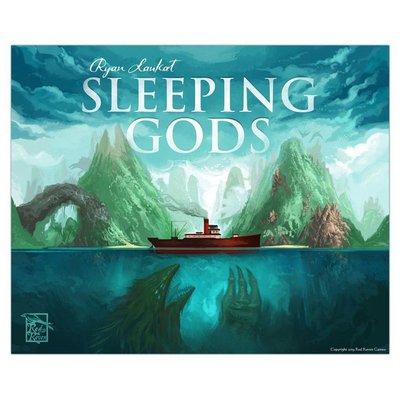
Hey everyone. Five popular games I would not buy again and the boxes I would take instead. My taste. Around two years seriously in the hobby. First one, Sleeping Gods. Beautiful maps, little stories. You sail a Manticore and the book talks back. Ryan Laukat. One to four. People fall in love with that and then the campaign sits half finished.
[sighs]
A session is not a night. It is a slice of a much longer thing. The goal is at least totems hidden in the world. Miss two weeks and the mood dies. You are buying a calendar, not a game night. By Vantage instead. 2025. Jamie Stegmaier. Stonemaier. One to six. Official setup is about two minutes. Official time is two to three hours. You crash onto a planet in different spots. First person location cards. You tell each other what you see. You are not reading the same paragraph in a circle. Here is why it is better for the job Sleeping Gods pretends to sell. Sleeping Gods sells discovery. Then it hides the discovery behind a save file. Totems. The journey log. Where you already docked. Which page you already used. Someone has to be the archivist. If that person is tired, the adventure stops being an adventure and becomes homework. Vantage is not a campaign box. The publisher says that out loud. You finish a night. Next time you know more about the planet.
Knowledge carries. You do not need last month's notes to start. That is the whole argument. Sleeping Gods also asks you to maintain a crew and a ship between sessions. Combat, upgrades, open map. All of that is real. It is also how a box becomes a second job. Vantage still has risk. You roll, you spend boosts, you can get hurt. The difference is the risk lives inside one evening. If your group is flaky, Vantage forgives you. Sleeping Gods does not. That is why I would spend the money on Vantage. One more thing on that swap. Sleeping Gods makes you feel like you could go anywhere, which is lovely until anywhere becomes a list of unfinished threads. Vantage scatters you on purpose. You are not sharing a ship log. You are sharing a planet by talking. I also like that Vantage does not pretend it will be your hobby for 6 months. It is a box you can finish. If you specifically want Laukat's writing voice, that is a different purchase. I'm not swapping authors. I'm swapping the shape of the night. Second, Forest Shuffle. Cute forest, trees, animals hanging off cards. It is on every list. Two to five, about 40 to 60 minutes. You build your own woods. On a turn, you draw two cards or you play one. To play, you pay by discarding cards into the clearing. Hope the next deer matches the tree you already planted. Trees take tucked cards on the sides. The game ends when the third winter card shows. I have talked
before about multiplayer solitaire. This is close. The clearing is shared. People can take what you discarded. Most of the night, you are still staring at your own canopy. Buy Castle Combo. Two to five, draft from a small market. Two rows of three, build a 3 by 3 grid. Nine turns, 10 to 25 minutes. Why it is better, not just shorter. Forest Shuffle looks shared because the decks sit in the middle. Your brain is still on your canopy. The icons are doing a lot of work. You can play a full hour and not be able to tell me what the person across from you was chasing. Castle Combo has fewer cards in reach. The market is small on purpose. If you leave the card you wanted, someone takes it. That sting is the game. Every card also cares where it sits. Left neighbor, right neighbor, column, row. Keys and Gold Gate what you can grab. So, even though the grid is yours, the choice is public. You are drafting against people, not just collecting a forest. Nine turns also changes how you think. In Forest Shuffle, you can shrug a bad draw and wait for winter. In Castle Combo, a bad pick lives in the grid forever. You feel the mistake. That is why I can remember the game the next day. Same build something pretty itch. More denial, cleaner ending. That is the upgrade.
Forest Shuffle also hides behind it is only cards. Setup looks light, then the icon reading starts. Which animal hangs left? Which tree pays for which fox? You can teach the idea in 5 minutes and still spend the first game translating the forest. Castle Combo teaches as a grid. Nine cards, neighbor score, you get it by turn three. Replay is immediate because the market changes and the grid is small enough that one stolen card ruins a plan. That is what I want from a short box, not another hour of pretty solitude. I can also teach Castle Combo to people who do not live in this hobby. That matters. Forest Shuffle looks like the gateway and then asks for icon fluency. Castle Combo looks like a joke grid and then has real decisions.
Third, The Lord of the Rings Duel for Middle Earth. Two players only. 2024. Built on Seven Wonders Duel. Face-up cards, face-down cards, pick, deny, build, map, ring track, instant wins. No big point pile like the original duel. The honest sibling is Seven Wonders Duel. Same bones. A lot of people will say the Tolkien box is the better first buy because the map and the ring track give you endings that are not just a tally. Then, I am buying Star Wars: The Deck Building Game. Different family. I am not pretending they share a rulebook. Why Star Wars is the better duel. Seven Wonders Duel and the Lord of the Rings version are construction games. You assemble an engine. You hope you trip an instant win. Or in Seven Wonders Duel, you count. The fight lives in the draft.
You can finish a game and never feel like you attacked anyone. You optimized past them. The map in the Tolkien box tries to fix that. Regions, fortresses, the ring moving. It still sits on the same draft skeleton. You are still mostly building. Star Wars is two players only. Shared galaxy row. You buy from the same line. First player to destroy three opposing bases wins. Once you know it, about 30 to 45 minutes. Combat is the point, not a side track. The card I take is a ship you do not get. And then that ship hits a base. You are looking at each other. I already called this the best dedicated two-player deck builder on this channel. Lord of the Rings Duel can end in a map race that still feels like a re-theme of a puzzle. Star Wars ends when bases fall. The night has a shape. Nobody is adding up civilian buildings. I like both themes. The mechanic made the call.
If you want the draft puzzle, Seven Wonders Duel is the name to know. If you want a duel, buy Star Wars. I want to be extra clear so nobody thinks I said the Tolkien game is broken. It is a polished re-implementation with extra tracks. For a lot of couples, it will be the one they keep. I am making a different claim. A duel for me means I can point at the table and say we are fighting. Star Wars lets me say that every turn. The galaxy row is the battlefield. Bases are the clock. That is why it wins this slot even though the rulebooks do not match. 40 minutes once you know Star Wars is doing real work, too. Lord of the Rings Duel can stretch while you stare at face-down cards and plan the next pick. I want the weeknight to end with a destroyed base.
Fourth, Arcs. Cole Wehrle, leader. Kyle Ferrin. Two to four. An hour to two. Blighted Reach if you want the campaign. Actions come from a trick-taking style hand. I put Arcs on a trick-taking list with a disclaimer. Not a classic must-follow trick-taker. The hand steers a war. You lead an action card. That card is your menu. Other people can play a matching card to copy or ride along. Ships move, dice hit, ambitions score. The map stays. Hot box. Needs the right table. First night can feel like your own cards are punishing you. Most people I would send to the Old King's Crown. One to four. Solo is in the box. Fantasy. Pablo Clark. Factions that are not copies. Nobility, clans, uprising, gathering. A year has seasons. Spring bidding, then clashes, then the rest of the year. Why the Crown is the better buy for the person who picked up Arcs for the wrong reason. A lot of people bought Arcs because it was the shiny leader space thing. What they wanted was painted war, plots, a throne. Arcs gives you that only after you accept that your hand might refuse to let you shoot. That restriction is the design. It is also why a mixed group bounces. Old King's Crown still has hidden information and timing. The seasons give the night a visible rhythm. You can explain the fantasy without teaching a new language of lead cards and follow cards and ambitions that flip the scoring. The
internet already pairs them. Arcs if your table already speaks Wehrle and wants the chapter snap. Crown if they wanted knights and schemes. Cole Wehrle and leader even helped on the Crown game, which is why the comparison will not die. I am not calling Arcs bad. I am saying the better box for the buyer who wanted a kingdom fight is the kingdom fight. Keep it light. Both still forming for me. Arcs rewards a group that likes being boxed in. Your hand is a cage and a weapon. That is brilliant when everyone signed up for it. It is a rough surprise when they wanted to move ships and talk politics. Old King's Crown still lets people scheme out loud. Factions give you a role you can say in one sentence. Nobility holds, clans hit, uprising plots, gathering erodes. You can sit down and play a person. That teach is why I would hand the crown to most tables first. Arcs can wait until the table is already weird in the good way. If your group already loves root level rules overhead, ignore me on this pair. The crown is the better first kingdom. Arcs is the better second language.
Last, Wrath, w r o t h. Chip theory, neon, Manny Trembley, one to four, about an hour. Draft action dice, shove troops. First faction to 30 victory points ends that round. Then, most points wins. It looks new and loud. Factions have elite troops. Co-op and solo in the box, different conversation. I would not start a thinking area control table here. I would buy Inis. Two to four. Draft season cards from a common pool. Play them to move clans, clash, throw festivals, drop sanctuaries. Three public wins. Present in six territories. Chieftain over six opposing clans. Present in territories that add to six sanctuaries. You have to throw a pretender token before the check. Whoever among the pretenders meets the most conditions wins. The Bren breaks some ties. If the Bren is not in a tie, base Inis just keeps going. Why Inis is the better game, not just the prettier old one. Wrath is a race on a neon map. Dice tell you what actions exist this round. You draft, you push, you score regions. It is tight. It is also shallow in the way a good filler can be shallow. After the artwork wears off, you are still doing majority math with special units. The conversation is I take battle. That is fine. It is not a masterpiece. Inis makes the conversation the game. The draft is the argument. If I take the clash card, you know I am coming. If I take the festival, you know
I am trying to stack a condition without a fight. Everyone is playing the same language. You do not need a faction booklet. You can see a win forming two seats away and you can stop it. Or, you can walk into it on purpose. Play it with the we need a king rule. That is the seasons of Inis module. Two sides on one tile. We want a king, then we need a king. You can run it on the base game. If people tie and the Bren is not in that tie, you do not shrug forever. Tied players can get a deed. Flip the tile. One more season. Last assembly. If nobody meets a condition, the Bren wins. If the Bren is not among the tied pretenders, those players can share the win. Use it at three and four from night one. Two player, it barely matters. The thing that sours first Inis nights is a game that refuses to end. The king rule keeps the masterpiece from becoming a hostage situation. Wrath is an hour of dice and neon. Inis is the area control I would call a masterpiece. Same map fight, better talk, better ending if you use the rule. Wrath will win the unboxing. Neoprene, neon, fat dice. I get it. Then the round structure takes over. Maintenance, draft, push, score.
It is clean. It is also easy to play on autopilot once you know your faction trick. Inis does not let you autopilot for long. The three conditions pull you in different directions on purpose. If you only stack sanctuaries, someone else takes the map. If you only fight, you feed chieftain points to the person you keep beating. You have to watch the whole table. That is the masterpiece part, not the art. The way the win conditions argue with each other. See you in the next one.