My Stonemaier Design Regrets (2023-2026)
Games in This Video
6 games are featured in this video — they unlock as you watch.


Transcript
Hey, I'm Jamie from Stonemire Games, and today I'm going to talk about my game and product design regrets from our last 10 games at Stonemire Games. I did a video like this a while ago for the previous 10 games, and I've done a video about this, like this for our expansions. Um, I'll link to those at the end of this video. But I thought I would revisit each of the games that we've published. Each of the last 10 games we published, starting with Smitten in 2023, I believe. Um maybe 2022. Yeah, one of those two. Um and then going forward from there to look at each of them and see if there's anything about the game design or the product design that I regret. And I say this uh for in a way that I can learn from past experiences. This isn't necessarily me uh dwelling on these regrets, which I don't think is healthy, or saying that these games need an all new addition to fix these regrets because many times you'll see that they're very minor and they were fixed in reprints. You don't need a new addition to fix like a very minor thing. Um, and there are other ways to fix things as well. Uh, but yeah, I'll talk about that just openly, honestly, and transparently today. And I look forward to hearing your thoughts in the comments. So, let's jump right in and start with Smitten. These are in chronological order starting with their date of release. So, Smitten here, uh, Smitten is a an 18 card game. It's a one to two-player cooperative game where
you're trying to form a panorama or two panoramas that look exactly like this. There's also Smitten 2, which I won't talk about later, but it is the same game just with different mechanisms on the cards. And the idea in Smitten is that as a cooperative game, the key element is that you don't know what the opponent is. they you don't know what's in their hand and you are trying or one of you is trying to say I can play a card um successfully because you need to place a card in a grid that's adjacent to another card and the card will say have instructions on it like this one says your partner must place a card in this grid. So if I choose to play this card I need confidence some confidence somehow based on the limited information that my partner will be able to place a card in this grid. Um so that is the puzzle of this game. Now, as a I don't know, a puzzly cooperative game, I built in different difficulty levels involving how many cards you start with in your opening hand. And um I did something a little odd in the rule book. And let me see if I have a photo of the rule book. I believe there was one photo.
Here's some other additions of the game that we were looking at there. Yeah, here is the rule book right here. So I basically my regret in this game has nothing to do with the mechanisms, but it has to do with the rulebook formatting. It's a very small rulebook. You can see it right here. It's a it's a very slim rule book and I did an odd thing that I regret. This is my regret where I built in this hard difficulty paragraph right here. I built this into the text in a place that is intuitive, but um what it does is that it looks like this paragraph is part of the hard parag hard difficulty paragraph whereas in reality this paragraph is just part of the gameplay text and this hard difficulty box should have been blocked out. Now, this might seem like a very minor regret, and it is. Um, and it might seem like a very minor thing, but because it looks like this paragraph merges into this one, players who aren't playing in hard difficulty oftentimes skip this paragraph when they're learning the game. And this paragraph is really important. It says, "At the end of each turn, both players draw back up to a full hand if possible." So, if you miss this or you think it is only part of hard difficulty, you might you're going to run out of cards because you won't be drawing back to a full hand of cards.
So, it actually is a big deal. This is a tiny formatting thing that actually makes a big difference. So in the reprint of Smitten and in Smitten 2, we block off this box to clearly differentiate it differentiate it from the rules text. Even I mean it's also a problem here that we have this important text here, the sign that says important and the text for important is the same weight and boldness as hard difficulty. So it looks just as important whereas in reality this is a uh a different mode almost than what we're including here. So little formatting things like this, especially in such a short rule book really matters and I regret not identifying that when I um did my my review of the well now I have review of it. I I wrote the rule book. Um I should have boxed it off from the very beginning so that we didn't miss it. That is my regret from Smitten.
Next up came Expeditions. And Expeditions does some interesting things. We even did an odd thing with the production of Expeditions where for the first time in a while, we sold the game to people before it was actually in stock. And we were very transparent about that. That isn't typically something that we normally do, but we wanted to make sure that we had enough for everyone who wanted it. And it didn't this had a result of putting a pretty big gap between the uh the us fulfilling direct orders and the retail release. uh because we had to make a a lot more copies for retailers than we thought and it meant that some of the buzz about the game had died down by the time retailers actually got their copies to release it. That's something somewhat unrelated to the game design and product design, but it is something on my head, something that we've learned from since then.
Expeditions is a it's a sequel to Scythe. It does not use any of the mechanisms inside, but I tried to capture the feeling of kind of engine building and optimization and leveling up and um and using Yakob's first-person art and having encounters as tiles instead of cards. All these things that connect to ex connect to Scythe, but are different than Scythe as well. And each player controls one single mech that they're using to stomp around the tiles on the table um and discover them. And my regret for this game is pretty much everything that I or many of the things that I did in Gears of Corruption the expansion to help the beginning of the game to help accelerate and give players flexibility at the beginning of the game. Namely, a few things like giving players some starting resources at the beginning of the game. Uh some power, some guile. Also giving players a uh a special worker at the beginning of the game so that they have a worker from the start because in expeditions when you play a card you can you can you gain the resource at the upper left of the card but you can also put a worker if you have a matching worker on the card itself to activate a special ability but there are limited uh locations where you can actually get workers. So there are other good things that you can do but getting workers is a really helpful thing in the game. It's also one of the goals in the game. And so if you can't get a worker early in the game, it can really slow you down. It can impact your engine, especially at a higher player count game where all the other players
have taken those those uh um those those actions at the beginning of the game to get those workers. So I think uh Gears of Corruption did a good job solving those those things and I wish I had identified those elements uh in the core of Expeditions. Now I say this as a regret and yet Expeditions I still stand by it as the game that is printed. I think sometimes you might interpret this as okay why don't you just add those things to the core game. I think that for all of for this and other games. Uh if I believe that that was necessary I would have changed the core game. I would have made maybe an essential edition or something like that. I don't believe that to be the case. I think expedition still works just fine. I think maybe a little bit too much um weight is put on getting a worker on the first turn. I don't I don't think that is true about the strategy of the game.
But I can I'm kind of responding to what players want here. what players have indicated they want and I think they they they like having that little boost at the beginning of the game. It's something that I also have learned from for the culture of Bordeaux. I give players a little bit of boost at the beginning of the game. So, I think that is helpful. One overall design lesson that I've tried to learn is uh to give players that little boost so they can jump right into the action at the beginning of the game rather than taking a a turn or two that uh that is in the way of them getting into the action. So that is my regret for expeditions. After expeditions came Apiary designed by Connie Vulgman. So Apiary is a worker placement game with a lot of positive player interaction uh about placing worker bees, space bees on a variety of different action spaces and you get an action. The strength of the action is equal to the strength of all the the bees that are on that action at a time.
And each action also has a powerful benefit if you place a level four bee or worker on that uh on that space. So in apiary, there are two things that uh that I regret uh ending up in the design. And even though I'm not the the designer of Apiary, I am the developer. So I am still responsible for a lot of the decisions made in these games. One of them is something that we changed in the expansion, which is that you can, it's kind of a variant that says you can play a maximum of two seed cards per game. You can get these seed cards that you can either discard as resources or you can play for a pretty good benefit in the game. Um, and what we found is that some players, this was not behavior exhibited in play testing, but some players will build up a big hand of seed cards and just play them all at once.
And that can really slow the game down, especially at the at the at the end of the game later in the game. And so putting that limit on playing a maximum of two seed cards per turn, I think is really really helpful. Um the other thing and this is a little bit more convoluted but when you in AP you can have your workers bumped off their action spaces and generally this is a good thing almost always this is a good thing because it means that you don't it's one fewer turn that you need to use to retrieve workers from the board. Um what we found in play testing is that every now and then you actually didn't want your worker to be bumped. Um and it has to be bumped by another player. There's no there's no blocking actions in apiary, so it has to be bumped. But the reason that players didn't always want that is that if you have a bunch of farm tiles, the green tiles in the game, the income from those tiles is only activated when you actually take a retrieve turn. It's a nuance that's fairly important because otherwise you could just bump yourself over and over again and collect income way too much and income would be way too powerful. Um, and so as a response to this, we built in the option for players when they have a worker bumped, whether it's by themselves or by another player, that they can choose to put that worker in a landing zone in a special area of their map. I hope I'm using the right terminology there. I believe it's a landing zone. Um, to later on to just kind of hang out there for a little bit and later on when you take a retrieve turn, you can move that worker to your
active zone, your active space uh, and on your player mat. and that's when you could gain that farm income. Now, as you can tell from this explanation, this is almost I'm describing an edge case, but we designed a whole rule and a place on your player mat around it. And I kind of wish we had done something different with with it because it does confuse a lot of players. They're like, why would I choose to do this? And there is a reason. It's a valid reason. I just explained it, but it is confusing. And I think maybe a middle ground option would have been to put that uh that landing zone on the board itself. So that it's very clear that this worker that has been bumped is not a worker that you have retrieved yet. Um because it's on the board, it's not on your player mat. Whereas by putting it on the player mat, it feel it feels like something bigger to the game than it really is. So yeah, that is my regret, my two regrets from Apiary.
Next up, we have Worms Span. Um, and like all these games, I I'm really happy with how Worms Span turned out. Wormspan. A couple things here. One product design decision, we didn't include a card tray in the first printing of Wormspan. And the the reason that we did this is that Wormspan has a lot of cards. Worms has a lot of dragon cards and it has also a lot of cave cards. And my experience with wingspan and that the and is that people do different things with their cards. They store their cards in different ways. Sometimes they store their cards in the tray that we provided, the card tray. Sometimes players sleeve all their cards with really thick sleeves that can't possibly fit into the card tray. And it's a small percentage. It's between five or 10 people. Five% of five or 10% of people, but that can add up to be a lot of people. And so I try to listen to those people just like I try to listen to solo gamers. It's 5 to 10% of people.
But I I want to feel them to feel included in our games. But it has made me a little jaded as to trying to find a an insert or tray solution for our games. Because if you try to include a tray that fits the thickest sleeves in every game, then you are essentially including a tray that is way too big for most people and probably a box that is way too big for most people. And so with that in my mind, I was like, okay, if the most v vocal people who don't like these card trays are the people who are sleing cards, let's just not include a card tray in this game. But in the end, I wish I had I wish I had kind of ignored that voice in my head and just said, "Okay, yes, I'm going to get some complaints. It doesn't fit. The thickest sleeve cards don't fit into this tray, but at least there's a card tray in there for those people who for most people who just want to put cards in a tray. I wish I had done that." and we have remedied that in future printing.
So now we also sell that card tray on our our website for anyone who wants it. Um there are also some little things that we fixed in the Dragon Academy expansion. Namely, uh probably the one that's maybe the most important to me is that uh the game can slow down to a crawl at certain times where on a very few specific cards that say all players can do a choice of these things. because they can gain a resource, they can gain an egg, they can gain um uh there's one other thing that I'm forgetting and g or gain or they draw card or they can gain a guild benefit. And guild benefits are one of the really awesome things about worms spam. But uh at 12:00 and 6 o'clock on the guild benefit track, let's see if I can actually find it so I can show it to you. There are more powerful benefit.
Here we go. Yeah. So right here, down here, and up here are interactive benefits. They involve you putting tokens on the guild itself. And so if on my turn I play a card that says that all players get to choose one of those options and one even just one other player chooses to advance on the dragon guild as a result of that card and they happen to get to one of these spaces, which happens more often than you think, then it really slows the game down on that turn. you can almost forget whose turn it is because it suddenly feels like it's their turn instead of your turn. And so I wish we hadn't include included those guild benefits as all player benefits on those cards and we removed that in the expansion. The other thing that we talked about in the design diaries for Dragon Academy is that optimally worms is around five and a half turns per round. Like each player should get around five and a half turns.
Um, but we gave players six coins because we figured, okay, let's be a little bit more generous. We'll get six coins, six actions essentially per per round. Um, but it makes the game feel, in my opinion, a little long. And so I wish we had done what we did with Dragon Academy, which is that we give players a benefit when they pass that might include six coins, but it might also include five coins and a couple eggs or some resources. Gives you some options there. And this also means that if players have found other ways to get coins or get extra actions essentially uh that players who are earlier to pass get first choice of those passing benefits. They might go after more coins. They might go after whatever they want. Um and it means that we don't have to precisely balance those benefits either. They can choose the one that is best for them in that exact moment. So I wish we had realized that in the core game. You know, some we we learn things after having many many people play through a game. Um, beyond just the the play testers, the the hundreds of play tests that we get from play testers.
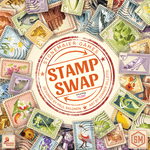
That's Wormspan. Next up, we have Stamp Swap. And I was actually a little hardressed to find something that I regret about Stamp Swap. This game certainly hasn't quite done as well as some of our other games, but I think it's a delightful um drafting and I you choose goal accomplishment game themed around stamps with a ton of beautiful art in the game. The one regret that I think I have about this game is that uh each stamp has a couple different things going on with it. One of the things going on on each stamp is that it has a color and we've dualcoded that for colorlind friendliness so that the borders of the stamps are different. Let's see if I can zoom in a little bit. Yeah, here we go. On some of these stamps, here's the stamps shown on the back of the board, but this is what the stamps look like in the game. So, for example, a green stamp like this has a border that uh that is mentioned in the rule book and on the reference card that says this border means green. In case you can't see green, this is what this is what green is in this game. That's great. However, each stamp also has a theme. And for the most part, you can tell what the theme is by looking at the picture. This is an animal. This is a vehicle. This though, is this space or is this a vehicle? Because it's in space, but it has a vehicle. I think somewhat obviously it's space because space is the theme. We're not going to put vehicles in space to make that super confusing. But technically, this is a vehicle. So, at a glance, you're thinking, okay, this is this a vehicle or is this a uh is this a space stamp?
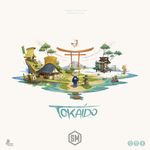
And so, what I wish we had done is dual code the art with an icon that just means uh space or vehicle or animal or so on or flower. U even though it is obvious, I believe in 99% of the cases in here, having that extra little icon on there removes any doubt from it and lets players kind of move forward and not have to think about that. So that is my regret from Stamp Swap. Product design decision from Stamp Swap. Here is Tokaido. Uh Tokaido. This is the fun forge version of the Tokaido board which is almost identical to the Stomire Games board with one small difference that I deeply regret. Um and so what happened with the Tokaido board is uh everything I sent all the files to the printer in Tokaido. It was good to go and it it looked great. It looked exactly like this board right here. Score track up here. Uh the path here where you're moving workers along this path or travelers around along this path. And some co-workers came back from a convention and said, "Hey, we talked to localization partners at this convention and we learned that they don't like the score track in Tokaido. Can you update the score track?" And what I should have said is no. I'm sorry, but no. we've we've already gone to print on this. Uh we can't change that. But I try to listen to my co-workers. I try to listen to our partners. And I was like, okay, well technically we haven't printed the board yet. So we'll make this change.
And what partners had recommended was that instead of having this kind of weird staggered score track and they are right. It is a weird staggered score track. Let's change the score track so it just wraps around the board like any other like any other game where you wrap around the board. It's so much more intuitive that way. They are absolutely right. it is better. And we made that change. But in making that change, our graphic designer made a mistake. And I'm not blaming the graphic designer. I wish they hadn't made this mistake, but I'm blaming myself for not catching it. The mistake that was made in change while changing this score track is that the path got shifted by around 8 millimeters. unrelated to the score track. But when you change anything in a file like this, especially at a late stage after it's gone through a complete pro proof reading, um there's a much incer chance that's there's going to be an error introduced, an unexpected error that you don't know to look for. And that is what happened here. The the path got shifted a little bit and it got printed that way. And we didn't realize it until we had fully printed the game and actually shipped the game to fulfillment centers and distributors.
The good news is that it doesn't matter. Like it is still very clear how the path works. It does look it doesn't look quite as good as it should and it is a beautiful game. It should look perfect, but it is fully functional exactly as it is. And we fixed it in the reprint. Uh we have extra boards that we can send people if if it's really really important to them. We also made a really nice neoprene or rubber playmat that has the correct path and actually also has spaces for the expansion cards as well. So, uh, we addressed it, but, um, I take responsibility for not looking for it, for not catching it, and for not saying no to a change that was just too late that had a really high chance of an unforced error being introduced. Um, we've added additional oversight since then to so that any file change late in the process goes through an an additional pair of eyes, not just my own. Um, but yeah, so it's a good learning experience, but it is still an embarrassing mistake and a regret for sure in our version of Tokaido.
Next up, we have Finsspan. I love Finsspan. I love teaching Finsspan. It is a fish version of Wingspan that depends more heavily on icon. So, it's kind of like a lighter version of of wingspan. It plays faster. I think it's easier to teach. Um, it has a different benefit system. you have this little diver meuple that's moving down and you're gaining all these benefits along the way based on the cards and where you have cards in relation to benefits specific to each uh to each dive site. There's one thing uh and this is kind of a a a thing as a developer I have to know when to um when to push designers for something that I think is right whether it's right for the fun the function the intuitiveness of the of the design or the balance in any of those categories.
I have to know when to push designers and when to know that a designer knows the game far better than I ever will. Even as the developer of the game, the designer will always know the game better than I did than I do. and the designers and I had a little disagreement about something in the game and I regret that I didn't push a little bit more because it is still something that even trips me up to this day as a player of Finsspan. Um, and that is that when you play a card that has a cost that says consume a card, it's the wingspan equivalent of tucking a card. When you play a card that has that cost, it means that it and I almost I almost said the wrong thing even as I said this because it it is confusing. It means that you must play that card on top of a of a smaller fish on your mat, whether it's a fish card or a fish printed on your mat. However, some fish have a benefit that says consume a card. So, when you're activating the card, so it doesn't say it here, but this card, for example, could say if activated, consume a card. When that is a benefit on a card, it means take a card from your hands and consume it. Put it that card under this fish.
This is uh it's not good. This is uh this is not intuitive. uh that that this is different that the benefit for the card is different than the cost. What it really should have been and I really just should have pushed back as a developer is made this the two the same thing. I should have made both of them uh uh something that you do from your hand. When you play this card, you have to tuck cards under it. When you uh activate the benefit of this card, you tuck cards under it. It's the same thing. It's much easier to remember, much easier to explain. And the result of this confusion is that there are there are multiple times that I have misplayed Finsspan where I have played a card and I have tucked cards from my hand under it. And maybe that's okay because that is just, you know, it's not that bad of a mistake to make. I'm still losing the cards from my hand. But uh yeah, I regret it. I I definitely regret not pushing back about this because I I I do not think it is the right design decision for Finsspan and now it's kind of stuck and ingrained into the game. So, it's made me more aware of um when I need to pick those battles and when I need to not pick those battles and trust that designer's instinct is correct. But player intuition and having such a key exception to this rule where it is it is completely different as a cost or as a benefit. Um I I absolutely regret that for Finan.
Oh, Vantage. So, Vantage is such a big game. This is a game with uh 9 thou 8 800 not 9,000. It has 800 locations. It has over 900 cards that you can discover that aren't even location cards. So those are in addition to the locations and it has uh over 7,000 actions in the game. We play tested this. We proof read it over and over again. We went through every line. And yet there are still mistakes in this game. Um and the mistakes that I dwell on aren't like the typos. Like I I knew typos were going to happen. We tried to avoid we, you know, we did our best to avoid them. But within a game that is the length of a long novel, I knew those mistakes were going to happen. But there were a few things related to the player experience that I regret not realizing in the design. Some of which I have fixed, some of which are just part of the part of the game. Um, so for example, I'm going to go into like some minor spoiler or maybe I'll say the non I'll say the non-spoiler stuff. Um, it's a little hard to sell things in Vantage. uh you might have something in your grid that has a coin value and it's a little difficult to do that. So I I wish I had included that into the trade action on your character. It is now included in the trade action on your character, but it wasn't from the start.
Um there are puzzles in Vantage that you can discover that that are kind of outside the regular action system. I like the puzzles a lot, but I wish I had given players an option to skip the puzzles if they've already done them. if they're not in the mood for a puzzle, just give them a really difficult normal standard action in the game. I have added that as a variant in the game that you can do that. Um, in the original rule book, I actually discourage players from performing the actions printed on the mission card. And I wish I had done the opposite. I wish I'd encouraged players to perform those actions to see what they do and how they work and how and how they can accomplish these missions because sometimes players get really frustrated. they can't accomplish a mission the first time they play Vantage, which is very normal. Like these missions are fairly difficult and when you don't know the world very well at all on your first few plays, uh it's going to be very difficult. It's going to take a long time to accomplish those missions. Um so I I wish I had done that. One of the biggest ones that I haven't been able to fix all that well because it's so ingrained in the game is that there are actions. There are consequences to actions in in Vantage where you might do something dangerous and the result of that action might be that you lose health or it might take longer than expected and you lose time or you lose morale. Maybe it was demoralizing to do it. But I kind of I wish I hadn't included that in the results of actions because there's already those consequences are already built into the core action system from rolling dice and not being able to place those dice. So, I wish I hadn't
surprised. It never feels good in Vantage when you're like down to one health and you have a roll and you happen to be able to place all those dice and avoid the one health that you need to avoid placing and then you get to the results of that action and it just says, "Oh, you lose a health." Like, it's kind of a bummer when that happens. Um, and the last thing, there are a few other things, but the last thing that I'll say here is, um, actually, it is a pretty big spoiler, so I won't go into it in too detail, but I mentioned puzzles in the game. There's also a miniame included throughout Vantage that I was really excited about. Um, and I still am excited about the fact that this thing exists in the world of Vantage. But I think the execution of it uh leaves a lot to be desired. As much time as I spent on it, which is amazing. Like I spent a lot of time on this miniame. And yet the rules could have been clearer. It could have been clear as to when you play this thing solo versus with other players. um or when you use the solo rules versus versus just playing solo. And I wish I had included a quick variant which is now included on rule pop the the digital story book for Vantage. Um and and it's now in the it will be in the in the next printing story book the quick variant for this mini game. But I wish I included that from the start too because even now as excited as I am that this thing exists in the world when I play Vantage I generally don't want to go through the steps of playing this mini game. it get takes me out of the flow of the game whereas the quick variant does not and I can do that and stay in the flow of the game. So yeah, a lot of things to learn from Vantage that maybe someday I'll apply to not an expansion
because Vantage is complete but maybe to a sequel for Vantage. Two more left. We have Tokido Duo. So Tokaido Tokaido Duo are games that we didn't uh we didn't I didn't I'm not the designer or the developer for these games, but I did look at them through that lens and especially from a product design lens. And there's something that I missed in Tokaido Duo that I wish I hadn't missed. And that is that the game uses the terminology mountain towns. That's what this workers on. This worker is on a mountain town right here. Uses that terminology, mountain towns for a specific worker type, but it also has mountains. You can see one right here. This is a mountain printed on the board. Mountains engage with the artist. The artist walks around to mountains and other landscapes and they might paint that mountain.
So, confusingly, this game has one. So, there there are three different types of uh characters here that you're that you're working on. One of the characters goes to mountain towns. Another character goes to mountains. This is confusing. This is just inherently confusing and and it it leads to a core confusion. In fact, recently when I was uh looking at the rules trying to understand a rule question about it was either about mountains or mountain towns. I was really stuck on it because I was like I I I am a little confused here because we have mountains we mountain towns which what what is correct here? What are we referring to? Um I I think it could have been solved if we had just changed the terminology of mountain town to town or village. just remove the word mountain from it and it's immediately more clear as to what we're talking about. But instead, we talk about mountain towns. I I think what it's in reference to is there's a rule that says artists can't move through mountain towns. But the way it reads is you think, okay, artists can't move through mountains, which really changes the the idea of what an artist can or cannot do in the game. This is the artist. So yeah, that kind of a maybe a lost in translation choice there, but I missed it when I was going through and and kind of rewriting, restructuring the rule book. Um, definitely something that I missed there and that I regret in Tokyo Duo. And last, we have my most recent game, Origin Story. Uh, this is a co-design
with my friend Pete. And my number one regret for this is something that we are solving with a mini expansion um is that we didn't include more uh superheroes. So, in the fifth round of origin story, you reveal the superhero hero that you've become. You have two cards there from the beginning of the game in secret, and you're going to choose one of them to reveal at that moment. There's a big reveal. It's a big moment. You get some points. You get usually a one-time ability in that moment. Um, and it felt like a lot to have 10 in the game, but when you play Origin Story a few times, suddenly it doesn't feel like that much at all. And so, I wish we had included more. I wish we had thought to include more. At the same time, this isn't that deep of a regret because I think having some space between the design of the game and playing the game a lot in the future uh can open up ideas that that I as the designer want to add.
And I think the mini expansion benefits from that. The mini expansion will come out in the summer of 2026. It has 21 new superhero cards and also something called super villains that are very similar. They're shuffled into the same deck. They're all shuffled together. because that means there will be a total of 31 a deck of 31 superhero/s supervillain cards all shuffled together but uh I wish we had included them from the start altogether uh not included them I wish I had thought of 31 superheroes to include whereas I only designed 10 of them because that those are all the ideas that I had after designing a ton of different story cards in this game and 18 different events there's a lot of variability in the game just not with this specific card type so I wish we'd included more in the game that brings us to the end here. Those are my regrets from these games. Oh, actually, there is a product design regret from Origin Story 2. Yeah, I'll mention this product design regret. It's a It's a little thing, but it it matters. Um, we I was really excited to do something special with the box for Origin Story. The box, let's see if I can find a photo of it. Yeah, here's the front of the box. Um, yeah, here's the box right here. So, the front of the box has this uh superhero. It shows in comic book style panels briefly their origin story. And on the back of the box, this is kind of a water driven character. On the back of the box, I have a fire driven character. Um, I will leap through while I'm talking about it. See if I have that fire driven character anywhere. Uh, actually, this is what the character looks like, but it's on the back of the box. I wish. Uh, and so I I thought this was really cool. I'll have the front of the box be also similar to the back of the box. That way, you can
choose if you want to display this box, which character you want to display. I don't know if anyone actually ever does that, but I thought it was a nice touch. But I got the feedback from my retail uh co-orker that um and a couple co-workers dealing with retail sales that retailers wouldn't like that the back of the box doesn't have the component list on it. Instead, it's on the side of the box, but they don't want it there. They want it on the back of the box. And so, we put a piece of paper on the back of the box that shows that information, shows, you know, the standard back of the box stuff. Um, which is all fine. That's fine. Like the piece of paper just covers that that content and then when you open the shrink wrap, you remove that piece of paper and then you're you're good to go. Now, Panda told us, our manufacturer told us that they were worried that that paper would slip around on the box as it's run through the shrink wrap machine and that might be a little weird. And so, they suggested that we add a little touch of glue that they assured us would not damage the box, that it would easily remove. As it turns out, it does damage the box. Some people have found that it peels away the paper on the back of the box. Some people have found that it just leaves a little bit of residue. Either way, you can use like a hair dryer or something warm carefully to remove it and it it removes it well. And it is just the back of the box. You know, you're not going to see it most of the time. It doesn't actually hurt their gameplay of the game at all, but everyone likes a pristine box. No one likes to damage a box the moment they open it. Um, so my regret here is that I wish I just told Panda, "No thanks."
Like, we're not going to use the glue. we're just going to put it back there and if the paper shifts a little bit in the shrink wrapping, that's fine. That's what we're going to deal with. Um or use a stiffer paper that isn't going to bend in through the shrink wrap machine. Do something else. Or maybe ultimately if they said no to that, just change the back of the box to normal back of the box. One of those options. I wish I had done that. Um but at the time, from what I knew, from what I thought I knew, the glue was not going to damage the box. And so I went ahead with it. But I do have that regret about origin story. Anyway, I hope you can tell that I am always trying to learn from past experiences and I try to apply these to the future. And I know it is never fun to have a first printing copy of the game that has one of these mistakes or these errors. Um, and when we can, we try to fix them. I think for most of these errors as you can see or these regrets I don't even know if many of them are called errors but for these regrets that hopefully they have not impeded your enjoyment of the game when you get it to the table. That's what's most important. Um even in Vantage where you know there's maybe a longer list of regrets. It's such a big world that you may not encounter most of these things when you play Vantage. Uh but uh but still I love to get these things right the first time. And so I try to learn from the past. I try to reflect on the past. and try to listen to people about what they what they say, their constructive criticism to apply these lessons to the future and learn from them so that they don't happen again in the future. Um, so that's what I'd like to leave today's video that that note I'd like to leave on that note that I'm
always trying to listen and learn and pay attention to the decisions I've made in the past so I can make better decisions in the future. So, thank you for being a part of that process. Um, if you would like to share anything constructive or your thoughts on these regrets in the comments, I'm open to hearing them. Might be a tougher comments area for me to read. Uh, but uh, but because as you can tell, I've already acknowledged these regrets, but maybe there's something that um, some constructive feedback that you'd like me to hear about one of these games that you'd like me to learn from and apply to future games. And I am completely open to doing that. So, feel free to share your constructive criticism in the comments below. Thanks.