Top 10 Ways that Board Games use Action Selection
Games in This Video
10 games are featured in this video — they unlock as you watch.





Transcript
hi I'm Adam in Wales and this is my board gaming vlog and today I want to talk to you about a category of mechanisms used in board games this is perhaps the most nebulous one of these sort of concepts that I've covered in these videos because we're going to be talking about actions selection it's a very hard thing to pin down and you tend to find that each category will blend into the other category so you get lots of gray areas between categories and lots of nuance and subtleties and contradictions creeping in there but it's this massive interesting design space for designers to explore and I thought maybe this video might be you know you might inspire some future hits from designers or perhaps just give some gamers new ideas of the sort of games they might want to purchase so we're gonna start simple with the old roll and move games that we remember from years gone by so here you can see you build monopoly which is a very clever Monopoly variant have covered it in more detail in a recent video in monopoly you have a playing space with many different actions Illustrated around the edge so you might one action is to purchase a property another action is to purchase a utility to draw a chance card or a Community Chest card or to pay tax or to go to jail and on your turn you'll only take one action and you've got no choice over which action you take the action is determined by the role of a die and this is characteristic of course of most board games originating in a 20th
century so around the turn of the 21st century Wolfgang Kramer and Michael Keesling were exploring an alternative system which is about action point allowance now they weren't the first people to explore action point allowance but they did really take it and run with it and they created this mask trilogy of games Java and Mexica and Tikal in these games on a player's turn they have a menu of choices and each choice will cost a certain number of action points and the players have a lot of action points to spend so they have a huge amount of choice over what they do on their turn so the sort of things that they might choose to do they might move their playing pieces across the board they might place tiles onto the board so let's have a look at that in Tikal in Mexico in Java they might explore temples they might place bridges they might build camps this gives players a really unique sense of freedom because there are so many options but some players will find this totally overwhelming and you tend to find that these are not good games to play with people who are prone to what we call analysis paralysis which means people who are gonna sit there paralyzed by the number of options and they're gonna try and maximize the map that there's a maximum amount of benefit from each individual turn thinking several turns ahead oh these games are gonna go on forever if you play with somebody like that but if you're gonna play it with
somebody who's a bit more of a casual player happy to just you know go with the flow not gonna take ages over there turns these are wonderful wonderful games so lots of the games that followed used similar sort of systems action point systems but they used a much reduced menu of choices so if we look at the game via nebula then each player has two actions that they can do on their turn from a menu of six available actions so these are to place a craftsman to place a building site to explore a fog space to explore a Petrified Forest to transport a resource to a building site or to construct a building and the game is one primarily based on the number of buildings that you've constructed so the next step in the evolution of action selection was to introduce a system of drafting so there's a set number of actions available in a central pool for all players and then players are going to take it in turns to select an action there by blocking the other players from taking the same action and worker placement really is a sub-genre of action drafting in general but it's a much discussed genre and its really iconic it's an iconic mechanism in the modern board game era so in worker placement players are going to place tokens which we call workers onto a central board which illustrates all the available actions that players possibly do and when they take one of those spaces generally speaking that blocks all other place no one else can
use that space as we see in the game Agricola the classic sort of poster child of this genre in lots of worker placement games though you're not entirely blocked you may still be able to get in on that space that someone else has previously used but you're gonna pay an additional cost or there's going to be at some other limitation on how you get there and in fact there's some disagreement in online forums some controversy some arguments about what exactly constitutes a worker placement and what should be excluded from the genre in Lorenzo el magnífico each player takes the role of a head of a noble family in Florence during the Renaissance blah blah blah victory points and at the start of each round three colored dice are rolled and the result of these dice rolls dictates the power of each worker so in this example the black worker has a power of two the white worker has a power of one and the orange worker has a power of six each worker is limited to taking actions which their power allows so for example to use this action a worker would need a power of at least three and once an action has been taken then no other player can take that same action and in fact they're going to have to pay an additional cost if they try and take any action within that column so worker placement has a similar feel to action programming which is a genre of games which I'm not going to cover in any great detail in this video because I don't really like them very much but an action programing game you know you're laying out your actions in advance and then you resolve them all in order but
you've planned several turns ahead that's also true in worker placement games we plan several turns ahead we place all our workers out and then they're resolved in a set order which means there's lots of opportunities for other people to mess up your plans and get in your way either accidentally or deliberately the reverse of worker placement is your more standard idea of drafting which is where there's a bunch of actions available and then each player takes it in turn to eliminate one of those actions they take the action and they eliminate it so other players can no longer use it in Grand Austria Hotel you're attempting to attract guests into the cafe and then into the bedrooms of your hotel and at the start of each round players roll dice to determine which actions are going to be available in the pool for all players to draft from so on the players turn they remove one of the dice and they take the Associated action and generally the number of dice left on that specific action slot dictates the power of the action that they take so for example if you were to take a die from this space it currently has five dice on it so you could take a combination of five strudel and/or cake cubes so the value of the actions then decreases as the dice are removed throughout the round and actions allow you to gather resources prepare rooms gain money and to employ staff so this is San Juan San Juan is a card game reimplementation of Puerto Rico which
was a very influential game from the sort of early days of the modern board game era so in San Juan there are five actions available to all the players and on a player's turn they select one of those roles one of those actions the counselor allows the player to take cards the Builder allows the player to place a building card the producer allows the player to generate resources from their buildings and so on all players get to take the action when it's selected so it's not just a pencil exit but everybody gets the action but the player whose turn it is gets an additional benefit a kickback which makes the action even more valuable for themselves so San Juan is often described as a roll selection game but roll selection is probably the most ill-defined sort of category of games game mechanisms that there is so the classification seems to be largely based on the thematic aspects of the game so the distinction between roll selection and action selection being is the action representing a character or a person or is it representing an activity or an ability the one with the character that would be role selection with the activity that would be action selection there's a whole other genre of games which is also often called roll selection but prob more accurately should be called simultaneous action selection it's got little to do with the role selection that we see in games like San Juan in these games all players simultaneously
select an action usually from a hand of cards with different actions on them and then they reveal what they've chosen and they resolve the outcomes of those actions together in broome service each player has the same 10 action cards available to them and at the start of each round each players simultaneously chooses 4 action cards from their own selection of 10 cards on the player's turn they declare which action they're taking and then each card is going to offer up to different versions of that action a powerful version the brave version which offers a big reward or a weaker version called the cowardly action which offers less of a reward if the player declares that they're going to be taking the bigger reward the brave action then another player who chose that same card could prevent them doing so and they can take the reward for themselves but if the player declares that they're going to take the smaller reward then they can do so safely regardless of whether whether any other players have taken that same action or not so a simultaneous action selection game it's all about predicting what are the other players going to do and ensuring that you're gonna take a different path a different strategy or you're gonna do something to prevent the other person from getting to play their action and these games can sometimes be quite frustrating because sometimes you know fault your own you end up picking the role that somebody else has also rolled picking an action someone else is also chosen and the whole thing goes to pot through no fault of your own meanwhile somebody else who's just been a bit lucky can race ahead and this is
not the case in games like broom service and actually live italia is another very good example of the genre where this is done right and it's really satisfying so many games as we've seen offer up a series of actions on cards the cards of players having their hands dictate the actions that they can take so in a game of flux when you play a card on the table you do whatever the card says I think that's a very simple game that is not particularly sophisticated design but many of the best examples of the genre can utilize multi-use cards so a card which has an action written on it but you can actually use that card for multiple different things really good examples of this sampan that we've already seen but also evolution which is my favorite game that's a great example and the game bruges belguim it is the 15th century the first stock market opens its doors all of europe has set its eyes on the wealthy and influential city of Bruges blah blah blah victory points in our own of Bruges each player has a hand of 5 cards they're going to play four of them and then they'll refill their hand and each card can be used in a multitude of ways they can be used to generate meeples or to generate money they can be discarded to remove threats like floods and riots and fires they can be spent to build canals or houses or you can recruit that character that's Illustrated on the front of the card and gain their special abilities and bonuses in some games players might have to
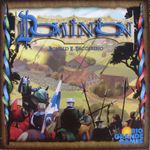
manage a hand of cards attempting to get the desired cards into their hands at the right time in order to use the action at the most appropriate time to get the maximum benefit out of that action so a good example of this is the deck building genre so in Dominion a player has their own personal deck of cards many of them which have actions on them and on their turn they draw cards from their deck they take a series of actions they purchase better cards from a central pool and they add those new cards into their discard pile and this discard pile will later be recycled to become their deck of available cards so the new improved actions are going to be available to the player in later turns and through clever purchasing decisions the players can generate chains of actions which eventually lead to amassing large numbers of victory points in the later part of the game so one of the most satisfying features of an action selection game is when you can chain actions together when you can create a series of actions which is often called a combo so in these games taking a single action can generate this big chain reaction resulting in multiple related actions which all occur on the same turn in arcane Academy players are the first generation of magical students at an academy of magic and sciences blah blah blah victory points and each player has their own personal player board with several actions illustrated on it throughout the game players can use actions to gather tiles to place onto their boards and these tiles provide further actions
which are going to be available in later rounds so when the tile action is activated other adjacent tiles activate as well so later turns of the game see exciting combos occurring where players generate large numbers of resources with which they can complete their objective cards and this is a mechanism which is also seen then more so in Glenmore players select a tile from a circular board they jump ahead to that position on the track and then the tile is placed into the players own personal display where it's going to generate resources for that player all the JSON tiles will then activate when the tile is placed producing even more resources or sometimes converting resources into victory points so Glenmore is similar to another genre of action selection games which are called the rondelle games again ill-defined sort of genre what constitutes a rondelle so in a rondelle we're usually moving a playing piece around a circular sort of track of options tiles playing pieces resources actions generally you can only move in one direction so if you go too far around the track then you're not going to get back to those earlier spaces unless you go all the way around the circle then fatting Glenmore by the time you go all the way around those original tiles will have gone so if you've missed them you've missed them often there's an increasing cost to go in further around the track so you may be able to go one two three spaces for free if you want to
go further you're gonna pay more for it so let's have a look at a fairly involved sort of version of this genre so in Murano there are a series of tokens which represent gondolas around the edge of the playing board each sitting on a different action space on the player's turn they can move one of these tokens as far as they like around the rondelle but it cannot enter or pass a space another token in it so players can pay to move the other tokens out the way but this is going to get quite expensive quite quickly so for example this player wants to use the build action but there are two tokens in their way so the player moves the first token out of the way for free and then moving the second token costs one coin the player can now move a token onto their desired action space and take that action but this is going to cost two coins the designer Mack goertz is really well known for his rondelle mechanisms for exploring them this mechanism in the whole series of games and examples are an TK and navigate or and hamburg am but the simplest example of a rondelle is monopoly so once you've reached Peach's castle you're not going to be able to get back to it until you've gone all the way around the board again but of course in this game you've got no control over those decisions it's entirely dependent on the roll of a dice of course we don't have to let dice control us we could control those dice we could mitigate that randomness we could harness the
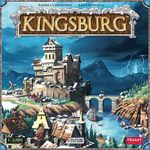
power of that dice roll and many designers have attempted to do this and quite successfully so in Kingsburg King Triton has chosen his most trusted and talented governors to oversee his newly acquired territories bla bla bla victory points and at the start of each round all players simultaneously roll three dice each starting with the player with the lowest results and then in turn order players place their dice onto corresponding action spaces and they can use single dice spread over multiple lower actions getting modest rewards or they can combine their dice to get fewer actions but more valuable resources and generally these actions generate resources which will allow players to purchase abilities which will mitigate the randomness of future dice rolls or some actions just offer up straight victory points these dice placement games have a lot of similarities with the worker placement genre usually the action spaces that you use are then blocked so that the other players can't use them so being starting player is extreme advantageous not all dice action games are deep strategy games though of course that sort of thematic style of game the sci-fi games the combat games that the fantasy genre they're often packed full of dice in Teenage Mutant Ninja Turtles shadows of the past we have a group of heroes who are cooperating against a single villain player and each hero has their own unique set of dice with
actions appropriate for that character so Michelangelo for example is all about the skateboarding movement and Leonardo he specializes in close combat and so on the clever action selection mechanism here relates to the sharing of these dice between the players these Turtles are brothers right and they're trained to fight as a team so in addition to using their own dice each turtle can use one of the dice from a turtle sack to their left and one of the dice from a turtle sat to their right and the positioning of these dice is really important because they can only use the die which is placed directly to their left or their right so the players have to cooperate to find the most effective placement of the dice Raphael Rey is a really powerful fighter but he's a loner so he has more dice than everybody else but he can't share any of the dice that belonged to his brothers in dice town players roll and re-roll poker dice in an attempt to have more of any particular result than any other player and only if they hold the majority in that dice result will they get to take the Associated action so the player with the most nines gets gold nuggets from the mine the player with the most tens steals money from the bank the player with the most jacks Keane's ability cards from the general store etc so dice town is an example of an area majority selection game my final category of action selection games so here the players assign a certain number of resources to each action space often through some sort of auction or bidding mechanism but here through rolling dice
and only the player with the most the majority on each action gets to take the rewards of that action space jackal Piero fell he will be imprisoned at cat rat prison for 20 years will you seize the opportunity bla bla bla three points in mafia zoo players discard cards from their hands to place gems onto the corresponding action space once they have placed their gems they can keep them grouped together or they can immediately spread them across connected action spaces and at the end of each round the action spaces will be resolved some of these phases will award bonuses only to the player as the most gems on that space some will offer the majority player a free bonus while all other players must pay for the privilege and some will offer all players the bonus provided they place enough gems I think this list could go on forever I experienced new action selection games on an almost daily basis and I'm really impressed frequently by the innovation and the exploration experimentation of other game designers so I hope this vlog has been interested to interesting to you if you're a designer hope it's given you some inspiration if you're a game player you don't care at all about design I hope I've shown you some games that you may not know about and you may be interested in playing I can recommend every game that I've mentioned on this list well I've mentioned monopoly I mentioned flux maybe I'll withdraw that statement slightly although those those are good games for some people too so if
you enjoyed the video please watch some of my others please subscribe to my channel it's Adams board game Wales or follow me on twitter at board game wales on board game geek I'm Adam 78 thank you very much for watching all the best