My Top 10 Collectible & Expandable Games



Transcript
Hey, I'm Jamie from Stonemaier Games, and today I'm going to talk about my top 10 favorite collectible, expandable, and customizable games. I almost said card games because a lot of these will be about card games, but some of them aren't. Some of them have ventured outside of the pack of cards model to explore some other components as well, which I think is clever. Uh this topic is on my mind recently both uh for a few reasons. One, there is, as I'm recording this, there is a collectible card game um on Kickstarter for Cyberpunk that has raised more money than any collectible card game has ever raised on crowdfunding before. I believe as of this recording it's around $17 million.
Uh uh this is definitely not the case for most collectible card games, but it is quite impressive that they raised this much money for a game that um has very few reviews even about it. Just looks good. Uh and they seem to have put a lot of work into it. So, I'm uh I I I I've also played Magic for most of my life since I was around 13 years old. So, this is a uh a type of game that is near and dear to me. And I do want to start off by saying, right off the bat, if you are uh somewhat maybe dismissive of the concept of collectible or expandable games uh because you think you associate those terms with money sink. I hear you. I see you. I have definitely spent too much money on these games at certain times in my life when I probably shouldn't have spent that much money on them. However, I have found that you don't have to play them that way. You can play any game exactly the way that you want to play it.
If you want to play these games where you just buy a couple packs of cards and you play with those packs of cards, that is completely okay. Most of the time now when I play this type of game, I play it a few times and I learn from it as a designer and I move on from it. Um also, whenever I play Magic, which is not every set cuz there are so many sets of Magic that come out, typically I buy a draft set and I have friends come over and we play a draft of it and that is enough for me. So, while I am spending money on it, I'm not sinking a lot of money on it for the purpose of competing in a tournament. I do not think that is the only way to play these games. So, if you were watching this and and that it was your initial impression, I think there's still some things to get out of this video. And I still will talk about some of those topics at the end of the video after the top 10 list. Um before I get to my list, I wanted to mention some of the games in this category that I have not played. One of them is Cyberpunk. I've not played that one. I haven't played Sorcery, Warlord.
I haven't played the original Pokémon game. I haven't played One Piece, Duel Masters, Yu-Gi-Oh, Rift bound is a fairly new one. Ashes and Ashes Reborn, I haven't played that. Alpha Clash, Dice Masters, Summoner Wars, and Mage Wars. I do want to give a special shout-out here to Ashes and Dice Masters because they are expandable games. Not all these are actually collectible, but these are expandable games that uh that use beautiful custom dice as part of the collectibility, which I think is really, really cool. Ashes in particular has really stunning high-quality dice in it. Some honorable mentions. So, I I was actually surprised that I had enough games to com- to to comprise a top 10 list here, but I even had more than 10 games. Uh some honorable mentions that didn't make the top 10 were Flesh and Bones, Lord of the Rings. So, this is Lord of the Rings specifically the uh the Living Card Game.
SoulForge Fusion, Netrunner, Hubworld: Eidolon, Dice Masters, X-Wing, Marvel Champions, Legend of the Five Rings, which I played as a kid a long time ago. I've not played I don't think I've played the more modern version of it. Hearthstone. There are going to be just some digital card games on this list. And Arkham Horror. And I do want to give a special shout-out here to X-Wing. Again, that definitely wasn't a a game for me. I don't I'm not really into tactical combat games, but having collectible miniatures I thought was pretty cool about X-Wing. I mean, having those very, very nice detailed miniatures was a very satisfying way to play a game. I know there are some other major properties that use miniatures as a collectible aspect of the game. I know very little about most of those games, but I did play X-Wing um and admired the miniatures and the immersion into the Star Wars world.
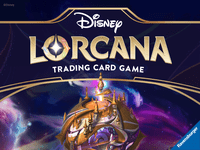
Let's get to the top 10. We're going to start off with Disney Lorcana. This was a tough list to make because some of these games could have shifted around. I really have not gone deep into most of these games. But uh Disney Lorcana I appreciated for a few specific reasons. And that's what I'm going to focus on on this list. Uh not necessarily what makes each of these games unique compared to the other ones, but a few elements of the game that I appreciated as a player and as a designer. One thing I liked about Lorcana is that it is a race to to points rather than a race to reducing your opponent's life to zero. You're you're racing to get I believe it's 20 um forget the resource that they call it in this game. It's it's like ink maybe I think I think is what it's called. Um and I thought that was great. I I I thought that was a a nice way to have a head-to-head experience without focused on without focusing on destroying your opponent. Um I don't entirely mind that with these games, but I thought it was innovative that they tried to do that. Also, like many of these games it uses a mana system that uh avoids some of the problems that Magic's mana system has cuz I think many of these games, if not all of them, have learned something from Magic and done something differently than Magic. Tried to differentiate themselves from Magic: The Gathering.
And I think that was one thing that Inkborn did. Also, I I admire Inkborn for actually having a co-op mode. While there are living card games that have cooperative play, very few of these expandable collectible card games have a cooperative mode. And co-op play is very popular in the tabletop game space. So, I think that's a really cool that Lorcana has that. Um if anyone knows of a cooperative way to play Magic: The Gathering, let me know. I've tried to search around for one, but I have not found like a even a semi-official version of that. So, that is Lorcana at number 10. At number nine, we have Star Wars Unlimited. This is a game that would be higher on this list for sure because I love the Star Wars theme. I think this is a very good game design were it not for the Star Wars deck-building game. If I want to play a dueling game with Star Wars, I love the Star Wars deck-building game. And I want to mention that a little bit here because uh even though this isn't talking about Star Wars Unlimited, but I do think that deck-building games give a lot of the feeling of a customizable card game without asking players to do any work up front before they actually play the game because a lot of these games has have you construct a deck in advance. And while that can be satisfying to think about and be creative with, um or even in the draft format where you're you're drafting cards then building a deck then playing with those cards or that with that deck, I do really like a deck-building game where I can just sit down and have that sense of progression and creativity while I'm playing the game instead of spending time in advance doing it.
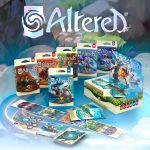
Anyway, I love Star Wars deck-building game and that's why I haven't gone deep into Star Wars Unlimited, but I have liked my limited plays of it. And one thing that I recall that I I appreciated about about it is that you only got one action per turn. So, there was a lot of back and forth. There weren't these long turns where even though I I think any player who goes deep into these collectible card games, these expandable games, they end up being pretty fast at their turns even though they're fairly involved. But if you look at the number of things that you do on a turn of Magic: The Gathering, it's a lot. It's a lot to understand the order of, to remember the order of. Um and so, I really like in Star Wars Unlimited they're like, "Okay, we're going to take out all these things and just say, you get one action." Hopefully I'm speaking of this in an informed manner, but that is what I recall from playing Star Wars Unlimited and I enjoyed about it. So, that's Star Wars Unlimited at number nine. At number eight is a game that very recently announced that it will not be continuing to exist, unfortunately.
Um this is Altered. Altered did a lot of interesting things. And the thing that I found the most interesting about Altered is that, again, instead of making this a dueling game where you're trying to destroy the opponent, rather you're trying to control territories. Let's see if I can zoom in on it a little bit. Trying to control territories in the middle of a kind of a tug-of-war style path of cards in the middle. This I think is a very interesting design space that I love to see more expandable and collectible card games uh venture into where each player maybe they have their own deck that they've created on their own, but there is also a preset uh shared space that the players have that they're they're working with. They're competing against they're trying to control. Um I think this is a really neat and and also tug-of-war I think has has been shown to be very successful in games like Lord of the Rings: Duel for Middle-earth and Seven Wonders Duel, its predecessor. I think those those shared elements that are maybe somewhat variable, but also somewhat consistent. So, you're playing in the same space uh and interacting with the same shared shared space even though you have your own creativity with the cards that you're playing and the card the deck that you're building.
Um I think that is a really neat space. I think that is really cool that Altered explored that space where most of the interactions happen on this central path, the central path of cards in the middle of the table. That is Altered at number eight. At number seven, I'm going way back to my childhood here to showcase Dragon Dice. I loved playing Dragon Dice when I was uh young teenager, 14, 15 years old. And part of it was because of these beautiful custom dice. I mentioned them earlier with Marvel Dice Masters and Ashes Reborn. The dice in Dungeon Dragon Dice uh are stunning. Like, they're really, really beautiful. And and they they they are high-quality dice. It feels good to roll them. They are highly customizable or not customizable, but they they are all many of them are different different uh numbers of faces on the dice, different icons on the dice.
Uh and I remember very little about how to actually play this game, but I do know that I played a lot of it. I had a lot of fun with it and a lot of it was because of these beautiful dice that you got to decide which dice that you wanted in your army and you got to roll those dice uh and and see what came up and and do things with those those different dice. I think I generally went for ranged attacks because I I like the idea of hitting opponents in in ways that they couldn't immediately hit me back. So yeah, Dragon Dice. I and this is one that I I'd like to revisit in its modern form, but I think I do remember just how beautiful this game was on the table. So put it at number seven here. Number six, we have our first digital collectible card game and this is Pokémon TCG Pocket. This is my one experience with the Pokémon universe and I got into this when it I think it this was released when I was in Japan in 2024 and then I came back and was like, I want to continue to connect with this experience of Japan. I'll try playing this game.
And the thing that I remember most about it, well I do I thought the duels were fine. Like they they were very snappy duels. You make a few different decisions. You're kind of deciding how long you want these creatures to stay out on the battlefield before maybe you pull them back or you let them perish to leave room for you to put more creatures out there. Uh but I I definitely remember enjoying the the experience of opening up packs on a daily basis. Like that they one of the most fun things about I think about these collectible card games, these expandable games, is the experience of opening packs and digital card games let you do that a lot. And so that was a reason that I came back to the app day after day to open packs and see what I would get. Um the other thing I think about the the playing experience, the gameplay of this game, is the idea of evolving cards.
Cards that if you have mul- if you have like I don't I don't know what uh what helps you create this Articuno, but there were there was I think a card that comes before that you have to play and then you can evolve that card into this Articuno card. This this idea where you have multiple of the same type of card in the deck and they evolve into one another. Soulfire Fusion also has a different version of this. Um I thought that was really cool. Um gives a little bit of a story to the individual characters found within the deck of cards. That is Pokémon TCG Pocket for its evolving cards. KeyForge. KeyForge has one of the coolest mechanisms I think in any game. Uh KeyForge is known for something that is not that mechanism, but KeyForge is known for this idea that every deck is when you open a a KeyForge deck, you are discovering a deck that has been uh that is completely unique to you.
It's been it's been put together in a pack uh and and uh digitally printed so that it's individual to you. Like it has a name printed on the back that is individual to your pack. It has a different combination of cards that is unique to your pack. Uh so there's no like drafting or anything like that. You are just opening a pack and playing it and learning from it as you go. I think that is really really clever. But the mechanism that I think is brilliant that I'd love to see in more games is that there's no resource system in KeyForge. Rather you on your turn every deck has three different factions in it. You can see there's three different factions for this deck down here. On your turn, you choose one of those factions and you can simply play any cards that you have for that faction. So if I chose this like egg faction, I have three of them in hand right now. I could play all of them if I if I wanted to on a turn where I declare that that is the faction that I'm playing this turn. Um it gives you choices within hand management because I'm deciding, okay, how many egg cards do I want in my hand before I choose to play them?
And also on the turn where I choose the egg faction, do I actually play all the cards there that I have for it? And what is the order in which I play them in? There's no resources to manage. It's just saying, I declare one of these factions and I play all cards with that faction. If you know of another game that does this, I'd love to hear about it cuz I think this is a brilliant manage- system gameplay system that removes resource management from the system altogether. That's why I think it's so clever in KeyForge at number five. And number four is one of the games that I played the most recently. This is Good Knight. This is a game that is largely not collectible, but they are venturing into the collectible space in that it is a dueling game where you choose a a faction and you do customize your deck. You can you can customize your deck in advance following their guidelines in a variety of different ways. So you are building a deck in advance and playing with that deck.
Up until recently, I don't think they had um packs of random cards, but they are venturing into that I believe with alternate art versions of the cards. But you can still just buy all the cards that you want. So when if you you always have full access to all the cards in Good Knight. It's just if you want the special versions that you can buy these special packs. I think they can also be used for drafting. But the gameplay itself it's the first game I think on this top 10 that uses a a battlefield aspect to it where there's a spatial aspect to that battlefield. You can play cards on top of one another if they share the same type and so if the top card gets destroyed, you still get to retain the bottom the card underneath it. I think that's really cool. But I one of the things that I think is particularly clever about Good Knight is that you get to see you almost certainly see your entire deck of cards when you play. You have a a deck of 20 cards and you start out with a pretty big hand of them and you're drawing them on almost every turn and if you besieged the opponent or if you siege the opponent or if you are besieged, you are discarding a card every turn. And why I think this is important is because a lot of these games have fairly big decks of cards and they're almost trying to get you not to see your entire deck of cards. But Good Knight says no, I you built this deck of cards, we're going to let you see all of them. The game is kind of paced out in such a way that you will see you will almost always see all 20 of your cards.
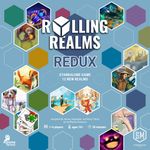
And I think that is really clever. You don't know the exact order that you see them. You still have decisions as to the order in which you play them and how much you value drawing cards, but I love that you actually get to see your full deck of cards in Good Knight when you play it. That's number four. Number three, a bit of a surprise here. You probably didn't think that Stonemaier Games had an expandable card game, but we actually do. Rolling Realms I have the Redux version shown here. This is an expandable card game. It isn't collectible because if you buy a pack of Rolling Realms cards, you know exactly the cards that you're getting in that pack, but but there are a ton of promo packs of Rolling Realms that you can use to add to the game. The way this game works very briefly is that each player has three realms in front of them, the same three realms. So one player will randomize the realms and all players will find those realms and put them in front of them. So in this game there's Title Blades, Finsbay, and Wonderland's War. These are kind of mini games inspired by these actual tabletop games.
And then turn by turn, one player will roll these two dice and all players will use the numbers on the dice. They'll put one of the number they'll use one of the numbers in one of the realms, the other number in another one of those realms and if they are able to spend their resources, there are three resources in the game shown here, pumpkins, hearts, and coins. There's often ways to create new numbers and you can use them on the realms that you haven't activated that turn that turn. Um so all players, the thing that I I think is that I really enjoy about Rolling Realms, couple different things really, but one of the things I particularly enjoy about it is that all players have an even playing field. They have the same three realms. They are using the same dice numbers and yet players end up playing in vastly different ways. Uh I I don't think I've ever seen anyone do the exact same thing even though they could feasibly do the exact same thing as the other players.
That never happens. Players make vastly different choices as they're playing Rolling Realms Redux even or Rolling Realms even though they have the same playing field. Uh so I I really really like that about it. I also have found while there is a solo mode that you can play, there's solo campaign modes that you can play in it. Um I play Rolling Realms a lot uh just I play I play essentially solo and then I broadcast. I put I make videos of it and you can play against me because all you need are the same three realms and the dice and you can play against me at any time because it's designed to not have player interaction. It's the one maybe major differentiating factor for Rolling Realms compared to all the other games on this list. It's designed specifically to there's no player interaction, which allows you to play against me as long as I recorded the video whenever you want at any time, which I think is pretty cool. Like I don't want that from every game, but I like I I think this is a neat concept that a game is designed around the idea of not having player interaction so that any number of people can play at any time and still technically be playing against one another.
So that's Rolling Realms at number three. Number two, we have Marvel Snap. I was enamored with this game when it first came out. I didn't end up going too deep into it, but I definitely played it a lot early on. Um as I did with Hearthstone, but I I I really really enjoyed Marvel Snap for a couple different reasons. Um one of the reasons is that it takes a mechanism from the game Air, Land, and Sea and uses it in a really clever way which in that there are three different zones in play. And at the beginning of the game, you can only see one of those zones. And then in the second round, the second zone is revealed then the third zone. So you don't know what those zones are. You don't know what they they do. They each have a unique twist. Like here we have cards that cost one, two, or three can't be played here. This one says, "Draw a one cost card from your deck when it's revealed." And this one says, "On turns three, four, and five, no cards can be added here." So they all add this really interesting twist to the game. This is similar to what I was talking about with Altered in that this is a shared uh gameplay uh shared space for players to play that isn't really owned by the players.
The players don't own these zones. You weren't collecting these zones. You're collecting cards. You're building your own deck. But both players are sharing these unique elements of the game. And both in terms of what how they mix up the play and how they are revealed. And that you can only typically play four of your cards per zone. So there's tough decisions to make how many which cards do you put in these these zones? When do you play them? Uh what order do you put them in? I think it's a great decision in Marvel Snap. The other thing I I admire about Marvel Snap is that your deck is small. Similar to Goodnight, you are going to see your entire deck unless someone uh forfeits early. Uh which is a big thing in this game. But you only have a a 12-card deck. And so you have a lot of control, a lot of agency over how the what what those cards are going to not only what they're going to be, but uh how you are going to interact with these cards because you're going to see all of them fairly early in the game. You don't know exactly what your opening hand will be, but you are going to see all almost always all 12 of those cards. Which I think is really really cool. I think that's neat that you actually a thing that you built, you get to use the whole thing that you built. That's just a matter of how do you use it and how do you uh optimize the three different realms that the players are the zones the players are playing in.
So that is yeah, Marvel Snap at number two. And last at number one, I do have Magic the Gathering. Uh like I said, I've been playing Magic for I don't know, 30 years now. There were times where I was building decks. There were times where I was uh uh uh competing in in tournaments mostly online. Um and now when I play, it's just if a if a set particularly intrigues me, I'll get a draft box and we'll play with that box and and have fun with it. So that is how I enjoy playing Magic not as a money sink now, just as a way that I enjoy playing the game. And really the thing that I think is particularly special about Magic the Gathering, a couple different things really. One, it I'm endlessly impressed with how Magic has been able to use its platform, its core rule set to offer so many different abilities and keywords and twist and and just like the the sheer volume of cards in this system that use the same system that feel unique is incredible to me. It's astounding to me. Like it it as a game designer, I know how hard it is to design even a set of 20 or 30 cards, but they've designed thousands of Magic cards and they've made them all feel unique and special. I think that is truly incredible.
Um one thing that I've learned from a designer is the idea of cycles of cards where you have maybe five different cards depending on how many colors you have in the game or how many factions you have in the game, but to give each of those factions its own version of a card that is unique to them and and accentuates what that type of faction or that color leans into. I think Magic does that does that really really well. Also, Magic's longevity has allowed it to do really cool things both in terms of marketing and in terms of game design in the way that it kind of calls back to older cards. That's what I'm showing here. They they are they've made newer new versions, new art versions of older cards. So that the history of Magic um plays into the game design so much now. And I think that is very difficult to do for any other game. It especially a new game to even just pretend that it has a history, I think is very difficult to do. But that is something that a design space that I love to play around with, the idea of pretending that a game is much older than it is and having that sort of call back to older versions of the game.
Um I played around with this design space a little bit in um in Vantage, uh my one of my recent games. But yeah, I think Magic is is pretty incredible. I love the draft format. I love passing cards around the table and picking them and and building a deck out of it. I also appreciate that while it is primarily a dueling game, that the Commander format of uh making it more of a tabletop game with with four typically I think four different players playing, I think is is a really neat that they they've evolved to adapt that as part of the game. And that they have different formats for different players. I think that's a really neat way to make a game more accessible to people. So yeah, Magic the Gathering is going to be my number one favorite uh collectible, expandable, customizable game on this list.
Now I have a few discussion topics to end the video. Uh just I'll I'll jump all over the place here. Some of them I have previously mentioned, but one one of the things I do appreciate about these types of games is that they really do help small local game stores stay in business. While I many of these game stores do sell tabletop games like the games behind me made by Stonemaier Games, um and that is wonderful. I love that they support our games and that they are hopefully making money from those games as well. The uh I I I I'm glad that these other types these card games exist primarily, these collectible games, so that stores can really thrive. So they can get people in the store and hopefully sometimes those people explore the other uh game tabletop games on on the shelves as well.
Um so yeah, I think they're they're in some ways in many ways the lifeblood of local stores and I love that local stores exist and have the chance to survive and thrive in uh in in 2026 and beyond. Um also, in terms of their impact on a publisher, it's a very interesting space because uh it in a few different ways. One is that a lot of the value of these games comes from how they are perceived by players and collectors. Um in such a way that like the cost of Wiz- Wizards of the Coast manufacturing and printing a uh uh a pack of 15 cards, 15 or 16 cards, is so small. Like it is probably around 10 to 15 cents, maybe 25 cents at the very most. But they get to sell it for like four to five dollars. So their margins are incredible when they sell these packs of cards.
And yet players really value opening these packs because on any given pack of cards uh like a Magic card Magic pack, you might open a card that's worth hundreds of dollars. And so the the the meta for the game, the market for these games has given value to a very small uh very uh I don't want to say cheap, but inexpensive to make uh uh uh product um where players don't really question it in the same way that they would question if I sold a uh a small stack of cards for that much money. Um So I think that is a interesting space. I can see why publishers do pursue it at least partially for those nice margins. Um but you have to do a lot in the in the general ecosystem of the game to make those packs of cards worth it for players who are opening especially a random pack of cards.
Um organized play. I I listened to a great podcast recently by Covenant, the Covenant Cast, where they talked a lot about organized play and how much goes into um giving players a reason to come together at stores and events and tournaments to play these games. Uh I'd recommend listening to that podcast. I can't even possibly summarize what they talked about there, but that is a big topic for it. The idea of competitive versus cooperative. So most of these games are competitive games and they're primarily even only competitive games. But I do think having a cooperative mode, a solo mode, is both of those two things are interesting design spaces that that could reach more players if they had them. And I think it's interesting that the living card games like Marvel Champions. Did I mention Marvel Champions earlier? Uh yeah, Marvel Champions, Arkham Horror, uh that those are very popular living card games that lean into the cooperative format. They are they are cooperative games.
Uh the idea of printing enough units. Like there's always I I I've I remember when Marvel uh Dice Masters came out or Dice Masters. I I can't remember if it was Marvel or not, but it Dice Masters was released and there was a huge shortage because they hadn't made enough and they had to remake them. They had to reprint them as many as possible. But by the time they reprinted them, they uh they kind of had flooded the market. Like it is a tough puzzle to solve even for any tabletop game to print the right number right quantity in the first printing. But uh I can see why some of these games are now turning to crowdfunding in the hopes of getting giving all players and stores the possibility of getting the uh of getting what they want in the first printing of the game. Especially since for the collectible aspect of it, if any of these games actually takes off the way that Magic did, that that first printing is probably by far the most valuable of any of the future printings to come.
Um there's also the idea of keeping it fresh. Like having one of these games for a publisher is a major endeavor. They have to invest a huge number of resources into um keeping the game fresh and keeping it going for a long time. Like having new sets come out. Uh I I I I talked to someone who uh was going to a Riftbound tournament recently and they were saying that it was fun, but they uh the new sets weren't coming out fast enough in for their opinion. At the same time I see Magic come out with what like eight to 10 sets every year. That seems way too many. Like as soon as Magic like releases a set, they're already talking about the next set, which just seems like too much to me. So there's a got to be a balance there of keeping a game like this fresh. Um Also, uh the last thing I think that I'll talk about is the idea that uh there are different ways to package these types of games um that explore some interesting design spaces. I think Magic did this with the Jumpstart set in a really creative way where they put together packs of cards that were uh you didn't know what you were getting inside the pack, I believe.
But um all you had to do is combine two of these packs and you had a deck of cards and so it allowed magic to create special decks of cards. Um. themed around certain aspects like I had a cats and dogs deck of of magic jumpstart where I had a cat deck and a dog deck. Where I didn't know I was opening a cat deck. I didn't know that I was opening a dog deck. You're opening something that you don't know what's on inside but magic has pre-created what that deck is and all you have to do to play instead of constructing anything it's just shuffle those two things together. There's still a decision to be made there which of these two do I want to combine to create my deck. Um but it very easy deck construction. So I think that is interesting that they have these games uh like keyforge also as well. Um.
All ex- expand beyond the idea of just having 15 random cards in a pack and explore some other design spaces that maybe maybe make it a little bit easier for players to be creative on the fly like more a little bit more like a deck building game. Um I'd love to see a little bit more of that design space as well. I'm sure there's much more I could talk about here. I've already talked for 30 minutes about these collectible card games but I'd love to hear your thoughts. I'd love to hear maybe your top three favorite collectible expandable living customizable games like this and any of your thoughts on the topics that I mentioned today or any topics that I didn't mention that that are on your mind when you think about these types of games. I'd love to hear about that in the comments below. Thanks.