2025: My Year in Games | Top 10 Board Games
Games in This Video
6 games are featured in this video — they unlock as you watch.





Transcript
Sleepless nights, a hit game with my name on the box. Endless nappies, signing contracts with respected publishers, sacrificing my games room to create a toddler's playroom, taking selfies with fans of the channel at the world's biggest board game convention. This is the double life that I've been living in 2025. Board game designer, author, YouTube commentator, sure, but most significantly, new dad. And that's changed everything. So, this little intro is just to let you know that this won't be a conventional top 10 board games of the year. If you're looking for a robust, well- tested, thoroughly researched list of the most groundbreaking titles, well, honestly, you're going to need to look elsewhere. This is your permission to click away now. I haven't even played some of the games in my top 10, and that's quite a statement. So, let's get that admission out there early. So, what is the point of this video? Well, this year has been fascinating for me personally. Three of my new designs were revealed at Essen Spiel in October. I published multiple books about board game design. I signed new contracts. The YouTube channel went from strength to strength. And as always, I fell in love with a handful of quirky little games most other channels will completely ignore. So, as we say goodbye to 2025 and look ahead to 2026, it's time for my endofear roundup.
I'm Adam Porter. I'm a game designer from Wales. And since 2016, I've put out a Christmas time video covering my top 10 of the year. And more recently, I've added a second video looking at design goals, reflections, and hopes for the future. But this year, thanks to limited opportunities to play, I'm combining the two into one. Same format, just condensed. So, in this video, I will highlight a designer who impressed me in 2025, set a YouTube goal for the coming year, reflect on my progress as a designer over the past 12 months, create a wish list, a few games that need an expansion, a resurrection, or a sequel, and finally reveal my top 10 of 2025. But first, as always, a quick rundown of my top 10 games from the previous five years. This time, the years 2020 to 2024. So, at number 10, we have Meadow from 2021. A tableau builder with gorgeous art and a clever twist on set collection. You're combining animals, trees, and plants into tiny ecosystems, all driven by a simple drafting system.
And number nine, The Animals of Baker Street from 2022. A narrative game for children following a group of animals who inhabit the margins of Sherlock Holmes's world. Smart mechanisms, beautiful illustrations, and wonderfully charming storytelling. At number eight, Dungeon Bowl from 2022. A more chaotic take on an already chaotic classic, Blood Bowl. This one's mostly a nostalgia pick for me. I loved the original as a teenager, and the new edition improves it in every way. It's ludicrous, luck driven, and it's wildly fun. Number seven, Caesar's Empire from 2022. I've been asking for more games based on Franco Belgian comics for years, and here's one set in the Asterisk universe, but cleverly sidelining the heroes to focus on the crazy Romans. Beneath the theme is a super streamlined network building game in a ticket to ride mold and a very worthy alternative. Number six, Thunder Road Vendetta from 2023. A violent apocalyptic road race and a remake of a Milton Bradley game from the 80s. Simple rules, fast turns, big production, and delightfully chaotic dice. Another forgotten classic updated for the modern era. Number five, Zuvardis from 2023. A reimagining of Rhinitzia's Quoardis, expanding it from a small obscure title into a lavish production with genuinely novel gameplay.
Negotiation games are surprisingly rare these days, and this one shot straight to the top of the pile. Number four, Zombie Teens Evolution from 2021. This is my favorite legacy experience so far. A cooperative game with a cute evolving story, tons of surprises, and incredible product design. Endlessly replayable even after the campaign. Number three, Pitch Out from 2021. A brilliant little two-player flicking game with asymmetric powers, simple, fast, and it's criminally underrated. Number two, Dominant Species Marine from 2021. A sequel to one of my all-time favorite games, Dominant Species. It adds a fresh twist to worker placement while retaining the cutthroat, deeply strategic heart of the original. Number one, Libertalia: Winds of Galerest from 2022. Stone Meers's remake of the roll selection classic. New card effects, variable scoring, smarter tiebreaking, everything just feels better. The art style divided opinion, and I wish it had received more support post-release, but it is wonderful to see an old favorite revitalized.
So, it's notable that six of these 10 are remakes or sequels. Maybe that reflects where I am now as a gamer. Older titles seem more firmly cemented in my affections each year. I find myself less interested in brand new experiences and more in refined versions of games that I already love. Perhaps it says something about the industry, too. Fewer risks, more reliance on known quantities. Every year I highlight a designer who has impressed me. And this year I was lucky enough to be invited to various meals and meetings at Essen Spiel, meeting a huge number of designers. It's a surreal thrill to shake someone's hand, start chatting, and then slowly realize that they created one or several of your favorite games. Picking just one designer is tough, but the nod this year goes to Casper Lap, designer of Magic Maze, That's Not a Hat, and many others.
I met him through my friend and fellow designer Rasmus Hervig, who by the way is guaranteed to feature in a future spotlight once his first games hit the market. Casper is Danish, warm, friendly, and disarmingly humble given the strength of his catalog. Magic Maze remains one of the most original cooperative experiences around. That's not a hat is that rare memory game that works with almost any group. Fun facts was nominated for the spiel desares and I still need to explore more of his work. Five Towers and Gods Love Dinosaurs have been on my radar for ages and I really ought to try his 2025 releases. Incv as well. I think it's fair to say that despite my parenting commitments, this has been my biggest year as a designer by quite some margin. And really, that's all down to work done years earlier. There's always a long runway before a game finally reaches the public. So, in September, Emberheart was announced. It's a new worker placement game from myself and my good friend Rob Fisher. And it captured more attention than anything I've released before, and that came down to three things. First, it's a mediumweight strategy game, and those always generate far more discussion online than children's games, card games, or puzzles, which is what I've previously designed. Second, Mind Clash put everything behind the release. They believed in the game from the very start and they invested fully. The marketing was fantastic and the pre-order window was a genuinely exciting time for us.
And third, and perhaps most significantly, the artwork is stunning. It was a little strange seeing the game promoted as the new game from Andrew Bosley, illustrator of Everell with Robs and My Names, bumped down the hierarchy, but honestly, I get it. Mind Clash and Andrew both have considerably more cache than either of us in the eyes of the gaming public. And the goal is to get people playing. And if leading with Andrew's name achieves that, great. As I've had to do many times over the past decade, I put my ego aside and enjoyed the buzz and the small slice of it that came my way. Ember also drew attention towards my other game debuting at Essence Spiel this year, Surakata. Now, that's a very different type of game. An unassuming little twist on tic-tac-toe where you try not to connect three, and it ended up generating more interest than I expected. I loved spending time at the Ghart Spiel booth. In fact, those hours were the highlight of all four days at Shiel for me. Gharts is a warm, familyrun company handcrafting their products and selling them with real joy.
They have a loyal fan base who return every year and I'm delighted that my little mircat game now sits among their beautiful collection. Robs and my flip and right tower drawing game flip pick towers was also announced by Osprey Games, though it won't be available until March 2026, so demoing it at Essen was a blast. It's such a fun game to teach. Every card that flips introduces a new effect. I loved watching people's reactions as they discovered what happens when they play a roof or a bridge or an imp or a dragon. And the Welsh setting makes it feel very personal. I can't wait to show it off more. So, my design goals for 2025 were to pitch at least one game at Essen Spiel and to publish at least one new game design book in my Adam in Wales series. I ended up surpassing both.
Within a month of spiel, I signed a contract for a brand new game due for release in 2026. I also recently signed another title for 2027 following an online speculative pitch earlier in the year. So, the steady flow of games should continue for at least another year or two. And I didn't just release one new design book. I released three. The first was a collection of material from this channel combined and expanded into a practical guide on product design, making games with a specific audience in mind, positioning them in the market, and most importantly, creating something of value for the people who will play it. The second book gathered together 10 years of experience in the industry and tackled the entire publishing process from approaching publishers to pitching, signing contracts, and everything that happens afterwards. And the third book was the biggest undertaking because it was written entirely from scratch, mostly at night during baby induced insomnia. Adam Wales Legacy features a 100 chapters, each focusing on an influential game from history and identifying a lesson that designers can take from it. Whether that's mechanical, thematic, in terms of presentation, or more broadly about the industry as a whole. It's a fascinating journey through board games history, and it should appeal to anyone who loves games, not just designers. So, my goals for 2026 are much more modest. I want to support the release of Flip Towers as much as I can, hopefully with a series of playthrough videos. It works brilliantly solo with loads of
replayability, so it lends itself really well to online coverage. I would of course love to design an expansion for Emberart, but that decision rests with the publisher. So, I'm patiently waiting to see how the game's received and whether there are any future plans. I've also recently pitched a brand new design that I think is really strong. So, getting that signed would be the final piece of the puzzle. And honestly, if all that happens, well, that's plenty for 2026. So, last year at this time, I had about 17,000 subscribers. Today, I'm around 23,000. But last year, I made a decision to stop focusing on subscribers and look at a more meaningful metric, and that's views. Subscribers often never return. So, the number is more a record of past interest than a reflection of the present. In 2024, I had 530,000 views, but 130,000 of those came from a single viral video, a total fluke. So, I set a more realistic target for 2025 of 400,000 views, and I just about hit it.
But the truth is, the algorithm is not loving my content at the moment. Each new video seems to underperform the last. Fewer views, fewer likes, fewer shares, fewer comments. Maybe it's because of YouTube shifting the subscription feed, pushing smaller creators further down. Maybe it's the rise of YouTube shorts. Or maybe I already covered the big game design topics years ago, and now I'm talking about more obscure ideas. Or maybe I'm kidding myself. I've been less consistent than ever, and that definitely plays a part. It's probably also because I do things like this, banging on about myself and game design when the majority just want to get to the top 10 already. So, I'm really sorry, folks. I will get to it. I promise. Just give me a couple more minutes. The likelihood is that my reduced output will continue in 2026. As my little one grows, more and more of my time is devoted to parenting, and I'm incredibly grateful that so many of you continue to stick with me. And finally, a huge thank you to everyone who came and spoke to me at UK Games Expo and Essen Spiel this year. I shook so many hands, I took so many selfies, signed so many games, and I heard about so many of your own amazing projects. A lot of you told me that this channel has inspired you, and that's incredibly affirming for me. If I had to pick my favorite video that I made this year, it would be my most recent one, covering 5,000 years of board game history and discussing where the industry is headed. My YouTube goal for 2026 is to forget views, forget subscribers, and just keep going. I think that will be an achievement in
itself. This year, I made 22 videos. I'll aim to make at least 12 in 2026, one per month. That seems [snorts] hopefully doable. And so, let's get to it. My top 10 of 2025. What follows is my heavily compromised and unapologetically personal top 10 of the year. I haven't actually played all of these games. Every entry here is something that I'm genuinely excited about, though, and each has earned its place for a reason. A few ground rules before we begin. I won't be including games that I designed myself. So, Emberheart and Surakata are off the table. I also tend to gravitate towards short, elegant experiences rather than sprawling high fantasy epics. So, that bias will be very much on display. And finally, I don't worry too much about strict release dates. So number 10 is Shaak or thinking hard about sheep. Apparently that's the English title. In the two-player game Shaft Nakad, your objective is to arrange your shepherd and three sheep into one row orthogonally or diagonally. The first player to manage this three times wins the game. On your turn, you move either your own shepherd or any one of the sheep in the playing area. Shepherds and sheep may move any number of steps as long as the path is clear. But you may only move a sheep if it has direct visual contact with your shepherd. So this entry is really a standin for a whole family of excellent games from Ghart Spiel and Design who also
happened to have published my own Surakata. I was gifted this fun little abstract by the designer. And while luggage constraints stopped me bringing home more, I also thoroughly enjoyed learning Repulso, Passage, and revisiting older Gear Hart's titles like Valdmeister and Schnip and Veg. This game reflects very much where my head is at right now as a designer, a theme that you'll see echoed throughout this list. Abstract strategy games are quick to prototype, fast to play, and generally only require one other player. So, that's a perfect formula for a sleep-deprived designer with limited time and energy. Number nine, Finsspan. I received a complimentary copy of Finsspan back in June to feature in my video about designing nature themed board games. As the second follow-up to the mega hit Wingspan, I was curious to see what a fish themed sequel might look like. The short answer, well, it's largely more of the same, but in a slightly streamlined package. And honestly, I was ready for that. The appeal of Wingspan has always been about more than just its solid mechanisms. It's also that enormous deck of beautiful illustrations and natural history trivia. And Finsspan delivers the same pleasure, this time with fish. Mechanically familiar, though it is, there are some welcome twists. I particularly enjoyed the vertical board with pieces diving through different ocean depths. It feels far more thematically grounded than Wingspan's left to right activation. Is it worth owning both? But that depends on your shelf space and appetite for variety.
But as an accessible, attractive entry-level game, Finsspan more than holds its own. Number eight, The Smurfs Hidden Village. I'm a lifelong fan of Franco Belgian comics or Bomb Design, the so-called ninth art. I grew up with Asterisks and Lucky Luke and Tintin and later discovered Spiru and Fantasio and the Masupalami and the Smurfs were part of my childhood although my exposure to them mostly came via little collectible figurines rather than the comics or cartoons. But in recent years I've become increasingly interested in the creators behind these works. Gassini Odzo Morris Hier and Po. And that curiosity brought me back to the Smurf albums. They're joyful and imaginative and chaotic and genuinely funny. I've been calling for more board games based on Bond Desane for years.
Aside from Witness, which is based on a detective espionage comic called Blake Mortimer and a handful of Asterisk titles, fans of this tradition are poorly served in the board game world. So, I was cautiously excited to see a new Smurfs game advertised. Cautious, of course, because it seemed destined to be rubbish. I mean, that's usually the way for licensed games, especially those aimed at kids, right? But just hold on a minute. The designers here are some of the best in the industry. Ludic Ma, the designer of Mr. Jack, Dice Town, Cichlides, and my personal favorite, Serrano. Quarantine Labraat, designer of Far Away, Tag Team, and Takeno Chibies. Tio Rivier, designer of Sea Salt and Paper, The Loop, and Oh My Brain. and the biggest name of all, Antoine Bowser, the man behind Seven Wonders, Ghost Stories, Hannabi, Takanoko, and Takaido. So, Smurf's Hidden Village is a cooperative game with strong presentation and a pleasing mix of mechanisms, set collection, light deck building, worker placement, and character powers. Our first play was underwhelming. It turns out that the default difficulty is extremely forgiving. But once you crank things up, and the game does give you plenty of tools to do so, it becomes a genuinely engaging co-op experience. The rule book is a mess. Contradictions, emissions, and references to prototype rules and components that no longer apply. But while frustrating, it's not a dealbreaker. This isn't a revolutionary cooperative game, but it is a solid one,
and crucially, it treats the Smurfs with real affection and respect. It's number seven, 50. In 50, each player starts a round by secretly writing five numbers between 1 and 49 onto their own player grid. One player then starts counting upwards from one. And as soon as a number is called out that one of the players has written down on their grid, they raise their hand and interrupt the count. If only one player raised their hand, then that player takes over the count continuing from that number. And for each new number that they call out without being interrupted by another player, they score a point. If several players raise their hands, then those players cross off their number on the player grids. An alternative way of scoring points, but the same player keeps counting. If you score a specific total in a single round, so 12 points for five players, for example, you gain a crown. And if you achieve two crowns, you win the game immediately. Otherwise, the player with the highest combined score after four rounds wins. Now, 50 is not one of the greatest gaming experiences of 2025, but it is one of the most inventive. I've got a real soft spot for odd little curios like this. Games that try something genuinely different, even if they don't entirely stick the landing. The idea here is strange, and yet it works. The game flows beautifully and creates real tension. You will find yourself triumphantly punching the air when you score a long uninterrupted run of numbers and groaning with frustration when your plans collapse before they
even begin. Players have very little actual control over the outcome. But crucially, it feels like you do. And because the game is short, that illusion of control is more than enough. This is exactly what I want from a miniame series like Yellows. Too often, these collections retread well-worn paths. Another take that game, another rat attack cat variant. 50 dares to be weird, and in that sense, it recalls the mind, though it's nowhere near as successful or impactful as that title. But I deeply appreciate the attempt, and I'll happily inflict this odd little experience on unsuspecting players for years to come. Number six, Doomcat. So, Doomcat is a very light roll and write game, closer to quicks than to Welcome to Two or Ctographers. What sets it apart isn't complexity, but presentation and variety. Each round, three dice are rolled and players each draw a line between two of the numbers on one of their dry wipe cards. The third number is written in the box at the top and a matching number is then crossed off on the card, unable to be used in future turns. The second time you write a number at the top of the card, that number becomes wild for future dice rolls. And every game uses a different combination of scoring cards, all built around the creation of angles and intersections between lines. The core idea here of criss-crossing lines and scoring for intersections is strong, and it opens up scoring possibilities that I haven't seen explored elsewhere in the Ralden Wright genre. The resulting
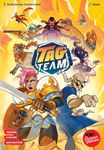
patterns resemble occult sigils, which gives the game a distinctive identity. variable scoring cards and number layouts are grouped into three modules of increasing complexity. And as you might expect from a crowdfunding project, there's a buffet of variant solo modes and campaigns. In a crowded field, Doomcat manages to feel memorable, which is no small achievement. Number five, Tag Team. Tag Team is a two-player auto battler card game where players build a fighting team by shuffling together two character decks. Each character contributes its own abilities and combat style, creating distinct synergies. In the first round, the two players compare two cards from their build deck and resolve their individual powers. Players then draw three more cards from their wider pool and select one to add to their build deck. But importantly, they never shuffle or change the order of cards.
Any new card is slotted in somewhere between the cards in the existing sequence. And then the cards are simultaneously revealed and resolved once again. And so the sequence repeats with more cards being added to the deck each round, and special powers firing off, depleting hit points, recovering, and messing with the rules in a variety of intriguing ways. Now, I haven't played Tag Team. It might be rubbish, but I doubt it. There's a lot of buzz around this one, which led me to pick up my own copy, and I'm looking forward to getting it to the table. My interest was peaked primarily because I've seen many designers over the years creating prototype games which essentially have the same broad goal as Tag Team. Head-to-head combat card games with asymmetric powers, colorful characters, hit points, and knockouts. Often, like Tag Team, these games have used simultaneous action selection, and few have really pulled it off. But Tag Team looks really slick, and Scorpion Mask is a publisher with a great track record.
It was a great idea to have players mash two characters together as in the old AEG game Smashup. And from what I've seen, the character abilities are diverse and inventive. The game's presentation is fab, too, largely because of the vibrant illustrations of Niad, the artist behind Tokaido and Seasons and Loot. Number four is Ludos America. Ludos is one of the most impressive gaming products that I've seen in years.
Nudos America completes a trilogy alongside Africa and Asia. Each box containing miniature versions of four ancient games from a single continent. The company's stated goal is to preserve traditional games of the past for the generations of the future. The presentation is stunning. Beautiful box construction, exquisitely crafted components, and individual drawers for each game. And every draw also includes a short historical document outlining the game's origins, traditional variants, and modern reinterpretations by the publisher. I've barely scratched the surface of the gameplay. Across the trilogy, there are 12 games, plus numerous variants. But as a guided tour through gaming history, these sets are fascinating and beautifully crafted. This is a wonderful way to collect abstract games. Four titles in a compact package which looks beautiful on the shelf. It's a far cry from the massive boxes used for the most recent printing of Chris Burm's outstanding GIF series, which requires real dedication to purchase and store. Number three, Magic Number 11. The Magic Number 11 is an odd little game, but I was impressed by the balance it struck between representing some of the most iconic features of a football match or soccer for my American viewers, while abstracting enough elements to create a satisfying fastmoving head-to-head card game. The flow just feels right. Essentially, this is a push your luck card game. On any turn, you can take a shot at goal, but doing so depletes your accuracy for
future turns. So, you only really want to take a shot when you've gathered enough icons to give you a high chance of bypassing your opponent's defense and scoring. Success is never guaranteed because some of the cards dictating success or failure are played face down, and the defending player has plenty of choices, too. Do you attempt to save the goal outright but risk failure or instead prevent the goal but give away a penalty kick? It's all pretty exciting stuff. There's a lot of group think in the board game industry and publishers generally won't touch sports themed games unless they're Formula 1 or horse racing which get a pass for some reason. So, it was great to see a clever little football game prove that it is possible to create the feel of a sport without attempting a full-on simulation. Number two, Asterix and Co. Asterix and Co. is built on a familiar structure. Players gradually commit cards to shared objectives until someone has enough influence to claim them. A soft form of area majority. And we've seen this in games like Smashup, Shot and Totten, Hanamakoji, and my own compromat. What makes these systems interesting is the delayed resolution.
Tension builds over multiple turns as players invest more and more into a scoring opportunity. Asterex and Code doesn't reinvent this wheel, but it executes it beautifully. The real joy though comes from the integration of the characters and the setting. The asterisk stories benefit from a huge cast of recurring characters, each with their own personalities, strengths, weaknesses, and quirks. And each card in this game represents a different character with a different ability. And they're really fun. You can feed them magic potion to strengthen them, but never Obelix because well, you know, he fell into the cauldron of potion as a baby and hence he's already incredibly strong. The characters fit into factions, Gauls, Romans, and neutral forces. It all just fits the Asterex universe so well, and each objective card is an oversized print of one of the iconic album covers with glorious Udzo or Conrad artwork on full display. This is exactly what I'm looking for in a card game based on an intellectual property. It's clear that the creators truly love and understand the source material.
It's number one garden. Fittingly, I finish where I began with a small, elegant, abstract strategy game. Garden is played on a 4x4 grid, though this can be modified by shifting the modular tiles. And on your turn, you place one of your bugs, and this dictates where your opponent can play next. If you play a dragonfly, they must play in the same row or column as you. If you play a butterfly, they must play in the same diagonal line as you. If you play a snail, they must play adjacent to you. And if you play a ladybug, they must not play adjacent. And the goal is to create lines of three or four of your own bugs in order to score points. Garden isn't new. It was originally self-published in the UK as Mine Leaf back in 2010 by designer Andy Hopwood. But this new edition from Taiwan Board Game Design gives a beautiful presentation and brought it to my attention for the first time. When I saw garden at Essen Spiel, I had one of those painful jealous moments. Why didn't I think of this? It's obvious in the best possible way. At its core, it's clearly tic-tac-toe, which gives it an incredibly low barrier to entry. The added rules tied to different animal pieces introduce depth, and the shape of those pieces communicate their functions perfectly. They're functional, elegant, and beautiful. The modular board adds welcome variety, preventing players from quickly solving what is otherwise a very clean system. This game is probably the polar opposite of most reviewers number one picks this year.
But it perfectly reflects where I am as a player and a designer. Short on time, space, and mental bandwidth, I deeply appreciate minimalist experiences like this, especially when they look this good. So, returning to my end of year roundup, it's time to make a wish list. And as my game purchases have slowed down, expansions, sequels, and remakes have become much less important to me than they have been in the past. But still, it's fun to look back at previous year's wishes and see what became of them. Libertalia. Now, I would buy an expansion for this in a heartbeat, but I don't think it's ever going to happen. Baron Park. I really enjoyed the first expansion, and I'd happily take more. Caesar's Empire. This will never get an expansion now that the publisher is closed. Animals of Baker Street. This one's unlikely, but I'd absolutely grab any new content for it. Pitch Out. A second expansion was promised via crowdfunding, but that seems to have fizzled out. But I'd still love to see the system expanded. My sequel wish list has fared a little bit better. Evidel and Quacks have seen multiple sequels, but I find myself increasingly unenthused by them. Abyss remains one of my all-time favorite games. And yet, I barely glanced at the 2025 sequel, Legions. I was already beginning to feel this way back in 2024 when I wrote, "Well, I think the truth is that I want a thematic sequel, not a mechanical one.
I want a game set in the same universe as Bunny Kingdom. I don't want Bunny Kingdom in Space or Bunny Kingdom Jewel. I want a worker placement game using characters from the Bunny Kingdom world with a few little mechanical nods to the original. I want an Everell pick and pass drafting game. I want a Quacks of Quedinberg negotiation game with just a touch of pushy luck to reference the original. And what did we get? Well, Bunny Kingdom Town, a two-player reimagining due for release in 2026. Now, don't get me wrong, I'm sure I'll play it and enjoy it, but I'm still hoping for more imaginative, innovative explorations within these universes rather than simple retreads of the formula. Remakes, on the other hand, still excite me, something that should be obvious from my top 10 list of the past 5 years. I love rebying older games when they return with the updated presentation or refined rules. It feels less like adding to my collection and more like upgrading it. And I especially enjoy picking up titles that I missed the first time around. I still haven't received my requested Restoration Games remake of Milton Bradley's Tank Battle.
Probably a long shot. So, here's a more realistic request. I'd love to see a revival of Astari's Eurogame Shakespeare. It was wellreceived back in 2015, but I never got to play it, and now it's almost impossible to find at a reasonable price. It's a theme that I adore, one that's still underused, so this game is one that I'd really like to see return. I've mostly run out of intellectual properties I'd like to see turned into board games. But there are still a few I'm quietly campaigning for Lucky Luke, Tintin, and the Muppets. And honestly, Mato, if you're listening, after the fantastic job you did with Asterics and Co, why not follow it up with Lucky Luke? They share the same original author after all. You could almost reskin the existing game with Lucky Luke characters, and I would be thrilled. And hey, if you do want a fresh take on the game, I'm available. Though I'm sure that asterisk and co-designers, Ruse and Tribe, might have something to say about me musling in on their territory. So, let's broaden the call. Any publishers out there want a Lucky Loop game? Well, I I'd love to make it happen for you. Last year, I ended my video with a prediction that the Hashet family of studios would gain even more prominence, and that's absolutely come true. They're now producing and distributing some of the most interesting games on the market, and it's been fantastic to watch. As for 2026, well, I don't have a bold prediction this time. What I can see clearly is a wave of consolidation sweeping through the industry. Companies are folding or selling off assets as the market becomes more volatile and unpredictable. The most valuable titles are being absorbed by larger expanding entities. And I expect this trend to continue. Big publishers
gathering more and more key games under their umbrella while smaller studios either step away or get pushed out of the industry altogether. I'd love to hear your own predictions and hopes for the year ahead. So, let me know in the comments. And thank you all for your support throughout the year. Every view, every comment, every share, every review of my books genuinely makes a difference. I'm looking forward to another year together in 2026. Until then, all the best.