BGG Top 10 Simultaneous Games
Games in This Video
9 games are featured in this video — they unlock as you watch.





Transcript
Well, we're talking intro at the same time. Of course, we're doing the game and we lost everyone already.
What's up everybody? My name is Nick.
I'm Mike.
We are the We'll take turns for now.
We'll do this part slower and separate. We're going to talk about simultaneous games. You didn't get that from that excellent intro we just did. Uh yeah, these are going to be simultaneous games. These are games where you're playing them two. Yeah, you're always playing games together, but you're playing at the same time where
there'll be at least some portion of the game that everyone will be able to be kind of doing their thing at the same time
instead of being like I go, you go, they go, I go, that kind of thing. You're kind of be doing it simultaneous. There's a lot of different ways that this can work. The list is pretty diverse in that way. There's certain things like rolling rights I feel like lend to this a lot more, but there's a lot drafting does as well.
There's a lot of other different kinds of games that really really lend to this. This would be games that have a lot of simultaneous play going on. Number 10 is going to be Let's Go to Japan. A lot of card drafting games have simultaneous elements to them because you're kind of considering your hand of cards, uh making some selections, and then passing on. In this game, you are uh planning out a trip to Japan. You're going to be bouncing back and forth between Tokyo and Kyoto and doing various activities based on all the real things you can actually do in those cities. uh and you're kind of building your itinerary. You're going to be there uh for several days and you're going to have basically three activities per day that you're going to do and you are setting up iconography and and things based on the cards you're playing uh throughout each day. But then there's going to be kind of a topmost card for each day, your sort of highlight, the the the biggest thing you do that day. That's often going to have a scoring based on the types of icons you've sort of produced uh based on your trip so far. And of course, you're going to end up going through this trip linearly. So, if I have a bunch of a certain type of symbol, I'm doing a bunch of food stuff later in the week, I wouldn't want to put a scoring thing in the first day of my trip because I haven't done that food stuff yet. I might want to put that at the end of my uh trip. So, you are making these considerations with these cards you're getting. You're also not you're trying not to bounce back and forth between the two cities too often because it's sort of taking up your time and can cost you some points. Uh but it's a really fun kind of tableau
building game ultimately. So, this is one where you're going to be getting these cards uh from one of your neighbors, making some decisions about where to place stuff and what order to place things within each day, and then kind of running your your trip at the end of the game and seeing like what you kind of score. So, I really enjoy the kind of buildup and spending the time planning out this trip and then getting to go through the trip in order, sort of describing all the things that you're doing. It's just really satisfying and really fun.
Number nine is going to be Moon Quality Blood Bath. The blood bath does not stop for player turns. You got to do this whole dang thing simultaneously. This is a great engine building engine like wrecking game because you're going to build out this engine and then it's going to get tore apart by the said bloodbath on the moon colony. So, this game is a simultaneous game because kind of what's happening the g the game is determined by this deck of cards. In this deck of cards, there's going to be, I believe, four action cards. When one of those comes up, everyone gets to choose one of the actions they can do. They can do like a mine action, which is how you're going to get money. You can do like a farm action, which is how you get food. Those kinds of things. Um, and there's, I believe, uh, four of those, and you can choose one of those whenever those one of those cards comes up. Other than that, there's going to be a whole bunch of other cards that are mostly going to be bad. It's going to be like robots who are killing your population.
Various things that are pretty much always going to be bad and taking away your um population because that's the whole point is you are trying to survive in this game the longest. You're basically trying to either get to the end of the game, which I've literally never seen someone do, or you want to be the last person standing with population. So, as I said, you're you're it's an engine building game. So, as you're getting these resources, food, this money, all this different kind of stuff, you can also play cards out into your tableau, and these cards are going to mostly give you population because it's places where people can go live, kind of go work, all those kinds of things. You have population on those cards, and you also have population tokens. But on top of that, these cards will also do certain things, give you certain powers, and a lot of times they're going to augment those other actions. So, they might augment the mine action or the farm action or something like that, make them beefier. But there's a lot of things, like I said, that are going to take out your people.
And so when you have to lose population, you can choose to lose the population, little chits that you have, or you can get rid of buildings. So the buildings have population on them and then any excess will just come back as chips. And on top of that, a lot of these cards will have um will have benefits that happens when they get destroyed. So a lot of times you're like, I'm going to put this one out here and then destroy it quick to get this benefit. I love Moon Calling Blood Bath. one the uh simultaneous nature is great. I really like simultaneous games. I like that kind of no downtime. Everyone's kind of doing the same thing. But Moon Calling Blood Bath works so well where I feel like a lot of games where it's like everything is bad and everything bad is happening to you. I feel like it works where a lot of those games don't work for me personally because one, it's happening to everyone simultaneously and then two, you get to build this engine and play with that engine before it gets destroyed. I feel like a lot of these other games about like empires falling or whatever, it's like the game starts, you're starting and you're just immediately getting beat up. In this one, you're getting a little bit beat up, but you get to build out this engine, play with it a little bit, and then it starts getting ripped to shreds.
And it's just really, really fun and really, really funny. It's got this campy look to it that it just really works with it. I hope they expand the butt out of this game. I love it so, so much. Moon calling Blood Bath is great. Next up is going to be a big classic game called Orleans. This is a game where you're going to be bag building. So, you're going to have these uh followers, these little chits, uh and you can get some upgraded bits right here at Board Game Geek, and I highly recommend those. Uh and you're going to be pulling out a certain amount depending on how far you've advanced up the castle track. Uh and these followers are then going to be put onto your player board to take certain actions. So each action is going to require two or three different followers of specific types to be able to activate uh that space and then kind of bump up tracks and do different things. Oftentimes getting new followers or developing technologies or getting more kind of worker space places for you to go. Uh so everyone's kind of doing that simultaneously. You're kind of building out your plan for the round and then you're going in turn and actually uh carrying out your actions in whatever order you see fit. This is a game where there's a bunch of things you can kind of focus on to get points. You're trying to get these citizen tokens. You're trying to advance up your kind of your your scholarly track to get a multiplier for the guild halls you build and the citizens you collect. Uh you can get different workers uh those followers to be able to hit a certain action type a
bunch of different times. If I want to make use of the map and really move around and build guild halls, I want to be able to make use of the wagon spaces and also the river spaces to move and then build. Uh again, with the kind of merchant tiles, you can gain uh specific spots that only you can go to. We all have a standard board that has uh you know, the main kind of actions in the game, but you can also get special actions that only you can do. And each kind of the main actions that you do will also bump you up these tracks and get you various bonuses and goodies along the way. So, there's just a lot of stuff to explore. There's a bunch of really great expansions for Orleans. they've supported it really well. But I love just kind of trying to figure out like what actions I want to take this round, especially based on what I pulled. I have to make some decisions.
You know, if I only pulled certain types of followers, that might limit what I can do. And it's a really fun puzzle each time trying to figure out what actions am I going to take? What am I planning for the future for? And then also kind of dealing with these events that are happening throughout the game.
A lot of drafting games end up being simultaneous selection game because you draft usually simultaneously. And this is going to be it's a Wonderful World. My favorite drafting game. And this is just drafting straight up for the most part. You have other stuff you're doing as well, but the main thing is drafting. This is a game where you're kind of like going through time. I'm not entirely sure what the theme of this game is. Civilization, I guess, is what it is. But nonetheless, this is a game where you're drafting all these cards. You're going to have a hand of seven cards. You're going to keep one and then pass your cards to the left or to the right. And then you keep a card, pass the cards, keep a card, pass the cards until everyone has seven cards. So once everyone has those seven cards, you then everyone again simultaneously, all of this is happening simultaneously, you can choose to then put cards into construction or you can recycle them and get rid of them. Putting cards into construction means you put it face down onto the table in front of you. And every card is going to have a certain amount of materials that they need um certain amount of resources I should say that they need to get built and be finished. And those resources are going to be like materials. They're going to be like population, finance, different things that again are kind of like civilization-y kind of things, right?
So, you can put something down into production or you can chuck a card that you drafted and every card that when you chuck them will usually give you a resource. It'll give you like a blue resource which I believe is population, a green resource which is science or something like that. So you chuck it out, you get a blue resource, you can immediately put that onto a card. Then once everyone puts all their stuff into constructions, if you ever finish a card, um you then get to put it kind of into your production row where you actually will get to use that card. And then basically everyone is going to start getting all of their production. the production is going to happen in this very specific order starting with the lowest material which is like the gray uh materials and stuff like that. So you're basically going to everyone's going to produce all the materials they produce and everyone's going to produce all the black cubes they produce and then all the yellow cubes they produce and then all the blue then all the green cubes then all the blue cubes and that kind of stuff. And as you produce these resources, you can then immediately put them onto cards that are in construction. And if those cards finish, they will immediately finish and come into your production row. So, if we're on like gray, which is the first thing that produces the materials, and that finishes a card that has like blue resources, well, that'll go into my production row, and then once we're producing blue resources, that card will happen. So, it's got this really, really satisfying kind of instant gratification to it where you're like, "Oo, if I do this in this order, I'll get to use this card right now. I love it." And that's the whole game. You're basically drafting off these cards, putting them into construction, trying to um finish them because a lot of these cards are going to have they're going to have points on them and a lot of times they'll have excess scoring conditions on them. Set collection. You want a bunch of green cards or a bunch of blue
cards, something like that. It's just so good. I love it. And it's all simultaneous. It plays quick. It plays great at two. It plays great at like six or seven, whatever the highest higher player count is. It's outstanding. I love It's a Wonderful World. Next up is going to be a game called Tend from IV Studios. This is a big old uh rollandright game ultimately or or I guess action selection and right game where you are on an alien planet and you are kind of exploring around doing some farming doing some mining exploring the woods and then producing goods to send back uh home. You work for a company called the Zenith Corporation and you're not so sure if they're like good or bad or whatever, but you're just trying to work a job. So, you are trying to fill this kind of cargo manifest with different goods, which are going to have these cool uh marker stamp things as you kind of fill out uh your your manifest.
So, what's really cool is you're going to have a menu of five cards uh that are going to have one or maybe one action, a couple uh different actions you can choose from. Then as the game progresses, you'll have kind of these uh secondary actions you can take if you meet the qualifications to do so. And everyone can choose from this menu two actions you're going to do each round. And we can, you know, choose the same ones, different ones, it doesn't matter. So this is something that is really fully simultaneous. Uh you're going to be kind of doing your own thing, taking actions. Uh, it has these cool scratch cards where if you're in the forest or the mines, you're actually scratching off and revealing the stuff you're finding. And you might find some kind of good uh or a valuable rock or something like that. And every time you're kind of coming across uh, you know, different goods, you have an immediate choice you can make. You can either uh, you know, if it's a good that can be put into your cargo manifest, you can basically put it in there. you can sell it immediately for money, which fills out a whole bunch of spots on your board are just going to require straight up money uh to pay for.
So, you're making all these cool decisions. There's also uh upgraded tools and things you can build that might require those materials as well. Or if I'm doing farming, I might need to build some fences for my animals, so I might need to use like wood that I find for that. So, you have all these cool decisions to make, and you're really trying to maximize what you can get out of every single round. There's of course a ton of ways to do different combinations uh and things. There's kind of neighbor bonuses where you're actually gifting things to each other but getting uh kind of progress up these valuable tracks as a result. On and on and on. It's just really fun. Super overproduced in a fun way. And it's just one that we really really enjoy.
Mikey just talked about tend, but we're going to talk about welcome to. A lot of rolling rights are simultaneous for a good reason. A lot of them you can play an infinite amount of people as well. Technically, as long as everyone has a sheet to ride on or whatever because of the fact that it's usually some kind of shared pool or shared thing that's happening, then everyone gets to do that thing. Welcome to is I feel like was like the first like big roll and right hit or at least one of the first ones. It kind of I feel like started the kind of roll and right craze that happened through board games. This is about welcome to your new neighborhood. Basically, you're just building out a suburb. It's kind of like a kind of like suburban that way where it's like kind of a low-key boring theme, but like it's just nice and everyone can kind of relate because mo everyone knows what a suburb is kind of thing, you know? Um, and yeah, so you're basically going to have these three cards set up next to each other and then they're going to be flipped over and there's going to be something on the back side. They could be like a pool, could be like a park, those kinds of things. And the numbers in the um on these cards are going to be essentially addresses. And then you're going to be putting those addresses onto one of three streets. And you want those streets to be in ascending or descending order. And on top of that, there's also going to be these other things that are on the back side of the card, which is going to be like those pools, which is going to be like those parks. Those are going to be all those other things that you can mark off. Marking off pools are going to get you more points. Having parks at the end of the street is going to get you a lot of points. And it's just that. And then you're going to flip over the cards, choose one of the three options, and then just keep going. And that's the whole game. You're basically just flipping out and basically trying to make this work as good as possible
because you have those constrictions of where you can place stuff and like what street you're going to be working on at a time because you can work on all of them kind of simultaneously. It just creates this great tension that a lot of rolling rides have where you're like, well, these are my options. I have to put something in here so what's going to be the best for me or in some cases, what's going to be the least bad for me? You know what I mean? And so I really really like Welcome 2. Also now a whole bunch of maps for Welcome 2. There's like Halloween ones. There's like zombie ones. I think there's like a Christmas one. They've really expanded it for a while. They call the new Welcome 2 thing in quite a bit. There's also Welcome to the Moon, which is even better than Welcome 2. Welcome to is great. It's got kind of again kind of one of those games that started the the Roll and Wright craze, at least in my opinion. Um, and it's still an absolute banger.
Next up is going to be a game that is fully simultaneous. This is going to be Planet Unknown. A very popular game from the last couple years here. Uh this is a polyomino tile placement game where you are going to be uh on a planet and you are going to be populating this planet and trying to fill it in as fully as possible with these polyomino shapes. What's really cool is in the middle of the table there are these kind of different depots in this lazy Susan that's going to be uh revolving around uh and each depot is going to be pointing at one player seated at the table all the way up to six different players and whatever depot's in front of you on a turn. There's two types of tiles you can choose from. You'll choose one of those two types and then you'll place it into your board kind of following standard polyomino rules where it has to go adjacent to another tile. Uh you know you can't overhang stuff.
you have to go within the confines of your planet. And each tile is going to show kind of two uh biomes, two types of uh tracks essentially that you can ascend on your playerboard. There's like, you know, your biomass, your greenery, your water, uh your civilization, things to advance your technologies, which can give you gamebreaking rules and things that now you can do uh to to get around the kind of limitations of the game. The reason I like this game so much is you can play a six-player game as fast as you can play a two-player game really because everyone's doing everything at the same time. I just love the the ability if you're the active player to choose which depot's in front of you and then everyone else just has to kind of take what they got and make use of it. There are these little rovers you can move around to collect uh meteorites that are crashing into the planet. Uh each track that you go up has various spots that will give you a bonus track bump. So, it's super comboastic where you're going to be going over here. You bump up this track which gives you a bonus bump. You bump up your civilization track. Now, you get a civilization card and on and on and on. You're also competing with your direct neighbors on a couple different goals. So, you are trying to pay attention to what they're building.
Try to make sure you're staying ahead of them on those goals and filling out as many uh rows of and columns of your planet as possible to get your main hit of points. There's asymmetric planets, there's asymmetric companies, on and on and on. There's just a lot of content in this box and it's a game that is just really easy to kind of table and play and accommodate a lot of people. So, it's no surprise that it's been so popular.
Number three, I love this game so much. This could be Slay the Spire the board game. I love Slay the Spire so much. And one of the cool things about Slay the Spire is that it is co-op and the fact that it's kind of simultaneous. Actually, it is simultaneous, or rather there's no uh turn structure, I should say, in the game. Um, it's really, really fun. If you don't know, Slay the Spire is originally a video game, but the video game was already kind of just a deck building card game. It was made by people who were like professional netroid Netrunner players. So, that's why it's like, yeah, it's just a a board game really. But then they end up making a board game out of it. And the board game is really, really good. And one of the main benefits of the board game is you get to play it cooperative now. Although now in Slay the Despire 2, you can play multiplayer, too. So, here's the thing. Any way you can play Slay Spire, play it. It's great. Oh my gosh, it's so good in every possible way. I love it so much. But nonetheless, um the board game is simultaneous. So, this is a game where everyone has a character.
Every character is completely unique. They have a completely unique deck of cards, and they do play very, very differently. You're really doing different stuff than your teammates are. And every basically round for the most part, you're going to be fighting some kind of random enemies. Random enemies are going to be drawn out from a deck of cards and you have to fight those enemies. The cool thing about this game is it's not really turnbased. So it's not like I'm going to do all my stuff, play all my cards. Now you go do all your stuff, play all your cards, and now Michael go and do all stuff and play his cards. It's not like that. I can play one card and then you can play a card, then I can play three cards, then I can play a card. And it's really really cooperative in that way where there's certain things like you could put vulnerable on something which means that the next attack they get is going to be double. You're like oo here I'll put vulnerable on and then now you you do your big attack on this one right here. And you're all kind of going back and forth and playing simultaneously and really working together in that way which does feel very different than the video game and I think feels good different not bad different. It's just really really fun. I absolutely adore Slay the Spire in every capacity. I've been playing a ton of Slay the Spire 2.
We've talked about a whole bunch of different times. I think this is such a good implementation of that game and it's just incredible. It's just so much fun and I really really like the co-op simultaneous nature of it. Next up is a game that is not only simultaneously played, but if you have multiple copies of the game, you could in theory play with an infinite amount of people. Uh, and we've done this uh, game of number nine is what I'm about to talk about. Uh, I think we played like a 60 or 70 person game of this once uh, where we had a whole bunch of different copies of this game. And this is a polyomino tile placement game where you going to have uh, these tiles that are representing the numbers 0 through nine in kind of this abstract funky way. And you have a deck of cards that you're going to draw, you know, shuffle out and draw. and it's going to have uh those tiles uh represented on those cards twice. Uh so you're gonna have two zeros, you're gonna place two nines, two eights and things, and it's a a situation where you're going to flip over a card, the four comes up. Everyone has to take a four tile and place it into their kind of player area. Now, what you're trying to do is you're trying to build a nice solid foundation, a nice base, because you ultimately need to start building up and stacking on top. Now, to stack on top, you have to be covering at least two different tiles. Uh, so you can't stack, you know, a four directly on top of a four and not overhang on another tile, but things have to be so fully supported. You can't be hanging off. Uh, and what's really cool is the scoring in this game. So, if
everything's on ground, you know, on the ground on the table, we're going to consider that ground zero. So, every number that you're placing, every tile is worth its value multiplied by the floor it's on. So, the bottom things touching the table are not worth anything no matter how high the number. Everything one floor up is its va face value. A four times one would be four. If you can build higher than that, everything is worth double its value or triple its value. So, you're really trying to build efficiently, build, you know, wide enough to be able to stack up high, but really get those high numbers. Hopefully, a nine comes up when you're able to put it on the second or third floor to really maximize that scoring. It's a tough polyomino uh puzzle cuz the numbers are just seem perfectly designed to be backward to what you want them to be and these tiles cannot flip over. So you're like h I need to get this around this way. I can make it so perfect it could fit in here and create a mega base I could then start stacking way higher on. So it's a really fun challenge every time everyone is playing simultaneously.
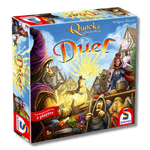
And again if you have multiple copies of the game you can have one person you know calling out the bingo card. Hey we got an eight everybody and everyone can be playing at the same time. So, it's really, really fun and a really good brain burn. Number one is going to be quacks or the quacks of Quidenberg, which is what it used to be, but now it's just quacks. It's just straight up Quacks. Let's be honest, everyone just called it Quacks anyway. That's good marketing. Just go with what everyone says anyway, right? Um, so now Quacks. Quack is a simultaneous game because it's a big push your luck game. A lot of times push your luck games tend to be simultaneous. Uh, and this is a game where you are going to be pulling out ingredients from a bag and putting them into this big bubbling cauldron. And you're basically trying to not bust. Like I said, it's a push your luck game. There are these little like white like we always call them snow peas, little snowberries.
These little white berries. If you have enough of those, I believe it's seven. Your pot will then explode and your turn is over. And so this whole thing is you're pulling out chits trying to figure out when you need to stop because you're like, I have so many chits in this bag. So few of them are those white ones. There's no way I'm going to draw those, right? Boom. You immediately draw them and explode your whole pot. But it's one of those things where you don't need to wait for other people. It's not like I need to sit there and wait for you to pull yours and I can pull mine. Okay, I'll wait for Mike now. Let's see what he does. You don't have to do any of that. You can all just pull things out simultaneously. There's no way that I can affect you. I can't like chuck stuff over into your pot and mess you up or anything like that. You're just doing your own thing in your own pot. And then once everyone is done because they either voluntarily stopped or they busted, you then will get to buy more of these chits. You will also score points.
All these chits will then go back into your bag and then next round you're drawing again. You're doing those things. I really like Quacks a lot. Um when this game came out, I mean it really like took over. was such an enormously popular game and I really really like it and it's one of those games that like at this point I don't play it quite as much as I used to but every single time I play it I go oh yeah that's right I really really like Quack of Quillberg and it's one of my favorite simultaneous games which is why it's number one on this list because I enjoy that kind of simultaneous nature of like boom to see what happens and then you bust you're like all right I guess I'll watch to see what everyone else does I just really really enjoy it is great
so those are 10 games that we like to have some simultaneous play going on. Of course, there are so many more games out there. These are just our preferences. So, we want to know from you is what are your favorite games that fall into this category? We always like to get a big list of recommendations for everyone to look at. So, put your favorites in the comments below. Let us know how we did on our list and we'll see you on the next top 10. Bye, everybody.