Delayed Gratification and Custom Dice
Games in This Video
7 games are featured in this video — they unlock as you watch.


Transcript
Well, we are back. Mitchell, good to see you. I'm Jamie. You're Mitchell. We're here for Positively Board Gaming episode 51. Welcome to anyone who's listening or watching. I am happy to be here today. Mitchell, how are you doing?
I'm happy. I'm I'm You know what? I'm doing well. I'm happy to be here, too. You know, we do our we we try and save as much as we can for the actual show, for as much as we can for the podcast, for the video. If you're watching on the, you know, Stonemary Games YouTube channel, we we like to do the video part. Or if you're listening, you know, we we tend to babble a little bit. Then I go, "Let's save it, Jamie. Let's save it for the actual show. So, you know, uh we had our we had our pre-show babble, which I love, but I also love, you know, saving a good portion of it for for the people's. Let the people's listen. Let the people be a part of like the joy that we share the normal. And again, we we do talk about board games. That's our main focus. That's why we're here. It's obviously Jaime's business and his passion. Just my passion, not my business. But we like to talk about other things happening in our lives, which sort of make up the person, which of course makes up the gamer. It's it's all part of it. It's all part of the mixture of joy and life that we call positivity board gaming episode 51.
Well, it's in that spirit of things that are way off topic from gaming that I thought we could do our treats of the day. Um, my treat is way off for this topic, but let's hear it. Yeah. So, as as Mitchell knows, um I am getting I am 44 45 now and so I'm getting my first um colonoscopy tomorrow. So, as you're watching this, it will have already happened. Uh, I'm still open to tips for things that happen in the future, but as we record this, I am uh a day into basically not eating anything, just drinking lots of fluids. And so today's treat of the day, I would say, is broth. Broth. Lamest treat of the day ever. I'm calling it right now. Not to take away your joy, Jamie. Lamest treat we've ever done, but it's important. It's important.
And it it is it actually has been really helpful today because I I [snorts] went into today thinking, what am I like? It's a fluid diet today. Yes. I can't really eat anything. Uh and so it's just mostly been water and uh and Gatorade and really the broth has been really nice because it it gives me a little bit of salt and a little a little bit of substance while still being liquids. Do you have any tips, Mitchell, from when you've gone through this process of things that have kept you going during the the uh the fluid and the purge phase of this?
Oh, yes. Uh, I constantly focus on how it will be over the next day and that I can go back to know, you know, Jamie and I and I I I I love the fact that Jamie is willing to share this and talk about this. And I asked Jamie before we started as part of our, you know, pre-show babble, as I like to call it. It's mostly me babbling. Um, but I asked Jamie, I was like, "Do you think it's okay? Are you okay talking about this?" And he's like, "Oh, yeah. It's actually going to be part of my treat of the day." And I'm totally teasing you about it being, well, in the world of our treats of the day, you know, lamest treat maybe. But when you're used to having and again for those of you who have not gone through a colonoscopy, they really can't do the they can't do the exam without your colon being cleaned out. I mean, you know, let's it it is what it is. And you have to go through this liquid diet and then you have to go through these laxatives and basically there's just they want you completely emptied out so that when you go in, they can see everything in the imaging perfectly because if they're going to find anything, they need to be able to see beautifully. So you try to do your best and the doctor will prescribe as he has for Jamie. you're going to take the you're going to have this diet for the couple of days before, the day before, the day up, and then you're going to take these laxatives and we maybe want you to drink this solution right before you come in and you're like, "Oh my god, how much can my body handle?" Um, so really the one thing that kept me going, and again, if you're having something just like water, Gatorade,
broth with some flavor to it is like it really is a treat. It's like, oh my gosh, after having just Gatorade, which and it, for some reason, it made me hate Gatorade. All the colonoscopies I had over the years, I'm like, I don't think I want to have Gatorade unless I'm forced to, unless it's prescribed to me now. So, I kind of lost my love for Gatorade over the years, having had a few colonoscopies in my life. But, um, just knowing that it's going to be over keeps you going. And maybe Jamie, what I'm going to share now, I feel terribly guilty because I have a treat of the day. Poor Jamie is going to sit there and go, "Oh, I'd love to have that. You insensitive." So, um, so I will like I I'll won't make a big deal out of it. kind of it really it kind of sucks. It's really not that good. I'm not I'm going to talk about it, but it's really not that good. So, Trader Joe's, Jamie, you'll be able to have this like tomorrow after you're done. You could have, you know, take it easy, but you could have some treats.
Yeah.
It's um these little honey gram squares covered in dark chocolate and sea salt.
And now Jamie, I could see the look in his eye. He wants to strangle me. They're so Yeah, they're so They're really good, right? And I hadn't had them in a long time, so um I forgot who brought them into the house. I might It sounds like me. probably my work. So, I've been like every once in a while grabbing them and again I forget I have stuff lying around. So, I'll go in and I'll go, "Oh, it's like a surprise." Like I surprised myself because grandpa forgot that he had a treat hiding in there. So, it's really great. I think that's like a whole new thing. Um, but I I think for the sake of like being sensitive to what you're going through now, we're not going to talk about any other treats. I think it's great that you're doing this. Just stay the course. And really, there are no there are no real hacks for this. It's one of these things where you just go through this bland diet, the bland thing, but you're you have the right point of view, which is you're looking at that broth that's like, "Oh my, this is the most flavorful thing I've had in a day because it is the most flavorful thing that you've had." Did they tell you you could have Jell-O as well? Because I think certain colors of Jell-O, I think they don't want you, but other Jell-O products said you can have as well, right?
Yeah. Yeah. Certain colors of Jell-O. And actually, I did have you can have um like popsicles or or um a sorbet as long as it doesn't have certain food dyes in it. So, I found a lemon sorbet at my grocery store and so I've been munching on that a little bit here and there and honestly like going into it with a like I am someone who is very food driven and very like schedule driven with how I eat. Yeah.
Um but I went into today knowing that I would probably feel a little weaker than normal that I I might get a headache. But so far I I think going into it with that mentality and having the broth, having a little bit of other liquids other than water has really helped. I I feel I feel fine. Yeah. So
we've talked about that. You talked about how expectations really play
heavily into how we react to things. You could have the same experience a million times, but depending on your expectations, you could have a million different outcomes from the same experience all because of how you anticipating it being.
So, I think you have the right point of view going in. I I will say you haven't really hit the the sweet spot of this whole experience yet, but as soon as we're done today, it's gonna Jamie asked my advice like a couple days ago. I was like, don't leave the house. Don't leave the house. And most importantly, don't leave the house.
Yeah.
Uh you want to be close to home because this this preceded thing is meant to keep you close to home and close to a bathroom and uh you know just just expect the uh unexpected. That's all I can say. But you I think you have a great point of view and that really is most of it. Having a great point of view, knowing knowing what's happening, knowing your body, knowing what you're in for. I'd say in for not in a dramatic way, just in terms of what you expect. Those are the most important things. Then you go and like okay because if you have different expectations that's when you know disappointment or like oh man I can't believe it and it's really not that big of a deal but it is sort of a right of passage. It's like we talked about this before it's like a prostate exam colonoscopy all these things that no one wants to do but you do it and go yeah I'm part of the club I did it. So if you've not had a colonoscopy and you're in your 40s
talk to your doctor about getting one. Depending on your medical history it'll it'll change depending if you have history of prostate or colon cancer in your family. These exams will vary in terms of when you should have them, but definitely uh something that needs to be done and I'm proud of you. I'm glad that you're doing it and I'm very happy that you're sharing it, too.
Well, thanks Mitchell.
Sure.
Well, before we jump into games and topics, do you have anything else that you want to throw in there? [sighs and gasps]
I don't know. You got me colonoscopy on the mind now. And you know, let's talk. I should have wait I didn't see you were drinking. Sorry. Yeah. What a horrible thing to have on the mind. No, I think I'm good. I'm going to save a couple things for next week. Um, you know, it's funny. we we start talking about things, you have an idea of what we want to talk about and then we get sidetracked a little with something that we actually enjoy talking about or that's important to talk about. You're like, "No, we can push that. We can always push that." I always have little things that I like to bring to the table, but um I was happy spending more time with medical stuff. I'm always I'm always happy talking about that stuff. It's important. We're here for you people. We're not just a board game podcast. We're a wellness podcast and a joy podcast. Yeah,
I just did really say that, didn't I?
So says little Tamimu.
people are still writing about that in the comments by the way. My little bird.
Yeah. Um well, why don't you share your topic then, Mitchell? What's what's on your mind? Yeah.
Well, this is courtesy of Susanna who's been like very he's always been great on your videos. Uh can you
my co-orker Susanna Exactly. And um Susanna had asked I think in the same it might have been in the same comment where she talked about
uh was it talking about my bird in the ocean in the oceanic expansion? Right. There was another Mitchell bird in there. Right.
Right.
But I think she had asked about my being drawn to purple dice and what you know what was why purple? Why was that? And I was like wow what a great question. And it starts and then when people ask you a question like that, it's always great to be to have questions asked. It sort of makes you reexamine like you want to give like an easy answer like oh I like the and I do love the color purple. It's a beautiful color. I love different shades of it. And
and I was like but I wonder what is there something more to it. What is it about that? So I wanted to do a deeper dive into my love o dice. We'll call it love o dice. and um how it's and the way I answered Susanna's question in the in the comment on the YouTube video from last week was I think part of it is if you're doing an RPG I think purple usually represents a warlock or some form of caster. Mhm.
So, purple to me has always represented Warlock, which I've always thought was a really interesting, fun character, which the strange part is I don't play a lot of warlocks in games normally. [clears throat] Although, with the new expansion of Diablo I with the new season and the new expansion coming out, they are bringing the warlock into Diablo I. And, you know, I'll be creating a warlock that no purple dice for it. No dice in that game, but I'm very excited to create a warlock. But that was my first thought uh was, okay, it's a warlock. It's a character that I kind of like, very interesting, but [clears throat] There's something about a purple dye, especially if it's translucent, because I tend to, and this is what made me think of this subject. What is it that draws me to dice? Is it just the color? But there are so many aspects of games that have dice in them that draw me in color being one of them that I wanted to that I wanted to talk about it. So, yes, color to me, yes, I am drawn to that.
Although if you look at a game like um I think Advantage has monochromatic dice. You have a black and white.
Yes. Yeah. There's a purple player color or character. Correct. Yeah. Not with the dice.
Right. So the the dice are fairly monochromatic. But I love I love the design of them.
Um and there those dice I was really drawn to them. And again you would think oh they're black and white. What's but I don't know. The imaging on I the engraving I loved it. Um so to me color does play a huge role. not important, but if I'm if I see like a purple dye, I'm always going to be like, "Oh, I love that." So, color, yes, does draw me in. Dark greens, dark blues, uh, purples. But it isn't just that. It's also sometimes the opacity, the translucence of a dice, cuz I'm a sucker for translucent dice. And I'm going to and I'm going to talk to you in a minute about this, Jamie, because I want to know my question to you after I give you this little mini list is going to be how much of this goes into your mind as a gamer when you're creating a game that has dice and then creating the dice or just as a producer slash developer game designer, how much of these thought how many of these thoughts go through your mind like oh okay let me think about this or how are people going to react to it if it's this? So listen to my list and tell me and jump in whenever you want if there's something that resonates with you. So yes, color is a big part of it, but like I said, the opacity, a translucent die, and translucent dies can be can be challenging because it is harder to see to read whatever the engravings are, whether it's a a standard PIP, but usually if it's an image um on the die or if it's a special symbol that you're looking to read, it can be more challenging to read if the if it is a translucent D. Is that something that you that resonates with you? because it is a little harder to see when they are translucent. Correct.
I agree. Yeah. Yeah, definitely.
So, yeah. So, that is something that I realize from a developer manufacturing standpoint can be challenging, but when they are translucent or have some opacity, they can even be a little bit smoky. So, you have like the best of both worlds where they're translucent but not quite. So, it's easier to see the imaging on there. But, I I love the translucence of a nice clear die with purple clear green clear dyes. And then the size comes into into play as well. I tend to like because I've worked with smaller dice before and depending on the game, depending on the packaging, sometimes they don't have room for a larger die or larger dice, they want to go slightly a millimeter smaller. Um, so the size, you know, it it'll vary from game to game also. And sometimes when there are multiple dice in a game, they will denote what is for what by by a difference in size. So you'll visually be able to say, take a visual cue, oh, that's for this, that's for this. So you visually, as I hit my camera like a wild man. Um, then there's also the texture.
Again, something you don't really think about when it comes to dice, right? There's something about when you're rolling a die and you feel that the smoothness of it. Um, and usually I usually I don't like wooden dice unless they have a purpose for the theme that I'm like, "Okay, I get it." Like with Wingspan with the wood, I was like, "Okay, this is perfect. It made perfect sense." And I was all in. Generally, if it's just a traditional game, I'd always like something on the, you know, smoother plasticky kind of feel rather than than a wooden feel. Um, so texture, opacity, and then actually what's engraved, whether it's a pip, whether it's an image or a symbol. And this is sort of an opportunity to make dice a thematic part of a game depending on what is it. And even if it's a traditional one through six where you would normally would be well served just having regular pips, but if the designer decides to make it something different just so it had it's more thematic with the game, an image that matches the game. If it's a Cthulhu based game to have images of those creatures and the or if it's something that's more D&D based, having the traditional symbols of the different classes, a warrior might have like a a two-handed axe and a caster might have a wand. So, anything that can draw a player in, uh, I'm always I'm always drawn to rather than a traditional just one through six pips.
Um, the number of dice that are included in the game. I always love I love rolling a lot of dice. Again, it's not every game that allows you to do that, right? But there's something about picking up a fistful of dice or being a or taking a few of them depending on what you've earned for that turn. Um, and again, that's something that Vantage also does really well as well. How many dice are you going to be rolling for this? How many do you want to roll? Um I I just having like a fistful of dice just really resonates with me. And then or being able to take from a pool and then take more if you want take more. Uh and the last thing I was going to mention is and this is sort of like having a a player guide for each player, especially if it's on a card. I'm like, why don't they have like a card for each player?
I love the idea, and it's not always possible, but that every person has their own set of dice. Again, that's not realistic and I understand that most games don't have that, but I tend to buy extra sets so that every player has, even if it's like every player gets eight dice. Yay. Where am I going to put them? I don't know. But I like the fact everyone has their own. So yeah, having your own dice, having a lot to roll, um the engravings, the pips, the the imaging on there, the opacity, the texture, the size, the color, those are all things that sort of that add to the tactile wonderfulness of handling dice during a game. So if I throw it back to you, how does this resonate with you? Both as a gamer, am I a little overboard? Does this resonate? And then as a creator of games, are these things that you think of as well in the creation process?
Yeah, I would say a couple things that come to mind. Um, you kind of alluded to the the budgetary aspect of do you include five dice for every player or do you just include five dice that are passed around the table? I think it depends on what the game is all about there. Like Dragon Farle, which you were very kind to give to me, every player has their own dice in Dragon Farle because largely that's the game. Like there are some cards and player mats, but mostly dice are the game of that. So that it makes sense for dragon farle. Um I think about the you mentioned the size of the dice. One thing that comes to mind when I think about the size of the dice is do players do other players need to see the what what what I've rolled on the dice.
Oh wow.
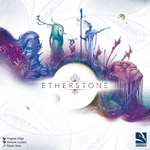
Or is it just me who needs to see it? Because if you're all six feet across the table and I'm rolling 12 millimeter dice and you need to see that information, that isn't enough. And so I need to up that size. I need to go bigger than normal for that size of die. Um and what was the other thing that you mentioned? Uh, oh, colorblind friendliness is something too. In fact, I just played a game the other day, Etherstone. I played a game called Etherstone that I really enjoyed. Really beautiful art. It is a partially a dice selection game. And I did something really clever in that the dice are unique colors, but for people who are color blind,
uh, the dice are kept on the table within these little cardboard rings that have unique patterns on them. So, it's like a purple ring for the purple dye with a unique pattern on it. And that way if someone is color blind, they just have to know that pattern. And so they can always select the purple dye based on the pattern, not based on the color of the d. The pattern on the on the circle.
Okay.
Um because all the dice are the dice kind of look the same similar. There's different colors to people who can see colors, but otherwise they're you know, it's tough to make dice I think look that distinct from one another in terms of color um or beyond the color in terms of dual coding it. So, I thought that was a neat solution for for not trying to go way out of the way to make each dice look completely different than the other ones while still making them color blind friendly.
You know, that this is making sense now because one of the things that I love about Rolling Realms is those lovely chunky dice, lovely big old dice. And it occurred to me, it's like, well, now that you're saying that, you want other people to be able to read, especially if you're doing a roll and write, anything like that where multiple people are seeing things. You want to have that. You don't want people like like, what is that? What can I see? I can't say anything. Oh, no. You're going to see what this role is. You're going to see it from across the room. You might see it from across the stage. So, that was my first reaction when I saw I was like, "Oh my god, these are wonderful. They were so big and chunky, but they're al they also serve a purpose, which is fantastic." And I wasn't even thinking about that.
See, so now you brought Yeah. having the size the size of it does matter in terms of being able to see it at the table with multiple people sharing a role. That makes a lot of sense.
Exactly. Yeah.
Okay, Jamie. And you answer questions for me left and right. and even questions I didn't know I had you answer for me. How does that even work? So, yeah. I mean, that's uh I know Susanna, you were just asking about the color, but it did it did spark something in me like to talk about like when I started thinking more about it.
Um I started thinking like, well, what is it in general? Because I always talk about, oh, I love dice. I have a and what are the aspects of it that sort of draw me? And it's more than just a color. It's sort of a a combination of all of those things. Is it just any any game? I always say I'm a sucker for like foil cards, dice, um a nice insert, a dual layer board. I'm telling you, this is like you take my money. I don't have to see the game. Just take it. Take it. So, yeah, Suzanne, thank you for the question. So,
yeah, I love that question too about about purple. And I like how you did a deep dive about your love of dice because it's come up a lot. I think it's a good summary of all the different things that you think about when you get excited about um dice. Oh, the one one thing I forgot to mention is uh and you talked about this a little bit too, the idea of using dice that have numbers on them versus dice that are custom in other ways. And the way I think about that as a designer is if I am not giving players if if the numbers don't matter, if they could be replaced by an icon instead of a number, like if I'm not having players manipulate the numbers, if I'm not giving them chances to like plus or minus or flip the die around to different sides where the number does matter, why not make it a custom icon instead? I think that's visually I think it looks better generally in my opinion if it is a a custom icon. And I understand that there are many reasons in games to have a uh have numbers. If you if you're asking for players to look for a range of numbers between four and six, they need to be numbers. They can't be icons that way. But they're not. I like to make it custom dice if possible.
And and you and I think you've mentioned mentioned we've talked about this whether on your own videos or with us doing positively board gaming. You mentioned that once you actually make the mold, producing dice for a game and producing cards are two of the cheaper things there are to make in a game. cards and dice in terms of production cost. Um, and coincidentally or not coincidentally, those are the two things if they're done really well can draw someone in and are able to create a lot of theme and a lot of beauty and a lot of feeling of a really high-end custom game without the trap costs of making a miniature or making something that, you know, or metal coins or things that are going to start where the money starts, you know, pun intended, starts adding up. Um, it's just funny that two of the least expensive aspects of a game are the two best opportunity or two great opportunities uh for drawing people in and giving that deluxified feel at a lower at a lower cost, which is great.
So, for publishers or uh game designers who feel like, listen, I can't I'm doing this myself. Uh I'm I'm putting this out there. Hopefully, it'll get picked up by a publisher. I don't have the money to make this to make this too deluxified. even if it's something with dice or just like imaging on cards, beautiful artwork, the custom dice we're talking about, it it a game can feel deluxe just with those two things. So, it's nice it's nice to have those.
Yeah, I agree. And cards definitely are more cost effective than dice, but in terms of like uh making one uh die cast or one mold for the dice and the it is an upfront expense, but once you've made that, once you've paid for that, uh it the the cost per unit is no different than if you were using a standard D6 dice with with pips or numbers on it. So that is a a I agree a very nice upgrade to have for what is eventually going to be a a very small cost spread out across many many dice. And I also appreciate this last thing I'll say about this cuz I want to get to Jamie's topic. And I also appreciate I know not everyone is is like me and would love to see like multiple I know not having multiple sets of dice especially if there are like eight eight dice in the game you know making that times four times six. I get that. But I also love when publishers offer uh let you buy online an extra set of dice if you want to create that experience where every player has their own. You can because they're sold separately and you can still add them on later. So that's another great option to have.
Yeah, I agree. I agree.
All right, Jamie. Again, I've babbled on way too long. Now's the time. Not at all. Jamie Stegmire, while awaiting his colonoscopy tomorrow and being very good and diligent about his preparation, is now going to bring his topic to the table.
Yes. So, I was thinking about sometimes I I like to bring topics to this podcast where I don't have a full top 10 list of games that fit this category, but they're games that I love or a specific element of game that I love. And so, today I thought I I would talk about games where while you are playing, you are making a choice between using typically a card. I'll use cards as the example, using a card. now versus setting it aside to use for a specific different purpose later. And the example that came to mind recently, I played a game called Off with Their Heads, which is a uh it's a game where you were given uh seven, no, you're given nine playing cards and you're going to play seven um I'll call them tricks. They're essentially tricks where each player is going to be playing a card from their hand from a standard deck of playing cards into the trick and determining if they have the highest card, the lowest card, or a card in the middle for this specific game.
But I said you have nine cards. You're only playing seven tricks. And so that means you get two cards left over. And you're going to play this game over three rounds. Every round you're setting aside. You're choosing two cards not to use
that. You push in the next round.
You push well not a actually that's a a good example too because in Libertalia you do that. I'll tell you in a second. I didn't think about that. Um in this one you you set them aside permanently until the very end of the game. And then at the very end of the game with those six cards that you've set aside, you get to make a poker hand and score points based on that poker hand. And if you have the best poker hand, you get some extra points. It's also the tiebreaker in the game. So, it's one of these decisions that's like it's a small thing in the game, but I realized as I was playing, this is kind of a big deal. Like, am I deciding to commit to this poker hand or am I using these cards for what I need right now for the other puzzles going on in the game? And so, I thought of a few examples to bring up today with that. Uh any any initial thoughts? Anything that comes to mind as I as I talk about that? Yeah.
Well, just in terms of like holding off when to play a card as opposed to because I don't know too many games where you get to set aside and then make something special out of them at the end, which is an awesome thing that is such a great little value added to the end of a game. That's really smart. I really like that. But just what what I was thinking about uh two games came to mind. One of them is yours. Uh, first one was heat pedal to the metal
because um I think a racing game especially when you have if you're using that that uses cards right I'm not like mixing up my racing games right it does
um and when to push when to sort because that's a very much it's a different kind of push your luck game in terms of like you know taking the speed that you take into the game and do I use this card now and continue my run or hold it off to my next turn. So that was the first game that came to mind with holding off cards and when to use them. The second one became more of a trick-taking with um Origin Story and it it it's sort of like a mechanism that's built into most trick- taking games, but Origin Stories in particular is what is what resonated with me is the whole balance of most trick- taking games and that one especially is not only taking tricks or not taking tricks, but when you take them or don't take them. the timing of when you decide okay now I need control of the game I need to take control I need the lead that's what you call it in a trick taking game whether it's bridge whatever having the lead basically you're controlling the narrative for that round you are setting the you are setting um the suit for lack of a better term which applies to all these games for that round but also um you are deciding whether or not you're going to throw a trick or slough a trick so someone else can take it or whether you need control continuously to keep on taking the trick. So, those are that that came to me. Those are the two games that came to me for very different reasons. But, yeah, it's it's a really it's a really cool thing to think about, especially for trick- taking, but in general, sort of when to play, you know, and and a lot of it strategy based, right? A lot of it comes down to strategy.
When you mentioned Libertalia, which I hadn't thought of as for example this, but in Libertalia, I think it's a great example of um in Libertalia, you you have a hand of cards and you're s you're you're using some of them in each in each round, but you're carrying over some to the next round. And the unique thing about Libertalia that hooked me years ago when I found out about it is that every player gets the the same random cards each round. So Mitchell might shuffle up the deck and in round two he'll deal out cards 5 6 26 27 and we'll all get cards 56 26 27. And so what is different from round to round is the cards that you've chosen not to play in the previous round because you're getting the same cards. That's a great example. The other two that big ones that come came to mind for me um in different ways are the game Dune Imperium, one of my favorite games of all time. In Dune Imperium, one of the major hooks in this deck building game is that typically you on your turn you are putting you're you're playing a card and you're playing put putting a worker on the board based on what's on that card. Um and you'll do this twice over the course of of a round. Typically you have two generally you have two workers so you're doing that twice but you have five cards in hand at the beginning of that round and so that means there are three cards that you're choosing not to play. You're not using them for the worker placement benefit. Instead you're using them for a different benefit at the bottom of the card at the in your generally your third turn that round.
You're saying okay I'm essentially passing out of the round now. I'm gonna use these cards for their bottom benefit either to acquire better cards and or to participate in the combat for that that round.
Okay. And it's it's a really neat decision in Dun Imperium. Have you ever played Dunium?
I have I have not. I have the game and I I have friends like yourself who just
swear by the game and I'm like, "Oh, I can't believe I" and my brother got it for me and I still haven't played it, but I'm going to have to I'm going to either have to bring it with me to my next game night or just demand that we play it here. Not just ask, demand. that will get bossy all of a sudden like come to my game that I demand you play this with me.
I'm very curious to hear your thoughts if you get the chance to play it. Um but but that is a really neat decision space that that it because there are a lot of games that make you sacrifice things to do one other thing. This I don't consider a sacrifice. It's you are choosing how to you best utilize some cards for one purpose versus the other. And the last example I have for that is a game called and this actually is I guess in a little bit of a way a sacrifice the game Shards of Infinity. It's one of my favorite deck building games.
Has a lot of cool things going on in the game. But one of the things it can do it it all allows you to do is there are certain cards that have abilities that say when you acquire this card instead of adding it to your deck like you do with most cards in a deck building game. Instead of doing that, you can use it right away for its ability. And this is particularly helpful late in a deck building game and even early on if you need like an extra boost for something on on a given turn, but especially late when you're probably not going to see that card come up in your deck. It's really nice to see those cards with these like kind of instant abilities. Um, knowing that you get you get to use the card right away instead of later. So, it's similar to what I'm talking about here. Do you use it now or do you save it for later and have it enter your deck?
I love that. I love that. That's And I'm now thinking of other games, so many other games that have this element. Yeah,
that LA in the decision space where and you know what I'm going to go back to Libert and by the way you said you know you brought up actually Jamie you brought up libertalia I brought up the the mechanism you were like oh like Libertalia I was like yeah that's what I meant that's what I meant but now that you bring that up and first of all I'm thinking again so much of it is like what you've played recently I haven't played libertalia in a while that easily could have been on my top 10 I've always
from the second I played my first from the second I played my first um round of I love there's something about that game just resonated with me so deeply I Love it. And one of the things I the way I explain to people is it's so interesting. It shows you how people think because from the beginning people might think from the outside if you explain the game and tell them how it works and just deal out the hands. It's like well so we're all playing with the same cards. Yes. But you don't know when those cards are going to be played, how they're going to be played. And then unless you have a photographic memory
remembering what hasn't been played so that a round or two later it's like
I didn't play this. I've had this since the beginning and I've been waiting for the right moment to punish you with it. So, I mean it's like it's not a punishing game, but I mean there are elements where you're like, "Okay, I've been saving this card." And that's one of the things I love, especially when you have a game where everyone has the same hand. Well, what do you do with that? How do you differentiate? How do you have get Well, you don't know when you're going to play it and you can hold it for multiple rounds. Like, oh, yeah, that's genius. The simplicity and the genius of it at the same time. So, yeah, that was a great example. That was your idea, not mine. I love that you gave me credit for it. No, no, that was you. It's all you. [snorts]
Well, yeah. I'm curious if anyone else has uh any examples of games where you can either use a card now, uh let's say play the card now versus save it for something later, whether it's at the end of the round or at the end of the game. I'd love to hear more examples of this. And I'd also love to hear what people think about when they think about custom dice and dice in general, the size, the shape, the color, the the the the composition of the die, all that stuff. I love hearing about that too, Mitchell. So, thanks for bringing that up today.
You know what? Thank you. I loved your subject too and uh your topic as well. And you know what? This is going to be this is going to come back to haunt me, I think, at some point. Usually in life, things come around to haunt you at some point that you never think would, right? This is like the most harmless of all things. But the whole dice thing, I almost look at it like a roar shark test. And for those people who don't know what a roar shark test is, uh basically it looks like an ink blot. And it was used in psychology and psychiatry would say, "What do you see in this ink blot picture?" And everyone would see something different. I see a dove. I see a monkey, you know, beating on a buffalo with a hammer. Okay, everyone saw something different and those depending on what you saw, um, it would tell it would give insight as to your personality or if you're a deeply disturbed person like I am clearly. So, I'm wondering if what I like about dice, if there's some genius out there, and I don't mean that. I mean like some genius who would use these like, okay, judging what Mitchell said, I can first of all, he is a deeply disturbed man. It tells it speaks to your personality based on these subtle things like okay I I prefer this this this and this. If you're able to read people's or intuit people's personality or or you know glean things about them based on their likes or dislikes is something as harmless as dice.
If you just explain something and what you like about it in full detail, can people glean aspects of your personality or take bigger picture takeaways from that? You know what I mean? I think that's interesting. If send if any of you can do that and and I'm turn out to be like there's something really wrong with me, just like send a private message. But otherwise, share it with the world. I'm not ashamed. I like the dice that I like and if it shows that I'm a weirdo, I'm willing to embrace my weirdness.
I think that would be neat to see. Like every now and then when I used to go to Gen Con, I'd go by certain booths where they had giant bins of custom dice and it would be neat [clears throat] to
pick one of those dice. like pick the one that that resonates the most with you and have the person at the booth tell you like what that means about your personality type. Even if they're just making it up on the spot, it would be, you know, add a little extra matrix to that moment.
I like that.
I know what I'm doing at Gen Con now. I'm going to I'm going to the bins. I'm just going to start grabbing dice. I I I'd like to see a couple of dice. I think they'd break my table. And we have an ice table, so I don't like dice that you can only hold one in your hand. Like you know these that I have that I that I roll that are have like the numbers built in that you roll for it. But these are so big and these these are made of metal. These would bust my table. But just like giant acrylic dice. The idea of like rolling if there are three of them, you have to like cradle them like a baby. I just I'm a sick man. Jamie, thank you for tolerating me for episode 51. It was a delight as always, Mitchell. Uh thanks for sharing your topic and thanks to everyone who listened along. Um yeah, I'll I'll uh we'll we'll hear your thoughts and see your comments and we'll see you next week. Good luck tomorrow and I'll talk to you later.
Sounds good. Thanks, Mitchell. Bye.