/pic2582929.jpg)
/pic3476592.jpg)
/pic4390414.jpg)
/pic3626220.jpg)
/pic2582929.jpg)
/pic3596681.jpg)
/pic4281839.jpg)





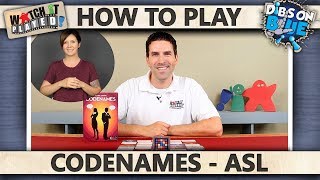















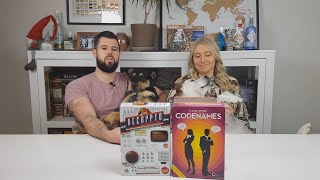





















Codenames Deep Dive
What the Community Thinks About Codenames
The board gaming community has embraced Codenames as a cornerstone party word game. Reviewers consistently praise its elegance, accessibility, and flexibility across different player groups. The consensus is remarkably strong: this is a game that works for casual families, competitive groups, and everyone in between. While some critics point to downtime concerns in larger groups, the overall reaction emphasizes Codenames as a modern classic that rewards clever thinking without requiring extensive rules knowledge. The game has spawned multiple themed editions and variants, yet the core version remains the benchmark against which word association games are measured.
Core Mechanics That Define Codenames
Word Deciphering
At its heart, Codenames is a game about linguistic creativity. One player per team, the spymaster, knows which cards belong to their team. Their job is to give a single-word clue paired with a number, signaling how many cards on the board connect to that clue. The brilliance lies in the constraint: clues must be creative enough to point teammates toward multiple cards while remaining specific enough to avoid confusion. Reviewers highlight how this forces players to think about words in novel ways, finding connections between concepts that might seem unrelated. The puzzle is not lexical but linguistic, rewarding players who understand how their teammates think and what cultural touchstones they share.
Limited Communication
Unlike most party games where chatter drives the experience, Codenames enforces silence at critical moments. Once a spymaster gives a clue, their teammates must puzzle out the connection while the opposing team watches and listens. This mechanical constraint transforms the game. The act of giving a clue requires deep analysis of which words on the board could connect to your chosen word, and which words must be avoided at all costs. The threat of the assassin, an instant loss condition, adds weight to every guess. This limitation forces thoughtfulness rather than reflexivity, making the moments when a clue lands perfectly all the more satisfying.
The Codenames Experience
Social Yet Contemplative
Codenames occupies a unique space in the party game landscape. It facilitates social interaction through discussion and debate about clues, yet it also creates moments of individual concentration. Players gather around the table to share in the intellectual challenge, but gameplay naturally includes periods where the clue-giver is thinking in silence while others wait and consider possibilities. This rhythm appeals to different social contexts. A group looking for raucous fun might generate wild guesses and laughter. A group seeking a more cerebral experience finds sophisticated wordplay and strategic precision. The game adapts to the energy level of the table rather than forcing a particular mood.
Accessible Gateway Experience
Explaining Codenames takes minutes. The rules are genuinely simple: there is a grid of words, spymasters have a key showing which words belong to their team, and each clue consists of one word plus a number. New players can jump in immediately without fear of making mistakes in complex rule execution. This accessibility makes Codenames an ideal introduction to more demanding hobby games. The mental challenge emerges naturally from the word association puzzle rather than from rule complexity. Casual gamers and hobbyists alike find something to enjoy: casual players appreciate the low barrier to entry, while experienced gamers engage in the strategic depth of crafting clues that teammates will understand but opponents will not.
What Makes Codenames Stand Out
Genius in Simplicity
The design economy of Codenames is remarkable. A 5x5 grid of word cards, a set of colored tiles, and one key card per team constitute the entire game state. No rulebook edge cases, no special powers to track, no ever-escalating complexity. Yet from this minimalist foundation emerges endless replayability and genuine strategic depth. The 200 double-sided word cards provide 400 words to work with, and each card's position on the grid creates entirely new puzzle scenarios. Reviewers consistently marvel at how much gameplay emerges from so little material. The game rewards creativity and cultural knowledge rather than mechanical mastery, making repeated plays feel fresh even after dozens of rounds.
Flexibility Across All Group Sizes
Few games genuinely work at 2 players, 4 players, 6 players, and 8+ players. Codenames does all of them. With two players, the spymaster must think more carefully about their partner's knowledge and associations. With larger groups, discussion among guessers adds a social layer. The rules remain unchanged, yet the experience shifts with player count. This flexibility means Codenames fits into any gaming night, any casual hangout, and any group composition. Players can hop in and out mid-game without confusion. Because the game has no hidden information during a round once a clue is given, newcomers can join seamlessly. This universality explains much of its success and why it remains on shelves across casual and hardcore collections alike.
Potential Drawbacks
Downtime in Larger Groups
As the player count grows, so does the time between turns. In a 12-person game split into two teams of six, a single player might wait several minutes before their turn arrives. The mandatory thinking time of the spymaster can extend this further. While the game's social nature means waiting players can discuss clues and debate past moves, some reviewers note that this downtime breaks the game's momentum. The magic happens in the moments of active clue-giving and guessing. Long stretches of observation can drain energy, particularly for players who prefer constant engagement.
Dependency on Group Knowledge and Compatibility
Codenames works best when teammates share cultural references and think similarly. A spymaster must predict how their partner will interpret words, which becomes harder with strangers or across significant generational gaps. Clues that seem obvious to one player mystify another. A clue that makes sense to an insider feels like a riddle to someone outside that reference frame. The game assumes a baseline of shared vocabulary and cultural knowledge. Additionally, some players find the competitive pressure of being spymaster stressful. The responsibility of choosing the right clue, managing risk, and reading your teammate's mind is not everyone's idea of fun.
If You Enjoy Codenames
Players drawn to Codenames's focus on clever word associations will find similar satisfaction in So Clover, a game built on similar collaborative wordplay but with a different mechanical framework. Those who love the cooperative aspect of Codenames Duet may want to explore Cross Clues, which combines word association with grid-based deduction. For players seeking the tension and deduction elements without the team structure, Just One offers a simpler, lighter alternative where one clue-giver faces off against everyone else simultaneously. Taboo and Monikers deliver similar party energy with more rapid-fire clues and laughter. Those who appreciate the strategic depth of multi-word clues should try Password, the classic game that influenced Codenames's design. The themed variants like Codenames Pictures and Codenames Disney offer the same core puzzle with different stimulus materials. Cooperative players should definitely explore Codenames Duet, which transforms the competitive game into a two-player partnership.
What Reviewers Are Saying
"I have played games of this that are raucous and wild. I have played games of this that are quiet and thinky. I have played games that are silly, I've played games that are serious, and it kind of like meets a group where they're at, and I like that about it a lot."
— Game Night Picks - Pair Of Dice Paradise
"This is one of those few games that it's a mental challenge, but it's so much of a challenge that you don't feel stupid for losing. And that's why I like it, because I mean I'm just competitive by nature, that when playing regular Codenames it's like it's not me and the other person versus the game, it's me and the other person versus another team. So if they're getting all the clues, am I stupid? Like, am I not, what am I doing wrong to not get them to guess my clues?"
— Board Games UnLocked
"Codenames is a blast. It is a thinking game and one that has a little bit of silence when you first start. When you start a round of Codenames, there's just a lot of thinking, especially by the people that have to give the clues. But having a, you know, two or three people on the other side that can discuss what the clue giver just gave you is, is, I think, the key. You want to play this with at least, I think, six people, so that you have at least two guessers on the other side."
— The Dice Tower