











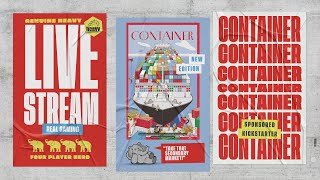


Container Deep Dive
What the Community Thinks About Container
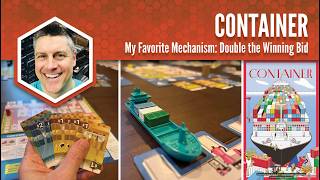
Container, the economic game designed by Franz-Benno Delonge, Thomas Ewert, and Kevin Nesbitt, has returned in a 2026 edition from Allplay, and reviewers largely agree that its long-standing reputation is earned. The shared view is that the game is clever, cutthroat, and sometimes harder to enjoy on the first play than it looks on the box. Meeple University presents the new edition as the third major release since 2007 and teaches the current standard rules, which fold the offshore bank into the default game. Where reviewers diverge is in how quickly the game clicks. The Dice Tower finds it admirable but not personally compelling, while Rolling Dice and Taking Names calls it one of the best economic games they have played and gives it a perfect score.
The strongest praise centers on the way the economy is built. Reviewers repeatedly describe a tight pool of cash that forces every bid and every price to matter. The most frequent criticism concerns the clarity of the game's rules and goals. Some players find the first session dissatisfying, and a few reviewers say that the path to victory is not obvious until they have played a few times. The Cardboard Herald and TheGameBoyGeek both describe the game as rewarding persistence, while the Dice Tower reviewers say the game can feel more heavy-handed than it needs to be.
Core Mechanics That Define Container
Auction and Bidding
Auctions are the engine that turns production into points in Container. When a ship docks at Container Island, every other player secretly bids from their hand, and the ship's owner then decides how the cargo is settled. The Dice Tower explains that the winning bidder is paid and the owner receives an additional government subsidy, while the cargo moves into the scoring zone. The owner can instead keep the cargo by paying the winning bid. Reviewers in Meeple University describe the same choice, emphasizing that delivering to the top bidder earns the owner double the winning amount. The offshore bank adds a second auction layer. Players can bid cash for containers or containers for cash, and the bidding can swing back and forth between open tiles. Because bidding in that layer is public, it creates a different kind of tension from the hidden delivery auction.
Closed Economy
Container's money supply is designed to be scarce. Reviewers consistently note that cash only grows when a delivery auction resolves. TheGameBoyGeek describes the game as a closed economy until someone runs an auction, because the government subsidy is the only time new cash enters play. Rolling Dice and Taking Names describes the same tension from the table, noting that the starting money circulates between players as they buy and sell, and that a bid can feel expensive precisely because nobody can print more. The bank's subsidy is therefore a deliberate leak, and reviewers see that leak as the moment when a player can suddenly afford to change the game. Loans offer a way to borrow against that scarcity, but as the Dice Tower reviewers note, borrowing carries a steady drag of interest.
The Container Experience
A Tense, Cutthroat Market
Reviewers describe Container as a game where every price is a bet on what your rivals need. Sellers set prices that face the buyers, so a low price can pull cargo away from a competitor while a high price may leave goods sitting unsold. TheGameBoyGeek frames this as a constant struggle between pricing wars and the efficiency of buying in bulk from a single player. The feeling is cutthroat, and Meeple University notes that the game nudges players toward offering goods that others may not want. Several reviewers say the most satisfying moments come when a rival misjudges the market and a well-timed auction collects their cargo cheaply.
A Slow Burn That Rewards Replay
The first game of Container is often a learning experience. The Dice Tower reviewers admit that they found the game obtuse at first and struggled to see when a high price would pay off. The Cardboard Herald expresses a similar view, observing that people often walk away from the first session disappointed, while those who push through discover why the game has a devoted following. Reviewers agree that the second and third games feel very different, because the market, the bidding, and the endgame all become readable. That shift is what keeps the game on tables for years.
What Makes Container Stand Out
Component Quality at a Modest Price
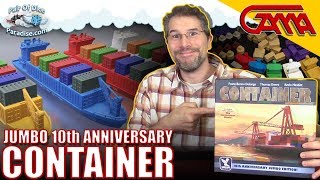
Production is one of the most consistently praised aspects of this edition. The Dice Tower highlights how neatly the game packs away and how clearly its information is laid out, with costs and pricing arranged so players can read them at a glance. Rolling Dice and Taking Names praises the plastic ships, containers, and thick money cards of the standard edition, noting that the retail price of $39.99 makes the quality remarkable. TheGameBoyGeek makes the same point about value in comparing the standard edition to the deluxe release, which adds heavy metal ships and crates for a much higher cost.
Hidden Scoring and Hidden Money
The secret scoring goal is a feature reviewers return to often. Each player holds a private card that defines which container colors are worth the most at the end of the game, and the player with the most of any one color has that color discarded. TheGameBoyGeek explains that the secrecy keeps everyone in contention, because players can see how many containers an opponent has but cannot know what those containers are worth to them. That uncertainty lets a player who seems behind still win an auction and turn the game around.
Potential Drawbacks
An Offshore Bank That Feels Bolted On
The most common concern is that the offshore bank does not fit neatly into the rest of the game. TheGameBoyGeek notes that the bank is not on the back of the box and that the box makes the rules sound far simpler than they are once the bank is added. The reviewer also argues that the bank's mechanics feel thematically disconnected, since players generate cash from auctions rather than from the goods they produce. Meeple University presents the bank as a standard part of the game, but the criticism from other channels suggests that new players may find its presence jarring.
A Hard Path to Money and a Heavy-Handed Ending
Reviewers also find the route to victory difficult to see. The Dice Tower notes that money is not easy to make, and that taking a loan is one of the most obvious ways to get cash, which leaves players feeling in debt for much of the game. The endgame rule that discards a player's most common color is the other sticking point. Rolling Dice and Taking Names calls the rule a major sticking point because it forces players to bid carefully on containers they might otherwise want. The Dice Tower reviewers describe the same rule as heavy-handed, but they also acknowledge that it creates a deliberate tension with the market.
If You Enjoy Container
Players who enjoy Container's player-set pricing and cutthroat auctions will find similar satisfaction in Power Grid, Magnate, First City, and Food Chain Magnate, which TheGameBoyGeek cites as the closest peers to Container in weight and length. TheGameBoyGeek also names Grainville as a newer economic game in the same category. Fans of the market-driven tension will recognize the feel of Isle of Skye, which Game Night Picks - Pair Of Dice Paradise compares directly to Container because both let each player set prices that others must accept or reject. The Estates is another recommendation from the same channel for players who enjoy Container's closed economy and blind auctions. The Dice Tower suggests Castle Ludwig as another game that leans on player-driven pricing.
What Reviewers Are Saying
"I think one of the big things that makes this game so good is the tight economics of this game. When you're bidding, you're like, how am I going to be able to afford a later round, but I really need these containers?"
— Rolling Dice and Taking Names
"I think that it's a very clever game that is sometimes more clever than fun, but when it's fun, man, it's fun."
— Chris Yee, The Dice Tower
"This is one of those games that hits a bit different. It feels ambitious and unconventional in ways that can be off-putting, but also exceptionally rewarding, though also situational."
— The Cardboard Herald