

Sleeping Gods box art

Sleeping Gods

Game Info
Year
2021
Players
1-4
Age
13+
Playtime
90 min
Publisher
Red Raven Games
Collection
Ratings
Expansions & Family
Mechanic profile
Percentile rank vs. all games
Vibe profile
How this game feels to play
Description

"Are the stars unfamiliar here?" she asked, and the sky grew suddenly dark, the star's patterns alien and exotic. "This is the Wandering Sea. The gods have brought you here, and you must wake them if you wish to return home."

In Sleeping Gods, you and up to 3 friends become Captain Sofi Odessa and her crew, lost in a strange world in 1929 on your steamship, the Manticore. You must work together to survive, exploring exotic islands, meeting new characters, and seeking out the totems of the gods so that you can return home.

Sleeping Gods is a campaign game. Each session can last as long as you want. When you are ready to take a break, you mark your progress on a journey log sheet, making it easy to return to the same place in the game the next time you play. You can play solo or with friends throughout your campaign. It's easy to swap players in and out at will. Your goal is to find at least fourteen totems hidden throughout the world. Like reading a book, you'll complete this journey one or two hours at a time, discovering new lands, stories, and challenges along the way.

Sleeping Gods is an atlas game. Each page of the atlas represents only a small portion of the world you can explore. When you reach the edge of a page and you want to continue in the same direction, you simply turn to a new page and sail onward.

Sleeping Gods is a storybook game. Each new location holds wild adventure, hidden treasures, and vivid characters. Your choices affect the characters and the plot of the game, and may help or hinder your chances of getting home!

Welcome to a vast world. Your journey starts now.

—description from the publisher

Ask a Rules Question
All mentions
Browse transcript mentions, sentiments, pros/cons, mechanics, topics, quotes, and references.
Total mentions: 258
This page: 8
Sentiment: pos 6 · mix 1 · neu 0 · neg 0
Mentions per page
Showing 251–258 of 258
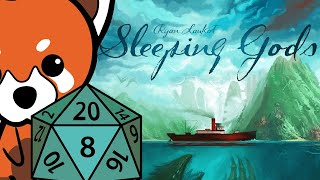
Video 9P7KXxXKyes Beyond Solitaire Review at 0:00 sentiment: mixed
Beyond Solitaire - Sleeping Gods video thumbnail
Click to watch at 0:00 · YouTube ↗
Overall sentiment (raw)
mixed
Pros
  • Gorgeous components and art
  • Engaging combat system with spatial reasoning
  • Strong potential for story-driven, cooperative play
  • Ability to carry knowledge and progress into subsequent campaigns
Cons
  • Heavy setup, token management, and game maintenance
  • Fatigue and command-token management can be tedious
  • Story elements sometimes feel thin or anemic compared to the heavy mechanics
  • Setup and teardown take a long time; not a quick pickup
Thematic elements
  • quest-driven exploration, awakening deities, alliance-building, and survival on a perilous, collaborative voyage.
  • A vast world accessed through voyage aboard a ship, exploring an atlas-like map across multiple locations as gods sleep and must be awakened.
  • story-driven, open-world with reading passages in an adventure book; multiple endings based on choices
Comparison games
Mechanics (from transcript analysis)
  • Adventure book and event cards — Progression driven by reading passages and resolving events that affect outcomes and endings.
  • Campaign — Campaigns can last many hours and progress between sessions with saved states.
  • Campaign progression and persistence — Campaigns can last many hours and progress between sessions with saved states.
  • Combat as spatial puzzle with targeted damage — Damage is allocated to specific adjacent squares; strategic choices about where to strike and potential splash damage.
  • Combat: Damage Based — Damage is allocated to specific adjacent squares; strategic choices about where to strike and potential splash damage.
  • Cooperative character management — Players manage nine crew members, assign tokens, skills, and equipment; solo play controls all characters.
  • Endings and narrative consequences — Multiple endings based on choices and outcomes throughout the campaign.
  • Explore, travel, and market actions — Explore destinations via atlas, travel between locations, visit markets for purchases to boost odds.
  • Resource and fatigue management — Characters accrue fatigue; use food and tokens to manage health, stamina, and readiness.
  • Resource Management — Characters accrue fatigue; use food and tokens to manage health, stamina, and readiness.
  • Ship actions and ship management — Turn structure uses ship locations (e.g., sickbay, bridge) for actions; damage imposes penalties and requires remedies.
  • Skill checks with symbol cards and fate deck — Skill outcomes determined by combining character symbols and fate/deck cards instead of dice.
Video topics + discussion points
No key topics recorded for this video.
Quotes (from this video)
  • this game is a massive table hog
  • the components are gorgeous the art is beautiful
  • i really want to like Sleeping Gods but it didn't quite happen for me
  • not getting enough story back out at least not for my tastes
  • it's not bad but it's not one that is going to keep me coming back again and again
  • the exploration aspect is cool
  • there are different endings to the game
References (from this video)
No references stored for this video.
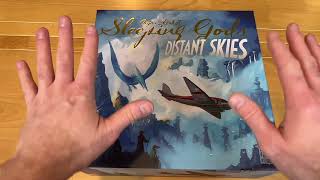
Video vQss6DO82YA Meet Me at the Table Unboxing at 0:04 sentiment: positive
Meet Me at the Table - Sleeping Gods video thumbnail
Click to watch at 0:04 · YouTube ↗
Overall sentiment (raw)
positive
Pros
  • expansive, immersive Sleeping Gods world with new exploration dynamics
  • high component quality and tactile variety of tokens, maps, and figures
  • strong replayability through multiple endings and expansive quest content
Cons
  • retains the heavy rules and learning curve of the base game
  • campaign length can be long, potentially intimidating for new players
Thematic elements
  • cooperative exploration and narrative-driven questing in a high-concept fantasy-sci-fi crossover world
  • In the Sleeping Gods universe, players fly a plane across a vast, dreamlike world of islands and stormy skies, seeking a way to return home after entering this enigmatic realm.
  • open-ended, branching adventures with multiple endings and journal-driven progression
Comparison games
  • Sleeping Gods (base game)
Mechanics (from transcript analysis)
  • adventure and quest cards — Quest cards drive the campaign and reveal locations, rewards, and potential perils; a large loot and totem system expands replayability.
  • combat with a dedicated deck — Each character engages in combat using a specific combat deck that progresses with upgrades and interactions with enemy cards.
  • Combat: Deck/Hand — Each character engages in combat using a specific combat deck that progresses with upgrades and interactions with enemy cards.
  • cooperative deck system — Characters use a shared and individual action/deck system to resolve skill checks, combat, and exploration challenges.
  • plane-based exploration — A customizable aircraft that can reach different locations on the map; fuel management and trajectory choices influence exploration options.
  • storybook and journal progression — A journal and book-like adventure structure guide players through locations and decisions, enabling a saved progression across sessions.
Video topics + discussion points
No key topics recorded for this video.
Quotes (from this video)
  • this is a super fun adventure game
  • there are six different endings
  • this one is going to be a lot shorter, about two hours
  • we're going to be back with distant skies and primeval peril
References (from this video)
No references stored for this video.
Video vQss6DO82YA Meet Me at the Table Unboxing at 0:09 sentiment: positive
Meet Me at the Table - Sleeping Gods video thumbnail
Click to watch at 0:09 · YouTube ↗
Overall sentiment (raw)
positive
Pros
  • offers a streamlined entry into the Sleeping Gods universe for 1-2 players
  • tight, engaging play sessions that still feel like a proper Sleeping Gods adventure
  • strong narrative flavor with varied hazards and encounters
Cons
  • less room for sprawling exploration compared to the main game
  • some players may prefer the breadth of the base title or Distant Skies
Thematic elements
  • adventure-driven exploration with escalating hazards and a tighter playtime window
  • Another installment in the Sleeping Gods universe, delivering a shorter, more focused experience that still threads into the same world of distant exploration.
  • campaign-style scenarios with a compact, more approachable setup
Comparison games
  • Sleeping Gods (base game)
Mechanics (from transcript analysis)
  • combat deck evolution in a shorter frame — A compact combat deck system with new cards that support shorter, more contained conflicts.
  • Combat: Deck/Hand — A compact combat deck system with new cards that support shorter, more contained conflicts.
  • expanded hazard and curse system — New hazard tiles and curses alter outcomes and challenge players with status effects and tricky decisions.
  • quest deck and loot progression — A distinct quest card set that drives shorter campaigns while still offering meaningful rewards.
  • river journey and map variety — A river-based travel mechanic that introduces fresh locations and hazards within a more compact play session.
  • save and replayability within a compact campaign — Even in a shorter module, players can replay with different routes and outcomes to experience new content.
Video topics + discussion points
No key topics recorded for this video.
Quotes (from this video)
  • this is a super fun adventure game
  • there are six different endings
  • this one is going to be a lot shorter, about two hours
  • we're going to be back with distant skies and primeval peril
References (from this video)
No references stored for this video.
Video 5ewTREX3Bp0 Board Game Hangover Top List at 2:57 sentiment: positive
Board Game Hangover - Sleeping Gods video thumbnail
Click to watch at 2:57 · YouTube ↗
Overall sentiment (raw)
positive
Pros
  • Immersive open-world feeling
  • Rich narrative potential and co-op depth
Cons
  • Campaign length can be long
  • Rules-heavy for newcomers
Thematic elements
  • Adventure, exploration, and emergent storytelling
  • Open-world exploration across a mythic oceanic archipelago
  • Open-ended, sandbox-like exploration with cooperative storytelling
Comparison games
Mechanics (from transcript analysis)
  • cooperative storytelling — Group decisions shape the narrative arc and character arcs.
  • Open-world exploration — Players freely explore locations, encounter events, and develop story outcomes.
  • Storytelling — Group decisions shape the narrative arc and character arcs.
Video topics + discussion points
No key topics recorded for this video.
Quotes (from this video)
  • it's amazing game in short you are building a zoo and not only building a zoo you're also trying to conserve the earth
  • this is my most played solo game
  • it's a very open world feeling where you can travel wherever talk with whoever have interactions there and fight monsters
  • pattern here first of all they're both in big heavy boxes second of all they both have minis and cards and a lot of stuff going on
  • let's skip the ranch and just buy Kickstarter games that look really nice
References (from this video)
No references stored for this video.
Video 0o0TZ4IoIrE Shelfies Top 10 List at 4:26 sentiment: positive
Shelfies - Sleeping Gods video thumbnail
Click to watch at 4:26 · YouTube ↗
Overall sentiment (raw)
positive
Pros
  • strong narrative depth
  • beautiful art and world-building
Cons
  • can be lengthy
  • setup can be involved
Thematic elements
  • Cooperative storytelling and exploration
  • Open-world epic in an open seas / exploration feel
Comparison games
Mechanics (from transcript analysis)
  • Campaign progression — Character/world state evolves with decisions.
  • Cooperative storytelling exploration — Players explore a sprawling map and uncover story-driven quests.
  • Storytelling — Players explore a sprawling map and uncover story-driven quests.
  • Track Advancement — Character/world state evolves with decisions.
Video topics + discussion points
No key topics recorded for this video.
Quotes (from this video)
  • we're gonna rank them and we're also gonna suggest a game that you could add to that collection
  • If you become our patreon and send us a selfie or better yet posted in our Discord Channel which is another perk that you get access to you will always be featured in our videos
  • this shelf is a quality over quantity eclipse is pretty popular here
References (from this video)
No references stored for this video.
Video zeOU5Qmd3Hg The Cardboard Herald Top List at 13:53
The Cardboard Herald - Sleeping Gods video thumbnail
Click to watch at 13:53 · YouTube ↗
Pros
none
Cons
none
Thematic elements
  • narrative exploration and campaign progression
  • open-world fantasy voyage
Comparison games
none
Mechanics (from transcript analysis)
  • campaign / exploration open-world — players explore a vast map, make story-driven choices, and progress through a campaign
Video topics + discussion points
No key topics recorded for this video.
Quotes (from this video)
  • number 10 pallet swapped illustrations
  • palette swaps of one color to another
  • sexy but space wasting insert
  • it's just demeaning
  • big floppy rulebooks
  • overly homogenized or equitable values
  • implicit rather than explicit rules or really just not having clearly defined rules in your freaking rule book
  • squared corners on cards
  • lack of color blind accessibility options
  • once someone puts six stars out then their turn is the last turn and there's no ability for anyone else to recover from that
References (from this video)
No references stored for this video.
Video lwP1yKQoByQ Board Game Hangover Discussion at 4:17 sentiment: positive
Board Game Hangover - Sleeping Gods video thumbnail
Click to watch at 4:17 · YouTube ↗
Overall sentiment (raw)
positive
Pros
  • Engaging story and twists
  • Family-friendly with kid-friendly appeal when guided
Cons
  • Heavy rules and longer playtime
  • Requires commitment for full experience
Thematic elements
  • narrative-driven exploration with choices and twists
  • Mythic, open-world nautical exploration
  • story-rich, campaign-driven
Comparison games
none
Mechanics (from transcript analysis)
  • Cooperative/story-based decision making — Players collaboratively navigate a shared campaign world.
  • Narrative exploration — Story-driven exploration with choices that influence outcomes.
Video topics + discussion points
No key topics recorded for this video.
Quotes (from this video)
  • not all board games are perfect for all situations but some are
  • we're all on the same submarine and we're all trying to get treasure as much as possible
  • it's a very simple dice rolling treasure collecting game
  • it's the perfect pick for this task
  • Quacks of Kwellingberg is basically a bag building game or pool building the game
  • it's not fully luck based i mean people listening oh it's just fully locked based or what are you suggesting no it isn't
  • deep sea adventure small box not a party game
  • canopy this could be perfect fit for both of you
  • my husband only wants to play romicoop i think i'm doomed
References (from this video)
No references stored for this video.
Video lwP1yKQoByQ Board Game Hangover Discussion at 4:20 sentiment: positive
Board Game Hangover - Sleeping Gods video thumbnail
Click to watch at 4:20 · YouTube ↗
Overall sentiment (raw)
positive
Pros
  • Story-driven experience with twists
  • Appeals to players who enjoy narrative campaigns
Cons
  • Heavy rules and long playtime
Thematic elements
  • open-world narrative with choices
  • Sea-faring, mythic exploration
Comparison games
none
Mechanics (from transcript analysis)
  • Narrative exploration — Story-driven exploration with player decisions guiding the voyage.
Video topics + discussion points
No key topics recorded for this video.
Quotes (from this video)
  • not all board games are perfect for all situations but some are
  • we're all on the same submarine and we're all trying to get treasure as much as possible
  • it's a very simple dice rolling treasure collecting game
  • it's the perfect pick for this task
  • Quacks of Kwellingberg is basically a bag building game or pool building the game
  • it's not fully luck based i mean people listening oh it's just fully locked based or what are you suggesting no it isn't
  • deep sea adventure small box not a party game
  • canopy this could be perfect fit for both of you
  • my husband only wants to play romicoop i think i'm doomed
References (from this video)
No references stored for this video.
Transcript Navigation
Showing 251–258 of 258
Game Deep Dive