

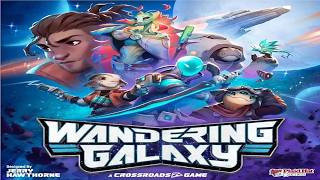

















Wandering Galaxy: A Crossroads Game Deep Dive
What the Community Thinks About Wandering Galaxy: A Crossroads Game
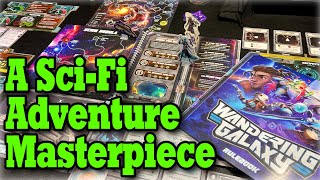
Wandering Galaxy has earned overwhelming praise from the board gaming community as perhaps the strongest entry in Plaid Hat Games' Crossroads series. Reviewers consistently celebrate the game as a masterpiece that successfully blends narrative depth with meaningful mechanical complexity. The Dungeon Dive's Daniel calls it a standout experience, while The Hungry Gamer awarded it 2025 Game of the Year honors. Even reviewers who found minor friction with setup complexity recognize Wandering Galaxy as a triumph of design. TheGameBoyGeek and The Dice Tower both highlight exceptional voice acting and comedy writing that elevates the entire narrative experience. While some express that the game's six ship stations create table management overhead, this concern does not diminish widespread recognition of the game's quality and replayability.
Core Mechanics That Define Wandering Galaxy: A Crossroads Game
Worker Placement and Multi-Role Ship Management
Wandering Galaxy organizes its gameplay around a crew commanding six specialized stations aboard the ship: Operations, Navigation, Logistics, Engineering, Science, and Security. Players place character standees on action spaces at locations throughout the galaxy, with each placement taking roughly 45 seconds under a timed pressure phase. This worker placement foundation forces meaningful choice, as single-capacity spaces limit where other players can go, directly denying opponents resources or information. Designer Jerry Hawthorne's approach makes each station feel active rather than passive. Navigation tracks waypoints and the galactic struggle state; Logistics manages supplies and cargo; Engineering monitors power and hull integrity; Science researches discoveries; Security manages weapons and combat. When players visit locations in the spiral-bound location book, they resolve actions from top to bottom and then turn to the app to enter numbered codes that trigger narrative consequences and encounters.
Card-Based Skill Checks and Deck Building
Rather than rolling dice, players flip three cards from their personal skill deck to resolve checks, counting symbols that match the challenge at hand. Each species starts with an asymmetric deck reflecting their abilities. As the game progresses, players acquire new cards to add to their deck from a card catalog organized by number, creating a light deck-building layer. Status cards like "Stressed" or "Inspired" get shuffled in, with Inspired cards providing bonuses and drawing an extra card, while Stressed cards muddy future draws. This system lets players mitigate bad draws by spending perk tokens, requesting help from fellow players (which gives them stress cards in return, creating meaningful cooperation), or acquiring better cards through gameplay. The mechanic shifts the emotional arc: rather than a dice roll crushing you, you constantly have agency to improve your odds, and helping teammates carry a cost that creates interesting trade-offs.
The Wandering Galaxy: A Crossroads Game Experience
Blue-Collar Space Adventure and Sandbox Freedom
Wandering Galaxy captures the feeling of being part of a scrappy spacer crew trying to survive and pay off debt in an indifferent galaxy. Unlike hero-centered adventures, you are not saving the universe; you are taking whatever jobs you can find to make profit and stay alive. This blue-collar framing makes every mission feel grounded and personal. The game operates as an open-world sandbox where players choose which jobs to pursue, which locations to visit, and which factions to align with or antagonize. Multiple campaigns branch in different directions, and players can ignore main story missions entirely to chase side quests. This freedom means each playthrough emerges differently. The Dice Tower notes that players can completely reshape their journey by choosing who to travel with, which jobs to prioritize, and which encounters to seek out. The sense that the galaxy is truly vast and explorable permeates every session.
Hilarity and Emotional Resonance Through Narrative
Reviewers consistently praise the writing as the game's beating heart. The voice acting is performed by professional actors, delivering comedy that lands reliably without feeling forced. The Dice Tower crew calls it the best voice acting and comedy writing in any board game. TheGameBoyGeek notes that the narration is so good it "ruins the entire genre" for them, making text-only story games feel lifeless by comparison. The comedy pops through absurdist humor, character quirks, and situational bits that grow richer on repeat plays. Simultaneously, reviewers report surprising emotional moments that catch them off guard; the narrative shifts tone unexpectedly, grounding the humor with genuine stakes. The Hungry Gamer describes it as an entertaining mashup of Star Wars and space piracy with an entertaining, hilarious mashup that feels brilliantly written. Every playthrough yields new laughs and new reasons to return.
What Makes Wandering Galaxy: A Crossroads Game Stand Out
Exceptional App Integration That Enhances, Not Dominates
Many cooperative games with apps suffer from players staring at screens. Wandering Galaxy solves this by using the app sparingly and brilliantly. Players interact with it only to enter location codes and read brief narrative passages, each taking seconds. The Operations player holds the device and reads aloud or lets the app's excellent voice actors do the honors. The app acts as a deck of hundreds of complex encounters, a tutorial system that teaches the game gracefully, and a narrative narrator that manages branching choices. One reviewer noted that the app is used so minimally that the complaint about "staring at screens all day" simply does not apply. Players spend most of their time with the physical components, making tactical decisions, building their character, and planning the next move. The optional physical book alternative exists but reviewers universally prefer the app experience because the voice acting transforms flavor text into genuine performance.
Staggering Replayability and Content Depth
Wandering Galaxy ships with multiple campaigns, each spanning four scenarios, plus standalone exploration modes. Within each scenario lies dozens of possible jobs, discoveries, and encounters. The Dungeon Dive emphasizes that even after completing multiple full campaigns, they have barely scratched the surface of available content. Random encounters and player choices ensure no two playthroughs follow the same path. Jobs have multiple solutions and outcomes. Locations have persistent jobs available only in that zone. The game supports solo play seamlessly through apprentice companions that allow one player to control multiple ship roles. It plays equally well from two to six players, scaling gracefully. Reviewers report playing it multiple times and still discovering new narrative branches, new skill cards, new ship upgrades, and new enemies they have never encountered. The combination of narrative branching and mechanical variety creates genuine long-term engagement.
Potential Drawbacks
Significant Setup Overhead and Table Space Requirements
Wandering Galaxy demands substantial setup time and table real estate. The initial card organization takes roughly 20 minutes, and every session requires laying out six individual ship station boards, the location book, the galaxy map, various token pools, and player character sheets. Reviewers playing solo note that controlling all six stations creates a jumbled appearance on the table, making it difficult to organize everything neatly. The Dice Tower mentions needing a full 3x4 table to accommodate everything comfortably. The Dungeon Dive cites setup friction as the only thing that discourages regular replay, despite loving the game deeply. A player must commit to this overhead before the fun begins. While not making the game worse mechanically, this friction represents real friction for some players with limited table space or a preference for rapid setup games.
Mechanical Complexity and Front-Loaded Learning
Wandering Galaxy is the most mechanically complex of the three Crossroads games. Six different ship stations, each with unique tracking and actions; multiple resource currencies (supplies, power, life support, cargo); a card catalog system requiring consistent lookup by number; and dozens of optional mechanics (discovered technologies, ship upgrades, faction relationships, docking violations) create an initially intimidating ruleset. The Dice Tower notes that while the app tutorial teaches most concepts gracefully, there remains a chunk of setup learning that delays entry into the narrative. A player watching the tutorial might feel tempted to skip ahead to the "fun story moments." Some players reported that this complexity deterred their families from wanting to replay it, whereas the lighter Freelancers got everyone excited to return. The game handles this better than most through excellent app guidance, but the cognitive load at the table is real.
If You Enjoy Wandering Galaxy: A Crossroads Game
Players who embrace Wandering Galaxy's blue-collar space adventure will find kindred spirits in Star Wars: Outer Rim, which shares the debt-payoff and spacer hustle feeling. Those drawn to the deck-building and personal character progression mechanics should explore Xia: Legends of the Drift System and Space Aces, both offering similar spacer career arcs. For the cooperative narrative structure with app integration, Forgotten Waters and Freelancers are the natural predecessors in Plaid Hat's Crossroads line, offering lighter alternatives with the same voice acting excellence. Firefly and Spacers capture the same scrappy-crew-in-space vibe. If the open-world sandbox and freedom appeal most, Spark Riders 3000 offers comparable mechanical depth with less app dependence. For players who love the app-driven narrative without the space theme, Arkham Horror provides cooperative mystery-solving with similar digital storytelling. And for those seeking card-based skill checks in a narrative game, Familiar Tales delivers a lighter touch on the same mechanical foundation.
What Reviewers Are Saying
"I'll go even farther. I think this is the best voice acting period for any game. And it's definitely the best comedy writing of any board game. It's not stupid, but it doesn't feel badly written."
— The Dice Tower
"This game is an absolute masterpiece. I would be shocked if this game wasn't on my top 10. I would probably bet right now that this will end up being my game of the year. It is such a game for me. It just feels like it's a game tailor-made for the Dungeon Dive."
— The Dungeon Dive
"After playing these games, it doesn't feel as good if you read text, even if it's good writing. The voice actors are so good, and it really brings you in. So I love that about this game, and it kind of ruins the entire genre for me that doesn't do this."
— TheGameBoyGeek