Board Game Design: How board games give FEEDBACK to players.
Games in This Video
9 games are featured in this video — they unlock as you watch.



Transcript
many board game players love highly interactive games they want their moves to be impactful on the other players around the table a highly interactive game might feature negotiation between players competition bluffing blocking attacking and defending but what if we reframe this can a game be interactive without pitting player versus player feedback describes a player's interaction with the game itself i talk to the game and the game talks back
i'm adam porter i design games and i review games on this channel with a particular slant on product design in my reviews i frequently refer to feedback as one of the key features i'm looking for in a board game but what do i mean by feedback and how do we incorporate it into our games when product designers talk about feedback they're talking about every interaction a user has with a product and specifically how the product communicates the outcome of an action taken by the user these interactions between user and product go a long way towards determining the product's identity for many electronic products this feedback comes in the form of sounds vibration lights visuals and displayed text the user presses a button the trigger and the product offers up a response it acknowledges the user's input and guides them towards the outcome the feedback tells the user you've done it right do that more or perhaps you've done it wrong don't do that again it shows the user where they are in the process and teaches them whether any given action is valuable or not board games may not be awash with led lights and rumble packs but nonetheless they're at their best when they engage with us the players for the purposes of this video i'm ignoring modern app-driven board games games like chronicles of crime of course offer up all the bells and whistles of a digital product auditory visual and haptic feedback all come easily to app driven
games but more traditional titles have to work a little bit harder to reassure their players that they're listening video games abandoned instruction manuals in the early 2000s instead opting to teach users the skills necessary to progress through in-game feedback offered up while you play board games struggle to adopt a similar approach generally they come with hefty rule books but some designers have experimented with video game inspired in-game tutorials regardless there's no doubt that in-game feedback is an incredibly powerful aid which helps players to master a game we can classify feedback in a variety of different ways intrinsic or extrinsic immediate sporadic or delayed positive neutral or negative feedback could be intrinsic or extrinsic so extrinsic feedback might consist of praise or criticism a pat on the back or a kick up the backside the accumulation of victory points is extrinsic feedback the game is telling you that you've played well intrinsic feedback on the other hand is something that you feel a physical sensation the wobbling of a tower in bandu provides intrinsic feedback as does a well executed flick of a disc in pitch out overcoming a physical challenge is uniquely rewarding a high which is hard to achieve in a more strategic intellectual game some other very satisfying moments of intrinsic feedback in games include the clicking together of the magnets when
the mummy catches a treasure hunter in pyramid of penguin or dropping dice into a tube causing it to teeter precariously and kip mia saurez or even something as simple as snapping open a popper to indicate that you're calling a player's bluff in sheriff of nottingham all offer up a brief tactile sensation which reinforces the significance of the action more commonly in board games the impact of feedback is going to be emotional rather than physical you feel that your turns are getting better and better it's immediately apparent that you're achieving more on every subsequent turn the most common feedback in tabletop games is the allocation of rewards for certain actions the simplest example would be awarding victory points for completion of a task the victory points don't impact on the game in any way they just accumulate and then they're totaled at game end to determine the winner the more immediate the feedback the more rewarding an action feels if i receive victory points consistently as the game progresses perhaps watching my little pile of point tokens piling up or advancing ahead of the other players on the score track well that's much more engaging than waiting for game end to calculate my score ticket to ride finds a nice balance between immediate and delayed feedback upon completion of a route the player immediately advances a number of spaces on the score track dependent on the length of the route but players also work towards more challenging objectives building a chain of routes to connect two destinations this scoring isn't revealed to the other
players until game end but it's not truly delayed feedback because the player who completed the ticket knows that these points are in the bag there is a small element of delayed feedback in the game though because players are going to lose points at the end of the game for any uncompleted destination tickets left in their hand ticket to ride would work just the same if players totaled up all of their points from routes and tickets at the end of the game rather than marking them on the track as they go along so why has the designer alan moon decided to award feedback continuously and cumulatively rather than relying on end game or terminal feedback i would guess that he wanted to reassure players that they're achieving something and to enhance the sense of competition between those players these are key features which keep people engaged bunny kingdom likewise offers up a mix of immediate sporadic and delayed feedback the immediate feedback in the game is pretty slight you occasionally pick up a provisions card which allows you to draw two random cards and play them immediately or perhaps you play exactly the card you need to connect two separate bunny communities into one massive kingdom at four points during the game players stop to record their scores from the current board state and at the end of the game the final scores are elevated massively by the revelation of completed objective cards this delayed feedback provides the big payoff and you can never be sure of victory until you see what your opponents have been working on tabletop games occasionally offer up preemptive feedback in living forest fire accumulates throughout the round players can choose
to put it out or let it burn but if nobody extinguishes the flames players are going to have to add punishing fire demons to their decks at the end of the round this game offers the information in advance and the players choose whether to deal with it or not robinson crusoe is a cooperative game famous for its ingenious storytelling mechanism when you draw a card you're presented with a choice do you want to address it now and deal with the immediate consequences or do you want to evade it and shuffle it back into the deck knowing that it's going to re-emerge later in the game with potentially even more devastating results in dominant species a series of events are laid out on the board they'll all take effect at some point but the players have plenty of time to prepare for them with regards to immediacy of feedback dominant species is an interesting case it's a worker placement game that's to say on your turn you place an action pawn of your own colour onto an action space locking in that action for you and you alone no other player can use that action space while it's occupied by your pawn the original game has a significant delay between the trigger that's placed in the action pawn and the outcome which is receiving the benefit of the space only when all the action pawns belonging to every player have been placed do you take your actions in order from the top of the board to the bottom dominant species has a sequel in the standalone game dominant species marine in this version when you place an action pawn you immediately gain the benefit of the action space this stark contrast between delayed and immediate feedback is the defining distinction between the
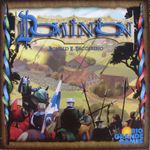
two games the original game feels like a programming game you lay out your plan fully aware that it might be disrupted by the actions of other players before you ever actually get to carry it out the later version is snappier with players able to react rapidly to the changing game state the continuous accumulation of victory points gives a sense of growth or momentum to a tabletop game but cumulative feedback can be richer if it allows a player to develop their in-game avatar resources or tableau in many games rather than receiving victory points when you take an action players receive a new resource objective or ability throughout the game the player develops and adapts to the dynamic game state game designers frequently talk about positive and negative feedback loops you may have heard the terms snowballing or rich get richer that's the effect of positive feedback the more success you have in the game the more powerful you become perhaps you've heard of rubber banding this is a term describing negative feedback the further you get ahead the more the game pulls you back in dominion the more money i have the better cards i can purchase and the better cards i have the more money i can generate hence allowing me to purchase even better cards and generate even more money and the momentum builds until i trigger the in-game criteria and win that's the flow of an engine building game and it can be disheartening for the players who were left behind never able to catch up it's a positive feedback loop unfortunately dominion inventor
donald x vacarino recognized this potential flaw in his design and he mitigated it the way you win in dominion is by purchasing victory point cards but these cards don't provide you with any actions so the more points you have the fewer actions are likely to be available to you on any of your turns which slows down your progress this is negative feedback it gives the other players a chance to catch up growth and development through cumulative feedback doesn't have to be positive or negative it could be neutral in evolution each player controls various species of animal represented by a tableau of cards and throughout the game the player adapts their species with cards drawn from the deck this doesn't necessarily make the creature more powerful in this game strength is only meaningful in reference to the tableau of another player rather than allowing players to become stronger or weaker the game offers players an opportunity to become different and each player needs to make a value judgment on whether that difference is desirable or undesirable based on the current game state all of the feedback discussed so far has focused on gameplay mechanisms the outcome of an in-game choice might score your victory points or otherwise enhance your powers available actions and progress towards victory but some forms of feedback are not of strategic or tactical importance they're there to drive a narrative if i open a door in star wars imperial assault and the pre-written scenario tells me that darth vader is revealed in a corridor littered with slain rebels that feedback is
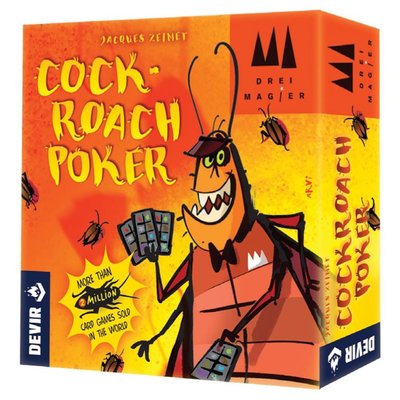
primarily there to drive the story forward in carter ventura every card presents a decision either a direction of travel or a key decision to make regarding the player's narrative choices flipping the card or revealing a new one from the deck allows you to discover the next portion of the tale in cooperative games the group works together to overcome an objective save people from a burning building in flashpoint fire rescue in the absence of a human opponent these games offer up tons of feedback through randomizers dice rolls card draws every action taken by the player has a reaction generated by the game we talk to the game and the game talks back some strategic titles get slated by gamers for their lack of interaction the phrase multiplayer solitaire gets thrown about a lot these critics can't understand how other players could be engaged by such a game but often these games are full of interaction it just happens between the player and the game rather than between the players themselves equally criticism is frequently aimed at games with a lot of human interaction but little in-game feedback these titles are often accused of being activities rather than games cockroach poker from dry maggie espio is one such product the goal of the game is to lie and to do it convincingly the feedback on the quality of the lie is determined by the other players not the game it's a little package rammed full of human interaction and it is incredibly fun the little feedback that the game itself offers is in the form of
cards which are collected in front of players when they fail the cards are a punishment a sort of extrinsic feedback it's immediate cumulative and continuous and it has no impact on your later performances so the feedback can't be said to be positive or negative accumulating cards is a visual representation of your poor performance this is a rare example of a game where one player loses and everybody else wins the game doubles down on the negative impact of collecting cards by making them all look a little bit icky each card is illustrated with a really creepy little bug drawing for my part i can happily manage without human interaction in the game if the game itself offers me enough feedback and likewise very happy to play a game without much feedback so long as the human interaction is plentiful activity or game that's all the same to me i want to feel like i'm achieving something when i play i want a game to reassure me guide me and challenge me i want it to react to my decisions i want to know that the game is listening if you enjoyed this video please go back and watch one of the many other videos i've made about games and product design let me know in the comments which games you've played which offer great feedback and don't forget to subscribe so you'll be notified of future videos like this until next time all the best