Reimagined Retro Board Game Classics - Monopoly




Transcript
Miniature Market has thousands of board games at discounted prices. Click the direct link below to see all those discounted games. Hello my friends, it's the Game Boy Geek here. Today we are continuing this series called re-imagined retro board game classics where we look at all these classic board games and we look at how those mechanisms of those board games have inspired newer, more modern games. And we've so far we've looked at uh Connect 4, we've looked at uh Strateggo, we've looked at Bingo. Today we're going to be taking a look at Monopoly, a very uh polarizing game. Uh and so uh I invite you to sit back, relax, and if you want to see those other ones, there's a playlist of this on my YouTube channel. You can check that to see all these nice reimagined classics. So here we go. All right. All right. So, for Monopoly, first I want to state that I have already done a video about how uh Monopoly is one of the most uh unfairly judged games. Uh it's an old game and it it's still there's still parts of that game that hold up well. I actually did a video where because most people don't play the game with the right rules, they have their own uh they have their own house rules like adding money to free parking and this and that, making it harder to bankrupt people, which is the whole name of the game, which is why the games last too long. In fact, tournament games never last longer than 90 minutes.
And if it does, it stops and whoever has the most money wins because it should never go past 90 minutes. 60 minutes is normal for people that know what they're doing with Monopoly and playing by the right rules. So, I actually did a a video where I played Monopoly with the actual right rules with my gaming group, people that like their gamer enthusiasts, and they all had a different perspective on Monopoly. They all enjoyed it more than they ever had in the past. And it's something that they said, "Yeah, I enjoyed this and I would play it again." Are there better things out there these days? Sure. but it doesn't get it doesn't shouldn't get the rap that it does, the bad rap if people just played the game correctly or or by the rules I should say. Uh so I have a video about that that uh I'll put a link to that up there in the corner. You can click that and check that out. It's really interesting to talk about all the different things of what makes the game what it is. Now with that being said, let's talk a little bit about the history of Monopoly. Um now the history of Monopoly can be traced back to 1903 when an American uh anti- monopouist Lizzie Maggie created the game called the landlord's game. Now, she hoped it would explain the single tax theory of Henry George as laid out in his book, Progress and Poverty. Now, it was intended as an educational tool to illustrate the negative aspects of concentrating land in private monopolies. Now, she took out a a patent in 1904, and her game was self-published beginning in 1906. But then many years later, Charles Daro was shown this landlord's game after dinner one night and asked them for a written set of the rules. Now, after that night, Daro went to utilize uh it to distribute the game
himself as Monopoly. Now, there's actually there was like a Netflix special about the games that made us and such like that. And there was a whole story about this thing. It was really good. I think it was an hour long. Now, Parker Brothers bought the game's copyright from Daro. And when the company learned that Darl was not the sole inventor of the game, it bought the rights to Maggie's patent for $500 at the time. So, at least Maggie got the money back in then. That was a lot of money, but at least she got credit for it eventually. Now, Parker Brothers first published Monopoly in 1935 and it was eventually absorbed into Hasbro in 1991. So, let's start talking about some of the games that are like Monopoly in the modern sense. Now, the first few games I'm going to talk about are purely negotiation games because Monopoly at the heart is it's called the property trading game. It's it's all about trading and dealing and negotiations.
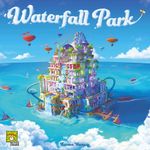
This first one is called Waterfall Park. Now, one of the things about this it's very different from Monopoly is it's even a lot shorter. The game says 45 minutes, but really it only takes about 30 minutes to play this game. It's pretty quick. Now, in this game, you're creating a waterfall park. You're creating contiguous groups of places in your waterfall park like bowling alleys and carousels and clown areas and things like that. Now, you're getting location number cards each round and you're getting location tile types like those bowling alleys, carousels, and things like that. Now, then it's all completely open negotiation. Everybody can see everything. You can see everyone's cards. You can see everyone's tiles. And it's all open negotiation for numbers and cards. So, you're you're negotiating. Hey, I'd like that card. What do you want for it? Oh, you want these two tiles? Okay. Well, so you're always trading numbers and cards. Uh, sorry, number cards and tiles. But you can also trade spots owned on the board.
You can say, "Hey, you know what? You want that number 13 slot that I have? I'll trade you that slot, but I want that number card location, and I want um, you know, these two tiles." And and so there's a lot those are the three things you can change with locations, numbered locations that you can now build on, or tiles themselves. And so it's just pure open negotiation. There's like no other mechanisms. Get things, spend money. And at the end of the round, you're getting money depending on how how big of sets you've made of each of the things. If you create a full set, like I think like five bowling alleys, you max it out. You're trying to max out everything to its largest size that only you own those things in one big contiguous group and you're going to be getting money whoever has the most money in the end. So, it's pure negotiation. Uh if you like the negotiation aspect, this is about as pure and streamlined as a negotiation game as you can find out there Waterfall Park. Now, this next negotiation game is one of my favorites of all time. It's a lot larger of a game. game does take about 90 minutes, sometimes two hours. It's called Lords of Vegas. Uh this is a fantastic game where you feel like you're in Vegas back in the I think it's like the 50s and 60s when it's really being built up because in this game it's an economic game uh as well, but you're it's a lot of negotiation where you're basically building different casinos and you're trying to expand those casinos and you're trying to buy empty lots. You're trying to buy casinos. You're trying to sometimes take over other people's casinos by re-rolling dice and reorganizing. you're trying to build this nice casino next to someone, then reorganize it and remodel it so that it looks like someone else's, then you basically merge them together. Uh the there's a lot of negotiation as to which
lots, hey, you own that lot, I own this lot, let's trade or no, you trade, give me this much money. Uh so there's a lot of negotiation as to like which casinos yours, which ones could be yours, which lots could be yours, where you could build. So the game is very heavily negotiated and in the rules it says open negotiation. Anything goes, you could trade anything for anything. Um, and so again, another hugely open negotiation game, but with a good economic set behind it where you're trying to build the biggest casinos, get paid out, but closer to your strip you are, every round, a certain casino is going to get paid out, and whoever is the the the master of that casino gets money, which is going to allow you to build expand that and build other casinos and buy more lots and things like that. So, it's very interesting because you are building up basically parts of the city like Monopoly. You're you're expanding in in different areas. You're trying to take over the people's. So, it has a lot of things to do with Monopoly, but it's one of my favorites of all time, Lords of Vegas. Now, this next one is called Corporate America. Here's a one minute overview of how this one works.
Corporate America is a negotiation game for three to six players where you'll be going through Wall Street and starting businesses and go on to Main Street and hopefully have consumers consume things that make you money. Then, you go on a campaign trail, run for president, maybe become president, and continue this a few times, putting in laws and sufficing protests throughout the game. Businesses come with a certain cost, but will make you a certain amount of money anytime those things are consumed. And they all have nice fun uh taglines, names, and icons. And when it's time to consume, hopefully the people consume what your businesses have. If not, people can negotiate to bring other cards out for specific amounts of money, and players can work together and give each other money to help each other out. But sometime protests might come out. And when the player becomes president, you'll have to invoke certain laws that help get rid of protests. You'll also be running for president, telling people which laws you'd enact when you became president. And if you get enough bids, then you'll be able to get a powerful card. And you go through this a few times. The one with the most money is the winner. Yeah, Corporate America came out a while back, but then it was reissued as the Gilded Edition, which is like a more streamlined version of the game. And again, yes, this game is pretty much pure negotiation and econ and e economics just like Monopoly is.
And again, you're you're getting those businesses. You're trying to find synergies. You're trying to get businesses that other players have because you guys kind of want to work together and and and kind of try to manipulate which industries are being paid out that round. And if you're in an industry somebody else is, well, you can tally your money to make another card get pulled. Oh crap, that other industry got paid. That person's going to make a lot of money. let's you and I pull our money together to get another card to be pulled. And it's funny because the person that's doing it has to spend money. Like they might have to spend $6 to pull another card. And you're like, "We want you to pull another card. We'll even pay for it." And the guy's like, "No, you know what? Not only going to pay for it, but you're going to pay me double. You're going to pay me $12 to flip this card. I'm going to take six of that and flip it, and I'm going to pocket the other six." And you're like, "No." And it's the open negotiation in this game is awesome. the the uh you know the the temporary alliances with the other players as you're trying to figure out how to get things going and then all the not to mention all the different aspects of who's going to be president and what are you going to do and what laws are you going to enact and what laws you going to remove that help different industries great negotiation game corporate America the next one is a classic game from the late great gfather of game design Sid Saxon one of the best game designers ever called the boss here's a one minute overview of how that works in this game it's pure negotiation You're trying to have the most money.
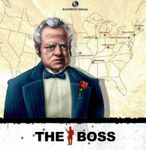
Each round, one person's the boss and there's an investment that has come up and you're trying to split up who is in this investment with you and you need certain people, certain people with certain skills and everyone has one of those skills and you're trying to get the right people to join in here and you're saying, "Hey, the payout is going to be X. You know what? Uh, I'll give I'll give these three people this amount. I'll give these two people this amount." Sometimes you could be more than one person and you're trying to negotiate who to cut in the deal. But also it's ruthless because you're trying to cut out people from deals as well. You're holding on grudges from earlier deals. But the also there's a handful of cards and these cards can do all different things. You can take over a deal. You can become a different type of investor so you can get into a different deal without other people seeing it. You could see a someone get sort of stalled out and you could or someone says, "Oh yeah, I'll take that." And they go, "Hold on a second. I could be that person, too. You didn't know I had this card in my hand. Why don't you cut me in this and cut him out? I'll take less than him." Sometimes you can play the I'm the boss card and actually take over the whole entire deal. You're like, "Oh, you didn't want to cut me in? Tough. I'm the boss now." And you're cut out. It is a ruthless negotiation game. It'll cause lots of fun, lots of laughter, lots of name calling. Uh but is a great simple negotiation game. I'm the boss. Now, I'm going to go to a couple of games that are more about cityb building and economics than negotiation. Uh this first one is called Acquire. Another one designed by the same late great Sid Saxon that did On the Boss. Acquire it came out in 1964. Let me give you a one minute overview of how this one works.
Acquire is a classic game of real estate by Sid Saxon for two to six players where you are real estate tycoons trying to invest in hotel chains. You'll be forming one of these hotel chains and gaining stock from those. And you'll be doing so by taking secret tiles of yours and placing them onto a common board that everyone's playing on. And during an acquisition, those with stocks from the smaller hotel chain get payouts, and they have different choices of what they can do with the stock. You're trying to balance your short-term cash, trying to get acquired, and then investing into bigger companies, and you're trying to make sure that some of your biggest investments are large enough that they'll never be acquired. So, let's see if you have what it takes to have the most money as a shrewd investor in the end. This new version of the game allows you to play the classic rules or the more forgiving tycoon mode. Great for firsttime players, and it brings back the functionality of the original 1964 board, but in a much more legible fashion. Yeah. And there's also been a new edition that came out in 2023. And then last year in 2024, there was a 60th anniversary edition that has come out.
And Acquire is just one of those great games. It's Monopolyesque because it's very economic. You're building buildings, hotel chains. You're adding to hotel chains, but it's not just your own. You're adding to a hotel chain that other people have added to and you're kind of working together with other people and you and you're making that more valuable and you're trying to find the right time to buy shares into something that then you're going to be able to add to and make more valuable. So then you can get it bought by other other uh mergers and make that money back. and you're constantly trying to make sure you have enough cash to be able to buy things, but you also want to be in the largest one or two uh hotel chains at the end to have a really good chance of winning. So, it's this constant mix of like I want to be in this with stock. I want to purposely get bought up by someone else to give me an influx of cash to buy stocks of ones I think are going to be in the long term.
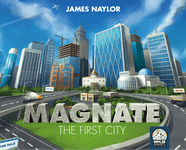
And it's a lot of it's got a scrabble feeling because you're taking these tiles and you're placing them on the board. You're trying to make contiguous feelings, contiguous things of these hotels and find the right time to merge them together, working with other players. Great economic game that feels Monopolyesque because essentially that's what you're doing with these hotel changes. You're kind of making them larger and larger and eating up other ones. So, Acquire is a great one. Now, the last one on this list is was game of the year for me when it came out called Magnate the First City. Here's a one minute overview of this one. Magnate the First City is an economic citybuilding game where you're trying to have the most money in the win. You keep it hidden in the envelope here and has a really cool first player marker that truck. So in this game, you're going to be buying land, buying buildings, attracting tenants, making money, selling buildings, and doing it over again and trying to time the market right. And there's all sorts of different tenants to attract in different segments like commercial for law firms and call centers or residential, retail, or industry. And they give you different amount of money for rent, but they also help influence other types of buildings that are close to it. And it's all very thematic.
But then building a big apartment building attracts some professional couple which actually will help out retail because they want to shop close by. Everything is interconnected. But each round depending on what's been happening in the economy, you might be moving the crash track down. And if this ever gets to zero, well, the game will end and there's a big crash. Are you trying to find the right time to sell things before the crash ends? Yeah, this one's also very much monopoly like because there's a grid of land and you're going to be buying the land up. you're going to be building different things on there. You know, Monopoly, it's just hotels or or houses. And here, it's like residential, you know, it's a part, it's it's a house, it's a duplex, it's an apartment, uh or it's a commercial, it's a whole shopping mall, it's industrial, right? There's different there's different industries that you're doing it with. And every one of those industries ties with everything else. And certain things are easier to get tenants. The people want to be next to shops and things like that. And so, but the the shops also need to be next to industrial stuff to get to get to get goods and such. And it's very interesting, uh, you know, how like, hey, the homes want to be next to woods and you'll be able to sell it for more if it's in a good area and if it's attached to this other thing and you want certain things next to other things. And it's this board where you're you're you're playing off of other players as well. You're not just you're building your own buildings and and running your own cash and running your own business, but you're also very much heavily influenced by what other people build, where they build it. Are they building it next to you or are they building something over that? And you want to get in with them and get the benefits of being next to that type of building that somebody else built. But then it's all about the the crash and when when is the bubble gonna burst and when do you need to sell everything off
at the end. It's very very interesting, but it does have that monopoly feel of building up an empire, running a business, getting tenants, getting rent, and then buying the bigger things. So this is a fantastic one. Magnate the first city. Well, I hope this video has helped you understand a little bit more about Monopoly. I hope you went back and watched my video about h how we played Monopoly the correct way and everyone actually really enjoyed it. I highly recommend you to watch that video and do that yourself and I hope that you've found some games that you might like better than Monopoly. This has been the Game Boy Geek breaking down barriers, growing relationship and board games helping you on the next one. Game Toppers upgrades every game you play and they just launched their 4.5 Kickstarter which will introduce the new Galactic Minecraft and Watson game toppers with interchangeable rail inlays as well as new game mats, miniature gaming terrain packs, leg kit options, dining covers, accessories, and amazing package deals. Search for Game Toppers on Kickstarter or go to gametopperslc.com.