18 new games ranked & reviewed! ►►► Rahdo Rounds up August 2025
Games in This Video
10 games are featured in this video — they unlock as you watch.






Transcript
Hey everybody. Today on Ronald Runs through I am going to be rounding up the month of August 2025 which was a very very good month. I've got 18 games to talk about that my wife and I have played over the last few weeks. Uh several of these are the highest ranked games I have played so far this year. So not only will I tell you my game of the month, but my game of the year so far. Although Essence Spiel is fast approaching, so I expect to get even better games to the table in the coming months. But oh my goodness, a lot of fun stuff to talk about today. Before I get to that though, we've got some housekeeping. First of all, I'm going to tell you about stuff that went up on the channel in the month of August that you might not have known about because they are exclusive for backers of the show at patreon.com/roto or here on YouTube as a member. Uh folks, did you know uh that you can be watching a bunch of extra runthroughs that are specifically for people who help keep Roto running? What did we have this month? Okay, we had a full runrough from start to finish. Me and Jen playing Apiary with the expanding the hive expansion, showing just how important this is for the base game. It's a kind of must-have expansion. You can see me and Jen playing all the way through.
What else? So, you can see me and Jen playing through a full game of Norse wind, the latest from Apora Games, which is a European superstar development house. And we also played Regisside Legacy, the new Legacy version of the super popular print and play fantasy cooperative adventure game. And then, oh, I also did a couple of solo runroughs. I did a full demo of the Peak team and um Great Evening Banquet, both of which I think have got a lot of interest uh because of the publishers, because of the designers. Um and you know what? I'll be talking about those in this roundup. But if you want to see them in action, well, you know what to do. Uh support the show, help keep Ro, and you can see exclusives like that.
But that's not all, folks. I did my monthly ramble video log series and this month my topic was uh my monthly or not my monthly, my yearly award ceremony. After the Dice Tower and Board Game Geek and the Spielus winners for the best of the year in a bunch of different categories are finally announced, I get on camera and say where everybody got it wrong. Whether it was the Dennis of Board Game Geek or Tom Vassel and crew or the Spielus Yurus folks, I say, "Oh, you thought that was the best art?" "No, it was this one. You thought that was the best cop game?" "No, no, no, it was this one." So, it's like my own little personal award ceremony I do every year, uh talking about the best in a whole bunch of different categories from last year. Also, I did another monthly Q&A.
Had a bunch of great questions that were submitted. And the fun thing is I recorded my answers and my wife Jen's answers while we were on the road um in our caravan driving around in Northern Ireland. So you got to see a little bit about what was going on in our personal lives with some really great Oh man, there were a lot of really good A versus B comparison uh questions. I love those. And um oh, and then finally, of course, uh the companion to this show. This is my Roto roundup. We also every month do a gen jog where my wife Jen gives her opinions on all the games we played and she always surprises often by coming up with different responses than the ones I do. So anyway, those are all available at various backing levels as a thank you for helping keeping Roto running. And now before I get to counting down and telling you about all 18 of these games with a new game of the month/year so far, we're going to switch over to James Wood of that board game show who does all the editing. Uh James is awesome.
His channel is awesome. And we're going to see what he got up to this month. Okay, James, what you got? Thank you, Richard. It really is my pleasure helping out with the editing of these videos. This month we played Fate Flip: Washed A to Shore, The Lord of the Rings: The Fellowship of the Ring tricktaking game, Kinfire Chronicles: Nights Fall, CO2 Second Chance, A Tale of Pirates, Ezra and Nehemiah, Quicksand, Sidmire's Civilization: The Board Game, and The Lost Expedition. And the highlight of all of those for us was definitely CO2 second chance. A phenomenal game design by Vetel Lord who is fast becoming one of my favorite game designers. He really knows how to integrate theme and mechanisms in a beautiful way that just brings the theme to life while simultaneously making my crunchy technical brain very very happy.
So, this is one where you're basically battling against climate change and you're doing so by trying to build clean green energy plants all around the world. And you do it with a very clever action selection pseudo worker placement kind of system. But I won't bore you with all the details. If you're interested, there are many videos online. In fact, I do believe Rod actually has a video for CO2 second chance. It was probably one of the things that put us onto it in the first place and put it on our wish list over 5 years ago. We've been trying to hunt down a copy of this game. Sadly, I do think it is out of print now. So, that's a bit of a shame, but there are copies out there that are available and here's hoping that one day it will get a reprint.
And on that board game show, I've put up two videos this month. one being a solo playthrough of the Lord of the Rings, the Fellowship of the Ring trick-taking game. A proper mouthful of a title. I think it's been abbreviated to just the Fellowship of the Ring tricktaking game on Board Game Geek, which is still quite a mouthful. And in my video, I show you the solo game played by playing out just the first chapter. There are 18 total chapters in the game and there are more to come because I just heard the other day that the two towers tricktaking game has just been announced. So, that's very exciting. This is a fantastic little cooperative trick taking game, which you wouldn't think cooperative campaign tricktaking game. You wouldn't think that sentence would work, but that somehow does. They pull it off.
And the other one is a what's in the box video for the Alien Invasion expansion for On Mars, another game by Vetel Loda. This one takes the base game of On Mars and makes it into a somewhat cooperative expansion. And what they mean by that is there's basically four modules in the expansion. One of them is a one versus many game where one player plays as the aliens and all the other players play as the players as the colony on Mars fighting off the aliens. There are two modules that are for exclusively cooperative play and there is one module that is a revision of the solo mode for the game. And with that I shall say once again that it's been an absolute pleasure to join the team here on Rod Run through and edit these videos. There are some very interesting games that really piqu my interest coming up in this month's roundup. So, you've got those to look forward to. And with that, I shall hand things back over to Richard.
Okay. Thank you, James, for that. And again, thank you so much for helping me make my life better with all the editing you are doing for this show. Folks, if I didn't mention already, check out the link down in the show not to go check out James's channel and send him some subscribes and some likes and some thumbs and some comments. Uh, we all need help with the algorithm and James, you're the best. Okay, folks, you've waited long enough. Without further ado, let's start counting down with sadly, as always, my least favorite game of the month is number 18, Morai. Not quite sure how to pronounce this. M O I R A I. As always, I beg the publishers, please put pronunciation guides in your rule books. You know how to pronounce it. Help me help you. Anyway, Moai is the uh one of the latest games from Dvere. It's a bass playing little uh deck of cards game where we are trying to manage the lives of a bunch of humans from birth potentially to death to meet the needs of the um the ancient face of of Greek um legend. You know, I forget their names, but anyway, there's one who cares about the births, one's about the lives, and one's about the death. And every time you play, there's going to be a different objective card for each of these three. And I should say, folks, right out of the gate, there is a mistake in the English rule book that if you pick this game up um and you didn't get the original Spanish version, you might be playing wrong. So, first of all, let me uh straighten things out
with that. Those three objective cards I was talking about, the one for the birth and life fates, uh those sisters, they score every single life you create, whether that um life comes to an end or not. And the uh the lives that of of people who die because you start their lives and end their lives by snipping the their lifelines, those get those are the only ones that are scored by the third fate, the the one who cares about death. The other two score every life whether they died or not. The English rule book says or it implies anyway that only the um li the lives that are that haven't died get scored by the first two but the first two get scored by uh they score all the lives. The third fate only scores um off the the the mortals who died in the game. Right. Sounds very grim. What is this game? Well, it's a very simple, fairly abstract card game where on your turn, you're going to do one of two things. You're either going to draw three cards from the draw pile, keep one, and discard the others. And when you discard them, there's four different colors of cards, and they go into separate discard piles for um you know, each color. And um that one card you took, you are either going to play it face up to extend an existing life in front of you. And what that means is if you've got a life in front of you that the last card that was played to it was a seven. Well, anything above a seven you can play so that that mortal lives a
little bit longer. So you can play a 10 or a 15 or a 50 for that matter. I think the cards are numbered 0 to 79. There's 80 total cards. Um so you can play it face up to extend the um a given mortal's life or you can play it face down either to start a new life or end an existing life. And um you're always doing this extending existing lives with the different cards you draw or starting or ending them to fulfill the requirements of the three phase. And every time you play, it's going to be a different combination. So, uh you get a lot of variability with what you value, whether you're trying to make diversified lives or whether you're trying to make lots of short lives or long lives, all kinds of different stuff. Uh the biggest strength of this game is the variability you get from the different combinations of objectives.
Um, now there's one other thing you can do instead. On your turn, instead of drawing three cards, keeping one for yourself to play, and then discarding the other ones into separate discard piles, your turn instead could be to say, "I'm not drawing. I'm not just hoping for the best, drawing three and picking one." because uh the discarded cards that go into their separate piles, you can pick one of the uh piles of discard cards, take all of those cards, and then uh spread them out amongst the existing lives to extend the existing lives, start new lives in new lives. So, you're going to do one of those two things every turn. Uh either draw three, pick one, and then build up the discard piles, or grab an entire discard pile for yourself. You do that until the deck is emptied out and then we see how well everybody met the requirements of the three fades. Bearing in mind the English rules have it a little bit wrong. Ouch.
Anyway, so there's a lot to like here. First of all, it's gorgeous. And again, I cannot stress how great the variability is of this game. A couple things I don't like as much about it. One, as a two-player game, there's nothing done to um, you know, strip out some of the cards from the deck. uh you're going to go through that entire 80 card deck. Whether you're playing a two-player game or a four-player game, which means in a two-player game, you're going to do twice as much work as you would in a four-player game, you're going to start and end twice as many lives. And it honestly, it's a quick game, but it felt like by the end of the game, I felt like I I've done too much here. Um and if I were playing a four-player game, I would have only done half as much. And I it always kind of bums me out when developers don't do that extra bit of work to say, "Hey, you know what? If you're playing a two-player game, take out X number of cards randomly from the deck. So, you still kind of do the standard, you know, level of production, for lack of a better word. Um, it's a minor thing though cuz the game doesn't overstate its welcome in any way, shape, or form.
It's still pretty quick, but that always just kind of bugs me a little bit. Thing that bugs me a little bit more is, and this might just be me and Jen, we might have some group thing going on, but we were always very reticent, very hesitant to take the action of draw three. um take one and then put the other two out. We would always prefer to grab one of those discard piles because every time I draw three uh pick one and put the other two out, I'm helping you. The person who comes after me has a better chance of getting a bigger discard pile and basically playing more cards. It's um you know, unless you usually Jen and I found in a twoplayer game uh because there aren't other players grabbing stuff, there's always an interesting discard pile that's worth grabbing. Even if a discard pile only has one card, if it's a card that's decent for me, why wouldn't I take that instead of, you know, taking chance into my own hands, you know, begging the fates to have me draw three cards, pick one, and okay, maybe I don't like any of the ones I drew. Maybe I should have just taken one of the discard piles instead. And even worse, maybe I got one I like, but the two I have to discard, oh, they're perfect for you. And then on your turn, you say, "Oh, I'll just snag those ones." Thank you very much. And um you know, Jen and I found that it was not attractive enough to um do the draw three, pick one. And we were constantly kind of battling for getting the opportunity to not do the most important action in the game, which is create the discard piles. And honestly, that just
felt a little weird. It wasn't broken. It was still a game full of meaningful decisions, but generally speaking, the decisions were a little bit less meaningful because it was almost, in our experience, without exception, almost always more attractive to grab those discard piles rather than risk getting a card I don't like and giving you cards you do like. If uh there's anything good in those discard piles, better to take those. And again, in a two-player game where there aren't as many people grabbing those discard piles, chances are there's going to be something for me. And so, it felt like from a two-player perspective, um, you know, and another thing I should say, grabbing those discard piles, oh, I might grab them because they're good for me or because they're amazing for you in a two-player game. Another feature is it's very easy to see what my opponent wants.
I know what the objectives are. I know what you're trying to do. I can see what lives you have. I can see how insanely important it is for you to get a card of value between, you know, 35 and 40. And oh, what do you know? There happens to be one there. Um, even if I don't care, I'll probably take that one just to prevent you from being able to score really well. The hate drafting as a two-player game is strong. If you like interaction through hate drafting as a two-player game, you're going to love it. But these were reasons it didn't really work as much for me and Jen as we might otherwise. I'd love to try it sometime as a four-player game, I wouldn't mind playing as a two-player, but at a two-player, there were a couple things about the design that kept me from falling in love with number 18 of the month, Morai. But maybe it'll work for you and yours. Oh, and also before we move on, uh let me say thanks to uh the great board game channel, Ticket to Board. Uh folks, it's worth your while to go check out this video. link is down in the show notes if you want to because it was originally not filmed in English, but this is an example of YouTube's new feature where they're autodubbing uh languages into different languages. So, if you'd like, you can watch this in English. Um, and it works really well.
And I really say thanks to Ticket to Board for making a greatl looking video that I was able to put on screen while I was talking about Morai. Again, folks, links down in the show notes. But now let's move on to number 17 of the month. Don Coyote, the ingenious hill doll go. Now this is based on the famous Cervante's novel um Don Coyote where a uh uh a knight is running around trying to write wrongs but is completely delusional and famously chasing after windmills. And in this game, we are competing to be the best to kind of write the story of Don Coyote because at any given time, there are four different adventure cards, you know, based on the events of the book that are out on display. And whoever the lead player is, they're going to pick one of those four to see, hey, how did that chapter work out? What happened? Was Donkey Khody successful or did he fail at that mad adventure that he went on? And um after the lead player chooses, all the players around the table have to look at their hand of cards that they're keeping secret, pick one card that is them voting on whether Don Kiote was successful or failed in his quest. And by the way, you can see all this on screen right now thanks to Board Game James and uh Board Games James and amazing uh channel. Uh James is a phenomenal uh person and does so much
for the community and you can go check out his runthrough. There's a link down in the show notes. Thank you James uh for showing everybody how it's done. But anyway, so what everybody does is everybody has their own secret thing they are trying to achieve their own private goals um that they want um you know uh Doniody to either be particularly inspirational or particularly delusional. There's like two good and two bad attributes. And we all want these attributes to be at certain levels for our own in-game scoring. And uh Donihody will become more famous or more infamous depending on whether he succeeds or fails at each one of these objectives. So I might pick one that if he fails at it is going to be really good for me. And so I and and by the way, every one of these adventures has a certain difficulty whether he's more or less likely to succeed or fail at it. you know, whether it's, you know, helping somebody out or, you know, all kinds of things. Again, based on the book. So, anyway, I want it to fail. I can see it's already hard for him to do. It already has on the adventure two built-in failures to begin with. So, I'm thinking, oh, there's a good chance that's going to fail and that's going to help my stats and know it probably won't. Maybe it'll help other players. I don't know what they're trying to do. I could try to do and figure out the way they're um based on the choices they've made. But anyway, I got to look at my hand of cards and decide, am I going to throw even of, you know, a card that would allow even more failures. Um, so he's more likely to fail or am I going to play one other one? I want it to fail, but I have some that could help him succeed, too. But
the thing is, these cards also trigger special abilities. And sometimes, okay, the one that would help guarantee that he will fail at this, which is what I want him to do, I don't want to do that special ability right now. It's really terrible. I want to play one of these other cards that will help me with that. And I think, well, you know what? Maybe if he's already got down by three, I could let him succeed by one and he'll probably still fail. Especially if I think other people around the table want him to fail also because of the way they've actually voted in the past. It seems like, well, I think you're I'm not the only one trying to make him delusional. Seems like you're really pushing that agenda, too. So, maybe I'll rely on you to make that fail. So, I'll play the success one cuz I want to trigger this other little bonus that I want for myself. Um, but then I'm risking him actually succeeding, which I don't want to do. Or maybe I don't care if he succeeds, cuz that's a stat I don't care one way or the other, cuz I only care about some of them, not all of them. That's the crux of the game.
Everybody reveals at the same time. We find out, did he succeed or fail? His stats rise or fall, and then we continue on. A new adventure is chosen by the next player, and we continue. Um, and at the end of the game, everybody reveals what they want to do, and we tally up our score. Now, there's one more thing about it. When I was talking about how I want to suggest uh, you know, I have to play one of my cards, I care when I play that card, I care about whether it pushes him towards success or failure for the reason I just described. I also care about the various special bonuses I could get for playing the card. There's a bunch of different ones. There's like a whole player aid full of them. Um, and so I care about that. But there's a third thing. There's the color of the card. Because by the end of the game, each of the four attributes has a different color associated with it. And the higher the delusion or the inspiration or whatever goes higher and higher and higher, the more cards of that color will be worth at the end of the game. And how do I score them? By playing them. If I think he's going to be very delusional because I'm trying to make that happen, then I want to play a lot of cards with a delusion color so they'll be worth more points at the end of the game. And by the same token, if he's not getting as delusional as I want, he's becoming more inspirational or one of the other ones, maybe I want to play some of those cards because they'll be worth more points to me because you're working so hard to make that stat climb. And maybe I don't care about that stat. Uh maybe it's not one of my in-game scoring things, but if I play a lot of those blue cards, they're worth a lot of points to me. So, I'll help you out even if I don't care about
the stat. That's the crux of the game. And it's I got to say right now, folks, brilliant. It is such a clever game full of mind games as you try so hard to figure out what your opponents want. Can I afford to take a risk on this adventure if I can figure out what it is you value more than me? Um, and I love that element about it. I I think it's great, especially as a two-player game because with only one other player, it's pretty easy to anticip well not easy, but it is definitely achievable that you can take informed uh guesses as to what your opponent's going to do and then take those risks and see if they pay off or not. And I love that. I love being able to read an opponent and guessing correctly and and satisfaction it gives.
Um, so that's a lot of things I love about this. Why did it come in at number 17? Well, here's the thing I don't love about it. Damn, this game is mean. This game is um very cutthroat. Uh, you know, for two main things. One of them is one of the bonuses we can get uh for playing certain cards are these tokens that give us special powers we can use at certain times. And if I haven't used that certain power and then somebody else earns it, they can steal it from me. Now, on some level, I don't mind that so much because hey, I should have used it earlier. I I was being greedy. I held on to it too long. Use them or lose them, I say. So, that's a minor thing. It doesn't bother me that much. What bothers me more is some of the special powers, the worst special power in this game is, "Oh, you thought you played so smart, didn't you? You figured out exactly what you needed to play to get Don Coyote to go in the direction you wanted and it was all going to be fine.
Well, you know what? I couldn't even control this. I didn't have any good cards to play right now, but I'll play this card anyway because the special power on it, the only thing it does is it neutralizes your card. It's like you didn't play a card at all and I have total control and that's awful. I hate that. Uh that's the equivalent of some game saying, "Oh, I play a card on you that makes you lose a turn because all that thought you put into it, you get nothing for it." Still, you played the card, it's going to be worth points at the end of the game. But, you know, that's a fairly common power. It's such a common power, the ability to pick somebody else around the table and zap their card like they had no say in the vote at all. I just hate it. It's so ubiquitous, that particular power, that there's another very common power that all it does is protects you from it. So that's the thing that kills me. If I were a cut-throat gamer, man, this game would be perfect for me. But as it is, I feel awful knowing how hard you work to try to get the vote to go your way. and you played it perfectly and all of it was for not because I just said too bad so sad you just wasted your turn. That's not for me. There's a lot of people who love that kind of stuff and if you're one of them, you might want to check out number 17 of the month, Don Kiod, the ingenious Adalgo. I cannot stress how brilliant this game is. Sadly, it's just not for me. Okay, let's move on to number 16 of the month, Mitikas. um which I have not done a run
through for, but here's a great looking video from another channel, Ludovox. Uh he did a wonderful job uh running us through how to play the game. So link for his video is down in the show notes if you want to see it in action. But what is this game? We are builders. I'm not sure if we're mortals or demigods or whatever, but basically for whatever reason, we get to build buildings and temples on Mount Olympus as one does. um you know to inspire the uh feelalty of the you know the gods to make the gods love us so we can score lots of victory points and the coolest thing about this game is the board that represents Mount Olympus. You know how these days everybody's so excited about dual layer boards that you have the recess things that hold stuff. This is a I forget it's either a five or a six layer board because there's a board and another board on top glued on top of it and another one and another one and another one. So, literally the board is this little tiny mountain with all the different levels of Mount Olympus going all the way up to the top where the gods live. And the thing is, as part of setup, you put a bunch of building spots on all the different levels. And what we want to do is we want to build buildings and temples. The higher up we can build them, the more powerful uh and lucrative they are. But it's hard work getting all of our materials up the side of the mountain. Because here's the way the game works. It is a worker placement game. um or I guess kind of a worker movement game because every turn you're taking your worker and you're moving it from one place on the big worker placement board to another. If it's occupied, you can't go there. In a two-player game, they do something to tighten the board up where you know um
there's I forget there are four gods, so there are eight total powers. Um but if you're playing a two-player game, you put your worker in between on the god itself, so you're occupying both god powers at once, which I thought was actually a very nice way to tighten up the board. other board game publishers making worker placement games. Look at this game as a good way to tighten up the board. Anyway, um on your turn, you are going to move your worker to a different god, uh Zeus and you know, Aries and all of them and activate either their daytime or their nighttime power. And uh you know, these powers have a lot to do with harvesting the resources we need to build the buildings and temples, actually building the buildings and temples, um and a bunch of other stuff, including getting the favor of the gods. Because here's the interesting thing. If you go visit the daytime of Zeus, there's a core action you get to do. And then there's a bonus action that you as the person who went there gets to do if you have a favor of Zeus token. So, you want to get these favor tokens of the gods. Um although if they run out, I try to grab one. I can take them from other players, but generally speaking, there's enough to kind of go around. Jen, I found we didn't steal from each other that often.
It's a little bit, but not too much. But anyway, um so you want these favor tokens and which means you want to spend time getting them. the time you're getting the earning the favor of the gods means you're not actually getting the building materials to build the stuff we're here to build, right? So, there's always those kinds of trade-offs. But anyway, if you have a favorite token, you get to do the thing and you hold on to the favor token. You don't even lose it. So, getting a favorite token with all four gods is great because that means you're getting double actions no matter where you go to. But here's the rub. After you go to Zeus and you get your double action because you had a Zeus favor token, me, your opponent, I've got a Zeus favor token, too. And here's what I can do. I can sacrifice my Zeus favor favor token so that I can follow you and do the core action from Zeus as well. So I can do stuff on my turn. When I passively use the favor token when I'm the active player, I get a small bonus. When I actively, i.e. discard it when it's your turn, I get the huge bonus. And that is a great system. I love this worker placement idea. How much time do I spend harvesting and hoarding those favor tokens so that I can get all those bonuses? When do I give them up to get a a powerful move right now knowing I'm probably going to throw away a couple of smaller bonuses later? That stuff is great. And the way they tighten up the worker placement, all this stuff is phenomenal. So, why does it not come in higher uh for me? Well, be while I love the mechanics of how we do stuff, I'm not the biggest fan of what we're actually doing in this game cuz like I
said, a big part of this game is harvesting resources and then, you know, combining them, uh, bundling them up to be able to build a building so that we can score points at the end of the game. And the higher we build the buildings, uh, the the more they're worth and all of that. So, that's all great. You know, there's nothing unusual about that, but in most games, that's it. You get the stuff and then you use the stuff, convert the stuff into points. There's an extra step here. You get the stuff, then you've got to transport the stuff because you don't want to build on the ground floor of Mount Olympus. You want to build up high so you get those big bonuses. That means you have to spend a fair amount of time and effort moving your personal cash of resources slowly up the mountain higher and higher so you can build on those higher levels. And honestly, there's nothing wrong with it, but it's kind of almost a little bit of a pick up and deliver type. It's not a pick up and deliver game. It's a worker placement game, but you know, I am used to um you know, hey, I gather resources, I I build the thing, I move on here, gather the resources, and now I got to figure out how to move them up because I got to build this thing at least on the third level. Most of the stuff on the first and second level are gone, or it's not going to be worth my time unless I build up that high. And right now, I've got to move them all the way up. And you know, it's not like all at once. I can only move one or two or three at a time.
So, it's it's a very time consuming process. There are some shortcuts that let you uh harvest stuff on higher levels. Those are very valuable. Um unless you can't get to them because they're blocked by other players, but overall, I love 80% of this game. And the 20% of the game that doesn't work for me, which again kind of has vibes of pick up and deliver, just spending a lot of time and effort moving goods from one place to another. That's just not something that either my wife Jen or I tend to enjoy. It's why we tend to stay away from pick up and deliver games and it's a big part of this game. Now, if you love worker placement and you love pick up and deliver and you're looking for a pick up and deliver that's not a pick up and deliver game that has really great worker placement and a very very cool worker placement following action system, there is a lot to recommend here uh but just didn't really work out for me and Jen for that reason which is why um Metacost comes in at number 16 of the month. Then we go on to number 15 of the month Huton. And first of all, let me say thank you to um the Cave couple. Uh I love their channel. They are amazing.
I'm actually going to be doing a guest spot on a video they're putting out in September. Watch for it coming soon. I'm such a fan of their channel. But anyway, thank you guys um for uh making a really great looking video that I can show folks. If you want to check out uh their run through and see who won, there's a link down in the show notes. They do a great job uh demoing the game. But anyway, what is Huton? Uh this is a game where each of us is trying to build our own little personal um rainforest. We have a small little clutch of land. I think it's a 9 by9 grid if I recall correctly. I think that's right. Um and the 9x9 grid is broken up into a lot of different sections. And at the end of the game, if you don't completely fill these sections, you will lose points for them. Um, so you are working really really hard to fill them up, but you have to fill them up with one single color of flower. If you fail to fill up a section or you don't quite things don't work out as well as you'd hope and you put in some mix of flowers, you'll get negative points. So, this is a game where you're under a lot of pressure to build smart. But how do you build? What are you building with? Well, every turn there's going to be number of players plus one cards come out and we're going to take turns drafting them. um uh and you know and on these cards are a bunch of combinations of different colored flowers and the cards I get say what flower tokens I can grab and play out onto my 9 by9 grid. Uh and the thing is of course you have to expand from existing stuff and you have to expand snake like I can't just like put them all over the place once I put one down I
have to expand from the one I just placed. So, the trick of this game is, okay, can I get the right colors during the draft? And then, can I actually play them appropriately? So, each one of the separate sections of my little rainforest is filled up with the mono color because if I fail to do that, then I'm going to lose big points. And so, that's a tricky needle to thread and it's really nice. Now, there's another thing on top of that. Unlike most tile line games, you just put the tile down and it's done. here. Once you put a red flower down later on, you could put a red flower on top of an existing red flower or blue on top of a blue or whatever. Putting a second flower on top of an existing one uh allows a tree to grow there. And trees are a huge source of bonus points. But then they become an even bigger source of points if you can fill up one of those areas completely full of trees. Because the last tree you would place in an area, that's not a tree, that's an animal. And the animals all score in different ways, too. So, there is a lot going on in this game and I have to say I was very very impressed by it. It's a it's a it's a fun class playing uh little game for sure, but for me it was a little bit too kind of gateway level. I you know I mean gateway by which I mean a welcoming game, you know, a game that you could bring out for people who have never played a board game before. You know, ticket to ride type stuff, that's great. Um, and if you are looking for a bright, colorful, fast playing, just wonderfully designed little game, um, that is, you know, on the lighter end of things, you know,
Huton, uh, Life in the Rainforest is an excellent one to check out. My wife, she actually enjoyed it quite a bit. She enjoyed it more than me. Um, but for me, I just was left wondering just a little bit more crunch. It was a, you know, the decisions were interesting, but they came a little too quick. They were a little too easy. And generally I'm looking for something a bit crunchier, a bit meteor. Um I I wouldn't turn down a game of futon because again it's lovely. It's delightful. It has a great table presence. All the pieces are wonderful. Just a little bit lightweight. Uh which is why it comes in at number 15 of the month. Okay, now let's move on to number 14, Spirits of Christmas. And on screen you're looking at a video from another board game channel, Board Game Perspective. They did a very nice little introduction to how it works. Uh, thank you. There's a link for them down in the show notes if you want to go check it out and see it firsthand. What is this game? This is Charles Dickens um, you know, Christmas Carol turned into a board game and done very, very well, I must say. And what's interesting, it's a cooperative game where players are sharing the responsibilities of the ghosts of Christmas, past, present, and future, trying to change the heart of Ebenezer Scrooge before time runs out and he meets his worst possible end. So, I'm really uh super charmed by the subject matter. And by the way, folks, I'm talking about this game now in August because if it piques your
curiosity, it's not too late to put it in order so you could get it in time to play with Christmas yourselves with your friends and loved ones because of course that's what this game is perfect for. So, I played it not at the appropriate time of year so that maybe you will if you liked it. But what is this game? Well, first and foremost, I'm very fond of the fact that this is a cooperative game. Um, and it is a rondelle game, which is one of my favorite mechanisms. and cooperative rondell's. That's kind of not a thing. That's not something you see every day. So, it's really unique. But how does it work? Well, there are uh if you look at the rondelle, there are four spokes. Um what are they? Um move make Ebenezer move um you know, forward or back through the different chapters of the book. They're all laid out in a random line of cards. You know, all the different big events in the past, present, and future. So, um, if we let if if it's my turn, um, I have to move clockwise at least one space on the rondelle or I can pay more and more money. Uh, and money is incredibly tight. The money symbolically is the 15 shillings, which is Bob Cratchet was paid is his salary. So, that's how much money we have to pay to break the rules of a randelle and move farther than we otherwise might. Because here's the deal. on my turn. Um, you know, if if I just move the one space I'm required to move, then that means I'll land on the Oh, Scrooge has to move. And for Scrooge to move, I have to play one of the cards from my hand that says he moves one, two, or three steps. And here's the deal. I don't want him to move right now. He's in the perfect space because the cards in my hand, they're multi-use.
I play them to have him move around when the move action happens. But when we do the change Scroo's heart action, what that means is if he's on one of the big crucial chapters, those require us to play cards from our hand for um the uh the attributes. I forget what they are. Generosity and, you know, three different attributes that are basically how we're trying to change, you know, compassion or empathy, stuff like that. And I can see, oh, I've got the empathy and and generosity that we need to play right now, but I have to move Scrooge away. So, no, no, no. This is going to hurt, but I'm going to pay a couple of coins to skip forward on the rondelle so I can actually make him do the thing right now. But maybe that wasn't the smart thing to do because I don't have to pay as much to instead skip over the move because we right where we want him right now. Um, instead I'll pay a little bit to land on the share because what I can do is this is an imperfect communication game where we can't tell each other what cards we have in our hand. We just had have to intuit it. Uh, and there's some simple rules. There's some advanced rules for communication I absolutely love that are based on the three spirits where if we're if we're playing as this the ghost of uh of Christmas future, we can't say anything.
We just have to point and nod because that's all the ghost of Christmas future did in the books. And if we're in the past, we can only talk about things that have already happened. We can't talk about here and now. Some really cool rules. I love that. But anyway, the important thing is I just can't come right out and say, "Oh, um I need you to do this because I've got these exact cards that'll let us do it." We just have to kind of figure things out. Anyway, so maybe I'll only move a little bit because if I land on the share, that means we can trade cards back and forth. And maybe I'll give them to you so that then you can move and then you're the one who changes Scroo's heart when he's going back to see, you know, uh, himself as a young man in love and, you know, so we have to get him to into the right mood at that time. And then the other the fourth action is draw three more cards. And we just keep going around those actions. move, share, play cards, and then draw more cards. But, um, you know, and if we do nothing else, just have to move one. We have to make sure everything times perfectly. Sometimes, oh, it's my turn to move him. I can't move him very far. Or, um, you know, I But I can move him very far and everybody else thought I was moving here. I'm going to skip the thing we wanted and go do something else because I could only move him far. But then other people on their turn, oh, if we go a little bit farther, we can get a bonus. like we can get the uh the torch that the uh I think it was the ghost of Christmas present had the big torch which is basically a thing that lets us skip wherever we want on the rondelle.
There's a lot of cool little rules um that are very very thematically tied to the book and it works it it just it works wonderfully. It is very um strongly thematic. It does a great job of telling the story and it has a lot of really great uh flourishes that are taken right out of the book as well. So anyway, the game has a lot to recommend it. So, why is it coming in at number 15? Uh, well, or I'm sorry, number 14 on the list. Well, first of all, it's coming in at number 14 on the list in the month of August. If you asked me to play this in the month of December, um, you know, at the appropriate time of year, oh, this would climb quite a bit higher. Um, this is just not something that I would want to play for, you know, 11 months out of the year. But the gameplay is sharp and when I'm in the Christmas mood, um, you know, I I I think I would very much enjoy it. So, I don't think I've ever had a thing where it's it's relative ranking for me based on the time of the year, but it definitely does. Uh, if you've got this on hand and you're looking for I mean, this is probably the best Christmas g themed game I've ever played. I've played several of them over the years.
Covered quite a few on the channel. This one is crunchy. There's uh, you know, a lot of challenge. I should say it's a very challenging game. If you even play at the medium difficulty level, once those um limited communication rules really start kicking in, it is hard hard to win. Now, me, I love that. My wife, she's generally not a big fan. She isn't the biggest co-op fan in the universe. Um especially if they're hard. So, I think maybe she found it was a little bit too challenging cuz I wanted to play at the higher difficulty levels where there were more features added into the game and all of that. But, um, yeah, you know, one month out of the year, I'd probably rank this in my top five. The rest I'm going to I I'm I'm just not that into it when it's not Christmas time. I I I should say also, I think over time, for a while, Jen and I were huge, like super big into limited communication uh co-ops. I'm kind of falling I haven't fallen out of love with them yet. In fact, I've got a couple more that I'm going to be talking about later in this roundup. But um you know this game really leans into it and you have to make a lot of leaps of logic um with what uh with what you can and can't guess uh about what your opponents can do. Um so you know the the game um made us work made both of us I think work a bit harder than we were used to.
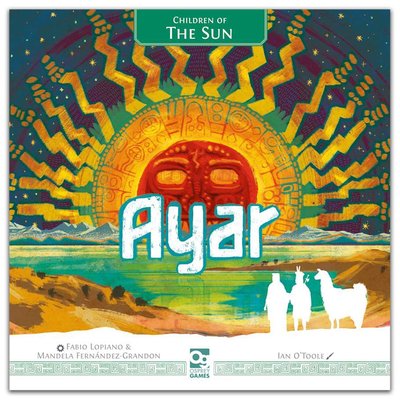
And um again in the month of December I'd rank it very high. I definitely want to play this a time or two for sure. Um, so yeah, I and and so I'm a bit at a loss. I should have shown you. I should have done this in the month of December, but I am anticipating the month of December in case you want to do it right now because if you love the subject matter, if you're looking for a challenging, and I can't stress it enough, really challenging, cooperative, Christmas themed game that you can play with just about anyone because the rules are fairly straightforward. It's definitely worth checking out. The game actually also has a bunch of rules that you can uh make it a lot easier. I wasn't a fan of making it easier. That kind of bugs me a little bit because I'm going to talk about this later in the roundup, too. Um, I'm not a fan of making a cooperative game easier by taking features away. And that's kind of what you have to do. If you want to play on the easier difficulty levels, not all the element of the games are there. I want a co-opter game that says, "No, I want to play with all the tools. I want to play with all the toys. I just want to have some system to make it a little bit easier to play." So, that was like a a a slight thing I would have liked to see done a little bit differently. But again, make no mistake, in the month of December and in late uh November, I would definitely be all over playing uh several games of number 14 of the month, The Spirits of Christmas. Okay, now let's move on to number 13 of the month, AR, Children of the Sun. Uh this is my number 13 of the month and it's the
latest from um designer superstar as far as I'm concerned. Fabio Lapiano. He is once again teaming up with Osprey. This is like the third game in this trilogy of Lapiano games from Osprey. First there was um MV and then Sang Corey and now AR. Um or was it IR? I please tell us how to pronounce your games. Anyway, sorry. Um, oh, and he teams up again with Mandela, Fernandez, Grandon, and what did I say? My video is on screen right now. What did I What was my subtitle for it? You've never seen a combination of mechanisms like this before. Yeah. And I stand by that cuz here's what this game is. It's basically a worker placement horse race for lack of a better term because this uh game is set in the um oh the uh the the Incan myths of the sun and the moon god and kind of their creation myth of these four brothers who traveled across the land uh you know and and and kudos to Austria for actually hiring cultural consultant to work with and make sure they get all the details right and they're respectful of you know the the the Incan culture all that. So anyway, there were these four brothers who traveled across the land and taught the Incans how best to live their lives and over time they fell by the wayside and there was one final one who set up their greatest city and all that. So that's the myth and so that's what the game is trying to tell. And so there are these four I guess demigods for lack of a better term that are traveling from one side of the board to the other. And there's a few interesting things about this. I like I said I liken it to a horse race. It's kind of like there this
is a slowm moving race between these brothers. Only one of them is going to be is making it to the end because in the myth and in this game at the end of every round another of the brothers falls. They get turned to stone or they get lost in caves based in the original myth and whatnot. And the thing is at the end of a round whichever one of the brothers has moved the least far overall that's the one that falls by the wayside. Um, and the how far they move is based entirely on our worker placement because we have our own little board with a grid and we put a worker that represents one of the four brothers on one of our spots and there's several things that happen when we do that. We say how far that particular brother is going to move forward on their path. We say um which building we can use a after we make them move. We then get to engage in one of the Incan ways of life. Um, basket making and uh, farming and oh, what were they? It's not fishing. It's reed collecting, although it looks like fishing. And there was a fourth one. And each one of these is a different mini game. One is a domino style tile layer, one is a set collection game, one is an area majority game, one is a travel and building game. So, there's these four different activities that make up the proper Incan uh, life um, you know, or society that these brothers are teaching. And after we make one of the move, whatever they have, whatever action spots they have behind them, I can take one of the tokens off my board and put it there to do that action, whether it's the set collection or the domino game or whatever. Um, and but
where I put my worker determines which house I take off my board to put on the board to say what action I'm going to do. And as I'm taking these houses off of my board, these way points, I'm also unlocking bonuses if I empty out rows and columns and or I'm getting to build temples if I empty out certain areas. And those temples are important because I um build the temples in honor of the different demigods. But I build them trying to guess which demigod is going to die, which demigod is gonna make it to the end. because if I can build one um you know in favor of the ones that are going to die and remember they're going to die based on our choices. Like I said, this is a horse race and we're betting all throughout the game, which of these four demigods is going to go furthest on the track because the ones that are going to fall to the wayside, I want to build a temple to them before they die so I can get the big benefit when they fall. Um, and as soon as I build one of those temples, suddenly everybody else around the table, if they haven't built a temple, they want to make sure that demigod doesn't fall by the wayside because they know I'm getting a bonus and nobody else will.
So, if I declare my intentions, the sooner I do it, the tougher it's going to be to make sure some uh they they fall by the wayside, so I get those bonuses. And that's just one of several different inter interconnected elements of this game, which is all about us every time choosing one of the four to move forward, choosing an action we're going to do. Um, man, there's the way scoring works because we score for both the sun and the moon in each of these four activities and they all work differently. It's this game is far out. It's unlike anyone I've ever seen before. And uh I don't do it justice to say it's worker placement plus horse racing. There's so much more to it. Folks, you can go watch my run through and see for yourself. I'm I didn't need to spend so much time because it's all available for you right there. But I'm blown away by the cleverness on display here. So, why then does it come in at number 13 of the month? Well, played as a two-player game, this can be a very cutthroat exercise, a very in yourrface, oh, I see what you want to do. I'm going to make sure that fails. you know, for the reasons I just described, because we're all betting on our horses, and as soon as I figure out what it is you want to do, I have two choices. I can either try to piggyback off that and take advantage by maybe focusing on the same things and doing better at what you want to do, or I can try to take steps to say, "Oh, that thing you work so hard on, it's never going to be valuable to you anyway." Um, because the farther these brothers go along, that gives you opportunities at certain points on their paths to score in the four different metrics. So, if I'm really good at read
gathering, I want to make sure that's the brother that moves forward. I don't want the brother that's all about basket making because I can see you're really good at basket making. So, I'm going to make sure that brother dies fast before he ever lets you pay off. And in a two-player game, so much of your thought is bent towards what's best for me and worse for you. As a four-player game, there would not be enough time. It would be more about just, oh, I see other players are doing this. we have kind of like a sympotico thing. Me and you, we're going to make sure it's all about basket weaving for the whole game. Um, you know, and it'll be more about alliances between players and less about, oh boy, it'd be a real shame if your favorite brother died right now, wouldn't it? Too bad that's what I'm going to make happen. So, it's a little too confrontational for Jensen's in my taste, but it's a brilliant game, and I'd love to try it someday at a higher player count. Number 13 of the month, AR or IR, Children of the Sun. Okay, then let's move on to number 12 of the month, Norse Wind. Um, here is a runthrough I did as an exclusive for backers of the show and um, Jen and I had a very fun time playing it. This is from a porta games. This is the first game from a porta that is not designed uh, by Christian Obby and is Spencenson. you know, I mean, the two founders of that and they they're always involved and of course they did a lot of development, but this is from a couple of designers from uh who were really very proactive a few years ago. Nicola Oh, now I'm going to look up their names. But wait, I
don't have to look up their names cuz I forgot. James Wood edits my videos and he's putting their names on screen right now. I remember one of them is Nikolai. I do not remember the other one. A couple of very nice Italian designers I met once at Essen many years ago. And you know, back in the day, they were putting out designs every year, but they've kind of gone quiet. And it's good to see them back because, oh, they are very good at what they do. And what did they do? What do they design here? This is a game set um you know, on the English shores um you know, long before England was a thing when um you know, Anglosaxon tribes were trying to be um you know, uh fruitful and and successful, but they were constantly attacked by Viking raids. And that's what we're dealing with in this game. Every round in this game, you are going to either build another building in one of your four Angelo Saxon kingdoms. um and uh you know to get uh become more prosperous, get more citizens and more prestige because at the end of the game every one of your four um kingdoms which are represented by a row of cards that we play, uh every one of these kingdoms will be the number of citizens you got multiplied by the amount of prestige you have if they are not sacked by Vikings.
Because every time you grab a card and put it on one of these rows to expand one of your four kingdoms, uh, hey, it shows, oh, look, there's new citizens and whatnot, and there's point scoring opportunities and all that, but there's also in the corner of the card, hey, this is going to attract the attention of more Vikings. Um, so you've got to watch out for that. Every time you put a new card out, you're creating problems for yourself because each of these four kingdoms at the end of the game will have, I don't know, anywhere from five to 15 points worth of Vikings coming their way. and you will score nothing for that kingdom, no matter how fruitful it was if the Vikings destroyed by the end of the game and the Vikings destroyed it because you chose those cards and put them there. So, what do you do? Well, on your turn, you're either going to build one of these buildings or you're going to build a castle. Um, and a castle has built-in defenses. So once you've applied a you get one castle per kingdom that says how much defense will this kingdom have and I do not want to put more Vikings there than I than the castle could um over could could deal with on the defense value it has. You get to upgrade the castles. Um you also get to upgrade the other cards to bring more prestige so you get bigger multipliers but wouldn't you know those tend to bring more Vikings too. Um but anyway that's the crux of it. You're either going to grab a card, build it, um or uh gra and I should say after you build a building, um there are several there's four different types of buildings, you get to make some money off the building you built because wherever you build it, it doesn't matter what type of building you build at that moment, but you look over
at the end of your kingdom and it says, "Oh, you built in this kingdom. That means you make money right now based on built on based on all the ships you have built in other kingdoms. So or all the um the the the ins you have built in other kingdoms. So this is a really tricky puzzle of a game. Every card you're putting down is creating threat with these Vikings. So, you're trying to manage that, trying to keep track of how many Vikings are in each one of your four kingdoms, but you're also trying to ensure that you buildings in a uh re kingdom where they can be scored. Um, you know, so once I've built two or three boats, then I want to build something in the kingdom that says, "Hey, score for all my boats because that's how I make a lot of money and it costs a lot of money to build the castles that we need to build." So, that's the crux of the puzzle that we're right now. what I'm building right now is setting me up for income in the future, but it's also going to give me income based on what I've done in the past. So, thinking past, present, and future, trying to solve balance all this puzzle at once while also worrying about the rising threat of Vikings and making sure I'm developing enough defense or saying, you know what, let this kingdom fall. I can't let all four of my kingdoms succeed. I'm going to make sure this one survives even if this one dies because this one made a lot of money for me that allow the other one to really build enough defenses. You know, those kinds of things. And then there's one other tweak as well. Every time you set up, you're going to grab four um uh modifier tiles, two good, two bad, and you're going to put them on your four
kingdoms. So, they might change your kingdom. So, oh, you can only build certain types of buildings there now. Or um you there's actually there's quite a few different things. it gets cheaper to build in this area or more expensive to build in this area. Um, you know, all all kinds of stuff. And every time you play, you're going to get different combination of two good things and two bad things that further define the strengths and weaknesses of building in any one kingdom. And you're going to do this. Oh, and then there's one other thing that I love about this game, too. It's entwined drafting because going back to grabbing a card. When you grab a card, on either side of it, there are two little depots of citizens. So, if I grab a card, it says, "Oh, I could either grab a purple citizen or blue citizen." Previous cards I've built have spots for purple or blue citizen. So, if I've got a lot of purple spots waiting to be filled by purple citizens times amount of prestige. The prestige comes from certain cards, it comes from your castle, etc. So, I want to get all my citizen slots filled. I've got a lot of purple citizens. That means I should take one of the cards by the purple citizen depot. But what if I don't want those two cards? I want one of the cards that's going to give me a red citizen or give me an upgrade and I don't have anything to upgrade right now. So, the entwined drafting all our Cascadia comes in too and that's excellent. There's a lot of stuff here that is absolutely excellent. And like I said right up front, um, oh, now I'm going to look them up. Stefania and Marco, designers of Zango, Railroad Revolution, a bunch of other great games besides, they've done a great job here. So, why then does
it come in at number 12? I'm not saying this is their best sign. This is actually lighter than what they're generally known for. But it is an excellent title. Here's the problem with it. The one real problem that Jen and I ran into, and it was mostly my wife, Jen. I'm actually knocking it down probably a few pegs because of her, because I take her into account. And there's one thing that really weighed on her quite a bit. Math. It's not hard math, but it's ubiquitous math. because I, as I mentioned right up front, you're constantly having to um tally and make sure that your defense meets the um rising offense of all these Vikings who are coming in. And throughout the game, um for my wife, she found it just a little um burdensome, I guess, tiresome.
It just uh it was it was it just required a lot of addition on top everything else you're balancing because there's a lot you're balancing here. And it's a really sharp design with the entwined drafting and everything else, but you're constantly right. How many Vikings were? Let me add them up again. Oh, it's it's it's four plus three plus one. Okay, yep, that's right. Oh, I needed a 12. I needed a 12 here. I haven't gotten the upgrade yet. Um, and she just found herself. I mean, at some point, if the game had gone on much longer, she was actually just going to get out some sticky notes and just start keeping track because it was it was a little bit more mental load than she was um comfortable with, constantly having to try to remind herself, right, this is the one where I don't have Yeah, there's only six Vikings. I'm most like, oh crap, I just put another Viking there and I forgot that's where I have the low castle. What am I going to do now? Am I going to build over the old castle, the new castle? Um, there's already so much going on. I mean, she f said it was kind of a shame that the game did not come with some sort of system that um would let you just like at a glance see, oh, right, I'm down two defense or I'm up four, uh, you know, offense or whatever on spaces, you know, even I mean, I said, well, hey, we could just have 20sided dice. Um, or no, actually need two colors. You need like a positive and negative saying, okay, we need more defense or we need more offense. If there had just been something like that, uh, a a tally, you know, you know, a bunch of cubes, you know, anything could do it, uh, just to help keep it going a little bit smoother so she could focus more on the planning, you know, because
again, this game is very temporal. The moves you've done in the past um, affect what you can harvest right now in the present, and what you're building right now in the present is going to be the base for what you can do in the future. It's really smart. Plus the entwined drafting, there's a lot to like here. And that was enough. Also, having to keep track of, right, that's where I needed I needed three more defense here or no, that was the one. It was just a bit much. So, basically, I didn't have a I didn't struggle with it all, but my wife did. And so, I like I said, I take her into account as well. I am ranking all of these based on how likely I am to keep these on my shelf. And so for my wife Jen um saying I don't know if I'd want to do that without some kind of system to you know keep track of all this stuff. That's what drops it down.
Um otherwise for me it would have easily been in my top 10 of the month. I thought it was very very sharp. There's a lot to recommend it. You know a Pora doesn't miss and um you know if you're ready for a little bit of calculation in and amongst a lot of really great design manipulation you'll definitely want to check out number 12 of the month. Then we go on to number 11 of the month, the Great Evening Banquet, which I did a solo run through for backers of the show. There's a link for it down in the show notes if you want to check it out, but remember this is that is a uh exclusive video for people who back the show. Uh anyway, um this is a game, the latest game from uh Japanese publishing powerhouse Sashi and Sashi. They're always known for fun, quirky little titles, uh, with really fun, quirky combinations of mechanisms. And interestingly, I would say this one's a bit less quirky than normal. We are basically trying to get, um, you know, various and sunundry important people to hang out with VIPs at a big gala banquet. And everyone of the six VIPs has things they people they want to hang out with, you know, people from certain countries, people they don't want to hang out with. Oh, I hate being with uh older ladies. I can't stand being with them. And so, every round you are going to get anywhere from two to four um tokens representing what is it? Um young men, young women, older men, and older women from five different countries or
five different colors. You're going to get a combination of those. And you have to decide right where am I going to disperse those amongst my six VIP to make sure the VIP are happy because if I ever don't follow what the VIPs want the VIPs will only score half their potential value. But I'm So that's one thing I have to concern myself with. The next thing I have to concern myself with is um I need to surround them with either pairs or two of a or three of a kinds or four of a kinds or straits uh of the different types the the young men, young women, old men, old women. Um also every one of them has a different color which represents a different country they come from. So I'm trying to match getting more and more of the same color if possible uh when I'm surrounding them so that they will score the maximum amount of points. uh you know straight score better than four of a kind. Four of a kind scores greater than two pair etc etc. So those kinds of things. So I'm trying to distribute them all. But then there's something else I'm concerned with because at the head of every column of these VIPs and at the top of or every row at the top of every column there is a photographer waiting until I've filled all the spaces around the VIP and then they're going to score as well. and they have different things like this photographer wants to see lots of people from the green country. So, I want to get a lot of of the young men or young women or old men or old women from green in this column and I've got to figure out a way to do that when this person uh in that column wants to see
combinations of old men and old women. They don't want to see youngsters. They only want to see oldsters, you know. So, every tile I place, what is it? There's like five different considerations. the horizontal and the vertical scoring thing. The um you know there's four spots around them they score. There's also what they want to see. I It's just a lot and it's a great little puzzle. It's a quick game. Um I played it solo and I played it two-player with Jen and it zips by at less than a half an hour. I'm sure it'd be less than an hour even at the full player count. The uh draft is very tensionfilled. It's very simple. every round, you know, a group of them come out on these different trays. Whoever's first in turn order gets first dibs. Whoever's last in turn order doesn't get a choice. They just take whatever they get. But you have a lot of flexibility with how you deploy them once you get them. This is not a game where, oh, I have to always deploy them in a snake around the board or something like that. So, you have a lot of power, a lot of flexibility. Plus, there's another thing. midway through the game at some point once you've scored 10 points, you get one opportunity to swap one of the uh people chips out with one of the one that's in the grand foyer or something like that. And so you can see those from the beginning. You can say, "Oh, I'll put this one here because I know I'm going to replace it later once I've scored 10 points, unless somebody else grabbed that one that I was hoping to grab cuz they scored 10 points before me." So, there's a lot to recommend here. It is a very crunchy puzzle and it can get even crunchier because it comes with an advanced version of the game where um a couple of the VIPs end up
standing next to each other. So there are several of the uh tiles you place that will affect multiple photographers and multiple VIPs, whereas normally each um you know person you place only affects two photographers and one VIP. So it can get super crunchy, like crazy crunchy. And I really enjoyed it. I thought it was fun. It's a bit dry. It's a bit abstract. Um, but it helps. I mean, it would have been nice if they would have actually like assign the different colors real countries. So, we would actually say, "Oh, uh, this is the delegation from Greenland." And, you know, you know, here are the the the the I don't know. Um, I can't think of countries sol thematic because it is a very abstract puzzle. its heart, but that's okay cuz I enjoyed it anyway. So, why did it come in at number 11? Well, this is the second time today I am talking about taking my wife's uh predilictions into account as well when I rank them. And like Norse win before it, this is a game that requires that you keep a lot of stuff in your head and you do a lot a lot of simple math and you're constantly running the numbers, right? Okay, I could potentially get seven points off of this one, but I won't make them happy. So, they'll only score three points of the seven. Is that better? Or should I make them happy and only score four points off? No, wait, but I'd only score four points if I can get a brown elder. But there is a brown elder up there. So, I could potentially get that
and score the four. Or I could say to heck with it and I'll I'll score seven, but divided by two right now by making them angry. There's just so much. And you do this multiplied by six different VIPs constantly from start to finish. So it is a lot a lot to juggle in your noggin, especially if you play at the uh higher difficulty level, which I really really like. Um but I I think even just a standard level uh is definitely challenging. It's a fun little almost a filler length game, but it's a little bit more. It requires you to juggle a lot and um you know and make the best of some bad situations because there will be times when you are the last to draft and okay well these aren't great and I've already lost my chance to swap so I'm going to give up on that but how will it work out? But the game is so so there is a bit of luck but the game is so fast and it has some nice luck mitigation like the ninth round the player who gets first dibs is whoever's farthest behind in points. There are some nice touches like that that make it work pretty well. I liked it. My wife said, "No, too much. Um, this overflows my brain. I don't think I'd want to play it again." So, again, because I rank these based on how likely they are to stay on my shelf and my wife's feelings apply to that, um, The Great Evening Banquet came in at number 11. But again, if you are looking for a very crunchy almost filler length game, um, with a lot of replay-ability, with the variability because you can change up how the VIPs lay out, you might want to check it out. I think Sashi and Sashi have done it again, but not everybody agrees. But anyway, that was number 11.
Now, we move on to number 10 of the month, Jackpot Set the Real, which was a sponsored preview I did. It's crowdfunding right now. You can follow the link to go check out my run through and that'll give you a link to the, you know, the Kickstarter page. Maybe it was Game Pound. I don't remember wherever it's raising funds, but what is it? This is a deck builder about um, you know, sitting in front of a one-armed bandit, a slot machine, and trying to make money off the thing. Here's the deal. You don't make money playing slots in real life, but in this game, we do because we can manipulate these slot machines. Um, you know, it's like we got magnets or something because we have a deck of cards. which is really I should say it's a hand of cards. 10 cards at the beginning of a round and you play them out. And this is one of those card games where you cannot change the position of cards relative in your hand. You got to play them where they lay. So what you do on your turn is you pick any three from anywhere in your hand. You pull them out and then play them. Boom. Boom. Boom.
That's like you just pulled the uh lever on the slot machine and you came up watermelon. Watermelon seven. Okay. Man, if I gotten a third watermelon, boom. I would have had a jackpot and I would have scored a lot of points. Yay. Well, if you want to get that jackpot off watermelons, you need to manipulate your hand and you need to manipulate the situation to get those three watermelons next to each other in your hand. Um, and there's several ways you can do that. Like, if you pull three out, the remaining cards in your hand collapse together and now that might get certain cards next to other cards so you can get big um scoring things on the following turns. But when you aren't actually getting jackpots by getting three of a kind, you can be earning money that lets you flip your cards over. So I could turn a bell into a watermelon. And then if I could pull these other three out, then this new watermelon I made will collapse down to my other two watermelons, then boom, watermelon jackpot. Um, but if that's not enough there, it's a deck builder. So there's also a supply of cards out there that you can um spend the money you're making by getting worseer hands by getting one of a kind or two of a kind. generally that makes you money that you can build up your not build your deck but modify your deck because you can buy other cards that are more powerful than what you started with and swap the cards in your hand out to replace them with these new ones and then you could upgrade those new ones later. So over the course of the game your hand of 10 cards gets better and better and more designed to be able to give you those jackpots repeatedly. But the tricky thing is, oh, I'm really good at making watermelon jackpots. The more times a watermelon jackpot pays out, the less valuable it
is. So, I'm like, "Ah, okay. I'm really good at watermelon jackpots, but now they're barely making me two bucks and one bonus every turn or two points and one bonus every turn. Maybe I should pivot and try to change this deck into something else." But it's a very fast game. You don't get much time. Um, so there's a lot to balance here. I thought it was great. I had a lovely time with it. Um, heck, I mean, just talking about it make me like play it right now. Uh, it comes in at number 10 of the month because at its heart it is a fairly simple game and I wish there was a little bit more to it. I enjoyed it, but I found myself wishing there were some other things I could do besides just trying to get the cards together. And, you know, and there's one other thing. Cards can be turned into wild cards if you upgrade them enough. That's really about the only special power in the game is turning regular cards into wild cards to get your jackpots easier. I just wish there was a little bit more because it's a little gatewayish, you know, out of the gate. Here's the thing, folks. Go check out the crowdfunding page. My prototype only came with the base game, but as I understand it, there are a bunch of little modular expansions that are going to be available for the game, too, and you can mix and match throw them in. And that, I think, is really going to elevate the experience quite a bit. I haven't played any them. I've only played the base game. It's kind of like playing Dominion with just like the simplest of cards. And it's not until you start mixing and matching with these other really cool card powers that Dominion really comes alive. I suspect that's going to be available. I don't know. I can't comment. I can only comment on playing Jackpot Set the Reel with the base rules without any of the
expansion content. It's nice. It's a fun little uh fast gateway deck builder that I'd happily play anytime I want. Don't know if I'd want to own it with some of those expansions that are available. I've looked at them on the crowdfunding page. They look pretty cool. My uh evaluation it might it might climb the ranks a little bit, but for now, Jackpot Set the Real comes in at number 10. Then we've got number nine, the buy. The uh latest game um from you know publishing powerhouse board and dice and design superstar Dave Turch. The two of them working together have made magic in the past. Towinsu is I think maybe my favorite TY game that I own. I think I'm pretty sure I'd have to check my rankings just be about that. And um so what have we got now with them working together? We have a dice worker placement game with upgradeable modifiable dice that evolve over time um to and I mean there is so much going on in this game. Now I've already done a sponsored preview so you can go check that if you want to see it in action. In short, this is a game where on your turn I take one of my citizen dice. I either send it to my own personal board where over the course of the game I'm unlocking more and more powerful actions that my citizens can do on my board or I send them out to the main board um you know where over the course of the game we're building up the main board with a lot of different actions and you know once there's like two actions next to each other I can send one of my citizens to stand in between them and if I pay enough money I can activate those so I can do even more powerful actions on the main board if I'm willing to pay. So,
that's the first half of every turn I take. And in any other game, that would be enough. Those are already big turns you can take. But in this game, first you um place a dieice somewhere. Then the second thing you do is out on the main board where over the course of the game, it's getting bigger and bigger because we're putting more and more buildings with more and more powers. We move our archon. I forget what it's called, but we have a worker that can move around the board. And wherever they land, they get to do more actions. to move from space to space because they've always got to move. They've got to cross over the dice that we've been playing. The dice we've been playing out there to activate double actions. Those become the bridges that our archons can move around. But here's the trick. If I move my archon to get to an action I really want to do. If I step over your dice, they upgrade. They become more powerful.
They get to the point where they can unlock big cool extra in-game bonus scoring stuff and whatnot. So, I don't want to walk over yours. So, hey, I'll build bridges and walk over my own. If I walk over my own dice, they downgrade and become weaker. So, of course, this is a game that strongly incentivizes me to help you. Help me help you. I mean, I need to get over there. If somebody builds if somebody puts a die there so that I can get to the place I'm going to want to get to, I'm going to want to walk over their die and they're going to get a huge benefit off of that. I'm going to get the huge benefit of going where I want to go. I love that. But I am always so happy to see a game that has really nice ways for players to be intertwined in positive ways and it's all positive. There's no take that or screwage or stealing or anything in this game. There's one other thing as well where we're send we have two types of dice. We have the citizens and we also have soldiers that we also need to send out to the big board and you know they can be used as bridges as well. Those soldiers don't activate actions on the board. They protect the board because on the edge at the end of every round, there's going to be invaders and we, you know, we know where the next attack is going to come. When everybody's done placing all their dice, we got to get our protection out there.
Um, you know, if you don't contribute to protection, you're throwing away tons of points. If we upgrade our soldiers, they can become generals that unlock all kinds of cool special powers we get. Uh, and there's a a lot going there's like a whole separate game there. So, this is basically three games glombmed into one. The dice worker placement, the archon worker movement, and the city defending game, and they all dovetail together really nicely. I like the game a lot. So, why is it number nine? Well, it's because I just described the official rules, and as a two-player game, there's one thing I do not like about it with the official rules to replicate a higher player count. Remember how I was talking about how if I walk my archon over your dice, your dice get leveled up? Well, they replicate that. They replicate a third player leveling up dice out on the big board, but it's not by an archon that moves around and preconstructed.
It's basically at the end of every round, we reveal a card that says, "Hey, every die in this column gets an upgrade." And that's just totally random. And I hate it. I I just hate the insane swingness because this game is so full of giving you opportunities to do long-term planning, but then it throws in this huge luck thing that means maybe I get incredibly lucky and I get a lot of upgrades and you don't and there's no way we can predict it or anything. And I really disliked that. So, because of that, I mean, this would have been in my top five of the month, I think. Would it? Yes, this might have been my number five. Yeah, my probably would have been my number five of the month if it weren't for that two-player rule. Now, if I could play this as a three or four player game, it wouldn't matter because everything would be about um not just random luck, but choices players make and then I'd be all over it. There'd be one other thing it could fix. And I talked about this in my video that I just wish that randomizer at the beginning of the round, put it face up so I can see so everybody knows what column is going to get the bonus. And because then that becomes another element of our long-term planning. And if that were the official rule, this probably would have been my number five of the month instead of my number nine of the month. It's not the official rule. Now, here's the deal. I talked about it and Dave Turchie himself commented on the video saying, you know what, that wouldn't break the game at all. I'm not going to say it's an official rule. I'm just saying as the designer, it would work. And so if it makes the game better for you, so there is an unofficial quasi sanctioned rule
that makes this game go from my number nine to my number five of the month, but it's not official and I'm ranking it based on the official rules as they exist right now, which is why the buy comes in at number nine. Okay. And if you want to know more folks, go watch my run through link down in the show notes. Okay, then let's go on to number eight of my countdown. Regisside. Now, I should say it's I'm not James. I apologize. I don't know if you should say it's Regisside or Reiside Legacy. Here's the deal. Um, Reiside uh is a cool little free game that anybody can play with a standard deck of 52 cards. It takes a deck of 52 cards, you know, um, ace through king of hearts and spades and clubs and diamonds. You can take that deck. Um, you pull all the face cards out because that's the royalty. And you use all the other cards, aces to tens, to be a group of adventurers who are trying to take down the corrupt nobility of their fantasy kingdom. And you know, um, I forget in the in the original Regiside, I think it's like diamonds are no, diamonds are clerics. No, hearts are clerics, diamonds are bards, and clubs are fighters and spades or paladins or something like that. And on your turn, you're fighting, you know, the next jack or the next queen or the next king, you know, um, and you have to do a certain amount of damage to them to take them
out so we can go to the next one. And it's called Regisside because we win if we beat all the jacks, you know, princes, basically, all the queens and all the kinks. So, we're committing Regisside. Um, but you play the whole game with just a deck of cards that anybody has in their house. It's a brilliant design. And so, here's the deal. I'm giving this an eight for the original Regiside that anybody can play for free right now. Although, there's actually an excellent app you can download that I think costs three bucks and you can play it on your phone, too. It's an excellent little It's a great solo game that is very challenging. It's also a really great um cooperative game. Uh which is saying something because my wife tends not to enjoy challenging cooper games and this is a challenging game and she enjoyed it. She enjoyed it. It's hard to get her to enjoy a hard game, but we liked it. Anyway, so I said right up front, so I it's a great game.
It's been around forever. Don't take my word for it. Just get out a deck of cards, play it for yourself. uh you can just um you know download I mean you can just there's plenty of videos showing you how you can do this. So why did I say up front I'm not sure whether I should call it Regeside or Reesside Legacy because here's the thing the copy I have is not me playing with just a deck of cards. It's my copy of Reeside Legacy that I've got here. This just came out and this turns everything I just described into a 12 chapter legacy campaign that we can play our way through where the very first mission of the 12 chapter campaign is standard regide rules and there's tiny changes but there are only hardcore regicide rule fans would even notice the changes. So here's the deal. I have only played the first chapter. I've played it solo and I've played it with Jen. I've enjoyed it a lot and I'm giving it an eight based on the original rules. This game that anybody can play for free with just a deck of cards. Now, I have opened up what's coming for chapter 2 and a special bonus thing. So, I've gotten to see a couple of things.
So, I've started to take a gander at what's going to be available in chapter 2 and chapter 3 and chapter 4. And I suspect my ranking for Regisside Legacy, um, which by the way has a standalone game. After you finish the 12 chapters, it then has a new mode that you can play forever with your new customized version of the game. I guess I am very excited about that, but I can't rank it because I've only seen a few things. So officially, my number eight of the month is I consider I've played Reiside. come back a few months from now and I'll tell you after we finish the campaign how I feel about Reicside Legacy. Um, but for now, Reiside is my number eight of the month. Okay, now let's go on to number seven of the month, the Voinage Puzzle, which I did a sponsored run through for. For a couple of years now, I have been saying designer Danny Garcia, you know, who burst on the scene with Arboria, and he's bringing an Arboria expansion out this year. I'm very excited about that.
And then follow that up with Barcelona and um uh Windmill Valley and Daitoshi and uh oh, what was the game with Neko Syndicate and I feel like I'm forgetting one or two. Um but anyway, I have been blown it goes beyond impressed. I have been blown away by every design Danny has put out and these have been some of consistently in my top 10 of every year. And every time I talk about a new Danny Garcia game, I say to myself, man, he's fast becoming one of my favorites. I don't know at what point I just say, yeah, Danny Garcia is my favorite designer and he supplants Stephenfeld. I'm really hesitant to do that, but at this point, he is easily my number two favorite designer of all time. And I don't know how much of it is just nostalgia um that keeps Feld in my number one spot and keeps uh Garcia out. But I'll tell you right now, folks, the Voyage puzzle, it is a very impressive game that once again makes me question, is Danny Garcia my favorite designer of all time? He might be, and I just might be struggling to admit that to myself, and if so, I apologize to Stephen Feld. But Danny, oh man, you are the best. You are the greatest. So, what is this game about?
Well, I've already done a run through, a sponsor preview. You can go check that out. This is a game where players are researchers trying to solve the uh unfathomable depths of the Voinich manuscript. A realworld document. It's like hundreds of pages of a language that nobody can read. A lost language full of detailed descriptions and illustrations of plants that have never existed on the planet, of astrological phenomenon that has never existed in time. It everybody wonders, is this the greatest hoax ever? Was this written by aliens? Nobody knows. It's real. It's a real thing that people study. And so now we get to be the the um academics who actually figure it out. We solve the Voinich puzzle. And the crux of the game is each of us has a few pages taken from the Voinich manuscript. And there are a bunch of cards that are put in these cool little plastic things that make it like a little book. And on my turn, I have to turn to a new page in the book and then pick one of the two pages on, you know, that section of the book and do all the actions there. And all the actions are kind of thematically representing all the different areas of knowledge that the Voyage manuscript seems to talk about. Uh whether it's botany or astronomy or um oh I forget the word for it. Uh the science of bathing and you know health through mineral uh you know there there's some there's recipe making and there's a lot of writing. So, there's these different um these five different um disciplines that the book details and nobody knows for sure. There's lots of theories. Uh AI is trying to crack it
now. Maybe that's going to finally crack it. Who knows? Um but we turn to a page. So, I'll turn to the page about astronomy and I'll do one of my two uh astronomy actions I get to do there. And that means I play the little astronomy mini game. Um or I do the botney mini game. And each one of them has their own separate rules. Uh although interestingly of the five different disciplines there each one you know each of the resources the our writings our plant information our water information and our our astrological star information these resources we have can be applied um to two different ones like writing can go towards the astronomy or the writing the um the botany can go towards the botney section or the bathing section for thematic reasons that Danny has come up with because nobody knows what what the whole point of the voidish manuscript is. So Danny Garcia has decided, well, I think this is what it is, and I'm making a game based on these presuppositions. I love that it's and he's then making us uh, you know, co- collaborators in actually um, you know, um, decrypting this uh, this this great, you know, academic mystery. Anyway, though, so you've got five different styles of games we're doing depending on because every turn you have to switch to a new page in your little booklet. And what we're trying to do, the number one thing we're trying to do is get the right resources by playing these five little mini games to upgrade the different pages of our book. So it's like we have transcribed more and more and we understand more of what the book is telling us as we literally rotate and flip the cards inside our little book.
So we get access to better and better stuff. And the thing is that means as I upgrade a page more and more, oh, I get to be more powerful if I go back to that page on a future turn. But also the more powerful one page in a given discipline gets, the more it will let me score in a different discipline. And you know the the supposition is everything in the voidish manuscript is intertwined. And so Danny has made everything intertwined in this game. Doing well in one thing means oh I'm going to score well in something else, but doing well in that thing because I want to score well in it means I'm going to do um score well in something else. So, trying to navigate this Byzantine maze of stuff is a really great puzzle. No surprise. Um, it's not my favorite Danny Garcia game, and I'll tell you why. What what keeps it out of like my number one or number two spot, as most of Danny's are, and there's nothing against it. This game has a slightly more classic feel to it because back in the day, back in the early days of modern board games, you know, when um you know, like the days of Power Grid and Rhiner Kenitia was, you know, you know, the only uh the only game in town, um there were certain things that the games didn't do that we kind of take for granted now. Things like unique player powers, right? Or everybody getting their own unique go um you know, secret goals. This game doesn't have anything like that. This game says, "Hey, when you start out, um, you have a little bit of variability, a tiny bit of variability based on the, uh, the pages of the manuscript you've got, but it's a
subtle variability. And there's a little bit of variability with the way the board is set up, but again, it's a subtle variability. The real variability of this game comes to fruition as it evolves in front of you. And in that regard, I got to, you know, there's no better game to compare it to than um, Power Grid. widely considered one of the greatest euros of all time for good reason because it always starts out the same. Always just slight differences. There's a little bit of difference between what power plants are available to build, but yet every time you play, it's going to evolve in different directions based on the choices players make. And that's what Voinage Puzzle does as well. And it's brilliant, especially because so much of this game is, hey, once something somebody has done something, that means other players can take advantage of that. Once somebody has written some writings, other players can put a star in the writing section to activate other players writings that they didn't have themselves. All kinds of stuff. There's so much. There's a conveyor belt where once I get on the conveyor belt, other people push me along automatically and give me passive bonuses. There's so much intertwinedness and I love everything about it. I just have to admit I'm kind of spoiled and I find myself wishing that the game had a little bit of those more modern things. I'm talking specifically about, you know, some unique player powers. I mean again we have slightly I I want something a little bit more unique or you know unique um objectives doesn't need it just like power grid and so many other classics doesn't need it but I'm just saying that's what keeps Voyage Puzzle out of it. That's why it's
not my favorite of all time. It's great though. And if you go watch my runthrough link down in the show notes, I think you'll be just as impressed as I am. And it'll show once again just what an amazing designer Danny Garcia is. Maybe the best designer working today. I mean, I'm getting closer and closer. I'm I'm almost have to say it at this point because once again, I am totally blown away. And while he didn't give me exactly what I personally want, it's not that the game needs it at all because there are so many games out there that are Princess of Florence, all you know, Puerto Rico, all these games. Uh, and like I said, that's why this one feels a bit more classic, and I mean that in a good way. But that's why Voinage Puzzle comes in at number seven of the month. Okay, then we've got Sorry, I'm going to drink water here. Oh my gosh.
How long have we been going? An hour and a half. Yikes. I'm sorry, James. Anyway, let's move on to um get another drink. Number six of the month is the Peak team. I'm not sure if it's the Peak Team or the Peak Team Rangers. The title on the box says Peak Team Rangers, but on Board Game Geek, it's just called the Peak Team, so I'm going to call it the Peak Team. Um, what is this? This is a cooperative game where we are National Forest Rangers. It's our job to travel all throughout the national park that we're assigned to um completing missions. And what those means are there's two main things we're trying to do. We're trying to check up on all the flora and all the fauna of the park uh in a specific order and we have to do it before time runs out. And if we can't stay on top of this, we always are getting these mission cards that are simply telling us, "Hey, travel over to this place in the park to check things out and make sure everything's okay."
And so over the course of six rounds, I forget, it's something we have to basically between us have to visit, it's something like 25 or 26 different locations. Now, it's totally random the order they come out in, but that's our main goal. Um, every time we, uh, you know, complete an objective, we get to a location, great, we check another one off, but there's still a big mountain of them yet to, um, yet to reach, and we've got to reach them all before time runs out. That's checking out the fauna, checking out all the locations. And here's the deal. At the end of a given round, we uh, we all start with a hand of four cards. And after we played all our cards to do our actions, which are primarily about us moving around on different locations, they're multi-use cards. These cards um they let us move either by hiking on trails, climbing on peaks, um snowshoeing through snow, rafting down rapids, rivers, and um what's the other one? Oh, driving on roads and flying on helicopters. And if we got a bunch of cards, they'll say, "Oh, you could take three steps um on hiking paths, or you could take one step climbing." And we combine these cards to try to puzzle our way through the maze of this board to get to the next place we need to go. And it's all a matter of trying to cleverly figure out how best to use our cards um to get where we need to go as fast as possible because we're racing against time. But they're multi-use cards because these cards, we can play them either to move from place to place, which is one half of what we need to do. I said that's looking at the fauna. We also have to check out the
flora. No, I'm sorry. Fauna is animals. Checking out the floor is just moving around to all the different places we have to go. As we move around, there are animals throughout the park. There's a bear, there's a bobcat, there's an eagle, there's all kinds of animals. And on each one of these cards, there's an animal. If we ever find ourselves in a region of the park that has the bobcat or the the beaver or whatever it is, and at that moment, we have a beaver card in our hand that we might very much want to use to drive from one side of the park to the other once we get over to the road. But right now, the beaver is there, and this road driving card I've got has the beaver. I can discard it to go check out the beaver. We need to check in on the the flora, and we need to check in on the fauna as well. Check out all the animals. We have to check them all out before time runs out. And we have to reach every one of the location before time runs out. And we do it by cleverly using movement from the cards that are in our hand. And just that would have been a great game. um you know and just hey every round we draw some cards and oh these are the cards I got right how am I going to get from one place to the other there's a few more things here or there about like going to our ranger stations that's how we get new missions spread amongst the players and stuff like that and if we don't keep getting new missions cuz means we have to finish our current mission so we have a spot for a new mission and if we don't at the end of the round once we run out of cards um every mission that we did not distribute to other players because we didn't pick them up because we didn't stay ahead of the curve those get translated into park breakdowns like landslides and floods and all cuz we weren't checking out the
park to make sure it was fine. So that's why we have to stay in the lead. That would have been enough. But I'm bearing the lead, folks. That's not what makes the game special. That's what makes it a very good cooperative game. Cuz hey, I'm going to go over there and do this. You have to do that. We all have our missions and whatnot. But here's the trick. At the beginning of the round, I said everybody has four cards. I lied to you. Here's what happens. Everybody draws four cards. I look at these cards. They're multi-use. Hey, that lets me get the beaver. That lets me get the eagle. That lets me drive the car. That lets me take the helicopter. Whatever. Right? I don't keep any of these cards. I have to give two of these cards to the player on my left and my other two cards to the player on my right. So, I need to look at these four cards and I need to look at where my teammates are. Oh, you're up in the mountains. You need snowshoes and pickaxe. Oh, I don't have any snowshoes and pickaxes in my hand. I can't give you snowshoes. Now, I could give you this helicopter, but the helicopter is the most valuable thing because it lets you pretty much go anywhere. And either of, you know, but if I give you the helicopter, you're ready to go get more missions. But if I give you the helicopter, that could help you get around where you need to go on the mountain because I can't give you any pickaxes or or um snowshoes. How am I going to give these up? But oh my gosh, you're close to the you're close to the elk and I've got an elk card. I clearly have to give you the elk. And then hopefully you'll use that to spot the elk because that's one of our objectives. Plus, when you spot the animals, that also unlocks bonuses that um you know, if I give you the elk card and you use it to check in on the elk and you take the elk token, you can't use the elk token, but everybody else around the table can use the elk token
because it'll give somebody an extra hike icon. Everything about this game is about what player uh me as a player focusing on what I need to do, but focusing even more on what everybody else around the table needs to do and what can I do to help everybody else. And that's what takes this game into the stratosphere. Here's the deal, folks. Peak team, it's right here. Right here, right next to me. This might be the best game of 2025 right now. I'm telling you this is easily the best new co-op game I have played in years by far. Hands down. This game, like I said, just the act of walking around and trying to do all the stuff, but then the focus this game has on um players helping each other. No co-op game I've ever played puts that more front and center in your thought process than this game. And it's not just the, oh, I've got four cards and I have to give two to my left and two to my right. Um, I've got access to powers that I can't use, but I can help other.
When somebody else is stuck, I'll say here, use my thing. Use my thing. Because then I can I've got enough cards. I can't really use them, but I can spend my cards to reset my power so then somebody else can use my power. The game is choa block full of examples, brilliant design touches that encourage and incentivize players collaborating in the best possible way. And I love it. I love it. So why then? Why would I say that? How could I possibly say it's only my number six of the month, right? Um because the game is is brilliant. I love it so much. And so it really bothers me that there are um two big things that uh keep it from being um you know, at the top of the list for me. And oh, it makes me so sad. And now, one thing, it's not that big a deal. It's it's it's livable. The rule book that comes with this game, maybe my least favorite rule book I've ever seen, quite frankly. And now, that's odd to say because strictly speaking, there's nothing wrong with rules. It's very well written. There's a couple of little typos, but for the most part, it's very clear how everything works. But the problem is, man, I have to show you um this thing. Hey, James, make me full screen so I can show people this. There's two rule books that come with the game. Here's the rule book, but it's not a normal rule book. It goes like this, and then you have to turn it around and go like this. And then there's a separate rule book that goes like this.
And to get everything, it's it's basically it's only a four-page rule book, but trying to go back and look stuff up when you're in the middle of the game, like, okay, which of the four pages was it on? I don't know. Oh, I hate this. Now, the reason they did it is because, and this gets to the other thing I don't like. Uh, the game comes, I think there are, was it five missions you can play through. Is that right? And a solo mode. I guess is the sixth way to play. Is that right? Yes. Levels 1 2 3 4 and five. And the way the rules are written, you're supposed to ignore this one. Just ignore this completely. And you start out here and you say, "Hey, hey, just set it up for game number one." And then read this. And you can kind of read it, but then okay, hey, turn the page. And then you know, so it's kind of you can still kind of turn through pages, but really when you're trying to look stuff up, you're just like, I just blank out. I don't remember where it said that one little thing about the way rivers work or, you know, whatever I'm trying to look up. But anyway, the reason they have you do this is because, yeah, you keep reading and you get to that and then there's some special rules for two-player because I should say some people won't like this.
I love it. When you play a two-player game, there is a third neutral player that um so when I've got those four cards, I give two to Jen and I give two to the neutral player and Jen also gives two to the neutral player. And then after we've done that, we just each draw two cards randomly as if the neutral player gave us stuff. So, it's great. And then we share control over the neutral player. Some people will hate that. I'm fine with it. Um but anyway, so I think the two-player game is great and it still has all that great cooperative feeling. The two-player I would say is the most complex way to play the game because we have this extra shared responsibility that doesn't normally exist. So anyway, once you have played the basic game, you can then play mission two and we'll introduce a new feature to you. We'll introduce roadblocks to you and then once you've gotten really good at that, then play mission three where we'll introduce special powers. Then introduce player then do player four where we introduce um oh shared missions and then do the fifth story where we introduce weather.
So, here's the deal. I like playing a cooperative game with all of the toys. I want all of it, right? So, um the thing is Peak Team is a crazy challenging co-op. And I mean that's a good thing for me. I like that. I like a really challenging even played on what is called rookie difficulty. It is a challenging game. But here's the deal. that, you know, any good cooperative design comes with ways to let you um adjust the difficulty to make it tougher if you're really good and to make it easier if you're struggling and you're frustrated. And I'll tell you right now, my wife found found this my wife does not like super hard uh challenging co-ops. So, I want to be able to play this easier with her so that she can get into the vibe so we can work our way up to it so she's comfortable with it.
That's fine. And they have a way to do that. Here's the way they do that. They make you turn off all the fun stuff you're supposed to play. Oh, no. Just play mission one. Because mission one, strictly speaking, is still hard, but it's a little bit easier because it's not easier, it's just less complex. It's challenging no matter what. As you add these extra modules in that make the game harder, there's also stuff that get added that makes the game easier. You get special powers, but you have shared missions you got to do. There's weather that hurts you, but the weather also helps you sometimes. You know, all that kind. It's very smart. But I don't want to play the dumbed down version of the game so that it can be easier. I want there to be a rule to say, "Hey, look, play the full version of the game and if you want to have it easier, here's the rules to make it easier." What this game, if if this game were pandemic, here's what would happen. Oh, are you having a hard time winning? Would you like to make it easier? Then tell you what, change the rules so that you can trade cards anywhere. You don't have to players don't have to both be on um Chicago to be able to trade the Chicago card back forth. Just be with another player and you can trade cards all you want. That'll make the game easier.
It'll also make the game simpler and more of a gateway and you won't be playing the pandemic experience anymore. Or hey, is it are you having a hard time playing pandemic? Tell you what, just as part of setup, put these um research bases out, but you don't even have to go to them. You can cure a disease anywhere you want. You don't have to build the um thing, nor do you have to go there to do it. Um it's like, okay, that makes it easier, but then I'm not playing pandemic. I'm playing this simpler game and I want to play the full game. What Peak Team does says, "Oh, you want easier? Then just take out the weather, take out the shared objectives, take out the special powers and the game will get easier." I don't want to do that. I want all those things. And then I want you to say, "Oh, to make the game to play on um an easier version of the game, everybody starts with three extra cards in their hands or something like that." Or um you know, you you start everybody starts with one animal already found, so everybody has a bonus right out of the gate. something to make it easier without having to neuter the game and simplify it down to its core premise.
That drives me nuts. I don't know why they did this. I I understand why it's a great idea to make this a game that, you know, it can kind of grow with you. Hey, we start out the simple game and it's a challenge and eventually we get good enough, we beat it, and now we go to the next level. That's great. That's not what I want. I want the full game from the beginning. I want to go from 0 to 60 immediately. And if it's challenging, I want to then adjust the difficulty level, but I don't want to adjust the difficulty level by turning off a third of the game. And those are the really cool parts like my unique player powers and stuff like that. That's not what I want to do. Why are you doing that? So that rule book, which again, you the game's not so complex. I mean, it's about the same complexity level as Pandemic. So I'd eventually get over the rule book, right? because I wouldn't need to look it up and have to dig through four pages of just instant. It's just so overwhelming trying to find anything because right was this rule I'm trying was that introduced in chapter 3 or was it introduced in chapter 4? I want a rule book that just lists everything for me in one place, please.
It's cool that you did that, but then it should have come with a third rule book that you can just read from start to finish for the full game. And they didn't do that. That I do not like. And I do not like that. I mean, I love that it's challenging, but I want my wife to love this as much as me, but I don't want to have to simplify it down. And she doesn't want to either. It's not that the full game is too complex for us. We're very experienced gamers. It's just that it's too challenging and they did not put in a variable of difficulty level other you they don't make it easier. They make it simpler and that was a mistake. And that's why I can't give this game my number one game of the month. Even though the game play it should totally have it. This could be my game of the year. Quite frankly, it is again, as I said right up front, one of the best co-op games I have played in years because of all the positives, but those are really offset by two production decisions that really rubbed me the wrong way. And so, I am really on the fence about whether I'm going to keep this quite frankly. I can only hope that the fine folks at Mato somewhere and Scott Alm, by the way, designer Scott Alms, this is probably Scott Alm's greatest design ever, quite frankly. And the man has been prolific and has made some real bangers, but this is phenomenal. Hey Scott, make more co-ops.
And hey, Mato, release a PDF of the rule book that's just a normal rule book, please, so I can just download that and look things up the normal way instead of trying to Anyway, so kind of got mixed feelings about number six of the month, Peak Team. But man, if you can get over those things and and if you want a the most cooperative game you're ever going to play that's incredibly challenging and is a great theme, oh man, check it out. The Peak Team or the Peak Team Rangers. Phew. Sorry, I got a little carried away there, folks. But anyway, let's move on now uh to number five, Movie Tricks. And here's the interesting thing about this. This is a trick taker. Jen and I don't like trick-T games. Uh the about the only trick- taking game we've ever really found that we liked in any significant way was The Crew. And at first I thought it's because it's co-op, but I've played other co-op co um tricktakers and we didn't keep those.
We've only ever kept the crew. This is the second trick taker that I've ever played with Jen that I thought, "Yeah, this is a keeper for us." And I'll tell you why. It's a competitive game where we're winning tricks to um get a what are they? special effects for our movies, actors for our movies, um scripts for our movies, and uh oh, what are the four things? I mean, it doesn't matter. There's there's suits, right? Instead of spades, hearts, um jacks and diamonds, we are getting Oh, that's going to drive me nuts now cuz I really do care about the theme. One of the things I love about this game is I love the theme so very, very, very much. And I just can't remember what the fourth thing is. It's actors, scripts. Okay, I need to get my glasses out cuz this text is really small. Hold on. Okay, it's um special effects, although they call them CGI, but I would have called them SP uh special effects or whatever. Um actors, all they call them roles. Soundtrack.
It's not writing, it's soundtrack, and then props. Okay, fine. Um but um we are, you know, but those those are the four suits of the game, right? And we're basically doing traditional trick taking stuff. Uh you know, it's all the normal things. Hey, the lead player picks a value that becomes the the suit that everybody has to follow and if they can't, they play whatever they want, which means they lose unless they play the Trump suit, in which case they win if they play the highest trump suit. You know, it's just standard tricktaking 101. Doesn't change the rules there at all, but it adds so much extra stuff on top of it. Um, so it's so great that my wife said, "This is the greatest trick taking game we've ever played." And I'm inclined to agree with her. So, here's the deal. um before we start actually play uh you know playing our cards to try to win the trick. What's actually on the uh on the uh board is number of players plus one if I recall correctly cards of those four things. Um and we're trying to win those cards because it's we're not winning the cards we're playing. We're winning the cards that are actually out there. So, what we're playing, if you win the trick, what you win is first dibs on the cards that are out there. So, you can grab them and set collect because we're trying to collect the best combination of what those four things I just said, the props and the special effects and the actors and the the soundtrack. Um, cuz when you get a set of four of those and they get played to columns, there's a column for the props and a column for soundtracks. When you when you get a row complete, that's a movie. And by the way, there's a fun little thing where once you do it, you actually say what the name of your movie is cuz each has a word and they are designed to become the title of a of a
summer blockbuster film. But anyway, um we're trying to win these things because as we put them out in our grid, and by the way, you can see on screen, um I filmed a quick little intro because this is going to be in an upcoming video for Cave where I talk about this. So, I've just got that video. Um, so it's probably going to repeat a lot because it's very short, but it's all I could give um, uh, James to put on screen right now. So, we're trying to collect these cards that we're playing the tricks for to see if we can go first or last at grabbing these cards because if we fill them in a row to make a movie, that scores one way, but each of the columns that represents the different things, the soundtracks and whatnot, those all score in different ways, too. And every single thing we're grabbing, we're having to add to these big collections, both to score ideally our rows, score in one way and our columns in a different way. And that's the meat of the game. The trick taking is pretty straightforward. And that's just um an avenue to be able to do this really fun set collection tableau building thing that I love, especially because it's about making movies. And my favorite part is actually saying what the name of my movie is once I actually have a full row done. And you get to do that several times. you make four or five or six movies every game as you fill these areas up. Um, but anyway, that's the crux of the game. Now, there's a couple things that actually elevate it even more because, okay, I am I look at the things that are out there and I'm not desperate to get any of them. So, maybe this trick taking round I I you know what I I'm I'm okay losing this particular trick taking round. I come in last because I'm still going to get something. And that's hugely important.
Trick taking is a real challenge for me and Jen. We have not played them all our lives and we kind of struggle with them. I will be honest, just to think correctly and get them get our heads get our heads tight around them. Um, because they're they're there's a real learning curve to them. But one of the things that I don't like about competitive trick taking games is they're pretty cutthroat. They're all or nothing. The whole game is about me just trying to beat you round after round after round to ensure you get nothing and I get everything. And I've always felt trick- taking games competitive are just kind of mean-spirited. they they I they I they I they I they I they I they I they I they I I can't enjoy them. But in this game, doesn't matter whether I beat you or not in the trick taking, you're still going to get something. You might get last dibs. I might get first dibs. But the important thing is whoever gets last dibs gets whatever is left over. Also, in addition to the cards that are out there that we're trying to win the tricks to get first dibs on, there's also bonus cards that have different functions. And whoever comes in last, they get a bonus card. And that bonus card can either go to that big tableau of movies they're making or it can go into their hand that they can then use to help win in a future round. And there's something else. Those bonus cards when they take them, wherever they put them, that defines what the trump suit is for the next round. So, and then the other thing is the cards we play to win the tricks, they all get transferred up into the display and those become the cards that we are trying to win in the next round. So, I might play a card this round, not caring whether I win or lose,
but only knowing that this is a card that I want to play. So, I'm trying to set myself up so I can win this card that I lost with in this round so I can win it next round. And I might want to lose this round so that I can because I can see, oh, then I can take that prop card as a bonus, which is great. And I've got a strong hand of props and not much else. Um, and so I will make props the Trump suit for next round, which means I'm all but guaranteed because I'm got a strong Trump. If it's a Trump, I'm going to win that next round. And then I can win that card that I purposely lost with this round. That's awesome. And I'm not saying this is the first game to do that. I know there's a lot of different trick taking games out there that do all kinds of things, and I have not come anywhere close to playing all of them.
So maybe there's other ones that do this better, but there aren't any that are about making movies. and this combination of stuff. The most important thing is I never lose. I always get something. Um, and sometimes I want to lose because what I can get for losing is better than what I can get for winning. I know that that's not new in the world of specialty trick takers, but it's done so well here. And it's no surprise because it's from one co-designed by one of my favorite designers of all time, is Venson. And I said before I played this, if there's anybody who could make me like a trick taker, it's he made me love a trick taker. I own two trick takers. I own The Crew and I own Movie Tricks. And I'm pretty happy with that. That's enough for me. And Movie Tricks is my number five of the month. And it's not available yet. I think it's going to be coming out Essence Spiel.
Oh, folks, if you go to Essence Spiel, this is going to sell out immediately. It's bonkers great. Anyway, all right. Let's move on to number four of the month, Sanctuary. Now, this is the sequel to Ark Nova. It's not okay. I was going to say it's not Arn Nova Light, but it is kind of Arn Nova Light. It uses the same action selection mechanism of you pick a card to do the stuff and then it gets weak and all the other cards get stronger. Um, but unlike Arc Nova that has like what is it five or six completely different things these cards do, the four cards we got in Sanctuary, an Arc Nova game, are all variations of two things. Get new tiles to build my um animal habitat or play those tiles. Everything else from Arnova is gone. The um you know partnerships and uh you know the the two alternate scoring tracks, all of its This is Arc Nova stripped away down to a bare basic tile laying game with its really brilliant action selection. I loved it in Arnova. I love it here. I think it's great. It works well. Um, there's not as wide a range of things you can do, but that's okay because the breadth and range of stuff comes from grabbing these big beautiful animal tiles and building them in your um enclosures and, you know, trying to put the right ones next to each other or keep ones far away from each other or having ones that need empty space next to them and all that stuff. Uh, you know, there was some of that stuff in Arc Nova, but Arc Nova was really about all the other stuff surrounding it. here. It's all about the
tile length and it's great. I've done a runthrough for it. You can go check that out. Um, you know, both Jen and I loved it to pieces. It's totally a keeper because if we ever feel like Arc Nova, but we don't have two plus hours to play, we'll play this. Yes, we'll only be getting we'll be getting just one thing from Arc Nova, which is the Tileang. But the tile lang in this game is much richer and more robust and deeper than the tile lang of full arc nova because other arnova has all this other stuff. Long story short, it is an amazing tile laying game with the arknova theme. We loved Arknova, we love Sanctuary. It's my number four of the month. You can see folks, I'm trying to speed up here because I've taken way too long. Anyway, that's number four of the month, Sanctuary. Then we've got number three of the month, Far Away, People from Below. This is an expansion, the first expansion, although it's only like 15 or 16 cards, I think, for Far and Away, which was um one of my wife's rare fivestar games, meaning it's one of her favorite of the year. And I liked it. I didn't love it, but I liked it. Uh everybody seems to love it. I I maybe I'll love it in time, but I I like it.
Jen loved it. I've now got the expansion for it, and I really should talk about the expansion, but I'll be honest, folks. Unless you want to be able to play um far away with I think now the player count can go up to seven because of the extra cards that are added. That's the main reason to get this because the new functions that are added in in original far and away there were some cards that were gray and that meant they basically they could not be scored for their color. Now, there are some cards that will score for being gray that said, "Oh, well, score for the number of gray cards you have." And there's some cards that will score if you do kind of a little set collection thing. Instead of just, "Oh, get a bunch of this symbol or this one." Now, it's get a bunch of sets of symbols. Those are the only two new functional things that have been added to the game. And they're so minor and inconsequential that honestly, if they didn't have little symbols on them, I wouldn't even know which cards are from the base game and which cards are from this because it didn't change anything about the game at all.
So, it the only reason to get this, I think, is because you want to play Far and Away at a higher player count, which is certainly a good thing to do because I'm sure Far and Away works great at any player count. Um, but anyway, uh, Far and Away was already a great game. It's one of my wife's favorites of all time and it's growing on me the more I play it, I will admit, which is why I'm putting it at number three. Oh, and by the way, I have not done a run through for either Far Away or the new one, but Board Game James has Board Games James, which is a phenomenal channel. link down in the show notes if you want to go watch um James play through this so you can see the new cards in action or if you just want to get a sense for how Far Away plays. James did a phenomenal job. Thank you, James. Uh folks, follow the link. Go subscribe to James uh and go like and give him a comment and all that stuff. All righty. Anyway, that's number three. Far away people from below. Then we got number two, a wild venture. This was another sponsored preview I did for I I don't know if it's still crowdfunding now, but crowdfunding might have closed. But hey, you know, it'll eventually go for uh it'll eventually open up. So, this will be good later, but maybe it's still crowdfunding right now. Follow the link. Go check out my run through. See if it's still available. I think it's probably closed by now. But regardless, what is it? This is a very simple card tableau building game. On your turn, you're going to do two things. It could be either play two up to play two cards, activate two cards that you previously played, or play one card and activate one card. That's the whole game. What you're going to be doing from start to finish. Um, but the crux of what makes the game great is the cards themselves and what they do.
Because all the cards are basically little miniature engine components. Once you've played a card, most of the cards you end up putting some coins on them. Um, and what that means is, um, you know, that says how many times can I activate that card? But a lot of the cards don't act, you know, and that means on a future turn, oh, instead of play two cards, I'll play a card and activate or I'll activate two of my cards I played previously. And once all the coins are gone, because every time you activate these cards, you take the coin and hey, that becomes money you can use to play more cards later. Yay. Um, and once the cards are gone, they go into your discard pile. And you're trying to build your discard pile for in-game scoring because you're trying to get an equal number of all the different suits. I think there's three different suits. They represent the different forest animals of our wild venture of the little anthroorphicized animal village that we live in. Um, so you're trying to evenly uh, you know, get and use and then ultimately discard an equal number of all the different types of suits. So that's one of the set collection elements. But the important thing is, like I said, a lot of these cards combo well with other cards. So you end up getting like a couple cards in play and then on future turns, oh, I run that one and that one and that one and that one and that one and oh, I don't get to run that one anymore because it's gone because I used it up last turn unless you find a way to put more coins on them. So you can stick around longer because those coins are basically every every card you play has an expiration date basically. And so this is a micro engine building game where instead of spending a lot of the game building one big engine and by halfway for the final oh I get to run my super engine a few times. This game you're constantly building little combo
engines but then they're constantly getting discarded after you've used them up and then you're pivoting to other combo engines and I love that. But there's something else I love about this too. There are certain types of cards, the gadgets, the gizmos, something like that. The gear I think they're called. when you play those and you put your little coins that say how many times they get to be used. These don't I don't activate them directly. Instead, they activate automatically when a certain thing is done. Uh you know, you go on an adventure or you make money or whatever it might be. And the thing is whenever you do that thing, you take a coin off them and then that's how they get used up. So they make doing certain actions more powerful. But not just for me, the player who played it. Everybody around the table can use my gear. So once you play gear that says, "Hey, go on adventures." Suddenly everybody wants to go on adventuring because we get to take coins off of your card. We're getting paid to buy you to go adventuring. And you might think, "Oh, that's terrible for you. You don't want that." But you kind of do because the sooner all of those coins come off your card, the sooner you get to cash it away and turn it into points at the end of the game because you're not going to score many points if you haven't burned through all your cards. So, we're helping you be get a higher score at the end of the game so that we can do stuff. That's a great simple example of synergy between players, and I love it. And that's what really and also the art is great, too.
But that's what really elevates Wild Venture and puts it in my number two spot. Go watch my run through. And then finally, folks, number one of the month is Orlloy, the uh Prague astronomical clock. And it is excellent. And I just noticed in my notes I spelled Prague wrong. Please, James, do not use my notes. I spelled Prague wrong. I hope you caught that. Um, I've always get the the U and the G mixed up. I've always my whole life. Sorry. I've been to Prague. It's wonderful. I've seen the Orloy, the astronomical clock in real life. But anyway, this is a game about how it was built in the 1400s, but then in the 1800s, it got a facelift and a bunch of extra stuff added to it. So, we are um artisans in the 1800s upgrading the oroy um astronomical clock. And I said in my video that as of having played that, it is the best game I've played this year.
That's kind of a lie cuz it's really Peak Team, but I already said why Peak Team doesn't rate high. And I'm hoping that's something that I can come to terms with. But that aside, Orlloy um from relatively new publisher Paralo Games, who last year gave us Phoenix New Horizon, which made it into my top 10 of last year, well, Orloy is probably going to be in my top 10 this year. And so that means backtoback two super winners puts Paralo Games high on my list of publishers to watch in the future. There is so much going on in this game. It is a game of combo multi-use worker placement action with interlocking gears and players creating opportunities for each other and so much wonderful deep stuff. And like Phoenix New Horizon, it's such a big complex roll looking game with so many things and yet its presentation is so nicely done to make it easy to teach and easy to play and easy to feel smart because every turn is going to be you getting to do a different combo of actions depending on how the astrological clock is turned.
And you can just go with whatever the clock gives you, or you can spend resources to break the clock and bend it to your will to get the bonus, the combo bonuses that you want for your particular strategy. I've spent way too much time talking, folks. I could go into depth about it, but there's already a run through for it. You can follow links down in the show notes. Suffice to say, today at the end of August, Overlloy is the best game of 2025. I expect it maybe won't make it by the end of the game because there's a lot of great stuff coming from Essen and maybe I'll change my mind about Peak Team if um who are the designers or if Scott Alms comes and says here's another way you can make the game easier then suddenly peak team but sorry jumping the gun I'm mixing games now I apologize I don't know what you're going to do with that James good luck um but anyway or is the number one game of the month and ph two freaking hours oh James I'm Sorry.
Thank you so much. In the old days, oh, that would have been so hard. I'll tell you, there's one thing that is hard about doing this. It used to be when I did this myself, I would spend hours setting up everything and then as I was talking, I could watch a video, the video that you see, uh, cuz I was just recording myself playing a video on YouTube. That was nice cuz it helped me jog my memory about what I liked and what I didn't like about the game. So, this is an interesting exercise just pretty much looking at myself. There I am right there on camera and trying to remember all this stuff. Um, but that's okay. Uh, because I hate editing video and I'm and and um, James makes the videos look so much better than they ever did when I was doing the roundup. Folks, once again, I said up front, I'll say it again. There's a link down in the show notes. Go show James some love. Uh, because he's making my life so much better. You know what he just volunteered for? If you stuck around to the end, folks, here's a sneak peek for something's coming up. Um, starting in late October, I'm going to do top 100 games of all time. Every week, a new top 10. You know, my, you know, 100 to 91, 90 to 81. I'm going to do that for the first time ever because earlier this year, I completely revamped my entire ranking system. And longtime all-time greats have been knocked down. New uh, greatest games ever. I'm going to be doing that in a series. And the only reason I'm doing it is because James agreed to edit them together for me. And interestingly, I'll be doing them during a threemonth window when Jen and I are going to be traveling through Europe because we're going to be taking our caravan to Essence and then we're going to stay in Europe until December. Um,
we're going to head over to Spain and maybe Portugal because that's where it's going to be warm. Uh, maybe too warm in Spain. We'll see. I have to look into that and see how that's going to go. But anyway, um, while we're on the road, I'll be filming and then James will be editing that top 100 of all time and hopefully you folks will enjoy it. So again, I cannot stress enough everybody go show James some love cuz he is awesome and his channel's very good too. And folks, that is it. We are done with another roundup. Thanks very much for watching. Have a very nice day. Talk to you later. So long. Bye-bye.