Top 10 Board Games for Family Gatherings
Games in This Video
12 games are featured in this video — they unlock as you watch.








Transcript
It's that time of year again, y'all. It is time to gather with our families. And sometimes those family gatherings can be stressful. Disperate personalities and views of the world and things you like to do, stuff everyone thinks fun, maybe a wide range of ages. But no matter what situation you're going into with your family gathering, you love games. Or maybe you don't love games. You're just looking for something to do with this larger than- normal group of people. you're now stuck spending time with. And so that is why I have put together my top 10 games and more that you can bring to your next family gathering. Okay, so I have organized this list a little differently than I have typically done my other top 10 lists. This one I tried to break down into like categories of games. So I'm going to talk about some party games. I'm going to talk about some card games. I'm going to talk about some light strategy games. And then I've got a little bit of a wild card to add in there. And spoiler, there's going to be slightly more than 10 games on this list. We're going to get to it. It's all going to be clear. It's all going to make sense. Now, the way I approached this list, I had a little bit of different criteria for the kinds of games I thought would be appropriate.
Most of them, not all of them, but most of them, I really wanted to focus in on games that were good for a larger group because you're probably going to be with, you know, parents, grandparents, aunts, and uncles, siblings, spouses, in-laws. You know, there's going to be maybe at least six of you. So, you need something that's going to work for a larger group. I also try to think of games that are low conflict as much as possible because you've got enough to fight about potentially if you're getting together with your family, all these people who think about the world in different ways. Let's not have a game add to any conflict. Let's do something where we can all feel good about what's going on. I also tried to be really aware of games that might have a tendency to make people feel stupid because there are, look, we love games.
If you're watching this video, you probably love games. And if you don't love games, you like them enough that you're considering, "Oh my gosh, I should bring something to this family gathering so we have something to do together. A game would probably work. What would be a good one?" So, you at least like games. You see some value in games if you're here, but not everyone does. And you might have family members who stay away from games because they're worried about looking stupid or dumb or like they don't know what's going on or maybe they're a little bit shy. So, I tried to stay away from games that I thought might make people feel less than their best in front of in front of a crowd. And the last thing I want to point out before we actually get into the list, this is quite the intro, is I own all of these games myself except for two on my main list. And then I'm going to throw some honorable mentions your way. And I own two of the four honorable mentions. So these are all games that for me are tried, true, tested. I own them. I vouch for them.
They are in my collection. Okay. The first honorable mention is Cushi Express. Now, this one is mostly an honorable mention rather than being on the actual list because I don't know how available it is in North America. Uh, I don't know. So, it might be really hard to find and actually purchase. So, I couldn't in good conscience put it on the actual list. But, if you can get your hands on this game, it is so fun. It also only goes up to four players, but you could like make teams, turn it into a little relay race. It could work with more people. You would just kind of have to house rule it. And I think that that is worth considering. So in Cushi Express, it is a real-time dexterity game where you are making like shish kebabs or barbecue skewers and you're flipping over orders and you have little sticks and these little like cubes, rubbery cubes and fabric ingredients and you're having to make this shish kebab, this skewer, this cushy as quickly as you can. And whoever can make that order first and put it down on the plate and say cushy cushi gets the points for it.
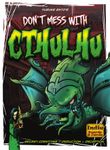
and it is just really silly, really fun, great with kids, but also really fun to play with adults. And so, if you can get your hands on this, I think that this one is a great one that can really kind of lighten the mood and add some fun to your gathering. The next honorable mention is Fuji Flush. This is an older game, but if you are tired of playing Uno with your family, take this, throw out Uno, and introduce your family to Fujifil. So, it's a game where you're trying to get rid of all of your cards. It's a card shedding game. And one at a time, you're going around the circle. You're playing a card. If the card that's played after you is a higher value, you have to draw another card into your hand. But if the card that comes after you is the same value, they add together. So if I play a four and then the next person plays a four on the table is now a value eight. If it makes it all the way back to you and no one has beaten the value of your card, then you get to discard that card without drawing new cards. So, you're really trying to kind of like team up with other people at the table to play the same value card to make it so it gets all the way back to you so you're able to get rid of cards instead of drawing new cards. It's super fun and it's honestly it's way better than Uno, but kind of in that vibe. The next honorable mention is called Don't Mess with Cthulhu. I put this on the list because if your family likes the idea of like a social deduction game, this is one I would recommend getting and playing over like a werewolf. And that is because it gives you a reason to actually be suspicious of the other players. So,
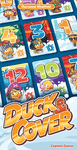
some of you are cultists and some of you are investigators and you're going to have cards in front of you and the investigators are trying to like be like, "Flip over that card." And if it's an elder sign, that's good for the investigators. They want to reveal all the elder sign. But if it's a Cthulhu, then that's good for the cultist. And so, it's not just, "Oh, you're just being suspicious, so I vote you out." You're literally like, "Wait, are you trying to get me to flip over Cthulhu or are you saying, "No, I have an elder sign and it's good for us if you flip over one of my cards." There's a lot of good structure to it. And so, I recommend if you're looking for a social deduction game to play at a family gathering. Don't mess with Cthulhu is a great one. The last honorable mention is a little card game called Duck and Cover. It's a quick card game, 15 20 minutes. It can play up to seven people.
It's, I think, one that works well with adults, but definitely with kids as well. This could really span like an age gap. So, with ducking cover, you have a whole grid in front of you of different like themed rubber duckies and they all have a different value on them. And then you have a main deck and you're flipping over a card and whatever card gets flipped over, you can either move the matching card or you can cover up the matching card on your little tableau. And what you're trying to do is make it so that you can have the fewest cards visible with the lowest values on them at the end of the round. And there's strategy to how you like move and manipulate your tableau to make it so that you can cover that 12 with that too. But it also is simple enough and cute enough that like kids are going to be able to get into this no problem. It doesn't outstate its welcome. It's super quick. It's charming to look at and you quack in the game, which I know I said I was avoiding games that might make people feel silly or stupid, but this one you really, it's surprising. People will get into it. It's really charming.
I recommend it. Quickly, as an honorable mention, the last one, Ducking Cover. Okay, let's talk party games. You've got a big group of people together. You want something light, boisterous, high energy. I got you. First one I want to talk about, Doodle Dash. Now, this is kind of in that world of Pictionary or if you know teleustrations, like teleustrations. Another great one in this category is caution signs. But I want to talk about Doodle Dash and there's a reason and that's because of the dash part of it. So, in Doodle Dash, you're going to pull out a card and it's going to have a bunch of different prompts on it. And so, the person who's going to be the guesser is going to close their eyes, show everyone else the card, and say a number, you know, uh, five. And whatever is there on five is what people have to draw. And everyone else is going to start drawing whatever that was. Let's say it was bride. Here's where the dash part comes in. Whoever finishes their drawing first grabs this little cylinder. And then whoever finishes their drawing second starts rolling this die. Whenever the die comes up with a stop sign, everyone else has to stop drawing. Then the person with the cylinder who finished first shows their drawing to the guesser. If the guesser can guess the drawing based on this first very quickly probably drawn image, then both of those people get points. If not, they're like, I don't know what that was. And you, the person
who grabbed the cylinder, who was like, this is a perfect bride, are now looking at it and you're like, what was I thinking? This could never ever be this just what is this mess? I thought it was so good. And then as soon as I stopped drawing, I realized it's a it's it's nonsense. It's squiggles. Then the second person reveals their drawing. And the guesser has another chance to guess. And if they guess it from that, the guesser and the second person gets the points. Now they still can't guess it from these two people who probably did their drawings very fast. Everyone else reveals their drawing. And with all this information, now the guesser can try and guess. And if they get it then then all the other people get points but not the first and the second. I think it is so funny when you draw something and then you realize I thought this was great and it's it's nonsense. It's absolute nonsense. And I really like what that speed element adds to this game. And that's why I really recommend it for a family gathering like this. And again, kids and adults can all play this. I mean my drawings look like kid drawings.
So even playing field there and it plays up to seven. So that's a nice bigger group that you can play this with. But it works well at I would say you probably want four at this. You can play with fewer, but I would say four is probably the fewest number of people you really want to be playing with, but it can go all the way up to seven. The next party game I want to talk to you about and recommend for your family gathering is one that is by one of my favorite designers. I have to say probably one of the most versatile designers we have working in board games right now. I'm very comfortable making that statement. It's by John Declair and it's called Ready, Set, Bet. So, let me tell you about the first time that I encountered this game. I was at a big game day. There were a bunch of people there. I was playing a nice calm strategy game.
This other group of people were playing ready set and they were losing their minds. They were hooting and hollering. They were going crazy. They were shouting. there. I was like, "Yo, the rest of us are trying to play like terraforming Mars right now. Can you like keep it down a little?" And then I was like, "I'll play the next game of Ready, Set, Bat, but I'm going to have some dignity. I'm not going to act like that." Okay. Yeah. Halfway through the first round of Ready, Set, Bat, I was standing up shouting, like banging on the table, also very into it. So, I was resistant and yet it sucked me in. And the same thing just might happen with your family. So, this is a game about betting on horse races. And you're going to lay out this big board to place out your bets as someone's rolling dice and moving horses along a track. And as they move, they're narrating what's going on.
And you're trying to place bets out on the board based on how the horses are doing. And there comes a point where there are no more bets. You just got to watch what's happening. And once someone has placed a bet on the spot you wanted, if you didn't get there fast enough, it's gone. You can't place there. It gets really exciting, intense. It's all luck based. You don't know how these horses are going to go because you don't know how the dice are going to roll. And look, if you are like, no one in our group wants to be the person running the horses. That's a little too much personal attention on on a person. Guess what? There's an app you everyone can just play. I think it can play up to nine people and you can just use the app to run the horses for you. No one has to do it themselves. So, that's a perfect solution for that issue. You also get a little extra strategy because every round new special bets come out. You get special little powers that you get to activate each round to like change your strategy or change how you're approaching every race. I think there are three races in the game and then it's done. It's so fun. It's high energy. It can play a large number of people. There's a little bit of strategy.
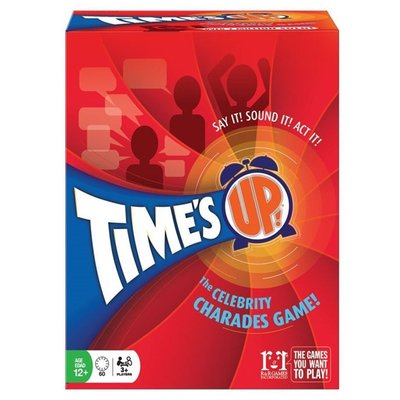
I really highly recommend this one if you have a family who would like to hoot and holler and place some imaginary bets on some imaginary horses. Okay, the last party game I am going to recommend to you, I guess that's technically game number eight on this list overall is one that you've potentially played before. It's kind of a play on a classic. So if you've ever played Fishbowl or Celebrity, this is basically that game but kind of made a bit more official. So, I'm going to recommend the version called Times Up, but there are other versions of this that are published out there, monikers. There's maybe another one, but I really like the version that's Times Up. So, in kind of the like public domain version of this game, you're making everyone write down different words, people, places, celebrities on pieces of paper and then mix them all together and then you're spreading them out among your team to get people to guess what everyone's written down. why I think it might be worth getting one of these official published copies of the game because no one has to come up with any words to put in. They're there for you.
The game comes with cards. You're going to pull out a certain number of cards and then you're going to deal those out equally to all the players. You're split into two teams sat every other. In the first round of the game, you're going to go through and you're going to do this. You can say anything you want to try and get your team to guess the word on your card. And everyone's hearing what all these words are, right? which is important. You're going to want to pay attention. Then at the end of the round, you count up how many guesses both teams got right. Mark that down. Go into round two. You're using the exact same cards. They're dealt out differently now because you're going to reshuffle them, redal them back out. But now in round two, you can only use one word to get people to guess what your card is. And hopefully you've established a little bit of a meta around what these words are because you're like, "Oh, this is the card that grandpa couldn't get, couldn't guess, and everyone was like, "Grandpa, you know it. You know it." And he couldn't guess it. So now maybe it comes up and you're like, "Grandpa." And now everyone knows exactly that it's Popeye or whatever. So you're going to do that. And then in the third round, you use all these same words again, but now you can only do charades. There's no speaking. And it really builds this really fun meta and like inside jokes around the table. And again, you don't have to buy this game to play it. You can just play it by making up your own words. But if you're in a group where you think some people are like, I don't know, I can't think of anything good.
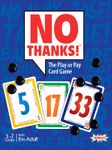
Just get one of these because the words will be there for you. All you have to do is shuffle up the cards, deal them out, low pressure, no one has to come up with anything. But say your family's not super into the high energy, boisterous party game scene. That's fine. Maybe your family is a lot like my family. You spend time sitting around the table playing a lot of card games. The next category of games we're going to talk about are card games that I recommend for your family gathering. So game number seven on this list is no thanks. So no thanks is a bit of a classic and I think it's going to work really well with your family gathering because it's very simple to teach. you are trying to score again the fewest number of points. The way you're going to do that is you're collecting cards and you score points based on the value shown on your cards. So on your turn, a card is going to be revealed and you're going to say whether or not you want that card. You take it, you put it in front of you or you say, "No thanks. I don't want that card." And you pay one of your chips.
Everyone has little chips onto the card to be like, "No, I don't want it." and it's going to go around the table until someone finally goes, "Okay, I'll take that card and they take the card and all the chips that are collected on it." So, for some reason it gets to you and you have no chips and you really didn't want that card, you're going to be forced to take it. So, now you're stuck with card number 37 and that's 37 points. That's bad. But if you collect cards that are consecutive, you're only going to score for the lowest value in that run. So, if I have card 37, now I really want to get card 36, 35, 34, 33, 32, 31, 30, because now I'm only scoring for 30. So, you're trying to get the fewest points as you can by collecting cards, bluffing, trying to get manage your chips, and you can play up to seven players. And again, it's so simple to teach. Once you do one or two rounds, everyone's there. They're with you. They understand how it works.
Plus, it's full of really delicious moments of being like, "This person is out of chips. They're gonna have to take this card." And like watching them be like, "No, it ruins my plans." Or being like, "They really want this 15, so I'm just going to take it because I don't want them to add it to their little run of cards so they can score fewer points or, you know, knowing that like no one else wants that card, but you do. I want that 30 because it's part of my run, but no one else wants it cuz it's 30 points. I'm going to let it go around a few times." They're all going to say, "No thanks. put more and more chips on it so that I can collect more chips so that I have more power to pass on cards later. It's great. It's really It's really fun. The next card game, it has two names. Right now, you can get it you can get it as Trio. My copy is an older version uh one from Japan and it's called Nana or Nana, which means I believe seven in Japanese, but you're probably going to find it as trio. So, I really recommend this because the way it was pitched to me is it's like memory plus Go Fish for gamers. So, again, if you are with kids or adults, everyone knows memory.
Everyone knows Go Fish. You're going to be able to teach these concepts to your non-gamer family members so easily, but it's got just a little you're just like, I don't know what this means. You're it's it's it's you're you're turning up the dial just a little. That's what this means. You're turning up the dial on it a little so there's enough strategy that someone who plays more games and wants something a little more interesting going on is going to have a great time with this game. So, the way this works is you're going to deal cards out to everyone. You're going to have a hand based on your player count and you're going to have some cards in the middle. They're all face down. You put your cards in order from lowest to highest. What you are trying to do is get three sets of three matching cards. Or if you just get the three set of sevens, you win. Or if you get a set of cards that together, either through addition or subtraction would equal seven, you win. So, for example, if you get the three nines and the three twos, 9 - 2 is seven. So, that's what you're trying to do. And that's why I think it's the original was called Nana and the new one is called Trio cuz you're working on a trio of trios, etc. Where does the go fish and the memory part come in? Well, on your turn, you get to look at three cards.
And you can do that either your own cards or other people's cards or the cards in the middle. So, if you want to choose a card in the middle, you just take one and you flip it over and you reveal it to everyone. Maybe that's like a five or whatever number is flipped over. You have one in your hand, but you don't know where the third one is. So maybe you're going to say, "I think maybe Aunt Debbie has the third one in her hand." So you're going to say, "Hey, Aunt Debbie, show me one of your cards." But you can only specify lowest card or highest card. You can never show a card in the middle of anyone's hand. So you're like, "Okay, this is a five. Maybe Aunt Debbiey's lowest card is also a five." So you say, "Aunt Debbie, show me your lowest card." She shows her lowest card. It's a three. So you have a five. The five's in the middle, but you don't know where the third five is. So you might then say, "Okay, let me just see what else." Maybe her next card. Her next lowest card is the five. You say again, "Aunt Debbie, show me your lowest card." Or you go to someone else. Show me your lowest card. Show me your highest card. Or if you had revealed the five in the middle and Aunt Debbie revealed her five and you have a five and it's your lowest or it's your highest, you could say, "Me, Paula, show me your lowest card. Oh, look, it's the third five. I now have one of my trios that I need to win the game." But if you don't find a matching set, everything flips back over. And now next time it comes around, you're like, "Oh my gosh, I know that the other two fives have
come out now by the time it's gotten back to me. But where were they? Was it this card in the middle? Was it Aunt Debbie who had the five? Or was it dad? And that's where the memory aspect comes in. It's super quick. It's super cute. It's really easy to learn, but you have like a little bit of that strategy because you can't just pull cards from the middle of your hand. They have to be lowest or highest. And that adds just enough little bit of intrigue, a little bit of strategy to really make it that memory goofish for gamers. Okay, this next one in this category is a little bit of a cheat because for number five on this list, I'm just putting classic card games. And now I'm going to talk to you about four modern tabletop games that you can introduce to your family based on other classic card games they already know and love. Okay, so the first one, if your family loves to play like blackjack, so I learned how to play blackjack from my uncle, so I grew up playing blackjack. You could introduce them to flip seven. It's that same kind of idea of flipping over cards. Do you want to hit? Do you want to stay? And trying to get the highest value that you can without busting. So in flip seven, you have cards zero through 12. And in the deck, there are the same number of cards of that value. So, what does that actually mean? That's a confusing way to say that. You have 12 twelves in the deck. 11 11s, 10 10, 9, 8, 7s, 6s, 5s,
44s, 3es, two twos, one one, and you also have one zero card. If you're flipping over cards and you get a duplicate card in front of you, you bust. If you manage to not get a duplicate card at the end of the round, you score your value of what's in front of you. So, if you have a 10, an 11, and a 12, and you are like, "Look, these are very likely to come out again cuz there's more of them in the deck, I'm just going to stop. I'm going to stay. These are the points I'm going to have at the end of the round." You've got what's that like 33 points? That's very good because whoever gets to 200 points first will win. But there's a twist. That's what makes this an elevated version of these classic games. That's what I was trying to do earlier. We're elevating.
So, you also have these other cards in the deck that might come out that might add to your score. They might multiply your score by two. They might give you a little safe card. You get a second chance. If you have the second chance card and then you bust, you get to play that. No, you didn't bust. You're good. You get to keep going. You can also freeze someone else so they can't keep taking cards, etc., etc. So, those things give a little more strategy to the game. Plus, the ultra thing is why do you want to really keep pushing your luck? is if you manage to flip over seven cards, flip seven without getting a duplicate, you don't bust the round immediately ends. You score all your points plus 15 bonus points. So, there's an incentive to keep going to see can you get to that seventh card or are you going to bust? So, flip seven. You can find this like anywhere. Go to any like Walmart, Target, Barnes & Noble, you can probably find a copy of this. The next elevated classic card game is for those of you who have family members who love to play Rummy. You could get Romy Rammy, which is a play on the Rummy mechanisms.
So on your turn with Romy Rammy, you have cards in your hand. You have cards in the market, and you can take up to three cards from the market. They just need to all either be matching suit or matching value. So maybe I want to take these three fives because I have a five in my hand already. I can then turn in the four fives to complete this contract that requires four of the same card. Then it gets a little extra interesting because see how there's a diamond on this card. If I have any diamonds in the cards I've turned in for that contract, they flip over and get saved for extra points at the end of the game. So just takes that idea of rummy and it just adds a few little extra things into it. Gamifies it even a little bit more. changes it up a little so that you can teach it to your family who love that game already but make it a little different, a little new, a little more interesting for you. So the next one is for your family members who like to play hearts and that is Rebel Princess. And Rebel Princess, it is all themed after like fairy tale princesses. And the hearts in this game, the cards you don't want are the princes. They have snuck in. They are trying to propose to you, but you don't want to get married. You don't want them. The prince cards have these little skull icons and at the end of the round you're gonna count up your skull icons for points and you want the fewest points at the end of the game to win. So you don't want to win the skulls. You don't want those princes in the tricks that you're winning. But also there's sneaky. There's this frog prince card who is extra skulls because he's a
prince in disguise. As soon as you kiss him, boom, he's not a frog anymore. He's a prince. Boo. This one is also just tuned up a little because every princess has a special ability you get to activate during the round if you want to. So that gives you a little extra strategy to think about. There's also different scoring and event things that happen every round. You're going to flip over a card and now it's like, "Ooh, this time fairy godmothers count as negative points." Or this time you have to play your cards into the trick face down. or this time you're swapping cards with your neighbors and it just really adds a little twist. So again, you have that base of hearts that your family already knows and likes and it just makes it a little bit different. Makes things a little more exciting. Okay, game number 5 one, two, four. Game number 5.4 for in this card game, classic card game category is the one that is for my family because we all like to play spades when we get together and I love spades and I'm still going to play it. But if you want to have a little like elevated version of spades, I'm going to recommend for you this little game that I just found earlier this year called number wang. Yes, that number wing. Just like spades, you're going to look at your hand and you're going to try and figure out how many tricks you think you can win. You are playing just on your own. You're not on a team and you know that there are going to be 13 tricks. You have to bid keeping in mind that there are 13 total tricks
that are going to be played out. You are going to take your hand, you are going to look at it, just get a feel for it, and then you're going to pass it to the player on your right for the first round. You take the player on your left hand and you look at it and you write down a bit of how many tricks you think that hand is going to win. That's locked in. You can't change it because then you're going to pass cards again. You look at the next hand. Now you have more information because you've seen your hand, their hand, and now their hand. You write down how many tricks you think they're going to win. So forth and so on until you get back to your hand. And now whatever's left, you're like, "Okay, well, I thought the first hand was going to win six tricks. There's only 13 total. So now that's seven. I have to split among the other three hands. So the next one was probably going to win three. And then okay, then I thought the next one was going to win three, but that only leaves one for me. So now I somehow have to win only one trick. And then you take two cards from your hand.
You all pass it to the player on your left. So now like you don't even know what cards are they pulling out of their hand to give to you. Are they going to actually try to win the tricks that you thought they could win? Because I'll tell you what, when I played this game, I thought for sure this player, they were they had such a good hand. I was like, they're going to win like six tricks. They decided to go nil and they did it. I was furious because you score points based on did everyone else at the table meet your bid you made for their hand. I know how to bid for my own hand in a game of like spades. I know how to manipulate winning or losing tricks so that I meet my bid. I I'm pretty good at it. But to have to then like apply that to other hands, not knowing how those players are actually going to end up behaving in the round, it just adds a little bit of chaos. It's super fun.
It's such a great twist on the game. Highly recommend it. And that's number Wang. Okay, so look, maybe you don't want to play party games. Maybe you're not a big fan of card games. You want your strategy games and you want to figure out how you can get them played with your family. Well, I've got a couple of those to recommend to you. These are light strategy games that I thought could work well with a larger group with people who aren't used to playing games and people who are and could run the gamut of age ranges. So, the first one I want to recommend to you, I guess it's number four overall on this top 10 list if you don't count all those card games we just talked about. It's Wilmont's Warehouse. So, this is a cooperative game, which I think can be really great when you're with your family. It takes away some of that competitive spirit if your family has maybe more than their fair share of it.
And basically, you have this board out in front of you and you have these tiles and every round you have tiles you're flipping over and you're placing out on the board. You're storing these items in your warehouse, if you will. And they're all these little abstract images. And as you place them down, you're going to show them to everyone and where I'm putting it. And then you flip it over face down. So every round you have a different little rule for how you're putting out your tiles to add to the board in the first place. So the first round maybe you just place them out. The second round it might be that only you and the player next to you get to see even what the tile looks like. You look at it, you describe it to everyone else, and then you get to just decide where it goes. They haven't even seen it. So, it's kind of mixing it up for every round until all your tiles are out.
Then, you've got all these little cards and you are going to set a timer and you're going to try and find the images that you know you've put on the board and put them in the right spots. Now, some of these cards that you have are images that you never put on the board. They're a little bit of a red herring. You need to set those aside. Some of them might be an image that you didn't see, but they did because in round two they were the only one allowed to look at it. And you're like, "Uh, was this that thing that you described as a taco?" Oh, and then they're like, "Yeah, that was and it goes here." You score based on how quickly you got this done. And for each one that you got incorrect, you add time to that score. And at first, this is going to sound impossible. You're going to be like, "How in the world are we going to remember 25 or however many tiles on the board and which one they all are?" But if you've told yourselves a little story and you work together, you're gonna remember and it's going to be like it's gonna be a b honestly, it's gonna be a bonding experience. So, this one really does kind of straddle the line between like party game and strategy game, but it's really fun. It's really great, and it's such a great way to work together with your family and be surprised at how well you're actually able to do it. The next two games on this list are part of the rolling right, flipin, right genre.
The reason I've chosen these is because they are light strategy games and because they tend to work well for like any number of players. Like I'm pretty sure both of these games list their player count from 1 to 100. So this is really great for a larger group that you have together. The first one we're going to talk about is Welcome to. Now this is the other game on this list that I don't personally own. I have Welcome to the Moon, which is also good, but you can't play it with as many players. But welcome to is one where you're trying to build out a neighborhood. So you have a sheet of paper that you've pulled off of like a score pad and you're going to fill in the house numbers and you really want to go in consecutive order. You want to go from low to high and you're trying to score based on filling in parts of your neighborhood and then other little things that you get to trigger because you flip over a card and that gives you the street number you need to put on the house and then the back of the card on the deck is a little symbol and that tells you like this one gives you a little bonus. you can put a pool in on this house or you can draw a fence here or this one's going to let you mark this other little scoring area and you have multiple you have like three laid out for each turn. So, you get to choose which value paired with which symbol is going to be best for your house and you're going to build things out and you're like doing so well. You're like, I've got a a a six to 12 and I really need that 13 to come out. And then you're like, h it's not coming out. It's not coming out. So, okay, fine. I'll just put the 15 there.
And then the 13 comes out. It's full of those kinds of moments. How far can you push it before you just have to give up on your goals, you know? It's just maybe that's too much like life. But it's super satisfying, especially if you have a family who's into like Sudoku type puzzles. I think this game kind of scratches that same kind of itch. And again, it can work with a huge number of players. And it's just really simple to teach and learn. And it's satisfying to fill in your little neighborhood and make your houses and your numbers like just right and in the right order. And it's like I feel like it's actually really good for like type A personalities. One of the reasons that welcome to and the next game I'm going to talk about works so well is because you're all taking your turn at the same time. You can play with a larger group because there is no downtime. You flip over the cards and then everyone is at the same time choosing what they want to use and putting it on their sheet. So, the game moves along and no one's like waiting for Uncle Bob to like make his decision. Actually, they might be cuz we're like, "We've all finished Uncle Bob." Which where are you putting that house number? Like, come on. But otherwise, there's no downtime. You're just moving things along. Okay, the last strategy game I want to talk about and technically I guess the number two game on this loose top 10 list is uh another flipping right game. It is one of my favorite games. I own this one. I'll never get rid of it for my collection. I really love it. And it's called Cgraphers. So in Cgraphers, it's similar to Welcome to and that you're flipping
over cards to tell you what you get to put on a sheet, but this time you're not adding house numbers to a neighborhood. you are actually mapping a new area of the kingdom and you're trying to make the best map. Now, I like to play this with colored pencils because you're going to add different kinds of terrain to your map, but you don't have to. You can just play with regular pencils. It it doesn't matter. So, you're going to have four different things you're scoring for. A, B, C, and D. And these kinds of scoring things are going to be it's a variety of things. You flip over a scoring card and see what it is for that game. But it might be something like you're going to score points for water squares next to farmland squares or you're going to score for having forests on the border of your map or you're going to score for your largest village that you've created. But these don't all score every round. So the first round you can focus on whatever A and B is because that's what's going to score the first round. The second round you're going to score. Can I do it with my fingers? For B and C. The third round you're going to score for C and D. And in the last round of the game, you're scoring for D and A. So, you're kind of thinking at some point you're going to be like, I don't have to worry about whatever scores for B anymore because we've scored it twice. It's not coming up again for the rest of the game. Every time you flip over a card, it's going to tell you what shape and terrain type you can choose from to put onto your map.
So, it might be you're definitely putting a forest on there, but it could be this shape, which is smaller, but it gets you a coin, which will be points that score every single round. Or this shape, which is larger, but it has no coin. Or it might be, look, you can choose from a water space or a farmland space, but it has to be this shape. And each of those cards has a certain amount of time value listed on it. And when you fill up the time value for the season you're in, that triggers the scoring for that round. I love drawing Tetris shapes. I love fitting things in. I like at the end of a game having something pretty to look at. That's one reason why I really enjoy cgraphers. And again, you're like all just sitting there drawing a map together. And you have the same options in front of you, but what you choose might be really different.
And that can be really fun to see like what you did and then like what your brother did and how that's different or how it's the same. You also have an option. So, it's up to you, but you can play kind of like a friendly version, which is what I've basically just described, or you can play a version that has a little more competition to it. And with that, you have these monster cards that shuffle into the deck. So, instead of flipping over just a regular terrain shape, you might flip over an ambush. You shift your maps over to the player next to you, and you draw the monster on another player's map for them. and you want to put it in a way that kind of messes up their plans because if you don't cover up those monster shapes that's worth negative points so you can really kind of be mean and like really mess up the person who sits next to you based on where you draw the monster card and then you pass it back and then you're like that's where you put the monster that ruins all of my plans don't do that. So if your family would be into that if you like the idea of maybe being able to like have a little more player interaction in your game play with those ambush cards. If you'd rather have a friendlier game, maybe you're playing with kids who like don't want their drawing ruined, you can play without those cards. But man, I love this game. It's so fun and it is like really visually pleasing and it's simple to teach and learn. You can play it quickly. You can play it over and over again. I really, really, highly recommend Cgraphers. Okay, y'all. We made it. It's the end of the list. It's the last game. It's my wildcard category
game. It's technically in the number one spot, but we've been playing real fast and loose with like the rankings. This is mostly just like 10 plus some bonus games, 14 games that I think you might have fun with. So, this one is called Clask. So, you can play this with two players. I think they might have a four-player version of it, but the main game is only two players, which I know breaks the rules that I set out for this list where it needed to be for larger groups, but you could set yourself up a little tournament and then you could get the whole family involved. You could make teams. You can rotate people through. So, what this is is kind of like a little mini air hockey game, but there's no air. You have this board that would be easier to travel with than Crokinol, which is why I'm not recommending Crokinol because Crocol is like is real big. You can't travel with that. But you could conceivably put your copy of Clask in the car if you're driving to your family gathering and take it with you.
So, it sets up on the table and you have these little magnet handles that go one goes on the top of the table and the other magnet part goes underneath. And now you've got your your clask stick that you can move around the table and you've got your little ball and it's going around. You're trying to hit that into the other player's goal spot. But these things are magnetized. So there's these little other little pucks in the middle of the board. And if they come attached to your stick, then that is points for the other player. If you get a goal, that's points for you. If you are kind of wild with how you're moving your stick around and you comes apart or you go into your own goal with your stick, that's points for the other player. It's just a fun dexterity game that feels like you're playing air hockey, but way smaller, way more actually like accessible. You don't need a giant like air hockey table that costs a bunch of money and you have this physical competitive game that you can set up a little tournament and play with. I think it could work really well in like a family gathering situation.
And we were like, "Look, this is what we're doing today. We're going to watch each other play. We're going to root for each other. We're going to have teams. We're going to make it a whole thing. You could really do like a whole tournament day with Clask." And I think you'd have a great time. You don't have to learn many rules. Like literally, there's like three rules to the game of how you score points. And then you just go and you try not to lose the little magnetic pieces. Don't play this one with babies cuz it's probably a choking hazard. It's just a fun silly time. It's my wildc card game because it's not a card game. It's not really a strategy game like what we're talking about. It's not really a party game. It's just a good a good old time. So, there you go y'all. 10 plus games that I think will go over really well. You'll be really successful if you bring those to your next family gathering. just a way to like know that you can spend some good time together that's not just sat in front of the TV or you know talking about politics or religion or any of the things that like you kind of want to avoid when you're with your family because everyone can approach these things so differently. Instead, you could spend time really building up some family bonds by playing games. take some of the pressure and some of the stress off of this time that we spend together, which can be stressful and there can be pressure and there can be expectations.
So, I hope that these game ideas help. I hope that you have fun. If you play any of these with your family or if you have any other games that are hits with your family that you want to recommend to people, please leave that in the comments below. I would love to know how how your family gathering goes. Thank you so much for watching this. A big thank you to my patrons who support what I do here on this channel. I make a lot of entertainment focused content. You know, I have these top 10 lists from time to time. I've got playthroughs, live playthroughs, edited playthroughs. I've got sketch comedy here about board games and tabletop gaming. Look around. Subscribe if you're not subscribed already. I hope that you like what you see. Okay. Well, happy happy family gathering time of year, whatever time of year it is here for you. And we'll see you in the next one. Bye everyone.