My Top 100 of all time! ►►► Numbers 40 to 31 (plus 🤒🤧🤢)
Games in This Video
8 games are featured in this video — they unlock as you watch.





Transcript
Hey everybody, it's time for Roto to once again continue the top 100 countdown. And this week folks, I am sorry. I am sick as a dog. I am death warmed over. So, you are not going to be getting to see a lot of fun interstitial stuff on the road. I'm just going to sit here in my jammy bottoms um sipping bullion that Jen just made for me. is it's the only thing that soothes this ravaged throat right here. Uh, and I'm just going to tell you about numbers 40 to 31. And I'm probably not going to be very high energy right now because I am all drugged up six ways to Sunday to be able to function at all um on I don't know daytime day quill and decongestions and all kinds of stuff. And I'm still it it's very unpleasant. Uh Jen's getting over it now. I'm about like two days behind her. So I'm looking forward to a time when my body returns to normal, but right now uh we are just hunkered down here at the Casasola Dam in Spain. If you want to look it up online, sorry.
Normally I'd go out there and I'd show you the little lake that we're overlooking and all of that, but and the deer that are walking by, but I just can't be bothered. Folks,
tell them to get their shots. Uh, Jen says, "Get your shots." Um, all right. Anyway, we're starting with uh Oh. Oh, you folks who don't like the stuff, you're going to be happy. This is just games today. But I don't think I'll be going into too much detail. My apologies to numbers 40 to 31. Let's go to number 40. Nations. This is one of the greatest civilization games of all time. I think it is my top ranked civilization game. So, yeah, I'm going to say it's the greatest civilization game of all time. Although there have been some good ones this year, I got to say, folks. But anyway, Nations is just it's tough to beat. It's a really simple, elegant system for capturing the true sweep in history of humanity. And if you get the expansion, the Dynasty's expansion, it adds so much content. But even without, it would probably still be in my top 100. Now, it used to be in my top 10 of all time, but as you recall back in the first episode of this series, I explained how I radically overhauled my ranking of games. And one of the things I do not rate as much as I used to, or one of the things that drags a game's ranking down is being exceptionally long. Nations is an exceptionally long game. I don't think Jen and I could play a game in under three hours, and we're just playing two players. Although, to be fair, we are slow players. Or more to the point, Jen is a slow player. Um but uh you know for those three hours we are so engrossed as we build up our civilizations by drafting all kinds of cards, leaders and technologies, colonies, wars, battles. Uh there's a
lot of stuff that really makes nations stand out. I love the way it handles war. It's a fairly career friendly way to do it where if I've got a certain military and I decide to declare a war, it's not a war against anybody else. So, it's just saying, "Oh, there's going to be wars in this age and they're going to be at my military level, which means anybody below my military level when the age is resolved is going to get hit. However, um they can raise their military so they're not bothered by it or they can instead invest in their infrastructure so they can pretty much just shrug off any losses. I think it's a really smart and elegant way to be thematically true to the darker side of humanity without having to make it a particularly nasty game. But really what's at the heart of what makes this one so satisfying is that um at any given time I think there maybe some of the different text changes but the default is I think you can only have four technologies active. Um you start with four you know kind of you know prehistory antiquities levels of technologies and every time you want to develop a new technology which is hugely important you have to jettison one of your old ones and the investment you've made it and all of that and that is painful and you will have to do this many times over the course of the game.
This is something you'll see is a repeating thing throughout this list. I like games that make me make tough choices that force me to compromise to achieve my goals and nations does it because of that very very simple um restraint in that you can't have more than four technologies. You got to make room for a new one. Out with the old, in with the new. Um although man sometimes you know you can add some some oddball things you know all the way up into the age of industrialization and we're still rocking Spearman or something like that because I have held on to this for the entire game. I just can't let it go and I've just had to, you know, jockey around my other Anyway, it's it's a brilliant design. Uh captures the scope of history beautifully with the expansion. I don't know if I'd rank it.
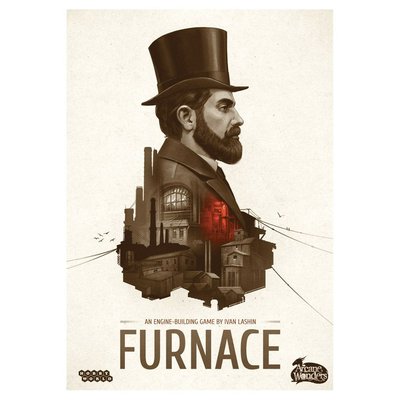
I probably wouldn't be 40 without the expansion because there's so much additional content and new cool ideas that were introduced in it. But anyway, Nations is it's the civilization game to beat quite frankly. And it's uh number 40. Number 39 is Furnace. Now, this is one of the greatest auction games of all time. Not the greatest. I believe there's one more big auction game still coming on the list a little bit later on. This is one of the greatest auction games ever because when I make my bid on a new building that can expand my um you know my era of industrialization set of cards I'm playing for myself, I might be putting a bid on that hoping to lose. As often as not in this game, you engage in auctions hoping someone will outbid you or even purposely under bidding somebody else who's already bid because sometimes whenever you um bid on a building that you can add to your own little engine because this is an engine building game.
Our neighbor is juggling.
Our neighbor is juggling.
Yes, he is.
Do you want to show
um
our cool neighbor?
Sorry, folks. We have a cool neighbor in a beanie who is juggling, but you won't be able to see him in the camera. I'd have to go outside. Trust me. Uh, motor homers are an eclectic mix and he's not inter he's just doing it for his own benefit cuz no one's watching him other than Jen looking out the window. Anyway, sorry, what was I talking about? First, it's an engine building game. We're bidding to get these cards to add to basically do goods conversions to score points, you know, um convert coal into um steel, convert steel into point, you know, whatever it might be. Very simple goods conversion. You're making a nice little engine that you want to run over and over again. You don't get very many opportunities to do it. It's a short game, only four rounds, if I recall correctly. Four auctions and then run your engine, another auction, run your engine or a set of auctions because there's all these different buildings that you want to add to your engine on offer. But every one of these cards has a consolation prize. If you bid on the building and you lose instead of getting that building to be able to run it later with your engine, you will get resources you need to feed your engine. And that's it. That's the crux of the game. This is a simple, elegant, fast playing game under an hour, but it is full from start to finish with really tough choices. And you know, uh, you know, weirdest thing in the world is, "Oh, I won the auction." No, I so wanted to lose that auction. What am I going to do? I thought for sure someone would out bid me, but nobody did. You know, uh those kinds of moments are really, really cool. The Interbellum expansion really
takes it to the next level, and it's with the Interbellum expansion, uh which I've covered on the channel. There's links down in the show notes, folks, for all these things I'm talking about today if you want to know more about them. The Interbellum expansion really elevates this by introducing, you know, cool, unique player powers and all kinds of fun stuff. Even the base game though is great. And I should also say I've gotten a chance to play the new Furnace Duel game that's probably not going to come out for two-player only furnace that's not going to come out till 2020. That game is phenomenal, too. Has the potential to even eclipse furnace. Although I'll probably just kind of group them all just in the Furnace series, uh, which sits right now as one of the greatest auction games of all time. The second greatest auction game of all time. Number 39, Furnace. Then there is number 38, Hollertow. You thought you were done with Uve Rosenberg. U Rosenberg was not done because this is my number one favorite Uveu. Rosenberg game, which is going to be a shocker to so many people. Uh Holllet did not really catch on quite as much as some of his other titles. But I think it's absolutely brilliant. It's him doing all his normal, you know, goods conversion euroy type stuff, but what really makes this game stand out is the way he handles objectives.
Objectives are a pretty common thing, a very important element. Ah, still warm. It's not pretty, but oh my gosh, it's keeping me going. Thank you, honey pie. Um, you know, objectives are, you know, objective cards are a pretty standard thing. The interesting thing about the holile objective system is you don't just get like, you know, hey, I'm going to draw three and resolve one at the end of the game or I'm going to, you know, get I'm going to get one every round or I start with three and that's it. This is a micro objective game where you are constantly getting an influx. One of the most important resources you can get is more objectives. But these objectives are tiny little jobs. You know, something that you you wouldn't even notice doing in another game, but in this game, you are rewarded for doing these simple things. Collect this type of stuff, you know, um do this type of conversion, build this type of thing.
Just little one-offs, things you would never consider an objective. But the thing is, at any given time, you're juggling, you know, upwards of a half a dozen of these different little things that are constantly pushing you, giving you little microwards um that can usually combo chain with each other. And so, smart play of this game, and this game has a lot of really cool ideas. The way it monitors the overall economy of the hauler towel, I which if I recall correctly, is a town. Is it in Netherlands? Is it in Austria? I do not remember, folks. I apologize. Um but um you know the the way the overall economy grows with this like major part on your board that I know it's kind of like the Uve Rosenberg um you know resource wheel but different in that it's not something you personally control. It's more on like a macroeconomic level that shows overall progress as certain milestones are hit. It's really cool in of itself but that's not what makes the game stand out. I love love love this game is so satisfying from start to finish because it just drip feeds you satisfying turn after turn after turn as you oh boom I I got two micro objectives done this time and I picked up three more and next time I know I can do this one oh and if I complete this one though it'll feed that one over there and it's just great feeling and I don't know that I've ever seen any other game approach it quite this way [snorts] and that's what really puts Holler towel at the top of the Rosenberg pantheon, number 38. Okay, then we go on to number 37, the rival networks. Now, I think in
the last episode of this series, which by the way, u if you if you just stumbled across this by accident and you've missed numbers 100 to 41, there's a playlist down in the show notes. You can go and hear all about all those other 60some games um that are the greatest of all time. But anyway, in a previous episode, I already talked about the networks, which is a phenomenal car drafting game. The rival networks is a twoplayer um version of the networks, but it really it it's the same setting, you know, where network TV executives trying to put together the right shows by combining the the right um setting with the right actors and the ads and all that and put them into the right time slot. The original networks, we were trying to manage a oneweek schedule. Now we're managing just one night with three hours, but still the same basic idea and it's still all about drafting the right cards and comboing them together and then trying to ride that show through maximum popularity and get lots of viewers, i.e. points. So the core game idea is still the same and a lot of the stuff is still the same, but there's two big things that changed that radically alter the feel of this game. One is entwined drafting. Now, if you want to take the perfect um you know, retired movie star who's going to be perfect for the cop drama you're trying to put on at the 8:00 p.m. slot, if you want to take him, he comes with an advertiser attached. Or if you but and you might not want that advertiser at all. Or you
have a perfect ad that fits your lineup to a tea, but it's got some soap opera actor and you Oh, yeah. Because that's it's the ads and the actors, if I recall correctly, they're entwined. And you, these are the most important things. You have to grab them. And I love entwined drafting because you often have to make those tough tough choices. I want this, but I don't want that. But they come as a package deal. So, how am I going to resolve it? So, introducing that to the already great gameplay of the networks makes the rival network stand head and shoulders above. But then there's something else too. And the networks, you know, the shows have kind of an arc. you know, you you set them up, they gain in popularity, you you you tweak them, they get more and more popular, but over time, they start to drop off, and sooner or later, you're going to cancel a show and move it into reruns. But, you know, the the heart of the original game is trying to, you know, drag that out as long as you can. The rival networks does something different. Every round, you are going to have to put a new show on.
You are constantly cycling through your shows. The game is forcing you to. And in the same I just talked about earlier nations um hey I've got these four um slots for you know whatchamacall um technologies and I've got to slot I've got to replace old ones with new ones. The rival networks forces you to do it whether you want to or not because that is the cutthroat nature of network television scheduling. And I love that extra um tension that it throws on you and it really really makes you have to work hard, really makes you have to plan smartly knowing that you're going to have this constant churn. And of course, the show, you know, once it's gone, it goes into reruns and and so that's its own little mini economy as well that you're trying to manage your reruns versus your first run shows, but the fact that you're constantly having to cycle stuff in and out really takes the rival networks to the next level. Um, networks is already great. The rival networks is even better. I love them both. Um, if the rival networks had as much expansion content as the networks did, I probably wouldn't need the networks anymore, quite frankly. But the networks is a bigger, broader. It takes twice as long to play. It's got a lot more stuff going on when you add the networks expansion and stuff like that.
But the rival networks is just a fast, tight, you know, tough little game. It just um makes you sweat from start to finish, and I love it. Number 37, The Rival Networks. Then we got number 36, Target. One of the greatest worker placement games of all time. And oh my gosh, that's another two-player only game. That's interesting. I'm talking about a lot of two-player only games today, folks. We're in a golden age of two-player gaming. Yes. Um because games like Tari don't have to be about players just sitting across from a battle line of each other and trying to blow each other up or destroy each other's summoned monsters or whatever it is. Uh, Tari is a worker placement game where every round you've got a grid of cards that represent different resources you need and then you've got a bunch of cards that ring the, you know, there's basically a bunch of cards that represent all the worker placement actions you can do and they are made in a ring, a square. Um, and then you every round you put a bunch of new stuff in the center, right? And you're going to put three workers, yeah, three targets on the outskirts, you know, in a row or column or whatever to do those outskirt actions. And you know, this is a euro game, so it's about goods conversion and all the normal and harvesting resources and all that stuff. But the thing is if I put um you know a worker in this row and then I put one in this column and this column in addition to doing those three actions where those three workers intersect out in the grid you know triangulation style I'm going to pick up those resources to carry into the next round. And that's awesome. That extra
level of depth and complexity for every single worker you set out. Not only are you doing something now, but you're setting yourself up to get stuff later that you know you're going to need. And often you will put a worker in a spot to do an action you don't care much about doing because you need to grab that spot because you need to triangulate off that row because the column was already taken and that's the only way you can get to that particular little bonus you need. That's what makes Tari so special. Tari has a great expansion as well. You don't need it though. Um, and it's hard to get. I don't understand why Target doesn't have a bigger audience. Everybody loves it. It's a cult classic and it is phenomenal. Absolutely. You know, infinitely replayable. So much variability built in and then a great expansion on top of it.
Makes Target one of the all-time greats. Number 36. Okay. Then we go on to number 35. Dog Lover. Oh man. Um, you know, this is a sequel to a game that was much more popular. The original Cat Lover really caught fire, I think, and it was a car drafting game about trying to take care of cats. Uh, a different designer, David Short, picked up from the original design of Cat Lover and rethemed it for dogs and made it better in every way. Jan and I, we tried Cat Lover and we thought it was a nice game, but it was a little bit too lightweight. I think there was an expansion for it that kind of elevated it. Dog lover though um is a surprisingly deep game all about trying to um you know take care of dogs, train them, rehome them, feed them, um you know, all this kind of stuff. And the way it works is there is a big grid. I think it's a 4x4 grid if I recall correctly. And on your turn, you're going to pick one row or one column. No, no, no, no, no, no. Is that right? No.
I'm thinking of something else. I was going to say you pick an entire row of column and grab all the cards out of that, but that's something that's coming later on this list here. It's cool because you've got these dogs, you train them in tricks, and these tricks have associated polyomino shapes like you know the S shape in Tetris or a straight line that could represent anyway. You're going to have a dog do a trick and that tells you what grouping of cards you can grab from this big grid. That's the super entwined drafting. You've got to grab all of them. You rotate the trick. you try to get the right stuff. Okay, it's really these two cards. They're next to each other I want. What other cards am I going to grab? Cuz I'm doing the trick that lets me do a, you know, a 2 by two square or whatever it might be, you know, depending on the dog, depending on the trick. And then I grab those cards. And those cards are a wide variety of things. They are new dogs.
They are new tricks. They are um, you know, behaviors. There are all kinds of things. And then once I grab these cards, I've got to work them in to this managerie of dogs I am building up for myself to score lots of points. And then um you know if I get new tricks, hey that means I can draft differently in a future round. It's awesome. It's super simple to teach. Um but there's all kinds of depth. In fact, I think probably the one complaint one could have about this game is, you know, dogs are kind of a universally appealing subject matter. And I'd love for this to be a gateway style game, but honestly, I think it's too heavy. I think there is too much going on. There's too much crunch. And I mean, this is like a great next step game after you've convinced your friends and loved ones that board games are awesome and you're trying to take them to the next level. Um, Dog Lover is a good next level game. I guess Cat Lover is the good intro. You pull them in with cats, but then you seal the deal with dogs. Oh, anyway, it's a phenomenal game. Um, you know, it's also really nice that, you know, all the dogs are named, so you really kind of develop an attachment for them. I think they are named after backers of the original Kickstarter campaign or something like that. But, you know, I mean, both my wife and I, we love I mean, look at this pillow. Look, look at this dog right there, right next to me. And there's one right over there. You know, we we travel with our dogs. We love dogs. So, of course, I'm going to love this. This is I'm just telling you right now, folks, this is the greatest dog themed modern board game there is, period. If you love board games and you love dogs, you have
to seek out number 35, Dog Lover. Okay, then we got number 34, Saltfield, which is the sequel/reake of an all-time great um era of colonization game, Santa Maria. And Santa Maria was always fantastic, but it was also not the most pleasant of themes. Um, and I've talked about Santa Maria great length and how the developer was really trying to do something, I think, kind of meaningful, important with theuh storytelling of that game. you know, trying to cast a light on the evils of colonization through using irony. And I think that was something that was lost on most people. And so it, you know, Santa Maria never really landed um the the way it meant to. And you know, it's probably just as well then that the developers decide to go back, take the cool core mechanisms of dice drafting and um dice activation that makes this game and Santa Maria amazing and rethe it. And now it's about um you know basically fishing in the fjords uh you know trying to build up your little mini fishing industry rather than trying to conquer South America and subjugate the people of South America. I got to say that's a big step up. It's a big improvement. I'd rather be doing one than the other given my brothers. And um I honestly I don't understand why some people No, I'd much rather subjugate innocent um you know oppressed people.
That that's me. That's what I love to do. Um me, I'd rather catch fish. Uh but anyway, regardless, the gameplay is where it's really at. Um this is a game where every round there's going to be some dice rolled. We're going to take turns drafting them and apply them to either the um row or columns of the little grid that represents our little fishing town. And the thing is what we're doing is I I I put a blue five at the top of the blue column five. I then get to activate in numerical order from top to bottom every tile I have previously built in that column. Boy, let's see if you can He's a bit close now. Can you see him? There's the juggler. Oh, if I can catch him on screen. Oh, there's there he is. Yep.
He's just walking around juggling. He's putting on a show for everybody here. Oh, and there he goes. Uh I guess he's practicing cuz
uh anyway though, that's he's he's really going for it. Sorry, folks. Uh, I promise you we're going to get no interstitials. You just got an interstitial. Let me get back to Saltfield. So, you take that blue five. You activate everything early on. Probably only going to be a thing or two. You activate by the end of the game after you put four or five tiles in there. You want those blue fives gesturally because you designed that row or that column or whatever it is to work in perfect unison as you activate all those things. Boom, boom, boom, boom, boom. And um, so with blue fives come up later, you want to grab them fast. And you know, when you're drafting, you can see what everybody else wants because you can see where their strongest rows and columns are. So there's a lot of tension built in and just a lot of satisfaction with building up the perfect I mean, what is it? I think it's a 6x6 grid, right? So that's 12 different engines you're building, you know, six rows and six columns, you know, and as you build up this row, you're also putting stuff in a column crossword style um that's going to make affect these other engines. And it's just so cool. That's always been the beating heart of Santa Maria, which was a brilliant design. And Salt Fur is even better. Uh, you know, I got rid of Santa Maria, even though I had the very, very cool expansion for it that added a bunch of new stuff, but Salt Fury adds a bunch of new stuff. Anyway, there's this whole other system it's got for managing resources. Um, this like resource conversion machine you've got on the side of your board that's really awesome as well.
There's a lot to love with number 34, Saltfur. Okay, then we got number 33, Tuah. Now, this is another one that for the longest time was in my top 10 games of all time. And the only reason it's fallen a bit like Nations before it is, it's a long beasty. Not as long as Nations, but pretty long. If it had an express mode, it'd probably still be in my top 10. But that doesn't change the fact that it is absolutely brilliant. We are developing the French city of Tuah. I think in Renaissance times or maybe late medieval, early Renaissance, I don't remember the time frame, but anyway, the city needs help and we're the folks who are going to help it by drafting dice. Although not exactly drafting dice, there's a lot going on with this game and it's really unique, quite unlike anything else out there.
Where to say? First of all, the city has three core elements. The red, yellow, and white. White was religion, yellow was civic, and red was noble/military. I think that's what it is. So, every time you play, you're going to get nine random cards in each of the three cards of each color um that represent the different buildings that represent all the different actions you can do. Every time you play, you're going to get a radically different experience because of these different combination of nine cards. Three red/military, three white religion. I'm trying to remember. I think religion were kind of the wild card. They do a bunch of stuff. the the yellow ones were the ones that like harvest a lot of stuff and the red ones were the ones that deal with all disasters cuz this city of Tuah is under constant threat. There are marauders, there are invaders, there's sickness, there's all kinds of stuff, all kinds of problems. Every round, new problems show up.
They're a different type of card. And we, as the people trying to steer through its troubles, it's our job to make sure that we address those threats. In each of the three locations, we can deploy meeples that represent citizens that focus on the military or the religion or the civic stuff. And at the beginning of a round, if I've got three meuples over in the yellow area, that means I'm going to get and roll three yellow dice. Maybe I'm going to get three yellow dice, one red and one white, right? And that's going to be my bundle of dice I've got. And so I roll them, you roll your dice, and you've got like three reds, whichever I call correctly. The reds are more expensive to maintain because you got to feed your dice or you have to feed your meuples basically to get these dice to represent what these mele are going to do for you. But anyway, everybody rolls their collection of dice. We got a wide variety of stuff. We put them on the central board because those are not my dice. I've got kind of first right of refusal on them. I've got first dibs on them. But anybody, if I rolled a yellow six and you desperately need that yellow six and you did not roll any yellow sixes, you when it comes around to you, if I haven't used my yellow six yet, you can um pay me to take my die. Now, some people consider that to be stealing.
Some people think Tua is a really nasty game because players are constantly stealing from each other. I don't understand how you could feel that way because you don't own those dice. You're you know that you're you're just like a temporary housing situation for them. And the thing is, if somebody gives you money for your dice, you're almost better off because there's nothing more important than money because money is how you manipulate the dice uh and and do a whole bunch of other stuff besides. So, if you want that yellow six that I rolled, you pay me for it. And hey, now I've got one die, but I could use that money to buy dice back from you later or do other things or manipulate my dice or bundle them and all kinds of fun stuff. And that's the crux of the game because I mean know if I I needed that yellow six because I want to funnel it into the second yellow building that just got revealed this round and I've deployed some of my people there and I need that dice to power that little micro engine I've got. So I need that yellow six cuz a yellow two I mean and this is a game where higher numbers are better almost always. So, if if I rolled high numbers, then I know I'm probably not going to get to use very many of them, but I'm going to be rolling in dough pretty soon cuz everybody who rolled low numbers wants to buy my high numbers for me. And then I can use all that money to turn things in my favor um in a lot of different ways um you know, to buy influence, all kinds of things. It's a really interactive game. And while again a lot of people consider it to be a nasty game, it has never once felt that to me cuz again I don't feel like I own those dice,
they just happen to kind of live on my land. I guess I'm their landlord or something like that. I don't. Anyway, it's a great game. I'm sorry my runthrough is very very old for it. Um and uh uh but apparently apparently in 2026, maybe 2027, it's going to be making a comeback. So, I'm very excited about that, too. Anyway, that was number 33. TWA. Oh, by the way, thanks as always, I should have said up front, thanks to James Wood of That Board Game Show. Link for his channel is down in the show notes for editing this together and getting rid of any coughing fits I had along the way. Uh, so I'm trying to stifle those, folks. But, oh, the fleg is it's growing. But I'm almost done. We're on to number 32, Cascadia.
Oh man. Um, first of all, this is Cascadia with the I think it's called Landmarks or Landscapes Land something expansion. Without that expansion, Cascadia might still be in my top 100, but it would be up in the 70s or 80s or 90s somewhere. But this exp that the Landmarks expansion so elevates it. But even without it, Cascadia is a phenomenal game. Cascadia. I think it won the Spiels. So, it's a great gateway game. Um, and I've used it to great effect many times. Introducing people to the modern world of board games through Cascadia is a great way to go. Um, I don't think it's a good gateway game if you don't have somebody to teach it to you, but if you do, it's a great intro. And I've I've ended up selling a few copies of Cascadia along the way, or I know people went out and bought a copy of it afterwards because they loved it so much. Anyway, though, what is it? You know, we're trying to build up the Cascadia Pacific Northwest region by entwined drafting tile laying. If you've been watching along up to now, folks, you know that's mother's milk for me or delicious warm bullion, as the case may be today. Um, you know, you the you're always every turn going to grab a terrain tile and an animal tile and they're they're bundled up together unless you can spend your pine cones to split them up and break the rules. But normally, you know, the perfect world is, oh, I want that eagle badly and I want that wetlands. Oh my gosh, they're together. That's perfect. But more often than not, the perfect bundle is not
there, and you have to compromise. Again, that's I love a game that makes me compromise to solve problems and make tough choices like that. And Cascadia is full of tough choices. As you grab those combinations of tiles, figure out where to place them for maximum. Every time you play, you're going to get a different set of scoring conditions for each of the was it the five different animals? The eagles, the bears, the trout, is it foxes, and a fifth one? I can't quite remember off the top of my head. Anyway, you can see it all on screen. Um, but every time you play, you're going to get a different combination of the way these different animals score. And then getting back to the landmarks, if you add that one as well, you're going to get different combinations of scoring the different environments as well. So, you go from like paying attention to five or six objectives to like 10 or 12. And oh my god, the game just becomes crazy crunchy, but in the best possible way.
But even the base game is one of the all-time greats. Of course, it is. It's here at number 32 on the list. Cascadia. Okay, folks. Uh, you can probably I don't know if you can hear off Jen's really starting to break down. She's starting to hawk up some luggies left, right, and center.
She can barely speak. I don't know if you could hear that. Anyway, let's just get out while the getting's good with number 31, the aisle of cats explore and draw, which is the big surprise. The aisle of cats is a great great game. Um, but when Frank West eventually, and Frank, I apologize again for not recognizing you when we ran into each other. Oh my gosh, I'm still so embarrassed by that. I can't believe that. I I ran into Frank and thought he was somebody else because I hadn't seen him for a few years and he looks very similar to somebody else and and he said and he was talking and like what are you talking why are you talking about oh my god you're Frank West it was so embarrassing. Oh so embarrassing. Anyway though sorry Frank I apologize again. You're a great man. I cannot wait to play a final version of um your new game for 2025. Anyway, sorry we're not talking about 2025 games. I I declared that at the beginning of this entire countdown. Is of cast explore and draw is the roll and write or not roll and write, it's a flip and right. You flip up cards and draft them. That's the randomizer instead of rolling dice. And instead of the uh and then you draw, what we're trying to do is rescue an aisle full of cats. Uh basically the cats come in all these crazy polyomino shapes and um you know when we rescue them, we draw them onto our map. It didn't have to be. This game could have been a tile layer, but I got to admit it's it's it is fun to draw, you know, and to fill up your boat with because the game comes with um oh, we call them
different colors to represent the different types of cats. So, it's very satisfying, much more satisfying to draw them in rather than just lay tiles down. Although, I will admit um you know, the tiles look nicer because I'm not a very good artist. I just kind of fill in the areas. But still, it's not the polyo tile lang, which is the real super strength of this game. I mean, although that is a super strength. Um, and trying to these really crazy shaped cats just laying around and, you know, creating U shapes and all kinds of stuff. Um, you know, and and the game has a boatload of objectives. Not as many objectives as Holler Tow, which I mentioned earlier, but still, um, you get a ton of objectives to chase after in this game, which again, it's a very satisfying thing. But what really makes this game special is the way you draft. And it's a repeat of earlier. It's um it's entwined drafting where you've got a big grid of cards that comes out every round and you've got to pick a row or column. So like dog lover, but dog lover had that extra twist of having different shapes you grabbed of cards. Here you just pick a row or you pick a column. You grab everything in there. That means new cats, that means new objectives. And you try to get the perfect combo of stuff.
There is no perfect combo. But I love entwin drafting. I mentioned I just loved it in Cascadia, but here it is so elevated because you're trying to grab four things at once. Or maybe not, depending on how things get grabbed and, you know, stuff gets emptied out. But trying to get the best com there's no perfect combination. You're always going to end up taking some stuff that well, what am I going to do with that purple cat? I guess I can put it over there and then maybe connect it to the other ones. I'm not quite sure. But it's always going to be a tough choice every round. And this game is so fast. It plays in a third of the time of Isisle of Cats. uh cuz it, you know, jettisoned all of the slow card drafting and the multi-phases and all that. And now it is just a hyper efficient fun machine. Like several of the other games I have talked about today. It is absolutely phenomenal.
Surprisingly, it is not the greatest roll and ride of all time. There's one more roll and right coming that ranks even higher because it has conveyor belts. Oh, I can't wait to talk about that. But still, it is the second greatest roll and right of all times. And uh yeah, it's number 31, the aisle of cats, explore and draw. And that's it, folks. Um uh hopefully by this time next week, uh Jen and I will be on the mend and I'll be able to give you a little bit more tour behind the scenes for folks who love that kind of stuff. But I'm sure you can tell from my voice, I'm just barely dragging through. But hopefully this was a fun list. There's a little bit of something for everybody in this one, I thought, and some nice overlaps. But oh, folks, we're getting down to the wire. We're getting uh now we're going to talk about the top 30 next week, the top 20 the week after that. The top 10. Oh, it's very exciting. Uh my current plan is to have the top 10 up on um Christmas Eve, and then have my top 10 of the year for 2025 on Christmas Day, provided James has enough time to edit all that stuff together. Oh, James, you are the best, folks. Please go like and subscribe to his channel. Throw some stuff his way cuz he is awesome. Thank you, James.
Hopefully this one's a bit easier for you to edit together than most. Uh it was not as easy for me cuz I've got such a splitting headache right now. I think the drugs are wearing off. But I'm going to end it right there, folks, before my nose starts running visibly on camera. And I'll catch you again next week from the road. This is Roto signing out. Thanks for watching everybody. Talk to you so long. Bye-bye. And why don't you click a thing on screen? I got plenty more.