Top 10 Small Box Solo Board Games
Games in This Video
9 games are featured in this video — they unlock as you watch.






Transcript
Hello everybody. Welcome to Totally Tabled. My name is Shaggy and today I'm running down my top 10 smallbox solo board games. I have quite a large board game collection and so anytime I can find a game that I love that's in a small box, I'm so happy. It's great just for the ease of storage, but they're also convenient for when you go traveling. And usually these games are so easy to set up and put away, they tend to get to the table more often. Now, a big thing when making a list like this is determining how big is too big. You have to draw the line somewhere. For this video, I decided to draw the line at Harmonies. Harmonies is a great game. It plays great solo. I've done a full playthrough of it. Go check that out. The box is small, but for the purposes of this list, I'm going to say it's just a tiny bit bigger than the games I'm including on this list. That means great games like Unstoppable and Warps Edge, also arguably in small boxes, are just too big for this list. There's a ton of great honorable mentions that have been playing in the background. I highly recommend you check those out and check out my playthroughs of all of them. I'll put all the links of all the playthroughs in the description below, so go check that out. But let's get started with number 10, Mini Rogue.
Mini Rogue is a very simple and streamlined dungeon crawl game, and there's a bunch of games like this that have tried to take the epic dungeon crawl and pack it into a very tiny box. Mini Rogue, I think, is my favorite. It's basically just a deck of cards that you lay out in a 3x3 grid. You travel through that moving either down or to the right until you get to the very bottom, you know, lower right card. Once you do that, you discard all the cards and then form another 3x3 grid. And you keep doing that from like floor to floor going through like 10 rooms. And as you go along, all the creatures that you meet and everything get uh more difficult. And it just has everything that you would expect in a traditional dungeon crawler. You have your hit points. You have gold and and food and armor. You gain XP. You collect treasures and then find shops in order to buy things. You can get different potions. And you're simply sort of rolling to resolve. You're pushing your luck at times. It's a good mix of the dice rolling kind of luck that you want from a game like this, but with some interesting decisions to make. And defeating the boss at the end feels very satisfying. I think this one gives you a lot of dungeon crawl gameplay in a small box. Check out my full playthrough to find out more. That's my number 10, Minirogue.
My number nine is the Oniverse series of games. For this one, you can pick whichever one is your favorite because they all come in the same sort of small squareized box. Natilion holds sort of a special place in my heart. It was definitely my favorite for a long time. It's actually using a roll and move style mechanism. Only in this case, you're rolling multiple dice and assigning them. One to your own ship that's moving, one to an enemy ship, and one to trigger like a a special event. And you're actually racing like down this map picking up tokens along the way. And you're trying to pick up specific tokens. Probably the best known Onverse game is Onyrim. That's much more of a straight old card game. There's also Sylveon and Arion, Castellion, Herbion, but I think at this point my favorite has to be Siberian, which is the most recent one that I've played.
Siberian is also a relatively simple game at heart. You're using these different colored robot cards in order to fix these broken machines. And each machine requires like, you know, very specific robots in order to fix it. And then as you fix the machines, you can level up the special abilities of the different robots, almost like a tech tree. It's got some really satisfying hand management going on. And just like all of the different games in the Oniverse series, it comes with both the base game and like five little mini modules that you can add or not add to make the game more complex and more challenging. So each one of these boxes has a ton of replayability in a very very small package. That's why it's my number nine, the Oniverse series.
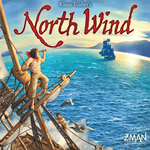
Number eight is for Northwood. For Northwood is a quick playing solo only trick-taking card game, which doesn't sound like it should work, but it actually creates this wonderfully puzzly game where you're attempting to win an exact number of tricks. The way it works is you have your hand of cards and then you just flip over a random card off the top of the deck to start the trick. You then get to respond to that just like a regular traditional trick taking game. You have to follow suit if you can. But even if you win the trick, you don't get to lead. The top card, a random card off the top of the deck always leads the trick. But you have some special abilities on hand to help you out a little bit. You get uh four cards at the beginning, and between each trick, you can decide whether you want to use one of their special abilities. Each one is one use for that round, but you have four of them. So figuring out how to strategically use those is really important. So it ends up really working great. You know, you you get your starting hand of cards, you try to pick how many tricks you think you're going to make, and then you try to pull it off using the special abilities, pushing your luck a little bit. This game has become extremely popular. It's easy to see why. That's my number eight for Northwood.
Number seven is Witchcraft. Witchcraft is the followup to a game called Resist. If you're familiar with Resist, that could easily be in this spot as well. They're very similar. I I like Witchcraft slightly better just because I think it's, you know, a little bit more winnable, a little bit more forgiving. Both games are great. It's really sort of a matter of taste, but these are ultimately card games where in the case of Witchcraft, you have a coven of these witch cards. You actually build your deck of witches at the beginning of the game. And each of these witch cards has two sides on them. It has a like hidden side and a revealed side. And each of those sides has a certain amount of power and perhaps a special ability that you can resolve. You're going to use these witches to try to accomplish missions which have, you know, a required amount of power that you have to put towards it, but also has all of these face down challenge cards that might add extra problems that you have to deal with. You're then going to allocate your witches, your hand of witches to that objective, that mission by either putting each one, keeping it hidden, which is usually going to have less power or less powerful special ability, or by revealing them. Revealing them will let them use more power, but it also means that they're going to be jailed at the end of that hand. You're going to lose them. If you keep them hidden, then you just put them into a
discard pile and they'll come back into your coven deck when you need to reshuffle it. So, it's all about hand management. It's all about finding the perfect time to reveal each of your witches and figuring out when you can keep them hidden and exploiting the synergies between the witches. This is a solo only game with a ton in the box. There's even like a little campaign that you can run through. Highly recommend checking this one out. That's my number seven, Witchcraft. Number six is Friday. Friday is just one of the most innovative deck building games of all time in my opinion. And it all comes in this tiny little box. Basically have a small little deck, starting deck of cards which are really bad. They kind of represent Robinson Crusoe. He's just crashed onto the island and he's terrible. He doesn't know how to survive. He's incompetent.
And then you have this challenge deck and you just flip over two cards from the challenge deck. Pick one of them to face, discard the other one, and you're going to need to flip over a certain number of cards and hopefully get enough power to successfully complete that challenge, to overcome the challenge. And if you do, then you get to add that card to your deck, right? You just flip it over. And then on the other side, it's a special ability that shows Robinson Cruso is getting better. He's learning. He's gaining skills. He's becoming more of a survivalist. If you fail a challenge, then you actually lose some health. The trick is you actually need to purposefully injure yourself at times in order to trash the bad cards out of your deck and thin your deck because when you lose health, you also get to remove bad cards from your deck.
So, the game is all about deciding, you know, when to push for success and when to admit failure. It's so incredibly tricky. And after all this time, I have not been able to master it. The game is apparently broken. And you know, people say that there's some specific way that you can win all the time. I have never figured it out. I doubt I ever will. And I'm thankful for that because it means I can still enjoy this really fantastic, fun solo game. That's Friday. My number six. Number five is Machi. Machi is a small worker placement game where players take the role of freedom fighters resisting the Nazi occupation of France during World War II. You place out your freedom fighter meuples into different locations throughout the city in order to gain resources and take special actions. The twist here is that police meuples are also being placed in random locations.
So, at the end of the round, your crew must be able to trace a clear path back to your safe house. If they can't, then they're arrested and you lose that mele for the rest of the game. It's a tense push your luck system that really brings out the theme. And because the police will usually not go to a place where you've placed a worker first, that means that you're often trying to create these like supply lines where you're just placing out meeples, not necessarily in a location that you want to take the action for, but just so that your other workers will have a way to get back to the safe house safely. It's a pretty unique twist on worker placement. And the game comes with a ton of different missions that you can attempt with a variety of difficulty levels. Maki really feels like a bigger meteor game than it actually is. And that's why it's my number five.
Number four is The Bloody Inn. If you're familiar with the channel, you know that I love The Bloody Inn. I talk about it a lot. I've done two playthrough videos for it, so go check that out. But this is a brilliant card game with some of the most evocative and unsettling artwork I've ever seen that really brings to life this game's dark sense of humor. You play the manager of a hotel that's going to murder and rob and then bury your guests in order to make money. And the way you do that is by playing cards. It's a mechanism you see in quite a few games. It works really well where you have to spend cards in order to uh gain cards or play cards. The cool thing here though is that each card has an action that it's proficient in. And so if you use that card to pay for that particular kind of action, then you get to keep that card rather than spending it. So for instance, you can bribe a bunch of people who are good at burying guests. And then when you go to bury guests, you won't lose those workers.
You only get two actions around, so you have to be very careful. If you run into a bunch of cops and you have unburied bodies lying around, you're going to instantly lose the game in the solo game. Just watch my first playthrough to see how that can happen. This is really an evergreen game for me. Highly recommended. My number four, The Bloody In. My number three is any Buttonshy game. Your favorite Buttonshy game you can put right here at number three. Now, if you're not familiar, Buttonshy is a publisher that makes micro games that fit into this little wallet. Each game is 18 cards. At least the base game is. And you think that would be extremely limiting just only having 18 cards, but they've managed to put out dozens and dozens and dozens of great games with this formula. I'm a huge fan of their games. Just to name a few of the games that I've done playthroughs for, Sprawopoulos, Natureopouloolis, The Royal Limited, The Last Lighthouse, The Walking Dead Surrounded, A Nice Kappa, Circle the Wagon, Second Shot, Glass Garden, Hyperstar Run, Adventurous, and my personal favorite, Rove. That's just a fraction of the soloable games that they have. And even a lot of their multiplayer games have uh solo expansions that you can get. These games are so great because one, they are
extremely tiny. I mean, we're talking the smallest of smallbox game. You could you could fit multiple of these in a small box. They're very cheap and there's a surprising amount of variety in these games. There's something for everyone. You know, there's tile laying style games, there's hand management, there's like dueling style games. area control and very puzzly games. Like I said, my favorite is Rove, and that's a a spatial puzzle. You start with these six modules on the table, and then you spend limited action points in order to move them to form these different configurations. And the trick is each module moves in a different way. I plan to do an entire top 10 list just on Buttonshy games here in the future. For now, I'd say look at the playthroughs and and find one that seems to fit your play style, cuz I guarantee you there's at least one that you'll love. And that's my number three, Buttonshy Games.
Number two is The Lost Expedition. This was actually the very first playthrough video I made on the channel. It was basically my trial run to see if I could figure out how to make these videos. And because of that, it's a game that has special significance for me. But it's also one that's just stood the test of time. It's one that I'll break out and play every once in a while and I've been doing that for years. It's just so easy to break it open and put it on the table and play. The Lost Expedition is essentially a adventure exploration survival card game. You manage a team of explorers that is searching the Amazon for El Dorado. In terms of card play, you're both drawing cards off the top of the deck and you have a hand of cards and it's all about trying to order those cards in a specific way so that when you resolve the line of cards from left to right, you get the best results. Each card represents an event and there are these banners that are different colors and some of the banners you you know you have to resolve, some you can choose to resolve and some you have to sort of pick between and you're going to be managing your explorer's health. You're going to be managing food and ammunition. Go check out my playthrough to see exactly how it works. There's actually a lot of great decisions and and it's very puzzly and satisfying to play. quite difficult and it just has these really large cards with absolutely gorgeous artwork. That's my number two,
The Lost Expedition. And my number one smallbox solo game is Coffee Roaster. Coffee Roaster is a quirky solo only bag builder about making the perfect cup of coffee. I've talked about this game a lot. It actually makes a lot of my top 10 list, so I won't belabor the point here. There's just no other game that quite feels like Coffee Roaster. In a nutshell, you're going to be pulling these tokens out of a bag and then you're going to be manipulating them using different abilities. You'll be roasting these beans to higher numbers and then putting them back into the bag. So, you'll have a bunch of chips in there that represent beans and it'll be a zero. So, it means it's had a zero roast. But when you pull it out, you exchange that zero bean for a one bean.
and then you put it back in the bag. So now those beans have a one roast. The next round you'll do the same thing. Pull a certain number of beans out of the bag. If you get one of those ones, then the one becomes a two. So now it's at a two roast. And slowly the total number is increasing in the bag. That represents you roasting the beans. Now there's a bunch of other chips in there as well. There's, you know, water. There's, you know, different things, different flavor tokens in there which you can then use to activate special abilities to manipulate the beans further. What you're attempting to do is to tune the bag so it has just the right numbers in there. You want to make sure that you haven't overroasted any of the beans because if it goes past four, then it gets burnt. And so once you've decided that you're done roasting, you stop. You move on to like phase two of the game where you're now pulling tokens out. one at a time and putting them into your cup. Your goal is to reach a very specific number, right? To not go too low or too high and also to have certain flavor profiles in there. Like I say, it's very quirky, very unusual game. The process of pulling tokens out of the bag and putting them back in, it's very satisfying, very tactile, just a great mellow solo experience. And luckily, the box is just barely small enough to make the list. So, there you go. That's my number one coffee roaster.
What small box games did I miss? Please let me know in the comments below. If any of these games sound interesting, I've done playthroughs for every single one of them. I'll have the links in the description below. Please go check them out. And if you enjoyed this video, please like it and subscribe to the channel. That would help me out a ton. Well, there you go. That's all for me. Thank you so much for watching and goodbye.