Best Trick Taking Board Games OF ALL TIME
Games in This Video
8 games are featured in this video — they unlock as you watch.




Transcript
Hey everyone, my list of best trick taking board games of all time. I'm only about two years seriously into this hobby. I still have a lot left to play. This is my taste, not a museum ranking. The filter was simple. The trick has to change what someone else can do. If the hand is just me solving my own puzzle, it does not make the list. I already said in the best mechanics video that I want other people still in the game. That has not changed. Eight games. Two of them are honorable mentions. Then the real list. Number eight is the honorable mention and it is Arcs. Cole Wehrle, 2024, two to four players, about 60 to 120 minutes. BoardGameGeek has it around a 7.98.
If you watch the area control video, you already know where this sits for me. I called it number three there. I am not walking that back. I am also not pretending it is a card night. The trick is the action system. Someone leads a card. That suit is the menu. Pips on the card are how many actions you get. Everyone else can surpass with a higher card of the same suit, copy the lead for one action, or pivot into a different suit for one action of their own. What you are trying to do each round is steal the initiative or live with someone else holding it. Only the initiative player declares an ambition and ambitions are how the points actually get scored across the chapters. The table is in the cards. If I lead aggression, I am daring you to follow me into a fight or spend your turn pivoting away. That is the part I like. Four suits: administration, aggression, construction, mobilization.
You are not bidding a number of tricks, you are bidding the shape of the turn. Most power wins. It can end after a chapter if someone hits the threshold. 33 power at two players, 30 at three, 27 at four. Otherwise, it ends after chapter five. There is a campaign box if you want the longer story. I am not ranking the campaign. I am ranking the trick. The rest of the box is a space game with a court and a map, and that is why it is an honorable mention. Best trick-taking action system I have played inside a big game, not a trick-taker. Number seven, for Northwood, Will Su, 2021, one player, about 15 to 30 minutes. Board Game Geek sits around a 7.78, which is rude for a solo card game. Solo fights the filter. I said the trick has to change what someone else can do.
There is no someone else. I am keeping it anyway as the exception because the rulers are mean enough to count. Eight fiefs. You visit each one once. Dialogue cards, one through eight, four suits. The ruler suit is trump for that visit. You are not trying to win the most tricks. You are trying to finish the visit on an exact target score. Hit it and the ruler turns friendly. Miss it and they leave. Friendly fiefs score the stars on their card. 16 or higher wins. A friendly ruler can later stand in for an ally. There is a challenge booklet if you want the longer run. The win I am talking about is the 16. I like that it is sharp and it fits in a coat pocket. I do not like that I cannot hand it to a table. If you only play with people, you can skip this one and lose nothing off the real list. Number six, Claim, two players, about 25 minutes, 2017. Board Game Geek is around a seven. Two phases and the second phase is built out of the first. In phase one, you are playing tricks to win follower cards. Those cards become your hand for phase two. In phase two, you fight for majority in the factions. A majority in at least three of the five factions wins. A tie in a faction goes to the highest card in that faction. Goblins, knights, undead, dwarves, doppelgangers.
Goblins do nothing. They're just cards. A knight beats a goblin if a goblin led the trick, and you still have to follow suit if you can. The other factions bend the trick in their own way. So, the card you steal in phase one is not just a point, it is a rule you might get to use later, and a rule they do not. What you are trying to do is draft your own fight. I ranked drafting number two in the mechanics video, and this is the trick-taking version of that pressure. Take the card, and you also deny it. Phase two is short. If you drafted badly, you feel it immediately. It is less elegant than the next one. The deck tells more of the story. I still like the two-face snap. Expansions exist if the base factions go stale. I would not start there. Base game, two people, one evening. That is the version. Number five, The Fox in the Forest, Joshua Buergel, 2017. Exactly two players, about 30 minutes. BoardGameGeek average is about a 7.06, which undersells the design and oversells nothing. Three suits, bells, keys, moons. 13 tricks. A decree card flips up, and that suit is trump. You must follow. Highest trump wins, otherwise highest of the lead suit.
Then, the scoring lies to you. Zero to three tricks is six points, humble. Four is one point, five is two, six is three, seven to nine is six again, 10 to 13 is zero, greedy. First to 21 wins. What you are trying to do each trick is stay in a band, not win the hand. If I am sitting on six tricks, the next one might be a gift or a disaster, and you can see me doing the math. 13 tricks, two players, so the bands are not subtle. You will know by trick eight if someone got greedy. The odd cards bend it. The swan, the one, leads the next trick if you play it and lose. The fox, the three, may swap the decree with a card from your hand, and that can change trump for the trick you are already in. The witch, the nine, becomes trump if she is the only witch in the trick. I am not reciting the whole fairy tale rule book. The point is the band.
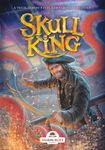
This is the two-player box I would actually keep. Cleaner than claim, meaner than it looks. If you only buy one competitive trick taker for two, buy this. The duet version exists if you want the co-op. I am ranking the mean one. Number four, Skull King, Brent Beck and Jeffrey Beck, 2013. Two to six players, about 30 minutes. BoardGameGeek around a 7.53. 10 rounds. You deal one card in round one, two in round two, up to 10. Before the cards hit the table, everyone bids how many tricks they will win. Hit a bid of one or more and you score 20 points per trick. Miss even by one and you lose 10 points per trick you are off. A zero bid is a different score. Make it and you get 10 points times the cards dealt that round. Fail it even by taking one trick and you lose 10 points times the cards dealt. Not 10 per trick, the whole round size. The special cards are the toy. Escapes are a zero so you can dump a trick. Pirates beat the numbered suits. The Skull King beats the pirates.
A mermaid beats the Skull King. First played wins if two of the same show up. Scary Mary is declared pirate or escape when you play her. Bonus points for the 14s and the character captures only count if you also hit the bid. What you are trying to do is not win tricks. It is win the number you said in a room that is actively trying to hand you one more. I can see your bid. I can throw you a pirate. A zero bid is a public dare. It is swingier than the games above it. The special cards are loud. I still want it on the list because this is the bidding game people already know how to sit down at. Wizard is the ancestor. Skull King is the one that gets played. 10 rounds, highest score wins. That is the whole prize. Number three, Rebel Princess Deluxe Edition.
2024 for the deluxe. Three to six players, about 45 minutes. BoardGameGeek has the deluxe around a 7.85. The base game is 2023, around a 7.4. Golden Trickster 2024. It is Hearts wearing a ball gown. Five rounds, four suits. You must follow. Highest of the lead suit takes the trick, and then you do not want a lot of what you just took. Princes are marriage proposals. Most of them are one. The frog is five. After five rounds, fewest proposals wins. You are trying to stay single. Every player is a princess with a power once per round. Every round also has its own rule, so the hand is not the same game five times. The deluxe adds a catch-up called Rebel of the Ball, plus extra princesses and extra round cards. What you are trying to do each trick is dump the proposal and still have a card left for the moment the frog appears. That is the whole night. Hearts players will recognize the pain suit. Everyone else just needs to hear, "Do not take the frog." I like it because the theme sells itself, and because must not win is mean in a way a new table understands in one hand. The princess power is once. You will waste it. That is part of the game.
If I am putting a competitive trick taker in front of people who do not own a game shelf, this is the one. Five rounds, fewest proposals go home. Deluxe if you can find it, base if you cannot. Same trick. Number two, The Lord of the Rings: The Fellowship of the Ring Trick-taking Game. Brian Borne Müller, Office Dog. Retail 2025. One to four players, about 20 to 40 minutes a chapter. BoardGameGeek average about a 7.99. Golden Trickster 2025. 18 chapters. You can play them in order or pull one. Co-op. You win the chapter only if every character finishes their goal. One failure and the chapter fails. Standard trick underneath. Frodo leads the first one. Must follow. Highest of the lead suit wins. There is no Trump suit. There is a lost card dealt out of the round, so the count is already a little wrong.
If that lost card is the one of rings, you shuffle it back and deal another. The one of rings has to be in a hand. Rings are a short suit, one through five. You cannot lead them until the suit has been broken or you have nothing else. The one of rings may choose to win the trick. Rings two through five do not. The player dealt the one of rings takes Frodo. In the standard setup, Gandalf takes the lost card, so he starts with one more card than everyone else. Later chapters can override that. Suits are forest, hill, mountain, shadow, one through eight, plus that little ring suit. A round ends when the hands are empty, except the extra card Gandalf is holding in the standard setup. All goals met, chapter one. One goal failed, set it up again. I almost put this at number one. It is the click.
It is the campaign I would actually finish. 18 chapters is a real book, not a weekend. I am not putting it above the next game because the next game invented the shape this one is standing on. Crew is the system. This is the best campaign on top of a system like it. Number one, The Crew: Mission Deep Sea, Thomas Sing, 2021. Two to five players and it breathes at four. About 20 minutes a mission. Board Game Geek average about an 8.06. Rank sits up around 45. That is not a card game rank. That is a game rank. 32 missions in the log. 96 task cards with difficulty numbers, so you can build a night instead of only walking the book. You win the mission when every task is complete. A task is something like a certain player winning a certain card or tasks finishing in order or a rule that limits what you are allowed to say. Communication is the actual mechanic. You mostly cannot talk about the hand. Deep Sea adds distress signals, so you can pass a card to to and then you have to decide if the mission is even allowed to use that.
Some missions put a current on the table, and the current is just a prettier way of saying you may not speak. There is a trump suit. Four colored suits, one through nine, and the submarines, one through four. Highest submarine wins the trick. The player with the highest submarine is the commander and leads. What you are trying to do each trick is fulfill a task without telling the table the task. I lead a color. You have to decide if I am helping you or trapping you. The puzzle is the task, not a missing hierarchy. The original Quest for Planet Nine is still the teaching copy. 50 missions, a little more linear. I would rank Deep Sea above it. The difficulty dial is the reason. You can make the night match the table. Two players have a variant. It is fine. Four is the game. If you buy one game off this list, buy this one. Small box, real interaction, no multiplayer solitaire hiding in a pretty deck. I have said before that I do not like a table where we are all solving our own puzzle. This is the opposite of that.
You fail together in public on trick four. See you in the next one.