Board Games I Got Rid Of (And Why) - Episode 4
Games in This Video
9 games are featured in this video — they unlock as you watch.




Transcript
Hey everybody, and welcome to another episode of games I've got rid of and why. So, this is a series looking at games that have previously been in my collection, but for one reason or another are no longer in my collection, either because it's a a bad game or because I've I've fallen out of favor or it's fallen out of favor with me because I've tried everything it has to offer, those kind of things. So, um I'm going to be talking about another 10 games today, so let's get started with the first. So, the first game I'm going to be looking at is a game that I still really enjoy, one that got my seal of quality and one that I would still recommend. This one is Council of Four um by I believe it's Daniele Tisini and Simone Luciani who are two incredible designers. This one is a more kind of entry-level um Euro style game where you are trying to collect cards and trying to cash them in to put your little nobles and establish little trade posts in these different cities, but it had this great kind of compounding um reward and almost like an engine-building combination style thing where the more kind of cities you'd build in adjacent to each other, then they would all trigger off and you'd get more and more bonuses as they link up. That was really satisfying gameplay, really fun. Um you could do this kind of interesting player interaction where you would tinker with these different councils by moving these miniatures and then um that would change what cards you needed to build in those cities in the first place. Had a lot of things I liked about this game. Um the reason why this is no longer in my collection is simply because I played this game a lot um and I tried everything I had to try in it, you know, I tried every single strategy you could do, different approaches, um and there
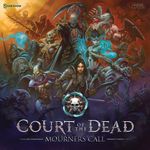
was nothing else for me to to try. So, it was very much one of those um I've exhausted every option um and uh you know, no fault of the game. I played it a lot, it stood up well, and I'll still play this now, but for me, um I no longer have that hook to play it anymore. I'm no longer intrigued and interested by it, but I can still completely stand back and say this is a really fantastic entry-level game that I'd recommend to people wanting to get their toe into the Euro genre. So, really great game, still holds my seal of quality, but I've just done everything it has to offer. Next up, I'm going to be talking about Court of the Dead: Mourner's Call. So, this one is something I don't normally go for. This is kind of a a miniatures game where you have this big map, you're trying to control these areas. Um the reason I backed this on Kickstarter in the first place was because I like the IP, you know, Court of the Dead is a a really cool comic series where has this kind of political intrigue in the underworld. I like that. Um looks great, uh has great table presence.
And I was kind of looking for something in the vein of, you know, like an Eric Lang style game for my gaming group if if we wanted it. Um has some really novel concepts such as, you know, if you if too many people went to the same area, you'd almost trigger this mechanism where you'd have to roll dice and um if you rolled it over a certain number or under a certain number, then you'd have to remove yourself from that. So, it had this real kind of weird balance to it and some some really neat mechanisms where you'd have to like contribute things uh as a group and if you didn't, you'd suffer a group burden. Um all sounded really good on paper, but I think in execution, the game just fell flat for me. Um for these kind of it it was it was a drafting game as well on top of that, so you have to draft cards and do things. And I always found that the drafting wasn't didn't have any tension in it. It was like whatever you picked one picked was fine. Um same with the different areas you can go into, everything was just fine, you know, you you would never have that that tension and that incentive to go to a certain region and have a real struggle over it. You think, you know, if someone's controlling that one, I'll just go somewhere else, that's equally as good. So, for me that for that reason, it didn't really um it didn't satisfy me whatsoever, and I know I wasn't the only person who thought this. I played this well, both people I played this with thought the same thing.
It just didn't have what I wanted, it didn't have the hook, it didn't have any meat on the bones really. Shame because it looks good, you know, as I said, I like the IP, but for me, if you want a game like this, check out Eric Lang games. Now, they're not Well, they're not my complete cup of tea now, I can I can completely appreciate how well Eric Lang does this style of game and um Court of the Dead isn't in that quality and um for that reason, it didn't stay in my collection. And then next up, I have Crown of Amara. Now, this is a game that was so close to being a great game for me. This is uh a really innovative idea where you have two rondels, uh one rondel being where you're collecting your resources, one being where you're cashing in your resources to get victory points in different ways, but on top of that, you'd have this interesting programming mechanism where you'd have a hand of cards which would give you bonuses.
You'd allocate them to these different spots which would move you a certain number of spots on each on the rondel. So, one would move you three spots, one would move you two spots, and you'd choose which rondel that related to. Loved that idea and I'd love to see that used again in another game. This was as I said, it was so close to being a great game for me. And I was just disappointed it didn't have that next level or an extra 20 or 30% of of juice or or meatiness. Um it was I think a slightly uh gateway plus level game, you know, again, a bit like Council of Four on the on the lighter end of the Euro scale. Um but I said, it was such a shame that I just didn't have an extra mechanism, just an extra layer in this game which would um which would have kept it in my collection because I was fascinated by it, I enjoyed my plays of it, but um I think before before you know it, you've done everything it has to offer. Um and it would have been nice to have a bit more variability and um just an extra an extra level to it which again, I can still sit back and say this game is really solid. It's it's another good one that I'd recommend to people wanting to get into the Euro Euro genre.
Next up, I have Crypt. Uh Crypt is um an extremely simple filler game where you are trying to collect different sets of things um of different kind of genres and different um points pools really. But the way you collect these things is quite interesting because you're going to have a hand of um or I think you have a set of three dice and you're basically bidding on these cards with these with these dice by choosing to raise the value you're bidding by increasing the pit values on them. And then whoever kind of chooses to um you know, no longer outbid someone else, um you are going to roll all the dice you've allocated to these different items. And if you meet or exceed the value that you've bid, then you get to keep your dice. And if you don't, then you're going to lose them to the pool which means that you're potentially going to have to waste your next turn collecting them all back. Really like that. The idea of bidding with dice is super novel um and it works really well.
A nice concise little game. Um I think the reason this didn't stick around was because I played it too much too quickly. Um I played ended up playing it um quite rapidly over the you know, the first month or so that where I got it and really started to you know, was really enjoying it and um yeah, burnt out pretty quickly. Um but on top of that, a a friend of mine bought it from me, so it's still in my gaming circle and if I really want to play it, I can um I can choose to borrow it off him or he can choose to bring it around for a game tonight. So, it's not like I've completely you know, this one's completely gone for me. It just isn't in my personal collection anymore. Uh next up, I have a a pretty unknown little filler game called Dashu or or Daxu, I don't know how you want to pronounce it. This one is one of these um paper rock scissors style games where you are trying to um almost play a kind of tug-of-war by playing cards on your side of the table. But you want to have the most of a certain type of card, but not have too many um more than your opponent. You want to just have maybe one or two cards more than them in order to get the most points because if you have too many, then you actually end up losing points.
And that's quite cool as you you know, you want to if if someone starts to run away with things, you want to play um you know, try to trick them into taking more of those cards etc. so they suffer more penalties. Um works completely fine, but from what I've found from over the years playing these paper rock scissors style games that it's it's so much um there's so much luck involved. Yes, you can do the you know, I know that you know that I know that you know that I know kind of thing and you can keep doing that infinitely to the point where whatever you play can be can work out or it can not work out. And that's ultimately where this game fell flat for me in the end. You know, I did enjoy my first 10 plays or so of it. Um it's a good example of that paper rock scissors style game, but my personal tastes have veered away from that now and it's not really something I'm looking to have in my collection today.
Uh next up, I have a a really successful game with Dead of Winter. Dead of Winter was one of the first games that got me into the hobby really. Um I don't normally like um zombie the zombie theme, anything like that doesn't it doesn't interest me. But I liked the idea of the game that we're trying to work together to overcome not only the zombies, but from the harsh weather conditions. Um it has this element of the you know, the the hidden traitor where someone's got an incentive to try and ruin it for the team and sabotage it for everyone else. And that paranoia really seeps in and you're trying to weed them out and there might not be one in the first place. That's all really cool. But the mechanisms themselves, especially as I started to become more aware of Euro games and how mechanically sound they are, I started to really see the flaws in the gameplay of this game where you'd have a look at actually what you were doing in the game and it was pretty pretty basic really when you just go off to a certain location and end up drawing cards trying to fulfill your personal objectives. And um that wasn't satisfying for me. Um it was pretty much paint by numbers.
Uh the game I thought took too long as well. Um and despite having a really cool uh narrative mechanism in it where, you know, when you do certain things, somebody would read a card which would give you kind of dilemmas to the group. Some really neat things in this game, but ultimately the gameplay mechanisms um ended up being quite transparent in the end about how weak they were. And um probably an unpopular opinion cuz I know Dead of Winter is a really successful and popular game, but not what I'm looking for in board games um now. Uh next up, I have uh Deception: Murder in Hong Kong. Now, this is a game that I spoke highly of for years and years and years. A really great example of social deduction where one person is a murderer and everybody else is trying to work out who that murderer is. One person is trying to help everybody else decipher who the murderer is by playing um these tiles and putting clues on these tiles to try and point towards a certain um clue and a certain kind of weapon that they've used. And um there's some really neat ideas here.
Some good The game does a good job of eradicating that player pressure of having to lie and um put people on the spot because you could come up with quite quite logical scapegoats um with this game without having to rack your brain too much and having to kind of play too much of a poker face. I think in that respect the game does a good job and it's a certainly a strong social deduction game. But maybe a bit like Cryptid, I played this one quite a lot and I ended up getting burnt out of it. I had quite a few games where the the game didn't quite land with a few players. It didn't It didn't quite Well, it fell a bit flat, I would say. So, yeah. And ultimately, I think in general these kind of social deduction deduction games have fallen a bit out of favor for me. I think I only have one in my collection now, actually, the uh The Resistance: Avalon. And I think Avalon does such a better job than all other social deduction games out there that I think that that's the only one I need.
So, hence why Deception: Murder in Hong Kong is no longer in my collection. Uh next up, I have uh Disney Villainous. Now, this one is a strange game and one that I can look at and say, you know, this is extremely ambitious as it has this kind of action selection mechanism and every single character you choose in this game, which are all based on Disney villains, um have a personal deck a personalized deck uh a personalized way of winning the game. Um really innovative ideas, some really creative ideas where, you know, everything is completely different. Um for me, the reason why this this kind of didn't stay in our collection was because it had a bit of an identity crisis. Yes, it's extremely inviting in terms of the theme, you know, great artwork, Disney's immensely popular.
But despite all that, the game was actually quite a gamey style game. You know, it has some pretty board game um well, mechanisms that aren't mainstream, first off, which is good in a lot of players respect because, you know, if you're into board games and you're into Disney, this is going to be fantastic. But if you wanted to play this with someone who isn't into the board game genre, but really loves Disney, it's going to be quite an obstacle to overcome. It has some quite obtuse mechanisms in it, some quite things that are hard to explain, particularly because each player plays completely differently. So, each time you play it, you're going to have a completely new set of rules to um to understand. Um and on top of that, you know, it was still light enough to not be uh not be involved to satisfy more salty gamers. So, it was too light for salty gamers, but but too heavy for intro level gamers, which kind of put it in this weird middle ground where it would never get played. Um which is a shame because I I I do enjoy the game. I thought it was good. Again, I can commend the ideas and the creativity that the designers have implemented into this one. But if it's not getting played, it's going to leave the collection, hence why um Disney Villainous is no longer in the collection.
Uh next up, I have a game that I haven't played for many years. This is Divinare. Now, Divinare is I suppose it's probably impossible to get a hold of now. Um it's a deduction game where you are uh you have a hand of cards and you're drafting cards um uh and playing them in front of you um and passing them on to your next pla- the next person. But you're using these drafts to try and decipher how many of a certain type of card is amongst all the players. And then you're bidding by placing these chips or your token on a certain number of each pool of those cards. Kind of hard to explain, a bit a bit out there. But the the deduction is quite vague, but it was a it was quick enough to be enjoyable. And when it did pay off, it paid off well. But ultimately, there was a bit of a a lot of gray area here and it wasn't as deterministic as a lot of deduction games. You know, I think I think with deduction games you'd like to have perfect information. You'd like to be sure of what you're deducing. Whereas this one, it was pretty much um you know, go with your gut feeling and get a basic idea of what you think it's going to be.
Um a lot of fun, had a great production. It looked fantastic, you know, amazing artwork. But I don't think the gameplay was quite strong enough to hold up to um deduction games, particularly now when there are so many fantastic deduction games. But um innovative idea and I liked the creat- creativity of it. Uh and finally, the game I'm going to be talking about this episode is Egizia: Shifting Sands. Now, this game is designed by um Acchittocca, who was who are a kind of a group of Italian designers who I absolutely adore. Uh almost every game they put out, I I love. This one was a uh re-implementation of um a game of its namesake called Egizia, um which was very much out of print by the time um Egizia: Shifting Sands came out. But this one is I suppose a pretty standard Euro as you are uh set in ancient Egypt and you're going down the river Nile trying to um stop at certain locations, pick up resources, this kind of thing, um contribute to building the pyramids, building uh obelisks, all this kind of thing. Lots of very standard Euro tropes, you know, climbing charts, feeding your workers, area control.
Um I was left feeling very unsatisfied with this game. Um It didn't have anything special about it. And I'm not sure if that's because they didn't make too much of an effort to update it from the original version, which is quite a few years old. And I think it got pretty much overtaken by a lot of more modern Euros. Um that being said, there's nothing wrong with it. It just It just fell a bit flat with me. And at the time, I think I gave it about a seven out of 10, which I'm kind of surprised at myself because if I if I was to review this now, I'd probably give it about five and a half out of 10 because it does absolutely nothing special. There's no unique selling point about this game. It just does everything pretty mediocre and it's quite pedestrian in everything it does. Um so, nothing wrong with the game and I think if you played this before you played a lot of um other games, you might think, you know, this is really solid, it's a lot of fun. But eventually, I think as you play more and more Euro games, this one is going to be overtaken and there are just way more interesting options out there. Hence why Egizia didn't stay in the collection.
So, some interesting games here. Um only one had my my shield of quality, which is Castle of Burgundy. Um but still, some really solid games here, you know, I really enjoyed um Kanagawa. Um Cryptid is still a solid game. And um yeah, so this isn't a a massive uh I'm not I'm not slandering these games. There's some really solid ones here, but they're just not for me, a lot of them. So, I hope you've enjoyed this this set of games for this episode. If you have, please hit like and subscribe to my channel and check out my other videos, too. For everyone else, I'll see you next time on Chairman of the Board. Bye.