This is What Separates Great Games from the Rest



Transcript
Hey gamers, this is Liz Davidson from Beyond Solitaire and today I want to talk about why I think your board game needs a thesis and I don't mean that in the kind of boring stressful way that your high school teacher meant. Although I do think a thesis statement of that nature also has a lot of value and if you didn't see it, you were missing out. Um but when I'm saying a thesis statement, I don't necessarily mean an argument like you could make in a historical game. Although of course those do exist. Like you could say that Cole Wehrle is making arguments about empire in John Company. Emma Holland is like the queen of board games as polemic and she's made a lot of interesting statements through games about things like the the tobacco industry with That's Our Product or about, you know, the arguments of the early church in something like Nicaea.
So it's absolutely possible to use your game to make an argument that is an actual point about the world and that is supposed to impact the viewpoint of the person who is playing the game. That is very present in historical games and something that I really love to see but that's actually not what I'm talking about here. What I'm talking about here is that I think your game, if you're designing it, if you're pitching it or if you're like looking at someone's game and trying to assess it, what you want to see is a game that has a specific tension point or story beat that is determined to show you above all the other ones. And so to me that would be the game's thesis statement. And I've started thinking about this and just started to make a video about it because, you know, I spent a long time being a game reviewer. I'm now a working game designer. Uh Queen's Spies is finally hitting people's porches. I'm so happy.
Um but you know, I'm also now a creative director and I'm having to look at games and take pitches and think about what we're doing at our studio and make decisions about what makes a game work or not and what a game needs to be driving towards before we consider it done inside the studio. And so that has forced me to new levels of being able to articulate what I see in games, what I'm trying to do with games, um and what I'm hoping they'll end up meaning to the people who play them. And so, I just wanted to make a video kind of snapshot of where I'm at on this at this point in time. I feel like probably interesting to other people who like to talk about games and I'll want to look back at it later and see where I was and if my own perspective change over the years.
So, what do I think a thesis statement is for a game? I think that it is the driving feeling or tension that you're trying to create in your game and that can be a semantic tension or it could be a mechanical tension. It can work either way. So, in my own work with David Thompson, Night Witches the very first note about it was that you should feel cold and isolated and like you are flying over unknown things that could be really dangerous. And so, the game ultimately ended up being about flying over territory where the hexes are blank until you observe and fill them in. Then you have to deal with the threats that appear. So, there's always a little bit of nervousness as you're flying over new places that you haven't flown over before. That is the core feeling that the game is trying to create and so, every design decision that we made along the way like fit that seeming and that's definitely what I would consider a thesis. Like Queen of Spies, which is now shipping, um that one the thesis there is that running a spy operation uh requires a whole lot of coordination in very, very little time.
And we wanted to kind of hit the operational challenges of managing a lot of people who may or may not succeed at every assignment you send them on, who could get arrested and put the rest of the organization in danger, thus killing more of your time that you could have spent trying to actually complete a mission. And so, that tightness of time and like the sort of panic about running out of it is a key aspect of the way the game feels when you play it, because that was part of our thesis for playing the game. Uh at Leader Games, um you know, one of the our first greenlit game under my creative directorship uh is Cart by Alida Robertson, who is one of our devs who is now a she's doing her design debut right now. And I'm super excited for her. Uh it's really fun to watch that game grow up in the office. But the thing that convinced me that it was a good green light is that Cart has a central thesis or a feeling that it's trying to capture. The feeling that it's trying to capture is being young, going downhill, you don't have an engine, gravity's pulling you faster and faster and faster. Uh and of course, as you go faster, you lose control a little bit of your vehicle and it gets scarier the faster you go. I think a lot of people watching this video have had the experience of skiing down a hill just straight down too fast or of riding their bike downhill and not being sure they were going to be able to brake without crashing.
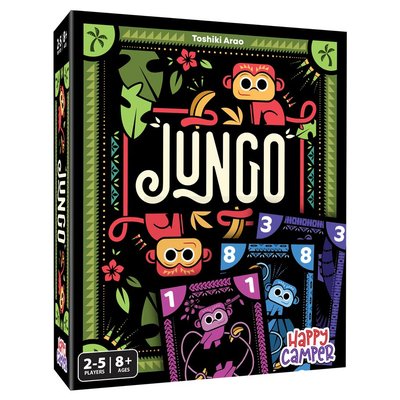
And I think that that feeling of fun and wildness and freedom um is really a cool thing to try to capture in a game. And the way that Alida is doing it is really interesting to watch happen uh with our dev team. And so the game has a story to tell. It's just a very simple story of racing as quickly as you can uh by letting yourself speed up and then having to deal with obstacles as you were going at top speed uh with less that you can do about those obstacles as they occur. I also think that more purely mechanical games are able to have essentially a thesis. Um and I think that you can actually really see it in like cool little card games. Like my favorite at the end of the night is Jungo, but I think you could say something like this about Trio. You could say this about Down Up. You could say it about Scout. Uh these are all games that have very simple mechanical tensions or premises that drive the entire rest of the simple system. And then a lot of game comes out of that system. So, what I like about Jungo is figuring out when to ditch cards versus pick them up and take them into my hand, how big of a combo do I need to make before I can go for broke and try to clear my hand out and win the game.
There are like lots of little decisions that come from essentially like three choices that you have at any moment in the game. And I think that that is a perfect example of a thesis um because you are very very focused on the combinations of cards that you can place, that you have the option of picking up or not, or that you can try to create by drawing from the deck. So, when I say a thesis for a game, that's really what I mean. I want to see like a driving design point, a feeling that you're trying to evoke, that everything in the game points to. And I think this helps you as both a designer and as somebody who is pitching games, and maybe, you know, for me as somebody who is assessing them. So, we'll talk through each of those things. So, as a designer, having that thesis be clear in your head at the beginning of the design process um is, I think, crucial because it drives every design decision that you make as you're working on that game. So, because, for example, David and I in our partnership have established about the weight of game we want and also what that that game is trying to evoke, right before we do anything. Like, we don't do any design until we kind of know what we're aiming for.
It has really helped us make decisions that are consistent throughout the design process and that also avoid bloat. Because I think especially when you're doing a historical design, you think about or like if you even if you just kind of spot a cool mechanism you think would be fun in a game that you're working on, it's so tempting to add stuff, but that actually takes away from the thesis of your game, from the feeling you're trying to evoke, unless what you're adding directly feeds into what you're trying to create in someone else. And so, I I see my own games as communication. Like, I want to feel seen. I want somebody to kind of pick up what I was putting down and like have that conversation with me even though I'm not there by playing a game that I worked on. And if you lose sight of that because you got distracted by something cool, you wanted to add something shiny, I think that ultimately detracts from the game that you're making. And that doesn't mean that lighter games are better than heavier games or that more minimalist games are lesser than more maximalist ones. In fact, I'm working on a huge game right now.
Um my friend Paul and I are working on Foxes and Lions. It's a giant Here I Stand series game about the Italian Wars. But even in that we are trying to make sure that everything that is there is there for a reason and that all of the main points that we want to get are in there and that they are as sleek as possible for such a heavy chromy game system. And so remembering what our point was as opposed to just trying to get too many random historical facts in there is also crucial for the design of an extremely heavy game and I think that other heavy historical gamers would say the same thing. So as a designer having a clear sense of purpose of how you want your game to feel, what you want your tension points to be is going to guide your design because instead of just throwing everything in there, you're going to try to throw things that communicate what you actually want to communicate. So I think one thing when I was teaching high school that was hard for students to understand about a thesis is that the thesis is there to help the reader understand what you're trying to say, but it's also there to help you decide what you're trying to say because once you've made your point or you decided what point you're making rather, um you're going to pick things to write that support that point and you're not just going to put a bunch of random stuff in there. And I think that as a game designer, you can take that same way of thinking about it and end up with a better game.
I also think that having a clear thesis statement and you know what it is and can communicate it is going to help when you're pitching. So I have now had the experience of pitching games a few times and I've also now been on the receiving end of a lot of game pitches and I admit I kind of blank out if somebody is just throwing a lot of mechanisms at me or, you know, saying, "Oh, yeah, it's like a whole story where you can do this and this and this and this." I realize that I don't necessarily respond very well to that. Not because the game itself isn't interesting, I don't know until I've played it, but because that lack of focus is making it hard for me to latch onto that game as something special. And it's making it hard for me to decide if it's something that I want to pursue above all the other games I'm looking at or that I could make in my own life, on my own design list.
So, things that have like a real clear sense of purpose and a driving force are easier to like pick out among other things and then decide whether you want to work on them, either as a designer yourself or as somebody who might be taking on somebody else's design. So, when you're pitching, I think it's good to really know how to communicate this game has this theme, but it's about X aspect of the theme, not just the whole theme, and these are the tension points that you could experience while you're playing. So, like if you tell me it's area control, I don't I don't know what that means. There's a lot of things that are area control. But if you tell me like, "Okay, well, you have to, you know, make really important decisions about, you know, controlling an area with someone else and then you're inevitably going to betray each other or something like that." I don't know, I just made that up. Um, that might be more interesting because I can understand what kinds of interactions it's going to create between players at the table. I understand what kind of feelings you're trying to create with your game, and it makes it make more sense as a piece of art that you're pitching. And having that clear in your own head is good for you and then having it something that you can communicate to people who you want to play your game and understand it and give you feedback about it, or maybe even pick it up to publish, you're going to be really helping those people give you the feedback you need and potentially get on the same page as you.
And also, while I don't feel comfortable reviewing games on this channel anymore because I work for a publisher, I don't think that that's really right. Um I do think about games as a reviewer still every time I play them. You know, when our dev team plays games in the office, we spend a lot of time ripping it apart. And uh I like to kind of take games apart and put them back together in my own mind now because it's part of my own practice as a designer. When I'm thinking to myself about how to assess a game, um you know, is it fun has never been like what I was looking for as somebody who's talking about games, which is probably how I've like navel-gazed myself to this point in my career.
Um you know, when I'm thinking about a game, I want to be able to assess it not just based on like whether I like it, but on what it's trying to say. And so if I can tell what the game is trying to say, it makes it easier for me to assess whether it was a successful game or not. And I find that really interesting. So something like Endurance, another Hanseatic game about surviving the Shackleton expedition, is interesting I mean, it's it's an interesting game to play, but it's not like the solo game that I would pull out cuz it's the most fun. However, that's not the point of the game. The point of the game is to communicate about the miracle of everybody on that expedition surviving, and also to kind of show some of the depressing and difficult aspects of being in Antarctica waiting for rescue. And so I don't want to assess that game on is it fun? I want to assess that game on am I having an interesting experience that is communicating to me about the things I think Amabel wanted to say. And because she always has such a clear thesis or point for her games, it's a lot easier for me to do that. So I'll wrap up my ramble here.
But to sum it up, your game needs a thesis statement not because you have to make a big highfalutin argument. Like your game about cats or your game that's about number manipulation could have a thesis statement. But what you're looking for is a point, a feeling, a really specific catch that you're introducing into your game. And you want to make sure that everything that you design around that catch contributes to it, helps it grow, and doesn't muffle it because that was the thing that was making your game essential and like alive. So, as a designer, you should know what you're trying to do before you do it. As a somebody who's pitching, you should talk very clearly about what you were trying to do so that the other person can understand. And as I think a game player, you're going to get a lot more out of your games by asking yourself, "What was this person trying to say? And did they do it?" As opposed to just, "Is it fun?" So, get in touch with your inner high schooler, I guess.
And uh start thinking about that game thesis. Uh thanks so much for watching. Go and play or make a game or preferably both. But do it with intention. Uh happy gaming, everybody.