Board Games I Got Rid Of (And Why) - Episode 9
Games in This Video
10 games are featured in this video — they unlock as you watch.




Transcript
Hey everybody, today I'm talking about another 10 board games that have previously left my collection and I'll try to explain the reasons for that. So, let's get started with the first game. So, the first game I'm going to talk about is Raccoon Tycoon. Now, this is a game that I still recommend. I think this is a wonderful introductory style game that kind of holds players' hands into getting into the economic games that are out there. So, games where you're trying to buy goods when they're low and sell them when the prices are high. You are manipulating the market on all these different resources. You are um buying these cards and auctions trying to get set collection points. And I also really loved the fact that you can invest in these tiles that give you unique player powers such as, you know, um when you sell certain goods, you might get a better price for them or you can sell two goods at once or even just increasing your storage capacity.
And I really did love how diverse those um power cards and these building cards were. I think they added a lot of flavor to this game. So, as I said, this is still a game I recommend. I think it's a wonderful introductory tool at a great family weight level game um with some pretty interesting decisions cuz the actual decisions themselves are pretty deep and it isn't a kind of throwaway um kind of a a brainless style game. There is actually quite a lot going on here but with very few rules. So, I love the way it's so compacted down. Um I think the reasons why this one left my collection was because I bought this for a particular group and I played this with that group several times until the point where I didn't feel like we needed to play it anymore. So, um it kind of filled that need that I needed it to to fill for a for a good period of time and then it was just got to a point where I was ready to move on from it and try something else. But, still a game that holds my seal of quality. Still one I'll recommend and it's absolutely stunning to look at. That is Raccoon Tycoon.
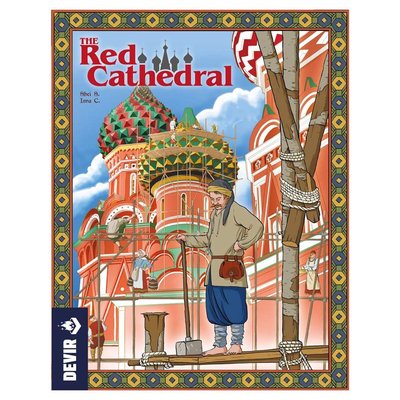
The next game I'm going to talk about is The Red Cathedral. Now, this actually made my top 10 games of 2020. Um this is a rondel style game as you are trying to move these dice around to collect different resources on this wheel and then you are basically contributing to building the Red Cathedral, um trying to build these different parts of the building, scoring points as you do so, um unlocking new kind of bonuses you can add on to your individual player board, so whenever you took certain dice, you can get a a kind of follow-up bonus, and it worked really well. I think this did a great job of having quite a quite a rich game in a quite a small package, because not only uh was the box physically small, but the the gameplay mechanisms were pretty simple. And I really did really love that rondel system where, you know, whenever you pick one of these dice, you'd move that many spots uh depending on the pip value on that die, and where that landed, if there were other dice there, then you can get kind of compounded rewards, and get a whole bunch of resources at once. But at the same time, you had to be careful not to get too much, because you had a a very tight capacity that you couldn't really just stockpile goods.
And I think this worked really well. It was a lovely package, and I actually really enjoyed it. So, obviously, it made my top 20 of from my top 10 of 2020, and another game that still holds my seal of quality. Um I suppose the reason this left my collection was because I never found myself going for it on my shelf, you know, I had a a lot of games, and this was one that just didn't quite stick its head above that parapet. Um I found that once you get your head around that rondel system, once you've kind of um got the satisfaction and understand the mechanisms and how that works, the rest of the game was pretty pedestrian, you know, it's very simple resource management, I suppose you could call it basic contract fulfillment, as you are building these parts of the cathedral. But it still works well. It's definitely one of the best examples of that style of game, and um again, I would still recommend it if you want that kind of gateway plus level game, and you do like your resource management. So, that is The Red Cathedral.
Uh the next game is something completely different with Rhino Hero. So, this is a gimmick, and it's actually a kids' game, um as you are stacking these cards trying to um, to build the highest towers as you can. And when you like play some of these tiles down which are either walls or or kind of floors, uh, the following player might have to take a bit of a forfeit such as having to move this rhino piece from floor to floor or um, just bit make basically make the game harder for someone else. Um, and it's one of those games that you play until someone knocks the tower down. You know, this is one of those games that it does have quite a a strict shelf life. Once you've um, gotten over the initial fun of it, it goes flat pretty quickly. Um, you know, I I enjoyed my time with it. Again, it only it's very cheap. It only takes, you know, 10 15 minutes to play. Um, but again, the the arc does fall flat pretty quickly and you'll find yourself not wanting to go back to it once that initial fun has been had. So, yeah, one of those games that just has a short shelf life. That is Rhino Hero.
Uh, the next game I'm going to talk about is actually from one of my favorite designers. This is Rialto. Now, Rialto is um, by Stefan Feld. This is a an area control and card drafting game as you are taking these piles of cards and then you you're going through this quite formulaic um, system in order to place um, pieces on on the board trying to control these regions when it comes to score them. You're trying to build bridges um, and score points in lots of different ways basically. Um, I thought the game was really good. I did like the way the game works. I don't think I've ever played a Stefan Feld that game that I don't like. However, I would say this is certainly one of the lower tiered games that he's put out there. And ultimately, I found that the actual physical mechanism of the game or the physical tempo of the game was a bit jarring because you'd do all the initial kind of game play and then you'd resolve all the cards quite formulaically which kind of brought the game to a bit of a halt, a bit of a standstill. And it just didn't have that flow that I really enjoyed and it didn't really keep people engaged to the level that I would have liked it to. But, uh, the actual decisions were really strong. You know, you had to manage your income in terms of having pieces to put onto the board in the first place.
Um you wanted to again build bridges, you wanted to um you know, control these regions. So, there's there's a lot of choice to go to go into the game, but again, that that system just didn't quite work for me, and this was a very narrow miss. So, that is Rialto. Uh the next game uh is Rising Sun by Eric Lang. So, this is actually an immensely popular big bombastic area control style game as you are um controlling all these different ancient or fantastical Japanese factions. You're trying to fight over Japan, trying to control these regions. Um some of the mechanisms in this game are absolutely fantastic. I love this um mandate system where you're picking the action you're going to take in the turn, and everybody gets to take that action, but you get a boosted version of it. So, if you're familiar with a game called Puerto Rico, which is one of my favorite games ever, uh this one did use that mechanism pretty well. And on top of that, the actual combat system in this game was something extremely innovative, something that I haven't seen before, as when you actually come to blows with another player, you would bid on these different um actions you could take secretly behind a screen uh by bidding your coins on them.
And that would determine um you know, who gets kidnapped, who kind of um kills themselves to get victory points. And the way that worked was quite an interesting way that timing came into it, and you had to get into the head of your opponent. So, definitely one of my favorite combat systems um out there. Um and this is actually my one game of all time from a few years back, and I was really besotted with this one when it came out. I absolutely loved it. It blew me away, not only because of those mechanisms I mentioned, but also because of the table presence. This is a beautiful game, so striking with these big impressive-looking miniatures. Um but I think the reason this um started to decline for me was a personal taste thing. Uh at this point, I wasn't so sure that I was as kind of um well, I was going to dive so deeply into the Eurogame kind of rabbit hole. And this one is kind of a bit of a hybrid, I suppose. So, I had a lot of things I did like, but yeah, as time's gone on since I've played Rising Sun, I've started to veer away from this style of game and go into these more deterministic style games that are a bit more um a bit more not compact, but a bit more deterministic, a bit more uh you know, just work a bit better mechanically and a bit smoother. Whereas this one has a lot of things going on at once. But still a a great triumph of a game. I still play this one anytime.
Another game that still holds my shield of quality. But I actually fell quite a bit for me and has actually fallen out of my top 50. So, um unfortunately, I didn't find a reason to keep Rising Sun in the collection because it did take up so much space, space being a big uh premium for me. And um so, I couldn't really warrant keeping it anymore. So, unfortunately, Rising Sun left the collection. Uh the next game I'm going to talk about is Riverboat. So, Riverboat is actually one of those games that I think's flown under the radar a bit despite being made or designed by Michael Kiesling, who is a a massively successful designer. Uh this is um yeah, a strange one because I think mechanically and again, the gameplay is so sound, it's fundamentally rich in terms of the strategy, the decisions you make. Uh but I think this game struggled a bit to differentiate itself from a lot of the games out there. So, this is a game where you are initially drafting these uh from these bunch of tiles, which means that when it came to a certain round, you'd get a bit of a bonus when it came to that round. And you would be trying to sow these crops onto your board initially using this kind of bingo style system where you draw these certain terrain types and you place your little farmers on there. Then you draft tiles to try and place them where the farmers are. And ultimately, you'd be trying to sow these crops to basically build these riverboats onto the onto your harbor side. And then the further you would move your harbormaster along this pier, you could generate more points um by doing so. But, the thing I really liked about this game more than anything was the scoring mechanism because you'd have these cards that you could accumulate throughout the game. And at
the end of each round in the game, you could choose to basically um bid or to uh tribute this type of worker onto these this scoring card, which means that you'd score that kind of car uh that that kind of card immediately. Um but, it means that you couldn't score it again for the rest of the game. So, it had this quite interesting pacing where you had to decide when you're going to cash in on a certain strategy and kind of con- continue with something else. Or, you know, are you going to um you know, push your luck further on this type of strategy and hopefully that you get more points by doing so. But, because you could only score a certain amount of uh these cards per round, then you have to be very careful of which ones you were selecting, which ones you were going to um continue to build on, which ones you were going to push to the side. And I I thought that decision was really strong.
So, yeah, another perfectly fine Euro game, one that I enjoy quite a bit. But, a bit like this one won't be on my shelf and there's no chance I'd ever pick this one above something else considering there's so many games out there. This one just struggled a little bit to um again to differentiate itself from the pack. So, that is Riverboat. And the next game I'm going to talk about is a game called Room 25. Now, if you're familiar with this channel, you you probably know that I prefer Euro style games and this one certainly is not a Euro style game. But, I do like the theme of this game is quite interesting as you are these um characters and you are put into this basically this this room with all these moving tiles that are face down. And all these tiles have different things. You can have like control rooms, you can have like camera rooms, and there's a lot of these extremely dangerous rooms where if you walked into them, you'd instantly die or you'd have to do something before you could get out of those rooms.
And the idea is that you're trying to find uh Room 25, you're trying to escape um before the other players do or at least before the traitor because this game does have a traitor mechanism um traps everybody inside. And I again, I like the idea of this one. It almost has that kind of Saw style mechanism or feel uh from those those films. Um but this one I thought the the actual things you could do on your turn were a bit jarring and a bit limiting um because you could only take two actions out of a possible four or so, you know, like moving around. You could peek into a tile and you could actually push other people into tiles and things. And it felt like it always felt like by the time it got back around to you, um you'd just look at a tile and then move into it if it was safe or look into a tile and then look into another tile. And it felt quite unsatisfying when it came to your turn after waiting quite a while and um basically doing very little on your turn. And I didn't find that very fun at all. Um additionally, there's quite a big portion of memory into this game because when you'd look into a room, um it would flip face back down again.
So, you have to remember where they are and constantly tiles are shifting, you know, vertically, horizontally, they're rotating. And just remembering things is is very difficult for me. I have to have a terrible memory, so it just didn't work for me. I found it went on a bit too long. Again, I found the actions just too limiting and the in the choices just weren't weren't interesting enough. They weren't uh they weren't meaningful enough. So, this was just not my style of game and uh wouldn't it wouldn't be something I'd look to play again. That's Room 25. Uh the next game is a game called Sagrada. So, this is a massively popular dice drafting game and to be honest, it's an excellent one. This is one of the best intro style dice drafting games out there. As you're essentially trying to uh draft these dice based not only on the color of those dice but the pip values as well as you are building this little stained glass window trying to adhere to certain restrictions, trying to get many as many points as you can by um basically trying to fulfill these objectives. They might say, you know, don't have any duplicates on a certain row or don't have or or kind of every diagonal of the same color you get more points for. All these different style of things that you're trying to do and there's also kind of predetermined restrictions on your on your player board as well.
Um which you have to kind of get around and manipulate. This game is so well done. I mean, it's beautiful, it's clean, it's extremely family-friendly, a great game to introduce to players. And also has quite a good amount of play or kind of passive player interaction as you can quite cunningly draft certain dice to leave your opponent high and dry and force them to take dice that you know they can't really place very efficiently. So, it has quite a lot of turn angst in this game, probably one of the best examples of a game with turn angst as you really don't want people to take the dice that you want. And that's pretty much what this game is about. It works so well. Again, striking visually and it certainly is going to appeal to a lot of people and has been massively massively successful.
And this was another game a bit like Raccoon Tycoon where the fatigue started to set in because I played this so so much. I think when this came out, this is probably my most played game of that year. And I'm I'm certainly a person who likes diversity. I like to play a variety of games and don't I don't regularly find myself playing the same thing again and again. And when I do find myself going down that route, I find myself getting to a point where I've kind of hit hit the wall and don't want to play it anymore. And Sagrada is nearly at that point. It certainly was at a point where I didn't want to keep it in my collection anymore, but I didn't want to get to a point where I didn't want to play the game again. So, I'm a happy point now where if somebody chooses or recommends or suggests to play Sagrada, I'd happily do so, but it's certainly not going to be a game that I'm going to pick myself because I've just I've just had my fill of it. So, that is Sagrada.
The next game I'm going to talk about is Santiago de Cuba. Now, this is a a very unknown game. You know, not not many people talk about this one anymore. And it is another game that I recommend as a Euro intro style game as you have this beautiful board of this kind of dockyard. And you are basically traveling around on this I suppose you could call it a rondel. Um and you are communally move moving this piece around trying to visit these different people in different locations. And basically collect these resources when you get back to the boat, then you're going to sell these resources and based on this kind of supply and demand system. And it works it works really well. That's pretty simple as it is. It's got some simple worker placement as well. At certain spots you can you can go to to get an additional bonus. You can even try you choose to buy these buildings where if other people go to these spots you get a little bit of a an in income as well.
And I think it's a really charming game. It plays in less than an hour and it's certainly going to be a good tool to introduce quite a few widely used mechanisms to. So, if you can get your hands on a copy of this one and you do play with intro level gamers then I'd highly recommend picking up Santiago Santiago de Cuba cuz it is a lovely little treat of a game. But ultimately, I I didn't really have the group to play this one with anymore. I used to use this game as a as a teaching tool for like my mom for example who isn't into games. And this was a game that really did bridge that gap for her to play more involved games. So, it certainly served its purpose and a beautiful little game and and has a lot of charm. So, that is Santiago de Cuba. The final game I'm going to talk about on this episode is Senji. Now, this is quite a strange little abstract game that only takes about 10 minutes to play.
Um and you are trying to basically collect discs of these different colors which are supposed to represent these different martial arts disciplines. And you want to be the player with the well well where the lowest number or the lowest column is higher than the other players. So, it almost has that Reiner Knizia style system where you want to build up all your columns and not neglect any because if you do, you're only as good as your worst score. And the choices are quite simple. You're trying to pick up these tiles and add them to your little holding spots and then you can choose to cash in all these discs on your holding spots and add them to your scoring area depending on the colors you're selecting. And you have to be careful about what the other people have in their holding areas because if you choose a certain color and the other people have the color those colors visible as well, then they are also going to add them to their scoring area.
So, you want to activate things when it benefits you and not the other players. Not the easiest game to explain verbally, but if you if you play this or saw it done visually, then it would make sense. But very simple and a game with that has that kind of that moment of the penny dropping you think, "Oh, that's why I'm doing this. That's how this works." And it actually is quite fun for for a short period of time, I would say. So, when I initially played this game, I was actually quite impressed with it because I took a massive punt on this game. I didn't know anything about it and it was a pure blind buy. And it turned out to be very solid. So, very fun, quick, snappy game. I'm I'm personally not the biggest fan of abstract style games and I do find myself having again a short time period with them where I tend to enjoy them and want to move on. And this is just an example of that. So, I enjoyed my plays and it just didn't have that hook to come back to it anymore and I'd explored my options with it and it didn't really have a a diverse scope of strategies you could play. It was extremely reactionary and you know, tactical style game that was fun, but just ultimately wasn't going to stay in my collection cuz it's just not my not my thing. So, that is Senji.
So, that concludes this episode of games I got rid of and why. And hopefully this has been somewhat useful for you in giving you a bit of insight about what goes through my mind when I cull games from my collection. So, if you have enjoyed this video, please hit like and subscribe to my channel and check out my other videos, too. And for everyone else, I'll see you next time on Chairman of the Board. Bye.