Top 10 Easy to Love Games
Games in This Video
7 games are featured in this video — they unlock as you watch.




Transcript
Mike, would you say that we're easy to love?
I'd say so.
A lot of the comments seem to think that not, but I think we're relatively easy to love.
I think we're easy to love, and I think these games are as easy to love as we are. What's up everybody? My name is Nick. I'm Mike.
We are the Brothers Murf and that's right. We're going to talk about 10 games that we think are easy to love. These are games that are going to go over well with many, many different people. Of course, not going to go over well with everybody. 100%.
But it's like, hey, you want a game that's going to go over well with like 90% of people? We think these 10 could do that. Now, you're going to see some party games on this list because obviously party games are meant to evoke a fun time and accommodate a large group of people. They are sort of at their essence meant to be easy to love. And just one for us is is a game that is like one of the purest examples of like beauty and simplicity. It is simply a try to guess the word game. You can each person can give a one-word clue that's all pointing toward whatever prompt we have or it might be baseball. So I have to put diamond or something that's going to point to a baseball. But you have the thing where we are trying to make sure we think of a really specific clue but not necessarily an obvious one because any people around the table who write the same clue. So if multiple people write diamond for example your answers get erased and then the person the guesser of that turn is only going to get to see all clues that are unique from any other clues given. So it's that kind of push and pull of like make it obvious. You want something that's going to be very clearly pointing to baseball, maybe a hat or something like that, but you don't want to say the obvious answer that someone else of course is going to choose. It creates really big fun moments because everyone kind of will overthink it almost and try to choose like I'm going to choose this thing that I think is really over here. No one else
is going to think of. Then like two or three people write that weird answer and no one will have written just the obvious like straightforward answer. And I really enjoy that kind of fun and it's cooperative. So it's, you know, we're all on the same team. We're all uh gunning for the best score possible. And it's just again super simple. You get one word for a clue, but make sure it's good, but also not too obvious for your teammates to then also have the same idea.
Number nine is going to be space base. I think space base is super easy to love. I think because of the rule set with not being too too crazy, not too complicated of a game, but I think one of the main reasons why Space Base is easy in our opinion is because of the fact that there's no real downtime and you always feel like you're doing something. This is a game where you have a 12 uh slot space dock and you have ships in every one of those spots. Again, 1 through 12, which is what can come up on uh two sides of a dice. Um, and then on your turn, you're going to roll two dice. And then you can activate both dice or you can combine them together and activate essentially one. So if I rolled a one and a five, I could activate my one slot, my five slot, or I can combine them and activate my six slot, which is how you activate like 11 and 12 and 10 and all that kind of stuff. And then you are also now just buying new ships. And those ships will also go into those slots. So then what you do is when you get a new ship, let's say it goes into slot seven, you will take the ship that's already there, replace it with a new ship, and then you'll flip it over, and then tuck it behind that slot behind your board. And now that ship, the old one, will activate when other people roll. So now if Mike then rolls a seven, I would get to activate that ship that's now behind my board. So the cool thing about this game is there's no downtime because every single roll you are, oh, you rolled an eight. Okay, cool. So, I can activate this ship and this ship or this ship. Okay, cool. And so, you're always doing something in the game. You always feel like you're progressing.
It's not just waiting around for your turn. Okay, now I get to roll. I can do my stuff. Okay, now I'll wait for my turn again. You're always engaged. You're always doing stuff. It's just one of those games that seems to sing really, really well with a lot of different people. I'm sure there's people out there who don't like this game, but nonetheless, this is one of those games that just like the theme is easy, the rules are pretty easy, and then just the fact that there's no downtime seems to just go down very smooth for most people.
Next one is going to be Can't Stop. This is a pure push your luck game where you are rolling dice uh using combinations of two dice to get values between two and 12 to ascend up these tracks and you are uh going to be the hopefully the first one to complete uh three tracks of these numbers. Now, of course, it's easier in theory with dice to roll sevens than it is to roll twos. So, the seven track is going to be longer than the twos and twelves and a few things like that are what make this game really interesting and just kind of cravable for me. It's that it's a simple push your luck game. Once you can only work on three tracks per turn. So once I've established those I'm working on seven 10 and three. If I don't roll at least one three or seven or 110. Basically if I cannot progress up any of my tracks then you bust and lose all progress from that current turn. So you are you are dealing with the idea of like I've made good progress. I haven't finished any tracks, but if I stop now, I save my progress and continue from that spot later. So, do I play it safe or do I go for one more roll, hopefully complete this column, which means it locks out for everybody else and it gets me closer to winning. That simple decision every time. Do I roll the dice one more time?
Of course I do, because it's called can't stop and I won't stop. Uh or do I stop, bank my progress, and continue? There's people get on just amazing rolls where you just keep rolling and you keep making it. you keep not busting. And and those those moments are so fun. And my wife and I will play game after game after game because someone will have a really epic turn and they win it all. And then someone's like, I got to get revenge for that. So now I'm going to, you know, try to go for this big turn and maybe it blows up in my face or or I succeed or whatever. Uh but it makes it really fun and again just forever cravable.
Number seven is Azul. Azul has really two things going for it. It's got easy, engaging gameplay and then just pretty art and components. There's not a ton of art in Azul because it's an ab an abstract game, but the art that is there and the box particularly is very very pretty. And then the pieces are very satisfying. They look like starburst. There are these little acrylic pieces that represent a mosaic in Portugal. Um, and so that is what you're doing. You're essentially drafting out these tiles and then kind of building your mosaic on your board. And the thing is is like that is very easy, that is very fun, that's very appealing, but the game itself is tough and can be pretty darn cutthroat as well because there are these various depots around the board. And these depots will have these tiles on them. And when you're taking these tiles, you can take all the tiles of one of the colors and then kind of put them down onto your little board. And so there is it's very very easy to stick people with tiles they do not want because you have to take tiles on your turn. And as you're putting them down onto your personal board, you have five different rows. The first row can hold one piece. The second row will hold two, three, four, five pieces. Um, and as you put in these pieces in these rows, all the pieces have to be the same color. So they all have to be like the blue and white ones or the red ones. So once you've started a row with red tiles, you then can't put a different kind of tile there. And then if there's ever a point where you can't place one of your tiles, they will go down to your broken tiles, which means they fell and they broke and you're get negative
points. So it's very, very easy to stick people with tiles they either don't want or can't place. And it's very, very fun. And then as you fill out these rows, you will then get to move some of those tiles over to your kind of final mosaic and then score those. So, it's this really kind of tactical, strategic, abstract game that has this really appealing theme, these really, really satisfying, click, clacky acrylic pieces, and just some beautiful art to go along with it. And all of those things together just make the game easy to play, easy to teach people, and easy for them to love.
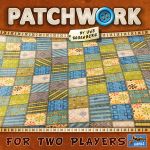
Next up is going to be Patchwork. Now, this is a game that I think falls into that category of just like so satisfying. This is a game where you are going to have a bunch of polyomino shaped uh strange pieces that are, you know, uh not seemingly going to fit with anything else and you're going to be collecting these different pieces as you make a patchwork quilt. So, uh, what I think makes this game kind of really enjoyable is and, you know, and everything like that is that it gives you a clear goal. You have a player board. You want to cover that playerboard as much as humanly possible. That's a clear goal. I can get that. There's a satisfaction with finding the perfect piece that fits into this strange gap you have. You're like, there's nothing that's going to work for that. And then you come across it and you're like, oh, I can actually make this fit in perfectly. It's got cozy vibes because of the theme. There are so many versions of patchwork. So, you can find a theme that really works for you.
And then there's the really awesome dual kind of currency mechanism in the center of the game where you are spending buttons to collect these patches. Uh your buttons are your victory points. So, you're literally spending your points to hopefully get something that's going to net you more points than you just spent. Uh and then you are also on a timer in the game. you have every uh piece that you select costs a certain amount of time and that's the time it takes to sew that piece in and that's going to move you on this kind of time track and once you reach the center of that time track your game is over. So, you're also kind of coming up against the clock and really trying to extract as much game as you can out of the time you have left and having to make those big decisions of like, you know, this is going to cost me six time and maybe 10 buttons. That's a big cost, but I'm going to get to cover all this stuff and it's going to produce buttons for me in the future so I can kind of recoup my investment almost. There's just so much fun stuff. Every single time I play this game, I am intrigued by that puzzle of how much button, you know, how many buttons am I willing to spend? How much time am I willing to spend? What am I going to get out of it? How much of my board is it covering? Because all negative, all blank spots on your board at the end of the game are negative.
There's just a ton of great stuff to munch on. Number five is going to be So Clover. A lot of party games are meant to be kind of appealing to a lot of different people and so Clover is definitely one of those. So Clover is this really really wonderful game of the kind of a word association game and it's so nice because the puzzle is always different in So Clover. It is a cooperative game and everyone will have their own little fourleaf clover piece which is a dry erase board which is a very cool piece in board games. And then you're going to get these four cards and you're going to place them in your fourleaf clover. So basically how it ends up being is that each leaf of the four-leaf clover is going to have two randomly placed words next to it. So two words, two words, two words, two words, and then you have to write a clue that pertains to both of those words. And then once you have done that, you're going to take all the cards off of your clover, add in a fifth card that has nothing to do with any of the clues, shuffle it up, and then your teammates are then going to try and rearrange your puzzle based on your clues. So it might be like um let's say it might be like bike and car and you put like tire or transportation or something like that.
We're like well oh it could be it could be car or it could be um a bike too over oh airplanes over here. Oh it could be airplane and so you have they then have to make it work kind of with what the clues you gave. Now that seems easy because bike and car are very well related. But sometimes they are super super not related. So you have to try and think of a clue that pertains to both of those words. And it's actually really really difficult. And not to mention that when you pick up your cards, you also have to add in a fifth card that you don't know what's on that fifth card. And that's just a grenade. And it might be like you might put like, you know, wheel. And then the other thing might be like office chair. And like office chairs have wheels and you're like that card wasn't even in my mix and it just messes the whole thing up and it's very very fun to try and reconstruct people's little puzzles.
It's just great. It's very satisfying to do. So I feel like very often you are able to do pretty well especially if you know the people you're playing with. It's just really fun. And every single time it's just a new puzzle because you're given four pairs of words that a lot of times, most of the time, have nothing to do with each other. And it's just it's just so much fun to play. You don't even need to score, just play.
Next up is going to be Crokinol. Dexterity games are meant for pure fun, so of course they're easy to love. Kroganol though gives you that perfect blend of like simple rule set, the highs and lows that come from a dexterity game and like the ability to actually get decently good at it and be strategic. Uh it gives you all of those things. And so it really is a game where you can play it absolutely completely casually and it's just for fun of flicking discs around or you can kind of get good and get competitive with it and stuff and like it's going to be fun from crossing that whole uh gamut, that whole range. It's going to be really fun along that entire uh trajectory and that is what makes it kind of easy to love. The games are quick. You can play on teams.
You can play one v one. The rules are simple where you're flicking a disc, hopefully getting into the very middle of the board to to net that for its positive points. If the board is empty of your opponent's pieces, you have to reach this kind of middle area. If at least one of your opponent's pieces are on the board, you have to carry them off of at least one opponent piece in order for your piece to stay on the board. And like that's really the rules. Like that's that's kind of all it is in terms of where you have to shoot, what you have to kind of focus on. And so you can really pull off some really cool shots and stuff. And I think that's what keeps you coming back is like you will probably have in any game one really epic shot and that is enough to make you like ah I want to do that again. So you like you play again and again and again and it's just again the games are quick. You can set up tournaments and stuff.
It's just a perfect kind of uh game for any kind of gathering. We plop it down on the table at those types of things and people just kind of play however you like. And so it kind of services anyone and everyone. And the joy of flicking those discs is I think something that's a universal experience.
Number three is a game called Wavelength. This is a teambased game where you're going to be on two teams and you have this kind of big wheel thing and you basically are going to move this wheel around and it's going to have essentially a range of like dead on kind of right outside and then right outside. And that is going to be corresponding to numbers between 1 and 14 I believe. And so basically if it's on like the two sides where dead on is that's on that side. And then you're going to have a comparison card. So it's going to be like hot to cold. So if your thing is on two, that means it's on the hot side, whereas like 14 would be on the very very cold side, right? So you have this card that might be like clean versus messy, expensive versus cheap, you know, certain things like that. And then depending on where that little barometer is, you then need to give a clue to your team that will point them to that number. So if we're going hot to cold and um you know, it's it's on the two side. So, it has to be hot, but not like that hot. You might be like a warm spring day, you know? It's not cold or you wouldn't say warm. You'd be like, I don't know, a a May 14th, you know, it's going to be like it's going to be warm, maybe a little hot, but not it's not going to be cold, basically, right? And so, they'd be like, "Oh, I think that's a four. I think that's a five." And then your team has to guess what number it is. And then you will gain a certain amount of points based off of whether or not you're dead on or whether you're in kind of that range of where it is, right? It's really really fun because
you get to you have to give clues that point to certain numbers and then there's all this context in the game that I personally think is really really interesting because so much of it is again about context where there was one that was loud versus noisy. And then so I had I was the clue giver and I said my thing was at very it was at pretty darn loud. Not like crazy crazy loud but pretty darn loud. and I said, um, Saturday night at a convention and people went like, okay, that's loud, but that's not like a volcano erupting. But then people kind of started talking like, okay, but but within the confines of a convention, Saturday night is like the loudest time, right? And so because it was quite loud and so sometimes you get into these weird like within the context of this though this means this but with the context of the greater world it's not that loud and you get these weird like meta mind moments which are very very very fun. I think this game is brilliant. I think it goes over great with everyone because it's about giving clues. It's about your teammates.
It's just so so fun. I love like I want to play it all the time. All right, next up is going to be Cascadia. Now, of course, you know, we're going to pick this one. We talk about it a lot, but I truly do think it's a very easy to love game because it gives you a simple rule set. You're collecting a a hexagonal tile and an animal token. And you are placing that tile into your kind of growing tableau of tiles making up the various habitats and kind of corridors of types of land. And then you are placing your animal tiles uh tokens on any of the tiles that can you know house that animal. And each animal is going to have a different kind of scoring. You might want like little families of bears or a long run of salmon and things like that or hawks kind of strategically placed throughout.
And so every time you play because of the order and the pairings of those tiles and tokens, you're going to create a different thing. And I think it's really satisfying to look at. you are trying to make big groups of the same uh land types for points. You're trying to maximize the scoring uh of the animals you're placing and those can change from game to game. So, there's really kind of like an infinite replayability between the factor, you know, the fact that like the tiles and tokens are going to come out in different order. You can spend piconeses to manipulate some of that stuff. So, it gives you extra levers to pull and then the kind of growing presence on the table in front of you. you kind of develop this beautiful forest land, this kind of Pacific Northwest vibe as you go through the game. So, it's kind of cool to have a game start with just this little three tile and then kind of become this big thing that you can sort of admire at the end. It's one that keeps us coming back.
We never get tired of this game. I'll play this game anytime with anybody. It's just always really fun. Number one is very very appealing and very easy to get to the table and that is Project L. This game goes over great with most people because it's a mix of intuitive gameplay and satisfying components. This is a game kind of like Tetris where you have these kind of cool dual layer cards and it has a void in the middle and you have to take these really satisfying kind of brightly colored acrylic pieces and you have to fill in that void with those pieces. So, like I said, it's very intuitive. If you gave people like, "Here's these pieces. Here's these cards. What are you supposed to do here?" Like, just ask them. They'd be like, "Oh, I'm supposed to fill in this with these." Yes, of course. Because that's very, very intuitive. It's always really nice when games are that intuitive. And it makes it so people can play them very easily and they tend to go over very well because there's not a lot of rules overhead, right? So, in this game, you are uh taking these pieces, filling in those cards. When you finish one of those cards, it's usually going to give you more pieces which allow you to fill in kind of like bigger void cards. And then you can also exchange some of those pieces for other pieces. But other than that, it's kind of just Tetrisy. You have kind of the classic Tetris L, the kind of classic Tetris T, the Z, and it's just satisfying. You're just kind of trying to do this and fill in these voids in the most efficient way possible while upgrading the pieces you have. It's just really, really nice. and the the the fact that the pieces are these nice bright color pieces uh where everything
else in the game is like kind of a stark black and white. The pieces are acrylic, so they have a nice sound. They have a nice feel in your hands. It just goes over really really really really well with pretty much everybody. And it's just like there's not like a theme that people could have like a problem with or anything like that. It's just the theme is cool shapes and colors and you're filling in these voids and it's just easy and it goes over well at least for us with pretty much everybody.
So those are 10 games that we find particularly easy to love. So at least
this is a great chance for everyone in the comments to give those games for you. What are the games where you're like this has always done well? This has always been you like universally loved by my game group and stuff if I've ever introduced it to somebody. Let's get a big list of recommendations in the comments for people to come and try to find those games because I think those games are so important for growing this hobby. Getting someone in having a really fun time putting your screens down and stuff, which you're undoubtedly watching right now, which is fun.
Uh I mean, real talk is as much as I love feast for Odin, they're more important than like a feast for Odin, right? Because they get people into the hobby.
You got to get them in so that you can then show them Feast for Odin, which I do want to do.
Get wrecked. U boom, you got wrecked just now. Uh, but those are 10 games we really uh find really easy to enjoy and love. Get yours in the comments below and we'll see you on the next top 10. Bye everybody.