10 EASY Board Games You Can’t Put Down
Games in This Video
9 games are featured in this video — they unlock as you watch.



Transcript
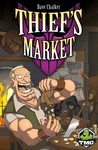
Skip the complicated rules. Here are 10 fun, easy tolearn board games for your next family game night. Starting off with number 10. Thieves Market is an engine building game where you'll be grabbing the best loot, recruiting master thieves, all to become the most infamous mastermind around. Throughout the game, you'll be buying from the marketplace, pulling off different heist, and all to collect relic cards. Now, the rounds are really simple. There's two phases to each round. First, there's the loot phase, and then there's the market phase. On the loot phase, you will roll the pool of dice, and each player will grab certain dice that they want for their own personal pool. Now, whatever dice that you grab are dice that other opponents won't have that they can grab themselves. So, the next player has one of two choices to make. They can grab any of the remaining dice in the general pool or they can choose to steal your dice instead. And then once it's your turn again, you have the choice to grab what's left in the general pool or steal from someone else. Now, why would you want even these dice in the first place?
Well, the dice will be certain gems or resources that you'll have to purchase in the market phase. And in the market phase, you'll have three different cards to choose from. You'll have market cards, you'll have heist cards, and you'll have relic cards, which are important. You need those to actually end the game. It's a clever little engine building game where you're going to have tons of cards, and you'll be converting different dices to different little things so that you can buy more from the marketplace to pull off even bigger heists to score even more victory points. And once three relic cards are collected, whoever has the most victory points at the end of the game wins. Basically, Thieves Market is a fun Splender, which Splender itself is fun, but a little bit more Take That as there's a bit more player interaction during the loot phase where you grab from the general pool and someone can steal from you. And so, if you don't like Take That, you may not like this one. But if you like a little bit more player interaction within your group, you're going to enjoy this one. If you're enjoying the content so far, please feel free to hit the like and subscribe button. Now, on to the next one.
Next up, I have Wanted Wombats. Wanted wombats is a push your luck card game. The goal is simple. Be the first to get to $15,000. Now, how do you get money in this game? Well, on your turn, you're going to draw a card. But you're going to choose that you're the card that you're going to draw is either going to be one of a,000, one of 5,000, one of 3,000, or one of 10,000. If you guess correctly on the card that is drawn, you keep it. If you're wrong, you bust. If you guess correctly, you keep said card and you could choose to draw another card. And if you guess correctly, well, you keep that card as well. And if you guess correctly, well, guess what? You keep that card as well. But if you keep going and you're incorrect and you bust, you lose everything on that round. So, do you want to push your luck or play it safe and say, you know what, I'm just going to keep what I earned and I'm going to live another day for the next round. The game is simple. The game is really quick, but it gives some fun quick laughs. And when you're able to draw that 10,000 card, ooh, it feels so good. In a way, this is a different version of Flip 7, but a fun little twist where you're trying to guess what that actual card is. And when you're able to guess correctly, it feels really good. This is Wanted Wombats, a simple push your luck card game that isn't going anywhere from my collection. Next
up, I have First Giants. First Giants is a set collection engine building game. And in this game, you're going to be doing one of two things. You're going to set a piece to get a card, or you're going to return all your pieces back to your board. That's it. But in this game, you're trying to collect sets of cards, whether it be sets of the same color or sets of the same number. If they're sets of the same color, you're trying to get three different cards. If they're sets of the same number, you're going to try to get five different cards, which will score you more victory points. Now, on your turn, when you place one of your fossil pieces on one of the four boards, you're going to collect a card from that board. Any cards that you draw up may have certain instant effects or passive effects throughout the entire game. And these passive effects can really add up when you have multiple cards. That's where the engine building aspect comes where when you do a certain move, they're going to compound and you're going to feel a lot more powerful on each of your turns. But when you choose to return your pieces back to your board, that's when you can choose to get an ember, which is a form of currency, or you could choose to display one of the cards that you've drawn. Now, when you start displaying these cards, that's when you start working towards your set collection. There's three different numbers and there's five different colors. So, any of the cards that you draw, you can pay embers to then put it into display into your said museum and you could start working towards one of those two different types of sets. It's a fun, quick little strategic game. And
who doesn't love dinosaurs? And I've enjoyed my time playing First Giants. If you're looking for something quick and simple, but with some strategy involved as well, I'd give this one a look. This is First Giants. Now, before I continue, I'd like to thank today's sponsor, Board. It's a tabletop gaming console with a 24-in touchscreen that works with real physical game pieces. Place a piece on the screen, move it around, and Board recognizes what it is and where it's moving, letting the game react to what you do. So, you still get that shared face-to-face experience with digital interactions built into the game itself. The library includes strategy, puzzle, and arcade games, so there are different styles to explore depending on what your group enjoys. Board comes with seven games and physical pieces to get you started, and there's no subscription required. You can also buy additional games to expand your collection. Check out Board using the link below in the description to learn more and see what other games are available.
Thanks again aboard for sponsoring this video. Now on to the next one. Castle Combo is a tableau building game. In Castle Combo, you'll be building a ninecard tableau which will be a 3x3 grid. On each turn, you'll be grabbing either a castle card or a villager card depending on where the messenger is at. Each card will have their own cost on the top left corner. And once you buy said card, you will place it into your tableau in this 3x3 grid. Once you have your 3x3 grid filled out, the game ends immediately and that's the game. Now, there's more to it than just building out your grid and then that's it. There's a focus on where you want to place these cards because these cards have certain requirements. If you're going to place it somewhere, some of these prefer to be on the top left corner, while some like to be with a certain colored card. So, these villagers are a bit picky and they want to be placed nicely in your tableau. The more you're able to connect and synergize these cards, the more victory points you'll score. So, in your first few games, you can just start playing some of these cards and you're playing the game. But, you'll slowly start realizing that these cards need to be placed in certain areas if you want to maximize the points out of each of these cards. And that's where the fun is. Once you start getting these cards to connect and synergize, it creates a combo, thus castle combo. And that's essentially the game. Once you figure out how these cards best synergize, creating the best
tableau that you can create, it creates a very satisfying ending once you see how these cards all synergize, scoring you multiple victory points. This is Castle Combo. Now, on to the next one. Next up, I have Downup. Downup is a ladder climbing card shedding game where you're trying to get rid of all the cards in your hand. If you're the first to do so, you score two points. If you're the second to do so, you score one point. You keep doing this until someone has four points. Spelling out down up. On your turn, you could do one of four things. You can play a set of cards. You can add a card to a set. You can take all the cards that are played out. or you can rotate your hand because these cards are double-sided. If you're thinking that this may be similar to Scout, well, you'd be right because this is actually made by the same designer who made Scout, but there's a small little difference in this one because any sets that you play will only be competing against other sets of the same amount of cards. So, let me give you an example. If I were to play a set of two cards and my opponent played a set of three cards, that set of three cards is not competing with my set of two cards.
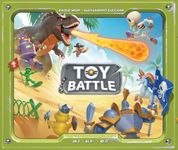
You're only going to be competing against sets of the same amount of cards. So, if the next player were to play a set of two cards, it must be a value higher than the set of two cards that I currently have in play. If it is, then the cards that I played return to my hand, but I must rotate them and put them back into my hand, changing the value of said cards. This is where things get really interesting because sometimes you can just play a set of one card and it could be a really stinky card like one and then someone could play a set of one card beating out the set that I have forcing me to return this card but rotating it where it is now a better card. So sometimes you may be playing cards to just make them better for you later down the road. This is down up. I've really enjoyed this one and I can't wait to play it again. Now, on to the next one. Next up, I have Toy Battle. Toy Battle is a two-player battler where you'll be placing pieces trying to eventually reach your opponent's headquarters. And the options that you have on your turn are simple.
You do one of two things. You either deploy a troop onto the field or you draw two troops. That's it. However, when you place a troop, depending on the troop that you play, you may get an instant action. And some of these actions allow you to gain an extra turn. Sometimes they allow you to draw troops. Some may actually break the rules of the actual game. And there's so much more. But when you place these troops, they must always be somehow connected to your current headquarters and the troops that you have in play. You can't really play a troop if they don't have a way to connect back home. And this is where things get tricky because slowly your opponent will be making their way towards your headquarters. But these troops have certain strengths. If your number is higher than the number that your opponent has in play, you can place your troop on top of theirs, defeating it. And if you're able to successfully have troops all the way from your headquarters to theirs, you win the game. But that's not the only way to win. Another method is by gaining these metal tokens. depending on the actual board that you use. And did I mention there's several of them in this base game? I think there's like eight of them. Depending on the actual board that you have, if you gain a certain amount of metal tokens, you win the game. And the way to earn these is if you control said region. So, if you have spaces surrounding the entire metal, then you gain control of that region, gaining said medal. If you acquire a certain amount, depending on the board,
you win the game. Toy Battle is a fun, quick, back and forth game, and don't let this actual theme fool you. There's some fun strategy in this one, and there's tons of variety. This is Toy Battle. Now, on to the next one. Jump Masters is a two to four player skirmish where you're trying to be king of the hill. Now, on your turn, you're going to be slowly moving your pieces, whether it be moving diagonally or orthogonally. Now, the pieces that you place, you can actually jump over your own pieces, charging the strength of each die, or you could jump over opponent's pieces, essentially attacking them. If your energy is higher than theirs, you'll be reducing them eventually to zero. If you do so, you gain victory points. If your king of the hill at the start of your turn, you gain victory points. First one to 20 or 30, depending on the player count, wins the game. Now, if this all sounds familiar, like Chinese checkers, well, you'd be right because this is Chinese checkers, but with a bit more bite to it. There's a bit more to think about because you have character cards.
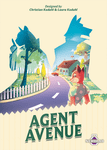
Each of these dice, each of these pieces have their own special strengths and abilities where you can do different things like jump over two spaces instead of one, increase your energy every time you attack, and so much more. There's also a lot of variety here with the different terrain tiles that you can place where it lets you charge up or wrap around to defend yourself. And it's really all about positioning on how you want to place your dice so that you not only attack one piece, but you can attack multiple pieces like you would typically in Chinese checkers. This is a fun, quick game and one that people are familiar with. So, this one is easy to teach, especially with people who have played classic games such as Chinese Checkers, and you can play this at four players. So, if you want something that feels familiar, but just want a fun spin on, give Jump Masters a shot. Now, on to the next one. Next up, I have Agent Avenue. Agent Avenue is a set collection bluffing game. In Agent Avenue, you and your opponent are both agents in the same neighborhood, and you're trying to move your agent piece onto the same space as your opponent's agent piece.
First one to do so wins the game. Now, how you move your agent pieces will be through these cards that you play. And the cards that you play will make you move forward or even move backwards. There's even some cards that let you lose the game immediately or win the game immediately. At the start of the game, you will draw four cards and this is your hand. And on your turn, you're going to be choosing two cards that your opponent's going to choose from to move their agent. Now, the interesting thing here is you're going to play one face up and one face down. Whichever the opponent doesn't choose will be the one that you have to play. So your opponent will choose a card, move their agent, and then with the other card that is not chosen, you must play it. So this is where the bluffing comes in because you may have a really good card and you may not want your opponent to have it. So you're going to have to choose which one you want to put face up and which one face down. And as I said earlier, this is a set collection game. And you'll notice a lot of these cards have three different numbers. So, if at one point you get this card and this is your first time getting it, you're going to move set space up here, which in this case would be one space, then you keep this card. If ever in the future you gain this same card and it is your second one, you move two spaces. If you draw if you get a third one, then
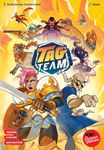
you move three spaces. So, some of these cards can be better the more that you collect, while some can get worse. So, you really want to be careful on which cards you obtain and which ones you want to give out. It's really about not just playing the game, but playing against the player, playing against your opponent, and knowing how they think so that they choose a certain card so you get the other one. This is Agent Avenue. Now, on to the next one. Next up, I have tag team. Tag Team is a deck building auto battler where you'll be choosing two different characters to form your team and you'll be battling against your opponent's team. First one to knock out one of the players wins the game. Now, on your turn, depending on the characters that you have, each one will have their own designed deck of cards, but you're only going to draw two specific cards at the start of the turn.
And so, how a turn works is you're going to start with those two cards and then you're going to choose and how you want to sequence them. Because on your turn, you're going to slowly reveal each card. Kind of like war, where you're going to reveal it and then address its effects. So, you're going to assign your two cards and then reveal said card and then address it effect. Whether it be an attack, a defense, or a special ability that said character has. While you reveal, the opponent reveals their card at the same time. Yeah, this is simultaneous. So, effects will be drawn at the same time. So, you'll address card and then you'll do the next one. Once you address all its effects and your deck runs out, then you draw three cards from the deck of both of your characters shuffled in. And then between the three, you're going to choose which card you want to add to the cards that you're playing out in battle. Once you choose a card, then you get to choose where in the deck you want to play it.
These cards that you play, you're going to be playing them round after round, round after round until someone's knocked out. And then each card that you're adding, you're going to choose in what sequence you want to play it. So in this case, I've played these two cards and I must add this new card. So I get to choose whether I want it to be first or I want it to be in the middle or I want it to be last. Once I choose my sequence, I lock it in and then you start again drawing from the top. doing its effect over and over again. Once you play your deck, you draw three cards and then you choose which one you want to add. When you have it, then you're going to choose in which order you want to play it in. And this is where sequencing becomes really important because you're noticing the sequence that your opponent has that you know that on turn two they attack. So you may want to have a defense card on turn two, but maybe they might change it up and change the sequence by adding a card at the very top. So it's a constant back and forth, paying attention. How is my opponent sequencing their cards? I'm noticing that they're focusing on a lot of attack cards. So I may want to defend so that I protect myself in this certain character because their health is getting low. So, it's a constant back and forth, but it's really simple because at the end of every turn, you're building out your deck, adding a new card, and once that turns over, then you just see how the sequence plays out, playing them out one at a time. And each of these characters have their own special abilities, fun
little twist, and it changes from game to game because the sequence can change, the characters can change, the effects can change, and there's a lot of variety here. plays very quickly and I've had a great time playing tag team and I'm really looking forward to exploring what this game has to offer in regards to the other characters and I think the other expansion that just came out. This one's a fun quick two-player game where if you want something simple but with that fun back and forth, especially if you like sequencing programming cards, give Tag Team a shot. This is Tag Team. Now on to number one. And for number one, I have jibberjabble. In jibberjabble, a player will draw a card where they will have a list of words. That player will not see these words. Everyone else will see it.
Now said player will say a number between 1 to six. So in this case, I said three. So it's cup. Now everyone else has to think of words that are related to cup. Yeah, simple. However, the fun twist in this game is you are spelling out each of these words starting off with the player to the right and then afterwards each player has to spell the next corresponding letter to that word. But none of these people are communicating to each other. So when you think of cup, you may think of coffee or mug, things like that. But they're not communicating with each other. You kind of just have to see if you could synchronize within thought and see if you can get to that same train of thought. So if I'm thinking of cup, you're trying to help me, but you're trying to think of words that everyone else can think of. So if said player thinks of a word and they say M, then the next player has to think about, okay, what goes after M and what word are they thinking about that's related to cup? So then they may say U. And then the next one has to think, "Oh, gee."
And then the next player once they finish the word, they can say, "Stop, new word." And then they go again. The group can give the guesser up to three words. Once they do that, the guesser is paying attention and they would get guess said word. And that's the game. You can do this as much as you want. I know there's objectives to this one. I don't know how many points you're supposed to score to actually win it, but to be honest, we've never played it that way. We've just played it until we just get done with the game. And this one has worked so well with so many groups of people, especially with people who aren't big gamers. And you can play this anywhere. And it just creates a fun fun environment where people are just laughing, having a good time, and you don't know what word that they're trying to guess, and then people have to salvage the word by trying to spell it right cuz some people can't spell. Well, most of us can't spell to be honest. I absolutely love Jibberjabble. It is a fun, easy to teach word game that plays in a wide variety of player counts. I highly recommend Jibberjabble. If you've made it this far, thank you so much for watching this video. And if you've enjoyed the content, please feel free to hit the like and subscribe button. Now, I love me my easy to teach board games.
But I also like some bigger complicated games, too. Those are fun. And I honestly think there are some that are worth the teach. They're worth learning. If you're interested and may want to dabble into that, I have just the games for you. You can see that video here.