My Top 100 of all time! ►►► Numbers 10 to 1
Games in This Video
9 games are featured in this video — they unlock as you watch.



Transcript
Hey everybody. Today on Roto Run through, I'm going to tell you about the 10 greatest games of all time. At least according to me. Hi everyone. I am here at the end of a very long and epic uh 10chapter series that I've been doing over the last few months where I count down my top 100 games of all time. Although I haven't done it alone. Um, one last time, let me give a huge shout out to James Wood of That Board Game Show, who has been editing all these videos together. James, you are a lifesaver. I would not have been able to do this without you. But anyway, folks, um, we've already talked about numbers 100 to number 11, and I'm about to tell you about my 10 favoritests of all time.
Although, if you haven't caught any of the stuff that got us here, there is a link down in the show notes for a playlist that will let you watch the entire list. And as I've said before on this folks, by all means, if you have any questions about this list, like, hey, what about game X, Y, or Z? I thought you really loved that. Um, you know, or I can't believe you put that there. That game is hot garbage. Well, okay. I'm not going to respond to that necessarily, but I always respond on every video on my channel to any good faith question that anybody asks, provided it's not particularly derogatory or dismissive or anything like that. So, if you have any questions about this list, um, or what's on it or what's not on it, by all means, let me know. And, um, otherwise, I don't think there's much to say. For folks who have been watching this entire series, you know, um, we've been on the road on a three-month European road trip the whole time. So, I've been doing lots of interstitials, talking about all kinds of things. I did a tour of Essen Spiel and the city of Strawburg and all kinds of slice of life stuff. Uh, even the last episode, I did a tour of my house now that we're back home. But for this final one, I'm just keeping it really simple. I'm just all about the games.
Uh, counting them down. And I don't even think I'm going to be taking that long because I've talked about all of these games at great length many, many times on the channel in many formats. I'm just going to tell you as quick as I can, what they are, and what makes them stand out so far above everything else. Right. Okay. Got it. Then let's get going with number 10, Planet Unknown, which um I absolutely adore. This is a game where we are terraforming some far off uninhabited planet and it is a polyomino tile layer. I should say, by the way, the video that's on screen is from my prototype run through I did many, many years ago, half a decade ago, I originally covered this game. And the final version of the game looks so much better than what you're looking at my old prototype video. I really need to, I don't know, film the Super Moon expansion or something like that. So, I have some footage of it's a bit more recent and up to date, but um like I said, this is a Planet Terraforming game. It is a Polyomino Tile Lang game.
If you watch the whole series, you know how much I love Tileang, especially Polyomino Tile Lang, trying to jigsaw puzzle all those pieces together to make them work. Um, but there's a couple things that really makes this game stand out. One, there is a separate board next to my little planet board that is a bunch of progress tracks. And as I lay down different tiles with different elements on them, I climb on all these different tracks. And these tracks are so brilliantly designed to be um you know, combo explosion generators basically because as you work your way up this track, uh you hit that space and that space, it'll make these two things happen. They combine to do this other stuff. I think when I originally talked about this game, I called it very Gon shown clever and I stand by that. The um the combo chains you pull off in this game are so satisfying and it never gets old. And um one nice thing about this game is there the game comes with a ton of variety. There are a bunch of different versions. There's a standard track uh but you get all these different space corporations that make the tracks work differently. So you have a ton of variety there. You also have a ton of variety because you can have just the standard planet um that's your terraforming which is what you see on screen or the game comes with a whole bunch of special bespoke ones with all kinds of special rules. So every time you play you can get a different you know unique combo of corporation and planet. So there's so much variability but um all that is secondary. The most important element of this game is the way we draft tiles. Um on your table you've got a lazy Susan which is you
know basically a platform that can spin around and that platform is full of tiles. 12 different depots with two tiles in each depot and when it's your turn if you're playing at a higher player count game you can um pick any depot put it in front of you and then grab one of the two tiles and everybody else ends up getting a tile that's in front of them or picks one of the two that are in front of them. So everything about this game is simultaneous play, which is another great thing about it. It makes the game just zip by so fast. Um, but you are so, you know, integrated into what other players are doing because whenever it's not your turn, other players are choosing what you have available to you, although you always have a choice between an A and a B. And then you grab the tile, you put it on um you you you try to get the icons in the right place, you try to get the water over the ice deposits. There's all kinds of tile laying stuff, including a really cool thing that as you go along, you can um you know, uh upgrade and get these little space buggies that can drive around on the planet as you're developing it to get more resources.
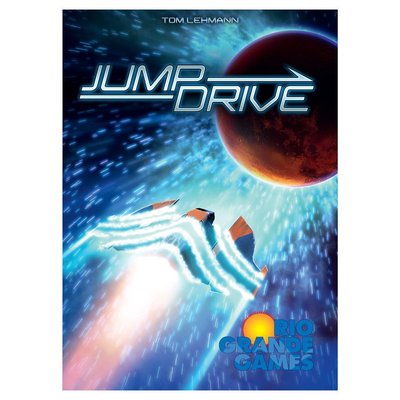
Everything about this game is fantastic, from the huge amount of variety to the absolutely wonderful simultaneous play that comes about because of that lazy Susan and the great comboy goodness. Um, it's just absolutely phenomenal. It's my number 10 greatest game of all time, Planet Unknown. Let's move on to number nine, Jump Drive. We are going back into outer space, folks. But this time, we're not just terraforming one planet. We are building a space empire. And Jump Drive is from designer Tom Layman, who is probably most famous for another game he has put out called Race for the Galaxy. Um, and Jump Drive is basically Race for the Galaxy Express. And after I played Jump Drive, I realized I would never be able to go back to Race for the Galaxy.
It is so good. It's a multi-use card game where um you got a handful of cards and over the course of the game, there are ways you can get more and more cards coming in. These represent all different kinds of technologies and planets and, you know, alien species and um, you know, government initiatives and technologies and all kinds of things. And you you want to play all these cards, but you have to choose smartly about which cards you're going to play. And to play those, you have to sacrifice other cards. And that's always a fun and satisfying decision. And jump drive is having you make these tough choices from start to finish. Although finish comes very quickly. This game is designed, the jump drive represents, you know, the zipping along at hyperspace as we travel from planet to planet or, you know, in our in our empire we're building. But more importantly, it represents the speed of the game itself. This is a game that is designed to go from zero to hero faster than anything else on the market.
You start out very doing anything, but by rounds two and round three, just even getting a few cards in play, just jump start um you know into hyperspace um just how fast you can level up. And in fact, this game is designed to be to last no more than four, five, six rounds um if players are playing smart because as we're building up, we are scoring points. there's a fixed number of points and once all those points are gone, whoever scored the most wins the game and it's absolutely brilliant. Uh it takes all the best elements of the original Race for the Galaxy, um but just crams them down into this tight package, this little nucleus of gameplay that is absolutely brilliant. And I could come back over and over and over and I've played this game dozens of times now. I absolutely adore it. It's interesting. Tom Layman has done a another game called The City, I believe, which uses the same core idea, but is all about building a modern real world city rather than a space empire. I like them both quite a bit, but if I had to pick one, Jump Drive would be the one that I keep coming back to. It's also got a great expansion with a really cool solo campaign you can play through, all kinds of amazing things. The game looks great. It plays so fast. This is the fastest game on my list. is basically a filler, but it is the crunchiest, meatiest, richest, most fulfilling, fast playing filler game you'll ever play.
Number nine, Jump Drive. Okay. All right, folks. Let's move on to number eight, Tiny Towns. Uh, this is another quick playing game. Um, and I kind of want to call it a Polyomino tile error, but it's not really. It's more of a tile builder because what happens in this game is um we each have a little 4x4 grid that is the site of the tiny town we are trying to build. And on a player's turn, they pick one resource cube that they and every other player adds to one of the 16 spaces in their little tiny town grid. And when it's not my turn, you're picking uh whether it's lumber or glass or brick or whatever. And everybody, not just you, but everybody takes one of those cubes and puts it on their board. And so, uh, you know, when it's not my turn, I am really at the subject to the mercy of other players and they're choosing how I'm going to expand my city at the same time they're choosing their own. So, that level of intertwinedness between players is delicious. Uh, it could be kind of an inconsequential thing or it can be like a really aggressive thing if you want to pick glass because, you know, I can't use it. you can see what I'm building towards. But how do we build? The the trick of this is it's why I called it a kind of a polyomino builder. Um, every time you play, there are I forget. I think it's like six different types of buildings. You know, the church and the the market square and the town hall and the residence and the well. There's several different buildings, types of
buildings you can build. Every time you play, um, there's going to be a randomly selected um, function card for each one of those buildings. It says how the buildings work, how they score points, etc., etc. So, every time you play, it's going to be a radically different scenario where um you know, these two things might interact in a way that they don't interact normally, all kinds of stuff. Um, but the uh shape of these buildings is pretty much always the same. Whether it's, you know, trying to get a certain number of cubes in like an L shape or a a square or whatever it is, because once you have put the right colored cubes in the right um position next to each other, it's kind of like you made a little virtual polyomino taking up space in your tight little 4x4 grid. But once you've made the right shape, all those cubes go away and they get replaced by a single building, a single mele that represents the building you were trying to build. So the game your your board just gets tighter and tighter, crunched and crunch every time I have to put another cube out that I have no use for because of a choice you made. I'll put it over here to the side and hopefully I can build something off of it later because I've just got to finish this. I just need ONE MORE BRICK.
SOMEBODY PICK a brick. Okay, it's my turn. I'll pick the brick. I'll put it in that spot because now all those tiles can come or those cubes can come off and suddenly I've got breathing room again because I replace those four cubes with just one token. So that creates this really interesting and very unique eb and flow where you're feeling crunched and tight for space. But then okay, I finished the building or maybe two buildings and I can breathe again. But now I'm starting to fill those spaces up again just as quickly and it is incredibly tensionfilled. um and in, you know, incredibly fun from start to finish and a real challenge, a very fun puzzly game that I could come back to over and over again. The game's gotten several wonderful expansions over the years that just make it better and better and better. But even if you just have the base game, there is so much goodness here. Uh I I I I can't imagine ever getting tired of this. I love this so much. I actually went on a live stream with the developers and the designer of the game and [clears throat] played with them. enough. I I I believe I beat the designer himself at his own game. Although the developer ended up winning, but still uh I have played this game, Seven Ways to Sunday. Probably one of the greatest runthroughs on my channel ever is my runthrough for Tiny Towns because I did it um with Ryan Kiteon of Nights Around a Table. He and I uh you know live streamed or you know, we recorded ourselves playing a game together. And the most fun part is you can watch that playthrough on my channel and hear my thoughts and my strategy and every decision I make. And then you can
watch the same run through on Ryan's channel where it's presented from his perspective and he's talking about all the decisions and strategies and whatnot he's doing. It's a blast. Um, everything about Tiny Towns is fantastic. It's phenomenal. If you want to know more about it, I'll put the link for that runrough down in the show notes. Actually, uh, links for every single game I'm talking about today are down in the show notes if you would like to know more about them and you'd like to see them in action because I've done runthroughs. I've covered all of these games on my channel over the years. Um, and yeah, uh, number eight is absolutely phenomenal. One of the best of all time, Tiny Towns. Let's move on to number seven, folks. We're going back into space with Roll for the Galaxy. And this is very interesting because Roll for the Galaxy is again from designer Tom Layman. Although he actually I think he was really the co-designer and um you know a friend of his was the main designer. I don't remember the name of his friend. It's on the screen right now thanks to James. Um very very important.
I apologize. I should have looked it up ahead of time. But um still the interesting thing about this is two of the games in my top 10 have Tom Layman as the designer or co-designer on them and nobody else has achieved that. So, does that make Tom Layman the greatest designer of all time? I'm not sure, but uh he certainly knows how to put a game together that um you know, tickles my fancy. What is Roll for the Galaxy? It is another spin-off of arguably his most popular, greatest design of all time, Race for the Galaxy. But in this game, we're using dice to build our space empire uh rather than cards. In both Race for the Galaxy and Jump Drive, which I mentioned a few entries ago, it's all about, you know, uh, grabbing cards, you know, figuring out the right cards to put into play to build our space empire. Now, we are, um, it's actually a tile grabbing. We we're grabbing tiles and putting them out, but then running those tiles and activating those tiles and getting the resources to get those tiles and all that stuff with cool little customized dice that are just so much fun to play. Every round in this game, you um take all the dice you've got that represent you, you know, the the full citizenry of your space empire. You put them in a cup, you shake it up, you slam it on the table, and then [clears throat] you start peeking to figure out, right, these are the dice I rolled, all these unique faces that kind of represent the same actions that existed in the original Race for the Galaxy. And I decide how I'm going to use these dice to expand my space empire. I do it behind a screen. And then once everybody's figured out what
they want, everybody reveals at the same time. And like Race for the Galaxy before it, this is a game where I so need to pay attention to what it is you're doing because um everybody's going to pick a primary action that they want to do, whether it's exploring for more tiles or um developing resources on the plants they've already got or selling those resources or consuming those resources or there's several different actions. And the thing is, whatever somebody picks one of those actions, everybody gets to do that action. So, it's very important for me to be able to anticipate and intuit it what you're going to do this round. Because if I can do that based on the dice you have, based on the stuff you've built, based on what I think your overall strategy is, then I want to make moves um when I'm programming my dice so that I'll be able to piggyback to best effect off of the action you've chose.
And you should be doing the same thing for me. There's nothing worse than me um initiating an action that um somebody else initiated as well because that meant I kind of wasted. I could have initiated a different action as well if I could have seen what you were doing if I could have figured that out ahead of time. And I love that form of interaction kind of almost a sort of deduction. Um but it's absolutely phenomenal and everything about this game is fantastic. the production quality. I know some people don't like it because they feel that this is the easiest game in the world to cheat at because everybody rolls their dice and then, you know, assigns them to different activities and categories behind a screen. And to be fair, it would be so easy for anybody to say, "Oh, I'm just going to change this die. I mean, nobody can see. Nobody knows." All I can say is, folks, if you're worried that that's what's happening with people you're playing with, you're playing with the wrong people. Don't worry about it. Um, don't worry. Be happy. Just do the best. Whether you win or lose doesn't matter. It's the journey that is important. And this game is so satisfying. It's funny. I talked about how Jump Drive is an incredibly hyperfast game. My wife and I played Roll for the Galaxy so fast. It is now, as a two-player game, a hyperfast, less than 20-minute game for us as well. It's another filler we've spent so much time with. I know this is in my wife's top 10 of all time. It is in my top 10. Uh it's got some really nice expansion content, too, but you don't need any of it. Just the base game is phenomenal. Uh Tom Layman, my hats off to you, sir.
Congratulations. Um getting uh a double spot in my top 10. Uh it is my number, what was it? Number seven, Roll for the Galaxy. Oh boy. Let's continue on now with number six. The loop. Uh we're getting into some co-ops. Co-op is my favorite way to play games in the universe. Um if I had my brothers, I would only play cooperative games, but my wife prefers competitive games. So, of my top 10, four of them are co-op, six of them are competitive, but heck, as you've seen in the other ones I've talked about, I'm always looking for games that have really interesting interplay and inter um connectivity between players, even if we're playing competitive. Not um interaction in the way that, oh, I could smash your stuff into the dirt, but rather that choices I make create opportunities for you. Um, and as much as I love that in a really great competitive game, that's nothing compared to a wonderful co-op like The Loop, which is um the game that has knocked Pandemic out of my top 10 games of all time. Because as much as I love Pandemic, I've talked about it in an earlier iteration of this show, folks.
Um, I love The Loop even more now. Why? Um, because really, it's hard. The Loop is a very pandemic inspired style game. Uh, we it's a firefighting game, for lack of a better term. There are all kinds of hot spots on the board that are constantly growing in threat. And if we don't keep them under control, if we don't run around and try to fight back those fires, they'll eventually overwhelm us and cause us to lose the game. But while we're spending our time doing that, we are also trying to work towards some big major goal as well, which is the way we win the game. And the tension between those two things um makes any great um you know pandemic inspired game really sing. And the loop has it in space. But I haven't even said what it is yet. This is a time travel game, folks, where we are agents of a uh uh you know, a space-time um protection consortium. And there is the evil doctor um Dr. Fu, although I think in in English it was names to Dr.
Foe, but in the original French, I have the original French version of the game, it's Dr. fu who is traveling through time um you know creating all these anomalies and his minions are spreading all over the place and so we've got to you know jump from time zone to time zone by moving around on the board and stop his evil plans while pursuing objectives that will prevent him from you know that will defeat him once and for all. And it's standard pandemicy type stuff. You get to do so many things on a turn. You decide where you're moving. You fight stuff or you try to collect things um you know to go for that bigger objective. That's the crux of the game. But there's a few things that makes this game so special. One is uh Dr. Fu himself or Dr. Foe uh is represented at the center of the board by this cool little cube tower. And whenever he acts, he's going to rotate a certain direction, clockwise or counterclockwise. It's um you know, somewhat predictable. It depends on which mode you're playing in. The game comes with like several different scenarios you can play with. the rules for how he decides where he's going to be sending his cubes of doom um throughout time uh is somewhat predictable and so you're trying to get there ahead of time to cut him off and but anyway he eventually rotates and then a few cubes drop in but then they can come out of three different exits from his tower so you can never be 100% certain where he's going to deploy his um dastardly plans um and then you've got to respond to it. That's just fun.
Um [clears throat] my my wife refuses to let me ever do it. She always insists on being the one to um rotate the tower and drop the cubes in and all of that and then shout for joy or despair depending on where they come out because if they build up too much they can start destroying the fabric of spaceime and if that happens too much we can never win. Um but anyway so that's just a fun gimmick but it works. it really elevates the experience. But it's the deck building that's really special about this game because um while we're deciding where we're going to move around because we've got to fight those cubes and we've got to, you know, complete objectives in different locations. Another thing is wherever we end our turn, whatever time zone we end in, we can draft a card um from that time zone and add it to our deck. So in addition to everything else I'm trying to decide on a given turn, where do I need to go? What do I need to do? It's also where do I need to end? where do I stop moving so that I can get a card that's going to be best for my deck?
Because uh these cards uh they're they're very funny. Uh they're very quirky, silly sci-fi concepts. Um but and they're very very powerful, too. But they also have symbols on them that represent I forget what they are like a black hole and dark matter and something else. Basically, I think there are three unique symbols. And the thing is um on some later turn when I draw my cards and I decide right what cards am I going to play? These cards let me move around. These cards let me fight the cubes. These cards let me collect resources. They let me do all kinds of things. Now, my turn is going to be in part decided by what cards I've built my deck and then what I've drawn. Here's the trick. Uh, say I end up playing a few cards that all have the same symbol, that black hole symbol on it, right? Um, if on a given turn I can play two or three cards, one of the things I can do on my turn is initiate a time loop. And what that means is I get to use my hand of cards again, but not my entire hand.
It's like I go back, I do whatever I'm doing with my cards and then I get to oh, I get to you get my cards back and I get to do something more. It's very satisfying if you can pull off multiple loops off the same hand of cards. But it's not all the cards that I get back into my hand. I have to pick one of those big symbols and I just get those cards back. And so, um, a big part of the, uh, the, uh, deck building of this game is trying to specialize in a given type of card or a given type of icon on the card so that when I trigger a loop, I can trigger more bonus actions. And so, that makes the that really elevates the deck building um, to a whole new level because, of course, there's all these cards I care about. They've got special powers that I need for various things, but I'm also trying to match those tokens or those icons so that I can be more powerful when I trigger a loop. But all that is incumbent on the fact that right well to pick up that card I need to be on the other side of the world or the the space-time continuum. Can I get over there to pick up that card? Or if not, could somebody just nobody else take that card? I'll get there next round. Um you maybe it'll take me a few turns to get over there because I need to pick that card out because it's perfect for my deck.
There's so much stuff that goes on in this game. It is such a fun and wonderful puzzle and it's also incredibly interactive because you will not win this alone. players really have to coordinate everything they're doing to be able to pull off a win in um one of the greatest co-op games of all time. Number six, the loop. All right, folks. Let's talk more co-op. Let's move on now to number five, Roll Camera. Oh man, I love everything about this game. Um starting with the subject matter. In this game, we are members of a film crew. As part of setup, everybody gets a unique special power card that represents us being a different crew member, whether we're the director or the hairdresser or or um you know, all kinds of the gaffer, all kinds of things that give us different powers. And on my turn, I'm going to roll some dice. And um depending on what I roll, I can use these dice to try my best to contribute to the quality of a major motion picture that we are all trying to um bring across the finish line and put on the market so that we can get fame and fortune and win the game. Um and we're all in this together. The better the movie is, the more the the more likely we are to win. Um, unless it's interesting, there is a a a special win condition you can do with this game where if instead of trying to make the highest quality movie, you can instead oh bomb it, try to make a really terrible absolute worst of all time stinker. If you can do that and you have to work really hard to not actually
bring quality into the movie based on your moves, but if you can make something that's alltime worst movie of all time, then it becomes a cult classic and then have to, you know, um, you know, an Ed Wood type scenario and that becomes a way you can win as well. I've never really pulled that off very much. My wife and I, we tend to try to make the movie better rather than make it worse. But that is a a fun cool idea, but it's a theme I love. Um, I for folks who don't know, I was a video game designer for over two decades. I was the lead designer on Siphon Filter and Fable 2 and Sims for console and Brink and Pitfall Lost Expedition and a bunch of other games aside. So, for most of my um my uh my 20s and my 30s and my 40s, every day I went in and worked with a big group, sometimes hundreds of people, all with the um creative collaboration to move in the same direction to create something that's bigger than the sum of all of us. And I loved my job when I did that. Um and so I love that as subject matter. I love a creative collaboration turned into cardboard form where we all have to contribute to the greater good by rolling dice, deciding what to use, maybe not using all my dice, setting them aside so my teammate can use them on their turn because they can use them to better effect than me and whatnot.
And so working on that to, you know, try to build the sets and write and rewrite the script and, you know, get the cinematography right and keep the talent happy and all of this stuff is absolutely phenomenal. All this cooperative gameplay. Also, it's interesting. This is a cooperative gameplay that does not borrow from the pandemic style of, hey, you've got a map of whatever it is, the world or spaceime or whatever, and we're just moving around fighting fires here. um you know, we're just using the dice [clears throat] uh to uh in different ways to activate different stuff. Almost kind of a dice worker placement sort of thing. There's one other thing I really love about this game, and it's like the epitome of the creative collaboration. The most powerful things we can do in this game is call a meeting between department heads. Um which may sound like, oh my god, that's the worst thing to do. But in my experience from making video games for 20 years, if you have a productive meeting with a bunch of creative people where you all come out of that meeting with a clear idea of what the problem is and how to solve it and how to make the pro in product better, there's no greater feeling in the world. And so I love that that is replicated in this game because one of the actions you do on your turn is everybody has a handful of meeting cards and we can't really share that information. We can't say what we can do, but we can say whether it's our turn or somebody else's turn, hey, I want to call a meeting. We need to call a meeting right now cuz what it means is I want to play this card that's really going to save us. Um, and thematically that is so meaningful to me and so important. Um and uh you know but the
thing is if if you whether it's me as the lead player or you the lead player you call a meeting everybody gets to contribute a meeting card to the supply but then whoever called the meeting has to be the one to decide oh these are all good meetings which one am I going to do now because all these could help us in different ways and that's a it's a simple little design thing but it's so thematically strong it reminds me of my former life before I quit the video game industry and then because I so hardcore into board games that I kind of fell out of love with video games even though I was playing them uh since I was a little kid in the 70s. Um but anyway though, sorry that's neither here nor there. But everything about this game reminds me of the best times I had in my first professional career of my well not my first I mean I was a dishwasher and I've done deliveries. I was a mailman for several years almost became a professional mailman until well there's this whole side story not going to get into that. So everything about roll camera which I might have called role player by accident. I sometimes make that mistake but it's everything about roll camera because you roll the dice roll camera all that stuff just it just speaks to me on such a deep philosophical and nostalgic level. It's one of the greatest call games even if I didn't have such a love for the subject matter. Not only the act of creative consensus building as we work um to solve problems to create something bigger than all of us. Like I said I did in video games. I love the idea of movies, but I also love movies. Movies, um, for most of my adult life were my
greatest passion. Board games is now, but movies is still in my top three greatest passions. So, um, you know, coming together to make a wonderful movie because there's so many cool little nods. Um, and you know, the presentation of the game is great, too, from um, the designer artists. Um, I I love everything about it. Of course, I do because it's my number six greatest game of all time. The loop. No, roll camera. is my number five. Roll camera. Oh, silly me. Moving on to number four. It's another co-op game, although you might not know it. It's Marico. Um, who is from one of my favorite designers of all time, Alexander Fister. This is my favorite Fister. Um, this is a game of high seas privateeer adventure. You know, uh, it's a kind of Pirates of the Caribbean, but without any of the the crazy fantastical stuff like Krakens and all that. Instead, we are just privateeers. Um, you know, sailing around the Spanish main getting into trouble. Um, you know, be dealing with all the waring European nations, maybe taking sides with some of them and fighting against others. Um, interacting with the indigenous people of the land.
Um, and the whole game itself is a big gigantic rondelle uh that you can travel as fast as you want clockwise and wherever you land you can interact with that space. And there's a bunch of ways you can interact with the different ports of call all around the uh the board. But the biggest thing is multi-use cards. We have a handful of cards that represent different potential members of our crew or um potentates that we interact with or the local indigenous people themselves we can interact and we have agents we can deploy on the board so that we're more likely to want to go to that port so we can interact with the cards we've played in previous turns or they're big projects for things we're trying to build or they are I mean they're multi-use cards because instead of playing these cards for their main face option you know the person or item or whatever we can instead um use them as trade goods because Hey, we one of the big things is sailing around and delivering the right things to the right port of call. Um there's all kinds of stuff we can do and I already loved the game just the base game. But Maracbo would not have made my top 10 just by itself. Probably would even made my top 20 um of this. It would be in my top 100 because just the base game is phenomenal because it's a rondelle game where you are encouraged and incentivized to go as fast. You can move up to seven steps on the I forget what it is. It's like a 25st step rondelle. And when somebody has made it all the way around, that's going to trigger the end of a round. And so I love a game that encourages me to go as fast as I can um you know, and skip over some opportunities so that I can get to the things that are most important to me and just keep the game
moving with incredible speed and velocity. So I love everything about it. It's the Marrabo Uprising expansion that has elevated this game um into my top 10 of all time because it allows you to play Marrabo cooperatively and um where we are working together doing all the same mechanisms of the base game but now working together to overcome threats to the uh you know the the entire region and actually if you like Alexander Fer is known for this he's done it in a lot of his games. There is a you can play every g instance of Maricbo as a standalone game whether you're playing cooperatively or competitively or you can play it as part of a big epic narrative campaign where you meet certain people and then you interact with them in one chapter and that means in future chapters they still exist because now they're cards that you can you interact with. I mean, I love everything about how he's done this, but what I love most is the fact that he's turned it into a co-op game. And instead of us trying to, you know, pick a side in the war between the uh European states, we're now kind of against all of them because we have picked a different side. we have decided to um take up arms with the native indigenous population of the Caribbean and help them cast off the shackles of oppression from the European uh dominating superpowers that we used to work for when we played it as a competitive game. Now instead we are fighting the good fight against colonization and trying to lift up and
help and work with um you know the the people who are being held down by those forces that we used to represent. And that not only is it great just because, hey, I'd rather play a cooperative game, all things being equal, compared to a competitive game, but the fact that it totally flips the script, changes the entire narrative, dramatic arc of this game, um, and makes us part of the solution instead of part of the problem. so elevates this game and it's something that I hope the entire industry uh takes a look at and realizes yeah a lot of the stuff we used to take for granted you know back in the you know the in this golden age of board games we're living through are kind of shortsighted and there are better ways there are better stories that we can tell um when we're making a really great hero we don't have to celebrate the oppressors and eliminate and erase those the marginalized and those who are suffering we shine a spotlight on them and tell their stories for a change. And that's what Marrabo does with the Uprising expansion. And I could never go back without it. And I respect everything about it. Um, you know, um, Alexander Fner and the developers, they took the time to listen to the audience and realize, yeah, we can make this game better. Uh, we can make it more inclusive. We can make it more welcoming. And they did. And I respect everything about it. And it's, you know, not only all that, but they also made the gameplay better, too, because it's a phenomenal co-op now. And you know how much I love co-ops, folks. That's why
Maracy with the Uprising expansion comes in at number four. Okay, folks. We're coming down to the wire. Um, we're talking about number three now. Earth. Welcome to Earth. Uh folks, I always like to say um when uh whenever I set it up to play, um this is a competitive game. Um but I love it so much. Uh we are trying every time you play, you get a different biome, an island that we are trying to develop with a big This is one of those games with a huge gigantic stack of cards full of all kinds of unique powers and opportunities that represent something mag. Here it is trying to, you know, um, bring in the flora and fauna and get the right cards into play in my own little biome that I am trying to develop to score lots of points and win the game. And this is a game like what was it what number seven I talked about earlier, Roll for the Galaxy. Even though it's a competitive game, you are so intertwined with everybody else because um every round there is a lead player and that lead player picks one of the primary actions that all players get to do that round.
And uh I love that as a form of positive interaction between players. I've already talked about why it's so great in Roll for the Galaxy. It's even better here. Um whoever is the lead player gets the better version of that action. The other players get the uh slightly less uh good version of that action. And success in this game more than anything else comes down to once again me paying attention to you and your biome because when it comes around to you and if I can anticipate when it comes around to you that oh you're going to um you know trigger the draw more cards action because I can see you don't have many cards in your hand and you're probably going to do that then I don't have to do that on my turn and in fact I can make my plans around the fact that you're going to be doing that soon. And so my strategy is um you know developed based on your strategy. Are you low on dirt?
You're probably going to generate the dirt. Are you low on cards? You're going to generate the cards. Um do you have a bunch of cards and a bunch of resources? You're probably going to play cards this turn. So I need to be ready so that when you play cards, I've got something so I'll be able to play too because there's nothing worse than being caught flatfooted not being prepared for the action somebody else triggers. Um, and so that's the beauty of this game and the interactive element that I care as much about um, your biome and what you're doing as I care about mine. And it's there's a lot of games that do this, right? Including Race for the Galaxy, which I've mentioned a few times and, you know, the original Puerto Rico and all of that. But I don't think I've ever seen a game that does this following action better than Earth. But that's only half of what makes Earth so great. The other half is, okay, when I'm actually going to play a card or two on my turn, I'm going to put put them into, if I call correct, I believe it's a 4x4 grid, right? Now, I can put the cards wherever I want. Um, but here's the interesting thing. There are different types of cards, you know, first of all, there's flora and fauna. But there's also different kinds of cards that do things like generate stuff or give me passive abilities or in-game scoring or whatever it might be. But I care very much about where because a lot of times cards, oh, this card needs to be in a row with these other types of cards or in a column or it needs to not be next to this type of card or whatever. So, there's always the puzzle of how I'm going to build my perfect biome, putting the right cards in the right place. But that's only half it. A lot of games do that. Not only am I building an in-game scoring biome, a grid of cards. I'm building an engine because every once in a while, I get to say, hey, you know what? I'm going to run all the blue cards in my deck. And if I can trigger
that you're going to be the one to trigger this action, I need to make sure all my blue cards that are on on my deck on my island are ready to go. But I don't just say, "Oh, I'm going to activate all of I activate them in a very specific order from top left to bottom right. You know, western reading style. Everything in the top row, then the next one, then the next one, then the next one. And so, not only am I trying to puzzle out how to put all these cards together so they're in the right place for in-game scoring and, you know, you know, positioning that they all want to do, but I'm also trying to lay them out so that when I get to activate all my red cards, they're going to activate in the correct sequence so that this card up here at the top will provide the resources for this card down here at the bottom. Oh my gosh. Wow. The engine building in this game is off the chart. Brilliant. I love it to pieces.
And let me tell you folks um interesting that I love it to pieces. I have met the um publisher of Earth uh you know from inside up uh at a convention a year or two ago and we were talking about he knew how much I love the game and I think I told him yeah I think it's just moving up into my top 10 of all time. I love it so much and the expansions have been great and all of that. And he said, "Yeah, I know. Uh yeah, I always expected it to be in your top 10 because of Well, you know the story about this game, right? The the the the behind-the-scenes development." Like, "No, I don't. Tell me." And so, here's the deal. The designer of this game, Maxim, when he set out to make this game, you know, design this game and get it signed and get it published, he had one goal with this game. He wanted to make the perfect game um that would um you know tick all the boxes for two people, me and Tom Vassel. He wanted a game that if he designed it right and everything worked that it's a game that both Tom and I would include amongst our favorite games of all time. That was his goal. And the the publisher told me that was his goal. I'd never heard this.
Apparently, he's mentioned in interviews or something like that that he was trying to make a game specifically for me and Tom Vassel of the Dice Tower, which uh tickled my fancy. I had no idea. Well, Maxim, you did it. It's in my top 10 now. Uh it was already in my top 10 before I found this out. Um you know, it's it's not like I'm doing him a favor or anything like that. And here's the deal. Before I started filming this today, I went and looked at Tom Vassel's most recent top 100. You know, he does it every year. He always updates. And for him, Earth is sitting at number 36. So, Maxim, you did it both ways. Both Tom and I have put it in our top 100 favorite games of all time. Congratulations. It is an it is a masterpiece of positive player interaction. Really fun, tight, constrained um uh you know, uh tableau building and one of the best engine builders ever. [clears throat] And oh, and not for nothing, it's got a great theme and great presentation. And I know not everybody likes, you know, the photograph um on card aesthetic, but I think it looks great. I love it to pieces. Number three, Earth. Let's talk about number two, Shadowrun Crossfire, which by the way, remember I said back in my at the beginning of this whole thing in my when my numbers 100 to 91, how I had done a complete and total revamp of my entire philosophy for ranking games that triggered um games that used to be in my top 10 to barely be in my top 100 and other games to climb and fall in a huge massive
reshuffle. Well, of all the changes that came about because of that total revamp of how I do things, and remember folks, if you don't know what I'm talking about, go watch the intro to this whole thing, I it's the first thing I talk about in numbers 191. The links down in the show notes to the playlist. Um, here's the thing. Of all the games that changed, and so many games radically climbed and fell or left the list and new list games came on the list, there's one game that didn't change. Shadow Run Crossfire. It used to be my number two highest ranked game of all time and it continues to be my number two highest ranked game of all time. And now what is it? Because I bet you a lot of you never even heard of it quite frankly. It is a cooperative Yes, that's right folks. I love co-op deck builder. This is the greatest cooperative fantasy uh deck building game of all time. Sorry Aonzand, you're number two. Um but uh this is the number one. And it's set in the uh Shadowrun universe, which for folks who don't know is a pen and paper role playing you like Dungeons and Dragons universe that is set in a cyberpunk future, you know, like Bladeunner or something like that, but it's a cyberpunk future that grew out of a fantasy world. So, it's imagine Dungeons and Dragons crossed with Bladeunner. And that's the scenario. We are a bunch of high techch um thieves who are going in to do a job and steal from an evil corporate headquarters. And the job for whatever whatever our job was that we were hired to do as mercenaries, it all went sideways before
the game even started. Everything fell apart. It's one of those, you know, uh scenarios you see in movies where, you know, they did the job. Uh they tried to pull it off, something went wrong, and now everybody's just trying to survive and just get out of town. This is what Shadowrun Crossfire is. We are now in the crossfire trying to survive round after round because um every mercenary in this uh post-apoc cyberpunk future is chasing us down, trying to collect the bounty on our heads as we're just trying to survive round after round to get out of town to safety because everything went belly up. And I love it. The thing I love most about it, besides the fact it's a great co-op game, uh, great co-op deck building, I love deck building. I love co-op games. Um, is how incredibly [snorts] unrelentingly brutal this game is. And I should warn you going in, folks, a lot of people dismiss this game out of hand because they say it's too hard, that it is impossible to win. uh because the game is so incredibly harsh and unrelenting and there's no way you could possibly win because the event cards that trigger there's no way you can survive them. The game is um you know what's it? Uh uh an atrophy where you're just constantly getting beaten down round after round after round, barely surviving from one round to the next as new waves of bad guys. You know, as soon as you take out the old bad guys cuz hey, we're we we're getting cyberpunk weapons and hacking things and um you know, kind of quasi magic stuff because of the fantasy setting. And we we're
building our deck to be able to play cards pretty much just to fight all these threats that are chasing us down. And at the end of every one of our turns, we can then buy a card uh and add it to our deck. This is a deck building game with almost no deck building. You're going to maybe add like five or six cards to your deck and your deck wasn't very big to begin with, but every card you get is so huge and impactful and consequential because of that. Even if they seem like they're only slightly differences to the cards, everything this game is so harsh and so unrelenting and so brutal and unforgiving, every decision is life or death. Um and I respond well to that. I love a uh crushingly challenging game whether it's a competitive or co-op because I like being pushed to my limit and that's what this game does. Anyway, for folks who say that the game is impossible and unfair and there's no reason to play it because you can never win, I always point out the fact that the developers and designers of this game, they win 90% of the time. And what that tells me is success in this game has nothing to do with luck and it has everything to do with skill. And if you play this game and you think it was impossible, I never could have won because this event, if it came along, there was no way I could have survived that event. That's not true. If you get hit by an event and it wipes you out and you feel like it's impossible to feed it, that's because you made the wrong decision five turns ago that put you on a road towards failure. And now all this is probably turning a lot of people off. And I don't blame you. I I warn anybody going into this. This game will chew you up and spit you out. But if you're me, you will
come back asking for more because um there are because it is so challenging. It's also incredibly fast. This game it it's less than a half an hour. So if it does brutally rip you apart, you can just shuffle the deck, set back up again, and be up and running in no time. And the thing is, like I said, it's not luck, it's skill. And my wife have now play and I have played this game. We've played this must be well over 70 or 80 times now. We have played it enough to where we can get kind of um a 50% win ratio, which is pretty good for us. Not as good as the developers, but pretty good. But there's one there's so many things I love about this game. So many really great fun mechanisms. The interactivity between players and um you know how we can set each up for success. It's a great co-op. Um if you want to know about it, I I don't know what video James has put on the screen now, but I actually did a series of like five or six videos. It wasn't a tutorial, but instead it was an introduction to a deep strategy dive of how this game plays for people who think it's impossible to win that I walk through how you how the game kind of tricks you. It it makes you it forces you to unlearn all the lessons you've ever learned from any kind of cooperative game because like you know there are traps you can fall into. You think this is a powerful card, but unless used in the right circumstance, it's a really weak card, and you're better off getting this one that seems like it's no big deal, but it's a simple little thing that can be the difference between life and death. So, if if you need to know more about this game, go check out I think it was like a five or six part series I did about how to win a Shadow Run Crossfire. But, um, man,
there's so much I can talk about this game. Of course, it's my number two of all time. I think I'm just going to mention one thing that I love more than anything else about it. The the the the brutal nature of it makes it so dramatic, so cinematic. I imagine us on the uh rainy dark, you know, neon streets of New Seattle, you know, just trying to hide out in alleyways and, you know, go into backlot black markets. Um, and then every once in a while the mercenaries catch up with us and then we have a round of fighting and then we escape from them and then, okay, we're on the land for a little while. We do some more deck building and then they come at us again. I I can see all of this play out as an amazing, you know, um I don't know, John Woo Hong Kong cinema style film as it plays. And there's so many elements that really accentuate the theme. But the best one is even if you get wiped out as a group and you know they take everybody out, there's still a way you can pull off a sort of win. You can abort. And this is my favorite thing about the game that if everybody else gets knocked out and there's only one player left and that that player is probably going to die too, right? Because every time uh somebody gets wiped out, all the mercenaries are on that, they get um sucked up into the next player. So, you know, the fewer players there are, the more all the mercenaries just converge on one player and that player is not going to survive long if those mercenaries are already taking somebody else out. But here's the deal. When that happens, and you can know when it's coming, you can get a sense for, oh, you know what? Jen's going down and then it's going to be just me. I that's going
to happen within a round or two. We need to start preparing because if you can prepare, if you're the last runner, the last uh shadow runner standing, all you have to do with all those mercenaries on you, if you can just survive one round, just one round. And that's going to be hard. It required multiple rounds of preparation. Then you can um basically it's called an abort. And it's officially a loss, but I consider it a win. And um you know, it just basically it means dramatically up against the wall uh against all odds. All your teammates are down for the count. Somehow you're able to pull off an abort and pull everybody to safety. And I consider it a win because you earn one experience point, which is not great.
Ideally, you want a real win because you can earn more experience points because in addition to everything else I talked about, folks, this is a campaign game. It's actually a legacy game. Um because as you level your characters up by playing game after game after game, um if you can pull off an abort, you get one point. If you can pull off an actual win, you get more points. Um but you get a slow, steady drip feed of experience points. And it takes several games before you can unlock a new character ability that will level you up, but then the game also levels up to create greater challenges for you. And it is so satisfying. Uh my wife and I, we have leveled up enough now that we could probably fight the dragon. We haven't ever done it yet, but I look forward to doing it someday because we are so powerful. But I also love sometimes just getting out of the game and saying, "Oh, forget all our level ups. I just want to play a game with just like a bog standard regular character with just the deck of cards and no cool special powers." Everything about this game is fantastic if you're the right type of player. If you're a glutton for punishment, which I definitely am. Um, if you are, then you probably owe it to yourself to seek it out. Now, it's going to be very hard. It's been out of print for a long time. Unfortunately, the publisher lost the license to it. They made a follow-up um that was uh called Dragonfire instead of um or was it uh Crossfire um which was set in the Dungeons and Dragons universe. And that actually was it wasn't as good as Shadow Run, but it was still good enough and it was available for a while a few years ago, but they lost the license to that one, too. So, that series is gone now. But in 2026, I believe there's going to be a
new spin-off called Runefire, uh, based on another popular, the Pathfinder RPG. It was originally based off Shadow Run RPGs, then it was based on Dungeons and Dragons. Now, it's going to be based on Pathfinder. So, it's going to be high fantasy again, and I am looking forward to that, as is every other Shadowrun Crossfire fan. Uh, Crossfire is still my favorite, but maybe Rune Fire will eclipse it. Time will tell. I can't wait. But in the meantime, Shadow on Crossfire is my number two and continues to be my number two best game of all time. All right, folks. You've made it. Here we are at the number one. This epic I don't know how many hours I've been doing this now, but it's all come down to this. My number one highest ranked game of all time, which has always for the longest time been in my top 10, but it has climbed the ranks to the number one spot. And you know, if you're a longtime fan of the show, you probably already know what it is. You know who my favorite designer is, Stefan Feld, right? You know what? One of my favorite mechanisms of all time is tile laying, right? Do you need any more clues? Do you need any more hints? Probably not.
It's the castles of Burgundy. Oh my gosh, this is Euro perfection. Um, and you know, I mean, Stephan has done a lot of really great designs. have been several of them in my top 100, but nothing compares to this. Um, you know, we are basically provincial leaders in um the Burgundy region of France at the height of the Renaissance and we are trying to build up this region uh by grabbing tiles and laying them down uh filling up different subsections, scoring points. Um, the different tiles do different things. Whether it's, you know, pastures for livestock or different technology breakthroughs that give us special powers and scoring, whether they are actual castles themselves, arguably the most important thing to build because castles give you extra turns, or whether they're mines, silver mines that give us money so that we can break the rules of the game. Um, there are all kinds of different tiles and uh it's always such an exquisitly beautiful puzzle how to get the right tiles at the right time to put into the right spot on your board to get to success. And the the engine that drives it all is um dice because on your turn you're going to roll a couple of dice and you know just regular d6s and um there are six depots um full of tiles on the main board that they can grab. So, if I use my three, that means I could grab one of the tiles from the number three spot. But I don't just grab that tile and then put it right on my board.
Oh, no, no, no, no. It goes from the public depot into my own little private storage depot. And then what I have to do on a future turn is um roll the dieice that will allow or you know, you you get the die that will allow me to move it from my personal depot onto the board. And so it's this one, two, three process using dice every step of the way. um you know, mitigating and modifying the dice if we need to to get them to be the right things, but then puzzling it all together. The game has so much content now. Um so many different cool layout maps, special rules, and all of that. Um, but even if you just play the basic standard um ancient version, forget about the anniversary edition or the the second anniversary super deluxe edition, just the basic beige version in and of itself with no expansion at all would still be one of the greatest games of all time. I have to admit it's there's so much content for it now that's pushed it all the way up into my number one spot. But it's just so good and it does dice so smartly. It is the epitome of how to properly use dice in a game. Dice, I think, in a game are terrible as a what's called roll to resolve. That I roll the dice. I I make all my plans. I know what I want to do, and then I roll the dice, and the dice say, "No, you can't do that. Sorry, Charlie. Too bad.
Are you having fun yet?" "No, I'm not." Um, dice should be rolled. I roll the dice. I see what I get. And then that becomes the origin of all the strategy of, right? How am I going to use those two dice this round based on what's available? Based on what I've set myself up for, based on what my short-term plans are, based on what my long-term plans are, based on what I'm racing you, because I'm racing you to be the first at everything, to be the first to fill up all my pastures, to be the first to maximize my castles and all of that. And I can't beat you on every metric, but um you know, I'm I'm racing on all of these. And it's just I roll those two dice like, "Oh, that does not give me what I want. Do I spend some resources to modify those dice or do I pivot because those dice say well you could do that or oh I could get into shipping now that would give me first choice in the next round and I'm sure to get what I want then you know all these kinds of things be driven by the dice um trying to figure out how to bend them to your will because they've got a mind of their own and sometimes they'll give you exactly what they want but more often they will make you open your eyes to um other strategies that you didn't even see there until the dice said Oh, you can only go to depot 5 and depot 3 and these are the only things that are left available for you. What are you going to do, smart guy? And I love it. I love the tile lang. I I love the the way dice are handled. I love the jigsaw puzzle of putting all together. I love the satisfaction at the end of the game because you won't have done everything.
You'll have made a region of the Burgundy, you know, of Burgundy in France. It'll be unique from game to game. It'll be different everybody else's. You'll have told a little story. you will have made your mark on the land and you'll have something to show for it at the end of the game. And then um you also have a lifetime worth of expansion content to explore if you get either of the anniversary editions or if you just pick up all the various expansions, mini and main expansions that come out over the years. But again, even without any of that stuff, just base Castles of Burgundy. It's why it's Castle of Burgundy is what keeps Stephenfeld as my number one designer of all time. It's going to be very, very hard to dethrone this game. It is perfect. It is the greatest Euro board game ever. It's competitive game, too, which is saying something to me because I love co-op so much. It's number one, The Castles of Burgundy. Okay, and that's it, folks.
Happy New Year. Merry Christmas whenever you're seeing this. I think I'm putting this up on Boxing Day, the day after Christmas or maybe um Christmas Eve, the day before. It depends on how quickly um James can get all this stuff edited together. But fortunately, this final one where I was just talking about the games and none of the other silliness that I was doing on the road, hopefully James, you didn't have too hard a time putting this one together and we can get this out to everybody. And like I said right up front, folks, let me know your thoughts. What are your top 10 favorite games of all time? Where do you agree with me? Where do you think I'm insane? I love talking board games. As long as it's done in an open and respectful manner, I will more than happily tell you what about games X, Y, or Z. Um, you know, including I mean, there's some of my old top 10s that aren't anywhere near anymore. Um, you know, but anyway, folks, this is where we call it quits and it's time for me to ride off into the sunset as 2016 is on the horizon. On January 1st, New Year's Day, I will be doing my most anticipated games for 2026.
Meanwhile, on Christmas Day, you may have already seen or maybe you'll soon see um me doing my top 20. I don't know if I'm going to do my top 10 for 2025. I feel like I should do my top 25 for 2025. Um I haven't figured out what I'm going to do yet there, but anyway, uh that's neither here nor there. But besides all that, there is plenty more that the channel has to offer. Uh, I very rarely ask, but folks, give it a like, give it a subscribe, help me on the old algorithm, and of course, help James as well, because again, James, uh, we're signing off now. Sayanara, thank you for helping me put all this together. I couldn't have done it without you. And that's it, folks. There is some stuff to click on the screens. I'm just going to stare at you without moving like a statue until you do it.
My eyes. I must blink. Ah.