Top 100 Board Games of All Time - 10-1





Transcript
Welcome back to my top 100 board game series. This is the final chapter, numbers 10 to one. If I was on death row because I'd murdered an anthropomorphic animal and the guards asked me what my final request was, I'd ask them to let me out and then I'd go home and play these awesome games. If you want to buy them, there are links below which help support the channel. Let's get to the list. At number 10 is The Resistance and Avalon, which are my favorite hidden traitor game because they managed to pack that experience that I love into such a succinct, punchy package. They're effectively the same game, but I'm going to talk about Avalon. At the start of the game, you're given a secret role. You're either a loyal servant of Arthur, one of the good guys, or you're a minion of Morrid, one of the traitors.
Throughout the game, there will be five quests. If the loyal servants can get three quests succeeded, they win the game. But the traitors, they are trying to sabotage them. And if they can fail three quests, they win the game. Each round is about picking the players that you'll send on a quest. So, one player will pick a group, putting these tiles in front of them, but everyone then has the opportunity to vote on that group. Everyone wants to go on a quest because if you're a good guy, you know that you're good. You don't know anything about anyone else, but you can trust that you'll succeed it. And if you're a bad guy, you want to go on a quest so that you can fail it. Eventually, the group will be picked and they will all be given these two cards, success and fail. They submit one of these cards secretly to the deck. Shuffle them up and then you reveal. You need all successes for the good guys to win this quest. If there's just one fail, then the bad guys have won. If there was a fail card in there, nobody knows who played it because the cards were shuffled up. And that's where the arguments begin. It can be an intense experience that you get very invested in what you think in this game. You're desperate for people to try and listen to you, whether it's to believe you or to listen to your theories about who might be the bad guy. And I love that experience when you play it with the right group. There are a lot more complicated hidden trader games out there, but for me, these are my favorite because they give you that pure experience of are you lying to me? Am I
lying to you? Let's have an argument about it. And just no game does it as simply as this. You could play it with someone brand new. They can get straight into it and it just get that full full-fledged experience of these games in half an hour. You can't beat that. And number nine is Western Legends, which is my favorite sandbox game set in the ultimate sandbox, the Wild West. You each play as a famous Wild West character like Wyatt Tup, and you are trying to claim legendary points, do stuff in the Wild West that will make you famous. You can go digging for gold, claiming these gold nuggets, and then take them to the bank to sell them for points. You can try and do a bank heist and get loads of money and then take that money to a show and spend it all for even more points. You can go to a saloon and play a simplified version of a poker game, winning money and points that way. You can rustle cattle, get into fights with bandits, and attack the other players to rob them or have a jewel with them. There's such a breadth of things to do in this game that it gives you this feeling of freedom. You can start off being a law-abiding citizen. Maybe you make some money on a poker game. Then you use that money to buy a gun and a horse. And now you become an outlaw and you start robbing the other players. A big part of the game is deciding whether to be good or bad. You've got the wanted track for outlaws and the marshall track for the goody two shoes. So if you start robbing the other players or robbing the bank,
that's going to put you up the wanted track. The further up that track you go, the more points you get every round. every round that you're not getting caught. The marshall track is more slow and steady wins the race. But if you go and arrest the players that are playing like outlaws, then you're going to move up that track and get points that way. You need to do it because they're making loads of points every turn as an outlaw on the run. You've got to hunt them down and catch you. So, the game forces you against each other. If two players are acting like outlaws causing trouble, then it encourages you to become a marshal because it's going to be much easier to arrest people now that there's two or three players to arrest. Once you get arrested as an outlaw, your wanted track goes. So, you can now start a new life as a marshall, but you'll probably get pulled back into the world of crime because now you've really got to catch up with points and that's going to be the quickest way to do it. I love the storytelling that this game creates.
You've even got the story deck, which gives you certain things that you're encouraged to do on a turn to reveal a little bit of story and get a bonus for it. So, the game is kind of forcing you into directions that you might not usually take so that you can get that extra bonus, which brings you together, gets you at each other's heads, and sort of takes you to parts of the map that you perhaps wouldn't choose to. The reason Western Legends is higher in my top 100 than my other favorite sandbox game, Merchants and Marauders, is because it's simpler. Even though it's a big game and there's a lot going on, it's not that hard to learn. And it doesn't take too long either. And the reason for that is this poker deck. These are multi-use cards that are used across the game for a variety of reasons. They're used in the poker games you play. They're used as actions that are written on each card, but also they're used for the jewels that you have with other players. If you're getting into a fight, you both simultaneously pick a card, and the player with a stronger one wins. So, it's really simple to resolve. There isn't loads of complicated dice. I love the variety this game offers, and I love the way it just naturally pits you against each other with the Wanted and Marshall tracks that you can never be too safe when another cowboy's around.
And when you start getting horses, you're all a lot nearer than you might look like on the map. And I love that every decision you make just fits the theme perfectly that it immerses you in this world because you're not just spending a resource to get this thing. No, you're winning a poker game to get money to buy a gun to go and shoot someone. And that's just a fun time as far as I'm concerned. And number eight is Sea Salt and Paper, which is my favorite smallbox card game because it packs such a punch. You're all in a race to get to seven points, and you do it by collecting the right cards. On your turn, you can decide between taking two cards off the top of the deck and picking one and then discarding the other, or you can pick from the discard piles already there.
So, this is available information. You can see what you'll get. Whereas, this is the fun mystery box. you might get something even better. The downside of taking from the deck is that you have to put the other card face up in the discard. So, if you get two good cards now that you're giving away a good card to another player, you're going to struggle to get that card. You're keeping your cards in your hand. So, nobody knows what sets anyone's got. So, when you get to seven, you can stop the round and score points. You get seven points and everyone else will get what they've got. So, you're racing to get there. But the brilliant thing is if you get to seven and you think no one else has, you can make a bet that no one else will reach your point total, even if they get another turn. You're basically laying your cards out and saying, "I've got seven points. I don't think you can beat me even if you get an extra turn."
It's such a fun gamble. You could have just taken those seven points. But now you're going to get even more if you're right. because then you don't just get the points your card score, but also your color bonus because each of these cards has a color. And your color bonus is the biggest collection of one color. So, if you manage to get five navy blue cards, that's another five points to add onto your seven. And it doesn't stop there. You've got these action cards. If you can collect a pair of them, you play them in front of you and you get a point. But you also get an action. And the crabs let you go through one of the discard piles and take the card that you want. If you can get a pair of shark and swimmer, you can steal a card from another player. So again, if you've seen them take a card that you really want, that's what you're going to be aiming for. The mermaids allow you to score your color bonus even without winning that bet. But you can also win the game if you collect all four mermaids in one round. You immediately win. The game stops. Every game you play, you'll get close. You might get two or three. And just the the tension of whether you can find that fourth is just brilliant.
You're so desperate to pull off this epic victory that I've never once seen in this game, but you know it's possible. You hear stories about it. This game is so good. Never as such a small box game given such a big feeling. There's the stress of not knowing what everyone else is collecting. You assume that everyone else is doing much better than you, but you never know. It's great at two, three, and four players. You can play it anywhere, and I've just never been this excited about such a small game. This video is sponsored by Game Tree, an app that helps you meet new gaming friends, because you can't keep relying on your one friend who's clearly not as into games as you are. Look, I'm sorry, man. I've got this immersive rock climbing experience that just came up.
And finding new people that you actually like playing with is like trying to win the mind with a table of sociopaths. At my last meet up, we called that Tuesday. Game Tree makes it easy to meet people you'll actually enjoy playing with by matching you based on your interests and personality. So, under interest, you'd put actual and under personality, you'd put cool brackets for liking actual. You can also list your favorite games, and with over 1.5 million people signed up, you're bound to find someone with the same taste in games as you. And best of all, it's completely free. It originally started as a video game platform to meet people to play with online, but now they're expanding into tabletop because of how cool they think we are now. And the friend matching is just the start.
They're turning it into a full social network for gamers. Somewhere you can show off the miniatures you just painted or confess your shelf of shame and people will get it. To help their growth, they're considering crowdfunding investment for early stage ownership. So you could own a piece of the company at the ground floor. Download the Game Tree app on iOS or Android and start searching for your gaming soulmate today. And check out the link below if you're interested to learn more about owning a piece of the tree. At number seven is Ra, which is my favorite auction game from my favorite designer, Rhina Canonitzia. This is a game that conjures desperation. You are desperate to get the tiles you want so that you don't lose out on points. You're desperate to get something before the round ends. And that desperation forces you into some crazy bidding. It's set in ancient Egypt. You play across three epochs, and you're trying to build the best kingdom possible. You want monuments and pharaohs. You want rivers, but you need to flood those rivers. You want all of that stuff to get more points than the other players. And the way you get any of it is through auction. On a turn, a player will either take a tile from this massive bag and add it to the auction or grab this big wooden thing, shout rah, and call an auction. So now we have to bid on the tiles that are available. And whoever wins the auction will win all of these tiles to add to their kingdom. The way you bid on them is with these numbered bidding tiles. And you can only bid
once. So you place your number in and whoever's got the highest wins. So when you make the decision of which one to pick, it's so tough because you know what tiles the other players have, which numbers they can play. So if I play an 11, I know it can be beaten by a 13 that this player still has, but are they going to waste their 13 on this auction? And this is the core thing of this game is how good is the auction and how much do people want to pay for it. You've only got three or four of these tiles. So you can only win three or four auctions. So if you make an auction too good, it's going to go to the player who's got the highest one of these left. So that's why it's good to call an auction before it gets too good because it's got some things that you want and you want to be able to get it on the cheap. It condenses that auction experience rather than rounds and rounds of bidding where you continuously get higher. You only have one chance to submit a bid. It's this mind game with the other players of if I play my middle number, are you going to out bid me or not? And there's a pressure to get these auctions won because every time someone draws a tile from the bag, they could draw a raw tile. That speeds up the end of the epoch. Once we fill up this track with raw tiles, it's over. There are no more auctions. I love the core conceit of auction games. Trying to decide the right value for something. How much is everyone else willing to pay? You get this kind of group think of people
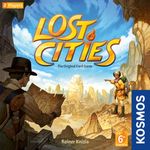
raising and raising the prices and just trying to get a bargain is a fun thing to do, but RA just takes all of that and amps it up. It adds all this pressure and desperation that just make it so much more exciting than any other auction game. And number six is Lost Cities, which is my favorite game from my favorite designer, Rhino Canitia. It's also my favorite two-player game because it is the perfect head-to-head battle with such incredible tough decisions about how much risk could take. The idea is you're going on expeditions to find lost cities. Each of the colors is a different location. And to go on an expedition, you will play numbered cards in ascending order in that color to try and get the most amount of points. You don't have to play all of the numbers.
You just want to play as many as possible because at the end of the game, they're all going to add together to be points. Playing the number 10 is massive. The number one is not so good. But your first problem is there's a cost to start an expedition. As soon as you play a card into one of your columns, that's minus 20 points. You have to gain back points in this column to be able to offset the cost that you're paying by just playing one single card. So to start in a color is a massive risk. You have to believe that you're going to be able to get enough of these colors to be able to offset that cost. And yet you've only got eight cards in your hand. So you can only see so far into the future. You can wait to collect three or four of them before you start playing green cards. But are you going to get more of them off the deck? Well, it's between you and your opponent, so you got a 50/50 chance. But if your opponent gets the colors you want in their hand, they're probably going to keep them there. Except that causes them problems because they need their hand to be able to plan for the future for the later numbers that they're going to play on the columns that they want. So, they need to be getting cards out of their hand so that they can draw new ones off the deck. And to get rid of cards instead of playing them is to play them on the discard pile. So each color has its own discard pile, but these are shared. So if you play the card I want on this discard pile, on my turn, I can take it and later play it. So you're
giving away crucial cards by getting rid of them. But it's a choice between either discarding them or playing them. And there's a risk in both directions. The reason you want to carefully take your time, discard cards so that you can collect what you need is that if you get eight cards down in one column, you get a 20 point bonus. So, you're encouraged to take your time, wait for the right cards to come out of the deck. Except when the deck runs out, the game immediately ends. And any expeditions that you haven't finished or haven't play your cards in, well, tough luck. So, you could have a 10 in your hand and not have had time to play it because you just took too long trying to plan it out perfectly and the other player rushed the end of the game. And to add to the risk-taking even more, you can place a bet that you're going to do well in one of the expeditions. So, you get these wager cards. You have to play them before you play any numbers, but they will multiply the score you get from that column. You can even play two or three of them. So, great. If you fill that column up, you're going to get double points. But if you don't get the cards you want, you're going to get double minus points. It multiplies that cost that you had to pay at the start of the game. And so it can end in tragedy.
It's such a simple game on the surface. You play a card and draw a card, but there's so much tension between the players of what cards are you going to allow to the other player by discarding or are you just going to play them down here? Take the risk of playing them because you can't bear to give them to your opponent. This is my favorite game to play with my wife. Even though it's so simple, it just has endless replayability. And number five is a Game of Thrones the board game which is my favorite epic game. This is a beast of a board game that can take up to 6 hours to play but it does such a great job of capturing what makes the books and the TV show that this is inspired by so fun. While on the surface it's a war game. You are fighting over the seven kingdoms trying to claim castles and strongholds for your faction. It's also a game of diplomacy and intrigue where you are negotiating and creating alliances with the other factions where you will not win the game if you don't get support from another player, but ultimately there can only be one winner. So, it's full of backstabbing as well. The game is set quite early on in the story line, but it's imagining a war between the six noble houses that control Westeros.
You've got the Starks in the north, the Greyjoys, the Lannisters, the Terrells, the Martell's, and the Baratheonss. Each of the players will take on one of those houses. So, it goes up to six players, and it's probably best at six players because that's the most balanced experience, but you can also have some fun with it at five and four with an expansion. But really, why you want five or six players is because you want that interaction between the players. You want the alliances forming and for there to be rival alliances and for there to be reasons why you're going to switch sides from one to another. The intrigue comes from the fact that you plan your orders. Behind your shield are all your order tokens, the things that you can get your troops to do. So for every space that you control, you will place an order. That might be to march into a neighboring territory to start a battle.
Or it could be to defend because you think someone's going to attack you. Everyone has to place out their orders before they know for sure what anyone else is doing, which is why you can make promises to people. If you're sharing a border, you'd be like, "I'm not going to attack you there. Let's have a truce. Let's expand elsewhere." And then, of course, backstab them, put down a march order, and whilst their back is turned, you go in and try and take their castle. And that is this game in a nutshell. You are backstabbing people left, right, and center. you are trying to attack them when they're weak and unsuspecting and you are making deals with other players. My favorite token is the support one because that allows you to support another faction in battle. If you border where you think there's going to be a battle, you can ally with one of the sides, bolstering them with your troops as well. So, you can agree with someone ahead of when they're going to do that battle that you'll join them and maybe they'll help you out later. When we play this game, we write notes to each other on the table. We've had WhatsApp groups going. You're sending secret messages.
Or you leave the room so no one else can hear, and you have a three-way discussion about how you're going to attack them in the fourth turn, and you're going to support here, but we're not doing it yet. We've just got to b our time. It is proper Game of Thrones style diplomacy where you are talking in secret and trying to come up with a way that you can be the most powerful. That means it's also really mean. You have to play with people that aren't going to get upset if they get completely destroyed or backstabbed by everyone in the game. It all contributes to tell such a brilliant story that perfectly fits the Game of Thrones universe that if you're someone that loves the books or the TV shows, then you're absolutely going to love inhabiting this world. But to get across all that detail, there's a lot of rules. And the first time I learned this game was a slog. for someone that is new to board games. I see a lot of this game being sold secondhand on vintage because I think you like the TV show and you buy a board game that's based on it and it happens to be one of the most complicated board games there is. That's quite tough for someone that maybe doesn't play many board games. I also really love the Mother of Dragons expansion which adds the Targaryen faction and dragons and all these other modules that really just bring the game to life even more. It's a game I haven't played now in years, but the memory of the games I have had is so strong. And if you told me I could play it tomorrow with five perfect players, then I would bite your hand
off. And number four is Sherlock Holmes Consulting Detective, which is my favorite detective game, partly because it's the original and the one that I fell in love with first. You play cooperatively trying to solve a case. There are 10 cases in the box. So, for example, you're given a kidnapping. You get the start of the story and then it's up to you to decide where to go, who to interview, and how to solve this case. The introduction to the case will tell you the backstory, who the victim is, where they live, and who their family members are. And then you can head out and find them. You look up their names in the directory of London and then turn to the right page in the case book to get an encounter with them. They're written in the style of a Sherlock Holmes novel. Constable Ponford has an oval face and a bushy brown beard. As he answers the door, he removes the smoking stub and it goes on. And the stories do such a great job of evoking Victorian London. There's something quaint and idilic about solving a murder that happened back then rather than right now. it's somehow less grizzly. You can also get clues from today's newspaper.
With each case, you get a newspaper that has adverts and articles and topical news that will somehow relate to the case. So, you've got to pour through this and find out what's relevant and then go and visit the people. Maybe it points you to a place on the map and so then you have to find the number as where that is and that will take you to the book. And I love that it doesn't spoon feed you where you need to go. In the back of the directory are a list of restaurants, solicitors, porn brokers. If you hear about something that might be related to that or that could shed light on your case, then you can go to those locations, canvas them, and when you do find something that really illuminates the case, it feels so good because you came up with the idea. It's like watching a who done it on TV.
You're coming up with theories as the story is unraveling. Right at the start, you're like, "Oh, I think that person did it." And then, of course, you change your mind when you information comes to light. But with this, you actually get to solve it. You actually get the reward. The game is giving you points because you got the right answer. Whereas, when you're watching on TV, nobody's listening and you get nothing. I love a lot of detective games, but I love the simplicity of this one. It's just bits of paper. So many of them use an app that sort of takes you out of the playing of a board game. With this, you can just take this case off on holiday, leave the rest of the box behind, and you've got a whole game that will give you two or three hours of fun. I'm not really one for cozy gaming because to me, board games aren't typically very relaxing when you're trying to strategize and win. But there's something about this where you can just kind of relax into the story that you are just experiencing it, but obviously with the elements of trying to decide where to go and and solve it at the end of it. I think I just find this game just so comfortable to play and that's why I love it so much. And number three is Pandemic and Pandemic Iberia, which are two very similar games that I love equally. They are about saving the world from deadly diseases. Pandemic set in modern times trying to save the world, whereas Iberia set in the past is about the Iberian Peninsula specifically. There are four diseases that are spreading across the map and it's up to you to work together
to stop those diseases from spreading and try and find a cure to win the game. One of the master strokes of Pandemic is how the admin of the game just lets this disease spread because you have this disease deck. At the end of every turn, you will place new cubes on the board that represent the disease. But eventually, you'll have epidemics. And this is where you shuffle up the cards that have come out, put them back on top of the deck, and they will reinfect the cities that have already had them. So, it's not just spreading, but growing where it already is. You need to keep the diseases under control because if you ever have to place a fourth cube, you create an outbreak. Too many outbreaks and you immediately lose the game. But the outbreaks also spread the diseases to all the neighboring cities. So if you don't have a control on things, things get much worse. You have four actions every turn to try and have an impact. Moving is an action. Treating a disease. Taking a cube off is an action. But you also need to try and build your infrastructure. In Iberia, you're literally building train tracks so that you can get around quicker because moving is really slow in this game. Whereas in Pandemic, you can use your cards to fly across the board. But when you use a card to do something else, you're not saving it to create a cure. To create a cure, you're going to have to collect five cards of the same color. So, it requires patience and not wasting those cards on other things. But it also requires coordination. You've only got so much hand space. And so, you're going to need to trade cards with other players. But that requires you to
meet in the same city, which when it's really hard to get around is quite tricky. you'll be over other sides of the map trying to deal with two different problems at once. One of you stopping the outbreaks over here, another over here. So, there's a lot of cooperation required. And what I love about Pandemic is that discussion is so important because there's different ways to skin this cat. You can be really clever with your plays and everyone will have a slightly different take on what you should do. Every player's got their own special character power will really help you decide who should focus on what. And there's these waves of threat in pandemic that you don't get with other cooperative games that you always feel so close to losing and then you get a little bit of breathing space and then another epidemic hits and things get even worse and you've just got to kind of claw back to some hope again. If you do win, you'll be moments away from potentially losing, either by running down the deck and running out of time, by running out of cubes because there's so many diseases on the board, or by being overwhelmed with outbreaks. And so when you do win, if you win, it feels so good because it feels so hard one. For me, Pandemic is far and away the best cooperative game because it's such a clever, clean system that delivers drama and excitement and requires the players to come together and really plan and just does it in a much simpler way than so many other games. This game is now 17 years old and every time I play a new
cooperative game, I'm thinking in the back of my mind, does it hold a candle to pandemic? And up until now, the answer is always no. And number two is Lords of Vegas, which is my favorite negotiation game where you are building casinos and trying to steal them off of each other. You start the game with two plots of land on this map of Vegas. And every turn, you will get money from the plots of land that you own, and you'll use that money to build casinos. You pay the cost for that particular space, and you pick a color of casino and build it. You put one of your color dice, and now you've got a casino. And the casinos are how you score points. Every turn, the current player will take a card and that will match the color of a type of casino.
That casino will score when this card comes up. And so, as you're building casinos, you're looking at which colors have already scored quite a lot. You want to try and play the odds by a color of casino that hasn't come out of the deck that much because then it's going to score more now that you own it. and you're trying to expand because for every tile you have in your casino when it scores, you'll get another point. But it also means that you can protect it better because other people are trying to steal your casino. What happens is you can build next to someone else's casino using the same color, but you've got your own dice and then you have the opportunity to reorganize. What that means is you've got to pay some money to re-roll all the dice and then the highest dice left in that casino at the end is now the new owner. So you could come in with just one dice against three. And if you roll a six and they only roll a four, then you are the new owner. It cost you a bit of money to get it, but now you're getting all of those points from someone else's hard work.
There's just so many swings in this game of stealing casinos and then stealing it back. But the timing of when you get it and when those cards come out of the deck is brilliant because you can steal the casino and then it scores twice before they have the chance to steal it back off you. You can trade anything in this game. You could trade lots for dice. You can take ownership of someone's casino if they're offering you enough that's good in return. But you can also take a risk of your own by sprawling. You can expand out into an empty space next to your casino, paying a hefty sum to the bank. So that now when you score that casino, you get an extra point. But if that lot now comes out of the deck because you bought something that wasn't available yet, then the new person that gets that card owns part of your casino. That's the risk you take. You can do as much as you want on your turn, building and sprawling and reorganizing as long as you can afford it. So you need as much money as possible. And that's where gambling comes in. On your turn, if you're a bit short of the money you need to build something, you can gamble at someone else's casino. You roll two dice, and if you get the right numbers, you will get to steal money off of them.
You're winning at their casino. Of course, if you lose your bet, which is slightly more likely, then you're going to be giving your money to them. I love a game where you're throwing around money. And I'd highly recommend trading out the paper money you get in the game with just a set of poker chips that you buy in a charity shop because it just makes it that bit more fun. The negotiation in this game is so free form. And combining it with just trying to be the richest person, trying to be this mean casino mogul. It's just a fun little bit of escapism for someone who doesn't live like that in real life. Lords of Vegas is the perfect intersection of luck and strategy. There is decisions to be made. how much are you willing to pay for stuff, the timing of when you build things, and the odds of what casinos are likely to score. But there's also just that joy of the luck going your way and winning you the game in the most entertaining way possible. My number one game of all time is Code Names, which I find to just be such an endlessly addictive challenge.
It's all about giving clues about words and trying to guess the right words. So you play on teams and on each team there's a clue giver. They are given certain words in this grid that they need their team to guess. And so they will give them a clue. So for example, if I had ham and onion and flat, I could say pizza three. I'm only allowed to say one word and then a number which refers to the number of words I'm clueing. And then they will just guess the words. Every time they get it right, we cover one of them up. And we are racing to get all of our words before the other team. So, I'm trying to give as big a clue as possible to be ambitious. But the bigger I go, the more likely we're going to hit into something else. There are also eight words on this grid for the other team, as well as an assassin. If you hit the assassin by the guesses picking that word, then you immediately lose the game. It's such a brilliant rule because it makes the game so tense. There's always a chance that you could just immediately lose. And so, as the clue giver, you've got to be so careful with what clues you give and how your teammates could interpret it so that they don't hit the assassin. I love that threat. You don't get many games with such jeopardy that you can immediately lose it, especially not party games. And even if you don't hit the assassin, hitting one of the other team's words is almost as bad because you're giving them a point. and you're ending your turn. So now it shifts to them. They get a clue and they can really get ahead. So as the
clue giver, there's this intrinsic dilemma between wanting to be ambitious, give as big a clue as possible because in your mind, you can often connect loads of these words to one idea, but you've also got to be so careful. Now, when I play this game, I'm as ambitious as possible. I love taking risks. As long as it's not going to hit the assassin, then I'll try and connect as many things as possible. I want to win this game with like a big six clue. I don't like giving two clues, especially not at the start of the game. Having played this game loads on the mobile app for code names, you really start to develop an understanding of how far away different words are to other ideas, even though they're not immediately there. You know, if you if the clue is food, then obviously you're going to tick off onion and ham, but then what's the next thing for food? Is it sling or pocket or tut two or wood? That for me is like some of the joy of the game is when you can pull off these ridiculous audacious clues and somebody still gets them and the other team are just left baffled.
And just the pressure of the other team doing well. They've suddenly gotten rid of five of their words. Now the other clue giver has really got to up the ante and be even more ambitious they were planning and take much bigger risks. So, by being ambitious and doing well yourself, you force the other player into making risks and that's when they make mistakes and you can just win the game by them hitting the assassin. One of the reasons I love this game so much is because I'm a writer and I really enjoy playing with definitions of words. Trying to come up with the perfect clue that combines these two very disperate words. It's just such a fun challenge and I always feel like I can get there. It is possible. The words that they've picked are so clever because they have like double and triple meanings. So, there's so many different ways you can approach a clue. I've played thousands of games of this on the app and I think it's just the perfect puzzle. I love trying to come up with a perfect clue, but even as the guesser just trying to understand how people's minds work.
Every time I do a list like this, I get comments of, "How could you pick code names as your number one game?" But for me, it's how could I not? This game is social. It's such a clever design that encourages competition. It uses language and words, which is something I love. If I'm going to be defined by any game, then this is the one I'd like to be defined by. Those are my top 10 board games of all time. If you want to buy any of them, there are links below. And if you enjoyed this series, please subscribe to the channel. And you can get exclusive videos of mine by signing up to my Patreon. I'm John Perkins. Thanks for watching.