Top 10 Games of 2016
Games in This Video
10 games are featured in this video — they unlock as you watch.




Transcript
With 2026 upon us now, we of course are looking at the upcoming games, but it's important to remember that games from yester year are still great. So, we're going to take a look 10 years into the past and talk about 10 great games that we're still playing.
What's up everybody? My name is Nick. I'm Mike.
We are the brothers Murph. And that's right. Today we're going to talk about games from 10 years ago, which is 2016. 2016, I will say, is one of the best years in my opinion for board games. There were completely agree so many bangers that came out in 2016. Like seriously, so many like all time games.
Yeah, like literally all time games. It's wild, y'all. But nonetheless, uh top 10 games of 2016, 10 years we're looking back. Let's get to it. Number 10 is going to be Quadropolis. This is a fantastic tile laying city building game um that was it still is one of the more unique games uh I've played in that you are building a city you're trying to populate your player board with different building types uh that might provide you you know resources and people to come live in your city and those have to be allocated to the buildings in your buildings to power them up or to you know have you have workers working in a store and things like that. Um, and it has a unique kind of selection system for gaining these tiles in that you have these kind of markers that are numbered 1 through four in the kind of basic game. Uh, and you have a central board that has this big collection of tiles.
And if I take my two tile, I can take it and play, you know, place it on one of the edges of the board pointing toward the middle. And if I have a two and I'm coming from the bottom, uh, I will count one two up from, you know, whatever column I'm in. And that is the tile that I take. So, it has this interesting spatial puzzle in order to figure out how to actually get the tiles that you want. And then when you collect those tiles, your player board is organized in rows and columns one through four. And again, if I use that two, I have to put this tile in a row or column showing the number two. So, there's this kind of great puzzly nature to the tile laying. And then of course on top of just figuring out the puzzle of how and where you can legally place your tiles, you are trying to put certain buildings and stuff next to certain other types of buildings. You want to have your harbors next to your kind of factories and stores because that's where they're getting their materials and things like that. You're trying to build a really efficient city. Uh it is just a really fantastic puzzle. I really like tiling games in general. I like citybuilding games and Quadropolis adds that really extra interesting unique uh tile selection mechanism.
Number nine is going to be Star Wars Rebellion. And I know this frankly I'll I'll fully admit it. It probably should be higher. The reason why it's not high enough is because we just haven't played it that much. Both Mike and I have each only played the game once and it was a very cool, very awesome experience with a really wonderful game. And I honestly think if we'd played it more, it probably would be higher on our again, this is our personal list, right? So, I'll fully admit this probably should be near the top if not at the top. The Star Wars Rebellion is a really cool game. This is Star Wars in a box. This is where you get to tell your own version of Star Wars. the first, you know, the trilogy, the first trilogy, more or less, where it's a two-player game. One side is the Rebel Alliance, the other side is the Empire. The Rebel Alliance has hidden their base, the Rebel base, on one of the planets around the galaxy.
It doesn't have to be on Oh gosh, Endor. Where was it actually? Don't worry about it. I remember. I'm just not telling you because of funsies. But you can hide it anywhere. You can hide it on like Coruscant. You can hide it on Tatooine. You can hide it wherever you want, the rebel base. And then the Empire is trying to find that rubble base and then kind of like surround it with a bunch of people and basically take it out. So that's what you're trying to do. You're trying to play cat and mouse, but as the game is going on, the Empire is getting access to these cards that have all the planets on them. And basically, as they get more and more of these cards, that is then knocking out the possibilities of where you could be. And because the way the Empire wins is not just to find the planet, but also to go surround it with their troops and take it over. So you need to kind of build up your defenses. So, you need to be throwing out all of these fakes, like I'm going to go build up Tatooine really hard, even though my whole thing's over here in Coruscant. You kind of are are you don't want to make it obvious where you are obviously, but you also can't leave it completely unguarded. It's incredible. And again, it's like all this different stuff that you can do where like different characters can get turned to the dark side, different characters can become the heroes. It's so freaking cool. It is. I love games like this in like War of the Ring where it's like, "Hey, here's this story that you know, now you get to tell this story in your own way." I think it's incredible. I understand it should be a little higher in the list, but this is where we've got it right now cuz we just haven't played it enough. But it is so good.
Next up is going to be Yokohama. Uh this is a game that we came to much later. I remember playing this uh kind of early in our board gaming careers and it melted my brain. It was just like way too heavy for me. Uh but I've grown to really love it since. Uh this is a game where you were in the city of Yokohama kind of at this like big boom of of trade and commerce. Uh and you are going to be moving around to different locations and kind of placing your assistance. You have your president pawn and your assistants. You're going to be placing assistants out onto uh these different action spaces. is then when you bring your president through uh and land on one of them, you will take an action at a certain power level based on, you know, buildings you've built on that action space, the assistance you have there, and then kind of your president themselves. So, you're really trying to almost sequence different actions to uh gain resources and then use those resources to fulfill contracts uh and and deliver things to, you know, the church board, for example. There's all these technology cards you can get that break uh you know rules of the games for you. Uh and there's a bit of set collection with um these different nation symbols which is kind of recognizing like the trade and and kind of expanding the commerce outward to the rest of the world at that was happening at that time. But again, I really love the idea of like I'm going to place assistance on these couple actions to sort of slowly build up their strength, but then I'm going to sort of go, you know, step one, step two, step three, and sort of carry out almost a sequence of actions to make sure that every time
I'm taking an action on one of these uh location spaces, it's as strong as possible. if you build, you know, with a strength of four or five, you can build buildings down and things. Uh, you're trying to get all this stuff done to kind of score as many points as possible. But I just love that puzzle at the center of it of trying to move kind of strategically, set up the actions for the future that you want to move to, uh, to make sure you're being, you know, as strong and efficient as possible.
Number seven is going to be mechs versus minions. This is a really This is such a weird game. Mechers versus Minions. If you were around, pop it down in the comments. Do you remember when Mechers Minions hit? Cuz it came out of nowhere. This is a game by Riot Games. Like the video game company, the multi-billion dollar video game company, Riot Games, just made a board game. And they made the board game in kind of the League of Legends world. And it is enormous. It has all these minis and these like custom trays. And the minis have like washes on them, which was very new at the time. Now a lot of games come with washes on their minis. That was very new to the game. The kind of main heroes were like prepainted, but prepainted well. They weren't like done really really badly. The big enormous game and it was like $70 if I remember correctly.
It was less than $100. And like I remember um Steven Bonor was talking about on the time um on their podcast with Ignasi Chichek which is on BG so you can check it out. He was basically saying for us to be able to sell this game, he was like, "We would need to charge like $250 for it." I don't remember exactly what the number was, but it was something like that. But because it's Riot Games, they were like, "We can make a penny on this game. It doesn't matter. This is not a money maker for us." So, it was just this enormous crazy game for like $70. But here's the thing, it was also really, really good. It was really good. This is a cooperative programming game where you're going to have all these different scenarios where you need to do one of them needs to like you're trying to protect the school. There's one where there's like this bomb around you're kind of like trying to drag it behind you and take it somewhere and there's minions constantly coming onto the board kind of in a mobile way where they're just kind of going straight forward towards whatever goal they're trying to go for like trying to defeat the school or something like that. and you are putting cards into your program and then you will have to run your program and that will allow you to move, turn, shoot, do all these crazy things. But as you get damaged by these minis, you're basically have to put in damage cards into your program and those will make you go like and make you like turn or make you move or make you do this thing and it's going to mess up your program.
It's really really fun. Again, it's scenario based. You're kind of unlocking stuff as you go. It's actually so much fun. and they made such a good game, but it was just this phenomenon when it dropped because it was this humongous game. I remember trying to get it. It was like all the website was like crashing cuz so many people were trying to get it. It was insane. It was such a weird time. But here's the thing. It was a really, really good game. And if you can try to play it, get it played. It's absolutely outstanding.
Next up is going to be World's Fair 1893. Uh this is a fantastic uh kind of area control game, area influence game that is set in the uh at the World's Fair in 1893. So the title is telling you exactly what's going on. Uh and so you are putting your workers, your little cubes out into these kind of five areas that were, you know, representing the kind of thematic areas of the World's Fair. So one of the areas is like electricity which was brand new at the time and agriculture and art and stuff like that. Uh all these things that were being brought from places all over the world to kind of showcase at the time. You are trying to kind of have as much influence in each of those zones as possible to at the end of the round be able to uh draft cards uh and things from those sections to do kind of set collection stuff. Ultimately it's kind of fairly simple in that way. So, you are going to be collecting cards uh of those different five colors uh to create groups of different colors uh you know as as many complete sets of those as you can. You're also competing to have the strongest uh presence in each of the areas to kind of win these medals along the way. There's also the ferris wheel which is very famously, you know, where it was first kind of showcased to the world was during this World's Fair. And so there are these kind of admission ticket cards for the midway uh that will kind of propel you and gain some money as well which are counted as victory points. What I really enjoy about uh this game is flavor text is absolutely on point because these cards
that you're collecting are just kind of colors. like you can just think of it like I just want you know the blue and the green and the gray and stuff like that but they are all actual um you know pavilions and different inventions and things that were on display at that world's fair. There's a bunch of really cool kind of flavor texts and art on these little cards and there are also people uh that you can play as that give you special actions allow you to move your workers around and add extra workers and things like that that are all kind of people that were of note at the World's Fair at that time. So, it's actually kind of historically very satisfying to play if you take the time to kind of just look through the cards, which I recommend you do at some point, you know, either before or after you play the game. There's a lot of really cool information, a cool theme, a nice little board, and a really kind of simple intro level area control game.
Number five is going to be one of my favorite games of all time, and this is going to be The Networks. I love the network, hence it's on the list. But nonetheless, the networks is this great game where you are putting you are running a TV network and you have three time slots, kind of the prime time slot time slots. So it's like 7, so it's like 8, 900 p.m. and 1000 p.m. And you're going to be slotting in shows into those slots and certain shows want to be in certain time slots. So if it's a slightly more adult show, you want to put it in like 10 p.m. You'll get less viewers, which are your points if you put it in like kind of the wrong time slot. And all of these shows have themes to them. So they, you know, and they're all puns. Instead of like fringe, it's cringe. Instead of like So You Think You Can Dance, it's So You Think You Can Flail. It's all just puns and like turning a certain show on its head. The art is this very odd. I don't even know how to describe it. Very weird art, but it works in this way. And some of these shows will require you to have various stars, and the stars are kind of based off real people. It's kind of like the quirky girl or like the action star or those kinds of things. So, they require stars. Those stars will bring you more viewers. Some of the shows will require you to have advertisements on them, which is how you gain money. And so, you're trying to put these in here and then every round these shows are going to give you a certain amount of viewers, which again is your points. But then every round, all those shows will move into their next season. And sometimes the viewers will go up, right? It's like, oh, the first season with this many viewers, second season it really started going. third season it's great and the fourth season it drops off a cliff. So, you're also con constantly
switching out these shows as they kind of hit their peak and now they're going to start getting you less and less viewers. You need to switch that out for a new hot show. It's really really good. I love just the production in terms of like again the the way the art comes through, the way the theme comes through. I really enjoy like movie and TV kind of themes, especially when you're like running those like running a movie studio, running a TV studio. I just think it's a really really cool theme and I wish there was more of those themes. And so the networks is so so so good. It's really really wonderful. Um and I just love it.
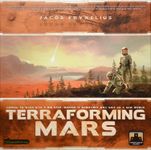
Next up for us is going to be Terraforming Mars. Now uh you know 2016 was fairly early in our kind of discovering the wider world of uh of board games. And so when we were going to, you know, Dice Tower East and things, uh, back before there was even a Dice Tower West, um, and going to conventions and stuff, Terraforming Mars was everywhere. It still is pretty much everywhere now, uh, all this time later, but this was one that, um, at any point if you were in a room that had multiple tables, like a third of them would be people playing Terraforming Mars. And of course, we played a lot of it uh over this last decade as well. This is a game where you are all landing on Mars. You are trying to collectively work to get the planet terraformed. Although it's not a cooperative game, you are working against each other to uh you know try to get the most gain and the most points and stuff through the card play uh that you do and the kind of terraform you know efforts toward terraforming that you make. I really like this game uh for the fact that it gives you this really cool big tableau engine building game experience uh where you are largely going to be playing these cards down uh that are going to give you production in you know either gaining you more money every round uh you know materials like steel and titanium.
uh the ability to kind of produce plant matter which you can use to kind of accelerate the terraforming process in terms of getting the oxygen up and kind of start to take control over parts of the board. Um there's just so many ways you can score points and focus on this game. You can try to really heavily uh do a bunch of terraforming because every time you terraform uh in addition to getting endame points and stuff like that, you will increase your terraform rating which is going to increase how much money you make every round, sort of your income level. So that can be super duper useful. And at the end of the game, whatever your terraforming, you know, level is at your rating, that's where you begin your scoring. So on 35, any other points on that are added to that 35. So you can focus on that. You can focus on card synergy with a tableau that you build. There are many cards that will reference certain tags, as they're called. Uh, and so I might want to get a bunch of things that have that tag to kind of make this one scoring card extra valuable. And on and on and on. It's a cool kind of not really sci-fi concept, the idea of populating Mars and terraforming it. We're kind of closer to that than ever before, but it is kind of like a cool thing to do. And I enjoy the fact that we're working toward a common goal. Like we are trying to terraform the planet, but I definitely want to be the person, I guess, who gets the most credit for having done so.
Number three is going to be Clank. Clank, the original Clank. There's you kind of have to specify that now because there's like three different ones. There's Clank, Clank in Space, and then Clank Catacombs. I will admit that Clank Catacombs is the best one in my opinion, but Clank is still really, really good. And I absolutely love the original Clank. This is a deck building um kind of dungeon delver. The board is kind of split into two halves. The top half uh is kind of above ground, and the bottom half is kind of under the ground. And under the ground there is going to be a dragon down there. And as you're going down exploring this board, you're going to be producing what's called clank. Clank is noise. And so as you're producing more and more of this noise, the dragon is going to be waking up and you have a higher chance of you getting damaged by the dragon. Because whenever you produce Clank, it's going to go in this little area. Clank comes in your own player cubes and then they'll go into a bag.
And whenever the dragon wakes up and decides to attack, which will happen through various card draws will happen when people grab um artifacts, things like that. Um when that happens, you will basically draw a certain amount of cubes out of the bag. And if any of your color cubes get drawn, you take damage. You can take full damage and get knocked out of the game. And if you get knocked out of the game in the bottom half of the board, you're just out. You're out completely. But if you get knocked out of the game in the top half of the board, you still get to count everything that you stole from beneath from the kind of the dragon's tomb down there. And so just because you get knocked out of the game doesn't mean you'll lose the game, it doesn't mean you're out of the game if um if you get above the halfway point. So there's a little bit of that push your luck in there, which I really really enjoy. And there's a lot of that push your luck with like how much clank do I want to produce? If I produce a ton, there's a lot of my cubes in that bag and they might get drawn, but they also might not get drawn. It's just kind of a random draw. Who knows? Maybe my mine don't come out at all. It's really, really fun. People complain that you can kind of like go down and grab the earliest um artifact and just run out.
I've never seen that actually work. Maybe everyone who's tried it just sucked, I guess. But I don't know. That argument I've never felt was a big deal with this game. Also, just, you know, don't do that. Easy. Problem solved. Um I don't know. I've just never understood that argument. I love Clank. It's really great. There's a sci-fi one called Clank in Space, which is also really, really good. And there's Clank Catacombs where you're kind of building out the board, building out the catacombs as you go. And that one honestly is the best one. It's by far the most fun, but they're all really, really good. And I do have a special place in my heart for that original Clank.
Number two is going to be Great Western Trail. This was seriously 2016 was crazy. Great Western Trail uh came out in 2016 and this is uh a really fantastic game that's now had second edition sequel games kind of a baby game in in Great Western Trail El Paso, a quicker version I should say. Uh but Great Western Trail and all of its, you know, iterations follow this idea of kind of going through a rondelle, meaning we're going to take a worker, we're going to work through a series of actions, land in Kansas City, and then start the trail over again. and you are running cattle. You're running cattle and stopping off at different locations on this kind of path that leads to Kansas City where you hope to deliver uh a as diverse a hand of cattle as possible to be able to make these deliveries and put your markers out onto uh the kind of deliveries portion at the top of the board. You are trying to earn money. You're building buildings. You're getting uh additional cattle of more, you know, higher values and to create even more diversity within your deck.
So, there's a bit of deck building going on. Um, but it's really kind of a hand management game, which I enjoy because if I have two of the same value and color of cow, that doesn't help me when I get to Kansas City. I can only count each, you know, unique card type once. So, you want to have as many different cards as possible. And I really enjoy the hand management. There's a bit of kind of uh engine build as you go. As you make deliveries, you're going to be removing discs from your player board, which might give you stronger actions, might allow you to move faster, uh, uh, have these kind of extra ribbons to get extra value when you do deliveries, and more. There's a ton of buildings you can build. And that's for me what I kind of makes, you know, what makes Great Western Trail so infinitely playable is there's a lot of ways you can kind of focus your strategy. Uh there's three uh worker types kind of these cowboys, engineers, and carpenters that each help in a different area of gaining cattle, you know, moving your train or building buildings. So you can try to hyperfocus, do a little bit of everything. Uh and the mix of kind of locations and things that you can build just keep the game really interesting as you try to ultimately manage your hand to have the ultimate hand to deliver and make that huge delivery for as many points as possible.
Number one is going to be A Feast for Odin. It's so good. It's so good. This was Mike's number one game for a very long time. Uh love A Feast for Odin. This is also one of the biggest surprises for me. This is kind of I can honestly say that Feast for Odin was the game that got me into like bigger Euro games because I went into my first game of Feast for Odin a long time ago, probably in 2016. um expecting to hate it. It just looked insane and I loved it and I immediately was like, "Mike, you've got to play this game. You're going to think you're not going to like it, but you're you are really going to love it." And then it was his favorite game for a couple years. So, I guess it worked out. But a feast for Odin is a a game where you are um kind of Scandinavian Vikings eventually. I guess Norwegian specifically because there is a Norwegians expansion. We're Norwegian, baby. Let's go. Um so, shout out to all our family in Norway. The Winter Olympics about to happen. Let's go Norway. Um, and so, uh, and there are like 60 different worker placement spots in this game. But one thing I really like about the worker placement in this game is that this big old board with all of these worker placement spots are broken down into various columns. The first column to the very left takes one worker, and those spots are pretty weak.
The second column takes two worker, and and they're a little bit stronger, and then three workers, and then four workers. But the four worker column, all of those actions are really, really powerful. And this is a big sandbox game. This is a game where every single game you can kind of choose to do different things, do different strategies. Like this one, I'm gonna do a whole bunch of this. I try to get a bunch of islands and fill them with all this different stuff and score points that way. And you can try all of these different strategies. Most of them are viable. And this is just one of those games where every single time I play, I go, I'm going to do this. Let's see if that worked. And that's what I really love about it. I like games like that where I can just choose like, I'm going to try this and see what happens. If I lose, oh well, guess it didn't work. Okay, next time I'll try something else. I really enjoy that and gives that kind of exploration. This is a huge exploration game. I don't know. Feast Roden is just so darn good. It's just such a wonderful game that I love so so so much.
So those are 10 games from 2016, excuse me, that I really really uh we really love.
Give us 10 more years, then we'll do
There you go. But uh like I think it's important like you know seeing a game that 10 years later people are still playing a ton is such a testament to its quality. Yeah,
you know what I mean? Not every game lasts and lasts and lasts kind of in the public eye, but these ones are literally like all time classics and it's pretty cool to have a game have that kind of staying power. So, we think it's valuable to take a look at that. Let us know for you look back 10 years 2016. You can search it right here on Board Game Geek
and uh tell us like what are the favorite games that you played from then especially let us know if you're still playing them 10 years later today. I think it's a really cool thing. Uh I am Mike
Nick.
That is Nick. We are the brothers Murf and we will see y'all in the next top 10. Bye everybody.