The Ultimate Small Games Guide
Games in This Video
11 games are featured in this video — they unlock as you watch.




Transcript
We all need small games to throw in the bag every time you leave the house because you never know. And being small, they won't weigh you down, except emotionally when you don't get to play them. But which game do you buy? I've combined all my recommendations into this ultimate small game guide and added two new games that have really impressed me this year. The first category are the flagship games. These are the definitive smallbox games. If you're just starting out, you can't go wrong with this category. They're carrying this genre on their shoulders with punchy, simple, addictive games. But if you want something bigger, try big game energy. These are the small boxes that feel like you're playing a proper board game. Then there's games for two players. You can get some incredible two-player games in small boxes. Filler games are the really short, easy games to fill 10 minutes at the end of the night. Party games if you're looking for something more relaxed that works with a big group. and solo games to play on your own because YouTube is down. If you want to buy any of the games, you can support the channel by using the links below. Let's get to the games.
Skull looks right at home in a pub because it's nothing more than a box of flamboyant drinks coasters. And when you play it, it feels like the sort of game people have been playing in saloons and speak easys for centuries that would always end with someone getting shot, but in a wistful old timey way that we can reflect on positively because they all wore hats back then. So, it's actually a bit disappointing to find out that Skull was invented only 10 years ago by a guy named Herv. Skull is a game of bluffing and bravado. You each have four coasters, one skull, and three flowers. The idea is you add coasters to your stack face down so no one knows what anyone's played and then you bid on how many coasters you can flip over without revealing a skull. You're trying to read the other players. If James was confident with his bid, maybe he didn't put down a skull and you can flip over his coasters safely. Where the bluffing comes in is when you bid even when you've played a skull to convince others to flip your coasters and fall into your trap. But it can backfire easily because if you win the bid, you always have to flip over your own coasters first. The tension when someone is flipping over coasters one at a time is brilliant. You look the others in their eyes. You're trying to work out where the flowers are. It's got the excitement of that final reveal in poker. If you hit a skull, you lose a coaster. And if you lose them all, you're out. So, you can either win by knocking everyone else out or by getting two bids right. Skull is a
classic. But it's one downside as a pub game is it's tricky to grasp on the first play. So if you got the time, it comes alive after a few games when you feel the rhythm of it. For Sale is a game about flipping houses, which in the UK just sounds like I'm politely mad at houses. Flipping houses. Flipping houses. First, you've got to buy some properties to flip. So you bid for them at auction. You want to get the best houses for as cheap as possible because the player with the most money at the end of the game wins. Obviously, I mean, it wasn't going to be the player with the most charitable nature, was it? Once you've got your houses, it's time to sell them. Hopefully, you at least painted the walls and exercised the ghosts of the previous residents, but the game is unclear on that. This time, you're competing to win the biggest checks. You can see which checks are up for grabs this round and you all simultaneously pick a house to sell, then reveal. The best house gets the biggest check and so on. But depending on what checks have come out and what houses have played, you could get 10 grand for a kennel or waste your mansion trying to get the biggest check because everyone else played an even better house than you.
It's such a clever way of simulating the housing market. If no one is in the mood to buy, your fancy house is worth nothing. But please don't be put off by all the reviewers out there who describe it as a simulation of the housing market.
Simulating the housing market.
I mean, are they trying to send people to sleep? The only instinct we've evolved since being cavemen is the instinct to get a bargain. And Forale taps into that and releases you all the lovely endorphins when you do. High society is another game about being the richest rich person. Being rich is about so much more than just money, though. You also need to have all the stuff. So, in high society, you have to spend your money to buy all the stuff to show off about how rich you are, but without spending so much that you're not actually rich anymore. Because at the end of the game, before you compare points, you have to reveal how much money you have left. And the player with the least money can't win the game. Huh.
They're poor. They spent it all on avocados and they deserve everything that's coming to them. It's one of my favorite bits of any game. The final reveal is such a great moment because you're never quite sure if you spent too much. Just make sure you remind everyone of this rule multiple times. No, wait. Don't bother because no matter how much you do, there's always one idiot called Tom who forgets it. To make you part with even more cash, the game presents you with these tabloid scandals. You have to bid to pay off the press to avoid having your reputation ruined. And I love how the threat of losing points scares players into spending silly amounts of money. High Society is one of the best card games in existence, full of ups and downs, and there's just something extra relatable about struggling for cash. If you don't relate to that, please go to patreon.com/actrolol and redistribute the wealth.
No thanks is all about resisting the inevitable. You will get points and points are bad. You don't want any card. So when it comes to your turn, instead of taking the card on offer, you can say no thanks to it. Hey, that's the name of the game. You do that by putting a chip on it and it passes to the next player who can do the same. And it goes round and round, but soon you'll run out of chips. And just like when your mother-in-law keeps offering you one of her cakes, no matter how full you are, eventually you're going to have to take one. But some of those cakes are worse than others. A 10 is a lot easier to swallow than a 30. And if you take the 10 out with chips on it, those chips will help you reject other worse cards.
Chips are your savior. So if they build up on a filthy 33, maybe you take it because it will save you from so many other cards. But how long do you let it collect chips before you take it? You want to get as many as possible, but if someone else is desperate for chips, too, they might grab it before you do, and you're screwed. The game really messes with you by giving some players an incentive to get certain cards. If you end up with cards of consecutive numbers, you only score the lowest one. It creates this brilliant situation where a number 29 is worth nothing to you, but still worth 29 points to everyone else. And so you can send it round and collect your chip tax on it, knowing they can't do anything about it.
Trying to escape devastation in this game is such a communal thrill. Someone's getting burnt, and it's just so good when it's not you, but one of your friends. No Thanks is a one-of-a-kind game that is perfect for playing in pubs. Before the next game, I want to thank Cyber GhostVPN for sponsoring today's video. Have you ever worried about having your data stolen when you're connected to a public Wi-Fi in a restaurant or a hotel? It can happen, but not if you use Cyber GhostVPN, which encrypts your information, so you can search for that secondhand copy of your Grail game without regret until you play the game. 38 million users worldwide trust Cyber Ghost with their privacy and they have an excellent rating on Trustpilot, so you know you'll be in safe hands. What you do online can be tracked either by your internet provider or any public Wi-Fi you use. With Cyber GhostVPN, simply select one of their over 100 locations before you browse and all your traffic will be encrypted and your IP will be hidden. So you're completely anonymous. No one ever has to know that you play Monopoly online every day under the username live landlord. And you can use Cyber Ghost on seven devices at the same time, phone, computer, or tablet.
You could share it with all your friends and then you'll still have four devices left over. And you know when you can't access the content you want from other countries? Well, you can use Cyber Ghost to change your virtual location and watch everything you've been missing out on on Netflix or 40 other streaming platforms. And best of all, it's affordable. You can get all of this for just $2.3 a month and 4 months for free if you sign up today using the link in the description. It's a no-brainer to protect your privacy for the cost of well, what's cheaper than a cup of coffee? Thanks to CyberVPN for sponsoring this video. Every collection needs a bluffing game, and Cockroach Poker is the definitive pick. The game is all about giving a card to another player and telling them what it is, saying it's a cockroach, or it's a rat, and they have to decide if you're lying to them or not. That's not a cockroach. And turning it over to see if they're right. If they called your bluff correctly, then you take the card as punishment. But if you fooled them, they get it. It's such a pure distillation of lying to your friends.
And you've had practice. Of course, I like your boyfriend. I watch your YouTube channel all the time. If you can't work out if someone is lying to you, you can actually look at the card and then pass it to someone else. But then you have to add to the bluff. It's actually a toad. So, it becomes this group lie. You've all given different reasons why you like their boyfriend that they can't work out which one is true. In this case, none of them are because he's a cockroach. You lose if you get four of one animal in front of you. So, you're sending traps to other players trying to bring them down because cockroach poker is like your friendship group. There are no winners, just one loser, you. There are smaller push your luck card games, but I'm willing to spend the extra space to include my favorite push.
One player is flipping cards off the deck, deciding whether to stick or twist. But what I love about this one is how everyone's involved, even when it's not your turn. They're adding the cards to three columns, but they will only get to take one of them. The other two will go to the next two players. They act like buffers, your box room to throw the stuff you don't want in so you can keep your master bedroom free for the good cards. Because each column can never have the same number or color twice. So, if you draw a red one, you stick it in a buffer column, saving room for the red six that you really want because it's worth six points. But eventually, all the columns will fill up. And if you flip a card you can't place, you go bust. And not only do you get nothing for this turn, but you will roll the dice and lose all the cards you've collected of that color. It's like losing everything at the casino, and they follow you home to smash up your TV as well. And that dice will also get rolled if you end up taking one of these cards, which you will purposely add to the columns going to the other players.
You're a kid throwing a grenade in their party bag because you resent them taking home your birthday cake. It's a game with big wins and big losses. Every time that dice rolls, you're bursting with shard and fredder, hoping to see someone rich pulled back down to the gutter. It sounds like I want all my friends to fail, but only the ones that are doing better than me. To give our collection a roll and write game couldn't be an easier choice because we've got the absolute quintessential Quinto. Each turn, one player will roll the dice and everyone will write that number on their sheet. You're trying to fill up your rows in order, but the numbers are coming at random. It's like trying to blind rank cute animals. You put the baby elephant at number one because you don't know what's coming next, and then you've got no space for the quawker. So, do you gamble and leave room for a higher number that will get you more points? Of course you do. No one wants to settle for 14 when there's a chance of getting 18. But that chance is 0.5%.
And you only score those points if you can finish your row. So, holding out for an 18 is like keeping a table free at your restaurant in case a critic shows up when it could be serving paying customers. Eventually, it will be the only space left. And if you roll a number you can't write in, you go bust and lose five points. That's your punishment for daring to dream. And the game knows how much you want it. So it offers you a deal with the devil. You can reroll those dice once. Let's say you rolled a boring nine. You've got space for a nine, but it's not an 18. Why settle for the bird in your hand when you've heard there's two over there in that bush. So, you reroll, give up your boring bird, but then get something even worse and go bust. It's a game full of highs and lows where your two biggest opponents are the dice that won't do what you want and your naive hubrist that this time they will.
Order Overload Cafe is a memory game, and everyone hates memory games because they're bad at remembering things. But you have no trouble forgetting that you hate memory games, do you? As players, you're working in a cafe and there are loads of orders coming in that you have to collectively remember. You're all in it together. You don't have to remember everything as long as some of you remember most of it. One player reads off the orders. Ice latte, hot tea, iced coffee, iced milk tea, ham and cheese sandwich, banana muffin, double espresso, strawberry milk. Were you listening? That was your one chance to remember everything. Then the orders are shuffled and dealt out and you take it in turns to call out an item that you remember. Hot latte. You throw it out into the world like saying I love you and not knowing if it will be reciprocated. It's painful as each player in turn rejects it. Stupid idea.
Why did I think there was a hot latte? Until finally you hear a yes as they catch you in their arms. They discard that card and the goal is to clear out two players hands. So, you don't need to remember all of the orders, and I promise you, you won't. Finishing a level feels like such an achievement, scraping the bottom of your brain to find that final match. It has those big group cheers that you get in the mind or just one. When someone remembers a chocolate shake that you're convinced has never passed your ears. If you call out an order that doesn't exist, you can no longer guess that round. And if everyone flunks out, you lose the game. But if one player clings on, they can keep guessing and win the round for everyone. It's nice that you're as bad as your best player. So a complete civ for brains won't hold you back too much.
It's not just that you won't remember the right things. You'll also remember the wrong things. Be fully convinced that you heard a banana milk when really it was a banana muffin or strawberry milk. The game is trying to confuse you with similar items. And you can get two or three of the same item come up, making it even harder. Each level, you tackle a bigger list. When you're trying to focus on memorizing, it's so distracting to hear new items like pancakes that you didn't even know your cafe sold. Now you'll remember pancakes and nothing else. Order overload is an experience game. It gives you the same camaraderie as the mind or havi. And part of the fun is going up against your memory and finding you do better than you think you will. All of the 930somes that I played it with managed to do better than they expected. It turns out they were good at memory games. They just forgotten.
A few years ago, I fell in love with a party game called I'm My Favorite Things. It's now called My Favorite Things, and it's one of my favorite party games of all time because it plays on your knowledge of your friends. It does that by having you rank your favorite things in a category. For example, cheese. You write down six cheeses, then secretly rank them. One being your favorite cheese of all time, and the rest are cheeses you like in the order you like them. The zero card is for a cheese you don't like. Even before the game has really started, it's fun being forced to rank your favorite comedians or flavor of crisps or Game of Thrones characters. Then once you've ranked them, you pass your cards to your neighbor. They can see what cheeses you've written, but have no idea of their rank. Everyone now has a hand of cards to play a simple trick-taking game with. You each play a card. So you've got Daenerys going up against Stilton, James Acastaster, and Salt and Vinegar.
Then reveal their values. Whoever played the best card, the most favorite thing, wins that trick. So you have to use what you know about your friends to guess which cards are the strongest. And it's such a fun challenge pulling at your memory for a clue. Didn't they once say that they hated Rock Fall? or were they talking about the village in northern France? You could be lifelong friends but just never had an in-depth conversation about cheese before. It's not a friendship I'd want, but it's possible. The best bit is when you reveal the ranks and find out that to your surprise, Becky only gave Camear a three. An Inquisition immediately takes place and you get to know each other even better because you find out that her tastes, like the cheese, have matured over time. It's the perfect level because it gets you talking about each other, but unlike other games in this vein, it never gets mean or personal and you learn stuff about each other, but in a way that's fun and silly and never veers into a cringy team building exercise. I love that you get to pick the category for your friends, so you can get really creative with it and set the tone based on the group.
When I've played with my schoolmates, we've had players ranking their favorite friends. We're just waiting for someone to have six kids so we can do favorite children. And it even works with people you've just met because you can pick a really soft category that most people would agree on, like Spielberg films, knowing Jurassic Park will be at the top. If it isn't, you don't want to be their friend anyway. I've never had a bad time with this game. It's just what you want from a party game. It's relaxed, it's funny, and it brings a group together. To win a round of noggin, you've got to say the right thing faster than anyone else, which is also how you win at being sympathetic. You're flipping cards onto the three stacks until you get a challenge. Then you've got to use the two letter cards to give an answer. If the challenge is word association, and the letters are L and B, you could shout lemon and banana because they're two words you'd associate with each other.
If the challenge was bookend, you could say ball or lab because they have L and B as their first and last letter. Whereas, if the challenge was middle letters, you could say elbow because the letters are in the middle of that word. Whoever gets there first wins the challenge card as a point. So, everyone's desperate to blurt out the first thing that enters their head. Love and bandages aren't words that you'd associate, but would be a good name for a country song. If you shout out the wrong thing, you have to put one of your challenge cards back in the prize pot. I like that every challenge foxes you in a different way. It seems so easy to come up with a word that doesn't include L or B, but your brain just can't help but fixate on them and pretend like no other words exist. My favorites are the tougher ones. Describe, which you need to pair an adjective and a noun, such as lamentable bankruptcy, which is definitely something I would come up with on the spot. and initials, which asks you to think of a famous person or fictional character with those initials, such as Blake Lively or Lindseay Buckingham, or as I like to call them, Gossip Girl and Rumors Man. As much as I love the challenge itself, I love hearing other people's failed attempts.
Play it late at night with some competitive friends, maybe some alcohol, and you're guaranteed to entertain each other. Another nice little touch is that as you're flipping the letter cards, if you ever create a three-letter word, like toy or butt, the first person to shout it out can steal a point from someone else. So, you've got to keep your wits about you at all times. And only if you can read the word clockwise around the circle, which is such a great trap that the game lays for you. This isn't red, it's duh, but you'll excitedly shout red and then lose a card for it. Noggin has a similar feel to the game Anomia which I also love and it's hard to pick between the two. I like the variety in Noggin and it's slightly tougher whereas Anomia is a bit more idiot proof. Both are loads of fun. So in summary, Boisterous Lark, Belly Laughs, Little Box.
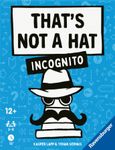
It's impossible to remember people's names even when they've been your nephew for 12 years. And that is the frustration you get to relive in That's Not a Hat incognito. It's all the fun of forgetting without making Arthur or is it Archie cry. Your card starts face up and you give it a name, whatever you like. This looks like an Oscar, so let's call it Merryill Streep. Then you turn it face down and pass it to someone else. This is Merrill Street, you tell them, and they believe you. Then they pass their other card to someone else. That's Homer Simpson. And over there is Jamie Oliver. Or is it? You're trying to keep track of where six different cards are. And they're constantly getting passed around the circle. So when you get handed Serena Williams, you have to give away your older card. But what was it? That was a lifetime ago. You have to say something. And if you say it with conviction, you might get away with it because you're all as lost as each other. So if you say Steve Irwin and it sounds plausible, they'll probably accept it. But if they think you're wrong, they'll reveal it. And if it isn't Steve Irwin, you take a penalty point. The best moment is when you say a name that's not even in the game anymore, and the other player also doesn't remember that and just accepts it, while the smart players silently giggle at the shambles. You can be completely sober, and within minutes, this game will make you feel drunk, like you're trying to keep up with a drinking game that's beyond you. You can get the original That's Not a Hat, which is
about remembering objects. But I really like coming up with your own names in this new incognito version because it makes the cards and the experience a little more memorable. If you're looking for a cute little game for a kid or a teenager, then get them Tinder Blocks, which is a tiny take on Jenga that comes in this little metal tin. You're all building a campfire, adding wooden blocks to the stack without knocking it over, which would be hard with your hands. But to protect yourself from the flames, you have to use tweezers to pick up the blocks. Slidy plastic tweezers trying to grip onto smooth wooden blocks is a recipe for disaster. And your instincts for not dropping something are to squeeze really hard because that's how fingers work.
But with tweezers, it will shoot the block out like a bullet. The game makes you create a stack of a log and two cubes. Cubes that are wider than the log so you can't grip them together that you have to carefully add at the same time or put a log vertically or use your weaker hand, which as a left-hander, I don't find it hard to use my right hand. I just find it demeaning to have to act like I'm one of the unexceptional humans for a moment. A fake artist goes to New York. A game of unintelligible illustrations. On this tiny sheet of paper, you will all collectively draw the same thing by taking it in turns to add a detail with your color pen. Except one of you has no idea what you're drawing. They are the fake artist. Imagine Damian Hurst, but with a normal amount of self-doubt. They know the category, so they know to add something vaguely animallike. But should it be a beak or a tail? Once you've all gone twice, you will scrutinize everyone's contributions and try to work out who the fake artist is. You sound like a bunch of art students trying to outdo each other. Oh well, if you don't understand it, maybe you're not a real artist. It should be obvious, but actually the other players need to be ky with what they draw because if the fake artist can guess the word, they will win the game. So you end up with the worst depiction of a manity ever produced and with accusations flying everywhere because the real artist can't distinguish between a ki drawing and a
clueless one. Fake artist is brilliant. It will have you drawing like Picasso and crying like Van Go. Phantom Inc. is in my favorite genre of party games where you play in teams trying to guess a secret word. And despite some serious competition, it still manages to stand out. Each team has a ghost, the clue giver, who is trying to communicate the same secret word to their team of mediums who are guessing. It's always something simple like parrot or rainbow. The sort of important messages that a ghost would be trying to communicate from the afterlife. Every turn, the mediums will pick two questions to ask their ghost. Things like, "Where is the nearest one?" or "What mood does it cause?" The word could be anything. So, they're trying to narrow it down from infinity, like picking something to watch on Netflix.
The ghost chooses the question they want to answer and shows their team. The other team doesn't have any idea which question is being answered, but they will get to see the answer, or at least part of it. Since the ghost is communicating via a Ouija board, they slowly give one letter at a time, revealing their answer. And when their team thinks they know what is being communicated, they shout, "Sencio!" to stop the ghost from writing anymore so they don't give the other team too much information. If the question was, "What mood does it cause?" and the ghost writes, "Ha," their team will assume the answer is happy because they know it's a mood. But the other team doesn't have that context. So to them, the answer could be hat or hand or harpsacord. I love discussing the other team's answers with my teammates, trying to work out what they could mean and then how it fits in with what you know already or think you know. Like a who done it, you can pin your whole theory around one piece of evidence, convinced that WA means water, and then later realize it could be wax, and suddenly you see all your other clues from a new perspective.
You end up with all these fragments of words that are vaguely connected to the secret word, and it's the medium's job to piece together those clues faster than the other team. You feel like Amy Adams in Arrival trying to understand this alien language and eventually it all clicks together in your head and feels incredible. There's a great tension to the game because after your team gets a clue, the other team can make a guess to win the game. So, you're terrified of helping them by making your clue word too obvious. So, you call Sencio after one letter, but then end up confusing yourself because the letter T could be so many words. If you think you know the answer, you guess one letter at a time and the ghost will knock if it's correct. It's a clever system because it means you're not giving too much away to the other team by guessing. And so many times we've been convinced that we've got it and then not made it past the first letter. Playing as the ghost isn't quite so interesting. It's a much less taxing job than giving clues in code names or decrypto, but that makes this game a lot more approachable. Phantom Inc. is perfect to play with kids, older relatives, and non-gamers, but it's still interesting in an experienced group because the mediums will call Sencio after one or two letters and make the deduction that much harder.
A holiday is not always the best time to be playing a game when you want to be swimming in the pool or lounging at the beach. What you need is a game you can play for when you're not playing a game. Don't get got is a game you play in the background. It's always on, like the air conditioning or the spy camera hiding in your Airbnb. You are playing it throughout the day or week, even when you're playing other games. The goal is to catch the other players out. You're all given secret missions to complete that require to get another player to do something without them realizing they're being tricked. Like convincing another player to let you try on an item of clothing they're wearing, which might not work if they've got their swimsuit on, or convince someone to switch seats with you. The beauty is you can wait until the restaurant later, pick the right time to pounce. But how do you bring it up? Are you going to come up with an elaborate reason why you need to swap seats or just play it cool and ask them? You can't make it too obvious because if they realize it's a mission, you failed. It's dead. That's why you b your time. Get them when their guard is down or when their blood alcohol level is high. You only have five missions, so the pressure is on. And when you start an attempt, it's so tense. It's like trying to get into a nightclub when you're underage. You say one wrong word and your night is ruined. So when you actually get away with it, it feels incredible. You got got, you shout right in their face as if there was never any doubt. In this game, you get to deceive
your friends, feel good about it, and rub it in their faces. For only £10, you get to be a sociopath without the prison sentence. And the anger you feel of being conned is amazing. Why would you think they wanted to swap chairs? You're not just a loser, but you're stupid as well. Determined to not let another mission get past you, you go on high alert. Anytime someone opens their mouth, you're ready to shout them down. Yet somehow in a sea of paranoia, you can still grab a win. And those are the best. At any time, you can say, "Guess what?" to another player. And if they naively reply, "What?" You claim another point. Everyone knows that that mission is in there. It shouldn't be a surprise. So when someone pulls it off, it's so good. And it works because you can't be on high alert all day, especially when you're on holiday. So, it's the perfect place to play it. And this is a new travel pack that comes in a tin which is small enough to take anywhere. So, do get don't get got or any of the games in this video using the links below to support the channel.
Dice Pool Party is a quirky dice game that manages to offer something completely different with just 12 dice and a score pad. You shake up the dice and reveal them. You're trying to work out the best way to score them because each round you will pick a scoring category. You could pick the greens and score what's showing on the green dice. Two sixes is 12 points. But if there are loads of sixes, you could score all the sixes and get 24 points. That's massive. But could it be better another round? The catch is you can only use each scoring category once. You're trying to get them when they're at their best. Especially for the ultimate category, which scores the value of every dice. You have to time that right. Should I do it now? No. Wait. How many fives were there? And the box is closed. You're only allowed to look for 3 seconds, which is the same as when you see someone's swimsuit has fallen off. It's like a test for lifeguards. Can you spot the person that's drowning amongst all the screaming children and inflatables?
You're trying to take it all in for 3 seconds and then remember it so you can decide which way to score. And it's such a funny challenge. You have to quiet your mind, turn it into a sponge because if you start weighing up the options during those 3 seconds, you'll come away having only remembered two of the dice and be so annoyed at yourself. This is what a filler should be. A quick burst of fun and great at filling those gaps on your shelf. For our deduction game, we turn to one of the most popular small card games around, Love Letter. You're all in love with the princess, and you're trying to win her favor, either by eliminating the competition or getting closer to her than anyone else. It's one of the simplest games in existence. On your turn, you draw a character card and then play one of the two in your hand. Each character has an action, like the priest, which lets you look at another player's hand so you know what they have. You're trying to survive by staying in the round. And if someone works out what card you have, you're at risk because they could play a guard and guess your character. If they're right, you're round. This is where the deduction comes in. You know how many of each character is in the deck, and you know what's already been played, so you can make an educated guess. It's usually still a guess, but that's what makes it feel so good when you hit the target and eliminate them. You made them look so stupid in front of the princess that they ran home to flagagillate themselves. I said flagagillate. That
threat of being kicked out puts you on the attack. You've got to kill them before they kill you. And it makes each round exciting. Getting picked off one by one like you're in a horror movie. It's not the deepest game in our shoe box, but it is versatile. Love Letter is fun for three to six players, and you could play it with anyone. The best way to build a solid collection is with a foundation of older games that you know you can rely on because they stood the test of time. And for our set collection pick, we turn to Colorto, which is old enough to drink in the US and every other country as well. You're collecting chameleons, and the more you get of one color, the more points you'll score. But you can only score three colors. Any you have beyond that count as minus points. So, everyone will be trying to saddle you with a hate rainbow. You're taking it in turns to add a card to one of these rows.
Everyone will end up taking a row. So, you're trying to create something that you want. But don't make it too good because someone else could take it. Instead of adding a card, you can run away with one of the rows, like a shopper on Black Friday buying the first TV that you see in case you miss out. You won't get the best deal possible. You'll end up taking less cards, but you're in charge of your own destiny. Whereas the others who are holding out for something even better will be stuck with the dregs. The fear that someone else will selfishly take a row early forces you into selfishly taking a row early. It's not your fault. You had to stockpile food and water in case they stockpiled it first and there was none left. Everyone knows which colors you're collecting. So when they draw a color you don't want, they're going to use it to spoil the row you're eyeing up.
Colorto is a fiesta of passive aggression. Each of you an embittered commod who can't bear the thought of anyone else being happy. And hopefully that's a fun personality to adopt for half an hour. But if you're a doctor's receptionist, it could be a busman's holiday. All the best card games have one thing in common. They flow. Like a good conversation. There's never any awkward pauses. You say something, someone else responds. There's a constant back and forth, and everyone feels involved. That's what I like about Jungo. It's got rhythm. I play a card, the next player follows, and it's back to me before I know it, cycling around the table. It's the joy of a long rally in tennis with every hit extending this limbo that you never want to end. You're trying to get rid of your cards, but each player must be stronger than the last. If I play one five, the next player must beat it by playing a higher number or two of the same number. It's a conversation of oneupmanship. I tell my anecdote about meeting Beyonce, you outdo me with meeting all of Destiny's child. The twist is that you can't move around the cards in your hand, and you can only play cards together if they're next to each other. This creates a fun internal struggle as you try to play cards to get them out of the way, reuniting a family of aranged eights so you can unleash them on your opponents. When you pull it off, it feels incredible because you've
been secretly crafting it all game, just waiting to show it off to the group. But you know, with every turn, everyone else's hand is becoming better aligned. And the fear is that they unleash their beast before yours is ready. If no one can beat someone's set, those cards get burnt and they can start again, a prime chance to clear out their hand. But it's not a foregone conclusion. If you can't beat what's on the table, the game gives you a second chance. You draw a card off the deck and you can put it anywhere you want in your hand. If you can combine it with a set that's big enough to beat what's on the table, you immediately play it and shout jungo, checking first that it's not a swear word in the place you're holidaying. It means there's always a chance other players are watching, hoping you'll get what you need to keep the round alive. And if you do, it's like you dive to the floor to keep the rally going. It makes the game feel hopeful. You're never completely stuck. And even if you don't get a jungo, you don't have to keep that card.
It's not a punishment, just a potential lifeline. It's the same when you beat someone's set. You can choose to take their cards into their hand if it will help, but you don't have to. Many of you will have spotted the similarities with the card game Scout, which is a deeper game than Jungo. But for me, Scout doesn't flow. The extra options each turn lead to overthinking and it slows the game down. If Scout is a dense meal, Jungo is some light tapass. Both have their place, but I know which one I want on holiday with a beer. Seaside is not the best game in the world, but it is the best game in the world that you can play at the beach in the sand. You don't need a table. You don't even need a flat surface. Finally, you can free yourself from the shackles of this hobby and play in the sand like you've always dreamed of. You don't even need dry hands. You could play this game at mankind's greatest invention, a swim up bar, with a pinina colada in your hand, your body in the water, and your head in the game. Due to budget constraints, I've sadly not been able to stage that scenario for this video.
Please support me on Patreon. With every turn of Seaside, you take a token out of the bag. This handy bag that you carry the game around in. This game is not like other girls. It doesn't need a table. It doesn't even wear a box. How very Parisian. Every token is double-sided and you choose which one to go with. Depending on what you get, it will either go in your seaside or in the sea. The sea is a shared area that collects all the creatures, crabs, shells, and isopods, which are the wood lice of the sea. If it goes in the sea, it's not yours. It's the seas. But hopefully, you'll come back later to steal it. Like if you draw a sandpiper, a bird who loves isopods. Everyday is a school day. You can snafle all the isopods in the sea to your seaside. Now they're your points. See, the reward for selflessly adding a creature to the sea is that you get to draw from the bag again. So, it can become a game of pushing your luck, filling up the sea with creatures in the hope you'll eventually draw what you need to steal them. Your second rock gets you all the crabs. Beaches let you take as many shells as you have beaches. And waves don't get you anything right now, but at the end of the game, the player with the most waves gets everything left in the sea. And that can be huge. I've seen someone push and push, filling up the sea just so they can empty the bag, which finishes the game, and they got 15 creatures in one turn. That was a great comeback for the player in last place.
But if your turn ends and you don't get those creatures, you've now handed them on a plate to the next player. Once the bag is dry, you stack up all the tokens in your seaside and compare. The player with the biggest hall wins. I love that simplicity. It's such an easy game to teach, and that's exactly what you want when the sun's beating down on you at the beach. It isn't the cleverest game you'll ever play, but there's just enough to keep a gamer like me interested. And it's one you will actually play. It won't sit on your shelf because you can never find the right opportunity. Seaside is bright, breezy, and a lovely way to spend the day. And so is the game. This game trio is like chocolate. It's an instant winner because it feels familiar, like something you played growing up. On your turn, you ask another player to reveal their highest or lowest card. You're trying to find trios of the same number. It's like you're playing Go Fish and you ask another player to give you all their threes, but instead they give you a better card game. Tom's highest card is a 12, so you go again trying to find another 12 to get that trio. So, you ask Dave, but his highest is a 10, so you've gone bust. And now the other players have that information. They can try and hunt for another 12. The challenge is in remembering what you've seen and where.
You know you've seen another 12 somewhere. But did Anna have it or was it Becky? It's so much more fun than a typical memory game because you connect the memory to your friends, not the cards. Tom has a 12 because that's how many pounds he owes me for kicking my football into a tree when we were 11. That's how I can remember that he has an 11. Easy. And what you know changes. If someone claims all the twelves, that changes what people's highest cards are. When someone reveals two of the same number but goes bust. It becomes a race to find the third. And if you have it, your hand starts burning, you're desperately hoping they don't ask you, and it will get to your turn so you can score it yourself. But that stress can give you away. If you start acting like a smuggler at an airport, nervously looking at your cards, they're going to pick you to empty your pockets. I love the moments of frustration as someone steals a trio out from under you. and the absolute elation that you were able to reach to the bottom of your mind to remember where that six was that you saw 10 turns ago. Trio is one of those joyous little card games that packs so much entertainment into the simplest, smallest of things. I've played this with so many different groups from three to six players and it's always a fun time.
If you've only got space for one game, you need something flexible. And Flip 7 will play from 3 to 18 players, ages 5 to 105. And you could play it with anyone, from the most brain dead jocks to the saddest of goths, as long as you're not in direct sunlight. And that's because it's one of the simplest games you'll ever play that's all about pushing your luck. Every turn, you decide whether to stick or twist. If you twist, you get a card off the deck. A 10 is worth 10 points, but it also means there's 10 of them in the deck. And when it comes back to you, if you twist again and get another 10, you go bust and score nothing for that round. So every time you're playing the odds, if you've got a two, there's only one other in the deck. So there's no way you'll go bust.
But as you start to rack up the numbers, you're adding more bullets to the chamber in this game of Russian roulette. You're bound to blow your brains out eventually. You can stick instead bank your points. But how can you bear to do that when everyone else has more than you? The game is a race to get to 200 points. And the further behind you are, the more it encourages you to take silly risks. And if you ever manage to flip seven cards without going bust, you get an extra 15 points for your bravery. Another incentive to keep flipping. Flip seven is such a pure distillation of gambling. You get seduced by fate, telling yourself, "One more won't hurt." What if I'm the chosen one that flips seven cards and wins the game? That's possible, isn't it? Don't tell me the odds. Just tell me it's possible. And then probability brings you crashing back down to earth. No, you're not special. All those points gone to waste, your ego in tatters, only for you to forget it all next round and do it again. The best thing about Flip Seven is it's such a communal game because the cards come out one by one.
You're all awaiting your fate together, like holding your plate out at the school canteen, waiting to see what the dealer will slop onto it. And it really heightens the tension as you all go back for seconds and thirds and then someone goes bust and that bullet could have hit you. Does their tragedy scare you off from carrying on or make you think you're safe? Because lightning won't strike again so soon, right? And the game throws in some special cards to make it even spicier. When you draw flip three, you can play on someone else and force them to flip three more cards, hopefully sending them bust. And second chance is a free life. You can go bust and not get hurt. There are loads of push your luck card games inspired by blackjack where you flip cards off the top of the deck until you either stick or go bust. And No Mercy is one of the most entertaining I've ever played because you can steal cards from the other players. If I flip an eight, I can take all the eight cards in front of the other players. And I will because each card is worth eight points at the end of the game. But if the next player flips an eight, they'll take the stack off me. So, the prize pool jumps around the table getting bigger each turn until you manage to keep it in front of you for a whole round because then you get to add them to your permanent stash. The points flying around are huge that it's such an incentive to keep taking risks and flipping more cards. But it's not just so you can steal all the points. It's to stop someone else from stashing them
forever. So long as your dream crush is dating other people, there's still a chance they could end up with you. But once they're married, you'll never get them. Everyone around the table is begging you to keep pushing your luck, so it's still up for grabs for them to steal off you on their turn. There's a duty to the table to play sheriff and stop the next player from making out like a bandit. Unlike some card flipping games, every turn is exciting for the whole table because you're either stealing, being robbed, or praying that the fat stash is coming your way. Of course, if you draw two of the same number, you go bust and get nothing that round, except to stop you from going bust too soon. The game won't let you bust until you have three cards. It's a nice buffer to stop you from having a really miserable turn. And it adds some interesting thought to the game. You might decide not to steal a stack of twos because it will waste your buffer to not get that many points and you're holding out for something more valuable.
There's still plenty of luck in the game, but that's what makes it entertaining. It has big moments. Push your luck games are meant to be lucky. I'd rather play one that's punchy and fast like this than one that over complicates itself trying to mitigate the luck. If I wanted strategy, I wouldn't play a game like this. Quickity Pikaty is exactly what I want from a filler game. A quick burst of fun that's easy to explain, set up, and play. If it were a fruit, it would be a grape straight in the mouth. No messing around. If your filler game takes as long to get into as peeling an orange, then it needs to taste better than an orange. I'm going to want chocolate in there or something. It's a real time game. We're all flipping fruit tiles in the center at the same time and deciding whether to take them or not. If you take one, you must put it into a set. And then you're stuck with it. You can't put it back. Each set is a collection of fruits of the same color or the same shape. And they have to be in the same mood. A set should either be all happy or all sad. And if you taint your batch of fruit with the wrong face, it's worth minus 10 points. I love how punishing it is of mistakes because it stops you from just taking tiles brainlessly. The other neat touch is that every round is different. Sometimes you want to collect really big sets, other times lots of small sets or only sets that are an even number. Plus, there's a special fruit to look out for that's worth extra points.
It stops you from getting into too good of a rhythm with the game. So, it's always a challenge. Whoever scores the most in a round gets a victory point, and it's first to three points to win the game. So, it doesn't matter if you completely mess up one round, it won't put you out of the running forever. I don't usually like competitive real-time games because there's such a gulf between the good and the bad players that it can be a bit embarrassing. But quickly picky is simple enough that anyone can compete. With every other game on this list, I could draw a line back to older games that they've taken inspiration from. But the number is unlike any game I've ever played, which is apt because in this game, the goal is to be different. You each write a three-digit number in secret, any number you like. Then you all reveal them and put them in order.
Starting with the highest number, you check to see if they're approved. If it contains any digit in any of the numbers below it, it's eliminated. So, if the top number is 800 and lower down there's a 282, then 800 is dead. That player won't score any points this turn. And as you go down the list, once you get to 282, if there's a number below that with a two or an eight in it, such as 118, then 282 will be eliminated. So, you want to use digits that no one else has. Zigg when they zag. But which number is zigg and which is zag? If you're safe, you get points equal to the first digit in your number. This is the genius of the game. 800 was the highest number and therefore the most likely to be eliminated because it had more players below it to clash with. But if it had survived, it was worth eight points.
Whereas the cowardly 118, the least willing to stick their head above the parapet, is only worth one measly point. And the game is enticing you to be brave by giving an extra bonus to the highest approved number that turn. So there are obvious moves, but if you do the obvious, you'll surely clash with someone else. But of course, everyone knows that and tries to avoid the obvious. It feels like being a teenager. You can try so hard to be different from the mainstream, then find that being different is the new mainstream. Every reveal is exciting when you quickly scan the numbers to see if you've been eliminated, and the buzz you get when you realize you've gotten away with it for once. It's your job to police the other players. It's like you're all a bunch of criminals after a heist, and you've all agreed that you won't play a nine and run off with the loot, but you can't trust each other. So, it's on you to lay a trap. You play a lower number with nine as one of the digits, and it will stop anyone from stealing the fortune. But it comes with a huge downside. If your number is approved, you cross those digits off your board, and you can't use them again this round.
So, if you play nine as a trap, you won't ever be able to use it to score nine points for yourself. As the turns go on, you can look at everyone's board and see what numbers they have left, so you know who can block you. It makes the game crescendo as the options narrow, but the rewards increase. In the fifth turn, with less digits available, you're much more likely to be eliminated. But if you can survive, you get double the points. So you can plan for that round. Save the numbers that you think other people will have already used. It's hard to know how much of these games is actually down to being able to outthink other players and how much is just luck. The number is definitely not for everyone. If, for example, you think the mind is just an activity, I suspect you won't like this game either. But to me, there's a social magic to these types of games, and I'd rather enjoy it than be skeptical of it. There's just enough going on to encourage players to do the same thing and create that will they, won't they? Excitement.
In Burger Brothers, you play as a gang of criminals trying to pull off a heist together. You're moving your team of robbers through this building trying to find the safes. You can scope out a room before you go in, but this is a heist. you can't take all day, so sometimes you'll run in without looking. And the building is full of traps and alarms you can set off, which will send the security guards to your location. It's a maze of narrow corridors, and to get through undetected, you really need to work together, getting another player to shout, "Over here!" at the guards so you can sneak behind them when their back is turned. It's a puzzle to solve, but one that totally fits the story it's telling. And you need to pick the best time to use your dynamite to blow up a wall, or your acrobat's ability to climb between floors. It's full of little touches that bring the theme alive, like when you open the safe and find the prize Chihuahua that starts barking and setting off alarms. The life of a shoe box gamer does come with sacrifices.
Most of the games in here are on the shorter side, but with Burger Brothers, you get a full 2-hour heist movie experience. When we talk about a small box game that packs a punch, this one is a haymaker. Flip tunes is a deck building game in the purest sense. All you do is build this deck by buying new cards and then you hope. You hope that you flip the right flipping cards in the right flipping order. You don't play the cards. You don't make any decisions. You just flip. It's part of a new trend of auto games in which you watch your fate unravel in front of you, powerless to stop it. In Flip Tunes, you flip out six cards into a 3x two grid, and you're hoping for the best cards in the right places. The sheep will score you four points, but only if it's in the middle column. But that's all luck, I hear you cry. Yes, and it's exciting. It's like watching your football team. You know what they're capable of on their best day, but will they bounce off each other in the right way today? Your influence is back at the training ground when you decide to trash the caterpillar for being a complete liability in the last match. And sign the flashy peacock who always delivers five points if they make it onto the pitch. Cuz if your squad is too big, they might not make it out of the deck. Every animal adds its own quirk to your deck, and you're trying to
find the right harmony or ride the chaos. Like the elephant, who grants you seven points, but flips the card before it face down, making them worthless. It seems too basic, and that was my first impression, too. But there's a subtle magic to the game that keeps it interesting, like the dog that only scores if someone else flips one, or the rabbits that let you stack, letting you have more than six cards out. You buy all those cards with a dream of what they could do for you. And you'll have bad rounds where they'll let you down. But one day they'll flip out just as you intended, and you'll be so proud of them. Sadly, someone else's deck was way better, and they've just won the game. For a wheeling and dealing negotiation game, I'm delighted to be able to include Bonanza, a game that is so much greater than the sum of its art. You play as bean farmers trying to make the most money by planting different types of beans. You want to grow your crops until you have enough to sell them. But the game forces you to plant new beans every turn. And if it doesn't match with what you've already got in your fields, you'll have to harvest them early to make space. And you don't get to choose what is planted because your hand is in a fixed order. It's like being tied to a train track. You can see what's coming, but you can't stop it. And that's where the trading comes in. If you don't want the cards you have coming up, you can swap them with the other players. And there's an urgency to get deals made.
You're desperate not to uproot your soybeans for nothing. But your rival farmers know how much you want to get rid of them, so they'll insist you throw in some extra chili beans to spice up the deal. Or sometimes they'll refuse all offers because they'd rather see your crops go to waste. Bonanza is great at getting everyone talking, trying to hammer out three-way deals that everyone's happy with. If you can look past the odd theme and the dodgy art, you'll find one of the best negotiation games ever made. My goal with this video was to only include games that are available right now in English. But the trouble with English-speaking publishers is they're all idiots that insist on filling their boxes with air. On the plus side, if you get trapped underwater with a copy of Splendor, you'd have enough oxygen to last a week. German and Dutch publishers understand the fundamentals of Fun Density, packing great games into much smaller packages. And I've broken my own rule to include Temple to Shreken, one of the finest hidden traitor games in existence, because in English, it's twice the size. You play as a group of greedy adventurers on the hunt for gold that isn't yours. Find all the gold and you win the game. But two of you are quite rightly trying to protect this sacred temple. They are the hidden traitors who win by killing the adventurers. The rooms of the temple are dealt out amongst the players, and you look at yours in secret, then shuffle them. So, you know what cards are in front of you, but not which is which. If
you're an adventurer with some gold, you'll desperately try to encourage the other players to visit one of your rooms. But when they do and then turn over an empty one, they'll wish they hadn't trusted you. It's not your fault, you protest. There is gold in there somewhere. But that's exactly what a traitor would say, trying to waste their time. Meanwhile, the traitors will be trying to win everyone's trust so that when the time is right, they can send them towards the traps and burn these robbers alive. Accusation, suspicion, betrayal. This has everything you want from a hidden traitor game. You won't find a better game in a smaller box for four to 10 players. If you do, let me know in the comments and I'll let you know you're wrong. I went on a hunt to find a tile laying game that would fit in my shoe box collection and found an absolute gem in Codeex Naturalis. Packed in this tiny box is a puzzle game in which you're trying to build a secret manuscript of plants and animals. And does that theme make any sense to me? No. But if I can distract you for a second, this game has shiny gold cards in it. You're adding cards to your manuscript by overlapping the corners, and each one will add resources that you need to pay for those shiny gold cards. Now I have three mushrooms and an animal. I can add this card and score three points. But where do I put it? You'll often have to cover up a resource, so it's no longer available. And the gold cards have corners which can't be overlapped, which means you can no longer expand in that direction. and that messes with the
patterns you're trying to create to hit your objectives. You're building your own thing, but there's just enough competition over cards and racing to the finish to keep things interesting. And it's great from two to four players. If you asked me if I was going to put an engine builder in my shoe box collection, I would say nah. And it's a really efficient design. You pick a Viking and add it to your ship, then activate every card of that color. collecting points and resources. That's your engine, or at least one of them. The color you play also dictates which card you'll get from the display, which gives the game a nice flow. Play a card, take a card, or you can go on a voyage to gain a destination card for big points. But to do that, you need to spend your Viking cards, destroying your engine in favor of another one because those destinations sit above your ship, and you can spend bracelets to activate them to get more stuff. So, it's about maintaining a fine balance between your two engines. You're like a Viking rock band. You can't keep touring the world without spending some time in the studio writing new music. The game is a race to get to 40 points. And it really speeds up once your engine kicks into gear, getting eight points every turn, like a smug retiree who invested wisely in their youth. NAR has a great rhythm to it. You know what you want to do when your turn comes around, and you're not kept waiting by these massive overblown
turns where someone does a million things. Even with four players, somehow it's always your turn again soon. Valbara is a lot like Libertalia, but in a smaller, shorter form. It has the same mechanism at its heart. You're all vying for these cards in the middle, and you pick a tribe member to make your claim. The card with the lowest number will get first dibs. Imagine your rival schools at a sports day. You each have an array of 12 kids from good to terrible. And if you waste your star athlete on discus, you won't have them available later to win the 100 meters. But you don't know what kids the other schools will put forward. So you could win an event with a week seven because everyone else fielded someone even worse. Everyone will go home with something. So you have to decide how important it is for you to have an early pick this round. Each of the land cards score in their own way.
They're simple to grasp, but really encourage you to strategize, and that makes it easier to read what other players are likely to do. The person scoring two points for every farm they have is probably going to take another one. It's not so bad having third pick at the lunch queue if you want spaghetti carbonara and you know that the two people in front of you are vegan. If anything, you can win some brownie points by letting them go first. And Valbara is the same. Each character comes with an action and the higher the number, i.e. the later your pick, the stronger the power. If your neighbors are fighting over rivers and there's one available this round, you can anticipate that and play the crafter and score five points for playing after them. I love that you can see what's up for grabs this round and next, so you can plan ahead. There's a really nice amount of stuff to consider each turn. What's available, what everyone else is collecting, and how the actions will interact with that, but it's never overwhelming. You only have five cards to pick from each round. They've struck that balance just right. What impresses me with Valbara is how smooth the experience is. It's distilled a bigger, longer game into something that fits into a small box, but still packs big decisions. For example, if you play the same role as someone else, the tie is broken by the hierarchy on the top of the deck. It's such an elegant solution, and it means you can look at it before each round to see how likely you are to win ties. Valbara is less brutal than Libertalia. You always get something of
value, and the game pits you against each other. For example, only one player can get the coveted four mountains worth 30 points, but you can't kill other players characters. It won't leave a sour taste in anyone's mouth. So, I think it has a wider appeal. Even though I prefer the bite of Libertalia, I don't think one cancels out the other. Valbara can't replace the more interesting arc that you get in the longer game of Libertalia with the way the hands evolve each round and the variety of the characters that give you a different dynamic every game. But, Libertalia can't match Valbara's immediacy. I could take it anywhere, fit it into a game night easier. I'll probably end up playing it a lot more. And at the end of the day, the game you're playing is always more fun than the ones sitting on your shelf.
Sea salt and paper that puts the petite in competitive. It comes in an adorably small box and has this amazing artwork of origami sea life. The idea is you're collecting sea creatures, trying to get to seven points as fast as possible so you can end the round and bank them. Every turn, you have to decide between taking a card you can see or gambling on something better hidden beneath the surface by drawing from the deck. It's like dating in the olden times. Do you accept your perfectly sturdy cousin who's right there? Or do you arrange a marriage to someone you've never met who could be even uglier? What's nice about drawing from the deck is those pesky rivals don't know what you've got. You keep your cards secret, so no one knows about my three octopuses. But if one shows up in the discard pile, I'm gonna have to take it. And now everyone knows what I'm collecting cuz they caught me leaving the octopus fetish shop. That secrecy makes the game so exciting because as soon as someone gets to seven points, they can end the round and score. So the whole time you're terrified someone's going to get there first and pull the rug out from under you. And the best bit of the game is when you end the round, if you think no one else is doing that well, you can bet your points that the other players won't be able to catch you even with an extra turn. It's the ultimate brag, like a runner giving you a head start and still beating you. And it's such a fun gamble because you don't really know what everyone else has. You're just assuming that you're killing it. And the game
always gives you hope that you can turn it around. These action cards let you take an extra turn or sift through the discard pile to get what you need. And if you play a shark and a swimmer, you can steal a card from another player. You can even shoot for the moon. If you bag all four mermaid cards, you immediately win the game. I've never seen it happen, but the dream keeps you going. Sea salt and Paper is a phenomenal game that completely stands on its own. It doesn't need any changes or additions to make it complete. It's already perfect. And expansions are a blight on the board game industry that trick gamers into wasting money on something that bloat their game and makes it harder to play. But these expansions come in cute little packets and they fit in the original box and they're teaching me how to love expansions again. The first expansion, Extra Salt, is a no-brainer. It adds eight cards that bring new actions to the game, which really do bring out its flavor, like the lobster, which paired with a crab lets you search the top five cards of the deck, or the seahorse, which can act as an octopus or penguin to boost any set. The only downside is you've got more card icons to understand, but you'll soon pick it up.
The second expansion, Extra Peppa, is a much bolder twist because it changes the rules. Every round you draw an event card like this one, which means a pair of crabs lets you take a card from both discard piles. For that round, crabs become way more sought after. So, it's a fun bit of variety. But where extra pepper gets spicy is at the end of the round that event card is given to the player with the least points. They get the benefit next round, but only then. It's woke gone mad on steroids. And I love it. If you're lagging behind, you get a little pickme up. Forget your bootstraps. Pull yourself up by these blue shells and get back in the action. There's even event cards which handicap the player in first place. Don't like it? Well, maybe getting loads of points early on isn't the right move anymore.
You wouldn't add extra pepper when playing with newbies because their pallets won't be ready for it, but I think it's a really cool addition for anyone who loves the game and fancies turning up the heat. Azul Mini gives you all the puzzly goodness of Azul because it's exactly the same game but with smaller pieces. And as someone who's short on space, I would roll out the red carpet for whoever came up with this idea, but I had to get rid of it. If you've not heard of us all, let's take the rock you've been living under and turn it into some beautiful tiles. We are collecting these Portuguese aleos and adding them to our personal board to build a mosaic. And if there's one thing they say in the mosaic community, it's gaps are bad. So every time you add a tile, you get points for each connected tile in that row or column. You're being rewarded for your neatness, which is innately satisfying. But getting the tiles you want is the tricky part. You can take all of one color from a coaster to add it to your board, but it doesn't get placed onto your wall until you fill up that row. So, you're trying to get exactly what you need because if you take too many, they end up on the floor and you get minus points for being wasteful. The mosaic community does not take kindly to wastefulness. To finish the saying from before, gaps are bad, but waste is worse. The tiles you don't take are pushed into the middle. So, you're trying to plan ahead. Push something into the middle that you can grab later, but expect your opponents to take it first. Azul has more bite than
your typical personal puzzle game. Especially at two players, you'll keep an eye on what your opponent needs and try to leave them with tiles they don't want to give them minus points. I got rid of the big from my collection, as shown in this provocative thumbnail. But now that I can own a version that's three times smaller, it's returned to my shelves. For £20, you won't find a more popular modern board game. And it's so nice to have the option to take a full-on board game on holiday. With its small recessed boards, you can even play it on the tray tables of an airplane. So, even if they already have the big, this is still a nice gift for gamers who travel. Longot the dice game gives you the twists of a horse race by having you roll the dice every turn. One of them says which horse moves forward, the other by how many spaces. You can't predict what will be rolled. It's pure luck. But that doesn't make sense either because in horse racing, some of the horses are faster than others. The favorites with better odds should have an advantage, and they do. When a horse moves, it pulls other horses with them, shown on their card, and the favorites get pulled more often. Luck can still grant the underdog a surprise victory, but it's more likely that the favorites will finish first. Just like in real life, if you bet on a long shot, you'll get way more money if they win. So, you have to decide between playing it safe on a favorite or betting on an upset.
The player who ends up with the most money wins the game. Every turn, you take an action related to the horse that just moved. So, you could place a bet on it, buy it to get its special ability or cross off its number on your concession stand. And this is a little bingo card that you're trying to fill up to get special powers. And these are the big moves of the game, such as taking more money for betting on horses with. or you can influence the race itself by moving horses forward or even backward. There's a lot more thought in this game than you'd expect, but it still captures the essence of gambling. Every role you're begging the gods to shine on your horse. I do have one complaint, which is there are way too many ways to pull the horses back, which makes the race feel like it's never going to end, and it's worse the more players you play with. You can alleviate it by crossing out one of those bonuses before you play, but I'm baffled how it made it through play testing as it is. And don't be fooled by the one to eight player listing. This is a three to six player game, but that's more than enough for me.
If your family likes a word game, let me recommend you one that's quicker than Scrabble and doesn't need a big space to play it like Bananagrams. And it comes with a beach towel for a hamster. Type set is all about trying to create words against the odds as the game throws letters at you. On your personal board, you have six rows, room for six words. And every turn, the game gives you a letter. You must add that to your board, either by starting a new word or adding it to the end of an existing word. Except they're not words yet, are they? These fledgling syllables are your babies. You have no idea how they're going to end up, but you've got hopes and dreams for them. Little C here is gonna grow up to be classic or college, something daddy can be really proud of because a sevenletter word scores you 10 points. But bit by bit, you will sell out those dreams. The L you needed to send your kid to college hasn't come up and you can't afford to wait. You have to add this F somewhere. So you give it to your baby and now all she'll amount to is coffee or end up in a coffin. and they're only sixletter words. As in life, as soon as you go down one path, you close yourself off to so many other opportunities. It's fascinating building words letter by letter, realizing that certain letters are a sharp turn down a culdeac with no way out. If you like exploring words in Wordle, you'll get the same kick out of types set. But if you're too idealistic, every time you
get a letter you don't want, you'll start a new word with it, hoping they can all end up perfect. But now you've got nowhere to put a dodgy letter, so you end up ruining one by giving it a letter it can't handle. And fake words score minus points at the end of the game. The true type set experience is playing this game once with naive optimism and ending up with a mess of a board, then insisting on immediately playing it again, armed with a streetwise cynicism and doing slightly better. Realizing that a finished word with a solid four-letter job is much better than a child prodigy who amounts to nothing. Where the game becomes really interesting is how you use your special abilities to fix your problems. You can add vowels to any word at any time by crossing them out. But you've only got a limited supply. And if you manage to use all six vowels, you unlock a wild letter. These are the lifesavers you need to have any hope of sending your daughter to college. But you've got to jump through the right hoops to get them. The toughest decision is when to call it quit. You can only bow out at the end of a round, but some of your words won't be finished. You can see which letters have already come out. And it's so tempting to stay in for that one letter you really need. But if you stay in, you'll have to take all five letters of the next round. And how much damage could they cause? Still, no one will remember your five failures if one child makes it to Hollywood.
50% of board gamers love trick-taking card games because they used to play them for hours with their favorite grandma, bathing in familial love. Well, I didn't have any of that. So, I see trick-T games for what they really are, with an objective bitterness that you won't get with other review channels. Every year, 50 new trick-taking games are released. each advertising a twist to the format with the confidence of someone writing a recipe for mashed potato because they've added black pepper. But occasionally there's a twist so good that the game reaches the other half of us who didn't play them with our grandma and just had to sit there and listen to her talk about the war. The mustard in the mash of Cat in the Box is that you decide the color of your card when you play it. If you want your four to be blue, you say it's blue. Then put a token on the board to show that because like any trick-taking game, there is only one blue four in the deck.
No one else can play it later. The board makes it really easy to follow because you can see what cards are left. You know if someone can beat you by playing a higher card. In normal trick-T games, you'd have to count cards to know that, which I hate because I can never remember anything when my mind's so busy thinking of ways to solve world hunger and be a better friend. Once you've seen your hand, you bet on how many tricks you think you can win. I love this mechanism because winning or losing one trick is nothing. It's one point. I don't care. But trying to pull off a perfect round by winning exactly three tricks makes you care about every trick. Do you push to win them early? And once you have them, it's just as hard trying to lose tricks. And when every player around the table has conflicting bets, your epic victory is someone else's heartbreak. It's funny betting on yourself. It's like making a New Year's resolution to eat healthier and then hearing your own voice order a burger afterwards, feeling like it was achievable, but only if you'd been someone else entirely. If you win your bet, your prize depends on what's happening on the board because you score for your largest group of tokens. So the whole game you're being tempted into playing bad cards just so you can grow a jackpot that you're unlikely to win because you're playing bad cards. You're so busy weaving the basket you're going to keep your eggs in that you forget to feed your chickens. To make your bet come true, the game gives you plenty of rope to trip yourself up with. If you don't want to follow suit, you can say, "I don't have any more greens." But
later, if the only space left is green and you said you didn't have any, you've created a paradox because you can't play a card. It ends the round and you get minus points for every trick you've won. It's such a great punishment because you spend the game terrified of having enough room left for your cards or hoping someone else causes a paradox before you do. I find most trick- taking games to be too subtle. So, I love the way that Cat in the Box hits you over the head, just like old grandma did. Most deck building games come in massive boxes like Dominion or The Quest for Elderorado, but you can get that same feel playing Star Realms that is 18 times smaller. The sacrifice you make is that it's only a two-player game, but that's also its USP because it turns deck building into a jewel. You are attacking each other's starfleet trying to wipe them out first. It's like that movie Star Battle. No, Space Jam. You start with a wedi deck of spaceships and use them to buy better cards to add to your deck, then use them to buy even better ones. It means your later turns are so much grander and more exciting than your first, which gives you this great sense of achievement, like looking back at your first day of school compared to the monster you've become.
The challenge is to grow bigger and faster than your opponent, and it's all about finding synergies, ships that work well with each other. The cards come in four factions, and each one helps you specialize. Red is all about attacking the other player, whereas green will help you heal and last longer. If you have another card of the same color in your hand, it unlocks bonus powers. And that's the game's secret drug, releasing dopamine whenever your hand perfectly aligns, which is fair enough. It's all because you made the right choices on those first days of school and they're finally paying off. I can only assume that would feel great. And just like school, it's not just about working on yourself. You have to remember to hold your rival back so they don't make you look bad. Destroy their space station so it's harder for them to get combos or buy the cards they really want.
In Shot and Totten, also known as Battle Line, you play as rival Scottish clans fighting over a border, but you actually don't attack each other. You send your troops up to the line, and they stand there like catwalk models, facing each other off, but never touching. The player with the hottest models wins that battle. Like many of the best two-player games, it's competitive. If I eat this cake, that's less cake for you, but it's not destructive. I can't come into your house and bend all your cake forks. To win these stones, you're trying to build sets of cards that are stronger than your opponents. And they work like poker hands. The strongest is a run of the same color, then three of a kind, and so on. The trouble is, you have to put a card down every turn. So, you can't wait to collect better cards before you make plans. You have to start committing immediately. It's like you're a football manager who has to pick their midfield before they even know what attackers are at the club. Okay, I'll put the five here, I guess, and hopefully I'll draw the four or the six. No. Okay, great.
But how long do you wait for the perfect cards? If you've got two more fives, you could give up on a color run and get a three of a kind. A bird in the hand is better than spending your whole life single because you're waiting for Dual Lipa to call. That's the heart of the game. Hope and compromise. Knowing when to be ambitious, early 20s, and when to give up on being a rockstar and settle for a secure office job, late 20s. You also have to accept that you can't win all the stones. So deciding where to put your best efforts is crucial. If they come in early with a strong set, you should probably let them have it and save your good cards for somewhere else. So their best troops got all doled up for an empty battlefield. The whole game is play a card then take a card. It couldn't be simpler. And yet the decision of which card to play and where is up there with the best.
Airland and Sea is one of my favorite two-player games. And now Spies, Lies, and Supplies is a standalone sequel come expansion that is just as good. Once again, you're competing over three theaters of war. This time, economics, intelligence, and diplomacy. If you control two out of three of them, you win that battle. But the best bit of Aland and Sea is that if you think you're going to lose, you can withdraw from the battle early so that your opponent gets less points. They still get their victory parade, but you took the helium out of their balloons. It makes for a fascinating game. How long do you cling on to the hope that you can still win a battle? Very few games ask you whether you're self-aware enough to know that you're losing. And if you're too much of a pessimist, you can surrender to battles you would have won.
Ideally, you'd look at your cards and think, "I can't win this round." But all the cards in this game are good. The sixes are brute strength, and the rest come with a hand grenade strong enough to change the game if played at the right time. Another thing I love about this game is there's only 18 cards, so it doesn't take you long to get to know them and expect them. There's even a reference on the back of the theaters. It means you get that satisfying feeling of knowing the game quicker than with other card games with loads of powers to remember. The way the cards combine with each other makes you feel clever. Retrofit lets you gain supplies which count as strength equal to a card that you flip. So you can flip your grand betrayal, adding six strength to that theater, and next turn you can use another card to flip it back over. So now you've got 12 strength there. You only play six cards each battle, but every turn feels like a big turn. The cards in Spies, Lies, and Supplies feel a little more dramatic than the original, and they fit the espionage and diplomacy theme. Neutralize lets you name a card, and if your opponent has it, they have to play it face down next turn, neutralizing it. I'm not usually one for sequels. I made a whole video about it, but this is a really distinctive alternative. And you can use it as an expansion, mixing and matching the theaters. Air, lies, and sea, spies, land, and supplies, bed, bath, and beyond. You can even play an epic mode with five theaters, and there's rules for a team variant. I haven't gotten to any of that yet because I'm enjoying it
too much as the base game. I think I prefer this version, but it's hard to be sure that that's not a novelty bias. I'm going to keep both in my collection for now. If you like head-to-head two-player card games, you need to try one of these. I'm not a fan of the Star Wars franchise, and that can make it quite hard to live on this planet. Almost as hard as it is to be a Star Wars fan, from what I can gather. I would usually overlook Star Wars games, like a meat eater ignoring a vegetarian sausage. But occasionally, they can conjure something out of soy protein that's so good it transcends the divide. And today is the day I enjoy a Star Wars game. It's the new two-player deck building game. A game that quite obviously builds upon other two-player deck building games like Star Realms. But it adds some interesting innovations. One of you plays as the Empire and the other as the rebels. And you're trying to destroy your rivals bases. Whoever does it first wins the game. But as with any deck building game, you have to build up your strength. You start with a pathetic starter deck of nameless red shirts and use them to buy better cards that will attack, defend, and buy more efficiently. The cards you can buy are in a row in front of you, and they come out of the deck at random. I really like that because it's simple to set up, and it makes the game evolve differently each time you play. It means your strategy has to constantly adapt to what's available. It also adds drama to the game. As soon as you buy a card, a new one is added. And if you reveal Luke Skywalker, famously the son of Buzz
Lightyear, you're desperately hoping your opponent can't afford it. A lot of the cards are specific to each faction. Only the rebels can buy Princess Leia because it wouldn't make sense for her to side with the Empire. But one of the best bits of the game is that the other side can attack that card, removing it from the galaxy row to stop your opponent from getting it. It adds to that fun deck building dilemma of short-term versus long-term. Do you kill Leia so they can't use her against you later or go straight for the win and use those attack points to hit their base? Another thing you have to keep your eye on is the force track. This is a little tugofwar you have going on between you. Some cards will let you pull it towards your side, and if the force is with you, it makes certain cards way more powerful. Darth Vader has six attack power normally, but if the force is with you, it goes up to 10. It can be easy to neglect it. Each little force benefit on their own isn't so bad. It's like them getting a 10% discount. But if you let your neighbor get 10% off every shop, it's going to add up and suddenly they've got a swimming pool and you've lost. Another nice touch is that the base cards have special powers. So when they destroy one, the next one you pick can suit your strategy. Like the Death Star can destroy a capital ship for four spending power. So, it's perfect late in the game where you're no longer buying cards and they've got loads of defensive ships blocking you. It's remarkably smooth for an IP game. There's no pointless bells and whistles. The few additions that they've made to this genre of game serve the theme and the
game play in the same breath. If you like Star Wars, it's a no-brainer. And if you don't, it's still a great two-player game. I ran a poll on the channel asking what player count you need when going on holiday, and most people wanted games for two players, and I'm delighted and surprised so many of you have found love. Solstice is a game that's perfect to play with your partner. It's a little bit of a table hog. This one needs a picnic bench or two sun lounges pushed together because you're each building your own panorama. And because it's made up of these delightful little tiles, it's hardier than a card game. So, it can handle some rogue taziki that's missed your mouth. You're collecting the tiles and adding them to your panorama. But it's not a typical tile laying game.
You're not choosing where they go. They all have a fixed position, a row and a column where they live. You're just trying to make as complete a picture as possible because you score a point for every tile in your biggest connected group, which is such an intuitive thing because that's exactly what your brain wants you to do to make a neat and tidy picture that looks nice instead of this mess you've got right now. Except when that picture is your desk, your brain doesn't care about that. But the trouble is, there's only one of each tile and your opponent will be snatching half of them for their panorama. It's devastating when you've got your heart set on a tile to join everything up and you look over and see that they've already got it. It's like asking your crush to go to prom and your nemesis has already asked them. To get tiles, you play one from your hand that has the same color or number as one in the display. If you play one that doesn't match, you get a second chance. You flip a new tile and if that matches, you get them, which is a fun little gamble to try and get something better than what's in your hand. But if the second chance fails, you get a rainbow tile, which you can place anywhere. They are vital for joining up the gaps in your panorama, especially when the tile you need is betrothed to your opponent. But it's only one tile instead of the usual two.
So, like wearing a manini, you're getting less coverage, but it's exactly where you need it to be. The other thing you desperately want is to complete these 2 by two groups because that gets you a spirit. Spirits are the cool special bit that make you different, like a belly button piercing or a lower back tattoo. So, of course, you want it. Spirits either give you an extra tile to fill up your panorama or an extra way to score points. And the lure of them is so strong, you'll overlook the tile you need to join everything up just so you can get that spirit, which you'll regret later, but everyone at college thinks it looks really cool. If you play with the Firefly expansion, whenever you finish two 2x two groups in the same turn, you get a Firefly. And if you manage to win four Fireflies, you immediately win the game. I love that level of Jeopardy. And now you've got to watch out your opponent doesn't steal your crush and your job. I'm not usually an expansion guy, but I love these tiny expansion packs that give you the thrill of adding something new, but without overwhelming you. And crucially, it all fits in the box.
Pixies is another small card game that flows. And this one is really nice as a couple's travel game because it's great at two players, but still fun at three and four as well, like a hot tub or a medium-sized bar of chocolate. The idea is you're collecting these pixies and each forming a little family of them in front of you. So, it does need some table space. Every turn, you take a pixie from the few available and put it in your grid. Each pixie has to go in its numbered spot. So, your options are small. Often, you don't have a choice at all. But that's what helps it flow. And the little decisions here and there make a real difference. Like when you take a second card of the same number, you now decide which card stays face up in your grid. You took this yellow five before, but as your grid has evolved, you're not feeling it anymore, so you replace it and pivot to green instead. The yellow goes underneath, validating that number, which means you get five points at the end of the round. So validating the eight and the nine is what you really want. And that's a lesson for us. Eights and nines need validation, too. The reason to switch is because you're trying to fill your grid with all the same color. At the end of the round, you score your biggest connected group of one color. And in the final round, it's four points per card, so it's massive.
Some cards are wild. They count for every color. So, they really help connect up your colors. But good cards come with downsides. These X's are minus points. the dowy for welcoming a celebrity pixie into your family. Whereas these pixies give you spirals which are worth a point each. So we must assume they're pixie criminals. The round ends when someone completes their grid and it can happen way quicker than you'd like before you validated anything. So you need to be careful which cards to leave for your opponent in case it ends the round. In a two-player game, the decisions are a little more interesting because there's four cards to pick from and you'll get two of them. So, you have to consider which one to grab first in case your opponent wants it. The flower power expansion makes things trickier. It adds some dual color pixies, which help with connecting colors, but punish you for having a certain color in your family.
So, some kind of racist grandparent pixie. And there's now big incentives for faceown cards, which you get by taking a number that you've already validated. I like what it adds, but I could live without it. Pixies is a humble game. It doesn't wow you with flashy moments, but the smooth gameplay, light rules, tiny but important decisions, it slowly, steadily wins you round. It might not seem like much, but take it from someone who's played 40some small games to make this video. This game stood out, even though it doesn't stand out, if you get my drift. Flip Circus is a neat little two-player game that comes in a pouch which you can put in your pocket and play anywhere. The game is in this circle of poker chips which represent your circus performers. Your goal is to get three of the same performer next to each other to win their tile. The trouble is these flipping tokens are double-sided with a different flipping performer on each side. So you got to flipping find them first. Every turn you get two actions.
For example, you can swap two adjacent tokens around or flip a token over hoping to find what you need. And the game gives you a hint of what could be on the other side with these colored dots. But flipping them over gives information to your opponent. If you use the fortune teller, you can secretly look at the other side. But now you need to remember what they are, which becomes a slow game of following which cup the ball is in as the poker chips move around the circle. Don't go checking your phone. you'll lose where everything is. And the beauty of leaving the performers face down is your opponent doesn't know which one you're trying to collect and won't be able to steal your hard work. If you do manage to pull it off, it's such a great achievement, like organizing a surprise party that they never suspected. But it's so funny when you've been working on it for ages, you go for the big reveal, and one of them is the wrong performer. It's that scene in Home Alone 2 where Kevin catches up to the man in a brown coat and it's not his dad. Even just getting the performers into position can be a tricky puzzle. The strong men refuse to swap positions with anyone because it threatens their masculinity. The acrobat can swap with the token opposite except the lion tamer who doesn't allow it. So, you really have to think around the houses. flipping the lion tamer over so you can move her without her permission, then flip her back. Flip Circus is the perfect game to play with your partner in the pub or before a meal. It's quick to set up, needs very little space, and has the right balance of tactics and
luck for a 15-minute game. Dual Fardia is a brand new smallbox gem. It's a masterpiece of simplicity. Every turn, you both choose and reveal a card from your hand, and they go head-to-head against each other. The highest card wins the jewel and gets a signate ring. And once you have five signant rings, you win the game. But the weaker card gets to activate its special power. And that's where the game gets clever. Those powers can change the result of previous jewels, altering the past to win signate rings back off your opponent. And there's clever little moves you can string together, like lowering the strength of your next card, so you can use its power. Powers on higher cards are much better, like the number 16 will instantly win you the game, but you hardly ever get to activate them. And the more you play, the more it becomes a game of bluffing and reading your opponent because you both play with the same deck of 16 cards. So, you quickly learn which cards to watch out for. It might not look like much, but this game is very clever. It reminds me of the modern classic love letter because it's small but sharp.
You know those people that carry a gun everywhere in case something bad happens? The police. Well, I like to carry a game everywhere in case something good happens. I guess you could call me the fun police. And that job has been made a lot easier by wallet games. This tiny flap of plastic will protect me against my greatest fear, being out in public and someone saying, "I wish we could play a game right now." and me not having one. Nobody's ever said that to me, but that's all the more reason to be prepared. I'm probably due an influx. Death Valley, it's a two-player game about going on a road trip through the California desert. You're collecting sights in front of you, and each card scores in its own way. For example, the scorpions want to be adjacent to mountains, and some will allow you to move them around to help with that. The desert is sparse. There's only ever one card to pick from, and if you don't want it, which is quite often, you can blindly draw from the deck. But it's a risk because if you draw your third son or third animal, you go bust and lose all the cards in your journey.
You ruined your trip by getting heatstroke. Instead of taking a card, you can be cautious and rest, saving one to your scrapbook to protect it. But that's a turn you could be gaining more points. It adds this fun gamble. You know how many mounting cards are left in the deck, so you keep driving in the hope you'll see a coyote, but end up in Devil's Hole. The reality of wallet games is you're going to get a smaller, shorter experience than a proper card game. Death Valley can't compete with deeper tableau building games, but sometimes you want something short and sweet, and this is like a crispy cream. It only takes two bites and you're buzzing for 10 minutes. Fugitive was the smallest hidden movement game on the market, but now it's been surpassed by the second edition of Fugitive, which is even smaller. It manages to create that cat-and- mouse dynamic with just a deck of numbered cards. Each number is a hideout that the fugitive can play face down on their path to escape. The marshall is drawing from the same deck, eliminating hideouts they can't be at on their whiteboard. Then they will guess which numbers the fugitive has stayed at to reveal those cards. They're playing a deduction game because they know the fugitive can only travel three miles between hideouts unless they spend extra cards to sprint or bluff by spending them when they don't need to to throw the marshall off. As the fugitive, you're trying to outwit the marshall long enough so you can escape. But as they get closer to you, the stress
becomes so much that you'll just want to le it to the finish. It's such a tense game. When you play as the fugitive, it feels like they're breathing down your neck and you're always one turn away from being caught, but then you play as the marshall and you feel like you're never going to get them. Or maybe I'm just bad at both sides. Fungi, also known as morels's, is a game that captures the everyday stresses of foraging for mushrooms. As you walk through the woods together, you take it in turns to pick some fungus from under your feet. And no, not your athletes foot. Do you take the common honey fungus or the rare morel, which tastes better, but is a lot harder to come by? Because you need at least three of the same type to eat them. You wouldn't want to heat your pan up over nothing. So if you take a morel now, how long is it going to sit in your hand before you get another two to cook it? And with so many different types of fungi, your hand is filling up with all this stuff that doesn't go together, like you're buying clothes in TK Maxx, which wouldn't be a problem if it weren't for your hand size. You see, the irony of this game is you don't have mushroom. And if you want the jokes to get better than that, you have to like and subscribe. Your tiny hands can only hold eight mushrooms at a time. and it becomes a problem almost immediately. At first, you're gay strolling through the forest without a care in the world. And in no time at all, you're freaking out because you can't pick up the mushrooms you need.
There are a few ways to make space, like taking a basket, which means you can carry more. But if you do something sensible like that on your turn, you won't be doing what you love, taking mushrooms. It'd be like going to McDonald's and having a salad. And if you don't take a card now, your opponent might grab it. There's only enough of the better mushrooms for one of you to make a meal out of them. You can take a mushroom further down the path by spending walking sticks to reach ahead and grab it. But to get sticks, you have to sell some mushrooms. It means giving up on one dream so you can invest in another. It's like selling your drum kit to pay for singing lessons. Thank god Phil Collins didn't have to. Like a pair of nepotism babies in Fungi, you're overwhelmed with good opportunities and you physically can't take all the other actors roles. This game is a timely reminder that being rich is hard.
For an abstract game, the obvious choice is Hive Pocket. The goal of Hive is to surround your opponent's queen bee before they surround yours. You each have the same collection of insects, and each one moves in its own style. The spiders have to move exactly three spaces. And the grasshoppers hop over the hive in a straight line. So, it's a real puzzle to try and maneuver your insects into an attacking position. But you also need to be careful not to get trapped. Your opponent can stop your piece from moving by freezing them with the beetle. Or if they move an insect so it is only touching yours, that piece is now trapped because you can never make a move if it would break the hive. Like all great abstract games, you start to visualize moves and plan a few turns ahead, predicting how your opponent will react. If I move my grasshopper here, then my opponent will cry. It's a game that you can really learn and improve at. So, it benefits from playing with the same person over and over. And you can play it on any surface in any condition. So, even if you don't survive the apocalypse, your partner can still have fun playing it with someone new.
Marabunta is a two-player game in which you play as rival ants at war with each other over a picnic blanket, which is cute because it's a silly thing to fight over. Not like fossil fuels or religion. The picnic blanket is divided into regions which you're trying to control. But to be able to get your ants in a region, you need the right dice. And that's where things get tricky. Each round, you roll the dice and one of you decides how to divide them into two piles. Imagine you're sharing a sandwich with your worst enemy. You don't want to give them a crumb more than they deserve. So, you have to cut it straight down the middle. If you make one side bigger, they're going to take that one because they get to pick first. But how do you make it even when all the dice are different? It's like trying to decide whether you want the ham and the tomato or the cheese and the lettuce.
You have this naive belief that if you cut it just right with that shiny cherry on top to distract them, you can trick them into taking the weaker half. But they're on high alert to your chicainery. And sometimes they'll ignore the cherry just to teach you a lesson. Like a dog offended that you covered their medicine in peanut butter. Don't tell me what I want. You don't know me. I contain multitudes. And just to guarantee you'll never cut it exactly in half, the game throws in a bonus tile each round. So, someone's always getting a smaller pile. When you get your dice, you write those numbers onto the map in their colored regions. You have to expand out from your existing units, which means placement is everything because you can block your opponent from expanding by creating a wall of your ants or try to reach these cupcakes to score bonus points and the crates, which give you special abilities. It's my kind of two-player game where you can't ever walk straight because the other player is elbowing you trying to walk the same footpath. I love that with every decision, you have to think about what they're going to do. It's like living in a tiny village with your annoying ex.
You'll let them have the good coffee shop if you can keep the yoga class. But who are you kidding? A tiny village doesn't have a good coffee shop. If you're traveling by yourself, you'll need a solo game you can play anywhere. And my tip for you is food chain island. It comes in a tiny plastic wallet you can slip into your pocket or lodge in any notable crevices. So even nudis can enjoy it. You start with a grid of animals and each turn you will move an animal making it eat one of the animals next to it by covering it up. But this is a food chain. They can only eat animals slightly smaller than them. The wolf number 11 can only eat the lynx, the fox, and the raccoon. And then the gator can eat the wolf. And the polar bear can eat the gator, which must be what happens in real life, or they wouldn't put it in a game, would they?
The goal is to clear out this grid. Eat all the animals one by one, so you're left with one big stack. In essence, you're creating the ultimate turducken, a delicious roasted polar bear stuffed with 15 other animals, each a matrioska for the next. Only then is mother nature's sadistic plan complete. Where it gets tricky is they can only eat what's directly next to them and don't always start next to their prey. But by eating, they get to move. So that can set them up for a feeding spree or get them closer to their predator to be devoured themselves and continue this beautiful cycle. The magic source is that each animal has a special ability that you get to use when they eat something. When they're antites, you can move another animal one to three spaces around the grid, setting things up nicely for later. But it's not all good news. The bigger animals make things harder. When the polar bear eats, he can't eat again next turn because he's intermittent fasting. So, you have to plan around that. The game ends when you can't make a move and you count how many animals are visible. Any more than three and you've lost. But the ultimate victory is to have one stack remaining.
It's like a modern alternative to solitaire, but rather than your chances of victory being determined by the shuffle, those powers always make you feel like you can win if you can just work out the right way to use them. And it has this chilled, pensive vibe that would be great to play at sunset after a long day of hiking or sightseeing. My solo pick is the infuriatingly and inexplicably named Unsurmountable. a delightful puzzle of trying to climb a mountain. Your goal is simple. As you place cards to build the mountain, you must create a connected path from the bottom to its peak. But the only card available each turn is the first one in your base camp. And it's that restriction you have to work around. Each other card has an ability that you can use to rearrange the mountain or change what's available so that you can get the cards you need, but only if you discard it, and you only have 17 cards.
You'll need 10 of them to complete your mountain. So, you have to be really sparing with how many you discard. You can't make an omelette without breaking some eggs, but some eggs. Yeah, your omelette isn't the only thing going on here. I didn't used to be a solo gamer, but I really like this quick, simple burst of a puzzle. It's just the right level of thinkiness, and it makes you feel like you achieved something at the end of it. And once you crack the first level, it gets much harder. And I really enjoyed coming back to try and beat levels three and four. That is my ultimate small games guide. There are links to buy them in the description below. And if you like this video, please subscribe because I'll definitely be recommending more small games in the future. And you can become a patron of the channel at patreon.com/actual. I'm John Peris. Thanks for watching. And remember, you can protect your privacy online with Cyber GhostVPN for only $2.3 a month and 4 months free using the link in the description. Thanks to Cyber Ghost for sponsoring this video.