Hidden Gem Board Games
Games in This Video
8 games are featured in this video — they unlock as you watch.





Transcript
Hey everyone, welcome back to the channel. I hope you're all doing well. I know I haven't been very active on YouTube over the past couple of months, but I'm making an effort to post a video every month or two. I'll be sharing my thoughts on the board games and card games I've enjoyed the most. I've covered all of these games in more detail over on Board GameGeeek. So, if you want to dive deeper, you can check them out in their corresponding forum pages. So, without further ado, let's get started. To kick things off, let's start with Pl. Pl is an engaging tugof-war and dice rolling game designed exclusively for two players. Created by Burnt Eisenstein and beautifully illustrated by Clemens France, this game was published by Iron Games in 2023.
With a play time of approximately 15 minutes, clock is suitable for players aged eight and up. Notably, it reimagines the earlier game Tug of War, which was released in 2006 by the same game designer. Set in the picturesque landscapes of Scotland, players represent the best athletes from the villages of Plton and Broford as they compete in a thrilling tugof-war event. Each player embodies one of these village athletes, and the player whose athlete remains standing after the conclusion of the second match is declared the victor. Overall, I was pleasantly surprised by how much I enjoyed PL. For a quick two-player game, it really packs a punch. I would be delighted to play it anytime as it serves as an excellent filler game that brings excitement and strategic depth to the table. Highly recommended. Next up, we have Baron Royal Edition.
Baron Royal Edition is an abstract strategy game designed by Mark Andre and illustrated by Bastian Jez, Samuel Buouant, and Ismail Pomaz. Released by Grail Games in 2025, it accommodates two to five players with gameplay typically lasting about 45 minutes. This game is suitable for ages 14 and older. This edition is a revamped version of the original Baron published by Metagot in 2015. Now expanding the player count from two to four players to two to five players. In Baron Royal Edition, players assume the roles of ambitious baronss, competing to expand their realms and become the supreme ruler. Each turn, players can choose from six different actions to grow their territories and undermine their rivals. Players can recruit knights, move them strategically, construct villages or strongholds, establish new cities, embark on expeditions, or upgrade their noble titles. The game ends when a player's ascended to the rank of duke, concluding the round and leading to a tally of victory points. The player with the highest score wins. Notably, this edition includes previous expansion, Sorcery, and a new mini expansion, Heroes.
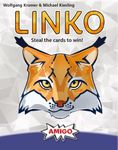
Overall, I'm thrilled to see Baron make a comeback with a new addition, allowing even more players to experience this fantastic and elegant game. It's an excellent choice for those who love strategic gameplay, as it promotes thoughtful planning and offers plenty of opportunities for player interaction. For anyone who enjoys games that are easy to learn yet challenging to master, Barin is definitely worth exploring. With its engaging gameplay and beautiful components, it's sure to be a wonderful addition to any game night. Next up, we have Linko. Linko is a card game featuring hand management, melding and slaying, moving through the deck, open drafting, and take that mechanics. Designed by renowned board game designer duo Wolf Gang Kramer and Michael Keyslang. The game accommodates two to five players takes about 20 minutes to play and is suitable for ages eight and up.
Initially published in 2014, Linko has seen various editions over the years. Today I'll cover the 2023 Korean edition published by Plate and illustrated by Anskim. I really enjoy playing Linko. It's one of my favorite card shedding games. What I appreciate most is the simplicity of its gameplay, particularly the take that mechanic through the snatch action. I love playing with four to five players as the game is fast-paced, easy to learn, and typically takes around 20 minutes. I often play multiple games and keep track of scores, which adds to the fun. Overall, Linko remains one of my favorite card shedding games, and I continue to enjoy it often. It's always a joy to play.
Next up, we have Schwin Band. Schwinband, literally translating to pig gang from German is an engaging family board game that beautifully merges worker placement and set collection mechanics. Crafted by the renowned game designer Stefan Dora and illustrated by the talented Doris Matias, this game was published by Hanzimlook in 2010. Designed for two to five players, Schwinbound offers approximately 30 minutes of gameplay and is suitable for ages eight and up. In this delightful game, players step into the shoes of farmers vying to cultivate the most valuable farms over four rounds. The objective is to collect various types of animals and strategically place them on their farms. The player boasting the most valuable farm at the end of the game is declared the winner.
Schwinband is an incredibly entertaining board game that delivers a delightful mix of cutthroat competition and strategic gameplay. I genuinely enjoy playing this game at all player counts as it manages to remain engaging whether you're with two players or a full table of five. The balance between strategy and luck, especially with the placement of the faceown animal tiles, keeps every session fresh and exciting. Overall, Schwinband is a fantastic game that I highly recommend to anyone looking for a blend of fun, strategy, and a bit of luck. I hope more players discover this wonderful game and enjoy the cutthroat excitement it brings. Next up, we have Matcha. Matcha is a card game with bluffing featuring set collection and hand management mechanics. The game is designed by David Harding, illustrated by TJ Lebrono, and was published by Grail Games in 2015.
The game accommodates two players only, takes around 20 minutes to play, and is for ages 10 and up. In this game, the players are transported to the islands of Japan, where they find themselves practicing a traditional Japanese tea ceremony, presenting matcha for their esteemed guests. The players aim to collect utensils needed to perform the tea ceremony by matching tea ceremony cards on the table by either their number or suit. The player who collects each type of utensil or four of the same type of utensil will be the winner. Overall, Matcha is an incredibly fun and brilliant game designed by David Harding. The game elements and mechanics combined to create an experience that's consistently enjoyable. For such a small deck of cards, it offers surprising strategic depth, engaging mind games, and a truly joyous overall experience.
Adding to the appeal, the artwork by TJ Lebrono is simply mesmerizing. Matcha's highly recommended for players who enjoy clever two-player only games. Its strategic depth and unique mechanics provide a rewarding experience in such a small package. Next up, we have Balloon Cup is a family card game that blends hand management, set collection, and take that mechanics. Designed by Stefan Glenn and illustrated by Mikuela Kinlay and Jurgen Zimmerman, the game first emerged in 2003 through Cosmos and was subsequently released in English by Rio Grande games the same year. Tailored for two players, each session lasts about 30 minutes and is recommended for ages 10 and older. In Balloon Cup, players engage in a race to collect colorful cubes by taking quick balloon flights known as hops. The game features four landscape tiles that alternate between planes and mountains, each displaying one to four cubes in colors like gray, blue, green, yellow, and red. Each player has a hand of eight balloon cards, which they use to match their cards with the cubes on their side. They can also play strategically to interfere with their opponent's plans. To maximize their points, players should place high value balloon cards on mountain tiles and save lower value cards for the planes. When a player collects cubes from a tile, that tile flips, turning mountains into planes and vice versa, and new cubes are added.
Alongside the tiles, there are five trophy cards worth between three and seven points, which players can earn by gathering the right number of colored cubes. Players can also trade three surplus cubes from a trophy that's already been collected for a more advantageous one. Once a trophy is claimed, it stays with the player. The game wraps up when someone successfully claims three trophy cards. Balloon Cup has received multiple accolades, including being recommended for the 2003 Spielus. In 2013, Rio Grande Games launched a re-imagined version titled Pinata, which introduces a new theme and rule modifications that align more closely with the designer's original vision rather than the publishers changes to Balloon Cup. Illustrated by Martin Hoffman, Claus Stefan, and Merkos Suzuki. Piñata typically takes about 45 minutes to play and is aimed at players aged 13 and up. It was also nominated for the 2013 Golden Geek best two-player board game. Overall, both Balloon Cup and Pinata are among my all-time favorite two-player games. Depending on the other player and my mood, I'll choose which one to play accordingly. If given the choice, I might lean towards Pinñata for a more relaxed, chat-filled game, while I'd pick Balloon Cup when I'm in the mood for a more intense strategic battle. However, players who are not fond of the luck of the draw may find aspects of both games less enjoyable, as bad card draws can affect
the overall experience. Regardless, both games are a lot of fun and offer unique experiences that I thoroughly enjoy. Next up, we have Jagdar Vampire. Jagdur Vampire or Hunt of the Vampires is a family board game designed by Dario Dafoi, Walter Obert, and Alex Randolph. The game is illustrated by Barbara Browning, Karen Schileley, Gerard Schmidt, and Felix Seabberger. It was published by Odo Meyer Verlog, which is known today as Ravensburgger in 1991. The game accommodates two to six players, takes around 45 minutes or less to play, and is suitable for ages 10 and up. In this game, players take on the role of vampires trying to get a hold of a certain treasure, a tomato piece hidden in one of the five castle towers.
The player who finds the tomato first will be the winner. Jagar Vampire is always a blast to play. I prefer this game with a high player count. It's a lot of fun for a family board game. The gameplay is engaging and fast-paced, and I love the overall simplicity of the game. The artwork is fantastic, and I appreciate the overall aesthetic. The iconography on the designated components is easy to read and understand. The components are superb. I love all of the game pieces. The vampire meuples are a highlight and are chunky. The fate tile dispenser is also quite nifty. All in all, it's a great production. Overall, Jagar Vampire is a super fun family board game. I'd be happy to play it at any time. It's such a great blast from the past. Now, give me that tomato. Next up, we have First in Flight. First in Flight is a strategy game that combines various mechanics such as deck building, push your luck, and racing. Designed by Matthew Ali and Ben Roset with illustrations by Tomas Bulgus and Amelia Sales, this game was published by Artana in 2023. It accommodates one to four players with gameplay lasting approximately 45 to 75 minutes, suitable for ages 12 and up. In this game, players embody earlier aviation pioneers from the dawn of the 20th century, each
striving to achieve the longest flight distance. Rather than accumulating points, players aim for high scores based on their farthest flights. The game concludes when a player reaches or exceeds 40 units of distance or after four rounds are completed. Following a final flight test, the player who has traveled the greatest distance is declared the winner. As players navigate the skies, they begin with a basic flyer and have the opportunity to enhance their designs through various actions. The goal is to successfully land and set new flight records, culminating in a thrilling competition after 4 years or once a player achieves that coveted distance. I recently had the pleasure of playing first in flight and I found the game to be quite entertaining and fun.
The deck building mechanic is particularly enjoyable as adding new flight cards to my deck allowed me to reach new heights and distances. The inclusion of development cards is a nice touch. Having the right combination can truly be a gamecher, helping players go the long distance. I appreciate how the game publisher weaves educational elements into their titles, and First and Flight is no exception. The historical theme is fantastic, featuring characters that played significant roles in early aviation. I enjoyed reading about them in the rule book, and I found myself wanting to learn more about these pioneers. Overall, First and Flight is a great game, and I highly recommend it. Whether you're a fan of strategy games or just looking for something fun and engaging, this game delivers on all fronts.
Next up, we have Pax. Pax is a strategy card game featuring mechanics like area majority, hand management, open drafting, and set collection. Designed by Burn Eisenstein, illustrated by Clemens Fron, and published by Iron Games. It accommodates one to four players, takes about 30 to 45 minutes to play, and is suitable for ages 10 and up. The first edition was released in 2011, followed by a second edition in 2019, which is the version I'm covering today. Set during the third Survile War in ancient Rome, also known as the Gladiator War, this game portrays the final slave uprising against the Roman Republic, which threatened Italy and revealed the military struggles. In PAX, escape rebels have gained power, while Rome seeks to weaken them to restore peace for its own benefit. Will the empire collapse? Or can they persuade the rebels to join their cause? Players assume the roles of escaped slaves, aiming to expand their influence and challenge Roman authority. By using cards, they build strength across seven areas. In the end, each player strives to surpass Rome and their rivals. Or they might choose to ally with Rome for a shared victory over the rebellion.
If you open up the B7 dictionary and look under hidden gem, you'll find packs listed as one of the definitions. I can't believe I missed this game and let it slip under my radar. The game play is sweet, elegant, and full of life. This game is so much fun. The game play is absolutely brilliant, and I've enjoyed all of my playthroughs. I've had a really great time playing at all player counts, two to four players. There are many aspects of the gameplay that I have really enjoyed, such as managing my display of cards and paying attention to what all other players are going for. You have to be constantly on the lookout for that one person trying to side with Rome and go for the intrigue cards, especially in a two-player game. I've also really enjoyed building my display of cards and aiming for high income plays. This game requires a good amount of focus, procurement, and thinking a few moves ahead, which I've really appreciated.
Overall, PAX is such a brilliant game, and I can't recommend it enough. This game is truly a hidden gem. What an amazing design by Burnt Eisenstein. If you enjoy fun and elegant card games with a competitive edge, definitely try it out. Pax is highly recommended. Next up, we have Schllo Ravenstein. In the world of Schllo Ravenstein, players take on the roles of children transformed into ravens by the wicked wizard Antev. These cursed beings must navigate the treacherous marshes, seeking their way to Ravenstein Castle. The goal of the game is to collect magical stones which will break the spell and restore their human forms. Designed by acclaimed game designer Stefon Dura and illustrated by Lisa Planger, this family-friendly board game was published by Patnik in 1996. It accommodates two to six players with an average play time of around 45 minutes and is suitable for ages six and up. The game is rooted in the fairy tale of Enchanted Ravens, where children must brave the wizard's curse to reclaim their lives.
Overall, Schllo Robinstein is a fun family and children's board game that I thoroughly enjoy playing. The unique movement mechanic keeps me engaged, and I find myself looking forward to each playthrough of this delightful game. After playing nearly all of Stefandura's games, I would say that while it may not be his best title, it ranks high among his offerings in the children's and family games category. If you're looking for a laid-back game to play with family, friends, or younger players, this one is definitely worth checking out. Next up, we have Snatchet. Snatchet is a party card game that features ladder climbing and take that mechanics created by Chrisart Conrad with illustrations by Gthalus. The game is published by Hadelbar Games in 2024.
Designed for three to six players, each session lasts about 20 minutes and is suitable for ages eight and above. In Snapchat, players embody hungry frogs living by a pond, eager to feast on various creatures. However, be wary. Other frogs may attempt to piler your food stash, and lurking sts pose an additional threat. The player who accumulates the most points from their creature cards by the game's conclusion will be crowned as the best croker. I have really enjoyed playing Snatchet. It was super fun, wild, and chaotic. The game play is loads of fun, and fast-paced, making it perfect fit for any gathering. The take that mechanic truly shines as players attempt to steal each other's stacks of creature cards, adding a delightful layer of strategy and excitement. Overall, Snatchet was a super duper fun time. I'd be happy to play it anytime. If you enjoy wild and chaotic card games, definitely give it a try. It's loads of fun and ranks high among my favorite card games by Hadelbar Games. Highly recommended for anyone who loves lively and chaotic party card games. Next up, we have Farmand. Farmand is a card game featuring trick taking, predictive bidding, deduction, and take that mechanics. The game is designed by Craig E. Summerton, illustrated by Samuel Bouvant, and is published by Grail Games in 2025. It accommodates 1
to five players, takes around 20 minutes to play, and is suitable for ages 10 and up. It's worth noting that Farmhand is a newer version of the previous game, Dino Tricks, which was a print and was released in 2023. In this game, players are taken to a lively farm filled with delightful farm animals. This unique trick taker includes predictive bidding and a few delightful twists. The game is played over six rounds and the player who collects the most points at the end will be the winner. And the best trick taking game of 2025 goes to Farmhand. But wait, it's only May. It's too early to decide. While Farmhand is a super fun trick taking game, one of the best I've played in recent years, and I've had so much fun with it. I just received the game a few days ago and we have already played over 15 games. I love it. The game play is superb. The inclusion of the Alex Randolph mechanic was genius. What's the Alex Randolph mechanic? Well, it's the cancellation mechanic where two or more items of the same type or number cancel each other out and the winner goes to the next highest. This awesome mechanic appears in many of Randolph's games such as Holster Guyire, What the Heck from 1988 and Big Shot from 2001. I'm a big fan of Alex Randolph's games, so it was refreshing to see the same mechanic implemented here. This mechanic also inspired many other games that came out much later, such as Rudiger Adorn's Las
Vegas from 2012. Overall, I can confidently say that Farmhand is my favorite trick-Tek game of the year, hands down. I doubt any other game will top it this year, as it's one of the best new to me trick- taking games that I played in recent years. You'll definitely see this game in my top 30 games of 2025 and probably in the top 10. The game is simply incredible and a joy to play. If you enjoy trick-T games, this is a no-brainer. Go for it. It's amazing. And if you're a game publisher, I highly urge you to co-publish and make this game available in your desired language and region. With the rise in popularity of trick- taking games, this game is exceptional, simple yet elegant, tons of fun, and an overall delightful game. Finally, let's wrap up with this bonus recommendation, Shanghai. I haven't covered this game in detail yet, but I wanted to share it with you. Well, that's a wrap for my monthly update of games. Before I go, I'd like to share some exciting news about what I've been doing over the past year. Game translations. After unofficially translating numerous boarding card games into English from various languages over the past year on BG, I'm excited to offer rulebook translation services to others. If you're interested, don't hesitate to ask. Most of my translations
have been for German games, but I've also tackled some Korean and Chinese titles. If you'd like to learn about my process, just let me know down in the chat and I'll share it with you. Well, that's it for today. I hope you enjoyed the video. Thank you so much for watching. If you played any of these games, let me know in the comments which ones you enjoyed or which game you're planning to try next. Don't forget to like and subscribe for more content and see you next time.