Top 10 Board Games New to Me 2025 Edition
Games in This Video
10 games are featured in this video — they unlock as you watch.






Transcript
Hello everyone and welcome back to the board gaming doctor. My name is Phil and I'll be your board game doctor today. So to wrap up the trio of videos that I wanted to do at the end of the year, I in addition to talking about new games from 2025 as well as revisiting the 2024 games. I wanted to talk about the top 10 board games that were new to me in this year of 2025. So, in total, there were 31 by my count games that I played throughout the year that were from uh 2023 or older based off of their listing on Board Game Geek. I would have at least had to play this game once to have it make make it here on the list. And so, we'll go through it. So, a lot of these in the back half of the uh list include mostly some kid games that I do enjoy playing with my kids, but you know, when I think about this list and how I rank them, it's basically which of these games would I choose to play on my own if conditions were right and and I had my way right. Uh I think the most notable game here on this list is The Bloody Inn. This is on this was a play on a couple of plays on on board game Arena and I I just think the the theme of it and and the mechanisms aren't as deep and complex and the theme of it is not as enticing to me per se. So I I think it's a good game but it's it's just not for me. And then in the top
half of the honorable mentions, right, I think the ones that really stood out to me here, Diced Veggies was a really fun game. It's a pretty simple and straightforward game, but I I really enjoyed the mechanisms there. You've got the uh Indian Summer and Cottage Garden from the Garden Trio from Rosenberg there as well. Sleeping Gods is a very highly rated game. It's I think it's got a lot of potential for me to enjoy. I just don't h have the the time or the I guess the desire to play a game that's more narrative driven and campaign style like this. And so if I had a group who wanted to try this out, I might feel differently about Sleeping Cods. And then if it wasn't for a couple of games that I've played literally in the last couple of weeks, uh, Shipyard and Wildcatterters would be in the top 10.
Both games are very great Euro games. Shipyard is a classic sui game about building ships and testing them out. Wildcatterers is a very unique oil uh economic type of game that I would gladly play again both of these, but they were just uh pushed out by a couple of games that you'll see on the list here to come. So, my number 10 is going to be Planted Nubo. So, this is a Rosenberg game. I I think actually it's mostly a Mike and OD game, the designers for Lagrronha who uh had Rosenberg come in and I I think helped them out and you know with with some of the design aspects of this game. I would say that there I mean if you're not familiar with this game, this is 2023 title that I played this year that has a lot of Euro style mechanisms. They have an interesting action selection mechanism where you have to take, you know, place a tool in between two randomized tiles to determine which action you take.
There are a lot of cards kind of similar to the card play of Hollertow in this game that you can adjust and play into your tableau to kind of give you some asymmetric abilities as you circle around it and reap reap their benefits. I think that was perhaps the take that Rosenberg added to the game if I had to guess, but everything else kind of felt very much like a Lrronha type of game from Mike and Ode. So, it's not my favorite game. You can go and check out my rating and review on it. It's It's not my favorite game because it does feel a little clunky, I suppose, and long for what it is. It's not a game that's easily intuitive. I I would say, but it's still a very enjoyable euro that I would enjoy to play.
My number nine is Hey, that's My Fish. And this game caught my eye at first when I went to the game store with my one of my kids and and they saw this on the shelf and thought, "Oh, you know, look at the penguins." And and so we pulled it out and we played it. I learned the rules on the fly and I thought, "Hey, this is actually a pretty interesting uh abstracted game." And then not too long after, I got to play this on Board Game Arena. And I really enjoy this game. I think I enjoy the the kind of the dichconomy of the choices of you move a penguin. First of all, you move a penguin onto a new spot, but the spot that you were just on gets removed from the board as if they are like glaciers that are melting and going away.
And you are not only trying to gather up the spots that have the most fish, but there's also this mind game and abstracted game of trying to block your opponent out from having access to the rest of the board because you are taking away these pieces as you go. And so it's a very straightforward yet fun and surprisingly deep abstract game. It's not the deepest out there, of course, but it is an it is simple enough that I could play this with my kids, but it has enough depth for it to make it interesting to play with other gamers and to play it over again. And so those are the main reasons why, hey, that's my fish is on my list at number nine.
Next we have Escape Plan. So this is a Lerta game that I had not played. Uh I don't know. There were a handful that I had did not play when I first got introduced to the to the hobby. I looked at some of these Lerta games at first like Lisboa and the Gallerist Conbon. Thought those were really cool and played them and enjoyed them, but I never got around to playing Escape Plan until this year. And I always heard that it felt kind of unique compared to his other titles. And it was like thematically it was very interesting. There was I think my favorite part was the puzzle that you're trying to solve with the tile placement in the board, building out your city as you go along and trying to figure out where the optimal space is for you to go in order to evade the comps and get as much loot as you can before you escape the city.
So, it's it was a really good experience. I enjoyed Escape Plan. It may not be my favorite LERTA, but it was a pleasant surprise to play. My number seven is going to be Oium. So, Tatsu Chuo designed Sweetlands, which uh minor spoiler is on the top 10 games. His one of his designs is one of my top 10 games from this year. And AIA was a previous release from a couple years ago that hopefully is getting to be more accessible for those to try and play it. It's a very mechanically sound game with a triedand-rue uh theme of trading in the Mediterranean and it utilizes a lot of sort of not many games but like the monala mechanisms that are seen in games like Trajan. But I think I would prefer to play this one over Trajan because I I feel like all the parts that you're building out, the routes that you're traversing with your ships, the buildings that you're building on your tableau, etc. were a little bit more intertwined and meshed together versus the mini games that felt isolated and separated in games like Trajan. So, I like how you take actions in this game.
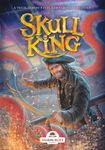
I like how integrated everything felt. And so it was just a very solid Euro game that I enjoyed quite a bit. So that's my number seven, AIA. Number six, a little bit of a lighter experience here is Skull King. So Skull King is a trick-T game where one of the crux of this games this game is is that you declare per round how many tricks you're going to win. You start off with one card and everyone plays the trick. Whoever wins that gets the win. And and then you increase your hand from round to round. And you're always betting or, you know, trying to predict how many cards or or tricks you're going to win in that round. If you get it right, you get a lot of points. If you don't, you don't. And you have all these cards that have special abilities that affect whether you win or not. And so this was a really really fun trick taking experience for me. I think with my experience in trick taking, not counting arcs of course, but strict trick takers, I would say Skull King rates just as highly for me as some other games like The Crew, the Fellowship of the Ring Trick Taking Game. Uh those are the only like tricktakers that come to mind that I've played quite a bit. And so Skull King felt a lot more fun, I would say, than The Crew. I think the the crew is is a good experience, but the Skull King
the the betting aspect and trying to like get that right or even shoot the moon sometimes just felt more fun. And so I I think this is my favorite trick taking like strict strict trick taker uh that I've played yet. And so that's Skull King, my number six. Number five is Fields of Green. So, this was always on my radar for a while because of the farming theme. As I introduced myself into this hobby, I was very much enamored by Rosenberg games because of the farming theme and how integrated those themes were with the mechanisms. And Fields of Green is a little bit more abstracted, but you're still building out this tableau with these farm cards. And the the point of the game is to try to produce these the resources in wheat and water and move them throughout your tableau to convert them into points and to also arrange your tableau in a way as you draft these cards to get points based off of what some of these cards say. And the drafting mechanism is one of the interesting things of more interesting things about this game where you have four different types of buildings or farm structures and you get to choose how many of each type of color of type of uh structure you get to bring to your hand. And I believe this is more so like in the solo mode or pardon, I don't know
if it's solo or if it's just the two-player. I think it's just the two-player mode where the there is kind of a draft back and forth and it plays a little bit differently in the three and four player. If I'm not mistaken, it's more like a market. But I really enjoyed how you can really tailor the hand that you are going to be drafting from and passing back and forth to your opponent based off of what you would need like in the early game versus late game where you want more of those endgame structures as you get to know what your tableau is looking like. So, I really enjoyed this one. This is uh kind of like a hidden gem for me. Um, of course, I I love the theme, but I was pleasantly surprised by how well it played. So, that was my number five, Fields of Green. Number four was also a big surprise for me. It was Art Society. So, this one is relatively new. I believe it was 2023 when this game came out. But what I really enjoyed about this game was the tough decisions that you had to make when bidding for pieces, going for like either really large pieces to take up a lot of space versus the small ones to kind of stay flexible in order to make sure that your pieces would fit correctly based off of the rules of placement. uh you're yeah you're essentially bidding for different works of art and trying to place them into your little board, your tableau and and arrange it in a way that would maximize
you scoring points. But I walked away from that experience really enjoying the tough decisions that you had to make when when betting for these different pieces of art and and the way that they like kind of came out for availability. like I I just thought this was a really good game and this is one that I would return to. So that's Art Society. So three is Findorf. I talked about this not too long ago. A Freedom and Free game that is very much like a Power Grid light type of game. That's a minor spoiler for what's to come soon. But Finorf is more of an autobiographical version of Power Grid based off of the hometown where Freriedman grew up. Now, having played Power Grid now, I feel like this is definitely a simplification of the economics behind that game, but utilizing a very straightforward yet interesting rondelle sort of action selection that everyone has and can build up over time to make your actions better and better. Now, there are some issues after talking with other PE folks and and researching this game as well.
There may be some slight issues with how this game is scored. It's it's very much like if you build a building, you score 50 points, there are no more no less than 50 points. And so if you do get a few more buildings than someone else, it is very hard to catch up, right? But I think what I enjoyed most about this game and what keeps it high on the list for me is the solo experience and trying to solve the the randomized collection of building cards that you have in your hand as well as you know everything else that is more static. But taking those buildings into account and formulating a plan to complete this game with a lot of points by the end of 25 turns, which is very tough and it's very reminiscent of some of the other solo experiences that I've enjoyed uh very much so far. So for I think that really carried my opinion of Findorf for me. But, you know, I would still need to play this more in the multiplayer sense to kind of get a feel of how skillful and interesting and fun this game would be. But, at least for the solo, I that is enough for me to have it be the bronze medalist out of all of the uh games that I that were new to me this year. But my number two is going to be Power Grid. I think I would rather play Power Grid. It is a a fascinating game where you and and before I continue, I'd also place like Power Grid Outpost and other versions of
this game here as well. But talking about the original Power Grid, it feels very much like an older school game where you have a very interactive central map. It's very economic. you you are dealing with high levels of money and cash trying to do and calculate the right amounts of money to spend to place out your uh houses onto the board and have enough of the power plant uh cards in your tableau and resources to make those cards function and power those houses on the board. Uh it's got a a really nice kind of catchup mechanism as well. Uh, and so the game feels tight.
Uh, it's very exhausting to me, at least the first couple of times that I played this to be consistently calculating what you need to do and how how you need to accomplish it. But I I really do enjoy how skillful this game can be based off of the slight variabilities of like what cards come out and what are what is available for purchase uh from the uh auction that you have for these power plant cards. And so very very strategic game very much enjoyed it. But there was one game that I enjoyed more than all of these and it's a contender I think for like a top 10 or top 20 of all time and that is Age of Steam. So I do I I would say that I am biased towards games from Wallace, Mr. Wallace.
I, you know, had played Steam, uh, Rails to Riches before a couple years ago, and I didn't really kind of, I guess, grasp the the mechanisms and the flow of the game from that experience. But having played Age of Steam not too long ago at the time of this recording, it's kind of got the trappings of what I look for in a game that makes it replayable for me and fun, right? And to compare this to a Gricola, like what I like about a Gricola in addition to like the theme is how it is variable from game to game with all the different cards that you can mix and match and combo with. The worker placement is very tight and interactive with other people as well.
And all that creates a game that can be really mastered over hundreds and thousands of plays, right? And I get the same sense that is the case with Age of Steam. It may not have a ton of different cards, but you have the randomized cities with, you know, different goods on them. They the goods kind of come up and pop up over time in in various places, but you can sort of plan ahead for that. There's the spatial puzzle element of how you place tracks and trying to get from point A to point B and sometimes a clever way. And so there's a lot of opportunities for uh cleverness in not only building your rails, but also making the so so you do bid for player order and and and therefore for um special actions that you can take throughout the game as well. And so uh there I think there is an art to the auctioning as well for having the right amount of money and knowing how much to bid and how much things technically kind of cost essentially. uh the opportunity costs for every action to uh be able to do what you need to do as efficiently as possible. And so you have all of that in just, you know, the base game, but also with all of the different maps and different rules from uh this the same designers as well as other designers pitching in and creating new experiences, it has like a ton of variability just from that. And that's the kind of variability that I would
enjoy as well. I I do enjoy a game that is very tight and interactive and economical like this one. It's not as calculating and exhausting as Power Grid. So, that's another point in Age of Steam's favor. But, I I do enjoy the the breadth of options that this game and this system, I should say, has with all of the other, you know, offshoots of games as well as maps and and so on and so forth. So, Age of Steam is definitely one that I really want to play again. I think this is it. It was definitely a very fun experience uh with the players that I played with, but the game itself really stood out to me as something that was very interesting and very fun for me and something that I would definitely want to replay again. So, those are my 10 games and then some from this last year that were new to me. Uh, let me know if there were any of these games that you enjoy a lot or if there were any other games that were new to you this year that instantly became a top favorite of yours. I'm always happy to hear from you. Thank you for listening or watching or supporting in any way.
Uh, just being here and commenting or leaving a thumbs up is encouraging and and very much appreciated. Hope you schedule an appointment with me real soon and I'll catch you on the next one. Take care.