Top 10 Strategic Planning Board Games - JonGetsGames
Games in This Video
7 games are featured in this video — they unlock as you watch.



Transcript
welcome to John gates games this is my third out of four bonus top ten videos that are being created to help support and draw attention to the John goes probe patreon pledge drive that is happening throughout the month of February 2018 now you may or may not know that I've recently turned to junkets games into a professional endeavor and the idea of this pledge drive is to gain extra support so that this is financially viable into the future since I have drastically increased the amount of hours that I've put into the channel so if you are interested in supporting the channel please go to patreon.com/scishow against games and you will find all of the information you need there all right without further ado let's now jump into the top 10 list itself this week we're covering my top 10 strategic planning games and for my high-level the idea here is you are talking about long term plans not just what you are trying to do this turn and what stimulus you have right now but you're trying to figure out how what you do now is gonna impact your next turn and the turn after that in fact many turns down the road so these are long-term planning style games that in general have a relatively low amount of randomness in them and as I go through this list please keep in mind that this is not necessarily in order of my preference for the entire game itself but in particular I have rated them when it comes to the strategic planning involved as you are actually playing the game so let's go ahead and start things off the stop for dynasty came out in 2014 and the high-level idea for this game is there are six different regions that are in a circular pattern in the middle of the table and what you are trying to do is have the most influence in those regions when they are going to score and at the very beginning of the game you're going to shuffle up a bunch
of these little tiles and you're gonna create a little table and that table will map out all of the scoring opportunities that are gonna happen throughout the entire game the there's always two different conditions that are happening the first is that there's a big king pawn and they're gonna move a certain number of spaces around the board on each given turn and that means that at the very beginning of the game you can map out all of the Kings movements throughout the entire game so you will know in what order all of those regions will score and that is definitely something long-term that you will need to be considering as you are trying to actually influence these spots out on the board but in every single one of the rounds there's also going to be a conditional scoring that will happen it'll be the region that maybe has the least number of treasure chests or maybe the spot that has the most number of influence tokens that are actually in that location and that means that you can actually force another region to actually score by kind of going really hard into that other area and try to make that happen especially if you have the majority of influence there because when you score a region then you get the most points and the most goodies when you have the most influence so you are constantly considering the short-term things like this turn like do I want to try and go over there to make that region score but also you're considering well next turn the King will be there and the turn after that he'll be over there so maybe actually right now I'll just throw a couple influence into this spot because it's actually easy right now and two turns from now I'll be really happy that happened because I was thinking ahead when it comes to all this stuff so I really enjoy the forward planning that you need to do in this game I do think that when you start the game you kind of need to vocalize all of the Kings movements so that it's just a public thing that everybody understands and then as you move into the actual
decisions that you're making while you're playing the game I just like trying to formulate those all together and especially trying to streamline those along with the private goals that you have because at the end of the game you will have a couple different conditions one is going to be a pattern of influence out on the different the board another one will be one of the six zones that you want to have the most influence in at the end of the game and last one is kind of conditional based off of different types of spots on the board so you are trying to weave all of those different conditions in with the places that the king will be and what everybody else is doing and all of these things have you thinking many turns in the future and I find that to be very satisfying and one of the hallmarks of the game next up we have a feast for Odin and this came out in 2016 and the high-level idea of this game is you have a worker placement on a thing going on with a massive board with over 60 different locations you can place your workers down on to but then everybody also has a private area where they are trying to literally puzzle all of these goofy different shaped pieces together in order to get themselves a lot of victory points but also to generating themselves income as they are playing the game also at the end of every single round of the game you need to feed your people which is a separate little puzzle where you use other resources and speaking of resources I didn't count them but this game has tons of resources like at least 20 different types of resources probably more so than that and as you are playing this game you are trying to figure out how you're gonna be placing your workers on to this huge grid to achieve your goals and when it comes to those goals that are just a wide variety of things that you need to consider and many of them are short-term and kind of
tactical like as you're trying to figure out where your opponent's might go and what you can do on the worker placement board but from a strategic planning perspective the thing that really shines in this game for me is trying to figure out how you're gonna build out these puzzle pieces on situations in front of yourself because as I said before this is a big factor when it comes to your points at the end of the game but also as you are playing the game you're going to generate income based off of how you fill in these grids and you're only gonna generate extra income if you completely fill in all of those spots as you work your way out and grow bigger onto your board you can also have the ability to surround a little bonus spot so that you can generate bonus resources when you do your income as well but I can tell you that you really need money in this game and as an income and so you have to consider what are you gonna try and do this term like how are you gonna try to fit all those puzzle pieces in and then how is that going to affect next turn and what kind of options are you gonna have for the different pieces that you can fit in then and then the turn after that and then it's turn after that and you are considering all that stuff also with your work replacement options because you have a big pile of workers even at the beginning of the game you have a bunch of workers and every single round you're generating more workers everybody is so you'll have more and more different options with which you can influence the worker placement board and honestly with 61 spots or actually I'm not sure if it's 61 it's it's a lot it's over 60 you will sometimes take a spot that your opponent really wants to go onto but for the most part it did feel like one of the more strategic worker placement games because you can come up with a plan and be like I'm gonna do this this turn then this then this and this and I'm gonna perfectly
use my people and I'll be able to perfectly feed them and odds are somewhat good that your opponents might not get in your way especially in the first few rounds of the game because you have less of these workers available to yourself now there are a couple hot button spots on that worker placement board that you might want to jump on too early because people really want to go there based off of where you are in the game but the act of strategically planning out all of the different phases of worker placement within this command turn but also from round around making sure you have the money and making sure you are building out your puzzle correctly makes this a very strategically satisfying game to play while I'm playing it moving on we now have finca which came out in 2009 and is one of the latter games on this overall list now there are a few really cool things going on in this game but the first thing I'd like to highlight is in the middle of the table you have this island of Majorca and on that island there is this large windmill and it's constructed out of randomized little windmill tiles and on every tile you have a resource that is associated with the wide variety of resources in this game and when it's your turn you can either move a farmer token around those different tiles on the windmill or you can cash your resources in for points now when it comes to moving around the windmill the way it works is you first count the number of farmers where you're starting with your worker and then you move it that number of spaces clockwise around the windmill and then wherever you land you're gonna generate a number of resources equal to the number of farmers on that spot now this isn't the first time I've seen this sort of mechanism in a game but it is the first time I've seen it used twice within a given movement and what this generates is a
wonderful set of strategic decisions to make as you're trying to plan forward to generate the resources that you need to do the set collection you're doing because on the middle of this island there are a variety of different stacks of tiles and on the top of every stack you have a set collection requirement to take that tile it might be a couple of oranges and a couple of olives or one of everything or six of one thing like there's a wide variety of these different options and you are trying to generate these resources on the windmill so that you can cash them out to get these tiles but in order to work that windmill you're gonna have to oftentimes plan multiple turns ahead because you might look around to be like I need orders and there are zero way for me to get oranges so how am I gonna get oranges well if I move this farmer here then I'll get olives which I don't mind and then I'll move this other farmer onto that spot maybe generate olives again and now there's two farmers on that spot so now I can catapult two spaces ahead and land on the orange location in order to get me the oranges that I need to cash out and that would be a 3 turn plan that you are generating that is going to give you a short-term benefits of course but realistically you're planning for the long term trying to make all these things happen now of course your plan might be bashed by your opponents because they can see that you want oranges because all of these tiles are face up in the table and they might see that that's the thing that you really need so maybe they will land a work onto that Olaf's pot as well so now there are three there so if you move now you're gonna overshoot which isn't necessarily what you were looking for and it's gonna kind of make you change your plan as you are playing the game but it doesn't mean that the strategic decisions that you're making or not very
satisfying as you're doing them and then the flip side is that on your turn you can instead of moving your farmer you can cash out and this isn't just simply like spending the resources taking the token no you have to use these little donkey carts which you generate by moving around the windmill and the carts can only hold a certain number of resources and it uses your entire turn to do this which means you want to be as efficient as possible so you will oftentimes have situations where you could satisfying that one tile out there but you really want to satisfying two tiles at the same time to make that turn more efficient and you need to look around and make sure nobody's gonna run in and snipe you when it comes to that and so once again you're planning multiple turns out trying to get yourself into position to play as efficiently as possible and to get all of these different tiles the last thing I want to mention is that sure you have set collection for these resources to take the tiles themselves and the tiles are numbered between one and five I believe but then you also have a set collection within those tiles because you're trying to make full sets of one to five with them which means that to value tile in the middle table might not seem super appealing to somebody oh it's just a couple points but if they take that they might complete their set and then get seven more points which is a really big bonus for them so as you can see there are certainly quite a bit of tactical things that you are doing in this game and as people will modify situations where they might take the tile that you wanted or move their farmers such that your plan needs to be adjusted but every single time I played this game I found that I'm always thinking multiple terms in advance as I'm trying to manipulate my farmers around the windmill the next game on the list is hostage to Tonica which came out in 2009
and in this game you are trying to take over as many of these little office spots on this very large map as you can and what you're doing on every single turn is spending a certain number of action points in order to influence the board in a variety of ways you might just add these cubes or disks down on to the locations in between the little towns on the board or maybe if all of the spots in that town are on that path between the towns are occupied you can cache those out pull them off the board and then put a keyboard disk down into one of the towns themselves and those are gonna generate you victory points at the end of the game as well as right then when you actually do that action now from a strategic perspective there are a lot of things going on here though it's not as simple as it sounds right there because as you were actually putting these things out onto the board you are constantly trying to first of all get in everybody's way because if there is two of yours and one of your opponents on that little road that you can't cash it out and you have to kick out your opponent and when you kick them out they actually get a really big bonus of adding extra resources onto the board so a big way to kind of get all extra resources out is to figure out what your opponents are trying to do this turn maybe next year maybe the turn after that and get in their way maybe not getting their way so much that they'll change their plans but just enough to be annoying so that like okay well I'll pay the extra penalty to get you extra stuff on the board to continue with my plan and that's very interesting line they have to tread because if you go really hard on blocking them they'll just come up with a new plan this also gives you some opportunities to be very flexible
because one of the things you can do is essentially teleport your cubes and disks all over the board so you can try to be sneaky and try to you know put your cubes and disks down over here make it look like you're trying to do something and then your opponents like aha they're trying to do that thing I'm gonna block them and you're like nope I didn't want to do that at all and you just teleport all your things down way over here and do the thing that you're actually planning on doing and so that means you are oftentimes planning multiple turns in a head because it takes quite a bit of actions to put these cubes down onto the board then again if you get in other people's way then you will get some free cubes out which is also a benefit another thing that you are considering is that everybody has a little board in front of themselves with a variety of tracks I believe it's five tracks on there and those tracks are gonna dictate how well you do all of the different actions of the different things in the game for instance one track just lets you get more actions every single turn and another track will allow you the privilege of being able to take control of some of the various towns in the middle of the board because there's all these different colors on them and if you don't have the right privilege color then you can't actually put a cube or this down into that spot which is going to deprive you of quite a few victory points so from a strategic perspective you are also trying to plan ahead to pull all of these different tubes and disks your player board to make yourself stronger as you go deeper into the game and make yourself more flexible in order to kind of get in everybody's way and develop these several term long plans in order to achieve what you really want which is at the end of the game you want a large network of towns that are connected with each other with your pieces in them and then there is a
modifier which can get you a whole bunch of points when you actually evaluate those the last thing I suppose I'll mention is there are these bonus tokens that come out onto the board they're the only random part of the game you kind of take them randomly but then you decide where to put them down and when you get these bullets tokens you can cash them in to do a variety of very nice things and so again it strategically you want to consider holding on to these until the perfect moment when you might actually spend a couple of these to do a really nice combo something that's gonna work very well for you as opposed to just doing it right now because it's kind of okay so that is how hot such a ton of how honson satanica works and I hope that I'm able to adequately convey the strategic decisions that you're doing here when you're playing it now we have keeper which came out in 2017 and it is a work replacement style game with so much more added on so when it comes to the workers to start off you have a wide variety of colors and when you put a worker down onto a spot in the middle of the table if the color of the worker matches that could the color of the spot you put it down onto you're gonna gain a benefit but then after you put the worker down you then have to ask the person to your left if they want to join in on that spot with you they can only join in if the color of their worker matches the color of yours and if they do that then you get an extra benefit but they also get the full benefit of that location so it helps them out quite a lot and so you don't necessarily want to help out your opponents but you have to ask them to join in and from a strategic planning perspective what that means is at the beginning of each one of the four overall seasons of the game you have this big pile of workers in a variety of colors and you want to use
them in such a way that will generate you the resources and activations you want for yourself but also you want to leave yourself flexible with the workers you have left over so that you can jump in on your opponent's turns to do the things that they want to do when it's their turn because that means you don't have to spend your turn doing it because an extra cool thing about this game is once you have spent all of your workers instead of being out of the round you then get to react workers that you have spent on your own personal area because you can kind of do stuff in your own town as you build out a bunch of buildings but also you're gonna be claiming some of the locations out in the middle of the board and on that location that you claimed you can then reactivate those workers on that location so from a strategic perspective you really do want to set yourself up to go out early to get these bonus actions but also to maybe place your workers down so that you can reactivate those later on in the round to gain the benefits that you need now when it comes to those buildings that I briefly talked about before you're going to need to use actions in order to get those down into your area you're going to spend resources to get these buildings built but the vast majority of buildings in the game are essentially set collection to give you victory points at the end of the game and that means that right from the very beginning of the game you are starting to develop a strategy with the buildings that you are choosing from the middle of the table as well as the kind of basic buildings you start with as you build those into your area it's going to kind of push you into doing this thing versus that thing maybe you're trying to get a lot of gems and gold to try and fit those in with this building right here that's gonna give you four points for every set of the Blues of the golds and the way that works out for yourself but that's not all you have to do you're
trying to do this for multiple buildings in your area you're essentially making a bunch of different set collection opportunities for yourself to customize your victory conditions the way you're gonna get all of your well the vast majority of your points anyway at the end of the game and that means that decisions that you make at the very beginning of the game in fact the very first turn you do might be taking a building from the middle of the table that will have huge ramifications on what you do an hour and a half later when you're in the final season trying to make that set collection work and everything you do in between those two moments is going to try and lead yourself towards a path of being able to best utilize that building to squeeze the most victory points out of it so that you can win the game and I've just found that as I'm playing this game sure your opponents are gonna do things that surprise you but the amount of planning that you're doing within that given season but then even from season to season because when you are claiming those boards in the middle of a table then all of the workers on that board are gonna be your new supply of workers for the following season so you're only just considering what you want to reactivate this round but also what you want to do next round there's just so many things to think about right now on your turn that all have huge ramifications on the things that you're doing the future and from a strategic perspective I find that to be immensely satisfying when I'm playing the game now we have Agra which came out in 2017 and this game has a gigantic board in the middle of the table and then another incline board right next to that and what you're trying to do in this game is generate resources in such a way that you can fulfill these contracts on this inclined board and when you do that you're gonna generate points based off of how much that specific guild likes
you and while you are playing this game you are gonna be every single turn placing one of your workers out on to the board but I wouldn't really call this a worker placement game because there are effectively no restrictions as far as where you can put that worker down and if you go to a spot where your opponent is already then you just kick them out and they get the worker back and they probably get a bonus when that happens so you have this wide swath of options available to you every single turn and then you need to really think about how you're gonna get it from A to B to C to D to e to F where F is like cashing in and that Guild contract because at the beginning of the game you only have access to the four basic resources and as you start playing into the game more and more you'll have the ability to spend some of these resources to create buildings or more like unlocked buildings which will allow you to upgrade those basic resources into better resources and then you can continue to do that unlocking more and more buildings making these basic resources into more and more refined things until you get to the very end of the board where you can get some really high-level resources that are hard to come by but also give you special benefits if you use them in a variety of different ways so what that means is on your turn you are just planning like crazy because you are trying to figure out what you're gonna do this term to give you these resources so that next term you can go to that spot maybe up code upgrade those over and then spend those to do this thing over here and an entire thing I haven't even mentioned is that before you do your main action you have a meditation face and in this phase you're going to lay down any of your workers that you want to in the middle of the table and generate meditation points for those and you can spend those
points to do all of these things that are pretty much talked about already like you can upgrade resources you can change one resource into another resource you can unlock a little crate which means you generate more resources when you go to those spots and you can even cash in resources onto cards that are not over there on the implant board there on the other side of the big board and there's all these different people that are kind of coming down the river on boats and if you give them specific resources then they will give you victory points and once enough resources have been put down onto them and somebody is gonna get that card and get a permanent ability going on for the rest of the game so you are trying to plan yourself so that you can also generate and get those cards because those people in addition to giving yourself the card they will let you bump your appreciation I suppose on the three different guilds on that big inclined board in order to generate more points when you cash in the set collection so what all of this stuff means is that there are about a hundred ways to do everything that you want to do in this game and you're constantly thinking about how you're going to get all those things done why do you away through the different passageways of options that give you victory points over here resources over there maybe a card this way or maybe you're building a building to get extra picture points to get a bonus in that different way there are just so many things I don't want to talk about too many more of them at this point but I want to give you an idea that for my strategic planning perspective you are constantly thinking multiple turns out and occasionally you will find yourself completely tapped out of resources I mean you need to do a boring turn where you just generate a bunch of resources and your turn is over
but then once you have those things out there again there's just so many different ways to manipulate everything around in the game to get yourself to your ultimate goal then I found it to be an intensely satisfying experience and from a strategic planning perspective it is certainly a bit of a brain burner when you get to those points where there are just so many different ways to get to where you need to go and you need to figure out which way is the best one okay let's now move on to the next game which is spear island this game also came out in 2017 and this is probably the most strategic fully cooperative game that I've ever played so what's going on here is you have an island in the middle of the table then split up into a variety of different zones and in these spots you have these invaders coming in with their explorers and then their towns and then their big cities and all of these things are blighting the land kind of destroying the island itself and each one of the people around the table plays a spirit of the island who is trying to push these invaders back and try to incorporate the use of the native people this island to try and scare all of these invaders to get them off the island but from a strategic perspective this game does some really fascinating things now when it comes to cooperative games oftentimes there is randomness shoved into the overall kind of artificial intelligence of the cardboard opponent to kind of keep things varied but when it comes to spear island you have so much for sight into the randomness that happens that you can plan many turns ahead in fact you must do that in order to have any chance of winning because every single turn you have a little deck of cards and you will flip over the top card on that deck and
that is a random shuffle there and that will be the location that will be explored out on the map and that's all that's gonna happen you're gonna put a little explorers down they don't hurt anything there's kind of hang out and then next turn you're gonna slide this back card over and now that's going to be the location where the explorers are going to build or the invaders are gonna build so what that means is you have an entire turn to try and kill off or move or scare away that Explorer because if there's no Explorer there then they're not gonna build a building but even building a building doesn't necessarily hurt the island because you wait an entire another turn when it shifts that card down and at that point you will then have those buildings actually heard the island and every single one of these turns we will have all of the players around the table playing all of different things they're gonna be doing in in this case you'll have big hands of cards full of really powerful abilities that are that's gonna cost you energy to actually play down and you're gonna be talking back and forth about the plans the things that you can do and how that's gonna interact with your partners around the tables that you can try to get your end goal which more often than not is to try and move the invaders off of the different spots so that they don't build that building so that the turn later they don't actually do the destruction so I love the fact that you always have like three turns in advance to see how all these things are gonna happen and then when the attacks happen it's just um there's no die rolling or anything you just this does this much damage that does that much damage you just figure it all out and it just makes sense and because of all event kind of lack of randomness and then that amount of foresight that you have in the game that means you're always playing three
terms ahead essentially you are of course trying to deal with the things that are right now but hypothetically if you do really well right now dealing with those explorers then three terms from now you won't have all these big cities that are gonna be destroying the island so it's this really awesome balancing act of dealing with the things that you have right in front of you as well as the things that are coming down the pipe and you can clearly see what they're gonna do and you can figure out exactly how it's gonna affect the overall game stage and working yourself around that strategically planning and making sure that you have a good plan set up to deal with that is really the entire crux of this game and you absolutely will not succeed unless you do that well let's now move on to Concordia which came out in 2013 and the main mechanic for this game is you have a hand of cards in at the beginning of the game everybody has the same exact hand and on your turn you're gonna play a single card from your hand and evaluate that card and then your turn is over and the next person can take their turn and the thing about the cards that you have in your hand is that they have a main action that you're going to evaluate and then every single card in the game along the bottom has an endgame scoring opportunity for yourself and what this means is as you play the game you're going to be moving a little boat around it moving some soldiers around and you're going to be building buildings into a variety of cities which will allow you to generate a bunch of different resources that you can buy and sell but at the end of the day a major thing you're doing is grabbing new cards from a row in the middle of a table and putting those into your hand that you can then play ouch as the new action but also you need to consider the bottom part of that card because when you're
taking those cards so the top actions can be very nice for you and they could really work with the thing that you're going for but if the bottom part that scores is not in line with what you've been doing in this game then maybe you shouldn't take that card and you should take the one next to it with an okay ability but it perfectly matches up with what you've been doing because the different variety of things that can score are maybe having a certain number of buildings in a specific kind of resource town or having a variety of different areas on the map covered or maybe a certain number of your soldiers and your boats out on the map there's just a bunch of different endgame scoring conditions and if you really go hard on one of them and continue to get more and more cards that match that condition then every one of those cards is gonna be worth even more points because it's kind of in line with what you're doing so that means from a strategic perspective right from the very beginning of the game you're kind of feeling out what you're gonna be doing well in this game like sometimes your very first action is going to be moving over and planting down into a town and you're like okay I make wine now and for the that might have ramifications that ripple out for the rest of the game because you happen to make wine a little bit better than other people at least in the beginning and you can maybe maintain that to the point where you have like a wine empire and you have cards they give you points at the end of the game for having wine and you can spend that wine to take new cards and there's just all these different things to keep in mind or maybe instead of doing that you just go to a town to make brick which is like a really basic resource that you don't really mind but then you do more of that and get a lot of bricks and suddenly you're able to make a lot more towns so you might have less cards in your hand at the end of the game but with more
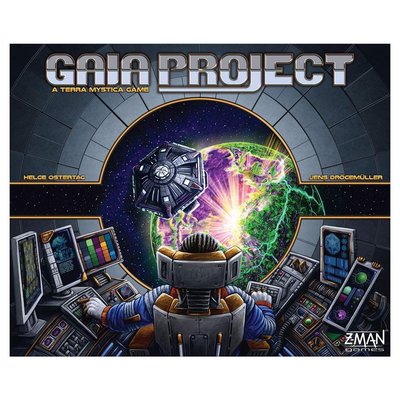
towns out on the map the cards are you have in your hand it will be worth more points versus the other person who has a ton of cards but not as much influence on the map so each individual card is maybe not worth as many points so I hope that kind of all makes sense as you try to understand how everything you're doing on this given turn has these big effects later on in the game especially with how you cultivate that hand of cards and I think that it works surprisingly well and I think it's one of the more elegant action to end game scoring type of mechanisms that I've ever seen in a board game next up we have guy project which came out in 2017 and is the sequel to Terra Mystica which came out many years before that now these two games are quite similar but guy project it does some small tweaks to some of the mechanics and some significant overhauls and additions of new mechanics to the Terra Mystica model in order to bring itself into a space theme and what you're doing in this game is you're taking control of an alien race and all of them have significantly different benefits as well as attractions as they are trying to go out and conquer planets in the middle of the table but what you're doing on every single turn is you're just deciding on one action out of I think seven or eight different options and then what these actions let you do is increase your infrastructure and build an engine so that as you ramp up from turn to turn to turn you were able to do more and expand faster and get more victory points for doing all these things as you're playing the game and as you are trying to take over these planets you are going to be flying different distances between them and you're gonna be spending resources usually to make that distance
happen and then you're gonna spend resources to terraform the planet and build buildings down on top of it and then you gonna spend even more resources to upgrade those buildings into new buildings which might give you new technologies which let you break the rules in different ways or increase your income in other ways and bump yourself up in these six different tracks there are technology tracks that let you gain new abilities or do things more efficiently or generate more resources and there are all these different things that you're doing and the crux of all of this is resource management on your player board you have a little track up on the top of the board and you have money you have or you have you have these little green cubes called qia cubes and then you have science as well and you are trying to adapt with the different situations in the game and use all of these different resources as efficiently as possible to make more resources this is an epitome of an engine building game because at the beginning you have almost nothing on the map but at the end you will have a galaxy spanning or solar system spanning Empire I'm not really sure how the theme of that works but it's just planets all over the place and you will control a wide variety of things and be able to make a ton of different points as you're jostling for good positions with your opponents as you are trying to just squeak by with the amount of resources that you have and there is a lot of math in this game and you are constantly planning out what you're doing this turn and next turn and then turn after that or I guess action to action after that because there are six overall rounds to the game I guess you could say and within each of those you're gonna take a bunch of different actions and you're gonna need to figure out you're gonna spend this much money to do this and
then you're gonna do that technology to do that which give you discount to do this and that and the other thing and you're just mapping all these things out just have all these numbers flying around in your brain and well it can be a bit intensive I've also found it to be incredibly satisfying especially when you're able to pull something off and you have just just exactly the number of resources to do this thing on this turn to get the extra bonus points because that's another thing to consider is that there are six overall rounds to the game and every single one of those rounds has a optional bonus scoring objective for that given round like in this round if you build trading houses you're gonna make some more money and these aren't randomly distributed at the beginning a game so right from the beginning you could look out there and be like okay I think I'm gonna try and build my sorry institute on turn four instead of turn two or something like that because I'm gonna get extra bonus points then and based off my race I don't desperately need that one particularly building down and so right there you are not only planning for rounds ahead but you're probably planning like twenty or thirty actions ahead for something that you're gonna try and angle yourself towards and so all of these things really come together in such a way and I guess in general engine building games where you just you put stuff in and you get more stuff out and you put that stuff in and get more stuff out they definitely lead themselves towards strategic planning and I think that guy project is a very good engine building game and that is why it is so far up on this list alright we've finally reached number one and that is through the ages and there are two different versions of this game the first one is called a story of civilization and that came out in 2006 I believe and the second is a new story of civilization which came out
in 2015 and for the purposes of strategic planning I'm gonna kind of combine them both together because the second version is vastly superior it tweaks a bunch of things and streamlines several things from the previous game and you should always play a new story of civilization but for both of these games the main core gameplay is the same and what's going on in this game is you are going to progress yourself through three different ages and in each age you're gonna shuffle up to this big deck of civil cards and you are always every single time you play the game gonna go through that entire deck but each time you play the game the shuffle of that deck is gonna be different and you're gonna lay those cards out face-up in the middle of the table and when it's your turn you are going to spend a number of different actions to do a variety of different things and these might be relatively simple things like drafting cards from that big row that I already talked about you might also use actions to build buildings or upgrade buildings and these buildings might generate you food or they might generate you resources that you can use to build other buildings some buildings are gonna help you create science which is going to allow you to develop technologies which allow you to do all of these different things better and then of course you can also invest in military both with technology and with military units to increase your overall strength which will allow you to potentially do aggressions against your opponents in or to squeeze some victory points out of them or just kind of freak them out and make them use their own resources to generate military engines of their own and the thing about military is it doesn't actually make you points in and
of itself so if you would get some easy military going and you scare everybody else into spending their resources into making extra military to be a less worried of you then they're not putting that or into like opera houses or printing presses which are gonna generate them victory points and potentially science as well now the reason this is the number one strategic planning game comes back to a little thing I mentioned earlier and that is that every single time you play this game you will go through that entire deck of each one of those different ages and what that means is this game incredibly pushes itself towards people who really like playing game over and over and over and over again and now I can traverse exactly my count but I've played the previous the the first version of through the ages well over 25 times and I've played a new story probably seven to eight times or so now so I have a lot of experience with the through the ages engine and what that means is when you go into this game right from the very first turn of this game you are constantly tapping in to all of the experiences all the mistakes all the amazing moves that you did in the previous games and they're trying to work things together so that you can get really good combos to generate your engine in such a way that will lead you to victory in that specific play and knowing what's in all of those future decks is really what this game is all about and I know that this actually rubs a lot of people the wrong way the fact that the first time you if you're the first time playing it through the ages you are in a disadvantage to somebody who's playing this game maybe twenty times or so because they know all of the
future cards and the cars that they're drafting from the card row right now they are intentionally thinking okay I'm taking this now which means I'm not gonna be taking that other thing about an hour and a half from now so that about three hours from now I can do that other thing you're planning all these things staggered so far ahead based off of this amount of information that you have in your head from previous place of the game and the strategy of planning that goes into working with the options that are available to you on this gimmick turn and how those are going to impact all of your future turns is just brilliant and is realistically where this game really shines I think if you're going to sit down and play through the ages like two or three times total for your entire life then you are not gonna see the amazing brightly glowing awesome gaming experience that really comes out of playing this one at least five six seven times and that's a big time commitment when you consider the fact at least for our play group if we sit down to play a three player game it's gonna take about four hours which is long like that's certainly on the long side for us as far as playing board games is concerned but also if you're gonna sit down to play a three to four hour game you want it to be strategic if you want to your early decisions to have these big ramifications later on you don't want to be just doing all these things that are just insular within their even each give and turn you want to revel in the great decisions you made hours before when you were in the Third Age and you want to be really upset at yourself at the mistakes you made like in the Second Age based off of that one card that you let slide by and you didn't draft it into your hand and now
everything just blows up in front of your face and I suppose the last thing I should mention before I ramble on about this for too long is that when the game is over the only end game victory points come from cards that are seeded into this event deck and you can be seeding events and all game long and they are going to affect things in a variety of different ways for instance if you seed a card into the event deck that is going to penalize somebody for having a weak military then you know that's coming you're not sure exactly when but it's coming soon so maybe you should make sure that you don't have the week as military so again you are strategizing finding multiple turns ahead to make sure that you're in a good position for when that event inevitably pops up you are going to be in a good position and not be penalized for it or maybe you're gonna get a big bonus based off of the condition of that card and rambling a little bit but going back to the endgame cards the ones that you put in there those are gonna generate you lots of points for being the person with the highest military or you make the most food or you have the most workers out in the board and all those different things are put in intentionally by the players and so you know what some of them are you don't know what your opponent's ones are but if you played this game 20 times you might have a decent idea you look at what they're doing and you're like I think they put that event in there and I'm gonna kind of play around that and try to play towards that as well so I do think I probably talked about this one enough but this game for a long time was my number one game of all time at this point I'm not sure if that is the case anymore so I guess B of all time but it has definitely been one of my favorite games and throughout my modern board gaming career and a big part of that is the wonderful engine building strategic depth and complexity
complexity of planning that you're doing while you're playing this game and that is why it is still sitting here at number one at least as far as this strategic planning list is concerned okay well it looks like we have completed yet another one of these top ten lists I hope that you have found this one interesting as I try to parse the difference between just liking the game for all of its pieces and specifically trying to put them in order with my with respect to these strategic planning decisions that come into play with each and every one of those and as I mentioned at the very beginning of the game this video was created to help support and draw a bunch of attention over to the John goes pro patreon pledge drive so if you like the content that you've seen today with this top 10 list as well as the in-depth more game reviews as well as full game playthroughs and vlogs like this and all the stuff that I do please go check out patreon.com/scishow and the years and of course please subscribe to the channel if you are interested in seeing more vlog style content like this one as well as my reviews and playthroughs thanks for watching you