Best Board Games FOR COUPLES With Real Interaction & Tension
Games in This Video
9 games are featured in this video — they unlock as you watch.


Transcript
Hey everyone. You know that specific evening when you and your partner both finally have time, the phones are away, and you just want a board game that actually works for two people. Not the kind where you're both quietly doing your own little puzzle next to each other. Not the kind that stretches to 3 hours and leaves one of you waiting while the other takes forever. Just something with real interaction. something where what you do actually affects the person sitting across from you. A bit of tension, a [clears throat] bit of reading each other, a bit of I see what you're trying to do there. I got a great list for you today. Real player interaction first. Decisions that matter to both of you. Mostly light to medium weight with a couple that go a bit heavier if the interaction is strong enough to justify the time. I'm not saying these are the best games for every couple on the planet. I'm just saying these are the ones that currently work the best for me. Number one, Unmatched.
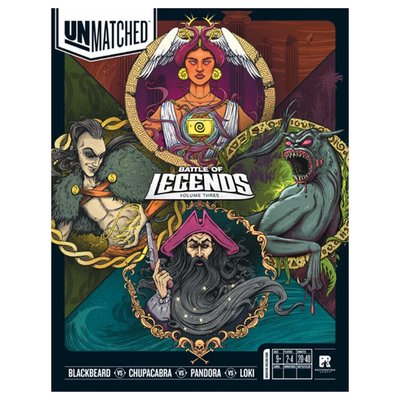
One of the first two-player games I ever played. This one is pure head-to-head energy, and I keep coming back to it for that reason. You each pick a fighter. They all play completely differently and you take turns moving around a small modular map and throwing cards at each other. On your turn, you get exactly two actions. You can maneuver to draw a card and move. You can scheme to play a special effect, or you can attack. Combat is resolved by both of you revealing an attack or defense card at the same time. The difference in values is the damage dealt. What you're trying to achieve each turn is improve your position, dig for the right cards, or set up a strong attack while keeping your own health and sidekick safe.
Across the whole game, you're hunting for that one clean sequence that drops the opposing hero to zero. I really enjoy the pure tension of those simultaneous card flips and how satisfying it feels once you start understanding a particular fighter's kit. The way every character is so different with their own sidekicks and the way the zones control line of sight keeps it feeling fresh even after a bunch of plays. It's fast, usually 20 to 40 minutes, and it never feels like you're playing alone. Perfect when you want something that feels like a proper fight, but still finishes before the tea gets cold. Number two, war chest. War Chest is quieter than Unmatched, but the interaction is constant and very clean.
You're both drawing three coins from your own bags every round and using them to deploy units onto a hex grid. Move them, attack, bolster them, or claim control points. The coins are both your army and the resource you spend. Each turn, you're trying to get useful pieces onto the board or remove the opponent's pieces so you can claim the key locations. Across the game, you're slowly building a stronger bag of units while racing to place all your control markers before the other person does. I like how clean the decisions feel and how much you're constantly reading what might still be left in the other person's bag. The fact that the same coins are both your units and the thing you spend gives it this really elegant almost chesslike quality with a satisfying physical weight. 30 minutes of pure I see the line you're trying to create.
Number three, Radlands. This one is mean in the best possible way. You're both protecting three camps and trying to destroy the other person's three camps. Water is your main resource. Each turn, you gain some water. Then you can play people cards in front of your camps, junk cards for quick effects, or activate abilities. You're building a little board of people while constantly looking for the opening that lets you finish one of their camps. What you want each turn is either to strengthen your own defense or to chip away at theirs. Across the game, you're trying to protect your three camps while systematically taking theirs down through combos and good timing. The constant pressure and the way a good combo can completely swing a game in one turn is what keeps me coming back. The camps all having different powers and changing how many cards you start with makes every match feel a little different. Games are short, 20 to 40 minutes, and they feel aggressive.
There's no real place to hide. Number four, Layers. This one is newer and the concept is just really fun for two people. You each get a set of walls, traps, monsters, and treasure, and you secretly build a little dungeon for the other person. Then you have to explore the dungeon they built for you. You move through it, fight whatever is there, grab treasure, and try not to get trapped or killed by the nasty things they left waiting. In the building phase, you're trying to create something challenging but still fair. In the exploration phase, each turn, you're trying to map a safe path, deal with whatever is in front of you, and grab the best treasure you can find. Across the whole game, you're both designing the hardest reasonable challenge you can and then solving the one that was built against you. I really like that dual role of being both the creator and the explorer. The fact that you're literally designing the exact puzzle your partner has to solve makes the interaction feel personal in a way most games don't.
Those gotcha moments when you walk straight into something they clearly planned are excellent. Number five, Scales of Fate. I'm a huge Veiled Fate fan, and this is the two-player version of it. Pure mind games, and I mean that in the best way. You're both secretly supporting two demigods out of a larger set and trying to move them around a score track while also trying to figure out which two your partner is looking after. Each round you send demigods to the board to take actions, smiting, gaining favor, that kind of thing. What you're trying to do each turn is position your secret pair favorably or disrupt the board in a way that helps your goals across the game. You're trying to score well with your two demigods while correctly guessing or at least not getting correctly guessed on the opponent's pair. The mind games and the constant reading of your partner are what make this one click for me. Being able to choose whether you're helping or actively hurting the demigods you're linked to adds this really interesting layer. It's quiet. It's cerebral. And the moment you correctly name their two demigods is delicious.
Number six, Mantis Falls. Social deduction hidden roles. You know that's my thing. And this one genuinely surprised me. It's a sometimes cooperative game that actually works at two players. You're both trying to escape a dark mob ruled town, but one of you might secretly be the assassin. You move along a road, play cards face down or openly, heal, attack or trigger events, and you talk the whole time. Each turn, the active players are trying to make progress down the road while managing wounds and deciding how much information to share or hide. Across the game, the witnesses are trying to reach the end alive together or eliminate the assassin while the assassin is looking for the right moment to take someone out without being exposed.
That constant can I trust you tension is what got me. The fact that a real trader experience can work this well with just two people still feels surprising. I didn't expect a game like this to feel so personal at this player count. It really does. Number seven, Five Tribes. This is one of my favorites in general, and it still works really well when it's just the two of us. You bid for turn order, then choose a tile and move a line of colorful meeples across the board, removing a group of the same color to trigger a powerful action. Assassinate, build, trade, summon gins, that kind of thing. Each turn, you're looking for the highest scoring combination of moves available on the board while also denying good options to the other person.
Across the game, you're collecting points from multiple different sources and trying to leave the board in a state that hurts your partner more than it hurts you. The constant interaction and that one perfect move feeling are what I keep coming back for. Removing workers instead of placing them still feels fresh every time. At two players, the board stays tight and every strong move you take is one they don't get. Number eight, onward. This is the one that feels like a moa on the table. You're controlling champions, pushing lanes with minions, taking towers, and trying to destroy the enemy nexus.
A lot of the action selection happens simultaneously, so you're constantly trying to read what the other person is about to do. Each turn, you're trying to create pressure on a lane, contest an objective, or set up a fight that favors you. Across the game, you're working to destroy the defensive towers so you can eventually reach and destroy the nexus. The shared battlefield tension and the constant reading of the other person's plans are what make this one feel special. It actually captures that moa feeling without just becoming another pure card game. The tempo and the way the board is always moving and reacting scratch an itch that most board games don't.
Number nine, 20 strong Nemesis. This one is different from the big box Nemesis a lot of people know. 20 Strong Nemesis is a deck in the 20 Strong system built around the Nemesis setting. It's a much tighter, faster experience that uses a shared pool of 20 dice and a deck of challenges. You explore the ship, manage noise, deal with intruders, and try to complete objectives and escape. Each turn, you're deciding how to spend your dice rolls, push for progress and risk more noise, or play safer and conserve resources. Across the game, you're trying to get the critical systems online, stay alive, and reach an escape route before the ship or the intruders end everything.
I like how it keeps that tense Nemesis atmosphere, but in a much more compact package. Distilling the semi-ooperative ship horror feeling into the 20 strong dice system and supporting one to three players in about 40 to 60 minutes makes it feel like a smart little alternative when you don't want the full 3hour commitment. It still delivers that can I trust what's happening on this ship feeling just tighter. Just played it yesterday and had to include it in this video. Number 10, Dune, War for Arachus. Okay, this one is heavier, and I know it's a stretch for pure casual, but the interaction is so strong, I couldn't leave it off the list. It's fully asymmetric. One side has the numbers, the mobility, and the straightforward power. The other side has the stealth, the sandworms, the missions, and the ability to disappear into the desert.
You're fighting over the same map the entire time. Each turn, you're moving forces, harvesting spice, fighting, or advancing your faction's specific goals. Across the game, the Haronin side is trying to find and destroy hidden settlements, while the atrades and FMAN side is trying to complete missions and survive long enough to turn the tide with their special tools. The theme, the asymmetry, and that constant back and forth are what make this one special for me. The way the Dune lore gets translated into completely different mechanical identities for each side is really well done. When it clicks, it feels like the book. It's longer, around 2 hours, so it's not a weekn night filler, but the whole game is one continuous conversation through the pieces.
So, those are the ones that currently feel strongest to me for couples who want real interaction. All of them force you to actually look at the other person or still create meaningful pressure and decisions. None of the main list let you just do your own thing in the corner while the other person does theirs. That's the main filter I care about. Real decisions that matter. I'm still early in the hobby, only about 2 years in. So, this list will almost certainly shift as I play more games and figure out more about what I actually like. But if you're looking for casual games for couples that don't feel like multiplayer solitaire, these are the ones living on my table and feeling good when it's just the two of us.