The TIMELESS Board Games From Every Decade??
Games in This Video
8 games are featured in this video — they unlock as you watch.



Transcript
Every few years, a game comes out that's so monumental, that's so compelling that it becomes etched in the walls of humanity, like the Moonlanding and Laboos. So today, I wanted to take a look back, way back, and go through the decades with you to take a look at board games that have not only stood the test of time, but remain as the best that the medium has to offer. The way I'm doing this is by the decade. We're going to go back to the tens, the double zeros, the '9s, all the way back to when overnight oats was called grl. And honestly, if you told someone from the 1950s that in 2025 people would be soaking oats in milk overnight on purpose and calling it breakfast, they would think we lost the Cold War. Now, a quick note on criteria. I don't care much about the game's influence, per se, on this list.
Everyone and their YouTube algorithm knows that Katan was the most influential board game of the '90s. So, here's my mandatory 3second stand in ovation for Katan, but it doesn't make this list. What I care about is playability. In other words, is this a game I actively want to engage with over more modern games? Did it actually stand the test of time as a game people want to play? So, sorry werewolf. You've created social deduction and I'm kicking you out first. Simply put, influence and playability aren't the same thing. Some games changed everything and then got left behind by what they created. The games on this list, though, they've been battered by decades of imitation and innovation, and they're still standing like the titans they are. So, let's go back in time and see what board games have stayed as fresh as the day they came out of. the 2010s. This was the decade where board gaming went from the niche hobby it was to a mainstream phenomenon. Obviously, this is the newest batch of games, so a lot of them haven't proven their staying power yet.
That said, I had a lot of them on my list. Pandemic Legacy, Through the Ages, Spirit Island, Scythe, Brass, Wingspan, all of those were contenders, and this decade is absolutely stacked. But when I think about what game from this decade will still be played in 50 years, I don't think it's the 25 lb box of plastic with a thousand cards and an endless campaign. I think it's Code Names. A game that fits in the box the size of a sandwich. Released in 2015, Code Names did something that sounds impossible. It made a party game that's actually legitimately good. Not just good for a party game. It's just so brain dead simple as a concept. a 5x5 grid of words and random words, Hollywood, dinosaur, car, luck. And your team is trying to guess which words belong to you based on clues from your spy master who gives a one-word clue and a number. For example, your spy master may give the clue animal three. And you're looking at this grid thinking, okay, which of these three connect to the word animal? Is it spine because the spinal column only is being possessed in vertebrates which are animals? Or is that insane? Am I overthinking this? And no, of course it wasn't Spine. The answer was Centaur. It's always Centaur.
And that's the entire game. Code Names is pure. There's nothing to remove. It's only been carved into the essential decision, word association and deduction. And there's this brilliance in this obscenely simple game. You're playing with random words and the connections emerge from specific grid in front of you and the specific minds at the table. The game gives you space for creativity to spawn from our pink jelly minds. And compare this to other party games. Most feel disposable. You play them a few times, you exhaust the cards, and you move on. The novelty of the mechanics can quickly wear thin. Or they rely on inside jokes and reference humor that just ages poorly. Code Names doesn't have that problem because the game isn't in the cards. It's more of an engine to come up with cleverness. And you know, you could teach this to someone in the '60s with zero modern gaming knowledge and they could still get it. Ward association isn't new.
What's new is structuring it into this perfect competitive framework. And I do think there's a feeling of depth and an ability to gain expertise here. Being a good spy master is harder than it looks. You're trying to find connections that are obvious enough for your team to see, and you can still outra all while trying to dodge those wrong clues. There's a surprising amount of risk management. Like you might ask yourself, do you go for the four words with a tenuous connection or the two words with an obvious one? Do I trust my team to get this weird lateral leap in logic? Now the skill ceiling is surprisingly high, but the skill floor is zero. It works for people who are afraid of rules. And code names has a singular focus on word association. And with that focus comes something interesting. There is no objective correct logic. Mammoth could connect to ancient times, to size, to elephants, to a movie franchise. The game works because human brains are connection making machines and every brain makes different connections. And look, the 2010s gave us incredibly ambitious games. Sprawling campaigns, legacy mechanisms, apps integrated into gameplay, but code names might be the game from this decade that people still actively want to play 50 years from now because of that innate connection with our brains and language. It's something humans have been doing since language existed. And this innovation has made it into one of the most replayable, accessible, and I would say genuinely clever games ever made. and that's
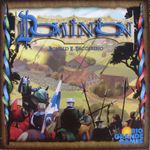
timeless. Okay, let's go to the 2000s. I have a little secret. I didn't play many games back in the 2000s. I just wasn't into tabletop stuff back then. So, whenever I found out like a game is from 2003 or 2005, I'm usually quite surprised. And to be honest, the games of this era have a certain charm. The artwork isn't that polished. The mechanisms are kind of wacky, but yeah, they're still interesting. So, what game from this decade that brought us the iPhone and the housing market collapse stands the test of time? For me, it's the grandpapa of deck builders, The Minion. The Minion was created in 2008 and popularized an entire genre. Before this, deck building as a mechanism wasn't really a thing. After this, everyone's making deck builders. In a way, there was a predominion and post Dominion game design shift. Now, the genius is that it gives you freedom to grow your deck in a player specific way. You start off with a terrible deck, seven coppers and three estates, the equivalent of some pocket lint and some paper clips. But then every turn you draw five cards, you play them. You use your money to buy new cards. Those new cards go back into your deck after you shuffle. And you're building your deck as you play. It's like going to eBay and trading your paper clips for slightly better paper clips and then trading those for some actual useful stuff. slowly upgrading from trash to treasure. But the true goal is always going to be the victory points. But there's a catch. Victory points are dead weight. So every time you draw a province instead of a useful
card, your hand gets worse. So you can't buy them too early or you'll clog up your engine. But you can't wait too long or someone else will end the game with all the properties. And every game uses a different combination of 10 kingdom cards from the dozens that are available. So, the strategy is malleable and changes each time you look at the board or at the cards. Maybe there's a great trash synergy, so you build a lean mean deck. Maybe there's no trash, so you go big money. Maybe you add attack cards to disrupt other players, making the game more interactive and mean. It's a liberating exercise in expression and piecing together what combination you think will work in a given game. And when I look back though, The Minion perfectly encapsulates that 2000 era's funk and quirkiness, but at the same time, it's pure and it's the essential deck building game by remaining singularly focused on the deck building part. There's a ramp that isn't diluted by other mechanics and remains intensely anchored into what makes it good. And nowadays, modern deck builders, they have added boards, combat systems, dice chucking, and all of these elaborate themes. They're always deck builders plus something to differentiate from the sea of deck builders. But the minion was already differentiated by being the deck builder. I came to the minion late and I expected it to feel dated. Instead, I found the platonic ideal of a deck building game, a game with a singular focus on that mechanism. And that focus doesn't age. Yeah, there are deck
builders with more elaborate themes, with better production, with more mechanisms layered on top. But if you want pure deck building, if you want to understand the core of what makes that mechanism work, you play Dominion. And when I look back, the 2000s were a weird time for board games. The industry was transitioning from that Euro game boom of the '90s into whatever the modern era would become. And Dominion is that perfect representation of that transitionary period. It's mechanically innovative. It's thematically forgettable, but it's undeniably perfectly good at what it does. It has stood the test of time by being the purest essence of a mechanic. The '9s, Dialup Internet, and the Euro game invasion. Katan drops in 95, Turus and Euphrates, El Grande. All of these games, it's all an absolutely stacked decade. But I'm going to go with RAW because in 1999, Reiner Kitsia made his magnum opus of an auction game. The concept is simple. Tiles come out representing Egyptian stuff. pharaohs, the Nile monuments. You're collecting these sets to score points, but there's a lot of ingenuity within this simple setup. The game has three epochs, and in each epoch, you have a limited number of Sundisk to bid with. Each disc has a different value, and once you use a sun to win an auction, it's gone until the next epoch. You can literally run out of opportunities to bid. So, what's the game flow? What's it like? In RAW, tiles fill up a track, and when an auction is
triggered, either by a player or by in-game forces, the auction happens immediately. Everyone decides right there and then if the tiles are worth one of their precious sons. The push and pull is exquisite. You're watching some tiles come out and you're just thinking to yourself, one more and the set is perfect. But someone calls raw and you have to decide right there. Or you're holding on to that raw trigger yourself and you call it early just to be mean. Not even strategically mean, just being chaotically mean. Oh, you wanted one more monument? Too bad, raw. It's all beautiful. And those nasty disaster tiles can wreck your score in entirely. So, there's this constant tension of biddone auctions with bad tiles mixed in. But here's what makes Raw timeless, and it's quite easy to miss. I think most auction games are about valuation, trying to figure out what something is worth and to bid accordingly. Raw's focus is elsewhere. Raw isn't necessarily about scarcity of goods.
It's about scarcity of action. The bag of tiles does feel endless. You know, more tiles are coming out. You know they exist. So, you're not asking, "What's the value of this one specific tile to me?" You're asking, "Can I afford to let someone else have this? Can I afford to waste one of my limited sons on something mediocre? Over the game, the tiles start to feel less valuable than you might think. What really feels valuable is that you only have a couple of chances per epoch to act. And every other player knows it. They can see your sun values. They know when you're weak. They know when you're holding your big value son for something better. And they will absolutely try to force you into a terrible decision because of it. It's an auction game where you're bidden against other players options, not against the strict valuation of the tiles. So, there'll be a situation where you know that one player has one low value sun left. So, you can actually push them out by bidden higher or you can let them waste it on garbage and save your bid for later. It's much less a matter of valuation. It's much more psychological.
And the epoch system creates this rhythm of desperation. Early in epoch, you can afford to pass on mediocre auctions. But late in epoch, suddenly those mediocre auctions look pretty delicious because if you don't actually bid, you might end up with tile draws that are practically worthless or even detrimental. The game forces you into participating in messy, undesirable situations, not because you want to bid, but because somehow not bidden is somehow worse. And that tension, the feeling of being forced to make a suboptimal play because the alternative is even worse. That's what keeps RAW tight the entire game. Compare this to modern auction games. They'll add bidden currencies, special powers, ways to mitigate bad auctions. Raw doesn't mitigate anything. It just says, "Here are your sons. Use them wisely or don't. Either way, you're going to regret something." And it really understood that the most tense scarcity is running out of chances to act. It's all about what you can do with the true currency of the game, your agency, and whether you can afford to spend it. All of those elaborate twists and innovations that modern games have made, they all help kind of even out the game to make it feel more appealing or more flexible. But in a lot of ways, I'd rather just play RAW because raw prove that you don't need to add complexity to your auctions. You just need to make every bid hurt. Plus, pulling tiles from a bag is just an addictive element in any game.
The '8s, the decade of excess. Everything turned up 211. People in the 80s looked like they were constantly shrugging. And I'll be honest, this was the hardest decade to choose from. There was Civilization. There was Sherlock Holmes Consultant Detective. These are bigger and more ambitious games. But a YouTube comment reminded me of Can't Stop. And when I went back to play it, I realized something. It's aged better than any of those bigger games. And let me explain the whole game. You roll four dice. You pair them up and you move up on those numbered columns associated with that row. The columns are of different lengths because of probability. Sevens are more common and two are more rare. And you're trying to claim three columns by reaching the top first. The catch, every roll you have to move in a column you've already moved this turn. If you can't, you bust and you lose everything. So essentially, every single roll is a decision. Do you want to roll again? You've moved up column 8 twice and everything's looking all sunny and good. And then you roll again. Move up in eight and maybe you get to climb up in six. Roll one final time and you're so close to the top.
Just one more. And then you bust and everyone points and laughs because watching someone ignore obvious probability for greed is humanity's favorite spectator sport. And these games we've been talking about, the games that last, they share something fundamental. They share a focus on an uncompromisable question. Can't Stop is obsessed with a primal question. How much is enough? Everything else, the complexity, the ornamentation, it falls away so that one question can breathe. How much is enough? That's it. You can't remove anything else because there's nothing left to cut. It's very similar to Raw and the auction games. The modern pusher luck mechanics. They try to add something special. They add cards with a unique ability with multiple resources to manage to add different paths to victory. And look, a lot of those games, they're fantastic, and I would agree, far more strategic, but they're adding complexity to make a mechanism feel fresh and strategic, but Can't Stop never really needed that. It understood something fundamental, that pure pusher luck is good enough. When I look at Can't Stop, the brilliance is so simple.
It's that every player becomes an expert analysist the moment it's not their turn. When you're sitting there and you're watching your friend roll and you're thinking to yourself, "Stop, you idiot. Just stop now." The correct play is so obvious when it's not your dice. But when those dice are in your hand, suddenly the math gets fuzzy. Suddenly, one more roll seems reasonable. Your primitive lizard brain activates. Your frontal lobe shuts off. And now you're purely operating on vibes and hubris. The skill ceiling is non-existent and the skill floor also non-existent. Everyone is equally capable of playing and capable of making terrible decisions. The entire game runs on a single human flaw. We're terrible at knowing when to quit when we're ahead.
Every person knows intellectually that you should stop after three good roles. But emotionally, what if the next role is perfect? And what's beautiful is that can't stop doesn't try to fix this flaw or balance it. It just holds a mirror to our own humanity. The game is honest about what it is, a test of your relationship with greed. Nothing more, nothing less. And look, people get this game instantly. It's a two-minute teach, but the moment that they play and the moment they experience the time where their brain just says stop and their hand reaches for the dice anyway, that's a universal feeling. It doesn't matter if you're into heavy euro games or party games. Everyone feels that pull. And it's so satisfying watching someone else bust after getting greedy. It's pure shot and Freud. They should have known to stop you. You knew. They knew that you knew too. And they went for it anyway. Can't stop is basically just watching everyone develop a gambling problem in real time. And the game it's 45 years old and you can play it with people who have never touched a hobby game before and they'll have a good time. You can play it with hardcore gamers and they'll kind of begrudgingly respect it. That kind of universal appeal is rare and it's proof that you don't need 20 mechanisms in a game to be timeless. Sometimes you just need dice, a board, and the human belief that this time the dice will be cooperating.
The 1970s The 70s were weird. bell bottoms, disco, lead paint, and a game designed to be completely unhinged. Now, of course, if you watch this channel, you know there's only one answer for this. Dune 1979. This game is a monument of human creativity. It does so many strange things that when you add it all up together, it's a legitimate miracle it all ties together. Every other game so far succeeded through mechanical focus, removing everything only until that core mechanism remains. ward connection, deck build, and human hubris. But Dune took the opposite path, thematic focus. While other games highlight mechanics, Dune swivels away from mechanical focus and adds complexity to highlight the theme.
It's the same principle, but a completely different application. A singular focus on a very different target. Dune is what happens when you take Frank Herbert's novel and refuse to compromise a single thing for the sake of game balance. The at trades can glimpse into the future by seeing upcoming market cards because that's a representation of precience. The Haronin or masters of deceit collecting a bountiful basket of traders and treachery cards because that's narratively accurate. The emperor is just rich. That's it. That's the power. They have so much money they can buy their way through problems. And this shouldn't work. By every modern design principle, this is a disaster waiting to happen. And look, if you don't believe me, just look at Kurama cards. Those would break so many design rules that people's heads would pop. But Dune succeeded by being completely uncompromisingly bound to its source material. Every mechanism exists to serve the fiction. The asymmetry isn't balanced mechanically. It's balanced socially. Those stronger powers get teamed up naturally. If someone is doing too well, then everyone else will acknowledge it and use things like stronghold blocking or strategic sacrifices to deplete their resources and reorient the game into a more balanced ecosystem. And there's a mastery found in Dune, a form of balance through human interaction and the layers of intent behind every move. I would say that the Benny Jesuit are arguably one of the most iconic factions in all of board games. Their prediction endgame win condition is something that always lurks in the back of everyone's mind.
The question, are they actually helping me? Adds nuance in ways that other safer games just never can. Dune eroded everything around it to pure theme. It succeeded through the devotion to its fiction and the correspondent chaos that comes from that. It trust human dynamic to balance what mechanics can't. It's an outlier in design that proves how rare successful outliers are. For every Dune that works, there are a hundred games that tried the same approach and collapse under their own weight. But the 70s, they were wild. The designers were willing to take risk that modern games just won't touch. While modern games try to smooth the rough edges and balance factions mechanically, Dune leans into the madness. It builds the rough edges into layers of trust, deceit, and social dilemmas. you know, the fun stuff. It says balance is for cowards and gives you a game where victory depends on reading the room and navigating the political landscape of one another. It's ambitious. It's weird. It's unafraid to be difficult. And it really shouldn't be working as well as it does. But it does work and that's why it's one of the greatest games ever made.
the 1960s, the space race, the Beatles, optimism about the future, and somehow in the middle of all that cultural revolution, a guy made corporate mergers fun. This is actually the second game on this list by Sid Jackson, and he designed a game about corporate mergers that's so good, that's so tightly designed, that 60 plus years later, it's still one of the best economic games ever made. And look, I'm still flabbergasted. The man made a game about mergers and acquisitions fun. That's like making a game about reading terms of service agreements. And I'll be honest, acquire it's a little bit intimidating at first. You're building these hotel chains by placing tiles on a board. And when the tiles connect to a chain, that chain grows. Bigger chains become more valuable. You buy stock in these chains. But at the core of all of that nuance, the core of the game is the merger. When two chains touch, the smaller chain gets absorbed.
Shareholders in the dead chain get paid out. They get bonuses for the top two players who own the most stock. And then you get to choose. You can cash out. You can trade your shares for stocks in the surviving chain. Or most slippery of all, you can keep your worthless stock in hopes of that brand becoming revitalized. The game is in essence place a tile, maybe buy a stock, occasionally trigger a merger. So even though the board looks like this Excel spreadsheet, it does have a logic and rhythm that is approachable. But when you look at the game after you learn the rules, the depth is staggering. You're figuring out which change will grow, which will get absorbed, when to buy, when you have to cash out. You only have so much money and purchases. So, every decision matters. And sometimes you'll draw the one tile that merges two big chains. You have to decide when to play it. While you're primed and ready, or do you hold on to it, buy more stock, and then trigger the merge? and everyone can see the board. So, you're deducing who has those key tiles and it's all based on purchases. If someone bought continental sock, you might think they have the merge tile probably, unless they're bluffing. And there's this whole other element of hand management and social speculation that just adds to that core tension. I think the strongest thing about Acquire is that a lot of other games are murky about the why.
When you teach someone a game, do they understand why it matters? Not just the rules, but the why. A choir is elegant with its why. Within three turns, players aren't asking, "What do I do? How do I do it?" They're asking, "When do I act?" And when you watch someone stockpile power shares and immediately start to do, do they have that merge tile? Should I buy in or cut my losses? And that central tension, that puzzle of speculation becomes obvious through play, not by explanation. You don't need a designer's note telling you why mergers matter. You just feel it when someone triggers one. Every rule serves a purpose. Nothing is wasted. And because of that, the game spreadsheet like table of letters and numbers becomes a far more potent battleground of growth and strategic timing. For me, Acquire looks like a game about money, but it's actually a game about speculation. There's a lot of shared knowledge, but nobody knows when the mergers will happen or where growth might take place. The entire game is about deciding when to act on incomplete information. That timing question, when do I buy? When do I trigger the merge?
When do I add this tile to this hotel? That's what makes it a game that has stood throughout the years. It's almost a messy social puzzle, reading the room and making a bet. That's why Aquire still feels modern 60 years later. And I've played heavy economic games that feel like work. But Acquire is much more fluid. It understands that economic games should be about interesting decisions and not accountant homework. And when we look back at the 60s, they gave us a lot. But in board gaming, it gave us acquiring. 60 years later, we're still trying to make economic games this clean, this tense, and this fun. We're still chasing S. Jackson's high. The 1950s, we've made it the 50s. poodle skirts, drive-in movies, and the game with the highest friendship destruction per playthrough ratio ever recorded. It is a known fact Monopoly might end more friendships in total, but that's just volume. Diplomacy has the highest KDA.
Diplomacy designed in 1959 might be one of the most important game designs of the 20th century, not just because it spawned copies, but because it understood something fundamental. The best games are about the people playing them and the mechanisms to create experiences. So, what is diplomacy? It's 1901 and you're one of the seven great European powers trying to control 18 supply centers. You move armies and fleets around trying to take territory, trying to hit that magic number. But there's a twist. There are no dice. There are no cards with random effects. No luck whatsoever. Everything is deterministic. So, how do you win? You have to make deals. You have to form alliances. You have to coordinate attacks. And then you betray them. Because in a sevenplayer game where someone needs 18 supply centers, math says that alliances can't last. Eventually, someone has to turn on someone else. And I see diplomacy really a game of two phases, diplomacy and resolution. At the diplomacy phase, everyone is just negotiating for as long as it takes. 15 minutes, half an hour.
You can say whatever you want. You can lie. You can make promises. It's like a family reunion where everyone's arguing about grandma's will and then everyone writes orders secretly. And when it's all revealed, you actually resolve what they said and if it was actually true. And I can't overstate how psychologically brutal this is. You'll coordinate an attack on Germany. Shake on it. And then the orders are revealed and they were lying the whole time. They were working with Germany against you. And the worst part is you can't blame the game. The game promises betrayal. It's the glue that holds diplomacy together. And look, every game on this list has been analyzed to death. Strategy guides exist. Optimal plays are calculated. And yet, we still play them because knowing the math doesn't really matter when the game is about reading the room and understand the people across from you. Diplomacy is all about perfect information and imperfect trust.
You can see every unit. You know what everyone could potentially do, but you don't know what they will do until it's too late. What makes this all timeless is that singular focus on one core experience, betrayal. The game creates an eb and flow of trust and mistrust building towards that perfect moment when someone stabs you in the back. Every game is different because every person is different. And even if not, the same seven people can play 10 times and have 10 completely different experiences based on the precedent of trust, promises, and betrayals that they're still salty about. And look, the game takes 4 to 10 hours and has absolutely awful player elimination by modern standards. It's not a casual game night affair, but its timelessness isn't in the ease of entry, but in the raw, unmatched emotions that it generates.
You need seven people who are committed, willing to engage with negotiation, and who are okay with psychological warfare. But when it works, it's a sevenplayer narrative engine that you can talk about for years. What diplomacy did in 1959 was prove that you don't need randomness for unpredictability. You don't need complex mechanisms for depth. You just need a framework where human nature can shine through all its terrible backstabbing glory. And in truth, we still haven't captured Diplomacy's ride or die focus on betrayal. There's games that try. And love it or hate it, nothing else creates quite an experience like Diplomacy. And there you have it. Seven decades of board gaming. Seven games that refuse to die. Games we keep coming back to not out of nostalgia, but because they're genuinely great. And this is what I realize when I look at all these games together. The games that last aren't the ones with the most stuff. It's not a function of how many mechanics or how much content. It's much more the games that understood that they were the container for the human expression.
Can't Stop is just dice and greed. Acquire is just speculation. Raw is just using auctions to experience scarcity. Dominion is this creativity through deck building. And code names is language and connections. Diplomacy is just negotiation and betrayal. And Dune is just a very creative novel that refused to compromise on a single thematic element for the sake of game balance. These games have weathered decades of iteration, decades of other designers trying to improve on them and add complexity to them. And yet here they still stand. Still some of the best at what they do. Because intentionally or not, they understood that fundamental core. Unwavering focus beats aimless ambition. And when I look at games every year, new games always come out with more mechanisms, more content, more plastic. Some of them are straight up fantastic. But will these massive productions be on a list like this in 50 years? Or will they be the first forgotten? For some unshakable reason, I just don't see them standing the test of time. The games that have endured asked one question and refuse to dilute it.
Who do you trust? When does speculation end? What if we don't compromise in the fiction? How much is enough? What are you willing to spend your agency on? What's the right engine? How do our minds connect ideas? And look, plenty of focused games have also failed and have been forgotten. I'm not claiming there's a magical formula for timelessness. For every Dune that succeeded through thematic commitment, there were like a dozen games that tried the same approach and collapsed under their own weight. So what separates survivors from failures? I think it's about focusing on the right thing. It has to be fundamental to the human experience, resistance to being solved or improved upon. Replay-ability without exhausting the question. I find that the games that die early are the ones that try to be everything. the games with 12 different modules even before release, a 90page rule book and a deluxe version with 10 lbs of plastic.
It reaches the point where you have to start using a firm just for your Kickstarter payments. There's this whole element of design by committee where every decision is made to maximize appeal rather than to serve a core experience. In contrast, these seven games feel architecturally sound. Every rule is loadbearing. You can't remove the sundisk from raw or the asymmetric powers from Dune or the words from code names without destroying what makes these games work. And look, I'm not saying that complexity or big box games are bad or that simple games are automatically better. That isn't my argument at all. Some of the greatest games ever are made both complex and focused. They have elaborate systems that serve a central experience. The problem isn't complexity or the size of the box itself. It's the unfocused complexity mechanisms that exist because they're cool or novel, not because they serve the game's core question. But let me be clear, this is just one theory of game design durability, not the theory.
I'm sure there are unfocused games from these eras that have also survived and focused games that have failed. The relationship between design principles and longevity is messy and nobody really knows. What I do feel confident though is that these seven specific games share a pattern. They know what the experience they were trying to create and they committed to it completely. Whether that's the only path to timelessness, I don't think so. But it's the one clear path that I see. And you know, maybe in 2035 someone will make a video explaining how I got this completely wrong. And I would think that's actually pretty cool. And that's time. Anyways, what games do you think have weathered the sands? What games do you pull out from the past that still stand strong against their contemporaries? As always, thank you for watching and bye.