













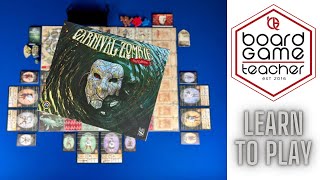







Carnival Zombie Deep Dive
What the Community Thinks About Carnival Zombie
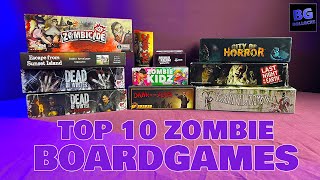
Reviewers agree that Carnival Zombie is a distinctive tower defense experience, but they disagree about how much its rough edges matter. BoardGameBollocks is the most consistently positive voice in the set. Its countdown of the best board games calls the game a fantastic tower defense title, and its later full overview argues that the finales, the dexterity element, and the characters make the effort of learning it worthwhile. The same channel does not hide its frustrations with the rulebook or with the cubes, and it places the game in the tower defense spectrum between Castle Panic and Dawn of the Zeds.
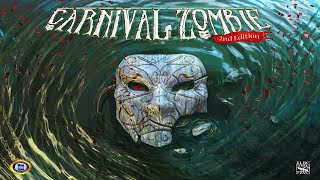
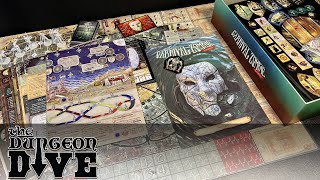
Colin of Meet Me at the Table played through the Milan expansion from the reverse side of the board and called the game a keeper. The reviewer praised how different each finale feels and acknowledged that the dexterity portion will not suit every table, while arguing that the game is better judged as a thematic experience than a balanced one. The Dungeon Dive approached the game as a pre-play unboxing of the second edition. It was impressed by the bold art and the hero standees, and it expected the rules to sit on the complex side for a tower defense game.
Board Games UnLocked sits at the opposite end. The channel placed the second edition among the worst releases of 2022, arguing that the update did little that was new, that the day and night structure drags, and that the setup and scenario rules are convoluted. That dissent is useful context for anyone weighing the updated edition against the original 2013 design.
Core Mechanics That Define Carnival Zombie
Cube Tower
Carnival Zombie represents its undead and its survivors with colored cubes. Infected cubes in green, white, violet, and gray go into a bag and are drawn into the abyss each night, while blue survivor cubes and black paranoia cubes can be drawn alongside them. After a character defeats infected, the player must drop the cubes onto a pile of corpses. Any cube that falls off the pile returns to play, and the pile's shape changes with the location being visited, which Colin of Meet Me at the Table described as the source of the game's unique feel. BoardGameBollocks treats this step as a small dexterity game in its own right, with the risk growing as the pile fills. Colin also noted that the game uses no dice, so its randomness comes from the nightmare deck instead.
Cooperative Game
Every player works against the game itself, and the group wins or loses together. The group must survive the nights and then escape Venice through one of several finales. If the fourth day ends without an escape, the Leviathan rises and the group must prime the holy bomb to destroy it. A character who reaches terror or is incapacitated changes what the group can do, and a night that begins in a sunken location is an automatic loss. BoardGameBollocks argues that the cooperative structure is strained when the game is played with four or five players, because one player may control two or more characters while another controls one. That arrangement gives the player with more characters more decisions and more input, which sits poorly with the shared-table spirit. Colin called controlling six characters the biggest downside of the game and said the load is a lot to handle, especially when playing solo.
The Carnival Zombie Experience
Foreboding
The dread in Carnival Zombie comes from watching the board fill up. Each night, infected appear across every region, bosses arrive with their own abilities, and the barricades that protect the refuge are chewed away by each attack. Colin reacted to the boss setup by saying the board looks menacing, and the Dungeon Dive described heroes who stay in the center while the zombie hordes move toward them. The tension rarely comes from a single decision. It builds from watching the margin for error shrink hour by hour as the clock moves toward dawn.
Tactile/Sensory
Components are where several reviewers find much of the game's appeal. The Dungeon Dive liked that the hero standees carry art matching the game's aesthetic, that the boss miniatures feel thick and chunky, and that the undead are represented by wooden tokens rather than plastic. BoardGameBollocks praised the artwork as sketch-like rather than computer generated. The same channel noted that the cubes are pretty to look at, but questioned whether they fit the subject matter, which is covered in the drawbacks below.
What Makes Carnival Zombie Stand Out
Varied Finales
BoardGameBollocks identifies the finales as the first thing the channel likes about the game. Each escape route, whether over the freedom bridge, by boat, or by airship, plays as its own mini scenario with a unique setup, which the channel says adds both flavor and replayability. Colin's playthrough supports that view. The armored car finale in the Milan expansion has its own rules, with cannon tokens, a gauge marker, and a separate way of handling the pile of corpses, and the reviewer said the finales are all so different from one another.
Characters and Theme
Reviewers consistently praise the cast. BoardGameBollocks describes the six survivors as almost anti-heroes, each with a personal item deck that ties the character to the game's Venetian setting. The Dungeon Dive noted the bold, somewhat abstract art and suggested that fans of Bloodborne will likely connect with the theming of the item cards. Colin's sessions show how these decks change play, from the sniper's long-range shots to the medic's ability to heal stress and remove paranoia.
Potential Drawbacks
The Rulebook and Translation
The rulebook is the sharpest point of criticism. BoardGameBollocks describes the translation from Italian as rough, with some confusing concepts left unexplained and rules that are hard to pick up on a first read. Colin agreed that the layout makes the rules difficult to follow, because key procedures are split across unexpected sections, and recommended watching a full playthrough before attempting the game. The Dungeon Dive, which had only unboxed the game at the time, anticipated a similar learning curve.
Cubes Against the Theme
BoardGameBollocks argues that the cubes detract from the thematic nature of the game, even though the setting is a zombie apocalypse with a sinking city and a monstrous Leviathan. Board Games UnLocked goes further, saying that the theme is lost once the cubes and the day and night cycle take over, and that the experience feels like a more convoluted version of Castle Panic. Players who value the zombie setting may find the abstraction hard to accept, while players who want a mechanical tower defense experience will see the cubes as an efficient choice.
If You Enjoy Carnival Zombie
Players who enjoy Carnival Zombie's cooperative tower defense will find a gentler entry point in Castle Panic, which BoardGameBollocks describes as a gateway game sitting below Carnival Zombie in complexity. Players who want the next step up in depth can look to Dawn of the Zeds, which reviewers place at the more complex end of the same spectrum. Players who enjoy the scenario structure of Carnival Zombie's finales should look at Robinson Crusoe, whose scenario sheets the Dungeon Dive compared directly to the supplemental sheets in Carnival Zombie. Players who enjoy the feeling of escaping a horde under time pressure will recognize that sensation from Left 4 Dead, which BoardGameBollocks uses as its point of comparison for the escape through Venice.
What Reviewers Are Saying
"so first thing that we really like about this game is the finales are really quite varied i mean if they weren't in a game then basically you just be escaping venice"
— BoardGameBollocks
"I'm not looking to play this game to have a balanced experience. I'm looking to play this game to have a thematic time where you're trying to survive against these hordes of zombies"
— Colin, Meet Me at the Table
"i'm glad that we don't have to use the minis for our heroes we can use these nice standees that actually have art that matches the aesthetic of the game so that is always a plus"
— The Dungeon Dive