/pic7229993.jpg)
/pic3464108.jpg)
/pic4285717.jpg)
/pic5932932.png)
/pic7229993.jpg)
/pic7275398.jpg)








































Castles of Mad King Ludwig Deep Dive
What the Community Thinks About Castles of Mad King Ludwig
Reviewers who bring up Castles of Mad King Ludwig tend to circle back to the same word: favorite. On Games Vite's top-100 countdown, the game lands at number six with the host calling it "a massive favorite of my family," a title that has stayed on the table so long that a friend, then a son, then in-laws all ended up buying their own copies. A panelist named Bonds, speaking on Board Game Geek, put it in a similar personal category, keeping the game in a permanent collection alongside Castles of Burgundy and Grand Austria Hotel and describing the appeal in almost nostalgic terms.
Not every take is quite so settled. Chairman of the Board profiled the game in a series about titles they eventually sold off, and while the tone stayed appreciative, the reasoning was practical: a close gaming friend liked it more, and a newer tile-placement game, Glenmore Chronicles, had started to scratch the same itch better. Board Games UnLocked brought a more skeptical lens to a live playthrough, joking that the title itself is misleading and that the box art and tile icons can look abstract and uninviting before anyone actually sits down to play. Board Games for One approached the game from a different angle entirely, unboxing a deluxe Kickstarter pledge without having played the base game first, and came away impressed by the components even while flagging the price and the table space they demand.
Core Mechanics That Define Castles of Mad King Ludwig
Placing Rooms and Chasing Adjacency
At its foundation, Castles of Mad King Ludwig is a room-by-room construction game. Each player starts with a simple foyer and adds new rooms over the course of the game, with every room carrying its own point value plus bonus points tied to what it ends up sitting next to. Games Vite described the scoring directly while narrating a session, noting that "if you place a room, say it's an outdoor room, it'll have a point value for placing the tile itself, but it'll also have a point value for rooms that it connects to, of like a kitchen type room." Board Games UnLocked echoed the same core loop from the player's seat, praising the strategic tile placement and the way adjacency bonuses reward planning several rooms ahead rather than reacting turn to turn.
Setting Prices as the Master Builder
The other defining system is the rotating Master Builder role. One player prices a set of available rooms each round, and the other players decide whether those prices are worth paying, with the Master Builder claiming whatever is left unsold. Board Games UnLocked singled this out as the game's sharpest hook, describing the appeal of "being able to get into the mind of your opponents," pricing a room cheap enough to tempt a rival while still trying to protect the pieces that matter most to your own castle. That same reviewer also noted the reverse side of the tension, where players sometimes overpay out of spite just to deny a room to someone who clearly wants it.
The Castles of Mad King Ludwig Experience
A Family Table Staple
For channels that have logged repeat plays, the game reads less like a puzzle to solve once and more like a standing tradition. Games Vite called it a game the family "could play it and play it and play it and not get tired of it," and pointed to the ease with which expansions slot into that same rhythm. Bonds, on Board Game Geek, framed the experience in almost sentimental terms, comparing the pleasure of decorating rooms and telling a story about the castle to childhood afternoons spent playing The Sims, and specifically called out playing the base 2014 edition solo as a favorite way to unwind.
Big Boxes and Bigger Tables
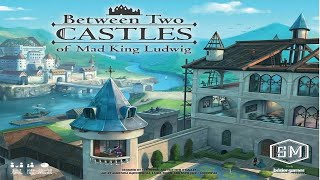
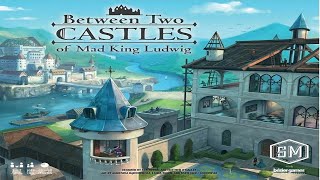
The physical footprint of the game becomes part of the experience in its own right, especially with the deluxe Kickstarter pressings. Board Games for One unboxed the Colossal Edition and admitted mid-stream that they had "not played Castles of Mad King Ludwig," having backed the pledge early in their collecting years, yet still came away charmed by the towers, the recessed connectors, and the sheer scale of the finished castle on the table. Games Vite reported a similar effect on game night, noting that the group ends up playing on the floor because the sprawling layout does not comfortably fit a table.
What Makes Castles of Mad King Ludwig Stand Out
Production That Rewards Backers
Component quality shows up in nearly every review of the deluxe pressings. Board Games for One spent an entire unboxing session admiring the dual-layered boards, the colored plastic towers, and the swan tokens that came with the Colossal Edition, repeatedly stopping to zoom in on details before ever reaching the rulebook. The reviewer acknowledged the readability trade-off that comes with all that scale, saying the bigger rooms make the icons easier to parse even as they make the box heavier and pricier.
Expansions That Fold In Cleanly
Where many games treat expansions as an added layer of rules overhead, Games Vite described the opposite experience with Castles of Mad King Ludwig, saying the expansions "integrate so seamlessly" that the group never had to relearn the base game to use them, just play "the game like usual" with an extra scoring element layered on top. That same reviewer noted picking up every expansion except Renovations, without treating the gap as a loss to the overall experience.
Potential Drawbacks
Price and Space Add Up
The most consistent complaint tracks back to scale. Board Games for One called out the high price point directly while unboxing the Colossal Edition, adding that they did not regret the purchase but recognized it limits who can reasonably buy in. Games Vite's account of needing floor space rather than table space points to the same issue from a different angle, since the room count that makes the castle impressive can also make it unwieldy once everyone's boards are out.
A Slow On-Ramp for New Players
Board Games UnLocked's first impression leaned on the idea that the box and title oversell how wild the game actually is, and that the tile icons can look abstract and even boring before a new player understands what they are looking at. Once a group works through a round or two, that reviewer argued the game opens up and becomes easy to read at the table, but the initial hurdle is real enough to mention on camera.
If You Enjoy Castles of Mad King Ludwig
Chairman of the Board drew the clearest direct line to another title, explaining that after picking up Glenmore Chronicles they ended up preferring its take on tile placement enough to pass their copy of Castles of Mad King Ludwig along to a friend who still plays it regularly. It is worth noting that reviewer's take was less a rejection of the game than a preference shift between two similar systems, and the copy stayed within the same gaming circle rather than getting shelved for good.
What Reviewers Are Saying
"I have the deluxe edition, but I end up playing the original game from 2014 more because it's quick to set up and play this game solo a lot. This game reminds me of The Sims video game. I grew up playing The Sims."
— Bonds, Board Game Geek
"I have not played Castles of Mad King Ludwig, which was silly of me to back the whole thing. But it was early in my board gaming crazes when I first found Kickstarter, and honestly I don't regret it, because this, I am not disappointed with this, is beautiful."
— Board Games for One
"It's something that I got all the expansions except for the renovations. And the expansions integrate so seamlessly."
— Games Vite