/pic4900321.jpg)

















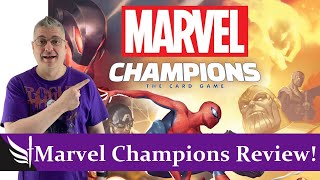
Marvel Champions: The Card Game Deep Dive
What the Community Thinks About Marvel Champions: The Card Game
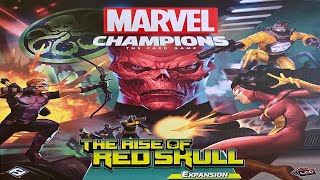
Across the channels that cover it, Marvel Champions: The Card Game reads as a game people keep coming back to. BoardGameCo calls it a phenomenal game and admits to owning nearly everything released for it, while All You Can Board opens a video by telling its audience the game is a ton of fun both to play and to talk about afterward. Board Games UnLocked frames the Rise of the Red Skull box as a fantastic entry point that keeps the line feeling fresh, and slickerdrips treats a live playthrough of the Fear No Evil expansion as a returning ritual rather than a one-off session.
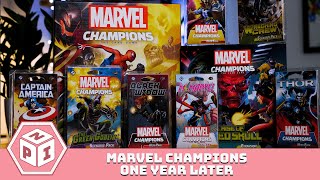
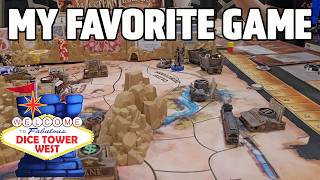
No Pun Included is the clearest holdout. The channel admits the game left them unimpressed at launch and, after a year of expansions, lands on a mixed verdict: strong in the moment, thinner once you try to explain why it works. Where other channels praise the flow of new content, No Pun Included questions whether individual character packs are worth their price next to a campaign box like Rise of the Red Skull. The Dice Tower, fielding audience questions on a livestream, sits closer to the enthusiastic camp, naming Marvel Champions their favorite living card game, though they also describe how the experience changed once they stopped playing it at four players.
Core Mechanics That Define Marvel Champions: The Card Game
Flipping Between Hero and Alter Ego
No Pun Included walks through the game's central mechanism: each hero has a hero form and an alter ego form, and a player can flip between them once a turn. Certain cards can only be played or activated in one mode, so a card tied to a hero's civilian identity can only heal damage and draw a card while that hero is in alter ego. Whether the villain hits a hero's health total or piles more threat onto the active scheme depends on which form that hero is in, which the channel describes as a seesaw between attacking, defending, and thwarting a scheme.
Precon Decks and Modular Villains
No Pun Included also lays out what a new character pack actually contains: not a handful of cards to fold into an existing deck, but an entire pre-constructed deck that is playable as soon as the wrapper comes off. Board Games UnLocked focuses on the other axis of variety, villains and encounter sets. Each box's villain plays differently, and the encounter sets mixed into a scenario change how it unfolds even when the underlying villain stays the same. The channel also points to the game's built-in expert mode, where a scenario starts at a harder tier of a villain's stat cards, as the game's answer to a deck that has become too efficient for the default difficulty.
The Marvel Champions: The Card Game Experience
Play Count Changes the Rhythm
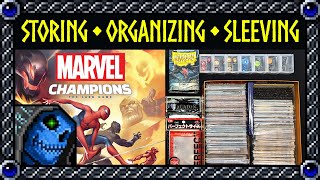
AzureDeath calls Marvel Champions one of their favorite solo games and one of their most played overall, building an entire video around how to store and sleeve a collection that covers nearly every wave up through Age of Apocalypse. The Dice Tower describes the opposite arc: the first time they played was a four-player game at a convention, and it felt long and drawn out. They explain that at four players a table loses the cadence of the turn order, the quick back and forth of one player acting and then the next, unless the decks in play are specifically tuned to interact with each other.
A Breezy, Comic-Book Feel
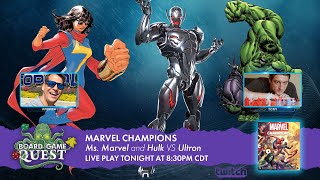
No Pun Included ties the pacing back to theme, arguing that a Marvel comic book should feel like a warm blanket rather than hard work, and that being breezy does not stop the game from being exciting in the moment. slickerdrips' live playthrough of Jessica Jones against Purple Man shows that breeziness in practice, reading the hero's flavor text aloud and working out that Jessica wants to stack evidence counters through side schemes and calling in favors, treating the whole session as an unhurried, conversational watch rather than a tightly scripted teach.
What Makes Marvel Champions: The Card Game Stand Out
A Roster of Heroes That Actually Play Differently
All You Can Board's ranking of the most fun heroes treats hero identity as the game's biggest draw, walking through how cheap resource-generating upgrades make Captain America's deck about unlocking more options each turn, and how Wasp's giant-form flips reward precise sequencing of thwart, attack, and defend powers. slickerdrips' playthrough backs that up from a different hero: Jessica Jones spends much of her turn in alter ego snooping around and discarding minions to build evidence, which plays nothing like a straightforward attacker.
Expansions That Keep the Line Fresh
Board Games UnLocked credits the box-set structure for keeping years-old content approachable, since a campaign box like Rise of the Red Skull ships with standalone villains that were not designed to be locked to that campaign and can be played on their own. BoardGameCo describes buying nearly every release as it comes out, in part because rarer campaign boxes become harder to find once they go out of print.
Potential Drawbacks
A Story That Doesn't Add Up to Much
No Pun Included's biggest complaint is narrative. Compared with Arkham Horror: The Card Game, the channel argues that Marvel Champions doesn't feel so much like it has a story and more like a boss to defeat inside an established framework, with modular encounter sets standing in for a connected arc. The channel goes further, questioning why heroes with wildly mismatched power levels would ever need to team up against a low-tier villain like Rhino, when the source comics use exactly that kind of threat as a narrative stop gap rather than a real challenge.
A Collection That Keeps Growing
BoardGameCo's video is built entirely around this problem: campaign expansions come out faster than they can be played, so a box like Sinister Motives sits in shrink on the shelf while newer releases keep arriving. AzureDeath describes a related cost on the accessory side, noting that sleeving an entire collection would get expensive and bulky enough that only part of it gets sleeved, and that deciding which cards need sleeves and which don't becomes its own low-grade decision fatigue.
If You Enjoy Marvel Champions: The Card Game
No Pun Included is the only channel here to draw a direct comparison, and it comes from a place of mild disappointment rather than pure recommendation. Having been shaped by Arkham Horror: The Card Game, the channel's earlier cooperative living card game from the same publisher, No Pun Included argues that anyone drawn to Marvel Champions for its cooperative structure should know Arkham Horror: The Card Game builds toward a more continuous scenario-to-scenario story than Marvel Champions delivers.
What Reviewers Are Saying
"In its best moments, Marvel Champions doesn't offer a clear answer. Each decision has downsides and you're backed into a corner no matter what you do. There will be consequences, and most of the time you're the weaver of your own fate."
— No Pun Included
"It just gives you more possibilities in your turn, the more you're able to generate resources, or in a whole other mechanic, draw cards for instance. The more capabilities and possibilities you have, and that is always more fun, having more things to do, more strategies to consider."
— All You Can Board
"This is a fantastic entry point if you are years later jumping into Marvel Champions and you have the core box and you see that they have a million different boxes that are like, wait, these are campaign sets. I mean, they're not connected really in any way. You could get any of them that you want, but this is a perfect starting point if you want to go further into this game."
— Board Games UnLocked