/pic7107431.jpg)















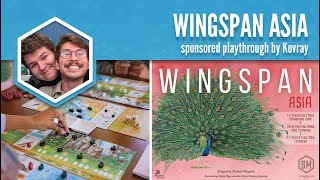










Wingspan Asia Deep Dive
What the Community Thinks About Wingspan Asia
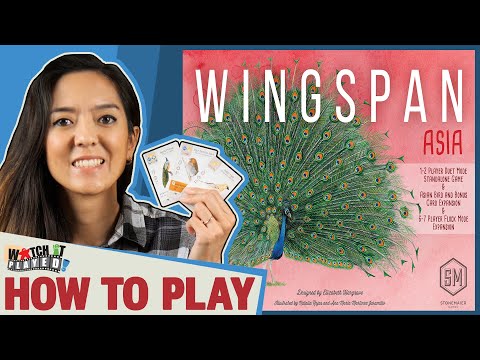
Coverage of Wingspan Asia lands positive across the board, with the strongest praise reserved for the duet mode rather than the six and seven player flock mode. Designed by Elizabeth Hargrave and published by Stonemaier Games, the expansion gets treated by most channels as a genuine standalone product rather than just another stack of bird cards, and several reviewers received their copy directly from the publisher: Allies or Enemies notes their copy was provided by Stonemaier while stating the opinions are their own, and Foster the Meeple discloses the same arrangement. The Mill's coverage is built on a preview copy obtained ahead of release, so its take leans more on rulebook detail than table time.
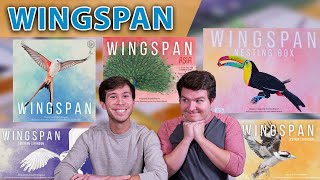
Where the community splits is on how Wingspan Asia ranks against the other two expansions. Allies or Enemies still calls Wingspan Oceania the must-have of the bunch and slots Wingspan Asia in the middle, framing it as a bit more mixed once you look past the duet mode. The hosts of Get Into Games take the opposite position, each independently placing Wingspan Asia first when asked to rank the expansions in buying order. Murf Brothers goes further, arguing that the standalone box makes Wingspan Asia the best starting point for someone who has never played Wingspan at all, rather than a purchase to save for later.
Core Mechanics That Define Wingspan Asia
A shared board that turns two-player Wingspan into a race
The duet mode adds a second board that both players interact with directly. Allies or Enemies explains that players set duet markers on their own bird spaces at setup, and every time a bird is played to a marked space, that marker moves onto the shared duet board in a location tied to the bird's region and the resource or nest type it uses. Get Into Games describes the same system from the player's side, noting the tokens form a yin and yang shape and can only be placed in a spot the played bird actually qualifies for, which added a layer of thinking about how to block the other player from connecting their own tokens. Rolling Dice and Taking Names frames it as an extra drafting decision, since a player might draft a particular bird type specifically to claim a spot on the secondary board or to cut off an opponent's line, on top of the usual choice of which bird to place and where.
Flock mode brings simultaneous play to six or seven
The Mill lays out how flock mode is meant to solve the long-standing complaint that base Wingspan tops out at five players. A dial assigns player colors into two simultaneous groups, each with its own bird feeder and dice, while the group still shares a discard pile and competes together for the end round goals, even though the bird tray and bonus cards get split among smaller sub-groups of three or four. Allies or Enemies confirms that flock mode requires owning the base game to actually play it, and is upfront that they had not had the chance to use the mode themselves at the time of the review, treating it as a nice bonus for family get-togethers rather than something they could speak to in depth.
The Wingspan Asia Experience
A travel-sized version of the game people already love
Reviewers keep returning to how compact the standalone box is compared to a full Wingspan collection. Get Into Games points out the box swaps the bird feeder dice tower for a flat cardboard tray and drops the card tray for a simple board, which makes the whole set slim enough to take on a trip, and Allies or Enemies makes the same trade-off, noting a bird feeder board replaces the iconic tower so the components pack down smaller even though it means losing the tower's physical charm. The Mill frames that portability in personal terms, describing it as the kind of box the reviewer would send off with a family member at college for a two-player game without needing the full nesting box collection.
Familiar Wingspan with a bit more tension in every turn
Underneath the new board, everyone agrees the core of the game still plays like Wingspan. Foster the Meeple describes loving the duet variant specifically because it adds what feels like a whole side quest running alongside the usual bird-placement turns, even in a game they already play constantly at two players. Rolling Dice and Taking Names credits the secondary board with giving every turn one more decision to weigh, but also flags that the added drafting and the volume of cards to process could be more than a more casual player at their table would want to take on, contrasting it with the simpler flow of base Wingspan.
What Makes Wingspan Asia Stand Out
A real entry point, not just an add-on
Multiple channels single out that Wingspan Asia works as someone's very first Wingspan box. Get Into Games highlights that it ships with its own A and B tutorial cards just like the base game, which makes it something they would hand to a couple who has never played before as a gift. Murf Brothers builds on that idea directly, recommending that a newcomer start with Wingspan Asia rather than the base game, since any additional Wingspan content can simply be shuffled in later once someone is hooked.
New cards that plug straight into what people already own
The expansion content is built to travel across the whole Wingspan line. The Mill details the 90 new bird cards and the double-sided player boards, one side matching the standard Wingspan layout and the other matching Oceania, so the same box supports whichever expansion a group already plays with. Murf Brothers reinforces that cross-compatibility, explaining that Wingspan Asia's content can be folded straight into a full Wingspan game or a six or seven player session while still working as its own separate, portable set.
Potential Drawbacks
Flock mode risks sitting unused
More than one channel is candid that the largest player-count content may not get much table time. The Mill admits the flock mode content will almost certainly sit in that reviewer's box unplayed, and pushes back on the idea that including it is padding, since it exists for the players who do regularly host six or seven. Allies or Enemies is similarly direct that they had not tried flock mode themselves by the time of the review, which limits how much either channel can vouch for it in practice.
More decisions can mean more friction for casual players
The extra layer on the duet board is not a pure upside for every group. Rolling Dice and Taking Names points out that the additional drafting consideration and the sheer number of cards moving through the game could overwhelm a player who is not already comfortable with Wingspan, singling out a more casual player at their own table as someone the mode might not suit as well. Allies or Enemies adds that going all-in on the expansion means giving up some of the tactile appeal of the base game, since Wingspan Asia trades the dice tower and multi-colored eggs for cardboard equivalents.
If You Enjoy Wingspan Asia
Every comparison reviewers draw stays inside the Wingspan family rather than reaching for outside games. Allies or Enemies still points to Wingspan Oceania as the must-have expansion to buy first, with Wingspan Asia recommended as the follow-up purchase once that one is in hand. The hosts of Get Into Games rank it the opposite way, putting Wingspan Asia ahead of both Wingspan Oceania and Wingspan Europe when asked to order all three expansions by preference. For anyone who already owns the base Wingspan and just wants more birds and a way to bring more people to the table, Murf Brothers frames Wingspan Asia as an addition that folds in cleanly rather than a separate purchase to weigh on its own.
What Reviewers Are Saying
"The duet mode does a pretty good job of adding just a smidge more depth to the head-to-head game. The changes aren't huge, but you will find yourself making bird choices based on the shared board, especially later in the game when you're trying to connect all of your groups of tokens, and the round scoring system changes to All or Nothing, which makes a big impact."
— Allies or Enemies
"I love Wingspan in general and the duet board that we played with just adds an extra something to a two-player game because generally we play Wingspan at two players. We obviously have played it at many other player counts, but I say that we play most at two players, so this really kind of adds just a little extra something for when you are playing it two player."
— Foster the Meeple
"The fact it's a standalone makes Wingspan Asia for me a really good place to start. If you want to try Wingspan, start with Wingspan Asia because if you want to get more Wingspan stuff later, you can shuffle everything into that or you have kind of a nice affordable entry point that isn't going to take up so much space on your shelf."
— Murf Brothers