










































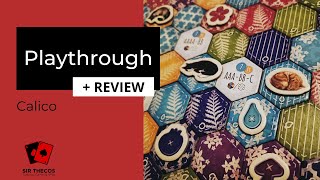

Calico Deep Dive
What the Community Thinks About Calico
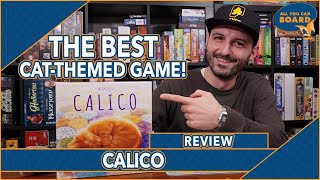
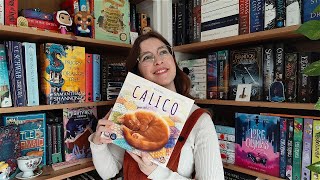
Calico has earned consistent praise from the board game community as a title that delivers elegance through simplicity. Reviewers describe a striking duality: a game with charming, cozy aesthetics that conceals genuine strategic depth and mental challenge. The consensus leans strongly positive, with reviewers across different channels recognizing the game as a success on both thematic and mechanical levels. Where opinions diverge, it's a matter of taste rather than quality. Some prefer the straightforward spatial puzzle; others find the competing objectives and tile scarcity lead to analysis paralysis or frustration. Yet even critics acknowledge the beauty of the design and its appeal to both casual players and those seeking meaty decision-making.
Core Mechanics That Define Calico
Tile Placement and Pattern Building
At its heart, Calico is a tile-placement puzzle. Players take turns selecting one of two tiles in hand, placing it on their personal 25-space board, then drafting a replacement from three available tiles. Each tile carries both a color and a pattern, and reviewers consistently note that where and how you place each piece becomes the crux of the game. The spatial puzzle mirrors the experience of assembling a quilt, with hexagonal tiles creating adjacencies that matter for both scoring and cat objectives. Designer Kevin Russ ensures that every placement reverberates through multiple scoring systems simultaneously, forcing players to weigh immediate gains against long-term board position.
Compound Scoring with Conflicting Objectives
The game presents three separate categories for points: buttons (earned by completing sets of three same-color tiles), cat tokens (awarded when patterns match specific cat requirement cards), and objective tiles (bonus points for arranging both matching colors and matching patterns around central goal tiles). Reviewers highlight how these competing systems create the game's tension. To maximize score, a player must simultaneously chase buttons, attract cats, and complete objectives, but the board constraints and tile availability make accomplishing all three nearly impossible. This scarcity-driven design means every decision trades one path for another, and the randomness of the draw bag ensures that mid-game pivots are not just common but essential.
The Calico Experience
Cozy Aesthetic with Strategic Teeth
The first impression Calico makes is one of warmth. The artwork by Beth Sobel is described by reviewers as gorgeous, the cat tokens (each based on a real cat with a biography in the rulebook) are endearingly cute, and the quilt-building theme evokes comfort. However, beneath this inviting exterior lies a brain-burner. Reviewers consistently express surprise at how taxing the puzzle becomes. Multiple reviewers note that analysis paralysis can strike, and the simple ruleset masks the complex decision tree underneath. One reviewer captures the duality perfectly: a game that appears relaxing but delivers surprising strategic challenge with each turn.
The Bittersweet Tension of Unfulfilled Plans
Calico's greatest strength, reviewers argue, is how it forces players to improvise when the perfect tile never arrives. The two-player variant heightens this feeling; when an opponent snatches the one tile that would complete your strategy, the game becomes visceral in a way the higher-player counts do not. This tension is intentional and praised. The game aggressively presents difficult choices and tile scarcity, transforming what could have been a gentle puzzle into something that demands problem-solving under constraint. Reviewers find satisfaction in salvaging a bad position or in the small victories when a risky plan works out despite the odds.
What Makes Calico Stand Out
Elegant Design That Rewrites Simplicity
Reviewers consistently praise how Calico achieves strategic depth through a minimal ruleset. The turn structure (place a tile, draw a replacement) is one of the simplest in modern board games, yet the implications cascade. Multiple reviewers note that this restraint in rules makes the game accessible to new players while never boring seasoned ones. Flatout Games and designer Kevin Russ demonstrate that complexity is not a prerequisite for meaningful decisions; instead, constraints and scoring systems can deliver the meaty puzzle that rewards careful planning and tactical adjustment.
Universal Accessibility Across Player Counts
Calico works as a solo game with built-in challenges and achievements, shines at two players where hate-drafting adds interpersonal tension, and remains engaging at three or four. Reviewers emphasize that solo play is not an afterthought; the game scales gracefully without requiring variant rules. One reviewer notes the strong two-player dynamic with heightened tension, while another praises it as an excellent entry point for players new to tile-laying games. The fact that a single design accommodates such different contexts speaks to the underlying elegance of the system.
Potential Drawbacks
Frustration When Plans Derail
For some players, the tile scarcity and random draw are sources of frustration rather than tension. Reviewers acknowledge that if you are seeking a game where careful planning guarantees success, Calico will disappoint. The bag can withhold the tile you desperately need, or an opponent can draft it first. One reviewer captures this candidly: the game is frustrating and painful and annoying, but also why it's good. However, not all players embrace this philosophy. Those who dislike analysis paralysis or who prefer games with higher agency over their outcomes may find Calico's forced improvisations limiting.
Difficulty Distinguishing Visual Elements
One reviewer noted an idiosyncratic challenge with pattern recognition. While the tile patterns are visually distinct when examined closely, some players may struggle to differentiate them quickly during play, especially under time pressure or when fatigued. The vibrancy of the colors and patterns are celebrated for aesthetics, but this same richness can make quick identification harder for certain players. Adjusting seat position or adopting a personal naming convention for patterns (as some reviewers do) mitigates this, but it remains a minor accessibility note worth awareness.
If You Enjoy Calico
Players drawn to the elegance of Calico will find kindred spirits in the broader Flatout Games catalog. Cascadia, also by Kevin Russ, shares the same spirit of tile placement and pattern completion but with a more open-ended board and ecosystem theme, making it feel less puzzle-like and more explorative. Verdant, the third in the informal series, layers additional mechanics atop similar foundations. For those specifically seeking the cozy aesthetic paired with deep strategy, Patchwork delivers quilt-building with a more direct two-player dynamic, while Isle of Cats offers feline-themed pattern completion with higher player counts. Reviewers who loved Calico's compound scoring recommend exploring Azul Queen's Garden for a related but more complex take on set collection and tile placement. Those who appreciate the brain-burning challenge despite the serene theme should investigate Noctiluca, which challenges similar problem-solving instincts in a different thematic package.
What Reviewers Are Saying
"Calico is a rare breed of fun. It's light as a feather but with the gravity turned upside down. It's a dichotomy of pleasure and crunch, a promise that never manifests only for you to find out that that promise was there all along. It's just great."
— No Pun Included
"A game that you look at and go wow this seems simple and then halfway through your first game you are screaming inside about where to place this damned useless tile."
— 3 Minute Board Games
"Calico is a really relaxing game but there are definitely some elements that present a nice thinking mental challenge. When you have to try to get certain objectives that makes it really interesting from start to finish."
— Might I Suggest a Game