




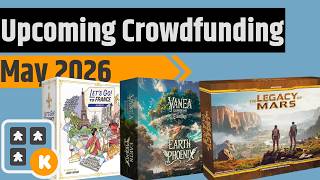








Terraforming Mars: The Legacy of Mars Deep Dive
What the Community Thinks About Terraforming Mars: The Legacy of Mars
The board gaming community holds a paradox about Terraforming Mars: The Legacy of Mars. Despite significant frustration with its misleading title and the pricing model surrounding split campaigns and deluxe components, reviewers are nearly unanimous that the game itself delivers an outstanding experience. BoardGameCo calls it an incredible gameplay experience, while Bower's Game Corner recognizes it as one of the most critically acclaimed board games receiving a fresh campaign iteration. The Dice Tower notes confusion about marketing claims, yet acknowledges it appeals strongly to existing Terraforming Mars fans. The central tension is between justified criticism of publisher decisions and genuine enthusiasm for what the game actually offers. Those who have played through all four missions report it among the best Terraforming Mars experiences they've ever had, a sentiment that speaks to how well the designers executed their vision despite the campaign's structural problems.
Core Mechanics That Define Terraforming Mars: The Legacy of Mars
Population Cubes and Specialized Tiles
The most significant mechanical addition to The Legacy of Mars is the population cube system, a new resource type that distinguishes this from the base game. Players earn population tokens from cards and actions, trading in sets of ten to place population on cities or special tiles. Each placement bumps a player's terraform rating and generates money when other players place tiles nearby, mirroring water's placement bonuses but with an additional economic payoff. This mechanic fundamentally changes how players think about board control and adjacency, forcing careful consideration of where and when to establish population centers. The population system transforms planet exploration from pure terraform racing into a puzzle about economic development and positioning.
Planet-Specific Rulesets and Card Pool Evolution
Each of the four mission boards introduces distinct rulesets and an evolving card pool that makes subsequent games feel fresh rather than repetitive. Mars plays as a variant of the base game with population added. Ganymede features an enormous heat track where players can continuously melt glaciers for points, making heat production incredibly valuable. Medea introduces radiation as a mechanic along with restricted tree placement in specific zones. The fourth planet presents its own unique constraints. Critically, between missions, the designers remove roughly 20-25 percent of the card pool and add an equivalent amount of new cards designed for that specific world. This card pool rotation ensures that familiar strategy shifts dramatically. A strategy that worked brilliantly on Mars may become obsolete on Ganymede, forcing players to adapt and discover new card synergies with each mission.
The Terraforming Mars: The Legacy of Mars Experience
Escalating Complexity That Rewards Investment
Players consistently describe The Legacy of Mars as a deeply engaging experience where each mission builds on the last without feeling bloated. The game introduces new rules incrementally, stacking mechanics rather than replacing them. Beginning players start with familiar Terraforming Mars gameplay plus population cubes. By mission three or four, they're managing multiple new systems simultaneously, yet reviewers note the complexity feels earned and purposeful rather than overwhelming. The sense of escalating challenge mirrors how players feel they're genuinely progressing through a campaign rather than simply playing four separate games. This emotional arc, where players feel increasingly powerful and capable as new tools unlock, creates strong investment in finishing the full campaign.
Constant Tension Between Personal Strategy and Shared Discovery
The campaign structure creates recurring moments where players simultaneously compete and explore together. With each new mission reveal, everyone discovers the board, rules, and potential strategies in real time. This shared discovery creates memorable moments where table talk and group decision-making matter beyond the official rules. Players report genuine anticipation before mission transitions, wondering what new mechanics await and how their favorite corporations will adapt. The title points system ensures competitive pressure never disappears, yet the campaign's structure encourages players to invest in the journey as a shared experience. This combination makes The Legacy of Mars work as both a competitive game and a cooperative narrative journey.
What Makes Terraforming Mars: The Legacy of Mars Stand Out
Meaningfully Different Planetary Experiences Despite Familiar Base Systems
Where many modular games feel like theme pasted over identical mechanics, each mission board in The Legacy of Mars genuinely changes how play unfolds. Ganymede's heat escalation creates entirely different card valuations than Mars. The radiation mechanics on Medea force different spatial planning. These changes stem from deliberate design: new cards enter the pool, existing cards gain or lose relevance, and environmental constraints reshape valid strategies. Players familiar with all of Terraforming Mars' expansions still describe each mission as surprising. The designers succeeded in creating the sensation of visiting new worlds with meaningfully tweaked parameters rather than the sense of simply applying different tiles to the same game.
Strong Emotional Investment Through Corporation Carryover and Development Cards
The game uses persistent elements to create emotional investment across missions. Players select a corporation at the campaign start and can evolve it through permanent development cards that accumulate across missions. This creates a sense of building something lasting within the campaign. Unlike pure tile-laying variants, your corporation genuinely grows more powerful and specialized as missions progress. Combined with the scoring system that rewards consistent strong performance across all four missions, players report genuine investment in the campaign's narrative arc. They want specific corporations to win not just individual missions but the entire campaign, creating story threads that emerge through play rather than designer-written narrative.
Potential Drawbacks
Campaign Structure Undermines the Title's Promise
The single most consistent criticism is that The Legacy of Mars is not actually a legacy game. No stickers mark permanent changes, no cards are destroyed or irrevocably altered, no decisions cascade across a branching narrative tree. Everything is reset between missions, and players can theoretically restart the campaign from any point. While reviewers acknowledge the game works exceptionally well as a campaign, the title actively misleads consumers who expect legacy gameplay. Stronghold Games has a history with legacy games and expansions, making the naming choice particularly confusing. This false expectation management created genuine frustration in the community, with some feeling misled about what they were purchasing. For consumers specifically seeking legacy game experiences with permanent consequences, this game delivers something structurally different.
Campaign Split and Deluxe Component Costs Present Real Purchasing Barriers
The decision to split seven missions across two crowdfunding campaigns compounds pricing concerns. Players must commit now to four missions with the promise of three additional missions later, a cost structure that feels risky. Furthermore, the deluxe edition requires purchasing new 3D tiles despite many fans owning Terraforming Mars' big box edition with its own deluxe tiles. While designers note the population mechanic makes old tiles less compatible, the effect feels like paying for premium components twice. The base pledge price of roughly $134 after shipping for four games works out to about $33-34 per game, reasonable for campaign content but stinging when players must choose between waiting for retail pricing or committing to a two-campaign structure now. For price-conscious consumers or those already invested in Terraforming Mars deluxe components, these structural decisions create real hesitation.
If You Enjoy Terraforming Mars: The Legacy of Mars
Players who deeply love the core Terraforming Mars system will find The Legacy of Mars essential. The game respects what made the original work while evolving its systems meaningfully. If you enjoy the building-engine gameplay of Terraforming Mars, The Legacy of Mars refines that experience with new interconnected mechanics. For those drawn to campaign structures with persistent elements and evolving difficulty, SeaFall offers true legacy gameplay with permanent changes, though with a different system. Players who appreciate board games where each subsequent play reveals new strategic dimensions might explore Gloomhaven, which similarly escalates complexity mission by mission. If the heat and production management appeals to you, Brass: Birmingham delivers similarly tense economic engine-building. For those who value campaign play where everything resets and remains replayable, Pandemic and its legacy variants offer cooperative campaign experiences. The Legacy of Mars stands as essential for Terraforming Mars fans specifically, particularly strong for groups that replay campaign games multiple times rather than seeking one-time narrative experiences.
What Reviewers Are Saying
"I loved this experience. We'll get into it more. I do think that if you are expecting either a legacy game or a really cool interlinked campaign game, I don't think you're getting that out of this. I don't think you are. I think you're getting a set of linked games that does have a point metric tied together."
— BoardGameCo
"So, this is a campaign game. Which is funny because they call it Legacy of Mars, but it's not a legacy game. Like, I have to keep that in my head."
— The Dice Tower
"I think it's an incredible game. Like, I think it's so much fun. It's ridiculous. I have not been this invested in a gameplay experience."
— BoardGameCo