TOP 10 Family Board Games of 2025





Transcript
Number 10 on the top 10 family board games of 2025 is the perfect example of what a family game should be. These are games that adults would play even if they didn't have kids. Games that you can invite your children to play with you, not children's games that you can play with your kids. So number 10, the first game is a game called Popcorn. Now in Popcorn, you are managing a movie theater. But what I love about this game and what makes it accessible for children is that you can easily explain the rules using the game's theme. It's very intuitive. The game is played in a few different phases of each round. The first phase, players take turns investing in their theater by buying seating, buying films, and advertising to audience members. The second phase is played simultaneously where players will be drawing audience members from their own personal bag. And with those audience members, they're going to be placing them in the theaters. And if those audience members are happy, as indicated by matching colors, they're going to be able to perform up to two actions, a seat action and a theater action. They go through evaluating their theaters, everyone doing this simultaneously, performing all of the actions. Then there's the third phase of the game, which I really love. Uh, it's the theatrical run. So, what's going to happen is all of the movies that you've shown are going to lose a little bit of hype because they've already been showing for one weekend. You represent this by sliding the tile up. And what
that does is it hides an action. So, every week there are less and less actions available to you when you are showing audiences. Next, you're going to go up to the market where the films come out, and all of the new films slide down. They become old movies, and then new movies come out. Those new movies have better benefits when you take them, but they're more expensive. And that's just about the entire game. Every new round, you're going to be investing in your theater, placing audience members to perform actions, and then the theatrical run at the end. When I played this game with my kids, they absolutely loved it. Now, you should know that my kids, the ones that play with me, are 11 and nine years old. So, this was within their reach for them. But I will say in order to get them to this place, uh I have spent a lot of time playing many different games with them. This is not their first board game at all. And in fact, I do think it is one of the more complex games on this list, but awesome game to play with adults as well. So, I put it at number 10 on this list, not because I don't think it's a brilliant game. I really think it is, but only because I think parents need to be a little bit more discerning when deciding whether or not it's appropriate for their family. Number nine is called Lay Lines, and this is a two to six player game about making deliveries. So, it is what we call a pick up and deliver style mechanic where you're trying to get resources. You're storing them on your player board until you can deliver them
to locations in order to fulfill contracts. I think what really makes this game stand out, what makes it fun and engaging for everyone are auctions for contracts. So, contracts, you start the game with a few, but during the course of the game, you're going to want to get more. When a player lands on a depot, it is mandatory that they start an auction for the contract. And I love how the auctions work in this game. One player picks what contract is going up for auction. And the next player will start bidding first. Start the bid at one coin and another says two coins. Three coins goes around the table. It gets to the player who started the auction. They can take the contract by matching it. But the person who bid highest gets compensation. If the active player does not match the bid, then they get the compensation. They get a friend that will come to visit their board. And the friend can provide all kinds of different bonuses. Oftentimes, the most common bonus is that they will give more gold for a certain type of resource whenever they deliver contracts with that resource on it. I love how that works because it motivates people to enter into the auction even if they're not interested in the contract. It also motivates people to raise the price up and force the person who wants it to bid high. I love it. It keeps more people engaged in the auctions. It really brings life to the game. Now, we played this game once with six people, uh, two
different families, uh, four kids, two adults, and the youngest kid was 7 years old, and he was in it for the entire game. Totally focused. It worked out really well. I also played this game at Essen with a bunch of adults. I loved playing it with adults. Really appeals to all audiences, but the run time can go quite long, especially when you're playing with kids who have a tendency to lose focus. So, when I played with the four kids, we played the game for two and a half hours. I do think the game can play in way less time, especially if you're only playing with adults. But what was cool is this is the kind of like game night game, right? You got snacks on the table, everyone's just hanging out. So, you know, you get distracted, you maybe you're joking around a little bit, but it's supposed to be fun. It's a game night game.
That's what it's all about. I really enjoyed it just the same. And I usually don't recommend games that run so long for families, but this one worked out well. The game lay lines number eight is another game that plays up to six players and it does something that I love in what I call these family plus games. It's not just that it appeals to adults and it has meaningful gameplay, but it's actually a bit uh enriching. It's it's educational uh because it's based on literature. It's the game Don Kiote the ingenious Hidalgo. So Don Kiote the ingenious Hidalgo is about players competing to be the most influential storyteller. And what's happening actually in the game is there are events from the book Don Kiote and a player chooses an event and places it in front and everyone uh places a vote on whether this event is going to be successful or if it's going to fail. Now the thing that motivates every player is that they all have secret objectives about how they want Doniote to be influenced by these events. You've got four attributes that are affecting him all the time. You've got things like love and um glory and obsession and delusion, right? So, you might have different goals for where you want those attributes to land at the end of the game. So, based on what you see
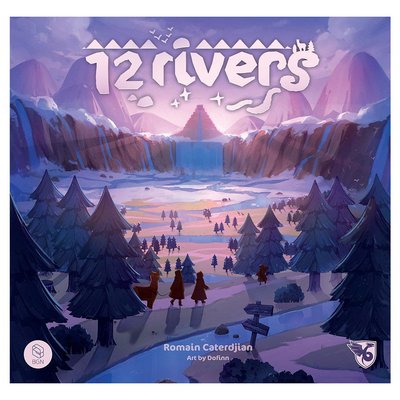
on the event card, you may you might desire the event to go one way or the other. Now, you play cards in order to cast your vote. The cards have check marks and they have X's on them uh to count for or against the outcome. But here's what's cool. This is what makes the game work so so very well. When you play that card, it stays in front of you for the rest of the game. And at the end of the game, regardless of whether your objective, your secret objective works out, you're going to score the icons on all of your cards according to where those attributes land. So, your card that you use for voting is also the card that influences your scoring and it plays really well with six players. Very exciting six player game. Box says eight and up. I would agree with that. I would say that it doesn't play or it's not as exciting with three players. Uh we played it three players and I was like I feel like this is it's for larger families. So, if you've got a bigger family, especially if you've got some younger kids, I really think Donkey Hot the Ingenious Adalgo is one to check out. At number seven, we have a game that technically had its first edition come out in 2022. The second edition came out in 2025, and for that reason, I almost excluded it, but my KIDS SAID, "DAD, IT HAS TO BE ON THE TOP 10 LIST."
They were very excited about this game. The game at number seven is 12 Rivers. Now, 12 Rivers is a game about set collection essentially, but the mechanic is what really makes this game work. Um, you are collecting pearls as they roll down 12 rivers. And the way you do this is by putting gates uh along the river and when the pearls collect behind your gate, you get to choose one pearl, then remove your gate and the rest of the pearls go down the river. Now, the thing is, in order to place gates higher up on this on this incline, uh you'll have more control over which marble you get, but it's going to be more expensive.
And what I love about the game is it's not money that you're paying in order to place your gates up higher on the river. You're using the cards. Now, in the game, there are cards that you can obtain, and these cards have all kinds of different uh effects that can help augment your play and help you have stronger plays, but you have to discard cards in order to place your your gates. So, there's a nice little conflict. It's b it's essentially multi-use cards. Either your cards can be used for the effect printed on the card, or you can spend those cards in order to place a gate higher up on the mountain. Uh, and that's a really meaningful choice. Doesn't play very long. It's only about four rounds long, I think, if I remember correctly. Uh, and plays in about an hour. And I think it is excellent game for many ages.
Eight would probably be fine. Of course, like I said, my daughter's nine, probably even play with a seven-year-old, but you have to work them up to it. Um, so that is 12 Rivers. At number six is a game called Kokashi. And now that we're talking about when games were published, this one was actually first published in Brazil in 2024, but is now available internationally in 2025. Anyway, I'm just being technical here. Uh, Kokashi is a game uh an engine builder and tile placing game where you are moving Kokashi dolls. So, you are a maker of Keshashi dolls. They sit on your shelf here and on your turn, you're going to choose one doll and move it up one level. When you move it up, one of two things is going to happen. If it moves up into an empty space, then it immediately moves back to the bottom of the shelf and you get to take a tile uh to place on your shelf. The other thing that could happen is you could move it up and it lands on a tile. When it lands on a tile, you do what the tile says.
And often times that means triggering another Kaueshi doll to move up. So you can trigger these chain reactions where one doll triggers another one and then it gets triggered again. It goes all the way up. You keep moving up these tracks, moving up these tracks. Eventually, you'll probably get to a point where it gets to an empty space and then like before, you move it back to the bottom and you place a new tile. Now, at the end of the game, you're going to win if you have the most happiness. Happiness is what you call points. You get them by moving to the top of the tracks. At the end of the game, you evaluate all the tracks. And some of the tile effects will trigger the movement of animal keshi, which are basically just more tracks for getting points. So, lots of tracks for getting points. That's really the point driver, but the driver of the fun is triggering these chain reactions.
It's just really quite a delightful game and it's not very complicated. Takes less than three minutes to explain all of the rules. Um, I really enjoy it. Works with adults, works with kids. Um, only four players though. I I almost wish it would play more. The game Kokeshi. Number five is Shallow Sea. Now, Shallow Sea is a tile placing game, which I think is very comparable to Cascadia, but it does some things that make it very interesting. Uh, on your turn, you get to take two things. You're going to be taking fish, and you're going to be taking some type of coral or sea life and placing it on your board. Now, the thing is, the coral get satisfied and will earn you points when you surround it by fish of the color designated on the tile. If you take sea life, sea life will earn you points when you satisfy conditions on the tile. And so on your turn, you get to choose, do you want to be building the coral reef or do you want to be giving yourself more and more conditions. I think what makes this game so brilliant is that it is as restraining as you want it to be.
the more conditions, the more objective tiles you take, the more restraint you're going to feel and the harder the game is going to be. But there's one more thing about it that I really like. It's not just that, but also when you satisfy one of these tiles, you get to have a seashell. And when you spend seashells, you can move your fish around. So, by moving your fish around, you can satisfy one tile, flip it over, take a seashell, move a fish, which satisfies another tile. You flip it over, get the points, take another seashell, you can move another fish, satisfy another tile, and you can get these really satisfying chain reactions where one little fish is just swimming around uh satisfying all these conditions for you. So, it it is it's a really really cool game. Shallow Sea is the name of that game. Number four is Seven Wonders Dice. Now, I'm very excited about this because I've been running this channel for like five years. I've never reviewed Seven Wonders.
The way that I feel about Seven Wonders, the the original game I'm talking about, is I I want to like it more than I do because it's a sevenplayer game. a seven player game is so useful when you have more people to play with or if you've got a big family. But the problem with Seven Wonders, it's it's always undermined it is that it it's not a fun game to teach. Everyone always says, "Oh, that was a fun game, but I really didn't understand what I was doing. I'm going to have to play it again." Okay, if they if they if they even want to play it again. I don't like ditching it for that reason. I want a game that you can play and it's fun the first time you play it. You don't have to lose before you can understand. So, finally, and I and by the way, Seven Wonders Duel, awesome. Seven Wonders Architects, uh, not awesome at all.
Don't like that one. But Seven Wonders Dice, best Seven Wonders game made so far, except maybe duel. But the thing about Seven Wonders Dice is all it's a it's a roll in, right? You're using dice and you're marking things on your board. Your board shows all of the requirements, all of the things that you can unlock from the very beginning. So, turn one, you know what to expect. You don't have to wait for three rounds of cards to come out. You can see, it's very transparent. And even better, it's not a private game. You can see each other's boards. So, if you're playing with kids and your child asks you, "What does this mean?" You can just look at their boards. Oh, that means such and such. Seven wonders. You're holding your deck of cards. You can't show anybody.
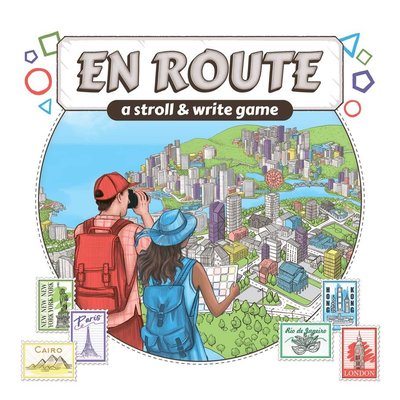
You're like, "Can I show you what my card is because I don't know what it means? I just just here. Can you tell me what this means?" And and then you're not It doesn't feel right. It's supposed to be secretive. But Seven Wonders Dice, you've got open information. Uh it's rolling right though. So, the way the dice works, everything about this game is so cool. The way the dice works is you put the dice in a tray, you put the lid on the tray, you shake the tray around, you expose it, and then the dice lay in the different quadrants, and it shows how much they cost. So, you get to choose one die or the the face of one die to mark on your board, but you're going to have to pay the gold for it. It is so well done. Best Seven Wonders uh rendition to date and plays seven people beautifully. So, I was so excited about this game. And that's not even number one. Let's move on. Number three. All right. Now, number three is another rolling, right? We just talked about a roll and right. I said 7 wonders dice was good. This one is the best one I've ever played. It's called On Route. And in On Route, you are a tour guide and you're taking tourists on a tour of several different cities. The game includes like five cities or something. And I got to say, one of the things I love about the game is the cities are approximately geographically accurate. I used to live in New York. When I saw the map of New York, I was like mind blown because it it looks like New York. It was so cool.
Uh I think they did an excellent job being authentic. But anyway, it's rolling, right? But well, kind of. It's it's it's flipping right. It's it's got a cool twist. Okay. Uh, the active player chooses a card from their hand. Now, the card is going to help specify the coordinates where you get to mark stuff and the types of tourists that go there. The player on their left and their right is going to play another card and it's the active player's job to choose which pair of cards from the three that are available there, including their own there. Uh, which pair to use. That pair of cards is going to specify the coordinates that players can mark on. Now, their maps are slightly different. They don't all have the same coordinate setup, but you can either do like if the coordinate was three, four. You could either go three over and four down, or you could go four over and three down, or however your coordinate plane is marked up. In that space, you mark your pedestrians, and you use two segments of your your route.
You're doing this, adding two segments every turn. And the objective is to try to make a connected route that will pick up several tourists along the way and hit multiple tourist destinations in order to satisfy those tourists. because at the end of the game, you're going to be um primarily scoring the product of the number of tourists on your route multiplied by the number of tourist destinations that those tourists like the matching color basically. Uh that is simp the the simple explanation. There are several other thematic tie-ins and several flavors that are different for each city. There's also extra rules.
Sometimes you can take boats or fairies in order to get to destinations. Um, there's some there's some really cool things that they do to make each city different. I love that the selection of this game is not just like the randomness of rolling dice, but it actually involves some player agency as the lead player and the player on their left and the right are contributing a card. Um, I love I love that it it they did a such a good job of being true to these cities and making a cool game. Again, it has that that element of enrichment of educational value. Number two is Origin Story. Origin Story plays one to five players. It's a tricktaking game. And in Origin Story, you play five rounds where you craft the origin story of a superhero. Now, they did something here that I really like. They avoided like the Marvel IP. They went with completely unique artwork, which I think is awesome. Um, I like unique ideas. So, this was cool to me. I love the artwork.
But you're you're playing five rounds of trick taking, but every round you're taking a new superpower and you're putting it onto your character and you're using energy in order to like charge these abilities so that you can have like a special effect as you do trick taking. So, this is kind of cool. It augments the trick taking a little bit, makes it more interesting. That's not it. That's not all, though. You also get to declare whether or not you're going to be a superhero and try to win tricks or you can be a super villain and try to lose all the tricks. The superpowers, they all work in different ways. Sometimes they help you to lose more tricks or they help you win tricks and you can play them in great little combinations. uh at the end of the game the is a like your ultimate superhero ability is unlocked and uh you can work towards that in order to get victory points. Awesome game. Plays up to five, not too long, easy to explain and a really engaging idea. My kids and my friends who I've played this game with have enjoyed the the superhero crafting ability. Only thing I would change, The only thing I would change is that I wish there were more base boards. It's a five player game that comes with five boards, so you only have five to start with. If there was an expansion for this that had some more like baseboards and more cards, I would absolutely go for it because that variety does add a lot of spice to the game. Origin story. All right, it's time for the number one
family board game of 2025. Now, this is the first year I've featured a game that is this complex. But even though I think this is a more challenging game, it's worth the number one spot because it does everything I love to see. It's an awesome game that adults would love even if they weren't playing with their kids. It has educational value with a theme that is relatable and exciting and it's got meaningful problem solving that is enriching and uh gets kids thinking critically. But the game is called Epona. Epona is a tableau building game about raising horses. To see what it's all about, we're going to look at the end game. This is what a player's board looks like at the end of the game. There are five stables or rows, and each stable has cards of different types: horses, trainers, equipment, etc. To understand what all this means, we can look at the scoring criteria in the top right of each card. This tells us how each card is going to score. For example, this horse is worth one point for the equipment surrounding it. That's two points. This groomer is going to give us one point for every groomer, and we have four. So, in this way, you would add up the value of all your cards to determine your score. Of course, this is a lot to take in, but while you're playing the game, you build your tableau gradually.
You start with only two stables. In turn order, players draft a card. If I take this one, I'd be able to draw cards from these decks and keep two. There's some agency here because the decks are split and show you what types of icons you can expect to find. So, I'll choose cards from the decks that satisfy my stables. Now, I am holding a lot of cards here, but when you look at the stables, it can help you decide which to prioritize. I might decide to take this horse because it scores in this row, and between the two horses, this one will score points for the mountain terrain. I don't have any vets, but I might choose this groomer because eventually I'll get a vet in the bottom row. And when I do, I'll be able to score it for the stable and the groomer. That's it. It's just round after round of drawing cards from different decks and playing them into a a tableau to score points at the end.
Um, I've played this game a couple of times with my kids and they have really found it engaging that it's a puzzle that's kind of like shallow sea in the sense that you can create it with the complexity that you want. Um, in order to simplify things a little bit, we score it differently with my kids. So, sometimes what we'll do is we'll just neglect the stable scoring and only focused on the card scoring or vice versa. So, Epona is my choice for the number one game this year, but don't put too much stock into that. These are all terrific games. I hope that you found this video helpful and that based on my review, you can find one that's right for your family. Thank you so much for watching this video. As we close out, I want to remind you to check out the perfect boardgame.com where you can search games according to their attributes, according to their category, or you can even take the perfect board game quiz in order to find games according to your perfect board game formula. Thanks for watching. See you next time. Bye-bye.