5 Difficulty Levels of Worker Placement
Games in This Video
10 games are featured in this video — they unlock as you watch.


Transcript
Some viewers may find the following video disturbing. Viewer discretion is advised.
Hey everyone, welcome back to Board Games Unlocked. And today I'm going to be doing yet another video where I talk about the difficulty levels of a given genre within the board game industry. And first and foremost, I got to give a huge thank you to all of you who uh watched the first video I did where I talked about the five difficulty levels of deck building. Uh I didn't actually expect that video to do as well as it actually has. And in the grand scheme of things, compared to a lot of other videos I do, that one has really popped off and seems to have helped a lot of people or even if people disagreed where I put some games, it created a great discussion on here's the games I would put in this uh you know, at this level and here's where I'd move yours around.
Uh, that's all perfectly fine because again, a it was my first time trying to give a difficulty scaling to some games. Um, but it also gives others insight if they read through the comments. So again, thank you so much for watching that. And here's to another video. So, as the title suggested, I'm going to be doing this same exact thing for worker placement. And if you're not familiar with worker placements, it is traditionally a Euro style game where you have a set amount of workers that you put at spots on the map to trigger an an action or gather resources or whatever it might be. But the biggest thing is you have a mele little character that you will place on a spot and for the most part that will take up that spot from other players until you do a recall or something. Um that is traditionally a worker placement. Um, the other caveat that I need to mention that I failed to do in I think I failed to do in the deck builder one is um because there were a lot of people s you know saying you know why didn't you mention this game or this should have been mentioned this should be at level one. Um there's a ton of games out there. So I only g I'm only giving two examples per uh difficulty um not 10 per difficulty. Uh, so if I don't
mention a particular game, it's I mean it could be one I don't like it. So that might I'm not really going to be given difficulty levels or recommendations of games I don't like. Um, but uh the other thing is is I just didn't pick it. That's the more likely option uh that I just I went into BGG. I went to advanced search. I went down to mechanic and I picked worker placement. Now, this does not Someone actually asked a good question on the deck builder one if I consider um bag building the same as deck building. And I probably could have put baguilders in that, but I wanted to stick uh strictly to deck building. So maybe I can do this with back building, although there's not a lot. So I probably could have combined them. And the same can be said here with worker placement because there are the meeples one that I talked about but there's also dice worker placement and functionally they do the same thing. Um, and I thought about combining those as well. But again, if you're looking for dice worker placement games, I don't have any on here, uh, because I just again wanted to stick traditionally to worker placement for the most part. Um, but if you didn't watch my deck building one, uh, one, go watch it. It's super cool. Unless you hate deck builders, then go watch it anyway. Uh but uh for this I have five
difficulty levels. We have novice, which is pretty much your gateway. These are the games that I would Hey, you've never played a worker placement game before. Okay, here's um here's these games. Then beginner, which is okay, you're a little familiar with the idea of worker placement now. Maybe you can have a little bit more complexity. Then intermediate. I mean, they're all what you would expect. They're going to go up a level. These could be, you know, I feel like you could probably teach intermediate to some gamers. Maybe not anyone if they haven't played work replacement, but they've played games in general, so it won't be too vast of a a leap. Um, so that's intermediate. Advanced is the next one where it starts getting a little more rules crunchy.
There's a lot more going on, more things to keep track of. And then expert is going to be these are the ones that I would recommend you play after you get a lot of worker placement games under your belt. Um, but as some people said in the deck building uh video, the first deck builders they played were were the ones I put a level five. So your mileage may vary on this. Uh, so this these are all all are games that I think uh should be here. And I also want to say the worker placement one seemed to actually be easier than the deck building one because worker placement typically doesn't have as much variation as deck building could go. So this one seemed to be a lot easier to actually kind of nail down what game should go in which difficulty. But without further ado, let's go ahead and get started with the novice games. And the first novice game that I am actually going to recommend if you've never played a worker placement game before. This is pretty much going to be a shoein.
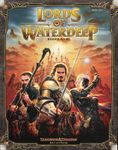
Everyone will tell you this is the gateway game probably for the the hobby for a lot of people, but definitely for worker placement and that is going to be Lords of Water Deep. So, I I thought I maybe it was just a game that I thought someone said they should reprint, but I maybe is getting one. Don't Don't That's a side rant. So, Lords of Water Deep is a D&D themed uh game that has actually sparked a lot of um people who got into the hobby. But like your other um traditional worker placements, this is a it's a way older game. 2012 I want to say. Yeah, 2012. So 13 years old at this point, but you have different types of of workers and they are trying to get different cubes. Now in this version, the cubes are the workers. Um, but there is an expansion you can get that turns them into actually little um what they call them Dn Dles, which is so stupid. Um, but you are going around on this on this map and you're effectively just activating different uh, you know, the different spots. You have a worker. You go to this location, you get two orange cubes. You go here, you get some money. you go here, you get I don't remember. It's
been a long time to that since I played Lords of Water Deep. Um, but these are essentially the action spaces that you are going to be sending workers to get different types of workers or of resources. And these resources allow you to complete quests. That's really the the crux of Lords of Water Deep is there are these various quests that you can send to go pick out which ones you want. Some of them will have events, but typically they're going to have different colored workers um and money that you're going to have to try and complete. There's various buildings that can come out and be built that uh will act will have different worker placement spots as well. So, the game isn't just go to these spots and get get a cube and then fill out a card. Uh there will be buildings that could be put out that will then open up the city, but that's pretty much the game. And one mistake I I probably have made in my deck building one is I took into consideration expansions for some games and potentially not for others.
So, but even with Lords of Water Deep, there's two expansions for it. The Scoundrels of Sculpar. I thought there was Is that the only one? I thought there were two. Um, but this does of course add some complexity to it. So again, you could just play Lords of Water Deep. Um, again, I have it as a five, but you know, that's honestly probably this that's based off of outdated information. I played that game, oh man, many many many years ago. But uh you could play Lords of Water Deep, especially at at a novice difficulty, someone who has never played a worker placement game before. This game would probably give you the idea of if you like this system or not. And then if you do like it, then you can actually stick with the same game and go to its expansion because its expansion adds a sideboard. It again upgrades the cube so it doesn't look so jank. Um, and it just gives you kind of more to go out and do.
Uh, this game does have a little bit of cutthroat elements to it. Uh, so there is player interaction, but again, for the most part, your player interaction is going to be coming from sending workers to the various spots that someone else might have been wanting to go to. Not a lot of worker placement games have, you know, direct player confrontation. It is a lot of I took something that you might have wanted first or I went to a spot that you needed to go to and now you kind of have to navigate and uh wait until that spot becomes available. It's not until years later that the concept of worker bumping came out where it's hey I can actually go to the same spot you can you just get your worker back. That's not here and I don't actually think it's in any of the games I chose either. That's not a huge system. You don't really see that a whole lot. But yeah, Lords of Water Deep, I think, is one of the perfect games to jump into. Uh I think a lot of people who, you know, if again, if you haven't been in the hobby or in this genre, even though it's a 13-year-old game, it definitely still does what it intends to do when you are first playing it. I think a lot of people who talk about it now either, hey, this was my gateway game, but you're not going to see this one jumping to the top of a lot of people's favorite games list because again, it's 13 years old and that's just the nature of the beast. But it still
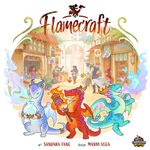
holds up. It still stands the test of time and I think having that D&D theme does help it a little bit. Even though it's not a thematic game by any means, it's still you you could still have that kind of atmosphere and vibe about it. So, that is the first game that I'm talking about in the novice difficulty. The second one that I chose is a more recent game, and funny enough, I was kind of thinking, is this a work replacement game? But it it is in in a different sense and that is Flamecraft. So Flamecraft definitely came out uh 10 years later. I absolutely love this game and a lot of people are going to attribute the success of this game to its art and that's perfectly perfectly perfectly perfectly reasonable. I was combining perfect and reasonable. Um because the art is absolutely gorgeous. This will uh lend itself for a lot of uh families, especially French families, apparently according to this back uh background that I picked. Um let me see if I can find a solid picture um of the board.
There we go. Uh, so this is this is the board and you have these various shops. This is actually the mat. I kind of really want a picture of of the actual map itself, but as you can see, the art is very clearly the highlight of this game. Um, but you will have various types of uh workers that you are going to be putting down at these local shops. Here we go. There we go. So, you have your worker um that you will go to these these local shops and you will be playing hands of cards of dragons and these dragons can give you potential abilities um based off how you know where you place them.
And all don't worry like all the colors of the dragons there's a deck of them that will be out for you to you know draw into your hand. All the colors do the exact same ability, so you don't have to be overwhelmed by every single card being unique. The green ones all do a green action. They do have different names and different art designs, so they're not static every time you see them, but the meat ones all have the same meat ability, which is actually kind of nice. The only variation you get with the dragons is there are these sun and these moon dragons that give you a special ability or special way to score. And you don't even have to include those in your first game. It's actually recommended that you don't. But if you've play Flamecraft enough and you're starting to get comfortable with it, then you can actually start throwing those in to give you a little bit of flare, something diversifying you from everyone else. But you have your little worker uh that is going to be going to a spot and triggering either the site's abilities or you're going to be putting um putting these dragon cards down to trigger to get the benefits for what they are. And then you get to trigger all the dragons that are there. The game is centered around artisan dragons. So they have uh they paint or they cook or they sculpt, whatever it might be, but that is the overall theme of this game.
And again, you're trying to get the most victory points. You have this heart. Well, I think it's called love points, so it's even cuter than just victory points, but you are gaining resources similar to Lords of Water Deep to try and complete these uh contracts in the middle. So, perfect. So, this one, for example, to do the dwaren stout, you need three anvils, two bread, and a meat. And when you do that, you can spend it and then you'll get six love points. Uh the spell spell cruette gives you you need three potions and two meat. You get four love points and get a dragon. Uh the ring van etchide.
I can't even tell. Ectide. Uh you know, you need three potions, two two meat, and a bread. You you get the idea. So you're gaining resources by manipulating where dragons are are going, triggering their effects. to gain I want to say it's love points and that's the game. There's again there's nothing really uh more complex than that. Uh all the everything on your player player board or player help card tells you um what you can do on your turn. So, I think this game, one, its theme and its art very much lends itself to being uh a more, you know, approachable game and it really isn't all that complex.
Uh, this this one just I don't know, it's it's a very cozy game to hop into. So, that is my second choice for the novice difficulty. the beginner category. This one was interesting and I I think I I put a game in here that I think does work well with its base game. If I did the same idea that I did with Dominion in the deck building one, this game actually should be higher. But I specifically wanted to temper that down, try and be a little more um correct in my assessment because if I'm looking back on the difficulty of Dominion, it probably should have been a two base game and then maybe a three uh with all the expansions, but I was trying to play that middle ground. Same thing can't be said about this game, but I feel this is a good beginner one after you've gotten a few worker placement games in this might be a good one to jump to. We're gonna stick with the cute theme because this is going to be Everddell.
Do not get the complete collection unless you love this game. And even if you love it, don't cuz I have You can't even see. Um, let's see. I don't want to bump my Yep. It is. The complete collection is right up there and it has sat up there since I put the game together. it for it's such an it's such a good storage solution except it's so big it never gets played. So, you can actually pick I'm I chose base Everddell, but in case you don't like the forest theme, you can go Everdell. No. Uh, was it Farshore that? Yeah, Everdell Farshore. Same base game concept. Uh, in fact, this might have a few more quality quality of life tweaks.
So, you can go with this one. There's also um Silver Frost. This is the newest one. I think uh so they've done pretty much what I think happened is they did the Everdell complete collection and then realized there was their money maker. So then they started doing a bunch of different stand because they they weren't going to keep making expansions because then it wouldn't fit in the collection thing. So, they had to make a bunch of different um a bunch of different standalone games. But I am specifically talking about Everddale. Now, the unique thing about Everddell is you have a certain number of workers at the start. You have your traditional workers, and again, there's some ver variety here with these goal cards you can go to. Um, and these there are more of these side worker placement spots that you can shuffle and that will come out. But like the other two worker placement games I mentioned, you are traditionally going to these spots to gather wood or gems or stones or berries and spending those to build locations.
Your overall goal is to build a tableau of cards. Uh 15 cards and whoever builds their final one will end the game. Uh or uh is it actually in the game? Can't remember if it ends the game. Don't quote me on that one. Or the seasons run out. Now, the interesting twist of what Everddel does is you will start with a certain number of workers. And when you kind of run out of workers to spend, you have to pass. And when you pass, you will gain a fourth worker. So your workers are spent or are placed for spring, summer, and autumn. There are two for autumn. So when you go into summer, you will have uh a fourth worker. When you go into autumn, you will have a fifth worker. when you go into winter, which is going to be the last full round of the game, you will have uh I think seven workers total. So, the trick to Everddale, and this is why I think it's a little bit more beginner because again, placing the worker and all that is very simple. The trick to Everddale is you have to try and be as efficient as possible because you can, it's not, oh, we all wait till everyone's done, then we all move. You can technically be in autumn while someone is in spring.
You know, that's not really going to happen, but you can actually be ahead of someone with more workers than they are. It's more of just a a passing system. Thematically makes no sense. You could, I guess, thematically say, I'm prepping for summer, so I'm I'm planning way ahead. You're not literally in the season of summer, but that doesn't actually matter. Um, so the trick to Everddale is trying to be as efficient as possible because there's actions you can take that on these cards that give you um abilities that could kind of you're trying to extend out your turn as quickly or as efficiently as possible so that you're not passing so much ahead of time. Um, the cards do have various effects on them, but again, they're triggered at very simple times. The green cards are triggered in the spring and the autumn.
You can even see the icons here. So, hey, I can m I could, you know, we're in spring. So, boom, I can my farm and my chip sweep and my other farm. All those do they trigger right now, but they won't trigger again until the next icon. The brown ones are as soon as you play them. The red ones are now unique spots for you. So, there might be a little uh, you know, getting used to what the cards do, but they're very straightforward. And how you place them is also very straightforward. There's very little placement uh, rules. It's just, hey, it's in my tableau now. So, that's pretty much the trick to Everddell. And like Lords of Water Deep, if you get familiar with Everddale, oh boy, can you get a bunch of expansions like I mentioned with that massive Everdell box that for me has coined the term the Everdell effect when a game gets too big where it's no longer fun to play.
Um, or sorry, not fun to play, it gets too big that it never hits the table. That is kind of this. But if you love the game of Everdell, which I still think is a phenomenal game, you can get a bunch of expansion, the Pearl Brook, and they all add to um they all add to the board as well, which I thought was a a really cool uh thing. Is this the picture? Yep. So, here's what the board looks like with all the expansions. The Pearl Brook, uh I think this was not Spy Crest, but I already forgot. And then the train one just really really bloats it out. Uh very cool, very fun to do, but yeah, very difficult to get get going. But those expansions, if I was including the expansions, I could see Everdell, if you're throwing every expansion, I could honestly see I could see an argument for advanced, even though I'd still probably put intermediate because the games I'm putting in advanced are rules-wise more complex. But that is the first game that I'm putting into beginner.
The second game that I am putting into beginner, the game I almost played, but I haven't had a chance to uh or didn't get a chance to, and that is Honey Buzz. I don't know what it is with uh sticking to a cute nature theme because Flamecraft I guess is not technically nature but uh then Everdell is nature and then Honeybuzz is also nature and this one is a really fun cool concept. Um so let's see if I can find a picture of the board. So in this game you are controlling bees. you have various bees and you're trying to collect different types of nectar that you will spend on completing orders for creatures in the forest. Um with thought I found one. Okay. Well, this is the hive board. So, what you are going to be doing is these uh worker placement spots are going to have uh tiles that you're wanting to place in your honeycomb.
Oh, this might be a somewhat better pick. It doesn't zoom. Um, but yeah, so you have your different color workers. And the cool thing about this one is unlike Everdell, Flamecraft, and Lords of Water Deep where you place uh your workers in a spot to get something. You still do that here, but you have a lot more workers because on the honeybee uh the honey buzz board where there are these different tiles, you need to send more and more workers uh to be able to take a tile uh than the person who has placed uh previously. So, for example, if I go there and I send two workers, for you to go to that same spot would send three. You'd have to send three workers. If I want to go back, I'd have to send four workers. So, you're trying to decide how much is an action worth uh for you to send a significant portion of your worker pool.
If you really need a tile that's going to complete a section in your honeycomb, then you might overpay and think it's worth it. Um, but the other cool thing about about this game is that when you are getting these tiles, these honeycomb tiles, perfect. You are positioning them to actually sprawl out and build kind of a honeycomb to place these actions in ideal spots to be able to um trigger them. So, you're trying to fill out these honeycomb locations. if you completely enclose it. Uh depending on the size of what you're needing, so to get all the red ringed ones, that will allow you to have a higher value nectar, it's going to require you to completely fill it out in in red. Or in this case, you need to get the two whites and the two and the two reds, you're going to need uh four.
This one, you only need three. Sometimes you only need two or or some you need you need four. So, you have to be uh careful on how you're positioning these and also in a spot that you can place your fan token to trigger the actions again. But the actions are all very simple really with what you're doing. A lot of times it's going to be Oh, good. This is actually a good picture is going to be selling them to either gain uh gain money uh based off the value on what it is. So the wildflower is usually not that expensive and it gets depreciates a lot quicker. The what is it? Acacia. Aaka Aakia. I've never heard this word before in my life. Uh is worth a lot, but it also requires a lot more positioning for you to get it out. And then there are these orders based off the actions that you can actually hey to get six points, it's going to need a wild flower and a rosemary.
So things like that. Like all the other worker placement games I've mentioned before, you are spending them I mean in this you're not actually sending them somewhere to get the resources. You're sending them uh somewhere to place the tiles so that you can then get the nectar. Um so a little bit more involved, but again the worker placement spot is really not that hard. You have another bee that you move around on these tiles to try and again place them in the middle of a spot for have the nectar go on it. And that's it. Oh, here we go. They're right here. So, a wild flower is the easiest. You need two. Then the cherry blossom, then the rosemary, and then the uh aakia. Aakia aacia. Aia asia.
It didn't play. It hates me. Oh, wait. I I did slow. Wow. I don't think I said that at all. They're wrong. Um, so yeah, that's that's Honey Buzz. And kind of like all the other ones, this does have a standalone expansion called Well, I guess this one might Do they call it standalone? No, they don't. Okay. I thought they called it a standalone expansion. Luckily, they don't from what I'm seeing. Um, if you really like Honeybuzz and you want to go deeper into it, this does have an expansion uh that is modular that, you know, gives you a lot more to exper uh experiment with in in your game. So, if you come into Honeybuzz and hell, you think, "Wow, he put this in beginner. This is novice.
This is actually for babies." Uh well then get the fall flavors expansion and it's a fantastic expansion. I think there I loved I think if I remember right I liked every single module that they had except for maybe one that I thought was just okay. But and from what I had heard back in the day cuz right now you actually no you can't. Honey Buzz is right there. It's two separate boxes of the exact same size. And unfortunately, Fall Flavors, you need from the first game. So, in this case, I kind of wish they made it a standalone expansion, but there's no storage solution. But they did tell me when I reviewed their this expansion, they said they plan to do one more expansion and then do a storage solution. That's why they didn't do it for this. But, it's Elf Creek Games. I don't even know if they're still a company anymore, so I don't know where they're at with that. Obviously, that expansion hasn't even been talked about and it's been 2 years, so who knows? But yeah, so that is the second game I have chosen for beginner.
All right, that's not even the Okay, intermediate. These are games that I think are obviously more involved and more complex than um than the games I've already talked about, but are going to be in that form factor of, you know, there's just there's just more you have to pay attention to than oh, I'm just need to go here and grab a reason. [clears throat] And that the first one is going to be a game that I think a lot of people are going to have in their top 10 worker placement games. Uh, and that's Vidy Culture. Uh, also an older game. I am gonna go with the essential edition.
Uh, where even the Essential Edition is 15 or 10 years old, 11 years old now. Uh, but there is also the Tuskanyany essential edition. This is actually an expansion. I think the version that you can get now includes all of them. um because the Tuskanyany expansion really was kind of a mustave for the game. But I I think Vidy Culture has a decent amount to to think about. And the main reason is the preparation you have to do because the game is broken up into well depends on which version you have. It's broken up into three seasons or actually all four seasons. So, the reason why I put it here is because the version I've played, the version that I um that I have is the four season one.
And the reason why it's in the intermediate is because it's not the most complex uh work replacement game in the world, but a horrible Here we go. Sure. This this will work, you know, for the most part. So, again, this is actually, in my knowledge, the first game that introduced not worker bumping, but the fact that you uh you could go to the same worker placement spot as someone else. All these other games I've mentioned, maybe not Flamecraft, but Everdell has limited workplacement spots. Honey Buzz makes it more expensive to go to a worker placement spot or the water deep, you can only go to the same spot uh or to a different spot. Vitty culture gives you traditional workers. So if you want to go to this board, this spot that is not in English. So if you want to go to this spot down here, you can. And there's it depends on number of players on how many spots are available, but you're typically rewarded with a uh if you go there first. So to go to this spot, if I go there first, I'm going to get a victory point and the and the game is first to 25 will win.
Um but now you were given a what what was called a grande worker and it was just a bigger worker. its only function was you could send your grande worker to a spot that was already occupied and receive the same benefits. So, it was a really cool aspect that this game introduced that allowed you to not have to stress so much about, okay, I really need to go to this spot. I hope someone doesn't take it from me. Now, you didn't have to worry about that. If you wanted the bonus, then yeah, but they weren't ever so game-breaking that it mattered all that much. But if someone went to a spot first or hell, if you're third in turn order and you're playing a three-player game and two people go to the spot and you are, you know, effectively out of going, oh, you have your grande worker, never mind. You can go there and still do your action.
So, that's one thing. The other thing about this game is the fact that you had Oh, thank god. I can I can now read. um you did not have workers for each season. This is why it's an an intermediate because if you had three workers and you send all of them into spring, you draw a card, you give a tour, you build one structure. Okay, you summer's going to come by, you don't do anything, fall, you don't do anything. Winter, you don't do anything. So, this game required you to actually look at all the seasons on what you wanted to do. See what actions were available. Oh, I want to sell a wine.
Okay. Well, I need to save one worker for winter. I don't have any orders uh to fulfill. Um, well, I need to save a worker for fall so that I can go to this action and draw an order card. I want to fulfill an order uh card. You now need to save a worker for winter. And also, you needed to manage money, not resources per se. Resources in this game are pretty much your money. Um, you needed to save money to train workers. So, you also like unlike some of the other games that I've mentioned, uh, you don't get all your workers at the get-go. In Everddale, you also didn't, but you were given to them as the rounds went on. Here, you have to actively spend money to get more workers, which is a staple for quite a few games where you have to do something to get extra workers, and it's pretty much something you always want to do.
There's been a few worker placement games that have come out lately where you can actually do perfectly fine without getting workers. it just might be a little bit more work, which I've always appreciated because I've never much cared for the idea of, hey, here's the meta. You you need to get all your workers to win. Um, but so that's something to also keep in mind is the different seasons. And this is also with the expansion or the version you get now. I honestly don't know anymore. They've done so many different versions of video culture. But I want to say in the other versions, autumn wasn't a thing. Autumn wasn't a worker placement spot. I think it was literally just spring summer and win. Uh but like I said, I've only played this version. Um and if I have played another version, it's been so long I don't remember. So you guys can let me know in the comments what what the difference was. But I'm pretty sure Tuscanyany and the versions you can get now have the have a double-sided board. um where it's one side has the autumn spots and the other side doesn't.
But this was also a race. And then you the resources that you manage was different types of grapes and different fields that you had to manage. And you whenever you were putting on these little beads onto the wine, it would actually age every round. And then whenever you wanted to crush them, you could make red wine, you could make white wine, you can make rosé, and you can make sparkling. And this tells you what you need to make those levels because you're going to need wine in your seller to sell them to make orders. So, so yeah, this this game again, I could still explain a little bit more, but one thing I've noticed as I've explained games is I almost feel like I talk myself into, well, maybe this game is actually more complicated than I think.
But I promise you, Vidy Culture is still your traditional worker placement game. I think the games I put above these, the four games for sure are way more complicated than VidCulture. And that's why it's an intermediate. I think that there's still things to think about. There's a little bit more going on than just place somewhere, get something, and that's kind of it. But, uh, but yeah, Vidy Culture has a good number of expansions, tons of variety. These cards up here are well, these are grapes, these are orders, and the yellow and blue are um visitors, I think. And they're effectively event cards. their things. Hey, you can sell a you can make a white wine for five, you know, or for two higher strength. Oh, cool. I can make a level seven white wine without needing the storage, whatever it might be. They give you kind of game-breaking effects.
So, that's just something to keep in mind. But that's the with the Tusk in the edition, which is again the only version that I've really played extensively. And if you really like Vidy Culture, but you kind of don't like the fact that it's um uh it's competitive, uh you can actually play play it cooperatively. Uh what was it? Vidic Culture World. Yep. You can uh play the cooperative expansion, which surprisingly works. Uh but that's not I have not taken that into consideration on where this goes in this difficulty, but it's there. All right, the second game that I chose for intermediate was originally going to be a game called MV. And I am going to show this. This is not what I actually chose.
But when I was looking at um when I was looking at games that were in the worker placement category, this was in here. But then I realized you don't really place workers. You kind of move around and trigger rows. So, it's not really a work replacement in my opinion. So, the other game that I chose is an also an old game and that is Zulkan. Zulkan the Mayan calendar. This is an old game. I guess this was originally by CG I think. Um Oh, no. My version is CG. I always think that this is a board and dice game, but it is not. Uh, if you've ever heard of this, you're going to be told that this is the game with the wheels, and it is the game with the wheels, and it's a really cool game with wheels. Uh, so this one has a really, really cool gimmick. This was one of the first games that I not that I had played, but the first uh games that came out that had the idea of these tracks that you're going up to get resources and benefits for and it's kind of been a staple in all these other tea games. This is uh this has been adopted into what's known as the T series, which are games that are made by board and dice uh that have a T in their name for the most part. So you got Teayot Walkon, Tismagist, uh, Tennanu, Tatum, I don't think
Terracotta Army actually counts, but it's a T game. Uh, Taba Nusi, but Zulkan originally came out in 2012. And the reason why this one isn't in intermediate, which for a lot of people, they might think, well, you really are just gathering resources like all these other games you mentioned. And that is true except Oh yeah, that painted. That is insane. Yeah, people have painted the gears, which is so freaking cool. Um, wow. 3D printed. Oh, center. Whoa. You can 3D print these, huh? Oh, maybe maybe it's 3D printed and painted. I I'm sorry. I got I knew people had painted these, but I didn't think they got that detailed.
Um, all right. So, here we go. Cool, cool, cool. So, the reason why this one is in intermediate is because of the fact that when you place your workers, you are placing them on This isn't going to work. This will you are placing them on a section of the gear and then to gain the benefit of the action that you are wanting from that given section, you have to wait. And over the course of the game, this middle dial will spin, which will
uh you got uh the gear would spin, thus advancing your worker, but you only had so many workers, so you couldn't just, you know, keep popping them on and then just kind But wait, you had to do something with them. Otherwise, you were penalized. So, you had to be efficient on where you were placing your workers, how long you wanted them to sit on a dial, and when you wanted to retrieve them to get the benefit. So, for example, the simplest one here is if you need corn uh to get, well, you could just pop it onto the spot and then, you know, have it rotate once and then retrieve it and get your corn. or you could let it sit out and then you can get a bunch of corn and a bunch of wood. Uh so you were rewarded for waiting, but you couldn't always wait.
And uh those resources were spent on various technologies on going up on uh various tracks, completing orders again, uh gaining the benefits for for those and hell even trying to gather um these gems, uh these skull gems, so that as they were coming out, you got a ton of victory points uh for being able to claim one of these spots. And each of these dial areas gave you different effects. Hey, this one gives you a different an extra worker. This one lets you uh sell corn to go up on one of these these tracks over here. And these also gave you rewards when you hit those, but they were also worth a ton of victory points at the end of the game.
So, for the sheer ma fact that you couldn't just place a worker on a spot and get the rewards for it immediately like every other worker placement game I put on here. Um, you had to actually stall out and wait on various uh spots. So, I think that that is still an innovative system for a game that is as old as uh Zulkan is. it it still is something that I have yet to uh be seen replicated anywhere. And if it has been, it didn't really do as well as this game. So, while gathering the resources or the resources you are gathering and spending are as simple as all these other ones, this one does do does do it radically different. And I think it's still pretty awesome. And like all the other games, this game unfortunately has an expansion that I would say is a must expansion because it's a modular expansion, which means that it has tons of different things you could just add. You don't have to add in everything, but the biggest one it adds are individual player powers. Uh, and that is a really, really cool one to throw in. But this kind of added a lot of breath of fresh air to throw into a game that is still very solid as
a base game. This just has a very good expansion. Now, for anyone who's jumping into this, I would still say Zulkan as a base game belongs in the intermediate, and even the expansion still kind of keeps it in the intermediate, but I wouldn't buy them all at the same time and play with both at the same time. Anyway, that is the intermediate section. Then we are going to advanced. And the first game that I'm going to be throwing into the advanced section is a game I have actually recorded rel or done a re-review relatively recently. And while I haven't played the two newest games that have came out in this series, I think that this is probably one of the more complex in the series and it is another tea game and that is to want Suyu.
Did I spell that right? To suit. There we go. The Inca Empire. So, this one without a doubt is definitely an advanced game. I would not the the T-series probably as a whole I think some are a little easier to grasp than others, but I would say the T-series or board and dice games as a whole would probably all belong in an advanced. They're not so heavy that they're overwhelming. Um, but they are probably the next level. These types of games are where I personally have kind of um are the games I still find enjoyment out of versus some other games I'll talk about later, but they uh these are the games I still have in my collection. But to Want Suyu actually, I wonder if there's a picture.
I doubt it. Comes with one of the best player aid that I have seen. And it's a game. It's a game that almost feels as if you need it because in this game you have Oh, all right. I'll go back to the board. But the player raid is fantastic. In this game, you have three tiers of of uh I guess levels. Three levels. And you have, you know, on this pentagram you have various sides. You have your main worker that is your shaman. I think your chieftain that is going to be on one of these sides. And where he is at will indicate how much of resources you need to spend to place these workers on these nodes.
Because if you spend if you if you're placing a worker on a side that your chieftain is at, it is significantly cheaper. But if you go to the sides that are adjacent to him, it increases. If you go to the sides that are opposite from him, it increases even more. If you go down a level that doesn't have a stair, it increases if you but it's cheaper if it's where you're facing. So, if you are trying to go to a spot way down here that's on the complete opposite side of your chieftain and three levels down, you are going to be spending an astronomical amount of resources to do so. On top of that, you need to have you have the uh what these uh god cards that have these icons. So, to even place a worker, you have to have a god card in your hand that matches that symbol.
And then if you didn't already have to manage all of that, the different colors of the workers all do something different. Um, so for example, if you wanted to go onto this spot here, this is a blue icon. when you place, you get rewarded on actions that are adjacent to that spot uh due to a variety of factors. But for example, this is a blue space. So if you place the blue worker there, then you get plus one action. So you can either, you know, get potatoes, build a building. Um this icon was off the top of my head, I think. Oh, I think it was trigger a technology. um or trigger a building. Um yeah, it wasn't build a Yeah, build a building because these are build statues uh down here for this action. So you're managing the only two resources. Well, actually you're managing corn, potatoes, and stone. So in terms of resources, what you're managing is just those three. Um but you need to make sure you have those for offerings and stuff. But yeah, so the red mele does something different. The yellow mele does something different. The white mele does something different. The only two that are relatively similar are the green and the blue ones and um they just give you plus one action.
So if you place the blue one here, you're going to get one action just for that, but you get a second one. So you could either build a building and gain a potato, you can get a potato and do this action, whatever it might be. So to even place a worker into want and sue you, you have to think about where your chieftain's at, how much you're going to need to spend. Do you get a discount because you're using steps? Do you even have a god card that lets you place where you want to go? Uh, and how many actions are you going to get when you do place it there? So unlike literally every other game that I've talked about where you just had to place it there and you got to do whatever the action says, uh that is not the case here.
Then you're on you're keeping track of armies on spending, you know, drawing army cards that you need for a ver for a strength on these war areas that you might get for benefits of hey, you get four gold if you do this one. This one you get three stone and a gold. You're also keeping track of these weavingings that you're trying to do a set collection element because you need to have different patterns on them and you only get benefits if the the icons are touching and they're a different pattern. You're keeping track of the god sizes. There is large statues and small statues. It's a lot. On top of the fact that workers are available to you. Whoa, there are none here.
But you could when you are getting an extra worker, you um can only pull from one side or the other. So if you really need a red worker, but there's two greens and a yellow and a white. So two greens, red, white, yellow, you can't get the red one. You need So you have to spend to be able to recruit these. And also you have to pay offerings during festivals whenever this uh the mele pool runs out. It's a lot. It is for sure a lot to uh keep um keep track of. And funny enough, out of all the games I've talked about, I think this one I could see someone making the argument for putting this in the expert category. If you throw in the expansion, which somehow they were able to make an expansion for it, um I could definitely see it up in the advanced. The reason why or up in the expert, the reason why I put it in the advanced is because the game itself is surprisingly way more manageable because of that player aid. Um, I re really there should be a picture of of the player aid, just the player aid itself, because it makes the game way more So you don't have to remember every little thing. A lot of the icons are or
not the icons. Well, the icons are there, but also the ma you don't have to do the math so much. The hell happened? Oh, it Okay, there's no previous. Yeah, it doesn't zoom in that much, but the player it shows you how much resources it's going to spend. If you're Hey, your guys here and you want to go down here. That's how much it's going to cost. It shows you what all the different colored meeples do. Um, what the different icons are and what they what they So, the player aid really makes this if they didn't have player rates for this game, it probably would have been burn. So, that's totally technically Zulkan is in the T series, but the only other um the only other T game I've I've put in here. The second game I have chosen for the advanced section is the only mind clash game on here and that is Anacrony.
Uh Anacrony also has an infinity box that stores a ton of expansions. Uh, but this one, funny enough, the way this game looks makes it feel as if it is a it it looks like a mess, honestly. But when you do play it, if you're at this level, if you've got, you know, gone through all the steps, you know, my uh my solid steps of games to play, if you play Lords of Water Deep, the Never Dell, then Vidy Culture, you'll be ready for anacrony. Obviously not, but um but when you are in this kind of uh territory for a workplacement game like this, it actually flows pretty pretty well. Um, but the cool thing about this game is the fact that it is uh a game kind of about time travel. Well, it's about the end of the world. A meteor is coming to destroy it and you're prepping for that because whoever survives the meteor, you're the winner of the game is the person who leads the people who survived and you're playing these different guilds. Um, the cool aspect of this game is the fact that you have these various mechs that you will slot your workers in. There's not that many workers, uh, but they all are of a different type.
You have a scientist, an engineer, a genius, and I can't remember the fourth one, but they all have specialties when they go to a specific spot on the board. Any worker can typically go and do any spot. Yes, perfect. So any worker I mean if you go here only a scientist can go here but um for example this is the mining which can get you different resources that you will need to spend on projects and stuff. But you could send anyone here. Uh, but if you send the engineer, then he actually comes back awake because your workers could be in two states. They could be asleep, exhausted, or they could be awake. Basically, if they're exhausted, you have to spend actions uh to get them all readied again for you to send them out.
Um, but if you send an engineer to this spot, then that means that he actually comes back ready. He's jazzed about mining, so he's I'm ready to go again. Um, but there's spots for you to trade icons. You need water for stuff. Uh, you could spend water to ready them, or you can just jolt them away awake, but that lowers morale. Um, your overall goal is you have a project that you need to complete before the era uh before the meteor shows up and you have to evacuate. Um, I was talking about the theming on this is it has something to do with time travel. So these actions here allow you to borrow resources from you uh in the past in case you hey you really need to do an action but you don't have one water.
Okay, you can actually spend a put a token on this timeline area and get that water immediately, but it would behoove you to eventually pay that back. And if you don't, that will actually create anomalies. And anomalies are negative points, but to get rid of them, they also kill workers. So, you're given a certain amount of time before the asteroid is about to hit. And this time travel element is such a cool idea of ways for you to get resources now and then try to pay them back later. But this is also kind of an engine building game is every person has their own board where you can build certain types of projects. These are super projects. These are regular projects but they now become your own unique worker placement spot.
So, for example, this spot here, you could send a scientist uh to remove a paradox token before it becomes an anomaly. Or maybe it's an anomaly token before it comes a paradox. I don't remember. But you saw those mechs earlier. You need these mech tokens or mech minis to be able to send workers out onto the main board. So eventually to even trigger those or to get more of those mechs available, you need to start getting reactor tokens and those can eventually you have to power them back up. But if you need resources out on the board to build something, you need to have a suit available to go do that. But eventually you might start getting some projects and buildings built in your own um in your own guild area that you no longer need to go out to the board main board as much.
So, I've always loved this idea of having mech suits to go uh survive the hazards of the main board and the fact that you have the time travel element, the different types of workers that can only go to a specific spot. Um, or they can go anywhere, but some workers are benefited. You can be that iron fist. I'm never going to gently wake up my workers. They're going to keep working and but you might have low morale. You have personal objectives that you have to complete by a certain amount of time. It really is a clean and and efficient game. There's just a lot of of kind of rules overhead that you are trying to to manage with anacrony. Um, and then of course there's a ton of expansions. As I mentioned, there is an infinity box that has tons of different ways for you to manage and objectives to actually complete. So, it is it's definitely up there for for a pretty complicated game.
And yeah, I feel pretty solid. At first, I thought for some reason I put Toantu in intermediate and I'm like there's no way. So, both of those games can be very brain burning and overwhelming because you're never quite sure on what you need to build or what to do or how to do it, how to get things out, how to not run out of resources, how to manage your paradoxes. But I think they're very well worth it. So, that is the second game I have put in advanced. And last, the last category for worker placement is these two games. Uh, I'm going take another God, I have an empty can and I keep pick
expert, the expert category. Let's go ahead and get the obvious one out of the way.
[clears throat]
A feast for Odin. A feat for Odin. A feast for Odin is very much a kind of like the quintessential um worker placement game because it is the game that has um what is it? Where is it? Do they have it? I thought they I thought it said how many action there there were. There we go. 61 different options to choose from. This is the board of all your options of where you send your workers to do.
This is the reason I put it into expert. Um because in terms of analysis paralysis, this game is is insane. Now, I've always said that uh the number of actions, they're all they are all different technically, but really it's just kind of like higher tier levels of some of the same actions. So like the livestock market are somewhat are somewhat similar. Um but your overall goal in a feast for Odin is you it's also a polyomino game where you have this uh board of negative points. I think even in the description it said how many points are negative?
86. Yeah, you start with negative 86 points and your overall goal is to do stuff like this is to gather uh gather resources, gather uh to resources to spend on polyomino tiles. All right. and you are wanting to place them out either with coins or with treasures or you know animals or hides to try and fill out your entire board so that you eventually get into the positive because these are this is worth 11 points but if you're negative 86 it doesn't really it it doesn't really move the needle all that much. Um, it is for a I mean it is still a polyomino game at its core uh which lends itself to being a little bit more uh manageable. But there's also tons of weapon cards, tons of uh action cards that you have to manage on top of again the fact that where you're placing your workers on the board of 61 different worker placement spots just makes it to where you're immediately overwhelmed with the amount of of options. Um, so yeah, I I really don't have much else
to say about a feast for Odin. Uh because also I guess what else you could do is whenever you're managing your resources, you're limited on the placement on all of that, but eventually you can get to a spot where you might have filled out your sheet and then you could expand out to other islands which are going to again be negative victory points, but you can start polyomino building that way. So, you have to manage all the different types of tokens or tiles that you can get, how to place them, and when it comes to strict worker placement. None of these other spots, none of these other games have the sheer amount of action spots as this game does. It had to it just had to be here.
Uh, even though I could actually probably say that K wantan Suyu is I yeah is is just probably overhead wise a little bit more complex um whenever it comes to placing your workers. But in a feast for Odin, 60 worker placements, nuts to go to is to even try to explain that game to teach someone, hey, we're ready to try and dive into a feast for Odin. Okay, let's see what 61 different worker placement spots and what they all do and how to actually efficiently place your workers to go into the deeper levels of the worker uh of the spots and what what strategy do I even go for? Do I go fishing? Do I go farming? Do I go treasure hunting? Do I go tanning? Do I do, you know, whoops, wrong picture.
Dang it. Uh yeah, I mean they are broken up into categories. Do I want to go sailing? Do I want to go p uh pillaging? Do I want to do crafting? And understanding what all these worker placement spots do? Um you know, and how much do I want to actually spend workers to go deeper into the category? It is it's a lot. It is definitely a lot. Um, and somehow there's an expansion for it, the Norwegian expansion, uh, that adds even even more more actions, different actions, uh, to do, different tiles to actually place, different islands to go explore. It is a wild concept.
Yeah, new buildings to build. So, while yeah, I could I I honestly could hear someone say a feast for Odin is probably more advanced than expert, I don't know. You got to give credit where credit's due on having a game like this with that many work replacement spots. So, that's my first pick for expert. And my last pick for [groaning] for expert has to go to the man himself that only designs expert level worker placement games and that is Mr. Vital Leotaa himself and his designs are always insane in my opinion. And this the game I chose is On Mars.
I don't know if this is considered Yeah. I mean, if you if you look at the if you take the weight for what it's worth, this is a 4.62. I don't know if any of his other games are are that that high. Speak Easy is 4.43. Um, Gallerist. He has a ton and they're all these massive big box big box games. 4.21. I think Escape Plan might have been his his lowest. Yeah. 3.68. What is a Weather Machine? Weather Machine was kind of the game I was realized I was kind of done. Um 4.57. It seems is his newest games tend to be kind of higher, but on Mars is is the one that I chose.
Um and the crazy thing about V uh Veto's games is they never, you know, whenever it describes, hey, what do you do on your turn? Oh, you just place a worker. But you have to know so many different subactions to even make efficient choices. Um because in this game they have the idea of various elements having like kind of a rotating wheel of how they interact with each other. So to so for example is you need I wonder if I can find a picture um because it's been a hot minute since I have uh played this because I haven't I mean I'm getting ready to learn speak easy uh to play with a friend who bought it but um I did not buy speak easy uh myself.
Um this might work if I can zoom. It's just more of a Yeah. Yeah. So, it kind of Okay. So, it kind of gives an idea at the bottom. So, you need minerals to be able to craft electricity. You need electricity to start generating water. You need water to start building plants. And you need plants to create oxygen to be able to get workers. And you need workers to create domes. So, that's kind of the main concept of on Mars that you have to have to manage. On top of the fact, Damn it. Oh yeah, look at the hands. On top of the fact that you have these rovers that are going to be moving around uh to the various facilities searching for these icons. Uh not these icons, these tokens that give you um benefits for your tech tree.
um you're positioning them in a spot to build out these different shuttle areas or not shuttle these uh buildings while you are uh shutter shuttling shuttling back and forth between orbit and on the on the planet. Um, so whenever your guy here is in this spot, you have to wait until the shuttle comes back around for you to hop on it. And when you decide to hop off is the kind of a benefit that you get down here, but you can only do various actions while you are on one side of the board. So, this gives you tech that you can put out on um on your playmat here, but that requires resources. For you to place a building here or a token here, you need to spend any two resources. But to do here, you need three oxygen. Well, to get oxygen again, you need to have plants to do all that.
Um eventually, you can uh shoot off these rockets that require gems. that you get for mining in various spots and those can give you a one time a one-time benefit. Um, you are also the way that the game. So, whenever you're building these various facilities, whether it's a battery facility or a plant facility or whatever it might be, that's going to start taking this this track up and you want it at even levels so that that improves the level of the overall uh Mars station that you're going to be on. And eventually you were going to put cubes out because there's going to be these different scoring objectives. So two points for every ship you've launched, two points for every building, two points for every rover. Uh you're going to be putting your cubes out here to try and claim, hey, this is what I'm going to be scoring.
There are all these different uh overall objectives that you're going to get rewarded for depending on which action you decide to take it. It is an incredibly overwhelming game on top of the fact that there are specialists of various uh actions as well that you are trying to corral to get their benefit on top of the fact that oh they don't have you have not personal objectives but other um I guess they're objective cards to get rewards for. They're kind of like projects. That's the word I'm uh talking about. Project cards work. Uh they don't have any out, but yeah, there are these project cards that you need conditions to be met. So, this game is incredibly or I mean this kid this Yeah. Yeah.
That's the face you make whenever you play um on Mars. It is to me the probably his heaviest game. Um because it also it never feels like you have an abundance of reason. It always feels like you're doing just enough to try and do something. But you also if you're wanting to do one thing, you have a mission, a project card you're trying to complete, you will look at it and think, "Okay, I understand what this card does." But then you realize I have to do five other things to be able to do this. So long-term planning is always the goal with his games. It feels like cuz some of these other games you can do you can do nickel and dime You can do something small, get rewarded, do something small, do something small, and then eventually get something. on Mars feels as if everything small is only for you to build to one big thing and that big thing isn't some big mega point generator. It's oh good now I can build a rover and but yeah the managing of going between the shuttle and to the planet is a huge thing. It's actually one thing I kind of forgot about until I was looking at this.
Um, yeah, it is. I mean, it's a beautifully designed game. All of his games are. Uh, but yeah, they they definitely are not easy. So, if someone's saying, "Oh, On Mars is way simple. You should have put this veto game." Pick any of his games. I picked one. I picked On Mars because that's the one that I thought was the heaviest out of all the ones of his I've played. Um, oh, Liz Boa. That was the other Boa. That one is at a 4.56. So yeah, this one's not too far behind. Yeah, he he is definitely the the expert king of worker placement games. So that's it. That is all of uh my my suggestions or my thoughts for the five difficulty levels of worker placement. like with the deck building one. Um, let me know what games that you would move around, what games you think should be in a different category of the ones I've mentioned. Uh, also mention other games that you think uh would be perfect for one of these categories. Which one do you think to be an expert game? Which one do you think was is perfectly suited for a novice?
because I only wanted to talk about two for each category. But anyone who's using this as an element of education on a given genre, then they can go in the comments and see other opportunities if these themes don't really pan out for them. But that's it everyone. Let me know also what genre you'd like me to cover next. Deck building and worker placement were kind of the two that were the easiest to immediately gra uh gravitate towards. Um, but obviously the uh the industry does not have a shortage of board game mechanisms. So, if there's one you'd like to see me cover, also let me know and I'll see if I can make one. But other than that, uh, like, comment, share, and subscribe and have a wonderful whatever time of day it is for you.