My Top 10 Surprises in Non-Campaign Games
Games in This Video
9 games are featured in this video — they unlock as you watch.



Transcript
Hey, I'm Jamie from Stonemire Games and today I'm going to talk about my top 10 favorite surprises in non-c campaign games. So, this is going to cover a pretty wide variety of categories of different types of things that have surprised me when unboxing, when playing games. Um, I'll share some examples in a minute, but because these are non- campaign games, these aren't really spoilers at all. These are things that anyone could discover while playing a game and that you may have probably already discovered by playing some of these games. So, for example, I'll start out with our digital gamer panelist Caitlyn. Caitlyn shared that in Nami, she was surprised to learn that Namiji could be played clockwise or counterclockwise. So sometimes the these are the types of things that you just may not have learned from the marketing of the game or may not be overtly obvious, but typically you play an Miji clockwise, but you can play an Miji counterclockwise. I think Caitlyn may have discovered this while playing a digital version of it. Or maybe not.
Maybe she played this on the tabletop. Um, and also she mentions Tokaido. Tokido being linear, Tokaido is played typically from left to right, but you can actually play Tokaido as well from right to left. Tokido is the predecessor of Nami. Our solo gamer, Aaron, mentioned the game Metal Gear Solid, which is a scenario-driven game. I don't think it's a campaign game, but it does have different scenarios. Aaron says, "Metal Gear Solid, without getting into spoilers, those who have played the original Metal Metal Gear Solid on PlayStation 1 back in the '9s may be asking, how did they adapt that particular boss encounter from the video game to a tabletop experience? Isn't that impossible?" Well, I'm incredibly pleased to report that they found a way, and I wear a huge grin on my face every time I think of that encounter. I don't know the specific encounter Aaron is referring to. I I think they're trying to keep it a little bit vague, which I understand, but uh but I think that's always a nice surprise when you play a game, especially a game that originated as a video game, when they managed to capture the feel of that game or even a specific element of that game in the tabletop game tabletop version. That is always really impressive. I had that feeling while playing Slay the Spire, the tabletop game. And last, our family gamer, Skyler, mentioned Meadow. Skyler says, "Meadow is a sweet game of set collection with a really interesting action selection system. The thing that really surprised me about it is the extra envelopes with additional cards to open at specific moments. It wasn't a necessary thing to play the game, but I love that the publishers added it to keep the game fresh and intriguing. My family enjoys this game for its lovely art and calm gameplay. Recommended for ages eight plus. I think Skyler touches upon something really important here
because it's actually two different types of surprises. One is when Skylar bought Meadow, I don't think Skyler knew that the game contained these special envelopes that you could unlock. And then once Skyler knew that, uh, she then got to discover those envelopes, which I think you unlock generally in different seasons or like after going on a walk, you might open one. And so what's inside the envelopes themselves is also a surprise. Two different levels of surprises there. So from Stillmire Games, we have we definitely have some campaign games that have surprises in them, like The Rise of Fener and Charter Stone. But in terms of uh our games, our non- campaign games that have surprises, one is expeditions. Expeditions has uh every type of expeditions has a um an achievement sheet and on the back of that sheet is a journal entry from the world of expedition from the 1920 plus world. And what you may not realize is that there are actually 20 different journal entries. And so you're going to have one of 20 in your copy. And fans of expeditions have compiled all 20. So you can go online and read all 20 of them.
Uh they're also on our website. But uh yeah, you'll get one of 20 somewhat uniquely to your copy of Expeditions. Uh Finsspan, as some people have started to discover, the backs of the player mats in Finsspan, if you put them together, they form a map of the world, a kind of a topographical map of the world. So a number of people have been delighted to surprise to discover that in in Finsspan in Scythe, Scythe is full of Easter eggs. Yakab Rosolski just packed uh mostly the board, but also some of the cards with various Easter eggs. And really in Stommy Games in general, many of our games have Easter eggs related to St. Louis, like the St. Louis Arch where we're based. And also my current cat, Walter, and my my late cat, Biddy. They appear in many of our games as Easter eggs. So, I'll talk about Easter eggs a little bit later as well. And then Vantage, of course, Vantage is not a campaign game. It is an open world exploration game that you play game to game, not as a campaign. And Vantage is a game designed around surprising you.
Um like you know there's there's 800 different locations in Vantage, 900 different discover. It is a game about surprise and discovery as you turn the corner and try something new. Uh there it's just a series of thousands of surprises in Vantage. All right. Aside from Stonewire Games, a quick list of uh in fact I should pull this image out of this just talk to you for a minute. Um, before I get to the top 10, here is a quick honorable mention list formed largely from ambassadors who submitted their the things that surprised them about games. And the game Beku, it includes a promo for a different game, the game Camelup, just the presence of a pop-up board that surprised people when they got the new version of Camelup. Cascadia, there's a Sasquatch hidden in the art of Cascadia.
In Emberleaf, new game, there's a red envelope apparently in Emberleaf that you can unlock and there's something special inside. In the game Galactic Cruise, the lanyard first player marker. I've heard this delight many people when they open the game and find that the first player marker is this lanyard that you wear around your neck as the first player. In Above and Below, there's a hidden promo card for Ryan Lockett's other game, Megaand. And in Megaand, there's a hidden promo card for Above and Below. In the game Obsession, and I haven't found this, I need to find this. There's a guest card that is just a cat that comes and visits you. I need to definitely find that guest in Obsession in Unlock. And I will talk about uh escape room games in a moment, but in unlock there are lots of hidden clues on unexpected components. I think uh escape room games in general do surprises really really well in a non- campaign format. And then finally, in the aisle of cats, another game from Emberleaf designer Frank West, the box top is designed to hold cats. It kind of has a target for a cat to come and sit in the box top, which is a nice little surprise when you play the game. Now, let's jump into the top 10 here. Starting with box one. This is somewhat representative of escape room games in general, but box one I thought was really really welldesigned by Neil Patrick Harris, a celebrity in a very different field around the idea of uh revealing surprise after surprise. You play it one card at a time. You you play a card, you kind of solve the puzzle on that card, and then you it takes you to the next card and so on. And as you play there, it layers on these different surprises. And there's one that I don't want to spoil, but there's there's kind of a big surprise in it that I found that I had not seen a
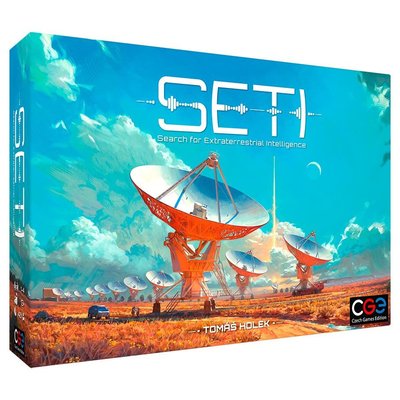
game do before in relation to time using time as a mechanism that I thought was really really clever that was a really delightful surprise when I played it. But yeah, this is again representative of escape room games in general, which I think are designed to be full of surprises in a non-c campaign format. Next up, we have the game STI. Uh SEI is a very hot game right now as of the recording. This is a game about trying to find alien life, extraterrestrial life, and finding it. I I think in almost any game of study, you are going to find alien life. It would be quite a accomplishment if you didn't find it. And the game does this by uh by hiding two different aliens in the game. You have to you have to actually find these two aliens. They're at the top of the board here. So, you know where they are. You know how to get to them. Um but you don't know what they are until you find them. Um there are five different aliens in the game. you have two of them per game. So there's lots of different combinations that asymmetric pairs that can end up in the game. And I really like the game is designed around this surprise. Like every time you play city, you know that you will be surprised by the aliens that are in that game because you don't know them going into the game.
I thought this was a really clever concept uh to really build a surprise into the core mechanisms of the game. And then it's not just a surprise reveal, but the aliens that you discover, they impact the mechanisms of the game for the rest of the game. um in a somewhat complicated way like you have to learn rules for these aliens as you go on the fly uh in the middle of the game. That is STI at number nine. In Grim Forest, Grim Forest uh is is a game is also kind of representative of a few different types of games where there is something hidden under the insert of the box. If you lift up the insert, you will find a card there, a special card that you can add to the game. Now, this is a fun but also precarious uh precarious surprise to put in the game because it is very possible for people to not find the surprise. Um, it's also very possible for someone to throw away the insert, just dump the insert in their recycling bin and out goes that card and they never find it. I think this may have proven to be a little complicated for the makers of Grim Forest because they ended up having to maybe replace some of those cards that were that were recycled or thrown away. So, it can be it can lead to a moment of frustration for a player who didn't know the surprise was there. But if you were someone who discovers it and looks under inserts for cards, then you might have been delighted by it. So, in general, I would say the players look under the inserts in games because there might be a surprise under there. Um, not the case in 95 99% of games, but every now and then you might discover something. And, uh, to publishers to maybe
remember that people might just throw it away by accident and that can be frustrating for them. uh in Glenmore 2 number seven. So that was that was a grim forest number eight. Glenmore 2 is also similar to STI built around the concept of surprises although in a slightly different way. In Glenmore I 2 there are all these chronicles. You can see them in these tuck boxes up here in the game. And as you play Glenmore 2 it is not a campaign game. You can choose any chronicle at any time even though they are numbered. So you could play them in order but you don't have to. And you get to add just a nice new mechanism to that particular game. It isn't a surprise in the middle of the game like SEI. It is something that you determine at the beginning of the game during setup. But uh there are so many of them in the box, these different modules that they really do add a it is a fun surprise to open one of them for the first time and to play with it for the first time. And so I I appreciate what Glenmore 2 did with these modules. And you know, there's many ways to add different modes and modules to a game.
Glenmore 2 did it in a way that feels like a special surprise to unravel the next time you play. That's Glenmore 2 at number seven on the list. Misborn, the deck building game. This is one that I've really enjoyed recently. And uh the surprise in Misborn to me is that in learning about the game and researching the game, uh even playing the game, I think the first time, uh my understanding was that that the two ways to win the game were by defeating all the other players, reducing their health to zero, or by accomplishing three different missions. It's a mission-driven game, which is true. Those are the primary ways of ending the game and winning the game. However, there is a third victory condition that John Declair is known for. It's kind of a shoot your shoot the moon mechanism. There is one card in the game that requires a bunch of resources at atom, a special resource in the game. And if you are able to get that card and play it with the ATM that you that you've accumulated, you can instantly win the game. This is, I think, a nice way to build a special surprise in the game because not only is it a surprise to find out that a game has this type of mechanism, a you win card that is earned. Um, but also when that card actually shows up in the game, because there are many games of Misborn where that card won't even show up. It won't even be an option for you to buy. And then an even additional layer of surprise when you actually pull it off.
That might be a surprise for the other players. They know that you acquired the card. They know it is not a surprise for them that you had the possibility that there was the possibility of you winning that way. But I like those layers of surprises that a rare instant win condition uh can can provide for a game. That's the Misborn deck building game. At number six, at number five, I have Magic the Gathering in general. I think Magic is full of surprises, but in particular, the sets Zendicar and Dominaria United. They both did something similar and I couldn't find a good image of it, but both of these games in a few packs of the games um there were cards, much older cards in those packs. So in in a pack of of of normal cards for for this this set, uh Zendicar, you would have all the normal cards and then every now and then you might open a pack that had an actual really just old weathered copy of of a card from a previous set, perhaps even a very very rare card in the set. This was representative of you kind of of the kind of the archaeology mechanism, the archaeology theme of this game. And then Dominaria United apparently Magic the Gathering, Wizards of the Coast discovered a bunch of packs of of a much older set that had never been open. So they weren't worn and like weathered and worn. They were brand new cards. They went through these packs, opened them up, and scattered the cards from those packs across many different packs of the new set Dominarian United. And so opening those packs I think provided a really fun surprise to discover these actual old cards that had that were you
know 25 30 years old almost in both of these sets. Uh something that not many games can do but it was I think a really cool thing that Magic the Gathering did this that is Magic Zendicar and Dominary United at number five. At number four cozy theme of creature comforts and creature comforts uh there are a number of cards in the game. I talked about Easter eggs earlier and creature comforts is full of Easter eggs. Um, even on I was looking for one on this bookshelf. I don't know if there's one actually here, but there might be a book that the No, I don't think there is actual an actual book on this shelf related to um an Easter egg, but there are a few different uh games that appear in Creature Comforts, including I believe Wingspan appears on one of these cards. Uh the makers of Creature Comforts reached out to me and asked if that would be okay. I said that of course that would be okay for them to add that nice Easter egg in the game.
And generally I think it's it's okay to add Easter eggs to other themes in your game. Um it's not causing uh copyright infringements. It's not causing confusion between brands or anything like that. Um not always okay, but many times it is okay. Better to ask just in case. But I love that they included those Easter eggs. So someone playing Creature Comforts building a a little library of games, they can actually have games on their shelf that they might have on their real game shelf at home. I think that is really really cool. And just Easter eggs in general in games. This is something I love at Stillar Games. We have it, as I mentioned before, in many of our games. I think they're a wonderful way to reward players who look closely at the art in games. Um, and when they discover that Easter egg, they get to feel extra special. At least I do when I discover an Easter egg. That's creature comforts. I never at Betrayal House on the Hill. Similar to SETI, this is a game uh designed around a surprise. In Betrayal and the various versions of Betrayal, including Betrayal Legacy, but not talk about campaigns here. Um, every in every game of Betrayal, around midway through the game, you are going to trigger the betrayal itself, and someone will be assigned the role of the betrayer, and uh they will learn the mechanisms for for what their new role is, their new win condition is, and the rest of the team will discover their new win condition. Um, in fact, they didn't even have a win condition before that. They will discover that they have a win condition now to defeat the betrayer.
Um, I think this is really cool. I mean, this is a game designed around a surprise in the middle of the game. And I think that's brilliant. I I love that idea of uh letting players prepare. Like, it isn't it isn't that you're aiming that you're walking around aimlessly for the first half of the game. You are preparing for what you know will be a surprise. Um, you just don't know exactly what that twist will be in the middle of the game. So, I guess it's more of a twist than a surprise, but it feels surprising every time I play Betrayal House on the Hill. I do want to play the uh the D and D version of this game. I think that looks fun, too. So, that's Betrayal House on the Hill at number three. And number two, this might be recency recency bias, but I've really enjoyed my plays recently of Knight of the Ninja. This is a uh social deduction bluffing hidden role game, and uh your role changes throughout the game. Um so, you're not just on one team for the entire game.
And also the cards that you have to use to try to acquire points throughout the game, they change. They cycle throughout the game. There's a little bit of a draft each round and then you get to play some of the cards and then you start all over in the next round. The trickster cards in particular, I think add a really nice element of surprise in the game. This is a way to surprise other players because other players there there's there aren't many tricksters in the game. You don't even know if there will be a trickster played in the in any given round. And they're all different unlike the other cards. Uh each trickster is different. Like we have this uh this thief that says reveal your house card. You may take one honor token from a player who has more than you. Actually steal an honor token. Those are the points tokens. Troublemaker. Look at another house another player's house card. You may reveal it if you want. And then shape shifter. This is a really tricky one. Look at the house cards of two players.
You may so you don't have to, but you may secretly swap them. So these add just a a burst of energy and uncertainty to the game whenever they're revealed. You never know when they will be revealed. And the first few times you play Night of the Ninja, you probably won't even know what these cards are. So, you were surprised by the first time they are actually played. I think that's a really fun element of uh of surprise in games. The the first few times you play where you don't even know what the cards are, and you get to be delighted by them. Hopefully, not too disappointed if they hurt you in that particular game, but hopefully delighted by the surprise of seeing what these different cards are and what they might do. That is the trickster cards in Knight of the Ninja. And then last, I don't even know if this should be number one, but I do love this game so much that I put it number one. This is the Star Wars deck building game. Um, specifically the inclusion of of all characters, Jar Jar Binks. Uh, because when I first played this game, I didn't know uh how they would incorporate Jar Jar into the game. I don't think I even knew that they were going to put Jar Jar into the game, but they put him in here.
And Jar does something that no other card in the game can do. So, this plays into the idea of kind of the trickster cards of discovering cards that are very unique that do something that not many other cards in the games do and uh the joy of discovering them for the first time and also tied back to the Misborn um comparison where they you they're not going to come up in every game. So, when they do come up, it is a nice surprise to see this unique card show up in the game. Jar says, let's see if I can zoom in here. Jar says, "When you purchase or play Jar Binks, you may spend two resources to gain one force and place him in your opponent's discard pile." So, Jar oftentimes goes back and forth between players. Players don't actually want to have him in their deck. They do gain a force for some reason because he has a lot of luck. Um, but he ends up clogging up your opponent's deck. And this is not a game about clogging up your opponent's deck. This is a one-off card that does that. I love how the theme incorporates with with the mechanisms of Jar Jar and that it adds a unique mechanism that only sometimes shows up in Star Wars the deck building game. So yeah, those are a variety of different types of surprises that that I love finding in non-c campaign games.
I'd love to hear your thoughts on games that have surprised you in some way or surprise you by design every time you get to them to the table like in SETI, like in Star Wars deck building game. I'd love to hear your thoughts about that in the comments below. or if you have a favorite game that I mentioned in the top 10 here u that you want to talk about a little bit more, I'd love to hear your thoughts about that as well. Thanks.