Top 10 Ageless Board Games That Defy Trends
Games in This Video
9 games are featured in this video — they unlock as you watch.




Transcript
Hey everybody. Today I'm talking about my top 10 board games that are pure and trendproof. And what I mean by that is that in my estimation, uh, these games have a timeless quality to them where it almost feels like they could have been played 100 years ago as well as still be played like 100 years in the future. They're not necessarily relying on current trends or patterns that are contemporary. Again, they just feel like they they just are going to weather the storm and stand the test of time. Um, I will say that these games are not necessarily in order of what is more timeless and what isn't because I obviously feel like they either fit that category or they don't. I've put these games in order of my preference. So, start off with my least favorite up to my most favorite, but they all fit that category of feeling trendproof. But before I get get started on these games, I want to give a shout out to the show sponsor kienda.co.uk who are my go-to online retailer. And if you use the link in the show notes or the QR code, then you can get 5% off your first order. But let's start with number 10. And at number 10, I have Suro. So Suro, super simplistic little tile placement game uh where you are placing these um tiles that have these different kind of roads on them onto this big grid. And then basically as soon as you place a tile, you'll move your little stone piece along the track on that tile up to the furthest point.
And as more and more players are taking their turns, that board is going to get populated with all these kind of squiggly lines um until eventually those pieces will kind of go off the board on the edge of the board, which means they're eliminated or they'll collide with each other because all these lines will eventually connect. And it's all about trying to stay in the game as long as you can. tried to stay alive and force your opponents off the board. So, this is a game that you can just pick up and play. You could almost see this one on like a coffee um like a coffee table anywhere. And it feels like this could be really deluxified and has this kind of like a an ancient feel to it. I mean, a big part of that goes into the actual production of the game because it does have this kind of ancient Chinese theme on it. Um but it feels like a true uh again timeless design. again, not terribly deep or um you know, strategic, anything like that. It's pure tactics.
Um but it's fun and I think it's one of those games you can just pick up and just gro immediately because you can just see um how the game works from the get- go. It's good fun. Nice and straightforward, super fast. That is Surro at number 10. At number nine, I have Skull. So, this to me feels like a more traditional kind of pub game. Um, and I'm sure it's kind of based on a game like that where in this game, and it will say this is more of a party game for higher player counts, uh, you and your opponents are going to get given these coasters and you are essentially betting or bidding how many coasters you can flip over without revealing a skull. And all you're going to do on your turn is you're going to either kind of raise that bid or you're going to drop out of the round until there's only one person left. And then that one person again will start flipping these coasters over hopefully not finding a skull. As soon as they find a skull, then they'll lose a life essentially. Um, and you're going until you've done two successful flips, again, like two successful bets and then flipping the relevant amount of tiles and then that player will be the winner.
Um, real good highs and lows in this game. kind of nice atmosphere. Um, you know, real ruckus party game, but it has again this kind of folk feel to it where it doesn't feel like it's been designed by a modern board gamer or board game designer. It feels like this game's been around forever because it just has that kind of real rustic feel. So, that is Skull at number nine. Uh, at number eight, I have Coobe Yakawa. So, this is an unusual game that's actually grown on me over the years. When I first played this one, I wasn't entirely sold um because it was so simple. Um but as time's gone on, I've started to appreciate the game sophistication. So, this is another game that is slightly better tailored towards higher player counts, but you are trying to have the highest valued card or the highest numbered card. And mechanically, this is as easy as it gets where each player will have one card. And there'll also be a card in the middle of the table face up. And all you can do on your turn is you can either um draw a new card and choose to swap it or not with your own, or you can flip the card from the top of the deck to replace the one in the middle of the table. And once everybody's done that, you will choose whether you want to stay in the round or not by wagering this token. And then once everybody has um you know revealed their cards, at least the people who stayed in the round, whoever's got the highest value card will win. But the twist on the game is that if you played the lowest value card, you will add the
value of the one in the middle. And of course, you're just trying to just sneak under the highest bid because that way you'll get boosted by that card in the middle. But again, maybe it's just worth going straight in with a higher card um and just trumping the other card that way. So again, a again game you got to kind of get the feel of it, but again it feels like a a bit more of a classic folk game. So minimalist, but I love that wagering aspect where you know sometimes you'll drop out of the round when you realize later you should have stayed in because you would have actually won. A lot of fun. Again, you have to appreciate the subtle nature of the game to get the most from it. But once you kind of appreciate that, then you'll get a lot of enjoyment and probably um a good respect for the simplistic game design in my opinion. So that is Kobe Yakawa at number eight. Uh at number seven, I have something a bit different with a bit more of a a ruckus game. Uh this is Can't Stop. So, I think push your luck games have a timeless feel to them because, you know, that idea of staying in one more round or dropping out and keeping what you've got is kind of a real kind of visceral emotion that um you know, us as humans enjoy. This one is a is a dice rolling game where you're rolling um I think it's three dice and you sorry, it's four dice and you have to create um kind of sets or pairs pairings of these dice in order to move up these tracks. So, you know, if I rolled a five and a two and a three and a three, then I can move up
maybe the six track and the seven track because that's what those pairings make. But once you've committed to three tracks and you keep rolling, you have to make sure that you're at least moving up one of those tracks each turn. And of course, you can back out and bank where you've sat on this mountain. Um, or risk another roll and falling right back to the beginning or your last kind of saved checkpoint. Uh, it's a lot of fun. you know, this game is still being played a lot and it's been around since the 80s, although it's not that, you know, that that huge time frame that I've been talking about in terms of the context of the video. It goes to show that it is on track to do that. Um, and again, it's this is a game that you can play with anybody. They're going to understand it. And they love the idea of just, you know, am I going to race to the finish and really push my luck and risk everything, or am I going to play it more conservatively and just nudge my way up the track? Uh, it's an evergreen classic that is Can't Stop at number seven. Uh, at number six, I have Devon from the JIP series. And to be honest, there were several games from the JIP series I could have put on this list, but I chose my favorite one and I think the best one of the bunch. So, Devon is a pure abstract strategy game which I think is goes hand inhand with a list like this because again they are more purists but for a modern design this is quite spectacular as you have this big board full of these discs and you can either pick up a stack of discs and move
the amount of spots in that order and land on another one and basically you're trying to gobble up your opponent's pieces that have the highest stacks. Uh, but the twist on the game is that you have to be connected to one of these special red pieces on the board. And if you can never trace a route to a red piece, then all of those pieces will be removed from the board. And of course, as you can land on these red pieces and then move around, you can leave your opponent's pieces high and dry and just force a whole cluster of them um from the board and remove them entirely. Uh, it's so elegant. It's kind of feels like it's been around again for hundreds of years. Uh, this game is it's it's a work of art really. I mean, it's not always in my kind of taste to play it all the time because it is proper head-to-head, you know, cerebral jewels style game.
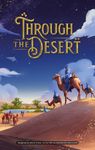
So, it's quite intense, but the design itself is very sophisticated, super timeless, and just a wonderful kind of masterpiece of elegant design. So, that is Devon at number six. At number five, I have um kind of a more of a board game. Uh this is through the desert by Dr. Rhino Kitia. So this one is is abstract in its nature. Um as you are moving around this big kind of hex grid uh of these um well these big hex tiles. Basically at the beginning of the game there's going to be a bunch of these camels seated on the board. And on your turn, all you have to do is you can either extend two of your um camel caravans by one or one by two. And as you can imagine, the board is quickly getting um kind of seeded with these camels. You're trying to reach these oases to get points. uh you're trying to kind of um gobble up these points tokens, but at the same time you are trying to corner off and section different pieces of the board because if you ever kind of do a an edgeto edge connection, then everything in that group that's not being contaminated will be yours as points at the end of the game. Uh this is like the the purest example of an opportunity cost style game where if you're going to do something, you're going to forsake something else. And again, although the board looks super open at the start of the game, within a few turns, your options get quickly kind of diluted and it's all about taking the optimal move,
optimum move. It's really good. Um, again, it's it's an evergreen classic, another game that's been around, you know, 20, 30 years. Um, constantly gets a new wave of people enjoying it. And again, minimalist purist design that is uh through the desert at number five. Uh, at number four, I have uh Battle Line, a game I've actually spoken a little bit on the channel about recently. Uh, this is a poker kind of adjacent style game. It's a a head-to-head game, you know, only two players as you and your opponent are fighting over these different flags by playing three card poker hands and assigning them to these different flags. You know, you only have a hand of seven cards each time. And of course, you're trying to build, you know, like straight straight runs of cards or, you know, all cards of the same color, all cards of the same number. Um, and if you kind of beat your opponent's display of of cards, then you'll win that flag and you're trying to race to get any five flags or three adjacent flags. But it's about a game about spinning plates. You don't want to commit too heavily early because you could end up drawing the perfect card later to get you a stronger hand. But at the same time, you don't want to water yourself down too much.
Um, because you're going to leave yourself with very specific wants and needs and and you know, inevitably that's never going to happen where you're going to get the cards you want because you are sharing that deck with your opponent. So, I thought this was a good fit for the list because it is again, you know, poker has been around for so many years, still super popular, and this is kind of a modern take on poker where it's different enough, um, but it still feels like it holds true to those purist poker concepts, um, but again, unique enough in its own right. So, that is Battle Line at number four. Uh, at number three, I have Hanamakoji, which is one of my most played games of all time. Uh, this is another twoplayeron game. Uh, and it's a it's a card game that is very subtle and I I always call this one probably the most perfectly balanced game that I've played in terms of just how powerful every action is, how powerful every card is, and everything has its right use at the right time. So this is almost like a tugof-war style game where you are trying to win the favor of these different geishes and all of these geishes are after a certain item. So you're going to have a hand of cards and you are trying to have the majority of these items um to again win the favor of that geisha and if you have the majority at the end of the game you you'll win essentially. Um, but the way the game works mechanically is so interesting because you have four actions that you can use um once per round it but in any
order you like. And one of the key concepts is this I split you choose mechanism where you will offer cards to your opponent. They'll choose what they want and you will get the remainder. And it's all about trying to divide these cards into the perfect group where it's kind of appetizing enough for your opponent to grab it. Um, and give them what they want, but making sure that you get what you want, knowing the other information that's in your hand. Uh, the other actions are like eliminating a card from the D game, which can be a complete game changer, as well as saving a card to the end. And it always comes down to that kind of final action. Very meticulous. uh you can get a kind of a real feel for this game the more you play it and it's just like this beautiful kind of cerebral dance and the more you play it the more you'll get out of it and again it just feels so classic and so rich and it's just a beautifully made game that I could not recommend uh enough. So this one is Hannah Makoji at number three. Uh at number two I have my third and final game by Rhino Kenitia on the list. This is Chin. Uh, this one's been reprinted recently. I can't quite remember what it's called. Um, but this one is a kind of a domino adjacent style game. As you are placing these tiles on another another grid, you are trying to create groups of colored um tiles in order to place your pagodas down. Uh, once those groups become big enough, you'll put another pagod down on it and
you're racing to get rid of your pagodas. Uh but the trick on this game is that you can encroach on your opponent's areas and kick your opponent's pagodas back off uh into their kind of back into their supply. Uh additionally, if you reach these cities by having the most pagodas that touch them, then you can shed more pagodas and put and claim those cities. So again, there's this back and forth between you and your opponents to not only get coverage of the map itself through the domino placement, but to connect the most tiles or pagodas to those cities uh on the board. Uh very simple um kind of the game flow, just you draw tiles, place tiles, and then obviously shed your pagodas if you need to. But I really do like this kind of race aspect of the game. I like the clean cut finish or kind of endame climax. Um, and there's even even a good ability for if there's a runaway leader happening, you can kind of conspire with the other players to try and put some speed bumps in their way to slow them down, but there's always new opportunities appearing uh on the table. So, love this one. I've played this one to death and I, you know, I'll keep on playing it.
Not even slightly bored of it. nice that it's getting a rethe and redoing so that more people can um can access this one because it really does feel like a a nice clean evergreen game that is going to be enjoyed for many many years to come. So that is Chin at number two. Uh and finally at number one and my favorite game on this list uh this is War Chest. So, war chess is, although I put this on this list, I think this one actually feels the most modern in a way because it does have some quite creative mechanisms. Um, but I'm so amazed with the minimalist design here. And this is um either a one versus one jeweling game or you can do a two versus two if you want to um like team based, but it's an abstract strategy war game where you are deploying and maneuvering these military units on this board. It has this like king of the hill effect to it where you are trying to race around to these spawning points, claim them as your own, and hopefully protect them from your opponent. And if you get your kind of claim markers down before your opponent does, then you'll win the game. But I love the variety of military units in this game. You know, each each time you play, I think you play with like five units each. And the game comes with a ton of them. Uh I love the way that all of the different units interact with with each other and you can exploit their abilities. Um you know, maybe put some fear in your opponent about the abilities of some of your units. Like for example, some of them, you know, the
archers can shoot from two hex's away or you've got the light cavalry which are much more maneuverable. Um you've got like trevetses, you've got um you know your your fully full on tanked up knights that can absorb loads of damage and so on. And although we've seen, you know, tons of games like this, I think War Chest has this um or a much higher standard of design when it comes to um kind of boiling it down to the core parts. There's nothing here that doesn't need to be there. Um I love this kind of poker chip system where you're drawing tokens from the bag which will dictate the moves you can do. And do you want to use that token to attack? Do you want to use it to move? Do you want it to bolster your troop to make it stronger and so on? And it's all about trying to weigh up what is most useful at that time. Um, the idea of these tokens also being your your health in a way because the more these tokens get depleted, the less maneuverability you have because it means that token is not going to get drawn again. So, this game has so many layers. I've had some fantastic games with this one. It really does feel like this almost like a simulation of a of a war and with boiled down into its cors and that's what I love about it. It's just a wonderful game. I love the strategy. I love the tactics. Um and I just love everything about this beautiful design. Uh that is War Chest at number one. Uh so there we have it.
That concludes uh the list. Hopefully you have enjoyed it. And there were of course some other games that would fit really well onto this list, but a lot of the time they weren't necessarily recommendations from myself, although I can appreciate their their good timeless games. Um, they're not necessarily my taste. So, I'm thinking of games like, you know, like Shoo or Corridor, these modern abstract games that are really good. And some games that narrowly missed out on the on the list were games like Torres and Medina as well. So, lots of different things that could go on here, but I'm really happy with the way this list turned out. And I think these games are really going to remain relevant um despite their simplicity. Uh they are that good. So, hopefully you've enjoyed the video. If you have, please hit like and subscribe to the channel.
And also, let me know what you think would be a good fit uh for this list because I'd love to hear and um I'm sure I'll be frustrated about some that I've forgotten about. So, um thanks again and I'll see you all next time on Chairman of the Board. Byebye.