Top 10 Mechanisms: Tile-laying
Games in This Video
10 games are featured in this video — they unlock as you watch.





Transcript
hi I'm Matt moon Wales and this is my board gaming vlog and the most recent game that I purchase is this one quadropple asst and this is a tile laying game and the first game I ever bought once I got into this modern gaming hobby was Carcassonne which is also a tile laying game but it wasn't the first tile in game I've ever played because as a teenager I was playing a lot of dungeon quest and when you look at the three games although they all fit into that tile laying genre they're very different games so this video is gonna look at my top ten different mechanisms that are used entirely in games now there's lots of different approaches that I could take to categorizing tile laying games we could look at are we working on a shared border are we working on our own individual tableau of tiles in front of us we could look at how do we get the tiles are they randomly drawn are they taken from a bag are they just grabbed from the middle in a real-time fashion or are they part of some sort of central marketplace we could look at how do the tiles activate when they're used do they give us actions when we place the tile or do they give us actions when we put something onto the tile or do they give us actions when a tile is placed adjacent to them all of these would be sensible ways to categorize a tile laying game but I'm going to go for something a little bit looser so number one on the list is real time tile laying games now real time tile laying games
are not my favorite genre that's why the number ten and I must have math couldn't think of more than ten Chandra's of tile and games so we're talking here about games like galaxy trucker galaxy trucker is probably the one of these games that I've got the most experience on I like half the game the first half but don't enjoy the second half that much so I like building the machine which is all done instantly grabbing tiles racing the other players to build your machine better than theirs build your spaceship and then when the time runs out we move on to the second part which is essentially a random card draw and see how your spaceship holds up against the different problems that come out of that deck basically what's your spaceship fall apart I'm not so keen on that bit it seems a bit long it's very very random but I do like that puzzly spatial aspect of building the ship in the first place other games I'd like to try out mondo I believe this has a similar timed building a map of the world and trying to score points and also factory fun this has quite the scope of those two games in terms of you know it's the fastest to grab from a small selection of tires in factory fun unlike the massive number of tiles that you get in galaxy trucker or mondo but all real-time tile laying games number 9 on my list is about building building a series of roads other way to travel around the board or around the table so my example here is the game sheep and thief which is a little I believe it's
Japanese I'm not quite sure about that but it's a it's a drafting game where you've draft cards which are essentially used as tiles to build network of roads and move sheep around these roads into scoring positions it's a great little game but other examples of this sort of genre of tile laying games are things like steam and a lot of the the railway train games have networks of rails that go around the board the 18 XX games like 1830 and then on the other end of the spectrum really simple games like Zorro and Cyril of the seas are about creating a network of roads and then traveling your porn down those roads one of the current speeds des Yara's Award nominees is Kariba from harbour games and kuba is very much that it's placing tiles into an individual sort of little tableau and trying to create a route to get explorers into little temples and and and and gather gems along the way so this is my number 9 travel and and sort of networking route building number 8 on my list is about destruction tiling seems to lend itself very well to natural disasters and so we see games like the downfall of Pompeii and also the game eruption where we lay tiles representing larvae running around and destroying things and so rather than building we're actually taking things apart survive escape from Atlantis from
stronghold games actually takes this at one step further and here we have a board that has all these lovely tiles laid out and we're taking them off the board creating a sort of sinking Island and and dropping the meeples into the sea and trying to save them with little boats and so tile laying is not always a constructive thing sometimes it's quite the opposite sometimes it's quite aggressive destructive activity number seven is is a totally different sort of idea to the previous entry and this is about a sort of having a living board having tiles that move around or stack throughout the game to create a different sort of environment in which to in which to work there's constantly adapting to the players play a great example would be forbidden desert Matt Leacock schoo operative game and where sands blow over the tiles and move around we have to uncover them dig them out from under the tiles and the tiles themselves move around the board with with the shifting of the wind and of time a much more complex much more competitive example would be dominant species where we have an enormous board representing the world and all different landscapes within it there's a great degree of exploration in this which we're going to come on to but there's also an oncoming sort of ice age where tundra and and these big glaciers move across the landscape and you have to adapt and move your your animals your tokens around the board to get them onto
more sort of hospitable areas I've already mentioned a sort of living board sometimes though we we're simply exploring a board thinks I'm going to change particularly once stuff is laid out there but we're going to turn over new tiles and see what see what's there I'm thinking of games like what dungeon quests would be a classic example where we build this sort of catacombs on a board the old originally Games Workshop now fantasy flight game but but within the Euro game genre there again the games like this - perhaps the most notable example is Tikal where we're exploring a sort of jungle and we're turning over these temples Java another game in the same series of games this one has really nice thick tiles that stack on top of each other and create hills and a really sort of three-dimensional landscape that you can then occupy and then a great degree of area majority as we try to claim the most the highest sort of point scoring areas of the board number five I'm calling pure tile laying games but I could equally call them abstract tile laying games this is where there is no board and there is no real theme although there may be some nominal theme and a bit of graphics in there your classic game on this particular SWAT is game quarrel which is a bit like Scrabble but we're laying out tiles with different shapes and different colors and trying to connect up rows of either
matching shape or color and then score those individual rows we can add on to existing rows as we can in Scrabble and we gradually build up this tableau of shapes and colors throughout the game very simple very accessible game tile laying at its absolute purest a more complex sort of version of the same idea would be something like völuspá which introduces the sort of Norse mythology artwork which has nothing to do with the game but each individual type of tile that's added to this sort of network this this tableau and each tile has a special ability and it might partner with another tile or it might affect another tile in a certain way and change the scoring but essentially this is like Quirrell advanced I would say and then we have games like mops royal now this is an ultra simple game from the German company Norris very very simple and it's about creating little sets of colors matching colors and symbols again this time working on your own individual tableau in fact it works very similarly to the game kuba that I mentioned earlier is nominated for this field as Yara's in mops royal both players are given the same tile at the same time it's just that they may choose to do something different with it and as a result they may end up go down a similar route or they may go somewhere completely different and then it's who does the best when everyone's given the same randomly chosen tile you just talked
about the game Quirrell that similarities to Scrabble this entry into the list brings Scrabble into the picture so here we have the classic word building game this is a tile laying game played on a board and what you find with a lot of these tile laying games played on boards is that it's all about getting your tile onto the space on the board that gives you the highest scoring opportunities so a game like Scrabble does that with its double letter scores and and those sort of bonuses and other games will be about how do you locate your tiles in proximity to what other players have done so at the more complex end of the spectrum the classic euro game from reineck Onyxia tigris and euphrates a masterpiece of a game where we're building up tiles in Mesopotamia and 3000 BC representing a civilization in a very loose sense it's essentially an abstract but a very aggressive fairly complex game with a lot of depth as opposed to Scrabble which is that old family favorite a simpler game perhaps one which people won't have heard of so much is Bangkok clums from DLP games it's got this lovely Clemens Fran's artwork of these little clones carrying and carrying fruit and and various goods it's it's it's in an abstract game where we're placing these boats onto the water and trying to get them into positions where we can score the most points lovely lovely game really overlooked and
now we're onto the game that started us off with this list and that's this new Days of Wonder title quadropple 'us where i built an individual tableau and i activate my tiles in order to generate points they're activated by placing other tiles adjacent to them most commonly that's the way that we score points so in a way that's similar to games like suburbia and the castles of Mad King Ludwig which have a slightly more complex version of that set of events now in the earlier game and in fact the first game that introduced me to this idea of an individual tableau and activation by placing tiles adjacent is the game Glenmore which hopefully will be coming back at some point soon Mattias Kramer made this game several years ago it's it's not a grand looking game but it's a it's a beautiful euro terms of its gameplay and we're placing tiles generating resources from those tiles spending those resources to gain more tiles it's got an ingenious little central marketplace and economics if you enjoy things like suburbia and castles of Mad King Ludwig this is absolutely your next step it's the same genre it's the same feel but it's got this lovely rich and sort of theme and and engine building in it in that classic euro style and you knew it was coming the number two on my list is shared tableau building where we lay out tiles and we share a communal pool to build a sort of
map and then we place things onto that map in order to activate the tiles in Carcassonne that means that we're scoring the tiles by placing little workers on roads or on cities it's a brilliant game in all its forms sometimes I like South Seas sometimes I like Carcassonne itself I have the two-player version the castle which opens up home that load of new strategic options this one being ironic in its ear and it's a it's it's a world of games in its own right if you owned a load of Carcassonne games that would give you a lot of variety actually because the games quite different in some ways but there are other games that do similar things one of them being Oregon Oregon is a this one this played on a board but again with share that board and we play styles on it we place meeples little little cowboy type meatballs onto the board and then we activate those tiles as a result now getting rid of all these games and looking at it in a slightly wider lens we have games like takenoko technique was a beautiful game where players build a garden and the garden grows bamboo as we move the gardener onto the pieces and the Panda moves around the pieces and eats the bamboo and so this Mack it grows but all players are sharing the same map and trying to achieve different goals by activating the tiles and for those of you that were surprised to find that Carcassonne and that shared tableau building are not number one in my list of tile laying mechanisms this is the reason why who doesn't love a bit of tessellation
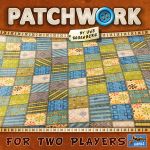
tessellation is the absolute epitome of the tile laying Chandra we're talking in his most classics of a purist form of of the game blockers but that has been integrated into other games not and not often enough so we have sublime games like Baumeister Bron Arcadia from rüdiger dawn where we lay out these these sort of Tetris style pieces and in order to claim territory in the rear so that's an old-fashioned sort of euro style but also again in in quite an old euro game now the princess of Florence amongst all the auctions and the economic stuff and the objective building all that stuff that's going on we have tessellation and tiles trying to fit them into our our sort of space on the board in the most appropriate way and these Tetris shaped pieces but perhaps the epitome of this genre and a little bit of a sort of poster child of the of the two-player and small box games is patchwork move a Rosenberg's other classic alongside this is magnum opus Agricola patchwork is beautiful and accessible and plays in a short duration it's ideal for two players it's got this lovely sort of quilting theme where we're placing bits of Tetris shaped cloth and and scoring buttons wonderful wonderful use of that Tetris sort of mechanism of tessellating tiles and that
brings us to the end of my top ten mechanisms for tile laying games of course some of these have overlapped you'll see some of those games that I've mentioned fitting into multiple different categories but it's interesting to look at the broad sort of ways in which a single mechanism can be used I hope you've enjoyed the video if you like this video please watch some of my others or subscribe to my youtube channel i'm adam in wales on twitter i'm at board game wales and on BoardGameGeek i'm adam 78 i hope you'll watch more of my videos in the future thank you very much for watching all the best