The Kitchen Sink of Modern Board Gaming
Games in This Video
11 games are featured in this video — they unlock as you watch.






Transcript
Have you recently played a board game where you thought, "That game could have done with a few less rules, a few less mechanics? Pretty much half the game could have been like absent and you still would have had a good time." Well, this is a video topic that I've kind of been pondering about and mulling over for quite a while. I've thought of a couple of different video titles for this video, but I've resided on the fact that I'm calling this the kitchen sink of modern board gaming. Hi, my name's Danny. I'm an avid modern board gamer from Australia. I'll share my passion for this hobby with you, my friends and my family. Come and join me in this journey as we talk about board game fluff. Now, if you really like my video, please subscribe for more wholesome board game content. Let's get this video started.
Now, early when I ventured into this hobby, there were lots of things that board games had that hooked me in. Whether it was like a gimmicky device or maybe it was the way you approached a worker placement game. There were lots of things that really pulled me in. These days I'm a little bit more hesitant to just dive straight straight into a game. And the more I kind of pondered through and sifted through my board game collection, I just wondered like if I were to able to cut some of the excess from some of the game rules and some of the game mechanics, some of these games would be really, really fun. I'd be able to table them more often. And so, it got me thinking about the idea of the kitchen sink. Everything but the kitchen sink or everything and the kitchen sink just being compressed into a board game box. And sometimes you learn a game and you're like, "Why are there like 50 different tracks? Are all these different things necessary to make it fun? They might have a thematic tie, which is why that mechanic's in there.
They may balance out or compensate for something that seems overpowered, so they have to put this mechanic in. They have to incorporate play interaction cuz people either want play interaction or they don't want play interaction, so they're going to accommodate. It's like trying to please everybody in every sort of gamer. So, they tend to just throw the whole kitchen sink into a board game box and hope something sticks. Well, there's one game that I want to use and sorry to this game, I do really love this game. And in this game's favor, I must say they've actually re-simplified this game down. So, if you do like the game that I'm about to talk about, there is a game another version of this game out there that's actually made this a lot more simpler. But, this is the one that I've got. This is the one I bought earlier on. This is the one that made me think about this video. So, basically, this is a Euro game about deduction, deducing different chemical combinations, and using your phone to put two different ingredients together on your board and seeing what happens when they react. And that was the hook that really got me into getting this game. Got me hook, line, and sinker, actually. The idea that you had your little deduction board behind your play screen represented by this pyramid or triangle of different options, which you need a master's in board games degree to work out how it works. You place this at the top, you take a photo using the app, and then the app tells you what the reaction is, and you kind of record it on here. And then you can you've got like a little booklet that kind of allows you to record the reactions
between different chemicals to try and help you with your deduction. It is a board game called Alchemists. So, the idea that you're like a little scientist or a wizard and you're trying to dabble in alchemy, it just feels really thematic. That is the reason why I got this game, to dabble in the reactions, dabble in the deductions, to scan the cards with my phone, and even the idea of using my phone wasn't something I really wanted to do, but I did it anyway. But then, when I started to learn the game, I realized it was not only just simply a deduction game. It came with a whole worker placement board with different ways where you allocate your workers by placing cubes. There were different people coming to buy your potions. Then, not only did it have this giant board, it also had this achievement board as well that allowed to publish and I guess say that, "Ooh, I declare that these this particular um ingredient matches with this alchemical." And so, there's this competition not only for worker placement, but also for publishing. And so, whilst it feels like it's a thematic tie-in to the game, it's not really what I bought the game for. If I wanted to play worker placement game, I would have bought or played Stone Age. Or I would have played Viticulture. If I wanted to play a game where I'm like publishing things, I feel like there are a lot of other games that do that we fulfill
contracts and make open deductions. Not only that, if you didn't want to use the the phone camera for deducing, some player could be allocated the master of the alchemicals and they'd have all the solutions here and they would be able to use this flow chart to convey to the other players, "Hey, if you mix these two ingredients, this is what you get. This is the reaction that you get." Oh my goodness. The amount of excess on this, the only thing I really wanted to play when I got this game were these components. I didn't really give to and maybe the pad of books. But I didn't really give two hoots about the rest. I just wanted to play a deduction game that had those things. And all of a sudden, I found myself spending, you know, three extra hours learning how the game worked, looking at the videos, looking at things. And I sta- step back and I think, was it necessary?
Was it necessary to get to just this hook of the game? And ever since I played my two or three plays of this game, I thought, you know what? If I want to play this deduction game, I might as well play it on an app. I might as well find another deduction game that just does that deduction. And so, I haven't played this game since. And I know they've released a smaller version of the game, which primarily focuses on this mechanic, uh called Little Alchemist, which I think I might ultimately trade this game in for. I thought, wow, was all this excess very necessary? So, my first point when it comes to thinking about everything and the kitchen sink is the setup time versus play time. There are some games out there that I've played where the setup ti- time is really fiddly, where you have to put tokens out, you have to put the timing bits where they should go, you've got to place cards where they are, you got to put a lock token here.
It's all setting up all the logistics of the game. And yet, the play time might be shorter than the time invested in setting up or learning the rules. And when you have a play time of a game where the rules teach is heavier and longer than how much you're actually spending to enjoy that game, that makes me think, mhm, something could have gone, you know, been culled along the way. And so, I often think, how much time does this game take to learn? How much time, and I'm talking about watching videos, looking at rules, teaching to other players, setting up the game area. And I know what I often do is set before me and my hubby play board game, I would set up the game, lay everything out, put all the pieces, put all the tokens. It's a whole like routine, actually. And then, when he comes to the table, it's all ready to go, and I already know most of the rules and the gist of the game, and I'll just kind of go through the main steps, and that makes the game experience a lot more smoother and fluid. But, if that time invested just setting up versus the percentage of time played, so if I've spent 70% setting up and 30% play, is that ultimate enjoyment of that value of the game worth it? In some instances, yes, because it's a big game. It's a big deep dive. I mean, recently I played the Anarchy, which is kind of like a roll and write style game, but it has two pages of very dense iconography. Then there's a whole like castle attacking track and things like that. And I was just like, "Oh my goodness, this is really overwhelming." But then when I got into
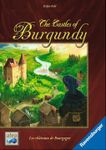
it, I was like, "Oh." It was like a 3-hour roll and write game, and it actually kind of paid off. Some of the things I learned at the beginning then was like, "Whoa." Once I got over the rules overhead, I was like, the play time kind of outweighed the learning time. And I guess on subsequent plays, I can play it again now as a solo game. Um and so that kind of was an extreme interesting experience where the play time outweighed the setup time. But with games which is the other way around, I think, is it worth it? Is it worth it to do spend your life learning this game only to play it for like half an hour or 45 minutes or abandon it halfway because there's too too many things? I always say, "Is it worth your time?" In addition to that point, I also want to say that a lot of the classic Euros uh really find a really good balance between having a low setup and teach time and having a really long game time. Like Castles of Burgundy, simple to teach, yet it's got a lot of thinky choices. One of the biggest games I really like that is in my top 10 is a game called Arboria, which is here on the shelf.
I taught it to my friend the other day. Took about 15 minutes to teach, but oh my goodness, the branching choices that you have to make on your one turn. Oh, so many different choices. And so, the setup time isn't a lot, but the play time is where most value comes from playing a game like this. Bigger, I don't think is necessarily always better. And I know it's a common phrase that people use, but in board gaming, first of all, shelf space is limited. I will always say that shelf space is a big priority for me because if I can't fit it on the shelf or one game takes up the space of five to six games, then maybe it's not a game I need to own or I can own a smaller, slimmed-down version of the game. I'm not someone really who likes to dabble in bazillion plastic miniatures that, you know, are not that good for the environment in in a broader sense, but also how often am I going to get that miniature game out and play with those miniatures? Like, unless it's a world that I'm truly, really super invested in and going to get that game out of its packaging over and over again, I'm probably not going to really care if they're um plastic, but basically, bigger is not always better. If I think you can condense a game, a really smart game like Trio or That's Not It down into a small box size like this, boy, have you achieved an incredible feat. Not only have you got a strong punching game, but also you've got that small box size that contains everything that you need for it, which means that it's easy to set up, easy to get into,
easy to play, and you're going to get more frequent um play and table sessions out of that game. So, I always think bigger is not always better. I always think smaller, but more potent is probably better. Having a smaller box or footprint space, but having more potent strategies and ease of getting it out is probably going to be far more beneficial in the long run than giant like Kallax cube size thing that fits in and takes like two people to get out. Now, one of my biggest board game gripes, and this is my third point, is when you're learning a game and there are rule exceptions. Then there's another rule exception. Then you learn this rule, however, not in this circumstance. Or you learn this situation and you're like, "Okay, I get the idea now in these three different situations, that rule doesn't apply." Or you would apply a secondary, third, or oh my goodness, forbid, like a fourth set of subset rules that apply to that one specific niche situation. That's when I start thinking, well, could this game have literally trimmed it and streamlined? I am all for streamlining a game and making it as smooth as possible. Now, there are lots of games like this in my collection, and when you look around and you see games that sell millions of copies like Azul, the rules are incredibly streamlined.
You basically pick the tile of the one color, you put them in your little storage, then you move the storage from top to bottom onto your convert them onto your little mosaic wall, score points. Bang bang bang bang. Beautiful. And Harmony's is a game that really exemplifies this. At the beginning of the game, you have the freedom to kind of build all the different types of habitats that you want in the patterns and configurations that you want, but you kind of want to localize in an area so you're maximizing the scoring potential of those habitats. But as you get towards the end of the game and your whole area board fills up, you're constantly making tougher and tougher decisions about which animals you're going to take, which animals can you put into these habitats to maximize that point score value. It is such a simple turn structure, but the puzzle in itself, because the rules is very slimmed down and streamlined, the thought process is a little bit more involved, and that is where the crunchiness really comes in.
The idea that you don't have to worry about, "Oh, is this a situation where I can't do that but I can do that or is this a situation where I can put that up or not that up? When you start introducing convoluted situations or convoluted rules or contradictory rules to how the game is intended or learned, that's when frustration starts creeping in. And if you have too many of those, the level of frustration or the frustration cracks of frustration really widen and split apart your initial enjoyment of the game. And so throughout the game, you're constantly thinking how can I just learn this game without having to concentrate on all these niggling things I have to keep account keeping for. And I often call that account keeping. We have to like oh, you have to pay this resource. You have to make sure you have five resources. You have to do this. And at the end of the day, is it fun?
No. Is it a constraint to the gameplay? Yes. Is it necessary? Question mark. And that's where you have to really think about whether that account keeping aspect is worth it for the overall satisfaction and enjoyment of a game. Number four is plain and simple. Get rid of the fluff. Is it needed in the game? Absolutely not. Now, I probably echoed that probably 50 times throughout this video. Uh basically, you've got to really think about in your when you're playing a game, does it make thematic sense? And then on the flip side, if it makes thematic sense, is it going to be enjoyable? And so you really got to play those two off. Is the mechanic necessary? Does it make sense to the theme? Which one is more important? And you know, is that essentially all going to lead to the end game point of are there interesting decisions? Is there variability? Is there player control?
And is there fulfillment of uh that joy factor that a player has. And so I think when you look at games, there should be a really fine balance of finesse, but also logical sense behind everything that you're learning throughout the game. And when you can kind of tap into the logic or you can tap into the fact that oh, this is the right balance, then I think you really hit that Goldilocks spot. You know, it's not too hot, not too cold, but it's just right. And so, I always say, keep it simple. Get rid of the fluff, get rid of the excess rules, use examples in your rule books, get the Don't overexplain things because the more wordy it is, the more you try to overexplain things, the more becomes overwhelming. And my bucket is only so big.
Well, consider my bucket already 3/4 full. And if you add a 40-page rule book to it, it's just going to be like, oh my goodness, I'll be sweating bullets. So, my fifth point I want to talk about is player agency. How much players actually have control in the game? So, the mechanics that the game has, how much does that give players ultimate control on whether they can beat the other players, whether they can win, whether they can kind of balance out the game. So, it might be some form of catch-up mechanism. So, in games like Isle of Skye or Quacks of Quedlinburg, there are catch-up style mechanisms that help give players more money or advance further using rat tail tokens that evens out the playing field. Those things are little small exceptions, but they make sense because it balances the game out. It also makes sense because it gives players more agency to be like, I've still got buying in this game. I've still got a chance. And as soon as a player says, I don't have a chance anymore and it's only round three out of six rounds in the game, then the balance unfortunately there is quite off or maybe the skill level required is off.
Whatever it is, it's got to feel like players will always have a constant buy into the mechanics, a buy into the choice and agency that this is what I did in the game. This is how I chose my destiny. This is how I played. This is how I did X, Y, and Z to reach this goal. This is how I failed. This is how I succeeded. This is how I tied the game. If I made a better choice here, this is what could have happened. And so, if players can kind of look back on their game and feel like they had agency, you know, then that's a game well played. A My sixth point that I want to make about the kitchen sink and board gaming is poor graphic design. When you pick up a game and there's like 200 cards in it, yes, I'm looking at you, Hamburg.
Well, the Queen's version of Hamburg that is. When there are cards with all these iconography or symbols, you're given this booklet of like five pages of appendix of like how to interpret the symbols, but none of the cards have any text on it to explain how the symbols work. I know there's a like a language conversion thing where you can kind of like just put icons and then sell the game in like like different countries, but if the icons are complicated, there has to be an easy way. Provide a player aid. Roll for the Galaxy I say Roll for the Galaxy and Race for the Galaxy do it really well cuz they give you a player aid for each player that explains all the icons. But yeah, just trying to interpret like little pictures or little rules or little icons that then have a cross to it and an arrow and a colon and a person with a hand. I think there was another game that I played recently where the iconography was so hard to decipher, I had to Google on BoardGameGeek. I think it was Tribes of the Wind. Brilliant game, but oh my goodness, the card icons is like, what is the person with the two other people that are colored in mean compared to the person that's colored in the middle and not color of the two people either side not colored in me. Oh my goodness, it's just like seriously, everything in the kitchen sink, strip it back, make it simple, make it logical, make it make sense. If you can make it make sense universally, then it's worth it. If it doesn't make sense, and I think it part of this is also like showing icons to people and go, "What do you think this means? What
do you think this means?" And seeing what people's feedback are on that icon, that's going to be like pivotal for lowering the barrier for allowing people to access your game. At the end of the day, learning rules is not enjoyable. You know, I've made so many board game videos, played lots of modern board games. Learning rules is probably the least enjoyable thing about this. Like I used to make videos where I used to do shot by shot of like how to play a game. Now I don't do any of that. It doesn't excite me at all. There are experts in this board gaming field that are uh uh uh superb in teaching you how to play a game, but I just do not find that fun. What I do find fun is connecting with the game, connecting with the theme, thinking about the choice, with the strategy, the theme, and how it all plays together in like a cohesive fruit salad bowl. But anyway, yeah, make it simple, and make it make sense. And I feel like that's the mantra that I definitely have when I look for a game that plays well. It's like, "Wow, it makes sense. Wow, it's simple. Wow, the choices are hard."
And if those games will often tick all my boxes. So, what is a recent board game experience that you've had where you just thought, "Oh my goodness, 25% of this game was not necessary. That was 25% more rules I had to learn. 25% more time I had to invest of my life learning these things that didn't make any difference in the end game result." I'd love to hear your experiences, your thoughts in the comments section below. Now, if you found this video super helpful, please consider liking and subscribing to my channel. If you really want to support and see more cool topical videos like this, please head over to my Patreon page and buy me a coffee over there. I would appreciate it so much. Otherwise, please consider checking out some of the other topic videos on my main YouTube page. There are hundreds of videos on there. I know there's a lot now, over 700.
Thanks once again for joining me for another Board Game Sanctuary video. If you found this video super helpful, don't forget to subscribe and I hope your next board game experience is an amazing one. This is Danny Sunier. I'll see you next time.