Top 10 Mechanisms in 2 Player Boardgames
Games in This Video
8 games are featured in this video — they unlock as you watch.


Transcript
hi I'm Adam Porter and this is Adams board game Wales a channel where we talk about games different types of games categorize games but specifically look at mechanisms in games in relation to game design uh now as a as somebody interested in game design myself I'm often thinking about what sort of things haven't been done within a specific genre what are common tropes within that genre um what are the things that seem familiar within that genre are there things that I can look at that I can either combine from other games in the genre or maybe something completely new which hasn't been done and that's where these categorized sort of lists really help me and today I'm looking at two player only games so this is a bit of an exploration for me what two-player only games are out there what sort of mechanisms feature in these games what works well what doesn't why are they two- player only why couldn't they have more players in them and what are the barriers that we meet when we trying to design a two-player only game so that's our our sort of starting point and I think the obvious uh sort of poster child for the two-player only games is the abstract strategy games so we're talking chess and checkers or drafts in the UK um as as a child I was particularly intrigued by the game uh Camelot which was an old sort of childhood game of my dad and it's a it's a really good abstract strategy game I'm surprised we don't still see it around now in fact well I haven't seen it anywhere for a long long time but more recently modern games we have the GF
series now these are fantastic games we've got GIF and dvon and zerz and punked and Yin and uh SAR and and and recently this new game linked or link I think it's called um these are fantastic games so in abstract strategy games each player has a set of identical pieces so we're both playing from a position of simil often the game is set up symmetrically although not also sometimes there's some sort of randomized setup but moves are entirely dictated by strategic and tactical decisions on the parts of the players there's very rarely any Randomness in these games certainly not in the GF series um other games which work along these similar lines games like onama and haruan they tend to be very cerebral sort of games where players will sit back and take their time to think about their mve moves uh and and and they a quiet experience we're not immersed by some heavy-handed sort of Storytelling thematic things put on top of the game we're immersed by uh thinking about several moves ahead how can we cut off our opponent often these games uh work on the basis of moving from one side of the board to the other or or connecting those sides of the board or controlling an area of territory or perhaps forming a linked chain of your own colored pieces maybe capturing an opponent's pieces uh so so so those are the abstract strategy games great games for
two the reason it don't work so well with multiplayers although there are examples of this is because they are so cerebral you tend to be thinking a lot which means they're going to slow down with more than two players and also the decision space gets much much bigger it's it's one thing to be able to predict several moves ahead what your single opponent might do but once we get two or three opponents that decision space becomes massive a friend recently brought along to our local board game club uh a version of three player chess now it sounded intriguing but once you looked at the board it was like one of those Magic Eye pictures it looked weird it made you feel nauseous sort of attractive but really really odd and the players playing the game they were pulling their hair out with my so many choices cuz the pieces are moving around and then they're branching off some of these games are Best Kept at two player I think there's no doubt about that and that's why traditionally they've always been so so having dealt with the traditional abstract strategy games number nine on my list of 10 mechanisms used in two player games is um your sort of sports type gam so if you think about sports we have pool and snooker and darts which are all often two-player games uh within the board game realm we have some Dex der It games like Croc andol which uh I it's on that border of is this a board game or not or is it some other sort of leisure activity the crocod is a fantastic game
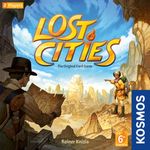
for two can be played in Partnerships But ultimately it's it's a it's it's best as a two-player head-to-head sort of battle and then this moves out into other sort of dexterity games uh the one immediately comes to mind is The Game Cube quest which is flicking these little uh plastic cubes trying to knock your opponent pieces off the board but essentially at its core it's something very similar to a game like crocodile number eight on the list is traditional card games so within this category we have probably the the the the real sort of the first one that comes to mind when people ask you about what game should I play with my partner who doesn't like games and that game is Lost Cities Lost Cities feels very much like a traditional card game that could be played with a traditional deck of playing cards um similar uh not similar in times of in terms of gameplay but again a game that feels like you could play it with playing cards is the game haggis which is an excellent um trick- taking climbing game um so the game Teach You is a a four player game that's that's played in Partnerships haggis is a two-player or three player but but I think it's at its best at two uh it's a trick-taking experience quite a sophisticated one I I think it's an excellent excellent design um Lost Cities now lost cities is Rhino Kia's uh game where we position out colored cards
so we're laying them out alongside a particular slot on a board so we we're laying out red cards next to the red slot and White cards next to the white slot and we're trying to score high in each of those categories now in doing so uh we're depriving the opposing player of those same cards cuz we're using a shared deck here um it's it's got aspects of lots of other types of two-player only games in it and I'm going to keep coming back to Lost Cities because it really does incorporate the best of many of the other two-player only games which I think is why it becomes the sort of poster child for for the couples game so first up looks like Lost Cities plays a bit like Lost Cities but it falls into a different category this is Battle Line and other games of its ilk so we're now into number seven which is the area majority games um so here we have battle line and its more recent incarnation of shot and Totten this is where again we have a series of placements but in these instances when we play cards we're trying to score a higher total on our side of the board than the person on the other side so we're trying to have sort of majority control of that particular slot unlike in Lost Cities where it doesn't really our scoring is not affected by what the player has on the other side so in
battle line or shod and Toton we're playing poker hands on these different slots and we're trying to take control of three adjacent slots or five slots across the board now this is a little bit of a staple in two-player only genre um with games like balloon cup or now called pinata in its most recent editions this has a very similar mechanism uh liad released a game called Nautilus several years ago which is very similar a lovely little game uh jolly and Roger was a recent game using this mechanism uh again playing cards trying to take control of those spaces and the the the the darling of of Essen Spiel convention 2016 Hannah mikoi which is just now making its way out into distribution into the wider sort of public Consciousness hanim mcoi stunning streamlined use of this this mechanism with beautiful beautiful artwork I couldn't recommend that one highly enough this of course again not just a two-player only thing it has been used in bigger board games games like smashup uses something similar where we're trying to take control of these different territories can get a bit clunky with more players take a little bit longer a little bit more calculation involved much more table space required uh Bruno catala toyed with it with the game um Chicago poker that was quite a nice little game using hexans and you're putting cards alongside the different sides of those hexes and bloodb team
manager is a very good game which uh can go up to multiplayer but still best with two I think um in terms of taking control of those different sides of of the spaces once we blow this up into a big board game area majority can become something as as huge as the game Twilight Struggle which is a massively popular heavy sort of um strategic game pretty complex sort of stuff and this brings us into our next category in that the two-player only games often feature asymmetry between the players that's obviously going to make things a little bit more exciting isn't it if we don't just have that standard setup as I mentioned with the abstract strategy games but actually we have different abilities on either side of the coin so Twilight Struggle has this absolutely each player has a totally different set of of cards that work for them in different ways um and another game two-player only game arguably they put on the box that you can play it with more but only really by splitting the moves between the different players within your team so it's two team game and this is Star Wars rebellion now for me Star Wars rebellion I mean it's not really up my street anyway but it has a a few little uh the similar issues to Twilight Struggle in that really in order to play effectively you need to know those decks of cards you need to know what's going on in your opponent's deck what's going on in your deck what cards are likely to come up
and so there's quite a lot of learning involved your first game you're going to be destroyed if you're playing against someone who's experienced with the game and only once you get to know the decks things going to become a little bit more uh easygoing and that's true of a lot of the asymmetric games you need to not only know your powers you need to know opponent's Powers too which is why they work quite nicely when they're stripped back to something a little bit lighter Bruno catala game uh um raptor is a particularly good example excellent uh Bruno and Bruno futti I should say for Raptor um this is an excellent two-player uh asymmetric game where one player is playing a family of dinosaurs a mother and babies and the other player is playing a scientist trying to capture those babies but both players have a a totally different deck of cards a totally different series of actions but because there's only nine of them it's really easy to learn the other players actions at the beginning of the game and have some idea of what they're going to do um so this works particularly well Bruno catala also made the asymmetric games uh Mr Jack Mr Jack in New York um Phantom of the Opera where again you need to learn the the actions of all the different pieces but the pieces are available to both players and this brings us into category five on my list which is that two-player only games tend to lend themselves to deduction games where you're trying to work out what your opponent's doing where they're going where they position maybe it's a
hidden movement game uh and and and Mr Jack is is a great deduction game of course going back to our childhoods we remember the game Guess Who a standard two-player deduction game that's going to be very tricky to incorporate into a wider sort of three or four player game Rebellion Star Wars rebellion already mentioned that's a deduction game too and if if if we're looking at deduction the uh the game Scotland Yard uh which I played a lot as a child it's not a two-play game in fact it's not even I don't think on the box it even says that you can play it with two but really it's an excellent game to play with two and when you're playing it with more than two you're essentially just splitting the actions between a group of players it's one versus or one versus a team it could be a two-player experience this gets blown up into bigger games like letters from White Chapel and fury of Dracula and I think the whole thing gets a little bit bloated and D the fun gets diluted for me um when other games have done that now going the other way so taking a big board game and reducing it to something two player is also something that we've commonly seen from Big designers and big big Publishers and so this is my category number four which I'm calling reduced board games and uve Rosenberg is the particular sort of example here so U Bo Rosenberg has put out a range of games uh through Mayfair and Lookout um
so we've got a two-player version of laav called the Inland Port we've got a two-player version of agrica called All Creatures big and small I believe we have one coming for Cera a two-player version now these are essentially games that that could be multiplayer but they're reduced to two player to fit into a small box a small time frame simplified rules and then uh be sold on that basis um these games don't particularly interest me because I like their bigger counterparts um and it feels like a probably an interesting design choice I can imagine doing that taking a big game and then thinking how can I really strip this back strip out the components make the Box smaller make the rules simpler it's probably a good design um thing but many of these bigger games that I've got behind me they work perfectly well at two player anyway way um so I consider those a sort of Oddity amongst this genre other examples would be um fields of ARL even U rosenberg's massive game now in that case I can see the logic you've got something enormous where there's going to be loads of thinking loads of downtime if you play it with multiplayers it's going to go on for hours yeah why not say this is a two-player only game albeit I know that in that game there was a three player expansion brought out in fact one one of my favorite uve Rosenberg games is um at the gates of lyang and I will only play that at two player it does go up to three or four but really to me it feels like we're essentially doing a solitire puzzle and there's a little bit of interaction in the card draft in the
middle of the game but essentially I'm playing alone I don't want to wait for three other players to take their quite long turns before it comes back to me whereas a two player is quite nice we're playing together it's quite casual little bit of interaction so I I can see the logic in some of these games in in making them two-player only before they get unwieldy other examples would be Star Realms a two-player only deck builder no reason why it needs to be two-player only and in fact you can increase it by adding in more decks to more players uh and kazon the castle the two-player only version of kazon um again it's just a version of kazon but it just happens to work for two quite like it uh but again it just feels like reduced um for the purposes purely of sort of marketing and Publishing interesting design choices there but why not just play carcass on two player this takes us to category number three which I'm calling army games but essentially we're talking War Games miniature games Skirmish type games um I've played a few of these over time bit a little bit of blood bow I like blood bow very much um mainly Nostalgia reasons I mean it is very luck dependent and it doesn't really fit with the other style of games I like but as a child I enjoyed it very much played a bit of Warhammer 40K at one point uh in my gaming life uh quite enjoyed that these are very much two-player games it would get a bit odd once you start to stick other players into the mix it's one army
or one group of models um battling against another trying to kill them or trying to take territory or move into their spaces or in the case of blood ball trying to get the ball into the other side of the pitch we have game like Memoir 44 I like Imperial assault the Skirmish game in that I'm not so keen on campaigns generally in scenario based games but one off battles me versus them it's quite exciting so so War Games army skirmish games fit quite well into two-player only sort of territory number two on the list collectible games very closely related to the army games in that often a lot of the work is done before the game starts so we're collecting a series of cards or a series of Miniatures and then we're making an army which we're going to take or or a deck of cards which we're going to take into that particular battle and so we see games like magic the Gathering and uh Android Netrunner and uh Warhammer 40K as I've mentioned and recently I've been playing a little bit of Star Wars Destiny just sort of dabbling with that this is the first time I've ever been buying booster packs random boosters not knowing what I'm getting found some excitement in it pretty soon a novelty wore off although the game itself I think is pretty good and there is some fun in building a simple little deck which you're then going to take up against your opponent you see this Imperial assault as well one of in fact one of the things I find frustrating about the scrimage game is the fact I have to sit there go through a bunch of cards and make a deck I'm much more interested in getting out of
the box and just playing but you can't do that in that particular game number one on the list so this is set collection and Drafting and you see this quite fre frequently in two-player only games when we talk about drafting in gaming it's a bit of a confusing sort of term because it can mean a number of different things but essentially we're borrowing the term drafting from Sports so in sports you'll you know classically I remember at school we used to play rounders the sort of British equivalent of baseball I suppose and you would be standing on that Sports field in a PE lesson and you'd be dreading it you know and then the the the players they would get to be the team captains they'd come out to the front and then they would pick right I want you on my team the other player would say I want you on my team and then some of us might be left till last which um I would have rather not been picked at all frankly than actually play but there we are you get picked last this is a draft and essentially it's what happens in uh some board games and uh the term has been adopted by games like seven wonders and Sushi go meaning that where we have a a deck of cards a hand of cards we take one we play it and we pass the cards on somebody else takes one it gets passed on so we're all selecting from that common pool but it doesn't have to be that way it doesn't have to be the pass and play sort of drafting it can be a central pool of components where we pick from that Central Pool and add them to
our own set set um and so often these games uh feature set collection and and different clever ways of drafting now what you find when you look at a game like seven wonders or sushi go although they do have two player versions they don't work very well some of the magic is lost when you're just passing the same set of cards back and forth between two players so when a two-player version of Seven Wonders was created it uses a totally different sort of draft where the cards are laid out on the table and by taking certain cards you can access other ones and it works quite well um it's quite a streamlined system quite clean not too many clunky rules and then you see other games try and do the same notably Bonanza dust Jewel that came out last year taking this big sort of uh negotiation drafting game Bonanza and trying to make it into a two-player game and the draft becomes really weird and complicated U Rosenberg tends to um feature fairly complicated drafts uh I like the fact the experiments with them but the gates of lyang has a fairly weird card drafting system in it as well so Bonanza dust duel slightly clunky example still fun Seven Wonders duel fairly clean streamlined example works very well but other examples of drafting in two-player games the game fungi or morels I think is a different addition of it where we're collecting different mushrooms and forming sets that's a
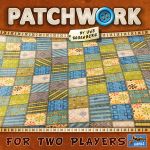
lovely two-player game the game jaur is an excellent excellent two-player game I mean right up there with battle line and lost cities um where we're collecting sets and putting them together and then even the game Patchwork which I haven't mentioned yet because it's a bit of an oddity amongst all these other games that we've talked about but Patchwork we're drafting almost Tetris style pieces and then putting them together to make a little puzzle on our board and try and hold this territory on our board cover as much of it as possible in order to score points or particularly to avoid negative points Patchwork excellent two-player game with a simple draft also by uve Rosenberg I mentioned Lost Cities again there and earlier I said Lost Cities factors in many of these different things it has an element of drafting it has an element of set collection it has a little bit of that it's not quite the area majority thing but it feels similar it's got the traditional card game feel to it it's got an attractive presentation a small box simple rules um and so it features a lot of these different mechanisms which is why it just feels right as a two-player only game and probably as the first one you're going to want to pick up if you're going to delve into this sort of world right so that was a little bit of a Whistle Stop tour through this particular sort of world of games um what do we gain from this I guess we're the aim of it was to look up what's done often in two-play games and therefore
what could be done what hasn't been done um if you look at the sort of list of the most popular two-player only games on board Game Geek it takes quite a long time before you going through that list before you find anything that doesn't fit into these categories um I've never played the game targi uh but it looks fascinating it doesn't look like just a reduced board game that could have loads more players it looks like something unique um I don't know enough about it to kind of give you an overview but can we do worker placement as a two-player only game um without it just feeling like a reduced version of the bigger games we do dice placement um what about simultaneous action selection well I mean Bruno catala has tried a bit of that with um Raptor and haruan what other games could we look at how could an auction work with two players uh what about a a sort of a word game like a code names type game something like that going on a party game um around this sort of this sort of thing you know this is what I'm interested in is working out what hasn't been done what needs to be done from here how can we bring something fresh into this genre not that it's particularly a sort of overdone genre I think there's plenty of scope for for new stuff and actually I could play uh deduction games like Mr Jack all day long without you know keep coming out with those that would be great I'd like a few more of those um anyway uh just
food for thought uh maybe I'll come back to this with some more thoughts and another time thank you very much for watching uh I'm Adam Porter this is Adam's board game Wales please follow me on Twitter at boardgame Wales thank you very much for watching and all the best