Top 10 Cooperative Games





Transcript
These top 10 are a cooperative experience.
We have to work together to come up with a list.
Audience has to watch us. They always love what we do, which is great.
That's always the best part. We always agree. Uh these are going to be our favorite cooperative games.
What's up everybody? I'm Mike. I'm Nick.
We are the brothers of Murf. And yes, we're talking about cooperative games today. Uh, I feel like, uh, for a lot of folks, at least a lot of folks that we have, um, encountered, their intro into board gaming was often through cooperative games.
Uh, it's nice to be able to work together on stuff.
It is. I feel like a lot of people get intimidated in competitive games because they
they know the person teach them probably knows the game more than them, maybe is better at board games because they just have more experience.
Burned by Monopoly.
Yeah. And a lot of people just don't want to get destroyed. And so, a lot of people like co-ops. We got started with co-ops because it's nice when you can just all work together, right? And so we've always loved co-ops for a long time. That's kind of mostly what we played. We then branched out past that. But um still still have a huge place in our heart for co-ops. And so let's talk about our favorite ones.
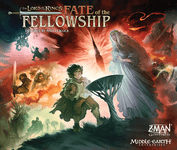
Number 10 is going to be the a new uh game out to everyone. Although it's not new system. This is going to be the Lord of the Rings, Fate of the Fellowship, a pandemic system game. So, this is a uh a pandemic system game, which is a a series of games that are all cooperative uh where you are going to be playing against the game essentially. So, you are going to in this case be the fellowship, the various uh characters from Lord of the Rings, the free peoples that you uh know and love. Uh you're going to be playing as two of them at once and getting the benefits of their different abilities and things. Uh, and you are trying to complete four missions ultimately against uh, Sauron and their evil forces. One of the missions is always the same. You got to destroy the ring. The one ring, got to get that thing in Mount Doom, toss it in there.
Uh, but then every game there will be three other missions that are randomly selected that are going to make you kind of focus on different areas of the map. You know, overcoming uh, certain obstacles, getting certain characters into certain locations, um, you know, setting up safe havens, on and on and on. the the different um stipulations of those missions is is varies greatly and sometimes will give you certain characters that you have to play with in this particular game. You have to have Gladriel for example because it's this mission is in play. Um these games are I think kind of ever living this pandemic games because people like to work together. It's fun to play characters that have their own abilities that only I can do. uh and how do I use my abilities to help the team as much as possible? Uh and then having like a common, you know, a common goal and a common enemy. It's like the game in this uh case is going to be spitting out orcs and stuff. They're going to be marching along these sort of pathways on the board, uh threatening your your safe havens and trying to turn them into enemy strongholds where they can spawn even more people. Uh, so you're trying to build up your armies, go and do battle, complete these missions, uh, and destroy the one ring before all hope is lost. Um, so this is just like a perfect confluence, at least for our taste.
Pandemic was our gateway game. It's the game that got us into board games. Uh, and we've grown up as lifelong Lord of the Rings nerds. So the fact that these two things have now come together is perfect. Number nine is going to be Marvel United. Marvel United is kind of the game I wanted like the Seonss of the world to kind of put out for a very long time, which is like if you're going to give me a game, like a giant Kickstarter with like a billion different characters and all these different expansions and all this different stuff, I need that game to be a short simple game because giant games like Zombie Side or all these like massive like Awaken Realm games, you'll never ever play through all of it. there's way too much for a single human to play through. And so, a lot of it just sits there doing nothing.
But Marvel Unite is a great game because this is a game in the Marvel universe and there's a million different expansions, a million different characters, a million different villains, but the game is very quick. It's very quick. It's like 30 minutes. It's super super easy, super simple to teach. So, you can actually play with all the stuff you have. Eventually, it'll still take a long time. There's a lot of content, don't get me wrong, but this is really great simple game where you're going to have kind of a villain, a main villain could be like the, you know, the Green I almost said the Green Lantern, the Green Goblin, you know, Voltron, um, you know, lots of different people, all the villains you can think of. And then you're each going to take on a specific hero like the Hulk or whatever like that. You're going to have a deck of cards. And the deck of cards are all unique. They have mostly the same kind of stuff. And they're going to have kind of like a lot of basic cards and a couple like of their big power cards like a Hulk smash card which will do a little bit extra stuff. And the game is really interesting in the cooperative nature of it because on your turn you'll get to play cards kind of in this big sequence. And when you play a card, you will get to do the stuff that's on your card and the card that was played previously, which will be played by one of your teammates. And so it's really really cooperative because you're like, "Oh, you need to move.
Okay, I'll play a card that has movement on it so that you can use it during your turn. It's really cooperative, really collaborative in the way you're playing. And you're going around this kind of big circle board to these various locations. You're beating up thugs. You are rescuing bystanders. And then you're trying to overcome the villain. And all the villains are going to work differently. And realistically, there's a ton and ton of ton of heroes, but the heroes are mostly pretty similar. They'll have a little bit of difference between them, but they're not that different. where the really different thing is is in the villains. The villains work very differently. It's still very simple, but they will really change up kind of how you have to play the game. And like I said, there's a ton of content for this game, but it's dead simple to teach this game. Super simple to play. It's got great art, great like chibi minis. Watch Lincoln. Lincoln's constantly painting u Marvel United here on YouTube and then over on Twitch. So, make sure to watch those. They have great minis. But it's that game that I've always wanted. like give me a billion a billion things, a billion expansions, all this content, but in a 30inut game so I can actually play it.
And that's what Marvel United is. Next up is going to be Paint the Roses. This is a cooperative deduction game where you are in the world of Alice and Wonderland and you are, you know, gardeners working for the Red Queen and you are trying to complete her garden. uh the of roses and bushes and things. You're trying to complete the garden before she gets fed up with you and chops your head off. Uh and the problem is is that the queen is fickle. The queen changes her mind constantly about what types of flowers she wants next to what other types, what kind of bushes she wants where, and things like that. And these are going to be uh in the game um shown through whim cards, the whims of the queen. So all of us in the game are going to have whim cards. These whim cards are secret. They've only been told to us and we can't talk about it with anybody else. So we have to communicate secretively through tile placement. So every turn, the active player will add one tile to the garden. Each tile is going to show a type of bush, which will be one of the four suits of cards, and a color of rose. There's like yellow and pink and purple uh and red. Uh, and what you're going to do is you're going to place a tile down. And then you will put any cubes on that tile if the tile you place made any matches for your whim cards. Your whim cards are going to show uh either a color to color match, a
shape to shape match, or for the hard whims, a color to shape match potentially. So, it might be something where on my whim card I have uh I want yellow roses next to red roses. So, if I place a tile that has a yellow rose on it next to two red roses, I put two cubes down to say, "Hey, this tile I just placed makes two matches for my whim." And then any other player, if my tile makes matches for them, they can put cubes down, even though it's not their turn. They're not the active player. And then we have to decide at least one whim card to make a guess on. If they're guessing my whim, I obviously cannot discuss the nature of my card, but everyone else can have great table talk and uh and try to guess at what we're trying to communicate by the tile placement we do. That's the thing I like about this game is it's a game that once you're in, you know, and off and running, I feel like anyone can play.
Uh, I like the idea of like I get to put a tile because I have a sneaking suspicion that this person's whim might have to do with these two uh, you know, uh, spades to clubs for the bush types or something. So, you know, I place a tile and maybe they put one of their cubes down. So, even though it's not their turn, they can be contributing uh, you know, information uh to to the team and stuff. And I love having that kind of again common goal, the table talk that comes up and really seeing how people think uh about things uh and you know and making those decisions, you know, hoping to not be wrong because the queen is perpetually chasing you down. Uh and if you're wrong, she moves double and stuff like that. Just the way the game ramps up. The queen kind of gets faster and faster the longer the game goes as you try to like stay alive, be clever with your clue giving. uh but within the very kind of limited way that you are allowed to communicate.
Number seven might be the maybe the biggest surprise we've ever had in a board game and this is going to be Primal the Awakening. Primal is a giant massive like big monster boss battler game kind of like Monster Hunter World although not Monster Hunter World the board game which is also very good was very close to making this list. We really like Monster World a board game as well, but for us personally, Primal has kind of replaced it. Um, because this is a game where you have some big dragon or some big ice beast or something, some big monster in the middle of the board and then you are these kind of like giant, you know, like giant sword, giant axe wielding like weapons these people could never actually lift. That kind of like that kind of vibe to it. Again, very Monster Hunter World. and you're those kinds of characters and you're basically moving around this monster playing out cards in this in your sequence uh trying to defeat them. The cool thing about this game as opposed to something like Monster Hunter World, now this is going to be a constant Monster Hunter World um comparison because we like both games is the monster just stays in the middle of the board. All it does is rotate, which is actually really really nice because it just puts all of the focus on the players and you don't have to worry about like monster movement and which way they're kind of doing. They just turn. They're all they're ever doing is turning. There's always going to be certain places you can hit the monsters, certain places you can't hit the monsters. You're constantly trying to move around to try and get to where you need. And you're playing cards out in your sequence. And a lot of those cards will kind of chain off of each other. So it'll be like this card does this one thing, but then if you play a red card
after this card, this card then does another thing. And then this card will be like, oh, if you played a blue card before this, you get to do an extra thing on this one. So you're trying to put these sequences out in this specific way, but then also to play your cards, you have to discard your cards to play those cards. And so it's this kind of really interesting nice hand management system. But one of the coolest parts is is that there isn't there isn't specific like hero turns and then monster turns. The monsters have a monster react system where they have these reaction cards and basically when you trigger that reaction card, that's when the monster will go. So, like one of the reaction cards will be like if you start your turn in like the region where their head is. If you start your if you start your turn there, you will have to flip over this reaction card and they're going to do something.
It might be like whenever you play a red card, this reaction card will happen and then it'll get discarded. A new one will come out. So, it's constantly changing and you're constantly trying to manage the kind of monster reaction system in the game and you're like, "Oh, I was going to play these two cards, but like I don't want to trigger all this stuff, so maybe I'll try and do something else instead because that's going to be bad." And it really makes you kind of play the game differently. I think Primal is a masterpiece. I think it's so much fun and I really, really enjoy it.
Next up is going to be Wilmet's Warehouse. This is based on a video game uh that has a really interesting way of being interpreted into a board game. So this is a memory game. Uh this is kind of a a memory and pneumonic device game ultimately where you are workers in this warehouse and you are trying to kind of arrange these tiles on your board which is representative of your warehouse uh in a way that you can remember where you put stuff. Uh, and so all of these tiles are going to be sort of abstract but kind of, you know, uh, will be evocative of something. Some of them looks like like looks like a donut or a rising sun or whatever. And it's ultimately up to the team to create an interpretation for what the tile means. Uh, and then place it down onto this kind of central board that you're working on. So, what's really fun is that in every round, you're going to be adding uh seven tiles, I believe. Uh, and every time you look at a new tile, everyone kind of talks about it. You decide where on the board it should go, and you place it, you're going to place it face down, and you can no longer look at that tile. So, once a tile is down, it's down. So, you have to start creating essentially a narrative for what these tiles, what the art on the tile kind of represents and create essentially a story to be able to remember where everything is placed, you know, and at the end of the game, you're
going to have 35 tiles out there. So, it's really a lot to track, but you end up kind of uh creating a tale. So, the last one we had, uh, it was ultimately all about like a farm to factory to like food production where there was an axe looking piece of art. Uh, and then something that looked kind of like a a cow's udder, but it was someone's hat. And so, okay, that's the farmer now. And they have the axe and stuff. And there's eggs. There's chickens producing eggs. The axe is cutting the eggs and separating the yolks from the egg whites. and those go down into a river and stuff where Poseidon is. And it becomes this non, you know, illogical tale, but something that is amazing because by creating meaning, creating, you know, uh uh something that these things all represent and finding even a weird loose way for them all to be connected to each other, you can actually keep track of where tiles are. Uh, and at the end of the game, you have to basically test how well do you think you as a team remember where everything is. You have all these cards that are going to show all of the potential tile types in the game. And there are many more tiles than 35.
You're going to place 35 every game, but there's several more in the in on the cards. And so, at the end of the game, you're going to deal out every single card. So, you not only have to remember where things are, but you have to make sure you have the right card you're putting down because some of them look similar to other pieces and make sure that you have things in the right place. And then you do a big reveal at the end to see how accurate you were, how quickly you were able to re uh kind of reform your factory from memory. Uh, and the main reason I like this is like the stories that emerge are bonkers and weird and very funny and it's super effective at helping you remember where things are. I have played this game several times and I have always been 100% correct. Me, I say me, our team together have always been 100% correct in recreating the map from memory. And it's it feels like a magic trick every time. And so it's something that like every time I played this game, I remember details of the story we create to explain all these strange abstract tiles and why they're placed where they are. Uh, and so it it's kind of an interesting meta thing where the game is about memory. You have to create a story to remember where tiles are. And then in doing so, I actually remember the specific plays that I had of the game for a long time afterwards. So, it's kind of like a double magic trick really.
Next up is going to be one of my favorite gaming experiences of all time. This is playing through the Fellowship of the Ring, the trick taking game. Two Towers tricktaking game is coming out soon or almost right now. I think it's out right now. We haven't played it yet. We actually have it. But um this series of games we'll say because uh the fellowship of the ring was so good and we played a little bit of Two Towers and um it's also incredibly good. But this is a um a trick- taking game set in the Fellowship of the Ring and now Two Towers and I would assume the Return of the King is coming as well. But you're kind of going through the story, going through the chapters of the book in a bunch of various cooperative trick-taking adventures basically. So, um, each different chapter you're going to have different characters that you either can use or have to use. And each of those characters is going to have a goal that they have. So, say like Pippen, Pippen has to has to by the end of the game round, you have to have won the least amount of tricks. If you don't, then you did not complete your goal and everyone loses. So, it's kind of like the crew in that way where everyone has a goal that they need to get to and if everyone doesn't complete their goal, you don't finish the chapter. You don't get to move on. So, like Pippen has to have the least. Mary can only have one or two tricks. You know, Legalist has to win a certain amount of forest cards. Gimy has to win a certain amount of like like mountain cards. Froto has to win a certain amount of ring cards, things like that. Um, and you're going through these various chapters. And these chapters are going to be like changing things up, changing rules. New elements are coming in as the
story changes. So eventually the Naz Ghouls show up and they start messing stuff up, you know, and it just gets kind of harder and harder and harder and harder and it's really really fun. If you know anything about us, you know that we're massive, massive Lord of the Rings fans. Um, we love trick- taking games, particularly co-op trick taking games. We love, love, love the crew. Really excited for whatever the new crew is going to be. Um, love co-op trick taking games. So, this is like a match made in heaven. The art is like absolutely incredible. It's just so good. I'm so excited to play through The Two Towers. Um, I can't wait for The Return of the King when that comes. I hope that they do The Hobbit after that. I don't even care. Just do it all. It's so good.
Next up is going to be a big one uh that a lot of people dig. It's very challenging. Uh, a lot of content to dig into. This is Spirit Island. Uh this is a game that we uh you know were a little late to the party on. Um it was a game that the first time I played it, which was earlier in my board gaming career, it melted my mind and left it as a puddle on the floor. Uh it was it was so hard to gro and I felt like I was just letting my teammates down. Uh but then I played it a few more times and stuff and now uh understand it much better. I'm not saying I'm great at the game, but I understand it better. Uh and this is a cooperative game where you are spirits that are protecting this island, hence spirit island. Uh and you are protecting it from these invaders that are kind of coming in to uh into your area into your space uh and threatening the the native peoples of these lands.
So, uh, that is going to be the game and the way it acts. And it's going to be kind of doing a program where it's sort of telegraphing, you know, where, uh, invaders are going to pop up, where they're going to move to, what they're going to build as they kind of try to build up on this land. And you, as a spirit, are going to use your abilities through card play uh, and kind of icon set collection. Uh, you're going to try to trigger your abilities to protect the land and create fear. You're trying to make these invaders fearful of this place and basically trying to scare them into running off and and uh uh and leaving this place uh for good to protect the dhan, the local people there. Um what's really cool about this game is you are uh a unique spirit with your own uh unique abilities, some unique uh starting cards and things like that. And it's really about trying to figure, you know, figure out the strategy of your spirit uh and how you can kind of contribute, how you can synergize with other players and the spirits they're playing as. Uh how you can use, you know, your abilities and kind of uh bounce off each other's abilities to kind of maximize uh your turns and things like that. You can also essentially deck build in the game because you can get more cards uh that are going to change and augment uh you know your strategy uh the types of icons you produce to kind of do your native abilities on your player board uh as you try to you know destroy buildings,
remove invaders, create fear to do these kind of big fear events uh and things like that to get uh get these invaders gone. I just think it's something that is with all the the kind of expansions and things they've done, there's so much content. There's so many different spirits to explore. This is a great game solo. A lot of people will two-hand solo it. So, they'll play two different spirits at, you know, at the same time, but playing by themsel and just trying to figure out like, how do these two spirits synergize? How do they work together? How do I make how do I make this whole thing kind of come together and pop off? It's super duper interesting. uh it has kind of a procedural nature for the uh the bad guys and uh you know where they're going to move, where they're going to build, uh where they're going to kind of populate from. And so you can kind of prepare for what's coming down the road and try to be in a spot to intercept their plans and uh kind of retake the island for yourself.
Number three is going to be one that I could see climbing this list even though it's already at number three. And this is going to be the Elder Scrolls betrayal of the second era. This is going to be the big chip theory Elder Scrolls game. So Elder Scrolls are games like Skyrim, Oblivion, Morowind, if you know those kinds of games. It's set in that world. It's not set as any one of those specific games, but set in the universe because you can be in Morowind in the game. You can be in Skyrim though. You can't be in Oblivion, which is a bummer. Um although I guess is Oblivion a place? I don't think it is, right? Isn't Oblivion set in Ciridel? I don't know. I don't know that much about the lore, but nonetheless, um I really really love this game. This is a really really cool awesome game. I really think it's like Chip theory's like Magnum Opus. I I think it's really really incredible. But a lot of those Elder Scrolls games, the the really the fun of it is building your character and then kind of learning the skills that you want to learn. You want to be like a melee person, you're going to bunch of two-handed heavy armor stuff, you can do that. Oh, you want to be a bunch of magic stuff? You can choose whatever you want in the video games. And you can do that same thing in the board game. In the game, you're going to be uh with a certain guild, like the Fighter Guild or the Thieves Guild, you know, one of the guilds. Um, and you're gonna basically have a goal that you have to get to by a certain day. And each round is kind of called a day. So, you're kind of making your way across the map and then getting to this point by a certain day. While you're doing there, you're going while you're getting there, you're going through fights. You might go through like a mine or a delve or something like that. You might go to towns, different things. All those things are going to allow you to gain experience. And you can use that experience to go to towns and basically uh learn new skills. You
will start with some skills. You'll start with a you know a race like half orc and all that kind of stuff. Um but although I think it's just main orc, but nonetheless is you can kind of build your character how you how you want and then you can use that experience to buy more and more dice for those various skill lines and really really choose how you want to be. And it's so much fun. Everything in this game is like relatively easy to do. And what I mean by that is that like it doesn't cost a ton of money to buy like cool items. When you go to a town, you can just spend one action to get some items. You don't have to like pay for them or anything like that. It's just a very generous game where it just gives you a lot. It really allows you to choose what you want to be, choose what you want to do. You have to reach this goal at some point, but you can kind of choose how you get there. You can choose how fast you get there. You do have a time limit, so you can't spend all day doing it, but it's like you can go this way, you can go that way, you can do these kinds of encounters, you can do those kinds of encounters. It's really up to you. It's a very fun, very generous game that I just absolutely adore.
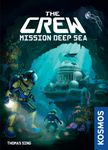
Next up is going to be the Crew Mission Deep Sea. You can also play the original Crew Quest for Planet 9. And uh they just announced another crew coming soon. These are all cooperative trick taking games. Uh to this point, The Crew Mission Deep Sea, which is the second game, is our favorite. Um but really, they're all fantastic. So, this is a game where you're going to be going through kind of a campaign uh of different scenarios of increasing difficulty where you can just kind of play, you know, round after round uh in whatever way you really like. Uh, but this is a cooperative trick- taking game where you're going to get a certain amount of missions, basically requirements that you have to you have to fulfill in order to uh succeed as a team. Uh, and these are widely varying. It might be that a certain player needs to have a certain color and number of card. Uh, someone, you know, can't win any tricks. Someone has to win a certain amount of tricks or the last trick. Um, and and on and on and on. And what is really fun with uh trick- taking games is again that kind of silent communication that can happen. You can't say what cards you have in your hand, but I can play cards in a certain way to hopefully convey that I, you know, have a certain card that I need you to I need you to take. So, it means you need to win this next trick so I can throw this card in there and you can get it and satisfy uh your condition. And I think it's a great way to kind of help teach again that secret language of trick taking, the way you communicate through the cards you play. Uh the reason we
like uh the crew mission deep sea better than the original crew is uh the the second version. All the mission cards are going to show basically a difficulty level. It is like how hard is this mission to uh succeed? Uh, and this one it scales for the player count because there's just this the the simple fact of certain missions are going to be much easier to complete at three, much harder at five, and maybe vice versa. And in the original crew, there wasn't any sort of consideration for player scaling. And here, you're going to be drawing out cards until you meet your difficulty level, and then whatever player count you're at, you will just use that to kind of determine the difficulty level. So, it kind of self-scales a little bit better. uh which I really really appreciate uh the game doing. But if you like trick- taking games or if you want to maybe get into trick- taking games, uh a cooperative trick taker is really a great way to go. Uh because I think we're encouraged to, you know, maybe at the end of a round, uh I can then reveal and talk about like, hey, when I played this card, this is sort of what I was trying to say to help kind of develop that that kind of secret trick-taking language. Because I think a lot of games really uh do well when you can kind of speak the lingo. But if you've never really played a trick- taking game, how would you know how to speak that lingo?
Number one is going to be kind of a not I was going to say kind of a cheat, not a cheat because it's a dang board game. And this is Slay the Spire, the board game. And you could say it's based off the video game. The video game is already kind of a board game. Yeah. And that's why the video game is great. And the board game is also very, very good. But they are different things. They really truly are. Um, and one of the main reasons is because the board game is co-op. Um, the video game is a solo game, although I think there's a co-op mod, which I do want to try now because I really like the co-op nature of Slay the Spire. This is a deck building game where you're going to have a specific character and that character will have a completely unique deck. All the characters are completely unique. They have totally different decks. They work totally different ways and they um do a lot of different things. There are ones that are like really strong and like hit really hard. There are ones that like a little bit more sneaky. there's like this defect that has all these orbs that are kind of going off all over the place. And all those decks kind of reinforce those things. And so you are going through a spire trying to get to the top at the end of the first act. At the top of this part of the spire, there's a boss. You will fight that boss and then you'll go to the bottom of the second act, go up, try to get through three acts. That's how you win the game.
But this game again is all about really learning your character and learning how to work that character. Um because again, they're all different. You really have to learn them. But the main thing that's different in this one is that it's co-op. And so in this game, you could really help each other out because you're basically going to be in these various rows and you're going to have monsters in those rows. And the monsters are all going to hit you. Or rather, the monsters in your row are going to hit you. But you can damage anything. You can damage any monster in any row. So sometimes you're like, "Oh, this one's going to hit me hard. Can we like gang up on them to kill them so I don't get like destroyed right now?" You can really work together. A lot of times you can give things like block and stuff to your um um to your teammates. There's no turn structure, so it's like, "Oh, I'm gonna do this. Put vulnerable on this one, and then you can hit it and do like double damage, and you can really like work together and play cards out in various different ways to uh go through the Spire. It's so much fun. I've played through this game a couple times uh recently, and it's just been so much fun. It's really reminded me just how much I love the video game, how much I love the board game. game. I just absolutely adore it. So, those are 10 cooperative games that we really, really love. Again, cooperative games are the reason we got into board games to begin with. I feel like a lot of other folks uh have experienced that as well. So, let us know your favorite co-ops in the comments below. Uh I there's just so many of them out there, so many great ones, classic ones. So, let me know, let Nick know your favorites in the comments below so we can get a nice uh list of suggestions for people who are maybe
looking for uh games that fit this category for you. Let us know your favorites. Give this video a thumbs up and we'll see you all in the next top 10. Bye everybody.