Top 100 Board Games of all Time 2025 (60-51)
Games in This Video
10 games are featured in this video — they unlock as you watch.






Transcript
Hey everybody, welcome back to When Harry Met Board Games. Today we continue my top 100 board games of all time. Last time we talked about games number 70 through 61. Today we're going to be covering games numbers 60 through 51. So we're discussing the final 10 games in the bottom 50 of the top 100. So without any further ado, let's get straight to the list. My number 60 board game of all time is Magic: The Gathering, the classic grandfather of the collectible card game genre. Originally designed by Richard Garfield back in the early 1990s. And this this game has taken the world by storm from the very get-go. And a lot of people who are big Magic fans are going to wonder, "Why is it so low on my list?" Well, for many years it hasn't even been on my top 100. It's a game that I have enjoyed and I have played casually over the years. But one of the reasons why it's risen back on the list uh to a place of high prominence is because my nephews, my two nephews, have really gotten into this game in recent months. Uh they've even started working on their own collections, have built different decks and such. All the old stuff that I used to have, the the little bit that I had for Magic, I actually gifted it to them.
But I play with them occasionally. Uh and that has, I guess, brought back another interest for the game. I also playing out with the Commander decks. I used to play with the duel decks, two-player one versus one. Uh here with the Commander deck you play a deck of 100 cards. You have your special character commander. Uh there are no duplicates in that 100 deck uh 100 card deck that you're playing. And I play three players with my two nephews, everybody for themselves. Really cool. I've had a lot of fun playing with it. Uh Magic: The Gathering is a game I respect, I appreciate. I like lots of games that have clearly been influenced by Magic the Gathering. So, I have to give some respect, put some respect to Magic the Gathering's name, my number 60 game of all time. Now, my number 59 game of all time, very different than Magic the Gathering. A lot of people are going to wonder why it's even on this list, and that is Time's Up, a party-style game where it's basically like charades, but the game consists of three different rounds. It's a team versus team game.
Sometimes you could have two teams, sometimes you could have multiple teams of smaller or fewer players. And basically, it's like charades, but it devolves or evolves from round to round where early on in the game, you can kind of give any type of clues, including verbal clues, but as the game progresses, you're only allowed to mime or make certain sounds. Later on in the game, your teammates will have fewer opportunities or fewer guesses to uh guess your words. Actually, we play Title Recall, so it's not just words, it's titles of books, of movies, uh different things, of songs. And as long as you're familiar a little bit with pop culture and things like that, you should be okay with this game. Also, you're going to have the same set of cards that the different teams are trying to go through in round one.
They're going to be the same cards that they go through in round two and round three. So, it will become a bit repetitive, but at the same time, that's going to help you uh establish or cement these concepts in your brain so that in future rounds, when people give fewer clues because they're more limited as to what they can do and say, you're going to be able or more likely, you'll be more likely to guess these things cuz they're already in the back of your mind, hopefully, if you have good enough memory. It's lots of fun seeing the people perform and seeing them do their best to to their teammates uh to guess the titles of these different things. My number 59 game of all time, Time's Up: Title Recall in particular. My number 58 board game of all time is Race for the Galaxy. And Race for the Galaxy, along with uh San Juan, I think they were like in production around the same time. They are kind of like the father to the different multi-purpose card games that we have had since then. Uh I think Glory to Rome was also one of the earlier iterations of this genre. I never played Glory to Rome. I have played San Juan. I have played Race for the Galaxy. And it's so cool cuz you're trying to grow. Players are trying to grow grow their intergalactic empire. And they start with their one home planet. And as the game progresses, they're going to colonize other planets. They're going to develop different uh technological items that are going to help their civilizations. And these are all
represented by cards. And the different cards are going to get you victory points. And they're also going to give you particular actions and benefits throughout the course of the game. And the way that they're going to combine or combo with one another in order to not only give you those victory points, but give you that efficient game engine that's going to produce the necessary actions for you to acquire more victory points. Really cool. Once a player has 10 cards in their player area, that triggers the end game. So, you want to be efficient. You do not want to have too many planets or too many developments that are not going to contribute significantly to your empire because you only have room for so much. And each card is either going to be the the card you play in your player area to grow your galactic empire, or the card is going to be a uh money that you're going to use to pay for those cards. So, the same cards you have in your hands, you're not going to be able to use all of them. You're going to have to pick and choose which ones you want to play and which ones you want to use to pay. And also, some of your planets generate resources for you, which will be a way to score additional points. It will be a way to draw additional cards. These resources are also going to be represented by the different cards in the deck and they're just going to go face down underneath, attached to said card, representing the resource that it produced. Really cool.
My number 58 board game of all time, Race for the Galaxy. My number 57 board game of all time is Android: Infiltration. And this game here is one of many games in Fantasy Flight's catalog of games with the Android theme. And this game in particular was designed by Donald X. Vaccarino, a designer that you have heard previously in this top 100 list and you might hear of him again. This game here, just like all of Donald X. Vaccarino's games, has the variable setup thing because basically players are representing these cybercriminals who are trying to break into a bank, hack it for its credits, for its money, hack it for its information. And basically, it's kind of semi-cooperative cuz two to six players can play and they're all breaking into the same bank and they're not trying to stop one one another, but they are trying to be the player who basically comes back with the most money. And if the police get involved, they do not want to get caught and they're totally fine with one of the other players getting caught. So, it's not cooperative in that sense. We're all We all have kind of like the same goal and we're not necessarily directly interfering with one another, but indirectly, we're absolutely trying to be the one who gets the greatest advantage. You're playing these different cards, you're making the decisions to advance into these different rooms and all of these rooms within the bank start as face down cards, so you do not know what's going to happen when you enter that room and
you flip it face up. You don't know how much opportunities there will be there for you to steal data or how much casualties or bad things can happen to you. Different NPCs enter the game and they interfere with you in different ways. We roll a die and we progress the game. There's kind of like a ticking time bomb where eventually the police will be called and they will arrive and whoever is still in the bank in the building by the time that the cut off point hits, they have lost the game and they don't even factor in to the end game scenario. However, all those who are able to make it back out, those players amongst themselves, they will count how much money or how much data or how much credits they were able to hack and whoever has the most will be the winner of the game. Again, really cool because you have two floors represented by two rows of cards that players will be going through. The second floor obviously has the more valuable information. However, if you make it to the second floor, you're basically going deeper into the dungeon if you will and when that ticking time bomb hits, which you don't do not know.
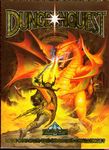
There's a certain predictability to it, but there's also a die roll involved, so it might sneak up on you. You go too deep into that bank. You go too deep into that second floor. You might find a shortcut back into the first floor, but you may not. And if you do and if you do not, it's going to be very unlikely for you to make it all the way back to the first floor and out of the building. It's so cool because these different cards that set up or make up the first and second floor, there's a lot of variety within them and you're never going to have the same exact rooms and they're never going to be in the same sequential order. So again, the variability is pretty much infinite because of that. My number 57 board game of all time, Android Infiltration. Now my number 56 board game of all time, that is Dungeon Quest. And now that I think about it, although these games are by totally different designers, Dungeon Quest is a uh out of print game based on a classic game from the 1980 1980s. I own the third edition. Fantasy Flight did two reiterations of this older game, their third edition and the fourth edition.
The one that I own is the third edition. And this game is a fantasy themed game where players, again, kind of have all the same objective. They're going into the dungeon and they're going on all these different little side quests and they're battling different fantastical creatures and they're trying to get as much treasure, as much gold as possible, and make it out of the dungeon. Because, again, there's a little bit of a time track. And once that time track hits the end, uh there's some predictability to predictability to it, but there's also some unpredictability to it cuz there is some die dice rolling towards the end of the game, just kind of like I mentioned in uh Android Infiltration. Once players uh once that time track has run out, whoever's still in the dungeon has lost. Only those who are able to get in, get what they want, and get out, only those players will be able to factor in into the end game scenario and whoever has the most treasure will be the winner of the game. But, there's a dragon involved in the center of the dungeon where the heart of the dungeon where the most treasure can be had, but if you go in there, you might awaken the dragon and there will be some casualties for that.
Um players are trying to go as long as possible without being knocked out. There are some variants in the game that make the game a little bit easier because it's very easy for players to be knocked out and for all players, actually, to be eliminated. But, there is some variants that allow for players to never be knocked out completely, just lose a whole bunch of their health, uh get set back as far as losing some of their treasure, but they're still in the game. But, it's a tile placement game where as the game goes on, you're revealing these different tiles that represent rooms and chambers and corridors along the dungeon. And sometimes you're not going to be able to get from point A to point B as efficiently as you would want cuz you draw the wrong tile and it kind of sends you on a detour. Sometimes you're sent into the catacombs where you will encounter lots of different dangers, but at the same time there might be some really cool surprises in the form of treasure there as well. Just a fun game, not to be taken too seriously, but very enjoyable when I play it. My number 56 board game of all time, Dungeon Quest.
Now we move on to my number 55, which is Greed, another game by Donald X. Vaccarino. Two games within the last three, Donald X. Vaccarino. Greed is a pick and pass card drafting game with a 1960s mafia gangster mobster theme to it. And I have already had two three other pick and pass card drafting games in this top 100 already. This is my fourth one, it might actually be my highest one. So, I do like the genre, I do like the board game category or mechanism of card drafting pick and pass in particular. And I find that this game gives me my most bang for my buck. Uh it's just a a small box, it's out of print, and I don't think it's done very well over the years, but there is so many there are so many different combinations that players can make with the different cards that they draft. And the first couple games that you play of this, you're kind of getting a feel for it, but as you get familiar with the card pool, it becomes more likely for you to strategize and map out exactly what you want to do. But, the cool thing about this game is that there is about 80 or so cards in the deck, but every individual game is only going to have about 60 of those 80 cards in the playable deck. So, that's something to keep in mind because, as I mentioned, when you become familiar with all the cards in the deck, you start to map out
strategies. Well, you have to account for the fact that like 20 cards aren't even in the game and you don't know which 20 cards those are until you cycle through the pick-and-pass mechanism a few times. At first, let's say you're playing with four other players, you do not know every card in the game. But maybe once you've gone around four times, at that point, you can know, "Okay, well, this card isn't in the game." But if you make a decision early on setting yourself up in the first round or two for a very particular card, you might be greatly dis- disappointed later on when you find out that that card's not in the current game. But I actually enjoy that unpredictable nature uh to to this game. Really cool. My number 55 game of all time, Greed. Now, we move on to my number 54 board game of all time, and that is Mercator, designed by Uwe Rosenberg. This game This game has a Renaissance theme. Players represent different merchants who are trying to acquire these different types of goods, and there are so many goods in this game, and you're basically trying to interchange them to fulfill different contracts, and the contracts are going to give you victory points.
And as you advance through the different levels of contracts, now it makes subsequent levels available to you. So, until you've done a level four contract, you wouldn't be able to do a level five contract, and so on and so forth. And finally, as you get to the real high contracts, it becomes harder to fulfill in the sense that there's much more resources or goods that you have to provide in order to fulfill them, but they're going to become much more rewarding. Now, I have mentioned in the past in this channel that this game, for a component from a component perspective, from a component standpoint, it's terrible because you've got all these different resources that are represented by small little tiny bland cubes, they're color-coded, and on top of it all, one color represents two different goods cuz you've got like 16 goods and you only have like eight colors. So, it's your placement of that cube on your board. Each player has their own individual player board, and they have the different compartments for the different resources. It's where you place that cube on your board that determines locks it in for that particular good because the color itself or the shape will not tell you.
Um none of the pieces here are really impressive. The board is some type of abstracted map of Europe. It's not even very concrete. It's not very um from a graphic design perspective, it's not very captivating. But, mechanically speaking, I always enjoy this game. My number 54 board game of all time, Mercator. Now, we move on to my number 53 board game of all time, and that's Le Havre. Another Uwe Rosenberg game. So, we just talked about Mercator. Here we have Le Havre. This game, such a fun game. It's one of my wife's favorite games. Uh players are uh working at a port, and we are uh shipping goods, and we're turning those goods into gold. We're turning those goods into money. We're turning those goods into upgraded versions so that we can make more money from them.
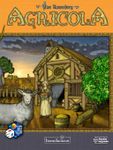
Uh players are also acquiring different buildings along the way, and these different buildings are going to give you the ability to do all these things, to convert, to ship, to sell all of these goods, all of these items for money. Now, in this game, the goods are represented by uh cardboard tokens double-sided with the standard version of a particular good and its upgraded form as well. Pretty decent artwork. From a design perspective, much better than Mercator. Really good game. My wife enjoying it absolutely helps it. My number 53 board game of all time, Le Havre. Now, we move on to my number 52 board game of all time, and that's Agricola. Another Uwe Rosenberg game. So, it seems like all these Uwe Rosenberg games have kind of been lumped up into this particular section. I will say that these games all ranked higher on my list in previous years. They have kind of gone down. I've kind of cemented my particular preferences within the board game hobby in the last couple years. I mentioned in my introductory video for this top 100 that over the years I've gotten rid of a lot of games, and I've kind of just settled on the games that I really enjoy playing the most. But, Agricola has made the cut and is still very close to making it to the top 50 right here at number 52. This is a farming agricultural theme game, worker placement.
Uwe Rosenberg did a great job. Players start with a a family, a husband and wife, and as they progress they have children, which brings about more demand because that's another mouth to feed. But, at the same time as you grow your family, each individual child you have represents another worker. So, that's another action you could take in the round. So, it might be worth having to provide that extra plate of food in order to take those extra actions. And in this game you're actually literally are providing plates of food for your family members in order to not suffer different casualties, which will take away points from you at the end of the game. And it's kind of like a point salad because you could choose to focus on animal husbandry, where you've got your different flocks of of sheep, your herds of cattle.
And as you have pairs of them, they will multiply, they will breed, and they'll have more of them, and they will get you points depending on how many you have within your different uh stables and such. Really cool. You could plant and and harvest different crops. That will also give you victory points. Uh, you will get a little bit penalized if you don't do a little bit of everything. And there's some people who do not like that. They find that to be limiting. They prefer Caverna, its cousin, which will not make it to the top 100. I actually uh sold my copy of Caverna. I enjoyed it. I enjoyed the fantastical theme to it. But Agricola is my preferred way of doing it. And the fact that it's a little bit on the stingier side as opposed to Caverna, I actually prefer that. As a matter of fact, I made a video on the channel comparing Caverna and Agricola and telling people why I prefer Agricola over Caverna. But again, Caverna is a fine game as well. My number 52 board game of all time, Agricola. And now we move on to my number 51, the last video or the last board game for this video. And that is Mage Knight by Vlaada Chvátil. And we have had a few Vlaada Chvátil games prior uh to this video already on the top 100 list. This game here is one of his more famous games. Obviously, Codenames being number one.
Fantasy-themed game. This game makes it to like all the solo lists. Everybody loves to play this game solo. And I am no exception. As a matter of fact, I don't think I've played this game at two or three or four players yet. I've only played it solo. Um, it's a fun game. Simple deck building. I say simple because throughout the course of the game, at least the way I play it and the scenarios I've played, you're not acquiring too many cards. Uh, it reminds me uh a little bit of A Study in Emerald um by Martin Wallace, another great deck building game with a Cthulhu theme, where yes, deck building is the mechanism, but it's not like some of the other deck builders that you might be used to or that I'm used to, where you're acquiring 15, 20, 30 cards throughout the course of the game and your deck really changes a lot. In Mage Knight, you might acquire 10 cards, I don't know, five more realistically. Um but it's such a fun game. I love traversing the map. I love encountering the different enemies and kind of solving the puzzle behind defeating every enemy based on their individual stats they have. Their stats with how much they hit you with, they have their stats as to how much life they have.
Some of them have additional stats that modify their defenses and you have to find a way to work around it and based on your current hand, you got to map out how you're going to go about attacking this enemy. And I find that to be really cool. I also love how the board starts with just a few tiles, but as you progress and go forward, you add additional tiles and it kind of expands, it kind of unfolds and you start to realize what may or may not happen or where you may or may not go. You also do sustain wounds throughout the course of the game, which will be represented by cards that do go in your deck and dilute your deck because they're basically duds, but there are ways of healing. You do have cards that help you heal and eliminate those cards so they will no longer clog your deck.
It's a fun game. I do have to play it more often. Um it's a bit on the heavier end of some of the solo games that I play. That's just Vlaada Chvátil's style. He He is a very crafty designer who makes very thought-provoking designs. Um but yes, I got to play it more cuz I do suspect that if I play it more, it has a good chance of rising even further on the list. My number 51 board game of all time, Mage Knight. And that's it for today's video. Thank you so much for joining us here, guys. Don't miss out next time when we break into the top 50 board games of all time. Please comment down below. Tell me what you thought about this particular 10. Which games were you surprised by? Which games are you totally disappointed made it this far in the list? I'm Harry from One Harry Per Board Games, guys. Saying to take care, everybody. Stay safe. Stay healthy and have fun gaming. Bye-bye.