Top 10 Civilization Games
I love building civilizations, man. Don't you? >> Before that was preceded us just staring at each other, wait for one of us to start and then neither of us started until Mike said, "I love civilization games, too. Let's talk about them. What's up everybody? I'm Mike the Brothers Murf and it is time to talk about our favorite civ building kind of games.
This is games where you're you're building out a civilization or you basically are a civilization that you are because there's a lot of these kinds of games there kind of like ones that are about like civilization as a whole or ones where you're like oh no you're just this civilization everyone is you're kind of playing like that but I it's people right it's generally tends to be um in the past like ancient stuff it's always been a thing of fascination for I feel like most people so it's fun to be like oh I'm playing as these people this time and let's see what happens kind of thing >> kind of rewrite history in the process we're going to talk about 10 games today that we really like that are uh civ builders of differing natures.
[music] Number 10 is going to be it's a Wonderful World. Now, this is more Civilization in terms of the theming and more so than well, I guess all of these are, but very it's more abstracted than this one, I'd say. But this is a game where you are drafting out these kind of civilization cards, and these are going to be different things that are happening through time.
And some of these are like kind of in the future, some of these are kind of in the past. These are various events, various technologies, all those different kinds of things. But you're essentially drafting them. [music] And then once everyone has drafted the cards that they're going to have, you will either choose to put them into production, put them into construction, I should say, which basically means you're starting to build those cards, or you can recycle them.
When you recycle them, you will essentially get a resource that you can immediately put on a card. Every card to be like be fully put into play and go into your production row will need a certain amount of resource. So it might need like two green gray resources which are like material, two blue resources which is like population and one green resource which is like oh no blue is I can't but the various colors of resources and once a card is completely full of resources that it needs those resources go back to the supply and then that card is now done.
It is built and it is now in your production row. [music] Once everyone has put cards into construction and recycled cards, everyone will then start to produce all of these resources in a specific order. I believe it goes gray, black, uh, green, yellow, blue, I think is what it is. If it's not, it's something like that.
So, basically, everyone will produce all the cards in the production row that produce gray resources. You will then get those resources, which you can then put on cards, and if you finish a card, that card will go into your production And the cool thing is is if the thing that that card produces hasn't happened yet.
I.e. it's like greed which is one of the later ones. It will get to produce this round which is really really fun. And again you're building out a civilization. There's like again it's kind of like old timey but it's also in the future. It's very abstracted but it is still kind of like a civ building game to some degree but ultimately you're drafting cards and trying to put them into production.
We absolutely adore this game. It's super super fun. And actually the art and the stuff that's happening on the cards is really really cool. But a lot of times you kind of ignore it cuz you're just trying to draft. You end up playing pretty quickly, but it's still very very good. [music] Number nine is going to be Toantan Sue.
This is uh what is called you know the T series of games largely by uh Board and Dice. Uh this is a game where you were the Inca Empire way on back in the day and you were kind of building up uh civilization uh kind of conquering you know nearby uh nations worshiping uh and kind of uh doing all this stuff that's centered on this board which is kind of representative of a big old hill that you are uh planting on building on.
and you're worshiping at the top of this hill with your kind of high priests uh as you build up different aspects of of your civilization. So, we're all kind of the same group of people here. Uh what's really interesting is uh that board, which again is sort of representative of a 2D flat hill. Uh is a big map for [music] different worker placement uh options to you.
there are all these kind of little sigils uh around on the board and you're going to be playing a god card [music] and you can place a worker on the symbol that matches the god card. So, you know, to further kind of add layers to things, there's kind of different sections of the hill that are going to be based on where your high priest is located.
[music] And if you want to go further away from that kind of main section where your priest is located, you're going to have additional costs and things cuz it's taking time and energy to just have to wander kind of further from your home base at the top of the hill there. Uh and you can go down and place workers taking uh between one and, you know, three or four different [music] actions that are surrounding the worker placement spot.
And there's many different things that can change uh how many actions you kind of get and stuff. There are different colors of workers you can place. And sort of like five tribes, if you're familiar, the different colors of the uh meeples that you place have different abilities, oftentimes giving you bonuses uh if you're matching a color, you know, a blue worker [music] to a blue sigil space and things like that as you're trying to build up, get food, uh worship, [music] move up temple tracks, do these conquering actions, and on and on and on.
So, it's just a really fun, interesting [music] style for worker placement. uh with that kind of giant board that you're sort of slowly covering up throughout the whole game. [music] Number eight is going to be Zulkan. [snorts] Zulken the Mayan [music] Mayan calendar is such a cool game with one of the best gimmicks in board games ever.
We love a good gimmick here and the one in Zulkin is really outstanding because it has the big Mayan calendar in the middle and a couple of different gears around the board and they are all interconnected like a good gear is. [music] And every single round, the big uh Mayan calendar will turn one click.
And that will then turn all of the other [music] um gears one click. And you are again playing as the Mayans, one of the civilizations. And you are getting food. You're building these like buildings. You're getting resources like wood and stone and gold. Um you can get these like kind of blue uh crystal skulls and stuff like that.
You're putting those out. But the kind of crux of the game is all about putting a worker on or taking workers off. That's all you can do in your turn. It's actually relatively simple. You can put workers out onto the various gears and sometimes you'll have to pay food to do so. Or you can take workers off and do the actions.
That's the only things you can do. Those are the two things you can do in your turn. That's it. Put workers out or take workers back and do the actions. It's pretty simple actually. But the thing is is the longer your worker stays on a gear, the more powerful those actions are going to get because like I said that my encounter is click [music] click click turning once per round and all those gears are also turning which means your workers are kind of going on a ride and then basically when you choose to take them off is going to dictate what action you do.
And the actions are going to get stronger and stronger and stronger the longer you leave them there. But the longer you leave them there, the less they're doing because they're not then going on to different um gears and doing stuff like that. It's such a cool gimmick, but it actually really really works.
[music] And it's kind of surprising that no one else has kind of taken that gimmick and used it in another game cuz board games and I think this is a very good thing is a lot about sharing and kind of like I really like this thing from this game. I'm going to take that and put it in my game. [music] It's kind of odd that no one really has done it with the Mayan calendar.
Um the kind of big gears in Zulkin, but Zulkin is a great game. It's the kind of classic Euroey looking game that uh is about a civilization and it's just so so good with probably the best gimmick in all board games. [music] Next up is going to be a game called Monumental. This is a big uh uh deck building game ultimately where you are going to be a different nation.
Uh [music] so you know you can be the Japanese or the Greeks and things and you're going to have some game elements uh that are common, certain cards and then certain things are specific to your nation, certain kind of technologies as you kind of advance your culture uh that will be unique to your faction and you are doing kind of classic civ game stuff where there are going to be wonders of the worlds.
you can build uh you can go kind of explore out onto a map uh conquer you know different locations and things that are going to give you different resources and benefits kind of throughout [music] the game as well as some of that area control uh as well. The things I really like about this game is it is um kind of classic civ feeling but when I first saw this game and it has these really cool minis.
There's a very nice deluxe version of this game. I figured it was going to be like a dudes on a map game and it's a deck building game at the center of it. You know, you're going to make this cool tableau of nine cards and you're going to activate one row and one column. So, you will activate five of those nine cards.
I thought that was a really interesting way to go about deck building. Instead of just having, you know, your five cards in your hand and that's what you play, you have some choices about which cards you activate and kind of remove from that tableau and then refill. Uh, and I thought that was a really kind of fun way that I had never really seen before of approaching a deck building game.
I like the different nations, the ways you can kind of advance, the kind of feels and flavors they give you, uh, all while doing some kind of like really classic Euro game. Great stuff. [music] Number six is going to be Seven Wonders Duel. You can also choose seven wonders, seven wonders architects, all of these different games.
They're all about generally civilizations, particularly seven wonders and seven wonders duel or it's kind of about seven the seven wonders and the seven wonders will come from various civilizations. And this is a game that is kind of the the thing that I think of really when I think of like civilization game because you're basically going through kind of like the old because these are the seven wonders of the olden times like the pyramids and the hanging gardens of Babylon and things like that.
And in Seven Wonders Duel, you are getting these cards that are going to build out your engine [music] from this kind of card pyramid. So you can only take the cards that are available at that moment. But when you take a card, you very often will reveal now a card or at least make a card available for the next person.
So this game is all about jockeying and trying to [music] get the resources cards that you need without giving them to another player. Cuz nothing worse than when you're like, "Oh, I'm going to take this card." and something flips over and you're like, "Wow, really would have preferred that card and now Mike is going to get it." Which is a bummer.
But nonetheless, uh it is very very fun. [music] And you're getting these resources and then now you have like stone and you're using those stones and brick and wood and all these different kinds of things [music] to then you buy these other cards and use those and eventually you can even build the wonders.
So again, you can build like the pyramids, the pyramids, you can build the hanging garders of Babel, you can build the library of Alexandria, all this kind of stuff or I don't think the Library of Alexandria is one of them. Colossus, we'll say, you know, all the different wonders. It's very, very good.
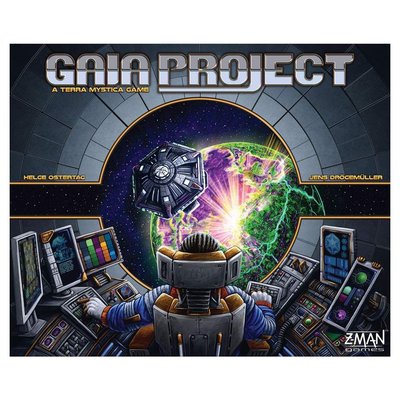
And I really think it's kind of like what a lot of people think of when they think of a Civilization game is a game like this. [music] Next up is going to be Gaia Project. This is a game where you're going to have a specific faction. You're some kind of alien [music] race uh that you have a home planet type uh a certain color and you are going to be kind of trying to explore out onto the board and uh build buildings, upgrade buildings, get your planetary institute and things like that out and really kind of harness the abilities of [music] your specific faction.
Everyone will be asymmetric uh and have different kind of things they can do, different focuses. um you know, they might start with slightly different uh resources or on certain technology tracks and stuff like that. And it really is trying to figure out how do I make best use of my faction, the bonus uh kind of actions each round.
There will be certain things that'll be worth points if you do them. How do I, you know, make use of the layout of the board to try to score as many points as possible? So, this is one that's really fun. This is based on Terrammystica. The entire line of Terrammystica games uh have that kind of central thesis of you are a specific faction.
You can only live in one type of place. So if I want to move onto a space that isn't my home planet, I have to terraform that planet to my home planet type. So I can then expand onto that space. And again, there's many ways to kind of go about doing that. [music] You can form federations. This is kind of a point salad situation where there are many ways to score points.
And I love that as you put buildings out onto the board, you are uncovering various incomes that you will get at the start of each round. If I want to upgrade a building, however, I'm going to replace a building already on the board with a new type. And that old building goes back on my board, potentially covering up some income.
So, you're really kind of playing with what types of resources do I need throughout the game. Maybe in round three, it's going to be really important to have a bunch of money, so I need to get my trading posts out there and stuff like that. There's a ton of really fun stuff uh to consider. Every game I feel like is a little bit different because the board map will change.
Uh you know, the different factions and how they sort of interact with each other might change. Uh and then again, those bonus uh points for each round and at the end of the game will also change that will give you kind of a unique puzzle every single time. [music] Number four is going to be Empires of the North.
So this is again one of the ones that's not um true civilizations. This is just kind of these various empires, these various civilizations that you are playing in this game and each one is very different. We also get chosen chosen like kind of imperial settlers. You're also kind of civilizations in those.
But this even more so because you are specific empires and you are specifically that empire and all the empires have a completely unique deck. They all have a thing [music] that they kind of do and there might be a little bit of uh crossover between them, but a lot of times they feel very very different.
So like this one is all about like raising other clans. You can go and like take other uh empire stuff and do that kind of stuff and then this one's all about building these kind of cards and this one's all about resources. They're all different and you kind of have to play them differently, [music] but it really is that.
It's like this empire, this civilization, and you are basically [music] working that engine as well as you can. And it's kind of a race to 25 points. And this game is also one of those ones that always creeps up on me in terms of you're kind of building out your engine, building out your stuff, and then also boom, the game ends, and it happens really, really quickly.
But I really, really like this game. I'm This is one of those games where I'm like, just give me a random faction. Give me a random civilization. I'm going to play as them and see how I do. It's very much that kind of game. I really, really love the art and the look of this [music] game. And again, it's just one of those things where I'm like, give me something random and I'll figure it out.
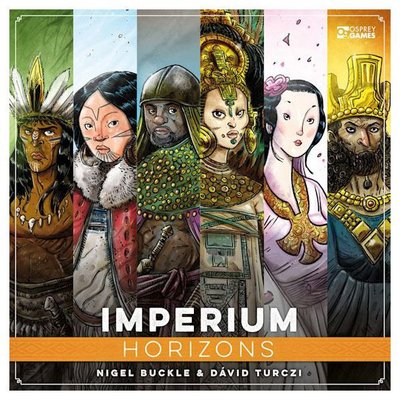
[music] Next up is going to be Imperium Horizons. Uh, these games are compatible with Imperium Classics and Legends as well. So, we'll just say the Imperium Games [music] uh as a catch-all. This is a big uh deck building game where you are going to be a specific group of people. [music] I say group of people because in Imperium Horizons, we have things like Martians and cultists as well as, you know, Mayans and things like that.
So, we're really kind of all over the place now. But, you're going to be a group of people or an ancient civilization. Uh and you are going to have a [music] unique starting deck of cards. Uh you'll have some cards that are available to you at the very beginning. Uh you're going to have some cards that you'll be kind of [music] gaining throughout the game as you cycle your deck because this is a deck building game.
Uh and you're going to have kind of your main leader and [music] focus for ways that you're going to generate and score your points. So that's something that's really fun is, you know, now with all three of these games, there's I don't know 30 plus different factions you could possibly [music] play.
Each of their own little kind of puzzle for you to solve. So, there's just so much content here. [music] It's really fun to see the way they kind of uh you know, interpret [music] what a nation is sort of known for. You know, the first uh version of this game I played was Imperium Classic. So, uh you know, I was Alexander the Great and stuff, and there's certain types of cards called region cards.
And so, I wanted a bunch of region cards cuz I was sort of spreading out far and [music] wide. Uh and that felt really kind of cool. And other uh you know, factions are going to have a different [music] feel. Some might be more aggressive in nature. Some might be just really kind of engine building focused uh as you play out your cards and kind of build your tableau and then purchase these kind of common cards from a deck uh or from the market I should say that will [music] kind of give you new things that uh that you can kind of rewrite kind of the story of these ancient peoples and stuff.
It's super duper fun. Um there's just so much to explore. It's a [music] really good solo game experience as well. So, this game can be big and long, uh, and there's not always a ton of direct interaction with other players. So, [music] this is a great game to just dig into as a solo puzzle, and there's just literally so much content to explore.
[music] Number two is going to be Civolution. Not Civilization, but Civolution. Very, very close though. But nonetheless, uh, Civolution is a game where you are, [music] it's interesting because you are a deity, you are a god, and you are kind of making a civilization in the game kind of is like a big experiment in this world.
It seems like everyone is their own deity, and you're all kind of making your own stuff and experimenting and doing some mutations and kind of just seeing what happens, which is an interesting take on the kind of civil civilization theme. But basically, you are going to have your own people and you have like tribes out on the port and you again are a deity.
And so you are doing these various actions through dice and that is going to allow you to move your tribes around and like migrate around, [music] gain resources from the land, bring it back to your main board, which you can then use to do other things with. You are going to be playing out these cards.
These cards are going to require these resources to be played. And these cards are going to be various technologies, various mutations. Like you can get like a beak or you can get like wings. And it's all pretty abstract. It's mostly just a card that's going to give you some bonuses, give you some track bumps, stuff like that.
But they are all various things like technologies and all that different kind of stuff. And so you were actually instead of being a civilization like in something like Zulkin which we talked about earlier, you are creating a civilization, you are creating kind of a world and a people which I think is a really cool interesting take on the civilization genre and it's just good crunchy Stephenfeld goodness.
Love it to death. Colution is very good. [music] We'd be remiss if we did a list about civilization games and not have through the ages as our number one or certainly on the list anywhere. Uh but this is a game that we have played a ton through the ages is [music] a classic uh civ game kind of based on those you know civ video games uh and and everything like that where you are going to start in the age of antiquity.
you are going to be moving up through time uh having different world leaders and stuff that we uh all know and remember. You're going to be upgrading your sort of uh technologies and [music] your resources you produce and ultimately trying to produce culture which are the victory points in the game.
There's also science. There's kind of your building materials resource and food which is going to help you increase your population and build buildings um and develop technologies with science and stuff as well. So, this one is just so fun because there are, you know, a ton of different cards. There are, [music] you know, four different resources that you can essentially engine build and build up kind of turn after turn production of these different resources and spend them in different ways.
You kind of eventually want everything to funnel into producing as much culture as possible, but you can have a really strong military and kind of attack your opponents. Uh, win out on these kind of event cards that pop up. oftentimes will deal with the amount of strength you have. [music] Uh there's different uh colonies to explore and things as you go through the game that might give you different types of resources.
You're trying to keep your people happy uh so they don't revolt against you and and not produce your resources and things. It's just really really fun and interesting. Feels very classic. As you move through eras, uh you know, you're going to have to get a new world leader because the time of of Sunzu is over.
You know, we're now moving forward. You go all the way up into modern times. [music] Um, and it's just an engine builder to to rule all other engine builders because you're not just trying to build one thing. You're building up these multiple types of uh resources for you to use in the game. And then there's a million kind of ways you can employ uh using those resources.
So, it's really really fun. I've played this game a ton. It works fantastically as an app cuz it takes care of the bookkeeping for you. So, I highly recommend uh you getting the app to play if you uh are feeling intimidated by the physical game on the table. Uh it's just super duper fun and one that I just never ever get tired of playing.
So, that was our top 10 civ building games. Let us know down in the comments [music] below the civ games that you like. There's a couple big ones out there like Nations and stuff like Civilization New John that I really want to play. We haven't had a chance to play. So, if you're wondering where they are, that's where they are.
Uh but nonetheless, let us know your favorites down in the comments below. And I think that's going to be it. >> That's going to be everyone. We'll see youall on the next top 10. >> Bye everybody.