10 Board Games That Take 60 Minutes and Are Worth Every Second
Games in This Video
9 games are featured in this video — they unlock as you watch.






Transcript
Hey everybody, today we are going old school and going back to doing a top 10 video and we're going to be talking about 10 board games that take approximately an hour. So, I believe it or not out of all the board games out there, there aren't actually that many that sit at that hour time frame mark. Now, usually you're looking at filler games which are like 30 minutes or below. Sometimes you're creeping to those 45-minute games and then after that it tends to go to those 90 to 120 minute game. So, it's a bit of a sweet spot that I personally like. I I really do like those games that you can kind of get done in about an hour's time because it kind of feels meaty enough to sink your teeth into, but it's not necessarily got to be the kind of main event um of your gaming night. So, these aren't in a particular order, although they do they do tend to um ramp up in terms of my enjoyment, but not not precisely.
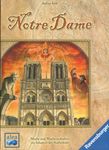
Um and I've tried to go for a bunch of different types of games here. So, if you do want a a catalog of hour-long games, then this could be a good place to start. So, let's get started with number 10 and we're going with a an old school Rüdiger Dorn classic with Istanbul. So, Istanbul, old school feeling euro. As you have your worker, you're going to be navigating around this board of tiles, and you're trying to plan efficient routes to collect resources, get money, um you know, improve your wagon to carry more goods and you're doing this in the most kind of efficient way possible to waste as little movement as you can because every time you complete a small objective, you're going to get given a ruby and it's a race to get so many rubies. And what I love about love about this game is this kind of like trademark Rüdiger Rüdiger Dorn mechanism where you have a stack of your merchants and when you land on a spot, you have to deposit one of those merchants. And but when you run out, you're going to have to backtrack on yourself to pick them back up so you can continue your journey. And you can create these nice little loops and these little kind of efficiency loops to try not waste any movement, but of course people get in your way, which can cost you money and time and effort. And it's just a very nice, well-put-together game. And I would also recommend the expansions to this very clean design. So, let's move on to number nine with um Notre Dame. So, Notre Dame is not necessarily one of my favorite Stefan Feld games, um but I do really
appreciate that niche of what this game is trying to go for. It does again tip on that lighter end of the Euro scale. And this game does do a lot of things differently to other games. So, at Notre Dame you are essentially drafting cards and then putting cubes down on these different actions depending on what you've drafted. And the more you invest in certain actions, the more potent those actions will become. And then for example, you can kill the rats off quicker, which is going to help you not suffer negative points. Or it will let you kind of travel around the map quicker with your little wagon picking up these bonus tokens. Or you can donate more tokens to Notre Dame Cathedral and win majorities that way. Um [snorts] but I do really like this idea that you you can't do everything. Do you want to kind of diversify and be a jack-of-all-trades, do everything moderately well, or do you want to be super skilled at one particular action?
And you've also got that constant pending doom of having to fight off these these plague-ridden rats um to avoid those negative points. Uh moving on, we have at number eight, the Foundations of Metropolis. Or Foundations of Rome, depending on which version you want, but this is the the more widely available, uh more affordable version of the game. But rules-wise, I believe they are identical. So, uh Foundations of Metropolis is a a lovely kind of entry-level, almost like family weight plus game, um where you are trying to put your buildings down on the shared map to put them in the most points lucrative areas in order to get money score points when it comes to point scoring phases, but also to try and improve your um or get as much population as you can to score points in other ways.
I love this action system in this game where you have, I think it's like two or three different things you can do on your turn, which makes this game remarkably pretty easy to teach and play. And all you're going to do is going to be buying these different plots of land. And you know, the longer the land's been up there neglected, the cheaper it gets. And you're going to claim those bits of land with your little markers. You think of something like Chinatown. And then once you want to, you can commit buildings from your personal player board onto the main map, which will start generating you points etc. Um but one of the really nice things about this game is that once you've committed to a certain building, it's not necessarily locked there for the rest of the game. You can keep building around it, and then um remove the existing building to put bigger, stronger buildings down on there. And there's lots of piggybacking off other people's efforts. And what do you want to do first? Do you want to get this building down before the scoring triggers? Do I want to secure myself all the land by buying all these plots up?
Do I need to really stock up on my coffers of money to keep on going? You know, really like every edge of this game has been sanded off. It's as streamlined as you can imagine. And I'm always impressed when that is the case. So, kind of kind of like an economic uh tile placement game, Foundations of Metropolis is a great place to start. Um onto number seven then. And at number seven, I have one of the most recent games uh on the list of that I've I've added to my collection. This is a game called Arigato. So, Arigato is more of a card driven little tableau builder as you are building up this little grid of I mean, it's only a 2 by 2 uh grid of cards and whenever you place these cards down you're going to have a an ability that's going to be active as long as it as it is in your little 2-x-2 grid. Like for example, it could say well whenever you draft this card you get this resource or whenever you complete this card you get one of these or x amount of points. And as you can imagine you can try and synergize these four cards together to keep on giving as much output as possible. But the twist on this game is that again you are locked into these four spots and once one of them is completed you're going to add it to your kind of scoring pile which means the power is no longer active. But you can choose to hold on to them as long as you want to but you are clogging up one of your spaces. And I love that kind of being so confined and restricted in a game like this. And the game also kind of gives you a bit of
pressure by urging you to complete these different goals that will come up throughout the game. And the more you do the more points you're going to score based on this sliding scale. I've yet to do them all but I do vow to do that. So if you like these card driven mechanically sound games that's a little bit subtle but clever then I would really recommend giving Arigato a try. Now moving on then to number six. Now this is actually might be maybe the maybe top or maybe second favorite game on the list but I put it here because out of all of these this is probably the biggest stretch to get into the hour. And this is the Druids of Adorra. So the second Stefan Feld game on the list and probably be my favorite game of last year. So this is a dice driven very point salad-y a route building style game as you are deploying dice onto this variable map and getting these kind of mini actions as you do so which will let you unlock special abilities or get more resources to keep you going Unlock more dice to play with. Um lots of different things you can do. You can like get personal objectives and things. It really does have a bit of a kitchen sink of mechanisms in this game.
But again, I love how restrictive it is because your your fuel in this game needs I think they're like berries. Um you you do run out of them really quickly and it comes with this kind of polarizing mechanism where you want to get high-valued dice onto the board because you'll control certain regions at the end of the game, which is another one of the the point-scoring categories. But the higher the dice pips you put down, the more expensive they are to put down. And whereas you can go cheap and cheerful all over the board and it'll be very affordable, but you're going to be missing out on end-game scoring opportunities because of that. It's really nice again. I I love how it ticks along at a really nice pace. Um there's so many different plates you're spinning. You want to get everything done, but there's just not enough time. I think there's only like 13 actions you take in this game. And these are the kind of fell games that I really do enjoy. And they're they're easy to play and explain, but there's lots to go for.
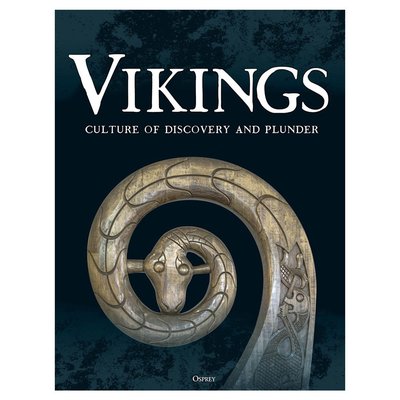
You can't do everything and it makes you want to keep coming back for more. So fantastic game, but maybe at the lower player counts or if you're more familiar with the game, you can get it into that hour mark. Um if not, you know, more than likely you're looking at 75 minutes, um but it is certainly doable. So that is the Druids of Adora. Uh at number five then, a game you're definitely going to get a couple played within the hour is Vikings. Now, Vikings is a game that I've been raving about for a long time and I always say this is probably the the strongest example of a game that could be a colossal hit, but nobody's played and it's just not available. And I have no idea why. You know, this is made by the great Michael Kiesling and it is just the quintessential kind of gateway plus lightweight Euro tall placement game that just everybody could uh enjoy. So, this is a a tile drafting game as you're drafting tiles based on this really cool cost mechanism where um once the cheaper tiles are bought up, the wheel is going to spin and make the more expensive ones cheaper. And you can use that to your advantage and try to, you know, leverage it against your opponents, try to make them uh force them into moves that will make your turn cheaper.
Uh and essentially you are building these little peninsulas out in rows um and all of which will do different things. So, for example, the yellow will give you more income or I think it's the blue workers or the Vikings will give you or feed your workers for for the end game. Or some will just generate you points and some of them will fight off threats. And it's another one of these games where you can't do everything. You do want to um carefully diversify and get things exactly right in the rows and columns to block things and so on. Um and it's just it offers so much and it's so engaging and it just keeps you on your toes from start to finish. Um the extra little module that comes with the game is fantastic to give you a further incentive to go for the most expensive tiles. And it's surely a matter of time before this one gets reprinted. It is an amazing game and it should be as big as your, you know, your Carcassonnes because it is fantastic. So, that is Vikings at number five.
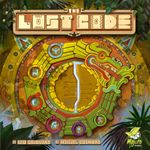
At number four, we're we're going for something completely different and less Euro-fied with a game called The Lost Code. Now, The Lost Code is actually my favorite logical deduction game uh and it's it's such a fantastic concept that I've never seen another deduction game do. And that is that you are rewarded for being more precise, but you can still do well by being a bit more vague with your answers. And what you're trying to do in this game is, you know, much like a lot of a lot of others um deductive games is you're trying to guess the arrangement of uh numbers in front of you. You can see everybody else's, but you can't see your own. And you're going to do that by using this dial system. Um and each round there's going to be three dice that are rolled. They're going to show different symbols based on the different tiles you have. And you are trying to work out the sum of those three particular tiles. And again, using those dials, you can go as vague, maybe have like a six um you know, maybe six number spread, or you can go as little as say you know, two or three or even just one um to get exactly what you think you have.
And when you get the answer, you get the or when you're right, you're going to get points. But if you're wrong, you're going to get more uh information. And I just think this game flows so nicely. You can just roll dice, um make your guess, and then find out if you're right or wrong, potentially get some more information, and keep going. At the end of the game, you're going to guess what your um what your numbers are. Uh the fewer guesses you have, uh the more points you'll get again. So, it's just For me, it takes all the best parts of all the uh the best deduction games. Again, playing it in an hour and hour, maybe even a little bit less, is just wonderful. It does feel like really brain racking and satisfying when you work things out. And you know, the fun factor for me is super high. And it doesn't feel like one of those other kind of murder mystery style um deduction game. So, for me, it's criminally underrated.
And I believe there's going to be another reprint of this one coming out. So, I would highly encourage you pick this one up if you're even a moderate fan of deduction style games. Uh at number three, I have Hadara. So, speaking of uh underrated games, uh this is one that did kind of fly under the radar. But the people who have played it seem to really like it. So, this is a another card driven um tableau builder as you are acquiring these cards. Uh the more cards of the same color you get, the cheaper they get. But you are also incentivized to collect different types of colors for end game scoring. Um Again, this has such a cool drafting system where um you're going to have this kind of wheel system which is where your icon is going to point towards a certain suit of cards. And you have to really pace yourself about how you want to spend your cash because cash is of of course very finite uh in this game um and you want everything, you know, you want the points, you want the food to feed your cards, uh you want to increase your money uh income um and so on. Um but in order to do that, you have to forsake some cards in order to get money for it. Um so, you know, you can't do everything in this game. You're going to have to get rid of quite a few cards to get the ones you exactly want. Um but it's always nice when you start to get build up a bit of an engine, get things cheaper and cheaper, get some really nice cards for affordable prices.
Um and this again lots of other things you can go for which I can't really talk about now, but you know, you can buy these statues that will push you up tracks. Um you Loads to go for here, you know, this is one of the best card driven Euro-style games that I've played. Uh if you like games like Saint Petersburg, or if you've been curious about game like Saint Petersburg, but you can't get your hands on a copy because it's, you know, like hen's teeth, it's so rare, this is a fantastic alternative, you know, just as good if not better than Saint Petersburg in my opinion. So, I'd definitely try that one out. And again, I think so many people could enjoy this one. Maybe the bleak aesthetics are putting people off. Um it didn't quite take off with a kind of rocket fuel it needed when it came out. But the game design, you know, the quality is up there with the best of them.
Uh at number two, uh certainly a unique game. And this is more of a pure area control game. And this is a game called Joraku. So, Joraku was actually recommended to me by a viewer of the the channel. I had no idea this game was even out there, and I'm assuming quite a few you guys don't know either. But this is one of the purest, most beautiful area control games uh that you will ever play and that unlike a lot of other area control games it's it's quite subtle and it is card driven through this kind of trick taker adjacent mechanism and I wouldn't let that put you off because you know I I hate trick taking games. This one does have some similarities and but it's fantastic. So basically the lead player is going to play a card with a color and a number on it then if you can every other player is going to have to follow that color and but the the twist in this game is that I think the the number you can either use to deploy number of troops into that particular region because the regions are numbered from one to six and or you can use that number to use them as action points to either move troops already on the map around from region to region or to eliminate enemy troops.
And but the the pacing of this game is fantastic because the game kind of gravitates or migrates from the right side of the board to the left side of the board as the points get more and more lucrative. But of course the regions of the left are only going to score later in the game. So do you want to kind of build yourself a bit of a nest egg there and prepare for the later rounds and get these big points in the meantime miss out on some earlier scoring or are you going to have enough action points to dominate the the early rounds and then get migrate your troops left as the game progresses. Sometimes you're hoping to be deliberately killed and removed from the board so that you can redeploy them further down the board later because every action point is very valuable in this game. So this is such a cerebral beautifully balanced clever you know intelligent sophisticated game in my opinion but it's still so easy to get to get into and to play and much like Hadara much like Vikings I have no idea why this game isn't in everybody's collection because it is a true work of art in terms of its game design.
Moving on then to number one. The first Knizia game on the list. This is Rebirth. So, Rebirth was my favorite game of one of my favorite games. Maybe Civolution just just tipped the scales. A year or two ago, I think it was 2024 this one came out. This for me is kind of like the greatest hits of Reiner Knizia. I love everything this game does. It's such a joy to play. It's so pleasant to play. It's a kind of a building area control objective fulfilling style game as you are going to be deploying these tokens onto this shared map. Each token only can go can only go into a certain space onto the board and you're trying to build chains of your tokens together to get more and more points kind of compounding on each other. You're trying to put your buildings into the towns and score majorities that way. You're trying to surround these castles to get end game scoring. Are you trying to fulfill these public and personal objectives? And it's one of those games where, you know, the board starts off looking super open but only after a few turns the game is completely spammed with all the tokens and you're trying to squeeze every point you can out of this one. And I just love these types of games where when you can do one deployment you can kind of vibe for several different things. You know, this particular spot might go for this objective. It will get me control of this castle and it also let me control this town. So, it's all about trying to get get as much as you can out of every
single placement. I can't really think of a single way this game could be improved. Maybe some people will complain about the the luck of the draw of the tiles you have in your supply but I think without that the game would be too meticulous. It would be too abstract and the adapting and reacting to what you have available to you is for me part of the fun. Also, a game of this kind of well, quality of design, it's so nice to have it produced so nicely as well because the game is actually super pleasant looking. You know, everything's beautiful. It's all produced to a high quality with these nice kind of resin buildings and stuff. Uh yeah, just a fantastic game. I think for me up there with Knizia's best, which is saying a lot because not only has he made uh thousands of games, uh you know, this far into his career, he's still making games this good. And for me, that is just fantastic. And I'm always excited to see what he comes out with next. And uh this one I think
should be in everyone's collection. It does so much in such a clean, smooth system. So, that is Rebirth at a well-deserved number one. So, hopefully you have enjoyed this video. It was a little bit more spontaneous. I wasn't quite sure what to record, but I think this is quite a good list, actually. And you can get a lot of value out of trying these games. So, if you have enjoyed the video, please be sure to hit like and subscribe to the channel. And then for everybody else, I'll see you next time on Chairman of the Board. Bye-bye.