10 Older Board Games We Still Really Enjoy!




Transcript
Hi everyone. My name is Money
and I'm Naveen from Before You Play
and today we have a 10 list for you. This time we are going to be talking about some older games that we still enjoy.
Yeah. So, uh, basically we got into the hobby probably 2014, I want to say. So, we've played a lot of games before we even started the channel.
Started the channel in 2019. And, uh, we're basically going to talk about games that we don't really talk about anymore that we still think hold the test of time.
Yeah.
Hopefully. Yeah. Um, now some people really enjoy, you know, just listening and hearing about newer games coming out because so many games come out every year. But I know that there are also a population of gamers who enjoy hearing about the older stuff. So today we have a list of 10 older games that were released 2017 and earlier. So cuz next year 2017 will be 10 years.
10 years from that. Yeah, we picked an arbitrary number. We felt like 2017 was a good like end point for this list. So, all these games will be 2017 and
yes, cuz so many new gamers have sort of come in and hopefully uh you'll hear about a game you've never heard of before.
But first, this episode is kindly sponsored by IV Studio for their two new expansions for Tend Hive and Cellar, which are currently on Gamefound. Tend is a flip and right game where players take on the role of pioneers building their own farms on a new alien world. Each round, players use shared task cards to take actions on their own sheets, including tending to their farms, collecting resources, and filling up their cargo manifest to earn victory points. We actually have a playthrough of Tend on the channels. If you are interested in that, there's a link in the description which you can check out. Now, there's two new expansions known as Hive and Seller. Hive adds a new sheet where you'll cultivate the planet's wild bees, build apiaries, and produce honey. Each round, bee dice determine which bees are available to gather into your hives, and building up your colonies earns you rewards and upgrades that enhance the actions from the base game.
This expansion also introduces artisan goods and a new cargo pod. Seller, on the other hand, turns Tend into a threeame mini campaign where you'll carry your seller sheet over from game to game, allowing you to unlock artisan equipment to age and refine goods, as well as store resources for future games. You'll also have a new market stall that can provide bonuses at the end of the campaign. So, if 10 hyen sellers sound interesting to you, please feel free to follow the link in the description below to their campaign. And again, thank you so much to Ivy Studios for helping sponsor this video.
All right, thank you so much. So, today's list is going to be a combined list. We decided to go and look through BGG just to give ourselves some memory as to what are the games uh from 2017 and before. So, it's a combined list of 10. We've basically agreed on all of these games. We do have a couple of honorable mentions that we wanted to talk about. Mon'nique, you are going to talk about one that I have not actually played, hence why it's your honorable mention.
Yes. So, all of these games, by the way, on the list are going to be like medium to lighter games. So, my honorable mention is a solo game because between the two of us, I'm the only one who plays solo games. And this is actually my favorite solo game so far of all time. It's a game that was I think I think it was published in 2017, but I have a sneaking suspicion that it was actually released earlier than that because it's like a I believe an indie designer and it's a game designed by John Keane. It's called Black Sonata. So, this is a game that I actually have a playthrough for on the channel. I think I made a mistake somewhere because a lot of people from time to time will say actually you guessed there. You did not
that reasoning wasn't correct.
Yes. But I think I still played the game correctly. Um, if you've never heard of this game before, Black Sonata is a logic deduction game where it's based in the Shakespearean world and you're trying to find and deduce you're trying to deduce the location of the shadowy lady and discover her identity.
And so, it's a hidden movement where the shadowy lady is going to be moving around the board and you're not going to know exactly where she is a lot of the times until you do find her.
Zero in
and once you think you're in her location, you can search for her. And the way that you're actually deducing who she is is the game comes with uh like these various character cards which all are potential uh characters that could be her and they have like a set of traits. And so you're trying to deduce who she is based on a combination of a process of elimination, but there's also a really interesting u mechanism that the deck of cards have. Like there's a sequencing uh sort of mechanism with the actual deck that helps you deduce her movement around the board. And then there's also a neat sort of mechanism with the clues, which I probably not going to go into detail too much because, you know, a lot of these games are old. We don't have B-roll for them. So, I feel like if I get too much into the weeds, it'll be more confusing than not.
Sure.
So, just know that the takeaway is it is a deduction game and hidden movement. And it's really cool. So, it's just a really interesting design. If you want to learn more about it, you can check out the playthrough or just kind of do some research. But, if you are a solo gamer and you've never played Black Sonata, highly recommend it. Okay, honorable mention that I wanted to include as part of this list. Uh, this is actually an Uve Rosenberg title. So, if you are familiar with our channel, been following us for a while, we did an entire playthrough series of a lot of the Uve Rosenberg games leading up to a certain year. I don't remember where we left off.
Yes.
A couple years ago, maybe. Uh, but basically, um, this list, we didn't want to just include a ton of Uve Rosenberg games because they have their notoriety and and they're widely known, but
they're very notable. A lot of them, a majority of them have been released before 2017, like the older, you know, and like we don't get to talk about those games a whole lot. So, I think Naveen just wanted to sort of pluck the one that he found to be unique that you really enjoy.
Yeah. So, the one I wanted to talk about was La Hav. Uh, so in this game, you're basically running like a a fishing port or you're operating out of a fishing port known as La Hav. M
basically you're trying to gather resources ultimately to build these different buildings. And the buildings themselves that you build will have scoring criteria as well as different actions on them. So you're really just trying to find ways to take actions to gather as many resources as physically possible. Use those resources to build these buildings so that you can create your own basically scoring and action slots.
Yeah. And I think it's an interesting choice especially for Naveen because um if you followed that series Naveen particularly enjoyed the hub was high up there from
a lot of the Uve Rosenberg games like once he got into farming like a lot of them have that sort of theme and uh just like mechanisms feel very similar in the the different ways that he tried to innovate but that one is pretty unique.
It is fairly unique. And then I don't know if I mentioned what year it came out. This was uh 2008.
Yes.
Uh so 2008 and it's by Lookout Games.
Mhm. So, it's an older one and one that still stands the test of time. So, if you're interested in checking out a a different sort of Uber Rosenberg game, try Laav. And on that note, like Naveen was mentioning, there will be no U Rosenberg titles on this list and pretty much no heavy games, right?
Yeah.
All right. Now, on to the actual list. Let's go ahead and start with number 10. This is not really ranked, just so you know. Um, but number 10 for us is a game that was released in 2015. So, the year that I think we got into the hobby.
I think we got in a little bit earlier than that. you say I think it's 2014 is when we really kind of you know murky you know what I mean so this is a game designed by Stinus and published by Gray Fox Games and it is a game called Champions of Midgard. I don't actually think we've ever spoken about this game on our channel before.
Not in a review form. We've never done a playthrough of it.
Yeah. So probably not. No.
So this is a game that sort of made a splash when it came out onto the scene. Right. because it is an interesting sort of mix of like dice battling with hero mechanics.
Yeah. Worker placement.
Worker placement. Yes. Because this is a worker placement game technically where you are trying to be you're trying to earn the most amount of glory so that you can be recognized as the champion of Midgard. And so each round you're going to be starting with the worker placement phase where you're going to put out workers and you're really just putting them out to get resources so that you can be better prepared to fight these monsters. And once the worker placement phase ends, depending on where people place their workers, you can fight trolls and droggers.
I'm not sure if I'm pronouncing that correctly.
That sounds good.
But you can fight the monsters at the top of the board. And then you can also go off with your ship and battle like the large monsters, which is the true point of the game.
That's where most of your points are going to come from.
You're doing all of this so that you can defeat these big hard-hitting monsters, but it's not like a monster dice battling game where you kind of go back and forth. You're really just, do you have enough of the stuff? Did you roll enough of the symbols to defeat this monster? If so, you get the card.
Yeah. You're using euro mechanisms to get to the point of the dice battle, basically.
Yes. Yes. Exactly. And at the very end of the game, you'll score points based on like set collection. Like there's other sort of like euroy endgame scoring things that are interesting about it because it's like, well, out of all the monsters that you defeated, did you complete a set? If so, you score these points. did you get these other cards that score you points for having x amount of this type of resource? So, it just it's just a really interesting combination of like euroy and dice.
And there's uh from what I remember, there's not like perfect information when you go to battle these monsters. Like there's like a hidden like element as to like what you're going to go up against. So, you can't just be like, I'm going to go fight that thing because I already know that I'm going to win no matter what I do.
Yeah. Cuz you flip over a card. There's like a card that you have to flip over right before you fight the monster. So, you have to truly be like as prepared as physically possible to then go and then take your chances obviously with the dice rolling. So, we actually did not play this game for quite some time. Like I was always interested in it, but I thought it was just like a like monster battling like fighting each other kind of game based. That's what it looks like. It's like a Viking theme. And so, when our friends taught it to us at a convention and like laid out the map and started explaining the worker placement aspect of it, it was just like,
I'm sorry, what are we getting into? like what what is cuz I never actually did any deep dive into it. They're like, "Oh, you've never played it. Here, just sit down and play it. You'll enjoy it."
And so, yeah, it was I was pleasantly surprised by it and hence why it made this list.
And that's why Yeah, exactly. That's why I like this title on this list because a lot of people who watch your channel do play Euro games. Um, I think there's a nice like combination. Yeah.
But it's just when you look at the game, when you see the box, especially newer gamers, like gamers who are newer to the hobby, looking at older games, you you wouldn't expect this kind of experience from it. That's what That's what happened to us.
Yeah, that's what happened to us.
I've also heard there are like expansions that take the game to another level. We've actually never played with those. At least I've never played with those expansions.
Nothing we know of.
Um there's like a mountains and like Vajala expansion that I heard like really elevate the game and so it's definitely one that I still want to play.
So that is at number 10. And by the way, if you've played any of these games, obviously these are older games. We would love for you to chime in and talk about your experiences, how they've evolved over time. If you played expansions, please let us know in the comments down below because it is always a nice resource for other people who want to learn more about games. Anyway, that's number 10, Champions of Midgard.
Okay, the next game we want to talk about, number nine on our list. Now, this one is actually rated fairly high on the BGG top whatever, top 1,000, top 200, I guess.
Yeah. So, it is a more popular game.
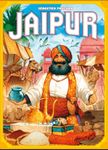
It's a more popular game, but uh it might be one of those ones where if you came into the hobby a little later, you see the fact that it was made in 2009, maybe you don't explore this game. But we still highly recommend this one all these years later. This one is called Jaipore. Now this is a two-player only game designed by Sebastian Pawan and published by Space Cowboys at least back then. And our copy is uh Space Cowboys. Now this is a game set in Jaipur, India which is a city uh and you are basically trying to buy and sell different goods and try to ultimately score points and it's played over the course of three rounds.
Yeah, I think it's like best out of three.
Best out of three. This is a two-player only card game through and through. And you're truly just trying to sell these goods. There are six different types of goods, but the actual like turn structure is interesting because on your turn, there's a display of cards.
Five cards. And they're going to be a combination of these six types of goods and camels. And on your turn, you're either going to take one card or you're going to trade cards from your hand with the display. you'll trade the same number of cards with the same number of cards from the display because ultimately you're trying to be able to sell as many cards of the same type of good as you can, right?
Because all of the points are sort of laid out in these tokens and they are not all the same amount of points.
They're typically in like descending order. So like the first green resource might be five and then the next one might be three. Yes. And so you're trying to sell when you have a ton of cards of one type because not only are you going to try you're going to get all those points that are in the descending order, but also there are these like tokens for these like bonuses. Yes. So you can sell one card at a time and that's great. you can you can score points, but if you're able to sell multiple of the same good at once, you get a bonus token, which is like a like you don't know exactly what how many points are going to be on the end, but it's within a certain range depending on how many cards you use. So truly, you're trying to battle this like decision between, do I sell as early as possible, but I'm not selling enough of the same type of good because the earlier you sell, the more likelihood you'll get the higher point value for that good, or do I just kind of wait until I have a lot of that same good so I can get the bonus tokens. Yeah.
So, it's a lot of that.
Yeah. One other aspect of the game is the hand management side. You are only allowed to hold a total of seven cards in your hand. So there is an element of like if I'm taking a green card which might be middle tier in terms of overall points. Well the the deck basically fills in. So maybe you reveal one of the highest value cards for your opponent. Your turn is over and now your opponent's going to go. So, you really have to try to figure out like when is it actually worth it to try to just push your luck on which cards you're going to collect because the the deck fills in or the the display fills in from the deck and everybody is looking for the high value like gems, gold and silver
and it's a hard hand limit. Hard hand limit you cannot go over. And the last thing is actually really important. I've kind of glossed over are the camels. So, there are camel cards in the game which don't sell for anything, but when you take them, they go sort of they don't stay in your hands and they're not part of the seven. They go face up in front of you. And even though you can't sell them, they are still useful in two different ways. When you go to trade with the display, you can trade using your camels. So, if you don't want to give up goods from your hand, you can use camels in front of you. But the thing is, when you take them from the display, you have to take all of the camels.
Yeah. So, if there's three camels in in the center and you're like, "Okay, I can use these camels." Yeah.
Great. You're going to take them. But now you're filling in three cards for your opponent because it's a two-player game.
Yeah.
What you fill in for your opponent, it becomes on their turn. So, now they have a decision to make. If if there's something really valuable, then they're going to probably go and and kind of capitalize on it. So, timing is really really important in the game.
But, at the end of the round, whoever has the most camels gets a bonus. So, it's not all bad. So, as you can see, there's a lot of different things that you are considering. Um, it's just a card game through and through and two-player only, but it's definitely like a mind game. There's a lot of like chicken. There's a lot of I'm going to hold this back. It's a lot of timing, a lot of decision-m when it comes to timing and that's it's a popular game for a reason, right?
It plays on BGA also and it plays really well for Game Arena. Uh, so if you are interested in checking it out, I do highly recommend starting there and if it's something you like, then obviously uh I think they made a newer version of it several years ago. So, but I'm looking at the BGG listing and it's like the art is very different
than the one that we have. We have like the old green box.
They all still hold up. It's the same game, but um that is our number nine. That is Jaipore.
All right, moving on to our number eight. This is a game that was released in 2017 and it's designed by two different designers, Matt Lumis, Isaac Shalv, published by IDW Games, and it's a game called Saikatsu.
This is a game that we played a ton of after we were introduced to it.
Really fell in love with this one when we first got it.
Yes. So, if you've never played Sakatsu before, it's a tile tile tile game. They're circular tiles. So, yes. Um, where you are basically trying to score the most amount of points from your perspective of the board.
It's a shared board.
Yes.
So, you know, most tile games like you have your own little thing. This is a unique uh circular board where everybody is placing tiles onto the same one.
Yes. And each tile has a certain type of bird and a certain uh type of flower,
like a wreath of flowers around it.
And on your turn, you're basically just drawing a tile. And then I believe you have a choice between like between three tiles. So it's one of those games where on your turn you're literally taking a tile and playing a tile. And when you place a tile, you'll first score in-game points for the birds. And that's going to be depending on the number of birds that are now in its cluster. And at the end of the game, that is when the flowers score, but it's going to be based on the most number of the same type of flowers in each of the rows depending on the the vantage point of your pagota.
Yes. So the thing that's interesting is there are three pigotas situated around the board and each player will have their own pagota that they're viewing across for endgame scoring which means if I place a tile in and it helps me it might also help another player depending on what they have in their their scoring row.
Yeah. So like because of the way the scoring is the in-game scoring is you want to get birds to cluster but not every bird is going to have the same type of flower. So there's four types of birds and four types of flowers. So there's different combinations. So in game, you might play something because you're like, "Oh, great. This is going to score me a lot." But it might affect your endame or actually help somebody else's endame if you're not being aware of how your opponents are going to score relative to their perspective. So you can either help your opponent accidentally or you can actually like hate place. If if you see that somebody is building up a line of the same type of flower, then you want to kind of block them off and you're like, "Look, I this is not going to help me too much, but this I need to kind of hold you back from scoring on this because I know you're doing really well there."
It's interesting. It's such a quick game. You know, it plays two to four and at two and three, it's fully competitive because there are three pagodas, but at four players and becomes a team game. So, there are different sort of feels for a game of this weight and uh length. But I also found it interesting that it's published by IDW games. I always thought it was interesting that they had a game
a comic book.
It's a comic book comic book publisher and this kind of game has really nothing to do with their comics. But there's also another version of it. I think it's called A Pet's Life. That's like it has pets instead on pillows. I still prefer this version. I think the color tiles made gave away too much information in that version of the game. Yeah.
So if you have a choice, I would recommend Sakatu.
Yeah. And this one again it plays two, three or four. So two and three is everybody for themselves. Four is team. And honestly I think it plays well at all three player counts.
Um three everybody has their own vantage point. And then the team game is nice because there's like that limited communication.
So it plays well at two, three, and four.
But there you go. That is our number eight. Saikatsu.
All right. This one our number seven. This is an older older game. This one actually came out in 1997. So it is coming up on 30 years later.
Yeah.
Yeah. 90s or 30 years ago. Yeah.
Oh my gosh. Some people watching this might not have been born.
Yeah.
Yet.
Yeah, that's true.
Wow.
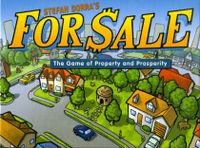
Anyway, uh designed by Stephan Dora and published by Eagle Griffin Games. And this is a small card game. At least our version is. It is called For Sale. Now, Forale is a pure auction style game where you are trying to buy and sell houses. So, you want to buy houses for low and sell them for high.
Yeah. Just like in real life.
Just like in real life. Yeah. And so this game is actually played over the course of two different phases. The first phase is using money in order to bid on these different properties. Then those properties become part of your hand. Uh in the second phase, you're actually using those properties to then sell them back for ideally a profit. Now the heart of the game is this is a card game through and through, by the way, but players do start the game with like money tokens. And during the buying phase, you'll lay out a number of cards equal to the number of players and you'll go around bidding on the highest valued card. So the copy that we have is they're very silly illustrations of houses and like the higher the value cuz they're numbered 1 through 30 and like the number 30 card is like a house in space.
Yeah.
So it just gets like it's a little ridiculous.
I think one might be like a cardboard box.
Yeah. The theming is really silly. Yeah.
Really ridiculous. But you're going around and you're bidding on the highest valued house. And whoever passes first must pay half of their bid to take the lowest valued house that's in the display.
So if this uh auction has been going round and round and round and you're the low you're the first one to pass and you've bid, let's say the max you've bid is eight,
then you get to take four back into your possession, but you spend four to take the lowest value house that's in the display,
which could be a two because you don't know it might be like 2530, right? And now everybody is trying to bid for that 30. And basically, you just go in order of whoever passes next takes the next lowest valued house. And these house cards go into your hand because once we've auctioned off all the cards in the deck, we move into the second phase where you're going to sell back these houses. And now instead of house cards being in the display, we'll have money cards and the the values are like 1,000 to 15,000. So there might be like a 1,000, 5,000, sometimes a zero. Yep.
Or maybe you'll have like the 15,000. And this time during the second phase, all players will simultaneously choose a card from their hand. And again, these cards are the house cards you won in the previous phase. And you'll reveal them simultaneously, and you'll take the currency cards uh in order from the lowest to highest valued house. If it's like 0, 2,000, 15,000, and I played the 30, and Naveen played the eight, somebody else played the seven, whoever played the seven will take the zero. Yeah,
gets whatever the value was and I get the highest valued currency because the object is just to have the most amount of money at the end of the game.
It's a really interesting combination of straight auction but also trying to like mind play everybody else, right?
Yeah. Cuz like sometimes like you don't know what coins are coming out. Sometimes you're hanging on to like some houses and you're like, "Well, I'll just get this one." Like the the the the differential between the three like uh money values. It's like four, five, six. Great. I'll play my level one house to take a four while you're playing your like 10 house to take a five. So, you only got a 1,000 difference, but I played my worst card, you know, to get that. But, you never know which combination of values are going to come up in that second half. And so, just like waiting and trying to time it is is a pretty interesting aspect of the game.
And that's the thing of like about any auction game. Any auction games have to do with you trying to determine the value of something because that is how you make a decision as to how much money you're going to bid on it, right? So, the value is unknown because like I could have bid a ton of money on that 30 house, but just because of the way that the currency cards came out, maybe I didn't play it to actually win back that much value or profit enough from it.
You didn't get the most that you like the highest value for the highest value house. Sometimes it just works out that way.
And the opposite could be true. Maybe you have the one value house, but because of the way that the cards came out, maybe they came out as like five, five, 15, 10. Well, I'm now gonna play this one to get a 5,000. But that's essentially it. You know, there have been many versions of for sale. There's like the travel version, which I think we have. We have the small box.
It is probably our most tattered game
in our entire collection.
We need to move it.
It is like smash. I think we I think it's in a Ziploc bag. And I think that's like what we had to end up doing. Like the box is just We used to travel with it a lot. Um you know, before we got into content creation and it's like we're just going to go hang out with some friends up in the Bay Area or something like that. That's one of the games that we would take with us.
And it just goes to show, you know, it is standing the test of time. Uh recently there has been a new version. I think it's like the car version. We've not played that one. We are still just playing the original house game.
So that is our number seven for sale.
All right, moving on to our number six. This is actually one of our favorite racing games. Um it was originally released, I believe, in 2014, designed by Stefan Bogen and published by Zman Games, or at least our copy was. And it is a camel racing game called Camel Up.
So, this is a very silly racing game where we are basically betting on these five camels that are just taking one lap, just a single lap around this track. And we're actually trying to just have the most amount of money because the way that the game works is there are these little camels and each camel has their own corresponding colored dye that's in the pyramid that you use as a like a dice dispenser and the values range from one to three. So, these camels are not moving very far each round. Each round, the players will take turns taking an action, but these actions are basically just like betting on a single leg, which is basically just one movement per camel. Or you can actually bet for the whole game where you're trying to bet to see which camel actually ends the entire race as first place and which camel ends up last.
So, those are the two big bets of the game.
Yeah. The entirety of the race is just when one of these camels crosses the finish line. Yes, that technically ends the game. And a lot of silliness really kind of ensues during the round because you can also place out a tile where if a camel lands exactly on that tile, the camel actually propels forward one space or moves backwards one space. And the thing that's really interesting about the camels themselves is the way that they move. When camels move forward, if there's a camel that's in front of them, they actually stack. But if they move backwards, they go underneath the entire stack. But if a camel isn't is a part of the stack and you move the bottommost camel, it takes the entire stack.
Yeah.
But if it's at the top of a stack and it moves, it hops off.
It just jumps off.
So it makes it like difficult to really guess which camel is going to be out on
sometimes like like the board state you're like the yellow camel is way behind, but just by happen stance the way it can go. Maybe the camel moves because the dice came out. One, two, three. It goes on top of a stack. And now when the blue camel's time to move, it passively moves with that blue camel and just gets propelled forward. And then from there, maybe it jumps off again. And now all of a sudden, this camel that was in like semi dead last is now somewhat competing for, you know, first place.
And that is the magic of the game because it produces these moments where, you know, you're you become very surprised by which camel actually ends up taking the lead. Y
just because of this whole like funny mechanism of how they stack and move. So that is still one that's you know it plays a lot of players. I is it eight?
I think it plays eight.
It plays a lot of a lot of players and you know when you're all on the table and everyone's really invested then it can be a really really fun game.
It's a good social game like this is a good family weight game that I still enjoy playing. Like if if somebody presented me like who wants to play Camel Up, I would probably say yes to that.
Yeah.
Yeah. Versus like you know some games like he's like you knowve I've been there done that I've played it plenty of times. I don't really care to play it. If that's suggested for me at a convention or something like that, I will pretty much always play it.
Yeah, it's definitely one of those games where you're in it for the experience. Like don't don't play Camel Up to like try to win it, like try to like, you know, figure out the game or anything. Like just let the game take you.
There is a Camelup 2 uh or a sequel which is its own game. It's like shares the same mechanism and everything.
I personally was not a fan of that one.
Oh, you played it?
Yeah, I have played it. Yeah. And so that one like there's like a gray dye and like camels can move backwards like more extreme than than kind of just the landing on a tile. Uh so if you're like if you're seeing like which one of the two for me personally if you're going on my recommendation the way I like to play it is the original
Camelup. And that is our number six camelup.
All right. Very good. Moving on to number five. Halfway through our list now. Uh this is another auction style game. There is tile laying involved. Uh, so you can see that we kind of like these types of games.
Maybe it was the era.
Maybe,
right? Maybe a lot of designers sort of focused on that. I feel like
it's a large era though.
Design kind of moves in waves.
It does. Yeah. Yeah. So, this one came out in 2000. It is called The Princes of Florence. Now, this is designed by three different designers. Our copy was from Aaliyah and uh, Rio Grand. Yeah. So, we have like a pretty old version of it. Another tattered box. Red box. looks it looks extremely dated and that's why we kind of wanted to draw attention to it.
There's a new version.
We had not played that.
Haven't tried it yet. But uh basically uh the theme is you're trying to impress the nobility. I think
I think that's what you're trying to do in Florence. You know, my type my type of game.
Uh and so basically the game is played every round is played over a couple different phases. So the first phase there's an auction. Uh there are seven different things that you can auction off. So on your turn, you are going to choose one of the seven different items uh and put it up for auction. And it's your traditional auction. And once somebody wins an auction, they are out for the rest of the the round. So they cannot now you cannot buy multiple things.
Yes. Yeah. It's a one thing. They're like tiles. Tiles typically. Yeah. Because it's tile game. And so like let's say you buy like the lake nobody else can now for the rest of the round put up another lake for auction.
So like every type of thing can only be auctioned off once. And so you have these like profession cards, which is basically your hidden like goals. Yeah. Like what how you're going to score. And so you're basically trying to uh acquire these different tiles over the course of the game, put them strategically on your board so that you can ultimately satisfy these like profession cards and score points.
The clever thing is once you've satisfied one of these profession cards, then it becomes a public uh everybody else has public access to that profession. So maybe Mon'nique has also built the infrastructure for something that I have just scored. On her turn, she can actually there's a mechanism in the game where she can then use the card that I've put into the public domain and actually score using that card. If that makes any sense. Yeah,
it does not make sense, but it's okay. You kind of get the point.
My personal scoring once I score it now can become everybody's scoring. There you go. Nice. Yeah, it's a really interesting design because I feel like it's another one of those where it really depends on the players, right? Because you are the ones determining
what's up for auction.
What's up for auction, but you have some hidden information. You have like a like skin in the game, right? Like there's certain things that are going to be like, I want to take that. I want to take it for cheap, but I need it because it's on my scoring card. Yeah.
And it really is just about the dynamic around the table. And I feel like that's kind of the thing that's neat about older games. You know, I feel like games that are getting released now, of course, with exception, but a lot of the games that are getting released now are really about the game. Like the game pro provides these mechanisms and ways to score points and you're like playing with what's there.
Whereas a lot of these older titles are like these are the things. It really depends on how you guys play it.
Yeah, this one is pretty interactive. Like this one is not like a solo like just look down at the board. Like you're really like looking like Monique put the the water up for auction. I was hoping to put that up like you know so you know or like I I really like man I can't afford this auction right now. I was hoping to wait till the next round you know.
Yeah the decision space is really interesting.
Uh another big thing that was uh that I think is really clever in the game is so when I talked about scoring
you actually you you move this like you're on a scoring track but those aren't actually your points. You can actually take them for a combination of points or a combination of more money.
Uh so that is kind of the way. So, so if you were able to get like 10 points, you can take for every point you can like sell a point for I think it's like 200 LRA.
And so that that could be now money that you can use for future rounds.
So you can take a combination. You can be like, well, I'll take half in points. So instead of getting 10, I'll take five points and then five times two for a,000 L. Now I have money going into the next option. And so you're basically trying to figure out like a clever way to to, you know, lay out your board, score your points, and ultimately make enough money so that you can keep going.
It has tough interesting decisions. That is an interesting one. If you play the new version, uh, and the old version, we'd love to know what your thoughts are, the differences. I don't actually know if there are differences, but if so, let us know.
Yeah. Yeah. Well, there you go. That is our number five. That is The Princes of Florence.
All right, moving on to our number four. So this is a game that was released in 2015. Uh designed by two different designers and published by Apora Games. So one of the designers I believe designed like Revive like that's like the one of the more recent games.
They've been doing it for a long time. Like looking back like in redoing the research you're like oh wow like oh these these are the same designers for the past like 12 years that I've been following.
Yes. So this is one of their older designs which I think is really interesting. It's a game called Automania. So, I think I I think we've talked about this game before, but um for anybody who's not familiar with Automania, this is a game where you are manufacturing and selling cars. So, this is like the other game that's not conbon, not Craft Wagon, you know?
The game has a really interesting worker placement mechanic where there is a grid of tiles in the center of the board. And on your turn, you're placing a worker on either the left hand four uh spaces, which represent the rows of the tiles, or the upper four spaces, which are the columns. And wherever you place a worker, you must take a tile from its row or column. And you can also optionally take the action of the space, which is primarily going to be manufacturing cars. Um but on a future turn if you want to place a worker where somebody else already placed a worker then you have to place out more one more worker than the number of workers there but you cannot place where you have placed a worker
kind of similar to um Manhattan Project Energy Empire.
Energy Empire. Exactly. So it is more it's a little bit more strict than that which makes sort of the aspect of uh taking tiles and manufacturing cars pretty competitive. Now, the tiles that you place get placed on your own player board where you are actually using to manufacture these cars and you have to pay money. It's really interesting because the tiles that you place on your board will determine sort of the quality of the car because it's like determined by stars and like the different traits of the cars and when you actually go to to manufacture them, you're going to sell them to either the European or the North American market, which are these two sort of areas on the board. There's a lot to explain, especially without actually having like enough
um images for it, but it is a mediumweight Euro where the decision-m is really interesting. One of the reasons why I wanted to include it on this list is because the graphic design of the game, like the box art, and also just like the the you know images on like the tiles and stuff,
the 2015 aesthetic.
Yeah. It really doesn't like give it enough credit for the design itself.
Yeah. So, the first time I ever played this was I think it was the was it maybe the first time we went to Essen.
Yes.
Um, so when we arrived at Essen, this is before we started doing content. Um, we were really trying to enjoy like the the the uh events that lead up to Essen. And so there's like this like gosh, I forgot a pub.
It's like a pub game.
Had a game day. Yeah.
Yeah. Like a open play game day
the day before or something.
And I I think we landed that morning and then went with jet lag went to this event. Yeah.
And my gosh, I was so tired. You know when you're so tired and people are explaining a game to you and you're just like
like
come on
like that. Yeah. Yeah. Yeah. That was me like during that and like you know you're exhausted but
once like you start playing the game and everything is like this was a this was a fantastic game. It woke you up. It woke you woke me up and then I was done for the rest of the evening. But um
he spent all his energy on automania.
Yes. But I remember just like I didn't want to be that guy that's like let's just start playing.
Yeah. Yeah.
Just start playing. You know, like people say that, you know.
Yeah. The rules were laid out. Yeah.
But that that was the first experience. Um and since then I I do think that design still stands the test of time. I feel like it could benefit from an overhaul.
Yeah. Like a second edition and just kind of like,
you know, that design sort of like paved the way for a lot of the more recent designs from this duo. So, so anyway, that is our number four automania.
All right, very good. Our number three, this is was a hidden gem for us. We knew nothing about this until somebody introduced it to us while we were on a trip. This one came out in 2017. Uh designed by
Kevin Bishop.
Kevin Bishop. Yes. Sorry.
With art by Matthew Bishop. And I think they might be brothers.
Brothers. Yes. And it's published by a company called Miramorph Games. This is a game called The Shipwreck Arcana. This is a uh co-op game.
Yes. Uh, and it's basically you're trying to solve like clues based off of math.
Yes,
based off math.
It's a cooperative deduction game.
And we actually have a three-player playthrough of this game on our channel. So, if you just want to see it in action, feel free to check that out. Basically, in this game, we are trying to score seven points before we reach seven doom, which is like the bad points in the game. Yes. And points are just performing correct predictions. So, this is a very strange game to explain, just so you know. But basically in this game,
each player will start by drawing these fate tokens, which are valued, I think, one through seven.
Seven, I think. Yep.
They're just numbered tiles. And on your turn, you have to place one of your two tiles underneath one of the fate cards, which are in the middle display. And fate cards are basically rules. So maybe they'll say something like, "If the sum of your fate tokens are odd, you must place one of them here." So then you'll place one of your tiles there. And now everybody around the table is trying to deduce the value of the tile that is still in your hand. Yes. Because you have to keep those tiles secret. Um and if we are able to do so just based on how you placed your other tile and maybe how you placed tiles previously then that is one correct prediction.
Yeah. Cuz you're trying to pick up like that information like okay so that means so that was odd like what put there. So does that mean that the last remaining card is odd? Well we don't know. So then the next type of action once it comes back around to you depending on how you play to these different fate cards with by establishing their by the established rules for placement.
You're deducing kind of what your teammates basically have and what that remaining last fate token is
in that moment cuz the problem is maybe on a future turn I draw another tile and I place the other tile that I had hidden last time. You're not allowed to tell people if you did that. Yeah. So, it's this deduction game where you're just trying to figure out based on how people are playing their tiles which tile they have left. Now, the problem is the fate cards don't stay there forever. So, they have like a certain amount of like hours that you can play tiles because the tiles have like these like little pips on them. And if they ever add up to or equal to whatever the value on the fate card is, then at the end of that turn, the fate card will fade and you'll lose a certain amount of doom if a correct prediction was not made in that turn. So, it's a race uh against the doom timer basically to try to make those seven correct predictions.
Sometimes though, getting that fade card out is good for you because there's placement rules, right? I don't like this rule in play right now. So, I'm actually glad it expired because now I can kind of open up
uh where else I want to play so that I can really give you some information. So, it's not always doom and gloom
because it gets replaced by a new fate card. Exactly. So, now you have a new rule on the table that people can interact with.
So, that's essentially the shipwreck arcana. It's a it's a quick playing game and it plays well at higher player counts. they played there.
I really like the art on the game also. So it kind of like because technically it's just like math and rules. So there's a theme really there's a theme. Yeah.
And the art like leads to the theme.
It it kind of like Yeah. Yeah.
It makes it some like it's very nice to look at on the table. Like it's it's one of those games that like if I was walking by I would be like, "Wait, hold on. Hold on. That's how we learned it. Yeah.
Yeah. We were we were on a trip with a lot of people who are gamers also and they were playing the game and we're like, "What is this?" Because it's very like it's very immersive. Everybody is head down.
Everybody's like working together until this game is done.
You know, you can just feel like everybody's like tension in their body like as they're like addressing the game. And so this was one of those ones that uh that we really really enjoyed.
And people can sort of jump in and out, right? Like if you're just like at a convention and you're like, "Oh, you want to jump in this?" Then you can just add a person to it. So,
so a very interesting design. That is our number three, the shipwreck arcana.
All right, moving on to number two. This is our penultimate pick. A game that was released in 2016 and published by formal ferret games. It's one that we've talked about before. It is a game called the networks. So, this game is designed by Gilhova and it is technically an open drafting game with a lot of theme. Like the theme is such a strong aspect of the game because in this game you are a network producer I believe like you have your own television network.
You're you're running a TV station basically.
Yes. And you are trying to you're trying to get shows for the three different time slots in your network and you're trying to do it several times over the course of the game. Like you want to keep shows alive and then you want to replace them with with shows and then those shows will get cancelled and they'll have reruns. But you also want to hire stars to assign them to these shows which are like celebrities obviously. Yeah.
You also want to sell ads and you also want to just get these network bonuses. And the theme and the art on all of these cards are very silly, super thematic. And you know, we're not like the most thematic gamers. Like we don't it's it's not like a huge selling point for us,
but when it's done well, it's very nice.
It's very nice. Yes. And it is done very well in this game. And like I said, it is just an open drafting style game where on your turn
there's a display of cards, and the cards are going to be shows, stars, ads, and networks, something like that. There's a there's one that's kind of like a wild card type,
and you do have to pay money to purchase certain things, but selling ads gives you money. So, there is a bit of like a a currency where you have to like money is tight. Yeah.
You have to really sort of like figure out how much money you're going to be spending for certain things. And then just like a lot of other games, the shows have like a special type or like a preferred time slot on your player board and you'll get points for them in a certain round and then maybe next round they'll actually earn you more points and then the third round they'll earn you the least amount of points.
It's like season one is it was a up andcoming show. Season two is like the height and season 3 it kind of crashed and burned.
And attaching stars to them will generate you more revenue. So it's really interesting, really thematic. I believe that there is a newer version that came out called the network's prime time and it's published by I think AllPlay.
I know All Play is doing something. I don't know if it's already out or if it's potential to come out.
Never played it.
Not played the new version, so we don't know what the changes are like or like which version is better or anything like that, but it was just a game that I was very enthused by and I just think it's really interesting and fun.
Yeah. And I know uh some people like to know about player count. For me personally, I like it higher player counts three and four because of the open draft. Yes,
competition for different things,
but I think there is a two-player like expansion or something like that. We have never played anything other than the base game, The Networks. So, that is our number two, The Networks.
Okay, moving on. Our final game we want to talk about, uh, this is one that when we decided that we wanted to do this video, I knew this was going to be on the list.
Mhm. Yeah, me too.
Yeah. So this is our number one game that we recommend from yester year that we don't talk about is a game called Quadropolis. Now Quadropolis came out I believe in 2016.
Yeah, that was a that was a good year 2015 2016. That like time range was a really good couple of years
published by Days of Wonder and designed by Francois Gandon. And this game like I said is called Quadropolis.
Uh now this one uh basically what you're trying to do is you're trying to build a city. Yes,
it's a tile laying game where you're taking tiles and trying to optimize uh the way you build a city. You have to worry about pollution and having like, you know, the city uh be like a positive thing for the the people who live there, but also you need industry in order to prop up the city and and kind of generate your money.
Yes. But the thing that's really interesting about the game is not only do so the game has different types of buildings and the buildings will score in different ways at the end of the game. There's like parks, there's like apartments, there's all sorts of buildings. But the thing that's interesting is the way that the turn structure works because on your turn each player has their own um tiles that are numbered and I don't remember what they're they're supposed to represent your actual like architects or engineers maybe city planners I think city planners.
That sounds right.
And on your turn you're going to place one of your city planners around this board that's I believe 5 by five. And that's the board that has all of the tiles the offering display for the round. The numbered tile you place out determines the exact tile you are taking from this board. So if I place out my number three, I'm taking the third tile in the row that I place out that arrow. Y
there's also this like pawn that you move to the space where you last took a tile from. And now uh the next player cannot place their tile in the row in a row or column that's pointing at that space. the tile that you took now gets placed on your own player board that has numbers around the edges and you can only place it in the row or column of the numbered arrow that you placed out. So, I know without images that sounds like what? But just know that that part is really thinky. The taking and placement of tiles is just as hard as like trying to configure how they're going to score at the end of the game.
The look of the game and like just the overall pitch sounds like it's going to be this is going to be light,
but
it's brain burning.
It's so brain burning. Like when you're like you're trying to like manage this like uh architect or whatever we're saying out,
you're like I I want that tile and I need that tile to be here, but that's going to cause a problem for these tiles because of the way they score.
So like how do I get this all to work together? And you're you're very much so like looking like this.
You're like head down like trying to figure out and you cannot uh you cannot place your tile over one that you just placed like on the board. There's this whole like pollution mechanism and like people currency also like there's a lot to the game. It's just like automania. The images of the box cover and like the look of the game on the table do not tell you how it's going to feel to play.
It is it's very thinky and there's also like two there's like various uh modes of play where you can play like the even harder variant that makes the buildings more difficult to score.
So that is one that's like in our collection through and through. I cannot see us getting rid of it. Right.
I I like that one a lot. I it pro I don't think it made like one of our top 50s, but did it make your top 50?
I don't know. Maybe not. Feel like Black Sonada definitely would have. You know, there are just so many games that come out, so many games you play, it's almost impossible for you to like formulate like a true top 50.
Just like doing the research of these games from from these past years, like it's like one of those like maybe that should have been in the top 50. And I think our top 50 just included a lot of really light and really heavy games, whereas this list that we're talking about today are in the medium weight, which is like really nice. It's really a nice weight to play these days,
you know, and you're kind of in and out in like an hour.
Yeah, I think this one plays in about an hour roughly,
something like that, depending on how
Yeah, you know,
and it's good at all player counts. Uh the way like the the blocking mechanism is when you put that architect or city planner out, like nobody can can go into that row or column. And so it's just like like I want to go there. Okay, I guess I'll wait the next turn, you know, to have access to the tile I really want.
So, anyway, that was our number one pick, Quadropolis, and that is essentially it. We talked about like a total of 12 games today
that were from the yester year 2017 and earlier. Um, we love hearing about older titles. So, if you have any recommendations for any older games, please let us know in the comments below because we love checking them out. Uh, we we love sort of discovering the hidden gems that like people don't really talk about anymore. Mo most of these games were were taught to us or like showed to us and we had no expectations going into them at the time. Well, there you have it. That is our 10 list. Thank you so much to Ivy Studios for helping sponsor this video and thank you all so much for sitting through it and watching it. If you like to see more videos like this in the future, please consider subscribing.
Thank you.
Thanks.
Bye.